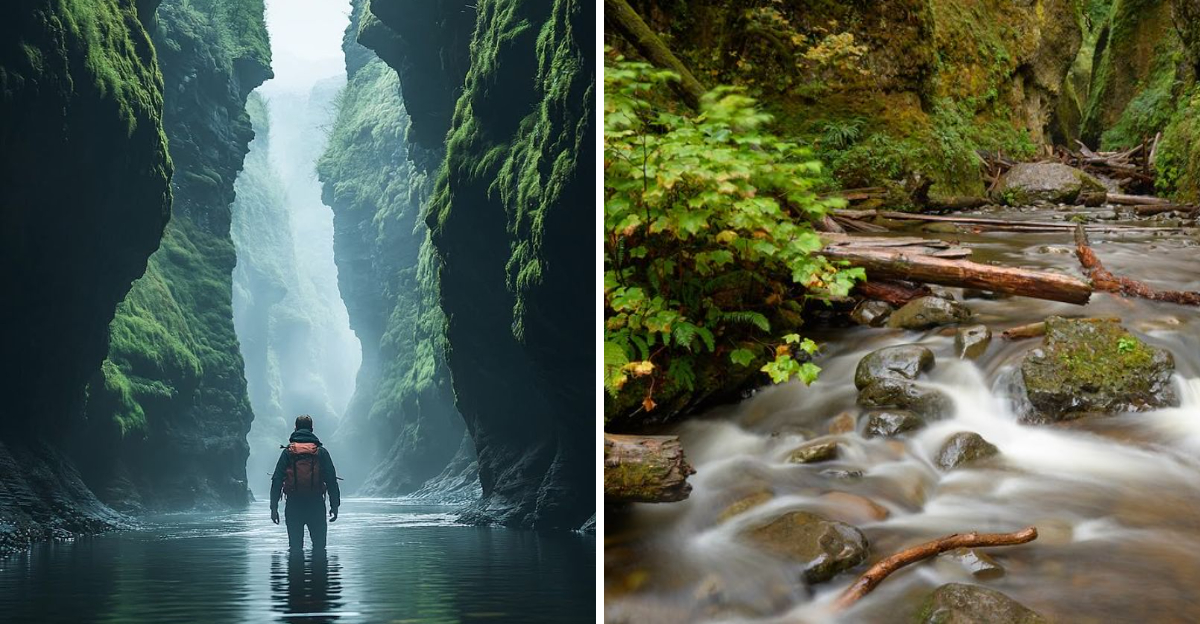
Tucked between towering moss-covered basalt walls along the Historic Columbia River Highway, Oneonta Gorge feels less like a hiking destination and more like stepping into a living painting.
The first time I rounded the bend and saw that narrow slice of green canyon stretching ahead, I genuinely stopped walking just to take it in.
Cold water rushes along the canyon floor, ancient ferns cling to every rock surface, and the light filters down in a way that makes everything glow. Few places in Oregon carry this kind of quiet, almost otherworldly atmosphere.
The gorge sits within the Columbia River Gorge National Scenic Area, a region already famous for dramatic waterfalls and lush terrain, yet Oneonta still manages to feel like a secret.
Whether you are a seasoned hiker or just someone chasing something beautiful on a free weekend, this slot canyon has a way of staying with you long after you leave.
The Slot Canyon Itself: A Geological Marvel
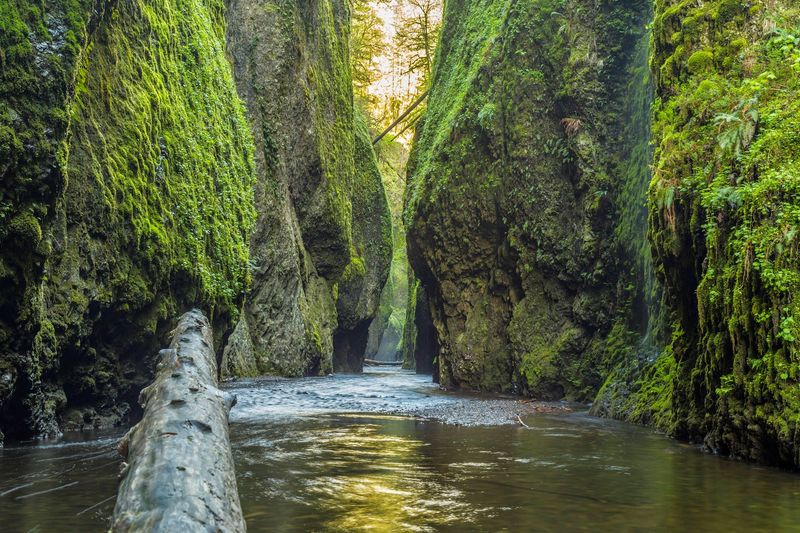
Standing at the entrance of Oneonta Gorge, the first thing you notice is how impossibly narrow the canyon walls are. They rise sharply on both sides, dark and slick with moisture, draped in layers of vivid green moss that make the whole place feel ancient.
The gorge was carved over thousands of years by Oneonta Creek cutting through the Columbia River Basalt layer.
This type of slot canyon is rare in the Pacific Northwest, which is a big part of why it draws so much attention from hikers and photographers alike.
The walls trap cool air and moisture year-round, creating a microclimate unlike anything you will find just a few miles away. Ferns grow in thick clusters from cracks in the rock.
Sunlight only reaches the canyon floor for a narrow window each day, and around midday in summer, it drops a single shaft of light directly over the waterfall at the far end. That moment is genuinely hard to describe without sounding dramatic about it.
Four Waterfalls Worth Every Wet Step
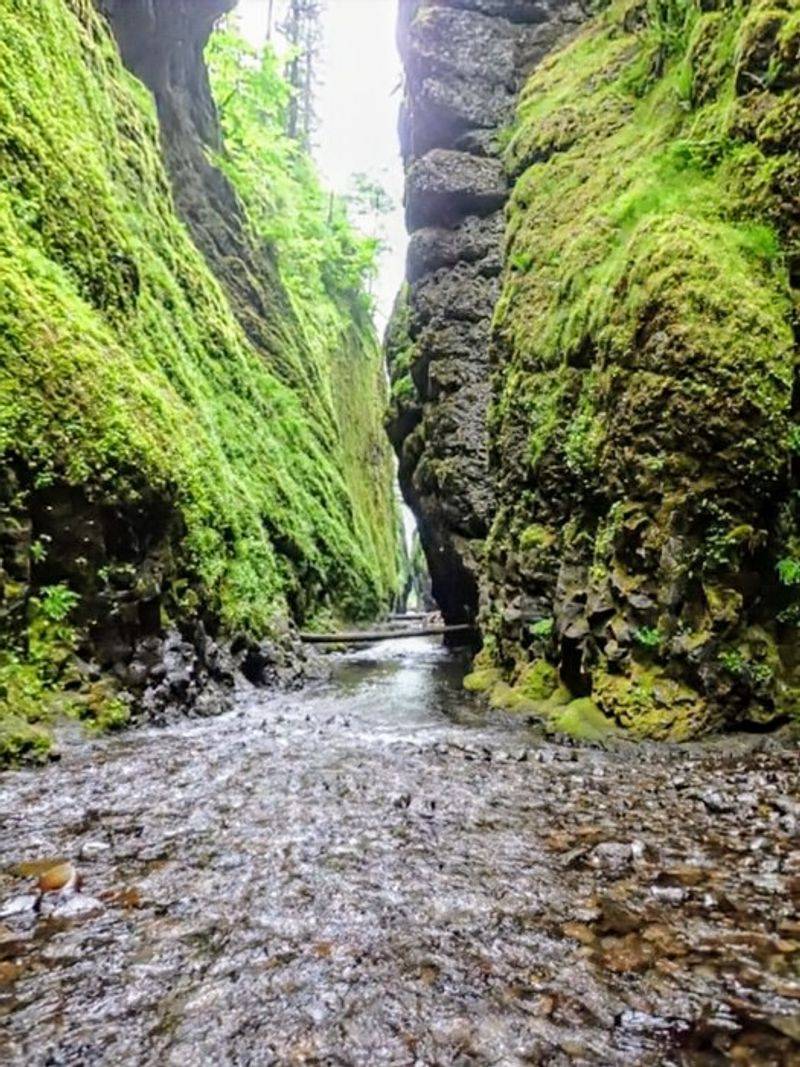
Oneonta Creek does not hold back when it comes to waterfalls. There are four major falls along the creek as it moves through the gorge, each one sitting at a different elevation and requiring a different level of effort to reach.
Lower Oneonta Falls is the most dramatic and the most famous. To see it properly, you have to wade upstream through the creek from the canyon entrance, and at certain times of year that means chest-deep cold water.
Middle Oneonta Falls drops 24 feet and can be spotted from a footpath, though many visitors mistake it for one of the others.
Upper Oneonta Falls sits about a mile upstream from the middle falls and involves some real scrambling to reach. Triple Falls, sometimes called the Fourth Falls, can be viewed from a vantage point along the upper canyon trails.
Each waterfall has its own personality. Some feel thunderous and close, others feel tucked away like something you were meant to discover on your own.
The Botanical Wonder Hidden in Plain Sight
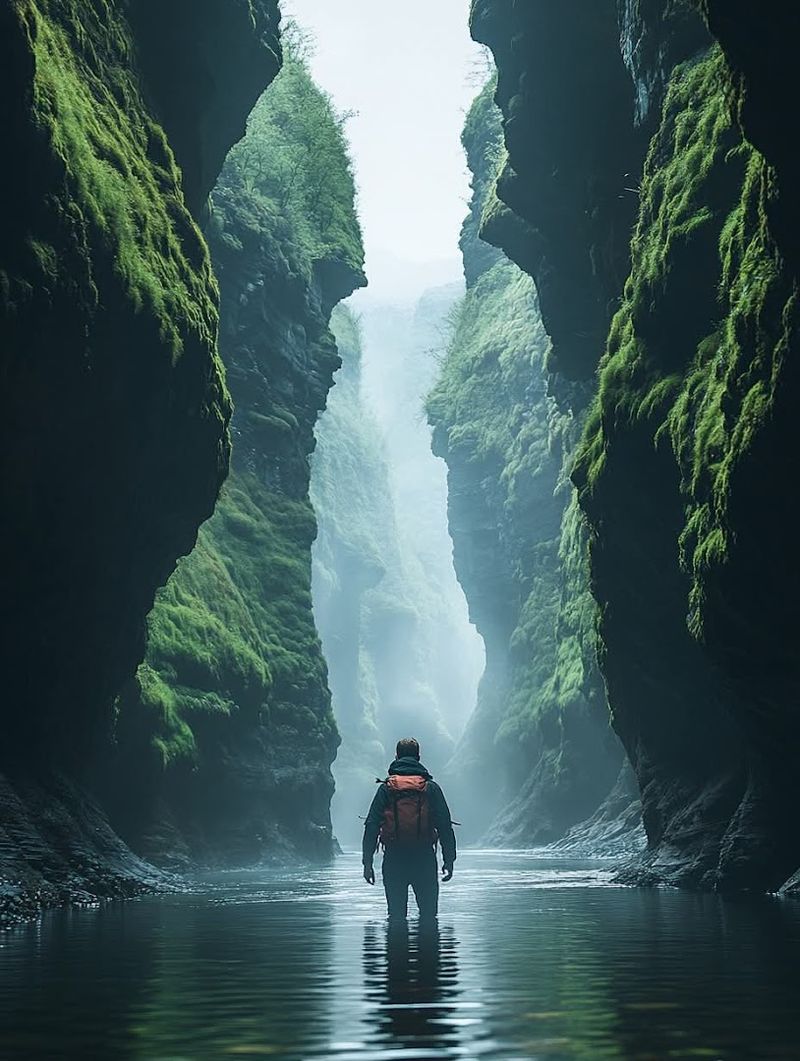
Not many hiking spots carry an official botanical designation, but Oneonta Gorge is one of them. The U.S.
Forest Service has recognized this area as a botanical zone because of the rare plant species that grow here and only here.
The combination of constant moisture, limited direct sunlight, and the specific mineral composition of the basalt walls creates conditions that support plant life you simply will not find anywhere else in the region.
Some of the moss and fern varieties clinging to these rocks have adapted specifically to this microenvironment over centuries.
Walking through the gorge, you are essentially moving through a living ecosystem that has developed in near-total isolation. That is what makes it feel so otherworldly.
Because the area carries this botanical status, visitors are asked to look and not touch, staying on the trail and respecting the growth around them. It is a small ask in exchange for getting to walk through something this rare and genuinely remarkable.
Wading Through Cold Water: The Real Trail Experience
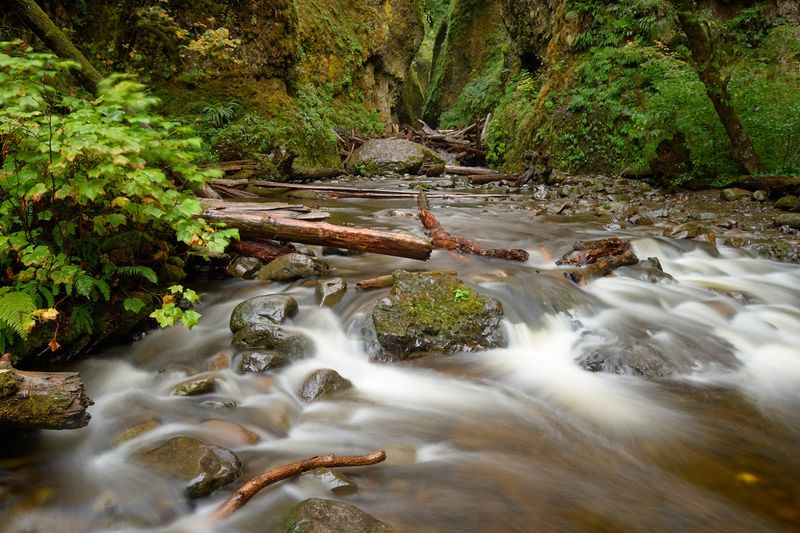
There is no dry way through Oneonta Gorge. That is just the truth of it, and honestly, it is part of the charm.
The trail follows the creek bed, which means your feet are going in the water from the very start.
At some points the water reaches knee depth, and in early season or after heavy rain it can rise significantly higher. One spot near the lower falls has historically required wading through chest-deep cold water to get a full view.
It sounds intense, but people do it with big smiles on their faces.
Water shoes or old sneakers with good grip are strongly recommended because the rocks underfoot are smooth and slippery. Sandals tend to slide off at the worst moments.
The water is genuinely cold, especially earlier in the season, but most people find they adjust within a few minutes of stepping in. Bringing a dry bag for your phone and any valuables is a smart move.
Getting wet here is not a drawback, it is the whole point.
Trail Safety and What to Know Before You Go
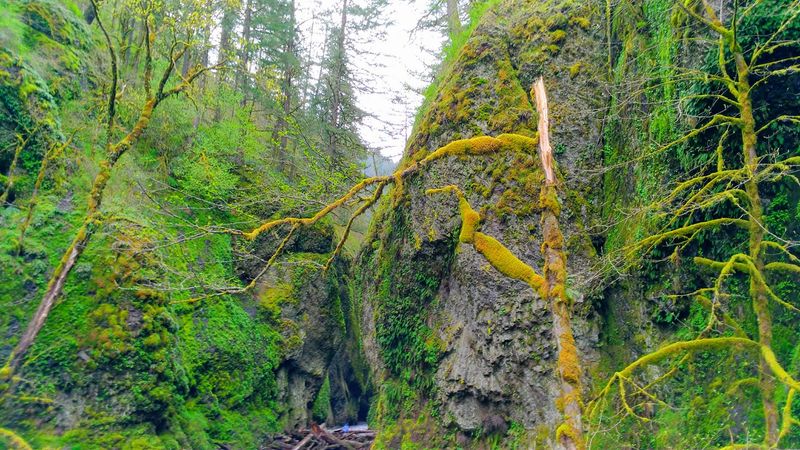
Oneonta Gorge is stunning, but it comes with real physical challenges that deserve honest attention before you pack your bag. The rocks throughout the canyon are slippery, and that applies to both the walls and the creek bed beneath your feet.
Fallen logs have historically blocked parts of the route, and some of them sit at awkward heights that require careful climbing. The hike itself is short in total distance, but the terrain demands slow, deliberate movement rather than a casual stroll.
Rushing through this canyon is how people get hurt.
The gorge trail has also experienced closures following fire damage from the 2017 Eagle Creek Fire, so checking current trail status before visiting is essential.
Trail conditions change with the seasons and with ongoing restoration work in the area.
Wearing sturdy footwear, bringing a first aid kit, and telling someone your plans before heading out are all basic but genuinely important steps. The gorge rewards careful, prepared visitors with a truly unforgettable experience.
The Historic Columbia River Highway and the Old Railroad Tunnel
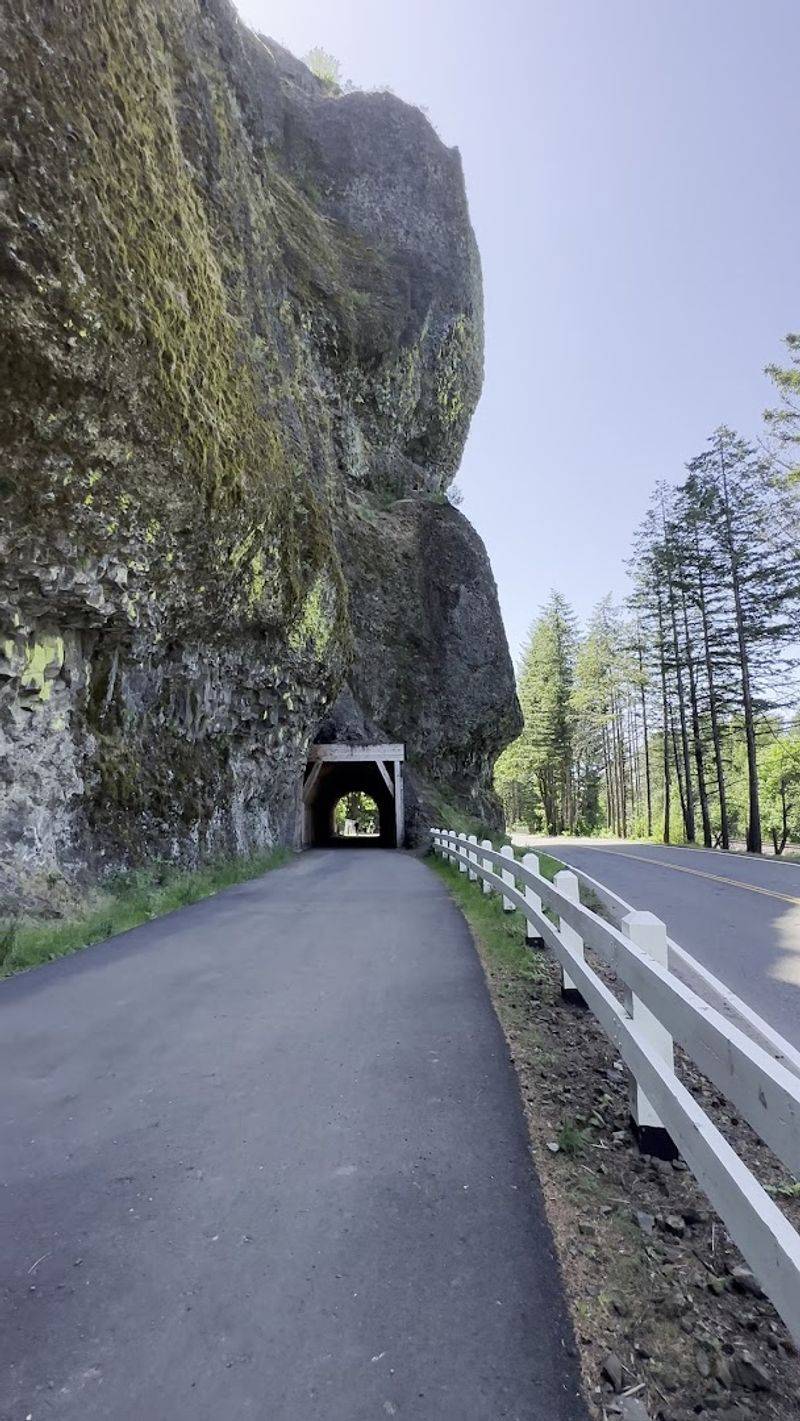
The road that leads you to Oneonta Gorge is worth paying attention to all on its own. The Historic Columbia River Highway was built in the early 1900s and remains one of the most scenic drives in the entire country, winding through dense forest with views of the Columbia River appearing between the trees.
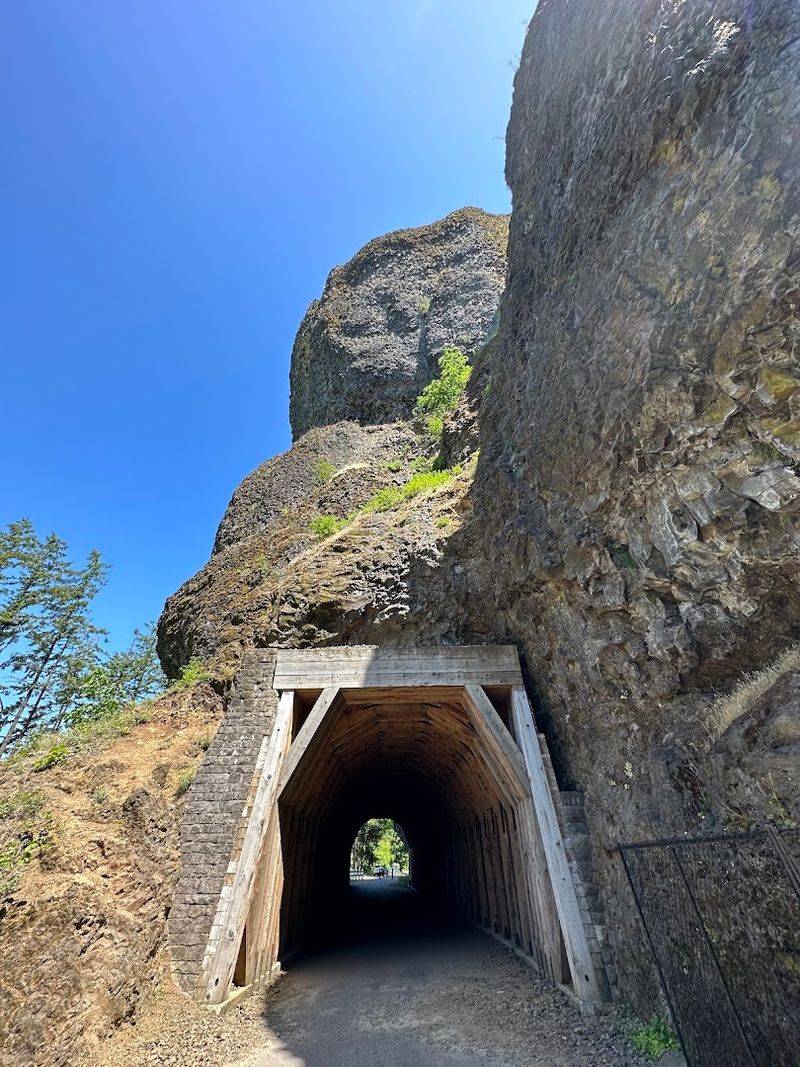
Right near the Oneonta Gorge trailhead sits an old railroad tunnel that has been converted into part of the pedestrian path. Walking through it feels like a small adventure before the main event even begins.
The tunnel is dark and cool inside, and the circular frame of daylight at each end makes for a pretty great photo.
Even during periods when the gorge trail itself has been closed, visitors have found the tunnel walk worthwhile on its own. The history layered into this stretch of highway adds real depth to the visit.
This is not just a trail, it is a corridor through Oregon history that happens to lead somewhere breathtaking.
The Eagle Creek Fire and the Road to Recovery
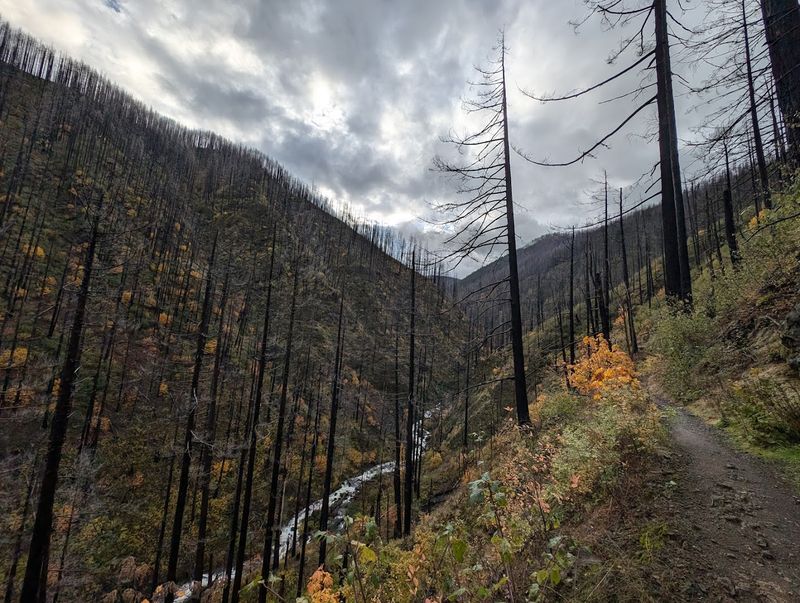
The 2017 Eagle Creek Fire left a significant mark on the Columbia River Gorge, and Oneonta Gorge was not untouched by it. The fire burned through large sections of the trail corridor, damaging vegetation, destabilizing slopes, and forcing extended closures of the gorge trail for public safety.
For several years after the fire, visitors arrived to find fencing around the trailhead and the canyon entrance blocked off. It was a difficult sight for people who had visited before and remembered the dense, unbroken green of the place.
But nature has been quietly doing its work.
Recovery has been gradual and ongoing, with new vegetation slowly reclaiming burned areas and trail restoration efforts continuing in phases. Some upper trails reopened earlier, allowing hikers to reach Triple Falls and view the gorge from above.
Watching a landscape this resilient come back from fire damage carries its own kind of meaning. Checking current conditions with the U.S.
Forest Service before your visit ensures you know exactly what is accessible on the day you arrive.
The Upper Trails: Elevation, Views, and Triple Falls
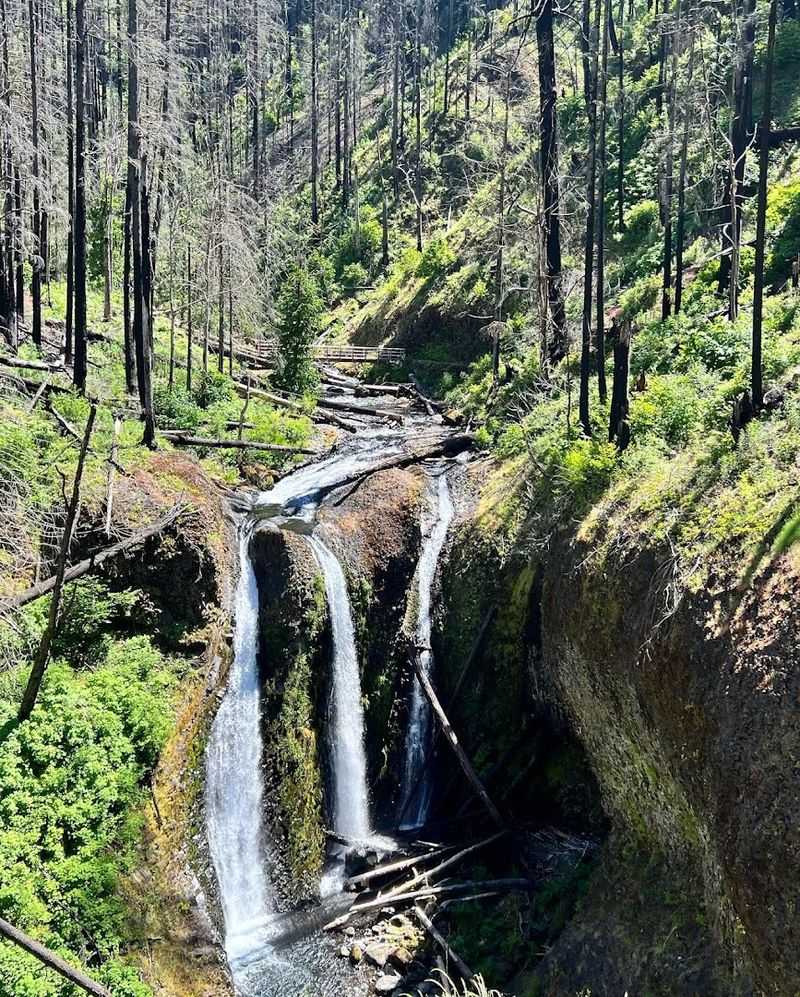
When the lower gorge trail has been closed, the upper trails near Oneonta have offered a genuinely rewarding alternative. The Oneonta Trail climbs above the canyon and connects to viewpoints and other trail systems within the broader Columbia River Gorge network.
Triple Falls is the big draw up here. It is roughly a 3.5-mile round trip hike with meaningful elevation changes that will get your heart rate up.
The trail moves through recovering forest and offers glimpses of the canyon below before arriving at Triple Falls, a dramatic three-tiered waterfall that earns its name without any exaggeration.
The upper trails also connect to Gorton Creek Trail and other routes for those who want a longer day out. Even from the road, there is a short one-mile hike up the mountain that delivers a panoramic view down into the gorge.
Standing up there and looking at the narrow green canyon cutting through the basalt below gives you a completely different perspective on how extraordinary this place actually is.
Light, Timing, and the Magic of Midday Sun
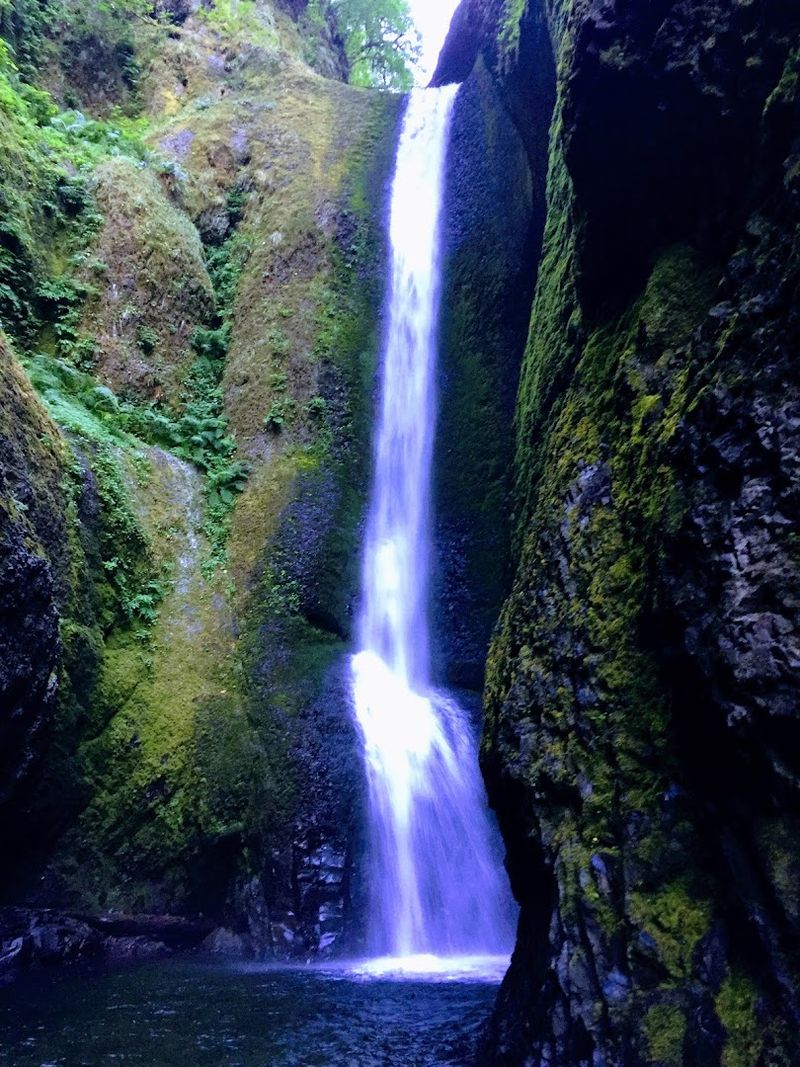
Photographers have been chasing a specific moment at Oneonta Gorge for decades. Around midday during summer months, the sun aligns directly above the narrow canyon opening and sends a concentrated beam of light straight down onto the waterfall at the far end of the gorge.
The effect is genuinely theatrical. The rest of the canyon stays cool and shadowed while this single column of light illuminates the falls and the mist rising off the water.
It is the kind of thing you see in a photo and assume has been edited, until you witness it in person and realize it is just what happens here.
Arriving earlier in the morning has its own appeal, with soft diffused light casting everything in an even, painterly glow. Sunrise visits mean fewer people and a stillness that feels almost private.
Either way, the light inside Oneonta Gorge behaves differently than it does almost anywhere else, and that is not an accident of geography. The narrow walls simply frame the sky in a way that turns ordinary sunlight into something worth planning your whole day around.
Planning Your Visit: Practical Tips for Oneonta Gorge
Getting to Oneonta Gorge is straightforward. The site sits along the Historic Columbia River Highway, accessible from Portland in roughly 45 minutes to an hour depending on traffic.
Parking near the gorge is limited to a small lot, and it fills up quickly on summer weekends.
Arriving early in the morning is the most reliable way to secure a spot and enjoy the canyon before crowds build. Weekday visits are noticeably quieter.
Bringing water, snacks, and dry clothes to change into after the wade is a genuinely good call rather than an optional suggestion.
Since trail access has shifted over the years due to fire damage and ongoing restoration, always check current conditions with the Columbia River Gorge National Scenic Area or the U.S. Forest Service website before heading out.
What was closed last season may be open now, and vice versa. The gorge is worth the effort of a little extra planning.
Few places in Oregon deliver this kind of concentrated beauty in such a short stretch of trail.
Dear Reader: This page may contain affiliate links which may earn a commission if you click through and make a purchase. Our independent journalism is not influenced by any advertiser or commercial initiative unless it is clearly marked as sponsored content. As travel products change, please be sure to reconfirm all details and stay up to date with current events to ensure a safe and successful trip.
