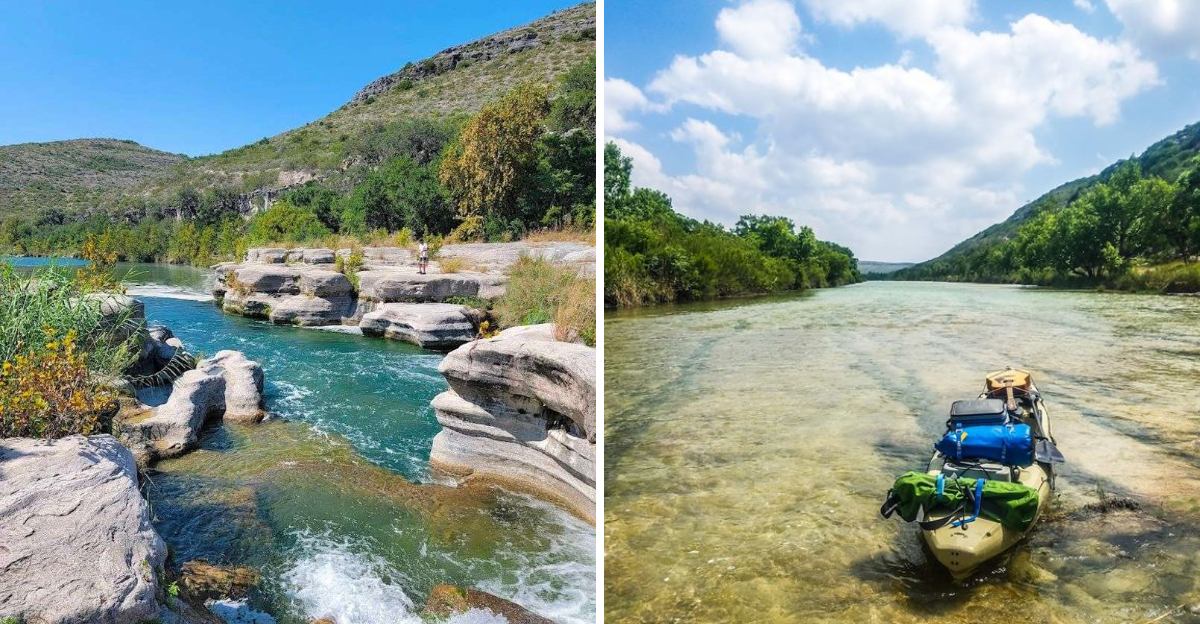
The journey here is not the easiest, but that is part of the appeal. This Texas river remains one of the most pristine paddling destinations in the state, attracting kayakers who want more than a typical day on the water.
In Texas, rivers like this are treasured for their clear currents and the feeling of complete escape they offer. Paddlers move slowly through calm sections, then drift past rugged cliffs and untouched stretches of wilderness.
The quiet is broken only by the sound of water moving beneath the kayak and the occasional splash of wildlife nearby. Experiences like this show just how extraordinary Texas waterways can be.
Getting There: The Remote Road That Filters Out the Crowds
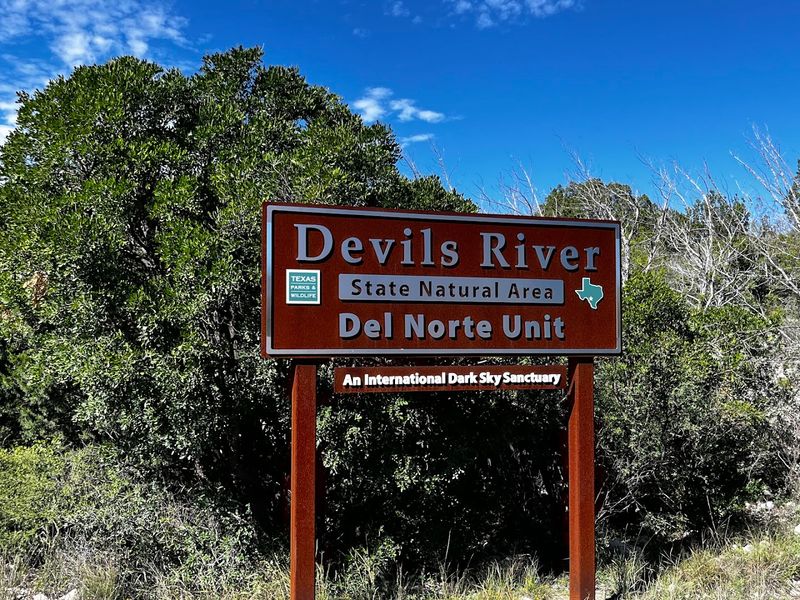
Reaching Devils River is genuinely part of the experience. The nearest town of any size is Del Rio, roughly 45 miles away, and the final stretch of road to the river is unpaved caliche that demands a high-clearance vehicle after any rainfall.
I have seen regular cars parked at the side of the road where drivers gave up, and honestly, that is probably for the best.
The remoteness is not accidental. It serves as a natural filter, keeping casual visitors away and preserving the river’s character.
Cell service disappears long before you reach the water, so planning ahead is not optional, it is survival strategy.
Fuel up in Del Rio before heading out, and bring more water than you think you need. The drive itself passes through open ranch land and low scrubby desert, and on a clear day the landscape feels enormous and humbling.
Once you arrive and hear the river, every bumpy mile suddenly makes complete sense. The effort required to get here is exactly what keeps Devils River feeling like a secret worth keeping.
Why Devils River Is Unlike Any Other Texas Waterway
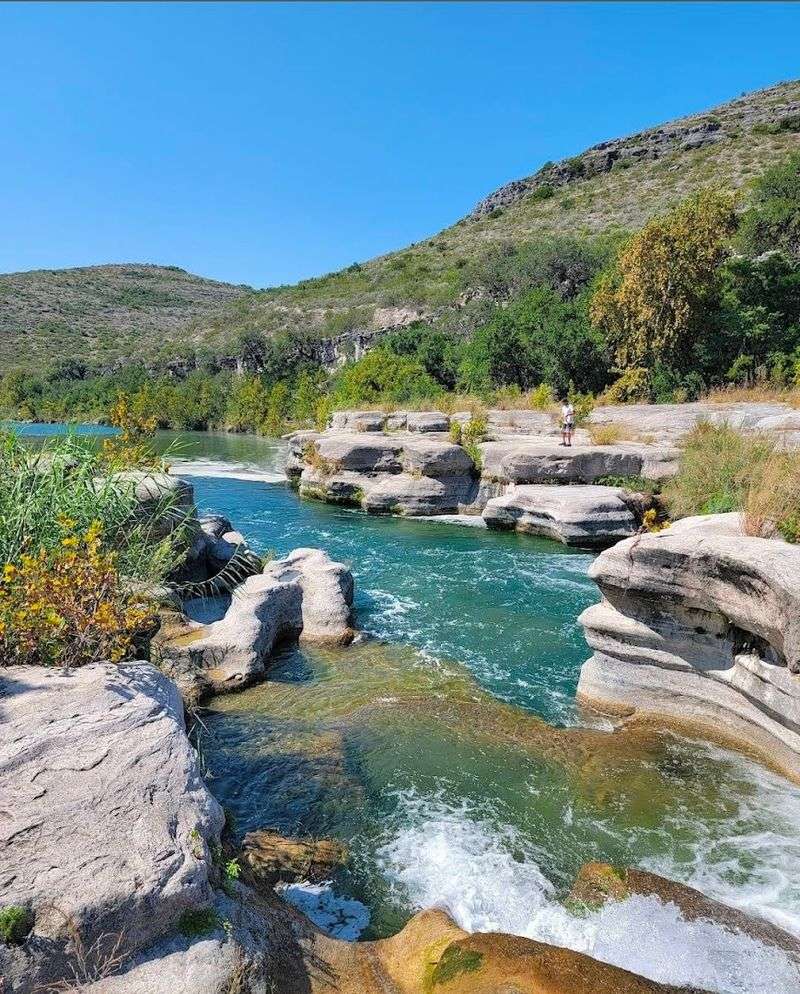
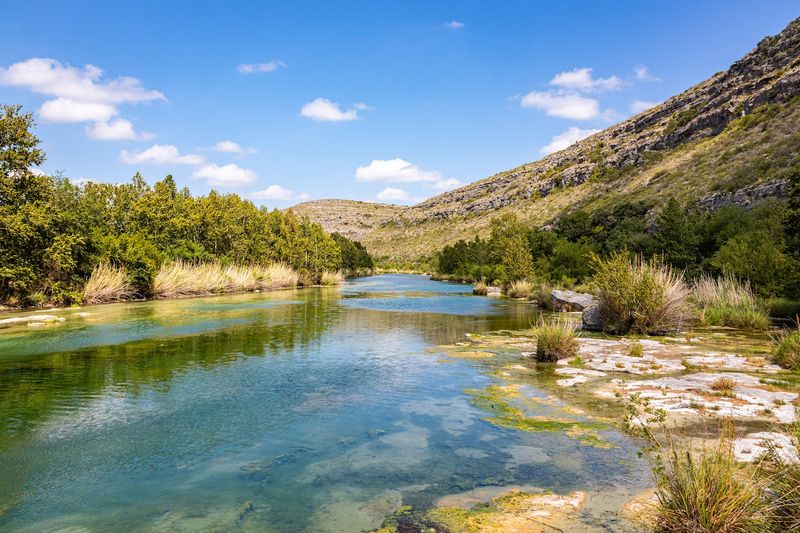
Most Texas rivers carry a brownish tint from sediment, but Devils River looks almost Caribbean in color. The water runs an impossibly clear blue-green, fed almost entirely by natural springs rather than surface runoff.
That spring-fed source keeps the water clean, cold, and visually stunning year-round.
The river cuts through the Chihuahuan Desert landscape of Val Verde County, carving deep limestone canyons along the way. This is not a river surrounded by pine trees and gentle meadows.
The terrain is raw, scrubby, and dramatic in a way that feels ancient.
Because the watershed has almost no development upstream, the water quality here ranks among the best of any river in Texas. Scientists and conservationists regularly point to Devils River as one of the most ecologically intact river systems in the entire state.
Paddling it feels less like a recreational outing and more like passing through a living, breathing nature preserve that somehow survived the modern world completely intact.
The Best Time of Year to Paddle Devils River
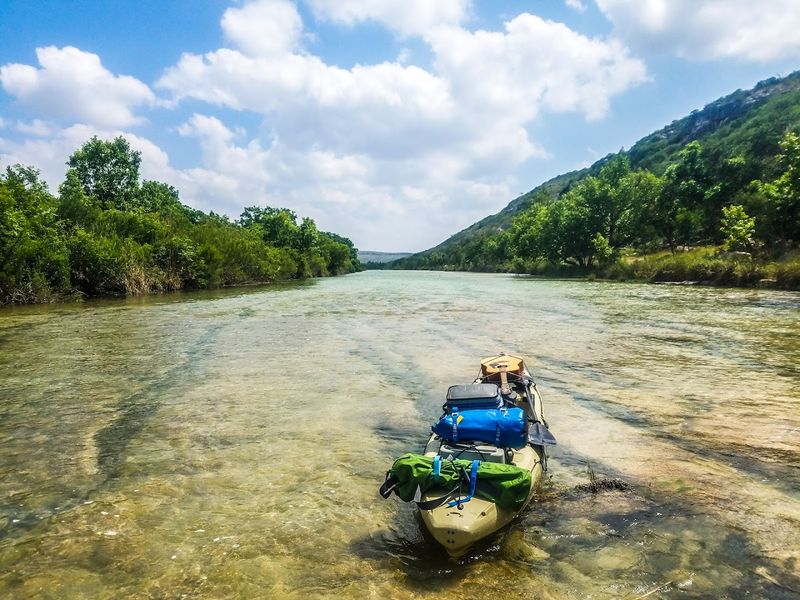
Spring and fall are the sweet spots for paddling Devils River. Temperatures sit in a comfortable range, the water levels tend to be reliable, and the desert around the canyon edges softens with color.
Summer brings brutal heat that can make a full multi-day paddle genuinely dangerous if you are not prepared.
Winter trips are possible and surprisingly peaceful, with almost no other paddlers on the water. The cold air keeps things crisp, and the low-angle winter light makes the canyon walls glow in a way that feels almost theatrical.
Just pack layers, because mornings near the river can drop significantly overnight.
Water levels fluctuate more than you might expect for a spring-fed river. Heavy rains upstream can cause sudden rises, so always check conditions before launching.
The Texas Parks and Wildlife Department maintains current information on the river, and connecting with local outfitters near Del Rio before your trip will give you the most up-to-date picture of what to expect on the water that specific week.
Rapids, Pools, and Portages: What the Water Actually Feels Like
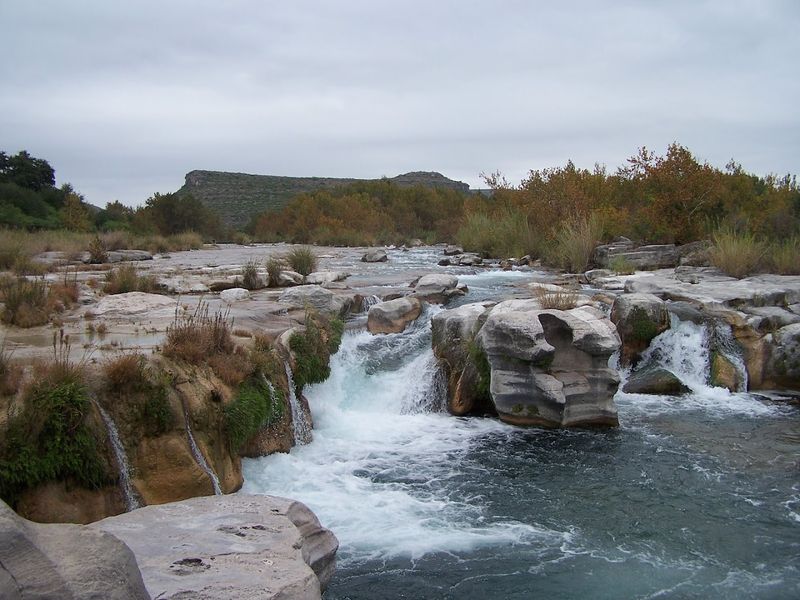
The rapids on Devils River are not the kind that require professional whitewater training, but they are not gentle either. Most fall into the Class I and Class II range, with a few technical spots that require reading the water carefully and occasionally getting out to portage around a rocky drop.
That mix keeps things interesting without being reckless.
Between the rapids, the river opens into wide, glassy pools where the water is so clear you can watch bass and sunfish moving below your hull. Those calm stretches are perfect for floating slowly and just absorbing the canyon scenery rising around you.
My favorite moments on the river happened in exactly those quiet pools.
The riverbed itself is mostly limestone, which means the water stays remarkably clean and the footing is solid when you do need to wade. Some sections require lining your boat through shallow rocky passages rather than paddling, which is just part of the charm.
The river keeps you engaged and present in a way that a flat, easy paddle simply cannot replicate. Every new bend offers something worth paying attention to.
Multi-Day Paddling: Planning Your Route on the River
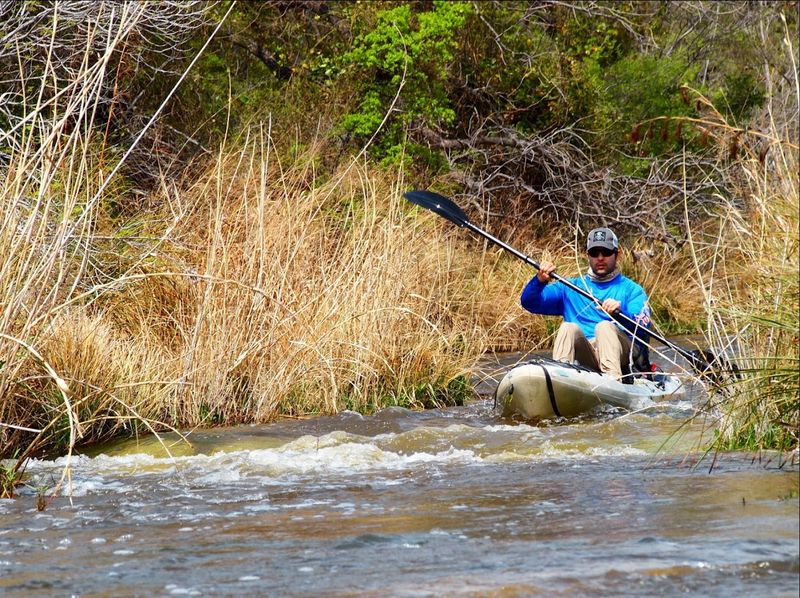
A full Devils River experience really unfolds over multiple days. The most popular stretch runs roughly 10 to 12 miles and takes paddlers through a series of rapids, calm pools, and narrow canyon passages that change character around every bend.
Rushing through it in a single day means missing most of what makes it special.
Camping along the riverbanks is part of the draw. Flat limestone shelves above the waterline make natural campsites, and falling asleep to the sound of the river while a sky full of stars appears overhead is the kind of thing that stays with you for years.
The light pollution out here is essentially zero.
Permits are required to access certain sections through Devils River State Natural Area, and visitor numbers are strictly limited. Booking well in advance is not a suggestion, it is a necessity.
The limited permit system exists to protect the ecosystem, and honestly, it is a relief knowing the place will not be overrun when you arrive. Plan your route with a buffer day in case weather or water levels require a change of plans.
Wildlife You Will Actually See Along the Banks
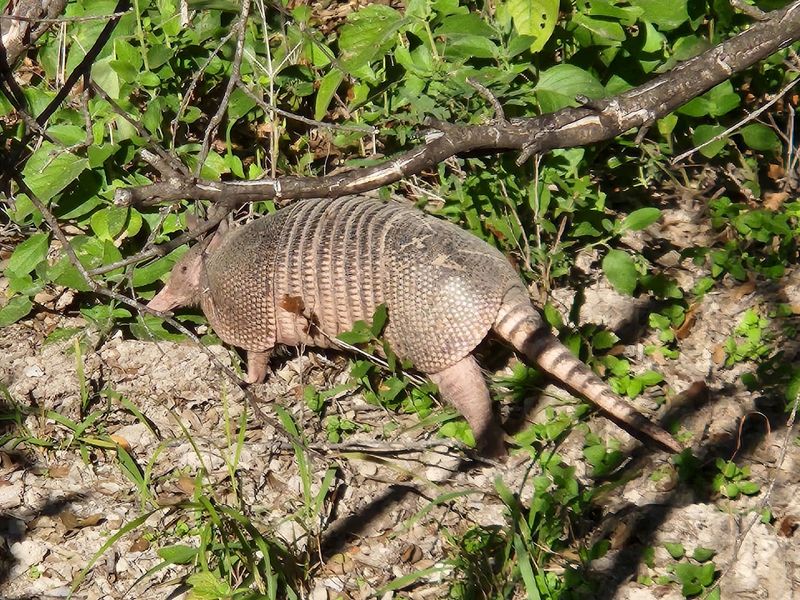
The wildlife along Devils River operates on its own schedule, completely indifferent to the fact that you are paddling through. Great Blue Herons stand motionless in the shallows like statues until you drift too close, then lift off with a prehistoric wingbeat that always catches you off guard.
Kingfishers dart low over the water in flashes of blue and orange.
White-tailed deer appear at the water’s edge in the early morning and late afternoon, especially at the wider gravel bars where the river spreads out. Black vultures circle overhead in lazy spirals, and if you are lucky, a peregrine falcon might cut across the canyon above you.
The canyon walls themselves host nesting birds in crevices and ledges you would never notice from a road.
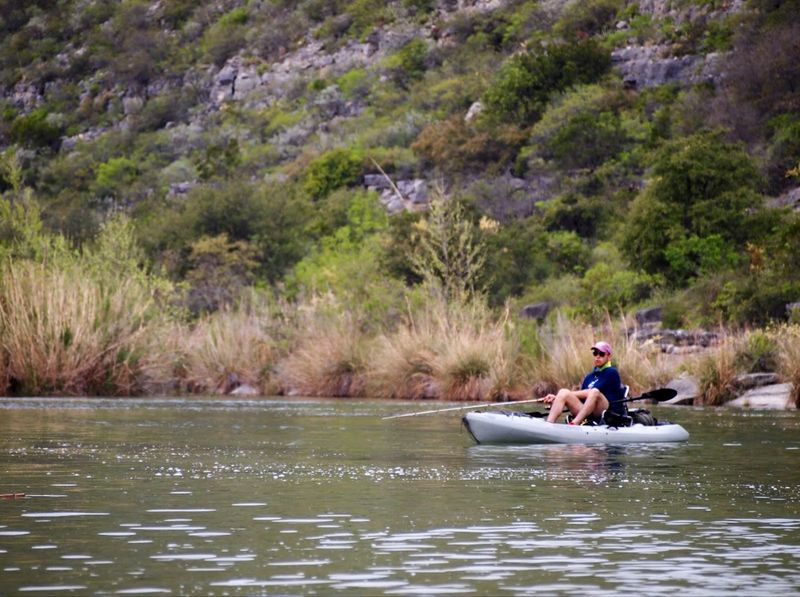
The river also supports a healthy population of Guadalupe bass, a species native to Texas and found in relatively few river systems. Anglers who combine fishing with paddling tend to have remarkable days on this water.
Even if fishing is not your thing, seeing large bass holding in the current beneath your kayak while the canyon walls tower overhead is a genuinely memorable natural experience.
Gear Up Right: What to Bring for a Devils River Trip
Packing for Devils River requires more thought than a typical weekend float. Because the river is remote and resupply is not an option once you launch, every item you bring needs to earn its spot in your boat.
A reliable water filter or purification tablets are essential, even though the water looks pristine.
Sun protection is non-negotiable. The canyon walls provide shade at certain times of day, but the open stretches under a Texas sky will absolutely burn unprotected skin.
A wide-brimmed hat, UV-rated long sleeves, and serious sunscreen are basics, not extras.
Dry bags protect your gear from the inevitable swims and splashes in the rapids. A first aid kit with blister treatment and basic wound care should live in an accessible spot in your boat.
Footwear that stays on your feet and protects against sharp limestone is important since you will be walking on rock regularly. Bring more food than you think you need since paddling and camping burns more calories than most people expect.
A headlamp with fresh batteries rounds out the essentials, because nights in the canyon arrive quickly and completely.
Devils River State Natural Area: The Official Access Point
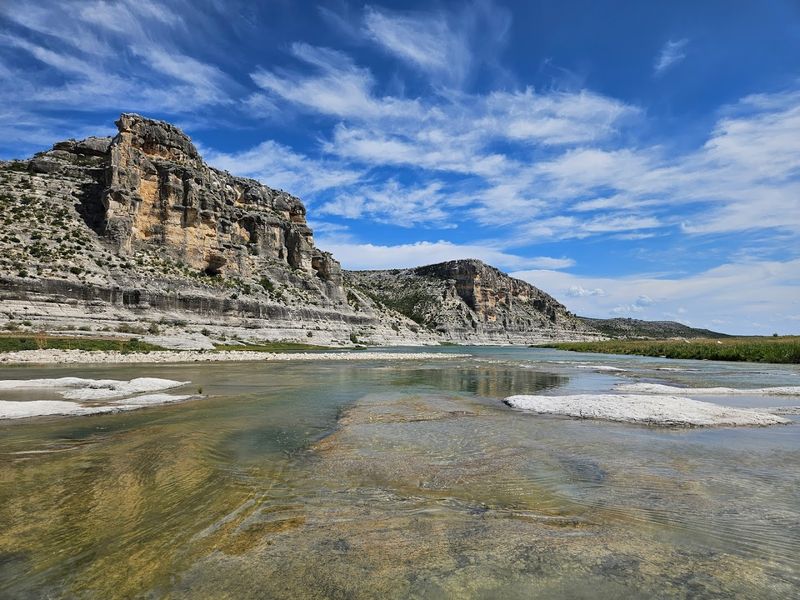
The State Natural Area managed by Texas Parks and Wildlife is the primary official access point for the river, and it functions differently from a typical state park. Visitor numbers are capped deliberately, and the facilities are minimal by design.
There is a primitive launch area, basic restrooms, and not much else, which is entirely the point.
Rangers stationed at the area are genuinely knowledgeable about the river and worth talking to before you launch. They can tell you about current water conditions, recent wildlife sightings, and any sections of the river that might need extra attention.
That kind of local, current information is hard to find anywhere else.
The natural area also protects the surrounding upland habitat, which means the canyon and river corridor remain intact rather than being hemmed in by development. Hiking trails near the headquarters offer a way to see the landscape from above the river before you get on the water.
Standing on a ridge overlooking the canyon before your paddle gives you a sense of the scale and character of the terrain you are about to travel through. Address: 101 Cook Ranch Road, Del Rio, Texas.
Leave No Trace on One of Texas’s Most Fragile Rivers
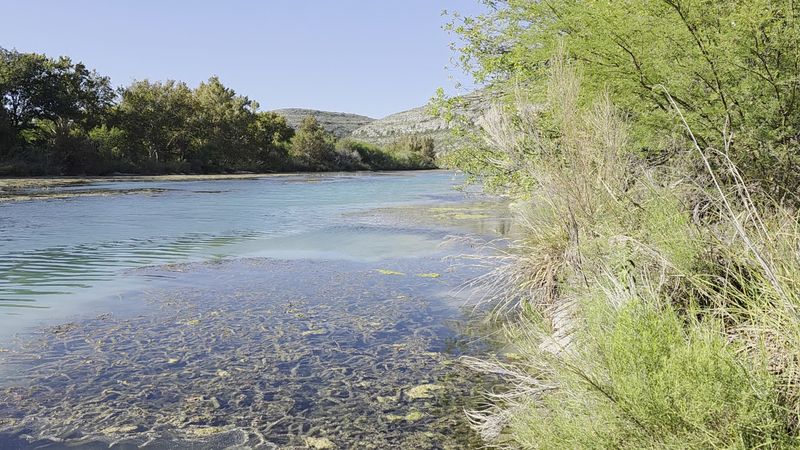
Devils River stays as pristine as it does because the people who visit it tend to take that responsibility seriously. The ecosystem here is genuinely fragile.
The spring-fed water system, the rare fish species, the nesting birds, and the desert riparian habitat all depend on visitors treating the place with real care rather than just posting about it afterward.
Pack out everything you bring in, including food scraps, packaging, and human waste using a WAG bag system, which is required in most sections of the river. Washing dishes or yourself directly in the river introduces soaps and chemicals that disrupt the water chemistry even in small amounts.
Carry water a short distance from the bank before using any cleaning products.
Campfire rules vary depending on conditions and current fire danger, so check before you plan to build one. Dead wood along the riverbank plays an important ecological role and should not be burned.
The minimal impact philosophy is not just a suggestion here, it is the reason the river still looks the way it does. Every person who paddles Devils River has a direct stake in keeping it that way for the people who will paddle it after them.
Why Devils River Stays in Your Memory Long After You Leave
Some places are beautiful in a way that photographs capture reasonably well. Devils River is not one of those places.
The combination of the water temperature, the smell of the desert after rain, the sound of a rapid building around a bend you cannot yet see, and the sheer scale of the canyon above you creates something that images simply cannot hold.
The remoteness itself becomes part of the memory. There is a particular kind of quiet that exists when you are miles from the nearest road, floating on water that has been flowing through limestone for thousands of years.
It recalibrates something in your sense of scale and time that is hard to explain but easy to feel.
People who paddle Devils River tend to talk about it the way others talk about life-changing travel experiences abroad, with a slightly disbelieving tone, as if they cannot quite believe it exists in their home state. That reaction makes complete sense once you have been there.
Texas hides remarkable things in its wide-open spaces, and Devils River might be the most remarkable of all of them. Go once, and you will already be planning the return trip before you have even finished loading your kayak back onto the car.
Dear Reader: This page may contain affiliate links which may earn a commission if you click through and make a purchase. Our independent journalism is not influenced by any advertiser or commercial initiative unless it is clearly marked as sponsored content. As travel products change, please be sure to reconfirm all details and stay up to date with current events to ensure a safe and successful trip.
