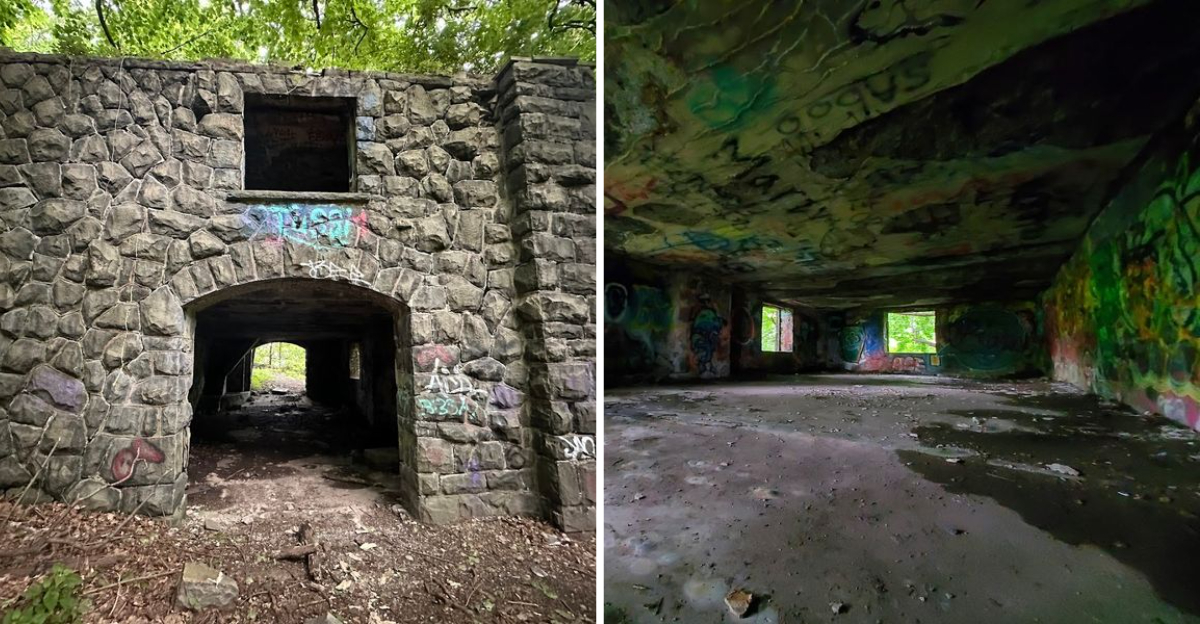
Here is a hot take for you. The best castle in New Jersey does not have a gift shop or a moat.
It is a two-story stone skeleton hiding in the woods, and it is completely free to explore.
This place was once a summer mansion with river views that probably made neighbors insanely jealous.
Then a very wealthy man bought the land and decided the skyline looked better without it.
The upper floors came down, but the foundation held its ground like a stubborn old mule.
Now you can wander through the ruins, spot the old terraced gardens, and find the year 1911 still carved into the stone.
It feels like discovering a secret history lesson, minus the boring textbook.
Has a hike ever made you feel like an actual explorer in New Jersey?
Your Aqua-Blazed Gateway to History
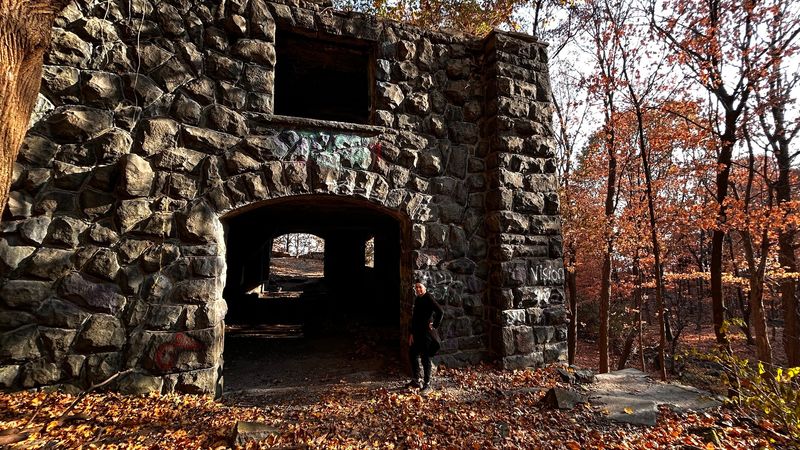
Finding the trailhead is genuinely half the fun here. The Long Path is marked with bright aqua blazes painted on trees, making it easy to follow even if your sense of direction is, let’s say, optimistic at best.
The trail winds through the Palisades Interstate Park in Alpine, New Jersey, offering a surprisingly peaceful walk through dense woodland.
The hike from the Alpine Lookout to the ruins covers less than a mile, which means almost anyone can manage it without breaking a serious sweat. Parts of the trail run close to cliff edges, so staying aware of your footing matters more than checking your phone.
The reward waiting at the end makes every step completely worth it.
Parking is available at the Alpine Scenic Overlook, and the lot fills up on weekends, so arriving early gives you a smoother start. Cooler months strip the trees of their leaves, opening up better sightlines to the stone ruins through the bare branches.
The whole experience feels like stepping into a living history book.
GeorThe Man Behind “Cliff Dale”
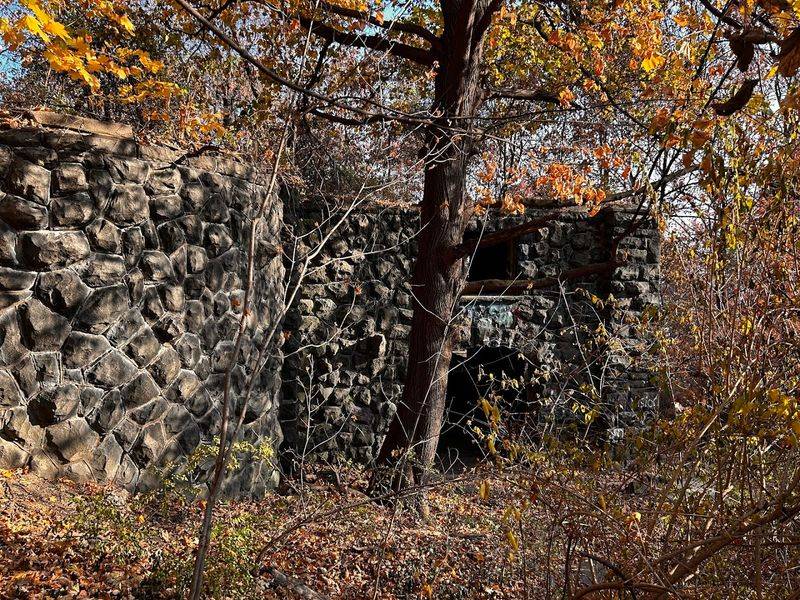
George A. Zabriskie was not exactly roughing it when he decided to build his summer getaway along the Palisades cliffs.
As the New York representative for Pillsbury Flour Mills, he had the kind of money that turned a hillside into a 15-room manor house crafted entirely from native stone.
The estate was completed in 1911 and sprawled across 25 acres of prime cliff-top real estate. Zabriskie named it “Cliff Dale,” a name that somehow manages to sound both grand and completely unpretentious at the same time.
The property sat along what locals and historians eventually nicknamed “Millionaire’s Row,” a stretch of the Palisades dotted with lavish estates.
Before Zabriskie took ownership, the land was held by William C. Baker, a man famous for pioneering steam-heated chicken egg incubation, which is a sentence that history books do not repeat nearly enough.
The progression from egg incubation pioneer to flour magnate summer residence says everything about how this particular patch of New Jersey real estate changed hands.
How the Estate Was Saved From Overdevelopment
By 1930, the construction of the George Washington Bridge had changed everything along the Palisades.
Development pressure was building fast, and wealthy land buyers were eyeing those dramatic cliffs for commercial projects that would have permanently altered the entire landscape.
John D. Rockefeller Jr. stepped in and purchased Cliff Dale along with several other properties lining the cliffs, specifically to prevent that kind of overdevelopment from taking hold.
It was a preservation move that, looking back, saved one of the most scenic stretches of the Hudson River corridor. Three years later, in 1933, Rockefeller donated the entire collection of properties to the Palisades Commission.
That donation transferred Cliff Dale into public hands, where it has remained ever since. Without that intervention, the ruins visitors explore today would likely have been replaced by something considerably less interesting.
The story behind the land purchase adds a genuinely compelling layer to an already fascinating site, turning a simple hike into a walk through multiple chapters of American history.
The WPA Demolition That Never Quite Finished
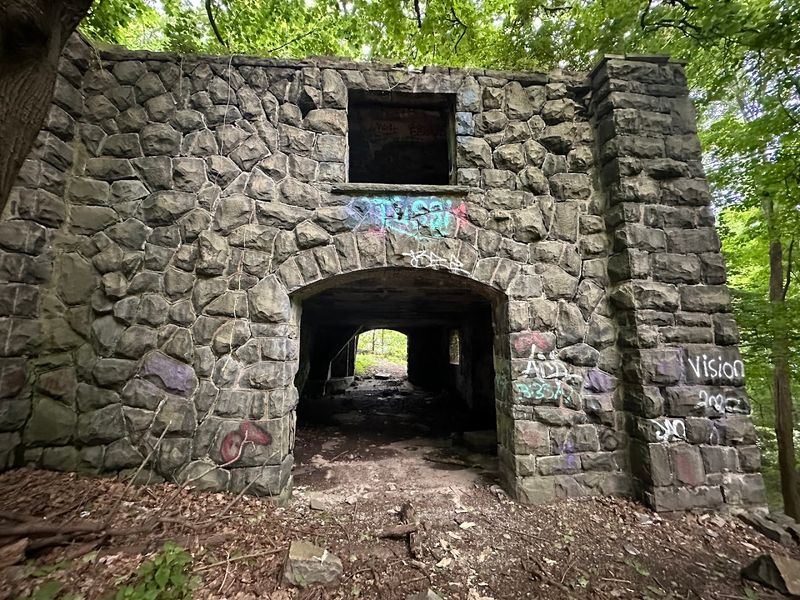
Here is where the story gets genuinely interesting. In 1939, the Works Progress Administration rolled up to Cliff Dale with the intention of tearing the whole manor down.
They managed to take out the upper floors just fine, but the lower portion gave them serious trouble.
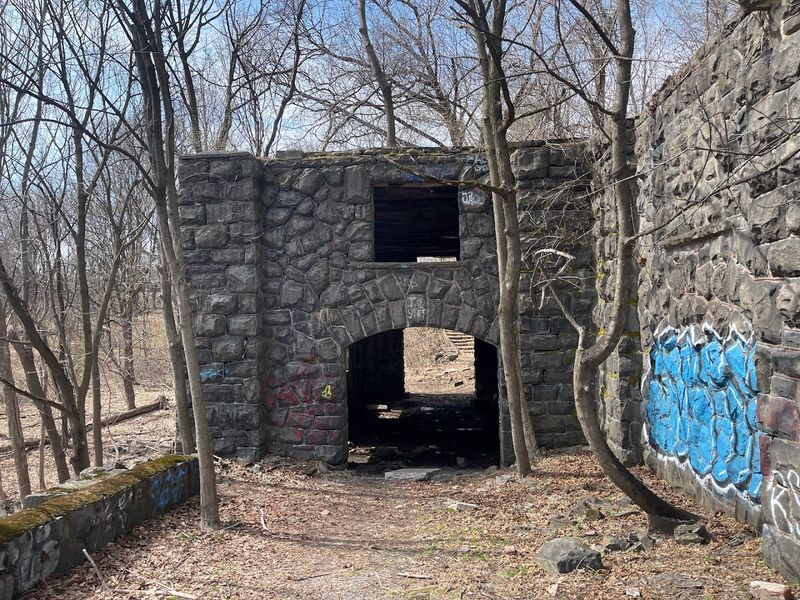
That bottom section was built directly into the hillside using native stone, and it turned out to be both structurally stubborn and unsafe to fully demolish. The WPA crews eventually decided the risk was not worth continuing, packed up their tools, and left the foundation standing.
That abandoned demolition effort is the entire reason visitors can still walk through those dramatic stone walls today.
It is a wonderfully accidental form of historic preservation, born not from careful planning but from sheer construction difficulty. The remaining structure now stands as the most intact example of the Millionaire’s Row estates that once lined this section of the Palisades.
Sometimes the things history forgets to finish become the most memorable things of all.
A Ghost Castle in the Trees
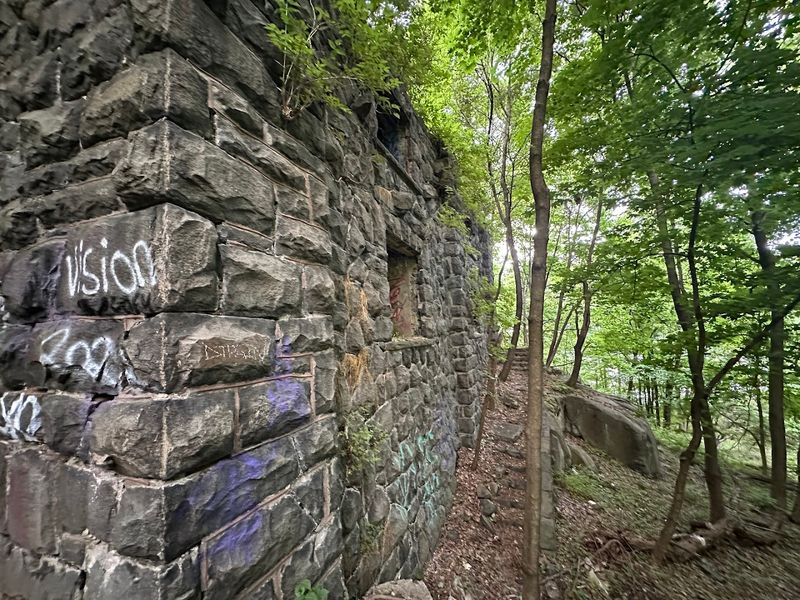
Standing in front of the Cliff Dale ruins for the first time genuinely catches you off guard. The two-story stone walls rise out of the forest floor with surprising height, framing open sky where ceilings once existed.
The whole structure has a ghost castle quality that photographs simply cannot capture with full accuracy.
Scattered stone columns dot the surrounding area, remnants of what were once elegant architectural details. Some sections of red tile flooring survive on the upper portions of the ruins, a small but vivid reminder that this was once a livable, furnished home.
Stairways built into the stone lead upward and then stop abruptly at nothing, which is both eerie and strangely poetic.
The basement stairs visible from inside the ruins are particularly striking, still solid and functional-looking despite decades of abandonment. The scale of what remains makes it easy to imagine just how massive the full 15-room manor must have been.
Every corner of the structure holds a different texture, a different story, a different reason to keep exploring.
Nature Reclaiming Elegance
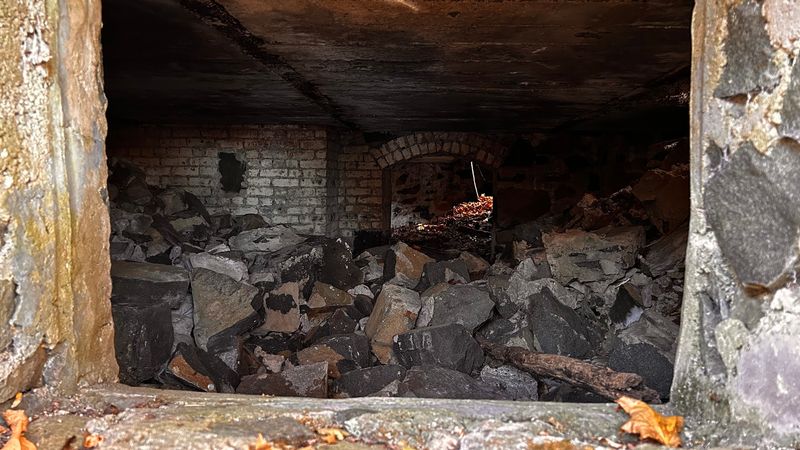
Beyond the main foundation walls, the grounds of Cliff Dale hold quieter surprises that reward slower exploration. Traces of terraced gardens carved into the hillside are still visible, their stone retaining walls holding shape despite nearly a century of neglect.
Walking through them feels like piecing together a puzzle where most of the picture is overgrown.
A man-made pond once sat within the estate grounds, fed deliberately and maintained as part of the formal landscaping. Today it reads as a low, marshy depression surrounded by thick vegetation, more guesswork than clarity during summer months.
Visiting in late autumn or winter strips enough foliage away to make its outline genuinely recognizable.
The terracing itself speaks to how seriously Zabriskie took the design of his summer estate. Formal garden terracing on a clifftop property in 1911 was not a casual undertaking.
It required significant labor and planning, and the fact that those stone lines still hold their shape after more than a hundred years is its own quiet form of architectural stubbornness.
Best Times to Visit for Maximum Atmosphere and Visibility
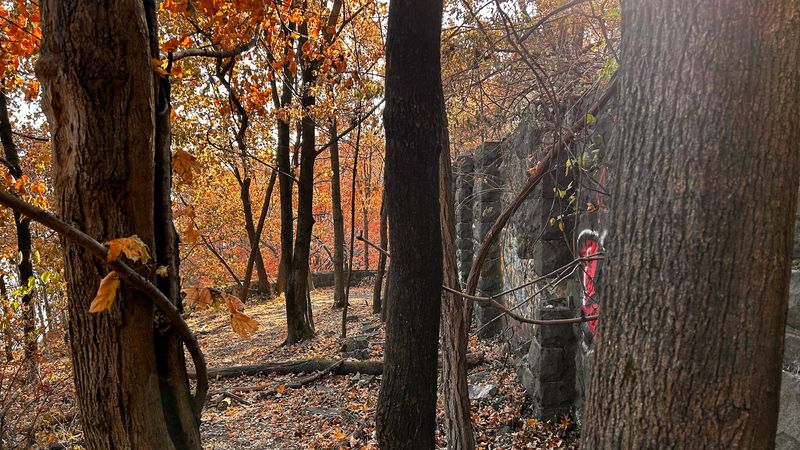
Timing a visit to Cliff Dale makes a real difference in what you actually get to see. Summer foliage is dense along the Long Path, and while the forest is beautiful, thick greenery can obscure significant portions of the ruins from a distance.
Autumn and winter visits open up the sightlines considerably.
Late October through early March tends to offer the clearest views of the stone walls through bare branches. The light in winter falls differently too, hitting the gray stone at angles that make the ruins look almost deliberately dramatic.
Cold air and quiet trails add a layer of atmosphere that warmer months genuinely cannot replicate.
Spring visits are perfectly enjoyable, especially for wildflower spotters, but expect some visibility trade-offs as new growth fills in quickly. The ruins are open 24 hours every day of the week, which technically makes a moonlit winter walk possible for the very adventurous.
Regardless of season, wearing sturdy footwear matters because uneven ground, hidden holes, and slippery surfaces are consistent features of the site year-round.
Practical Tips for Exploring Cliff Dale Safely
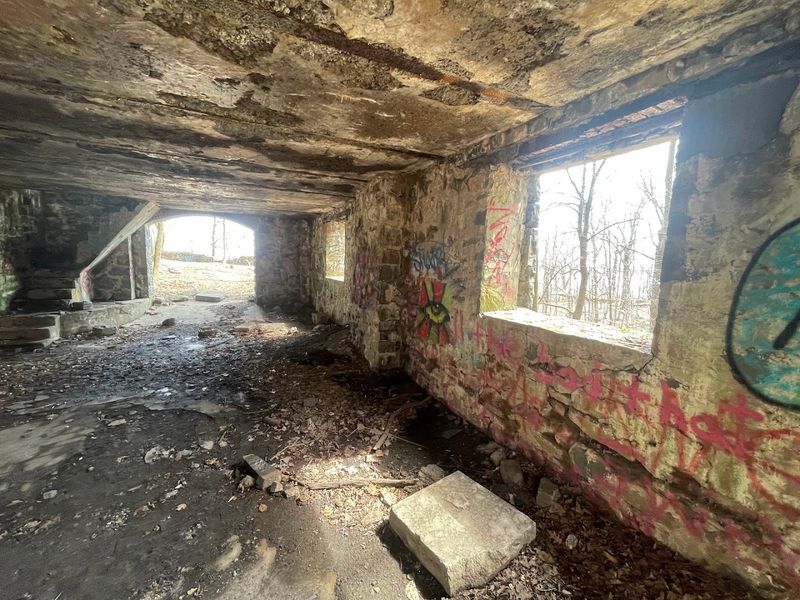
Cliff Dale sits on public park property, which means visiting and exploring the ruins is entirely legal and genuinely encouraged. That said, a few practical considerations go a long way toward making the experience both safe and enjoyable.
Sturdy hiking boots are non-negotiable here.
The ground around the ruins is uneven, with hidden holes and loose stone that can catch an ankle off guard. Some sections of the trail run near cliff edges, so staying on marked paths and keeping a reasonable distance from drop-offs is just smart hiking behavior.
Bringing a fully charged phone for navigation and emergency contact is always a good call.
The ruins themselves have deteriorating surfaces, especially on upper sections, so climbing on unstable walls is worth avoiding entirely.
Parking at the Alpine Scenic Overlook is the most straightforward starting point, and arriving on weekday mornings virtually guarantees a quieter, more personal experience.
The site is open around the clock, but daylight hours provide the safest conditions for navigating the terrain and fully appreciating everything the ruins have to offer.
Why Cliff Dale Deserves a Spot on Your List
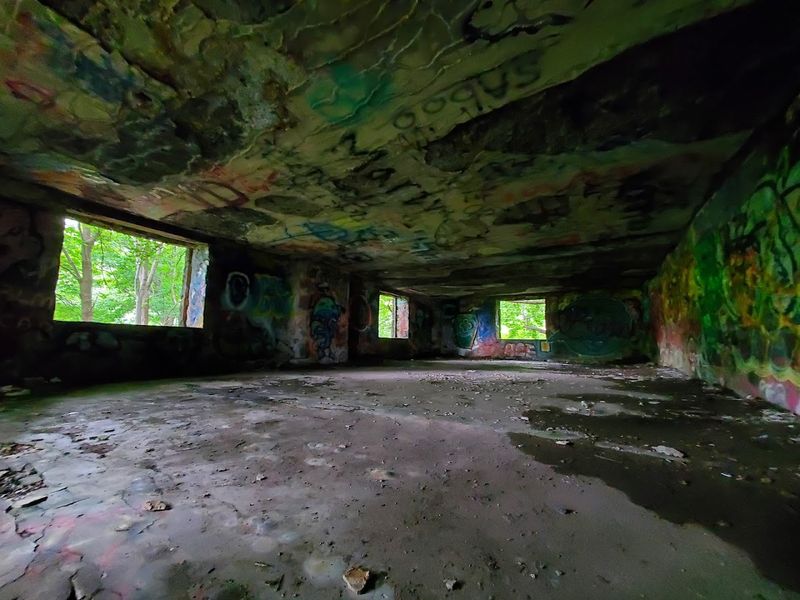
Some places earn their reputation through crowds and marketing. Cliff Dale earned its reputation by simply existing, quietly and stubbornly, for over a hundred years in the middle of a New Jersey forest.
There is something genuinely rare about a place this historically layered being this easy to reach.
The combination of a short, manageable hike and a destination that looks like something out of a European ruin photo set makes this spot accessible to a wide range of visitors.
Families with older kids, solo hikers, history enthusiasts, and photographers all find something here that feels worth the trip.
It never feels crowded the way more publicized landmarks do.
The experience sticks with you after you leave. Standing inside those walls, looking up at the sky through stone frames where windows once held glass, makes the passage of time feel tangible in a way that few places manage.
Cliff Dale is not just a hike to a ruin. It is a full afternoon of curiosity, discovery, and the particular satisfaction of finding something extraordinary hiding in plain sight.
Address: W3QG+PJ, Alpine, NJ 07620
