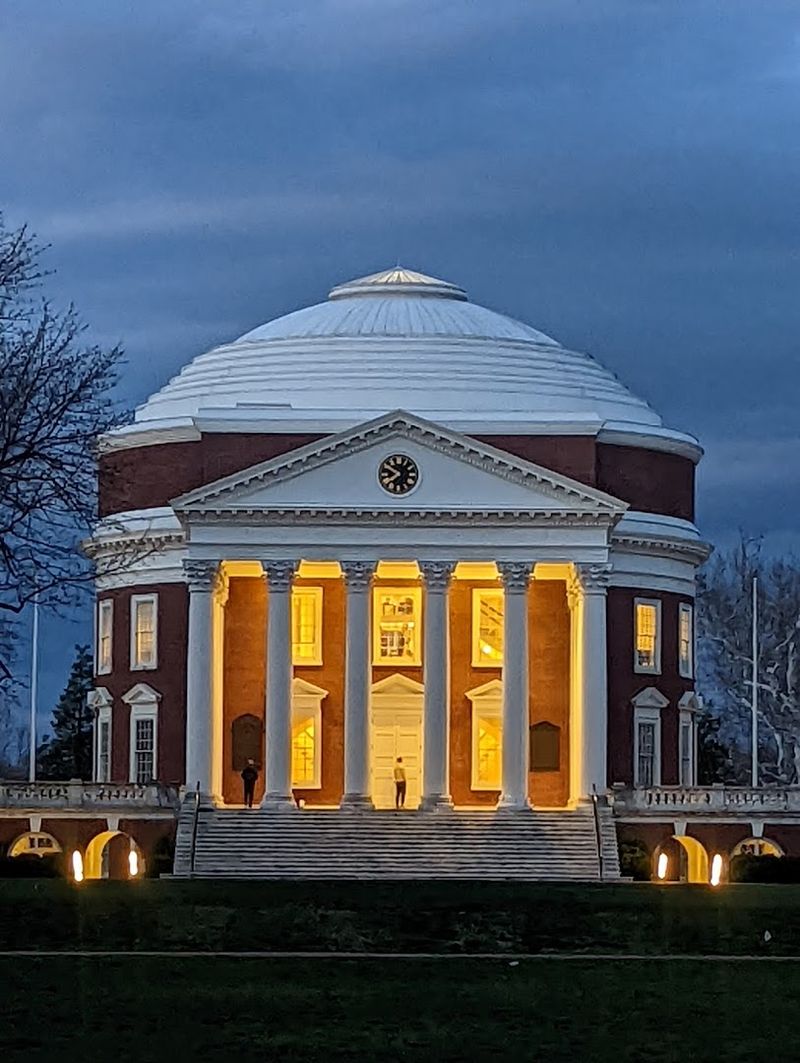
Some buildings just stop you cold. Standing at the edge of the Lawn at the University of Virginia, I felt that exact jolt the moment the white columns came into view.
Virginia has no shortage of historic landmarks, but this one hits differently. Designed by Thomas Jefferson himself and completed in the 1820s, this building is a masterpiece of classical architecture that doubles as a living, breathing part of campus life.
It is a UNESCO World Heritage Site, a symbol of intellectual ambition, and honestly one of the most jaw-dropping structures I have ever walked through. If you have been sleeping on Charlottesville as a travel destination, this building alone is reason enough to finally make the trip.
Jefferson’s Vision Carved in Brick and Marble
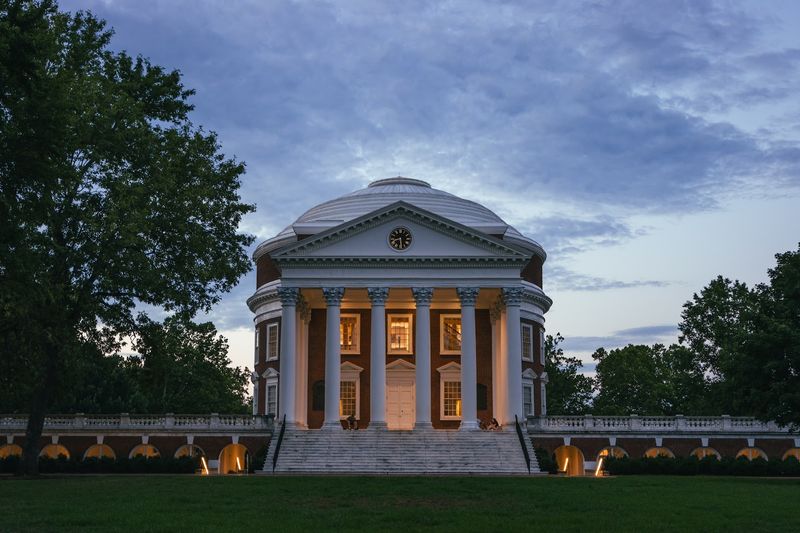
Thomas Jefferson did not just found a university. He designed it, brick by brick, column by column, with the kind of obsessive brilliance that makes architects weep with envy.
The Rotunda at the University of Virginia was his crowning achievement, modeled directly after the Pantheon in Rome and built to represent what he called the authority of nature and the power of reason.
Jefferson believed that a library, not a chapel, should anchor a university. That philosophy was radical for its time and remains deeply compelling today.
He placed the Rotunda at the head of the Lawn, flanked by pavilions and student rooms, creating what he called the Academical Village.
Walking up to the building for the first time, I was struck by how perfectly proportioned everything feels. The dome rises exactly as tall as the building is wide, a geometric harmony that makes your brain feel quietly satisfied.
Virginia has produced many great thinkers, but Jefferson’s architectural legacy here is in a category all its own. The Rotunda is not a relic.
It is a declaration.
A Dome Room That Will Make Your Jaw Drop
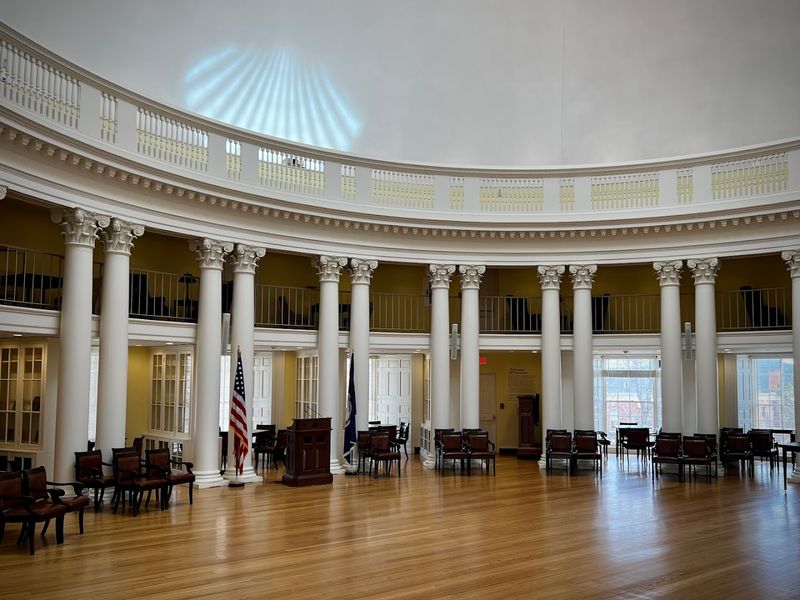
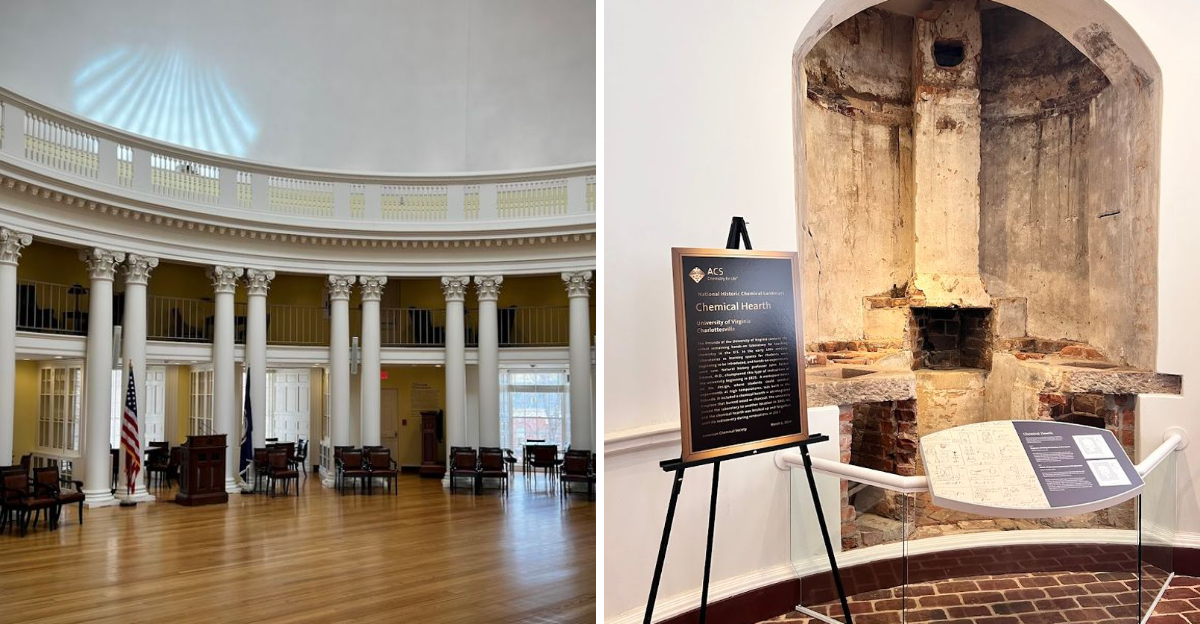
Nothing quite prepares you for stepping into the Dome Room. After climbing the narrow staircase inside the Rotunda at the University of Virginia, the ceiling opens up into a wide, luminous oval space that feels almost celestial.
Oculus windows ring the upper portion of the dome, flooding the room with soft natural light that shifts throughout the day.
The restored ceiling is a creamy white, detailed with delicate plasterwork that Jefferson specified in his original plans. Students use this space for studying, and seeing someone hunched over a laptop beneath that magnificent dome is both amusing and oddly moving.
History and daily life coexist here without any awkwardness.
A balcony wraps around the interior of the dome, giving you a bird’s-eye view of the entire room below. Looking down from up there, I felt the full weight of what Jefferson had created, a space designed to inspire serious thought.
Virginia is full of beautiful rooms, but the Dome Room is genuinely in a class apart. Quiet, grand, and completely unforgettable, it rewards every single step of the climb to reach it.
The Fire That Almost Erased Everything
Great buildings sometimes need to survive disaster before the world truly appreciates them. In 1895, a fire caused by faulty wiring tore through the Rotunda at the University of Virginia and its adjacent annex, gutting the interior and threatening the entire Academical Village.
It was a catastrophic loss that shocked the academic world.
The prestigious New York firm McKim, Mead and White was brought in to rebuild the structure. Led by Stanford White, the firm made significant changes to Jefferson’s original design, including adding a monumental portico on the north elevation that Jefferson had never envisioned.
For decades, this altered version stood as the Rotunda most people knew.
What makes this chapter of the story so fascinating is what came next. Rather than accepting Stanford White’s version as the new normal, the university eventually decided to restore the building to Jefferson’s original intent.
The 1970s restoration stripped away the additions and reconstructed the interior using historical drawings. Virginia’s commitment to preserving Jefferson’s exact vision, rather than a famous architect’s interpretation of it, says everything about how seriously this place takes its heritage.
The Restoration That Brought Jefferson Back
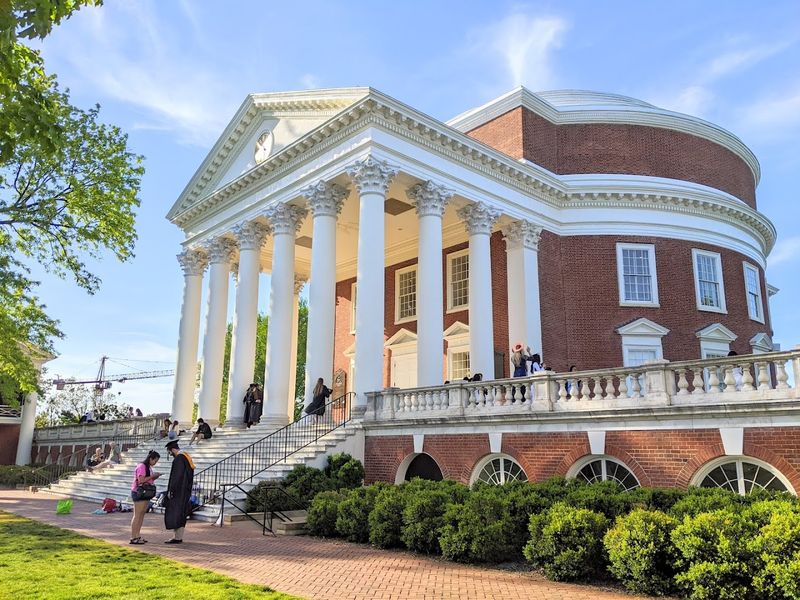
Restoring a building to a two-hundred-year-old blueprint is not for the faint of heart. The most recent major restoration of the Rotunda at the University of Virginia, completed in 2016, was a meticulous, multi-year effort that touched nearly every surface of the building, inside and out.
On the exterior, workers replaced portico roofs, repaired marble column capitals, and restored the stucco plaster to match Jefferson’s original specifications. Inside, craftspeople painstakingly recreated original finishes, ceiling details, and column capitals in the Dome Room.
Every decision was guided by historical documentation and a genuine reverence for the source material.
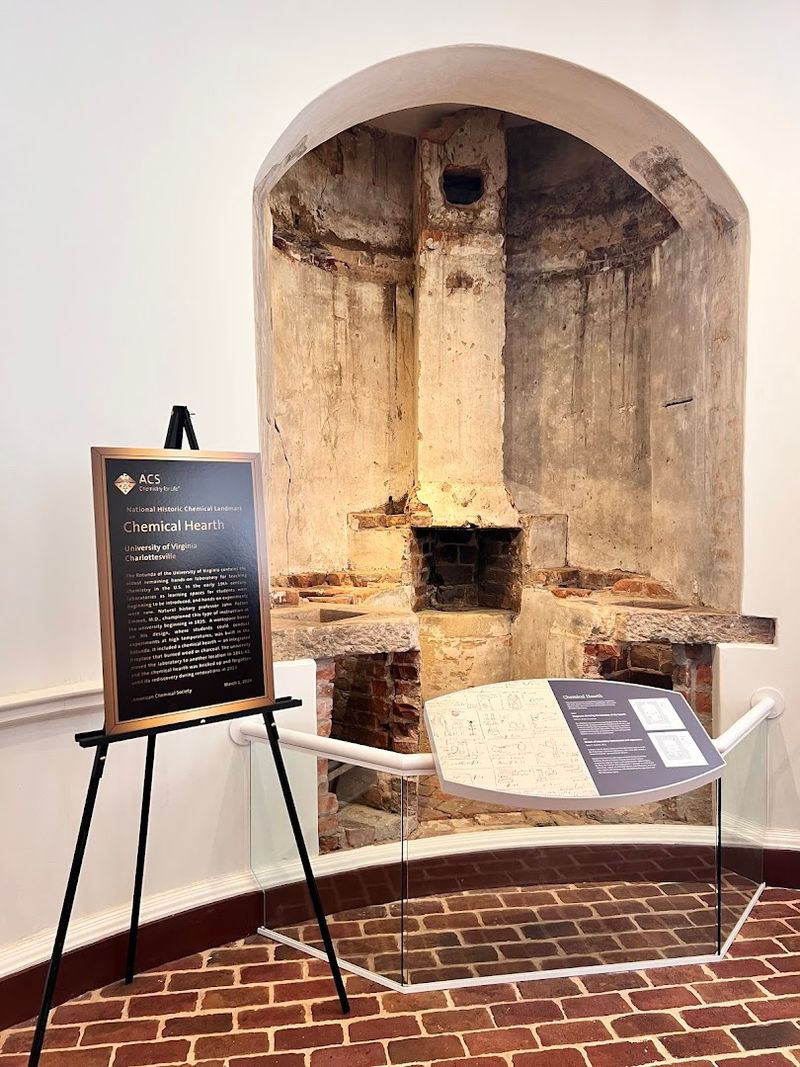
One of the most exciting surprises came from beneath the surface. During the restoration, workers discovered a nineteenth-century chemical hearth on the ground floor, a remnant of early chemistry education at the university.
Finding that kind of physical evidence of how students actually used the building centuries ago is the sort of detail that makes history feel suddenly very close. The 2016 restoration did not just fix a building.
It reconnected Virginia’s most famous campus to the mind of the man who imagined it.
The Lawn: A Living Classroom Stretching South
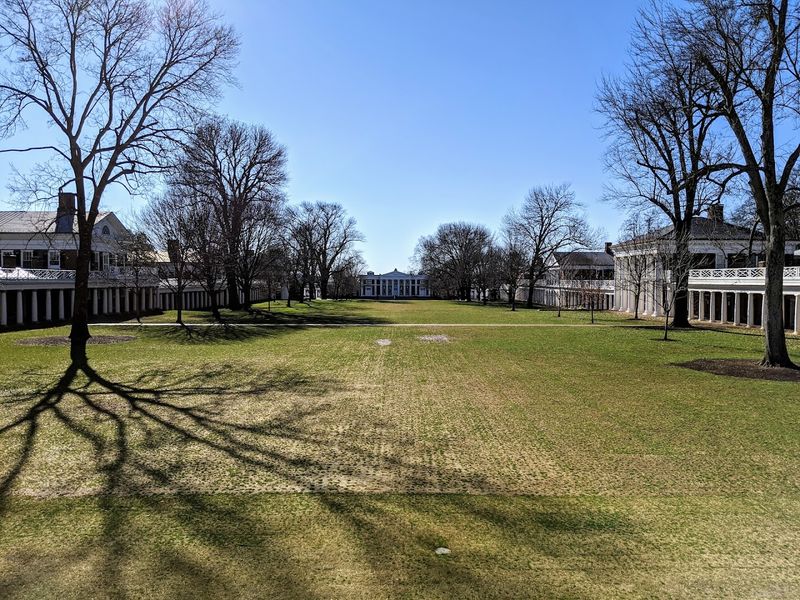
Stand on the steps of the Rotunda and look south. The view is one of the great architectural vistas in the United States.
The Lawn stretches out in a long, gently sloping rectangle, lined on both sides by a series of colonnaded pavilions connected by covered walkways. Each pavilion is slightly different, because Jefferson used them as architectural teaching tools, each one demonstrating a different classical order.
Student rooms open directly onto the Lawn, and living in one of them is considered a high honor at the university. Faculty members occupy the pavilions, creating an intentional mix of student and academic life that Jefferson specifically designed to encourage learning outside the classroom.
I spent a full hour just sitting on the grass, watching students cross the Lawn with backpacks and coffee cups, completely at ease in a space that is also a UNESCO World Heritage Site. That combination of grandeur and everyday life is something you rarely encounter.
Virginia has plenty of scenic campuses, but nothing else feels quite like standing in the middle of Jefferson’s original vision, still functioning exactly as he intended it to, nearly two centuries later.
UNESCO Status and Why It Actually Matters
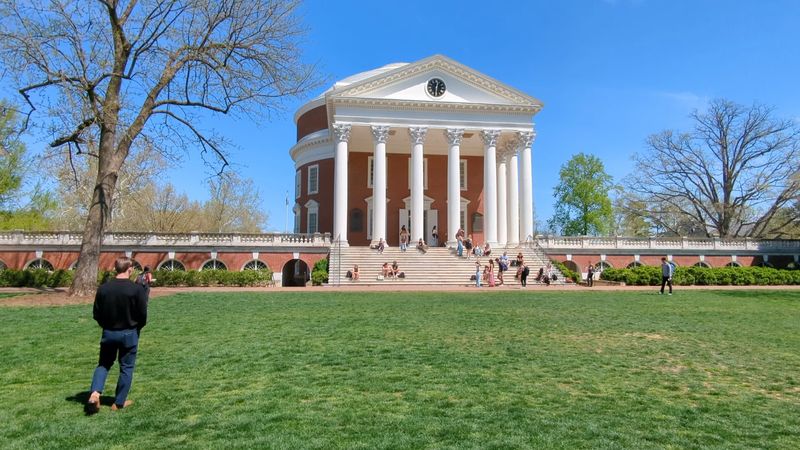
The Rotunda at the University of Virginia does not just belong to Virginia or even to the United States. UNESCO designated the original Academical Village, anchored by the Rotunda, as a World Heritage Site, placing it alongside the Taj Mahal, the Colosseum, and the Great Wall of China.
That is not a casual honor.
The designation recognizes the site’s outstanding universal value as an architectural and educational landmark. Jefferson’s concept of a community of scholars, housed in a purpose-built village centered on a library rather than a church, was genuinely revolutionary.
It influenced university design around the world and continues to shape how we think about the relationship between space and learning.
For the average person visiting Charlottesville, the UNESCO status adds a layer of context that transforms the experience. You are not just touring a pretty old building.
You are standing inside one of humanity’s recognized cultural treasures. I find that framing actually changes how carefully you look at things, how slowly you walk, how much you notice.
Virginia earned this recognition, and spending time at the Rotunda makes it abundantly clear why the world agreed.
The Ground Floor Museum You Should Not Skip
Most people rush straight upstairs toward the Dome Room and completely miss the ground floor. Do not make that mistake.
The basement level of the Rotunda at the University of Virginia houses a compact but genuinely rewarding museum that tells the full story of the building’s construction, destruction, and restoration.
Photographs of the 1895 fire are displayed alongside architectural drawings, historical documents, and artifacts recovered during various restoration projects. The recently discovered nineteenth-century chemical hearth is contextualized here, giving you a vivid sense of how early students and professors actually used the building day to day.
It is the kind of exhibit that makes the upstairs experience significantly richer.
I spent nearly thirty minutes down there before heading up, and I left with a much deeper appreciation for what I was about to see. The museum does not overwhelm you with information.
It is carefully curated, easy to navigate, and surprisingly engaging even for people who do not usually gravitate toward architectural history. If you are visiting with kids, this floor tends to spark a lot of great questions.
The story of a building that burned and came back better is one that resonates at any age.
Guided Tours and How to Make the Most of Your Visit
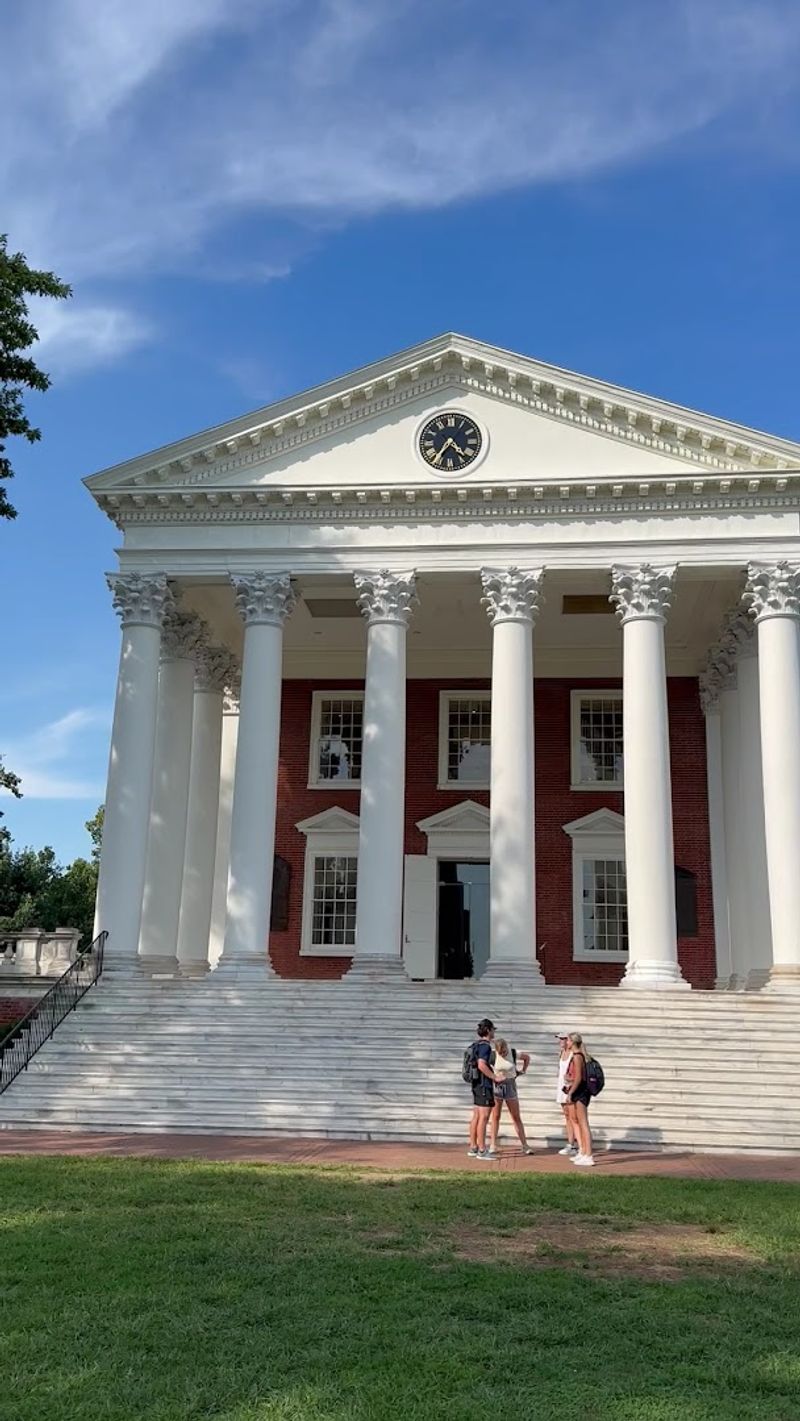
Showing up to the Rotunda without a guide is perfectly fine, but going with one is a completely different experience. The university offers guided tours led by students who know the building’s history in impressive detail and have a genuine enthusiasm for sharing it.
The tours are free and run regularly throughout the week.
A good guide will point out details you would never notice on your own, the subtle differences between the original Jefferson design and the Stanford White alterations, the way the dome is proportioned, the story behind the column capitals. My tour guide moved through the building with the easy confidence of someone who genuinely loves the place, and that energy is contagious.
The Rotunda is open daily and sits right on University Avenue in Charlottesville, making it straightforward to combine with a walk through the Lawn and a visit to the nearby gardens. Plan for at least two hours if you want to explore properly.
Virginia’s spring and fall seasons are ideal times to visit, when the campus is lush and the light on those white columns is almost impossibly beautiful. Come on a weekday morning for the quietest experience.
Planetarium Shows Inside a Historic Dome
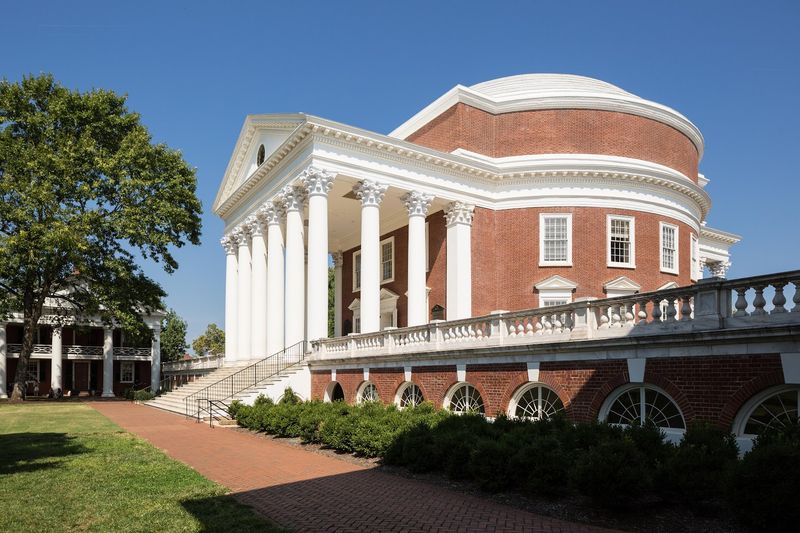
Here is something that genuinely surprised me. The Dome Room at the Rotunda at the University of Virginia occasionally transforms into a planetarium.
Periodic shows are held in the space, using projection technology to turn Jefferson’s elegant ceiling into a star map. It is one of the more unexpected and delightful things you can experience in this building.
The shows are not frequent, so checking the Rotunda’s official schedule before your visit is worth doing if you want to catch one. Tickets are required for planetarium events, and they tend to fill up quickly given how unique the setting is.
Sitting inside a two-hundred-year-old dome while constellations spin overhead is the kind of experience that feels almost surreal.
Jefferson himself was deeply interested in astronomy and natural science, so there is something fitting about using his greatest architectural achievement to explore the night sky. The combination of classical architecture and modern science feels less like a gimmick and more like a genuine tribute to his intellectual spirit.
Virginia has a lot of historic venues, but very few of them double as planetariums. This one earns serious points for creativity and sheer, unexpected magic.
Plan Your Visit to This Virginia Landmark
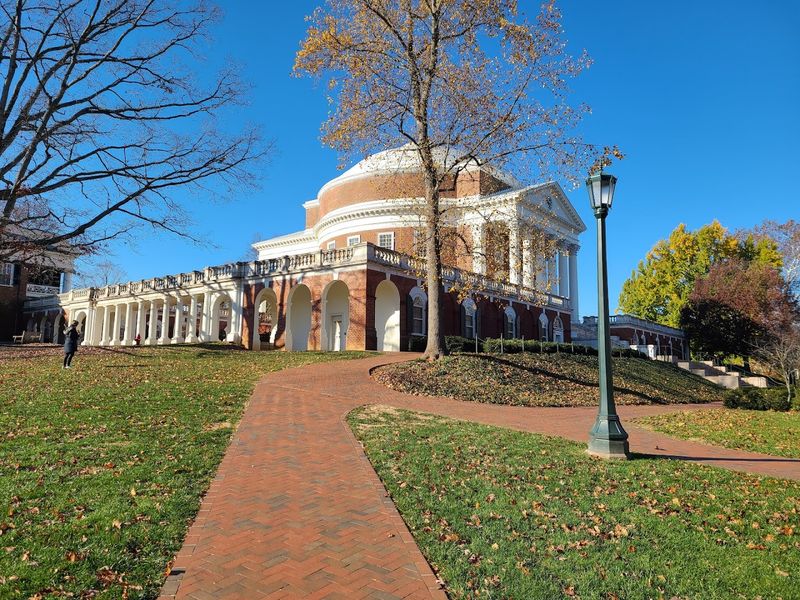
Getting to the Rotunda at the University of Virginia is straightforward, and the experience rewards a little planning. The address is 1826 University Ave, Charlottesville, VA 22904, which places it right at the heart of the UVA campus and within easy reach of downtown Charlottesville.
Parking is available nearby, and the building is also accessible on foot from several directions.
The Rotunda is open daily from 9 AM to 5 PM, making it a realistic stop for almost any travel itinerary. Admission is free, which is remarkable given that you are walking into a UNESCO World Heritage Site.
Combining the visit with a stroll through the Lawn, a look at the gardens behind the pavilions, and a trip to nearby Monticello makes for a full and deeply satisfying day in Virginia.
My honest advice is to arrive early, before the campus gets busy, and give yourself permission to wander slowly. The Rotunda rewards curiosity.
Look up, look down, read the plaques, take the stairs to the balcony. Every corner of this building has a story worth knowing.
Pack your curiosity, leave your rush at the door, and let Jefferson’s masterpiece do what it has been doing for nearly two centuries. It will not disappoint.
Dear Reader: This page may contain affiliate links which may earn a commission if you click through and make a purchase. Our independent journalism is not influenced by any advertiser or commercial initiative unless it is clearly marked as sponsored content. As travel products change, please be sure to reconfirm all details and stay up to date with current events to ensure a safe and successful trip.
