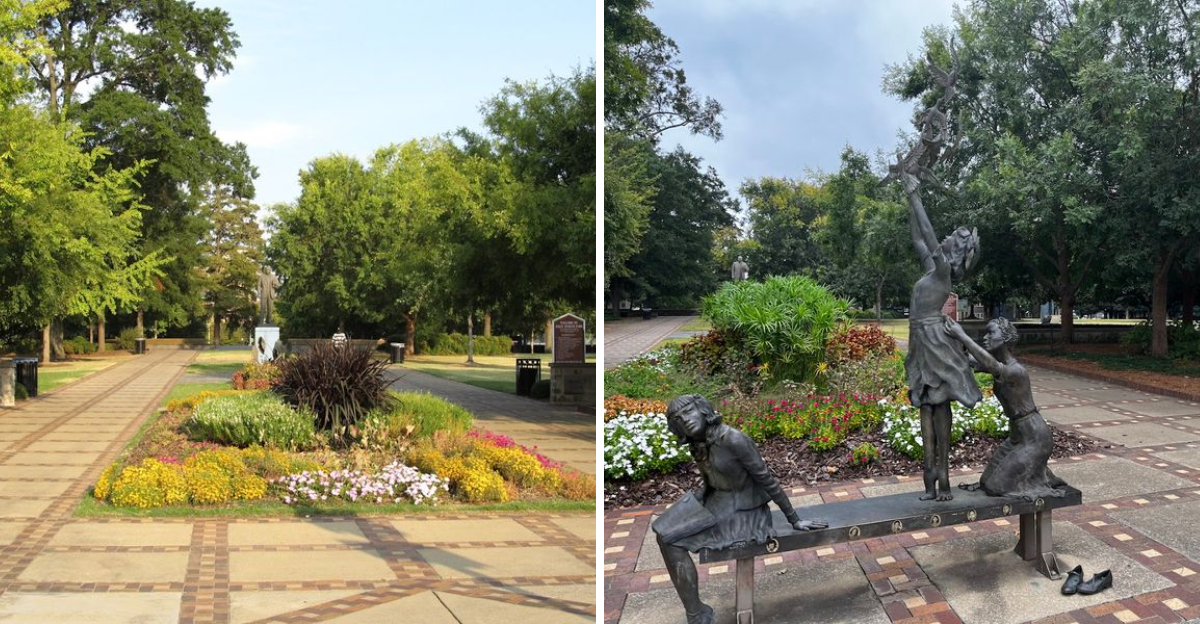
A park in Birmingham, Alabama is one of the most powerful outdoor spaces in the country. Located in the heart of the city’s Civil Rights District, this four-acre space serves as a living reminder of moments that helped shape American history.
Sculptures throughout the grounds capture scenes of protest and resilience, turning the area into an open-air reflection on the past. Visitors can follow a free self-guided audio tour that adds deeper context to what they are seeing, making each stop along the path more meaningful.
Today, it is both a place of remembrance and a quiet green space in the middle of a busy city. Whether you are drawn by history, art, or reflection, a visit here leaves a lasting impression.
Come Face to Face With James Drake’s Police Dog Sculptures
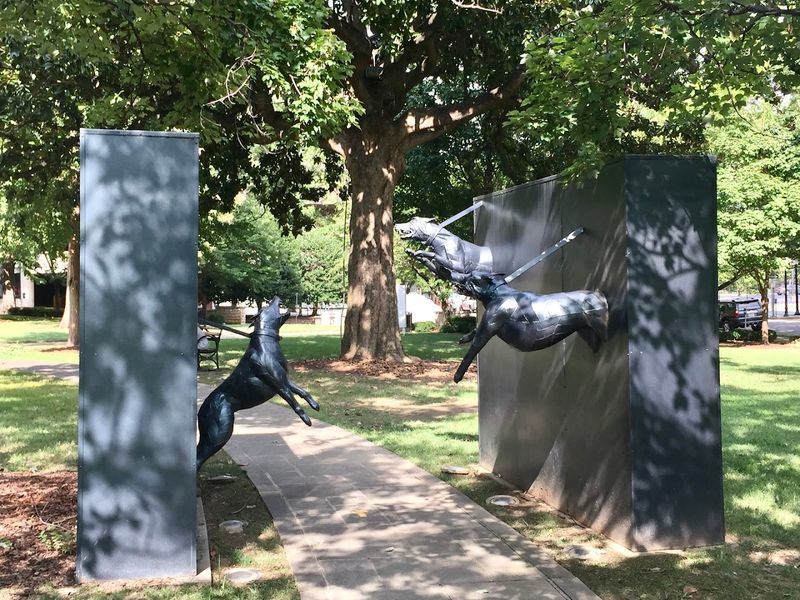
Few things stop you in your tracks the way James Drake’s sculptures do. These raw, emotionally intense bronze installations line the Freedom Walk and force you to confront one of the darkest chapters in American history without looking away.
Drake created a series of scenes depicting the brutal confrontations of 1963, when Public Safety Commissioner Eugene ‘Bull’ Connor ordered police dogs and firehoses turned on peaceful demonstrators, many of whom were children. The sculptures do not soften those moments.
They capture the terror with startling realism.
One of the most striking installations actually requires you to walk between snarling dog figures positioned on either side of the path. You feel surrounded, and that is entirely the point.
The artist designed the experience so visitors physically move through the fear rather than just observing it from a safe distance.
Standing in front of these pieces, it becomes impossible to treat the Civil Rights Movement as a distant historical event. The emotion hits immediately, and it stays with you long after you leave the park.
Drake’s work was installed as part of the 1992 renovation that rededicated Kelly Ingram Park as ‘A Place of Revolution and Reconciliation.’ That phrase is carved into the park itself, setting the tone before you even reach the first sculpture.
Bring a camera, but also bring patience. These pieces deserve more than a quick photo.
Plan Your Visit Around the Free Cell Phone Audio Tour
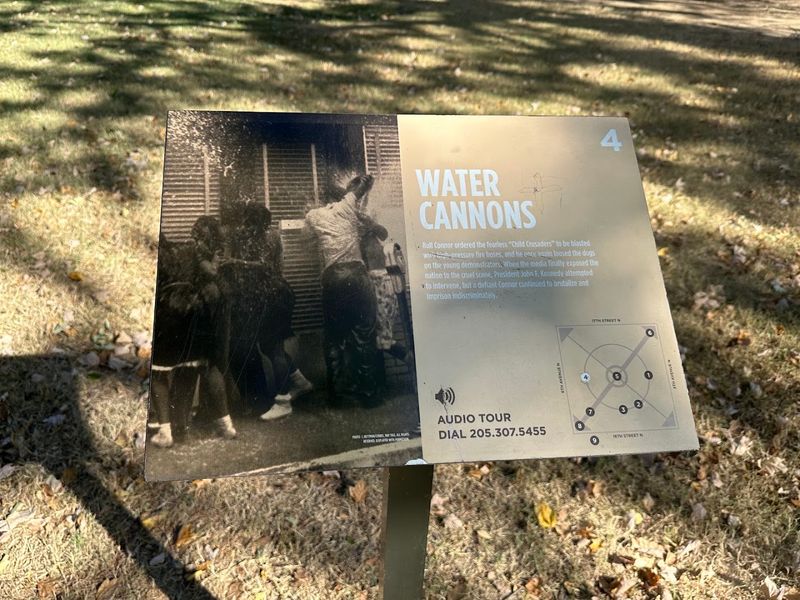
Most outdoor parks offer a plaque or a sign. Kelly Ingram Park offers something far more personal.
The free cell phone audio tour lets you hear the voices and stories of people who were directly involved in the 1963 protests, giving each sculpture a human story rather than just a historical label.
You access the tour by calling a number posted at each numbered stop along the Freedom Walk, or by scanning QR codes placed throughout the park. No app download is required, and there is no cost involved.
Just your phone and a willingness to listen.
The audio content is layered and specific. At each stop, you hear remembrances tied directly to what you are looking at, whether that is a sculpture of ministers kneeling in prayer or a scene depicting firehoses being turned on marchers.
The connection between the visual and the audio is immediate.
Visitors who use the tour consistently describe the experience as more powerful than those who simply walk through on their own. The extra context transforms a thoughtful visit into something genuinely unforgettable.
Set aside at least 90 minutes if you plan to use the full audio tour. Rushing through defeats the purpose.
The park is open daily from 8:00 AM to 8:00 PM, so there is plenty of time to move slowly and absorb everything.
Charge your phone before you arrive. You will want it working from the first stop to the last.
Walk the Free Freedom Walk Path Through Living History
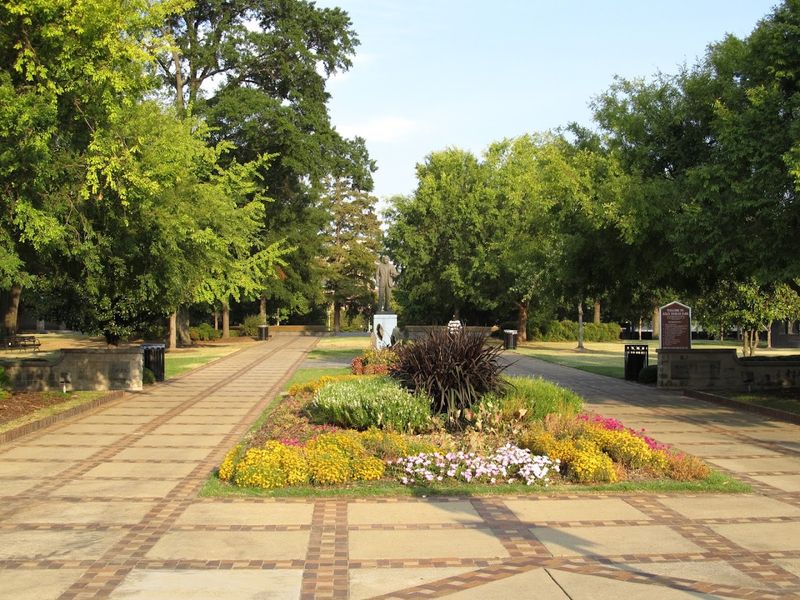
Not many places let you walk through decades of American history without spending a single dollar. The Freedom Walk at Kelly Ingram Park, located at 500 17th St N, Birmingham, AL 35203, is a circular paved path that guides visitors past every major sculpture and monument in the park.
You move at your own pace, stopping wherever something catches your attention. There is no rush, no ticket booth, and no tour group required.
The path is fully paved and wheelchair accessible, with crosswalk ramps that make it easy for everyone to enjoy.
Each stop along the Freedom Walk is numbered, which helps you follow along with the free cell phone audio tour. Just by calling a number or scanning a QR code, you can hear firsthand remembrances from people who were actually present during the 1963 confrontations.
That kind of direct connection to history is rare.
The path loops through shaded areas and open sections, giving you a full view of the surrounding Civil Rights District. You can see the 16th Street Baptist Church directly across the street as you walk.
That visual connection between the park and the church adds a layer of meaning that no museum exhibit can quite replicate.
Plan to spend at least an hour here if you want to absorb everything. Going slowly and listening to the audio tour makes the experience far more meaningful than simply passing through.
You Should See the Four Spirits Memorial Up Close
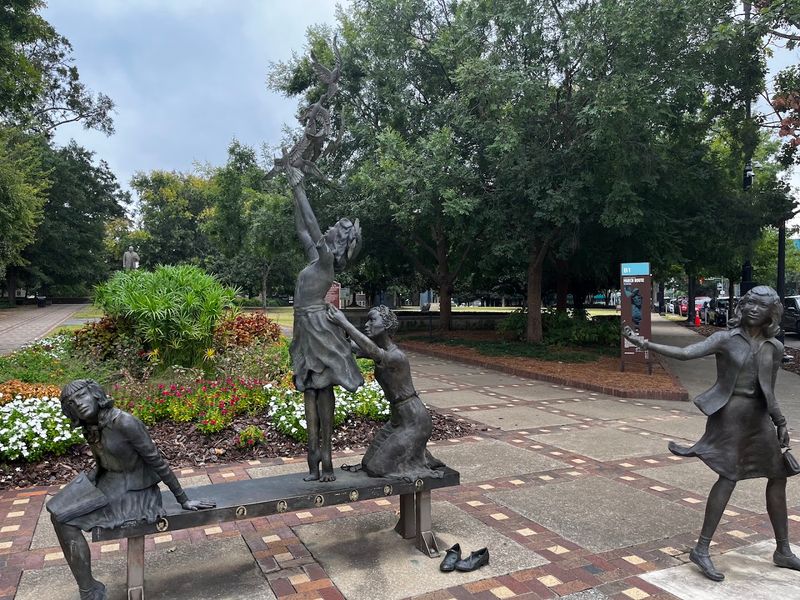
Unveiled in 2013 on the 50th anniversary of one of the most devastating events of the Civil Rights era, the Four Spirits sculpture stands as a quiet but deeply moving tribute. It honors the four young girls killed in the bombing of the 16th Street Baptist Church on September 15, 1963.
Addie Mae Collins, Cynthia Wesley, Carole Robertson, and Carol Denise McNair were between 11 and 14 years old when the bomb went off. The sculpture captures their youth and innocence in a way that makes the tragedy feel immediate rather than historical.
Spending time at this memorial feels different from the rest of the park. The energy shifts.
Visitors tend to grow quieter here, and many stay longer than they expected. It is one of those rare public artworks that genuinely demands stillness.
The memorial sits within easy walking distance of the church itself, which still stands across the street. Seeing both together gives you a fuller sense of what that day meant to Birmingham and to the entire country.
The sculpture was created to mark a half-century of remembrance, but it speaks just as clearly today. History classes often read about the bombing, but standing next to this memorial makes those words feel alive in a completely different way.
Do not skip this one. It is a small space, but the weight it carries is enormous.
Do Not Miss the Ministers Kneeling in Prayer Sculpture
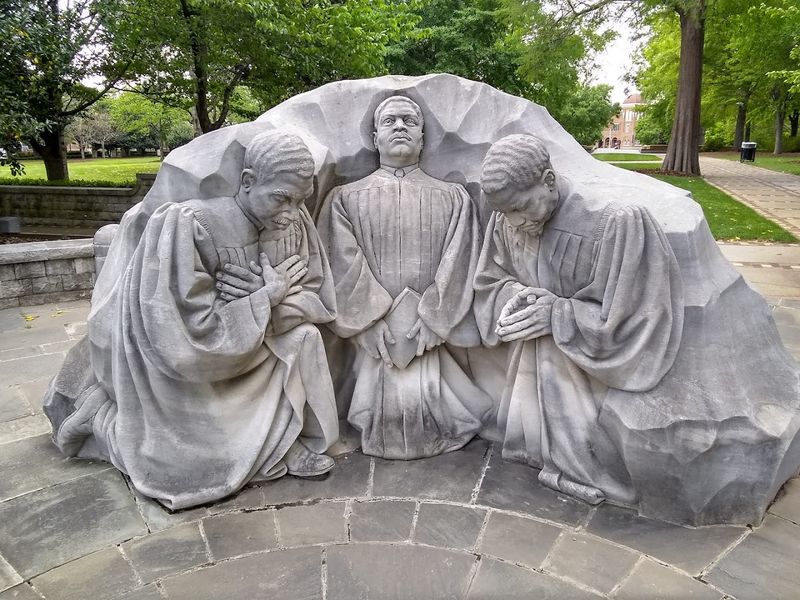
There is something quietly powerful about a sculpture that shows strength through stillness. Raymond Kaskey created this limestone piece in 1992, and it depicts three ministers kneeling in prayer during a Palm Sunday march in 1963.
The three figures represent real people: Reverend John Thomas Porter, Reverend Nelson H. Smith, and Reverend A.D. King.
These were not symbolic characters. They were actual leaders who risked their safety to stand for justice in Birmingham, Alabama, at a time when doing so came with serious consequences.
Kaskey’s choice of limestone gives the sculpture a different texture and weight compared to the bronze pieces nearby. It feels grounded and solemn, like something carved from the earth itself.
The kneeling posture communicates both vulnerability and resolve at the same time.
Visitors often spend extra time here, especially those who come with a faith background. But you do not need any religious connection to feel the gravity of what these three men represented.
Their act of public prayer in the middle of a march was a deliberate statement of courage.
The sculpture is positioned along the Freedom Walk, so you will encounter it naturally as you move through the park. Reading the names of the three ministers before you arrive adds useful context that deepens the experience once you are standing in front of the piece.
Take a moment to read the inscription. It adds meaning to every detail.
Skip No Statue on the Martin Luther King Jr. Memorial Path
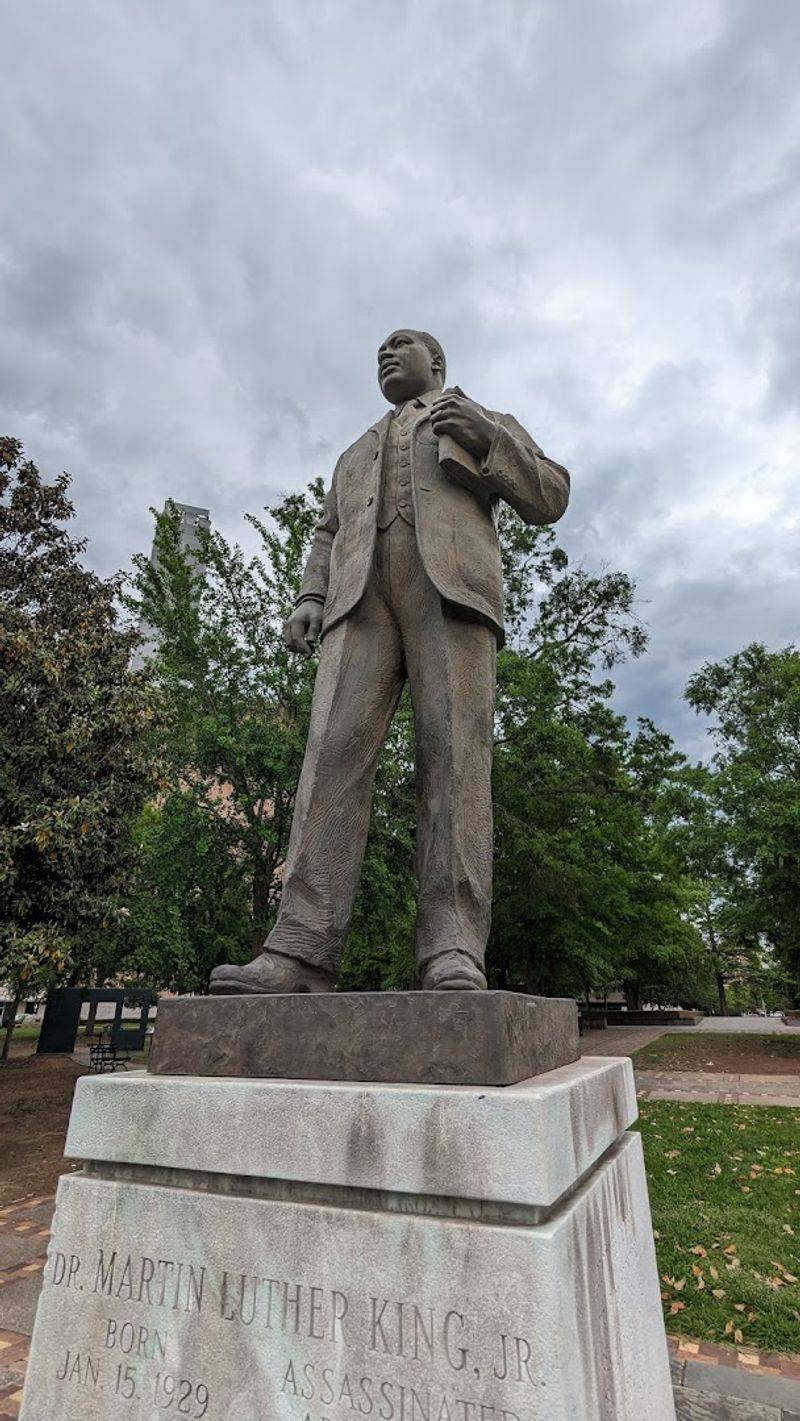
Kelly Ingram Park does not just honor movements. It honors the people who built them.
Among the most recognizable figures commemorated here is Dr. Martin Luther King Jr., whose statue stands as a reminder of both his national legacy and his deep personal connection to Birmingham.
Dr. King was arrested in Birmingham in 1963 and wrote his famous Letter from Birmingham Jail while held there. That context makes seeing his likeness in this specific park feel entirely different from encountering his image elsewhere.
This is one of the places where his courage was most directly tested.
Reverend Fred Shuttlesworth is also honored in the park. Shuttlesworth was a local leader who organized resistance in Birmingham for years before the larger national movement arrived.
Many historians argue that without Shuttlesworth, the 1963 campaign would never have happened at all.
The statues of these figures are positioned throughout the park alongside monuments honoring the everyday protesters known as foot soldiers. That choice is meaningful.
It places the famous and the unknown side by side, acknowledging that the movement was built by thousands of ordinary people, not just a handful of famous names.
Walking past each statue with the audio tour active adds biographical detail that transforms a visual experience into a full portrait of a movement. Every face in this park has a story attached to it.
Come ready to learn names you may not have heard before.
Make Time for the Nearby 16th Street Baptist Church
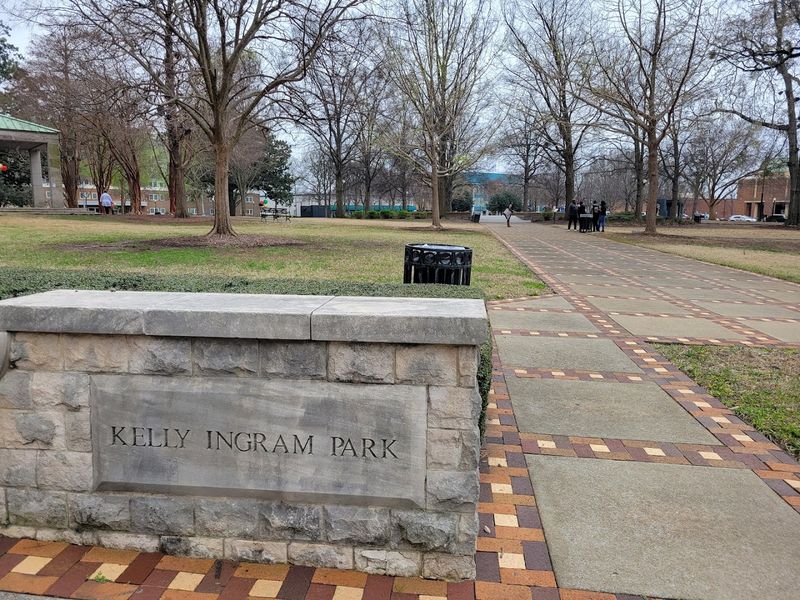
Standing at the edge of Kelly Ingram Park and looking directly across the street, you see the 16th Street Baptist Church. That view alone is one of the most historically significant sightlines in the United States.
The two landmarks are inseparable in both geography and meaning.
The church served as a meeting place and organizing hub for Civil Rights Movement leaders throughout the early 1960s. On September 15, 1963, a bomb planted by members of the Ku Klux Klan exploded during Sunday services, killing four young girls and injuring many others.
The attack shocked the world and accelerated momentum toward the Civil Rights Act of 1964.
Visiting the park without crossing the street to see the church is like reading only half a story. The two sites speak to each other in ways that no single exhibit can fully capture.
The park reflects on the demonstrations. The church reflects on the cost.
Tours of the church interior are available separately and are worth planning for. The stained glass windows inside, including one donated by the people of Wales, carry their own powerful history.
The Birmingham Civil Rights Institute sits just adjacent to the park as well, offering deeper historical context through extensive exhibits. Together, the park, the church, and the institute form one of the most complete civil rights education experiences anywhere in the country.
Wear comfortable shoes. You will want to walk the entire district at your own pace.
