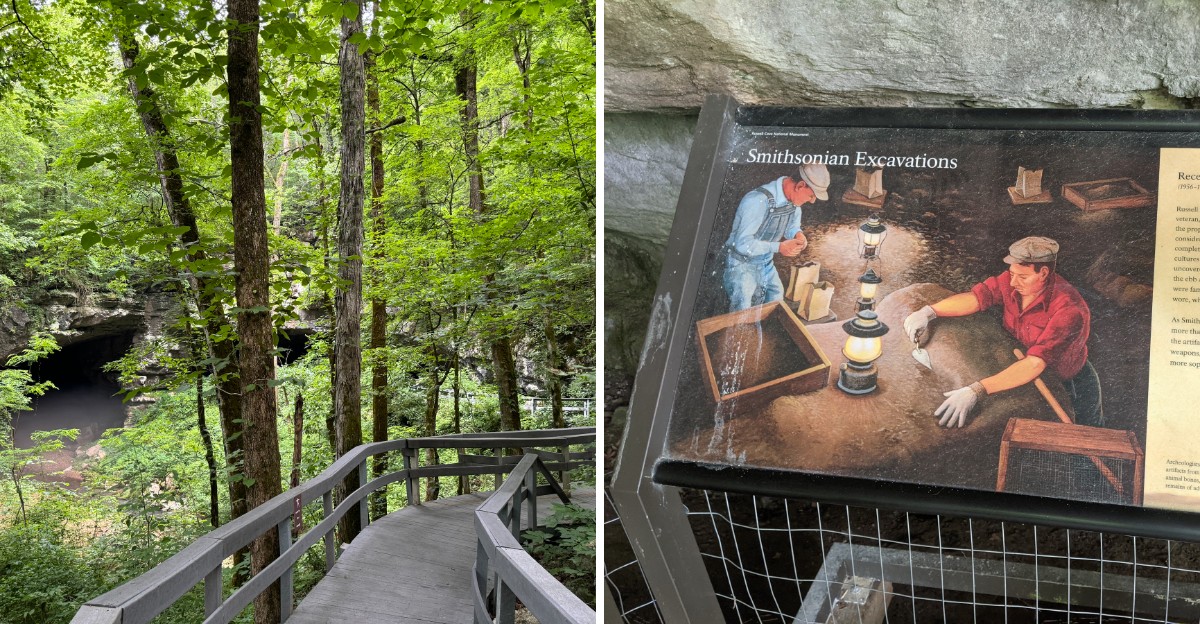
The stroller can make it. That is the surprising part.
So can a wheelchair. So can anyone who wants to stand inside a place where people were already making fires 12,000 years ago.
This Alabama trail is barely a fifth of a mile long, winding through hardwoods before reaching a massive limestone rock shelter with a small stream slipping from beneath it. The walk is easy.
The history is enormous. There is also a free museum.
Rangers are happy to talk. More than 130 bird species move through the surrounding woods.
So the visit can start as a simple walk and end with somebody trying to explain how on earth people lived here that long ago.
Accessibility That Actually Means Something Here
Plenty of parks advertise accessible trails and then hand visitors a gravel path with a curb at the end. Not the case here.
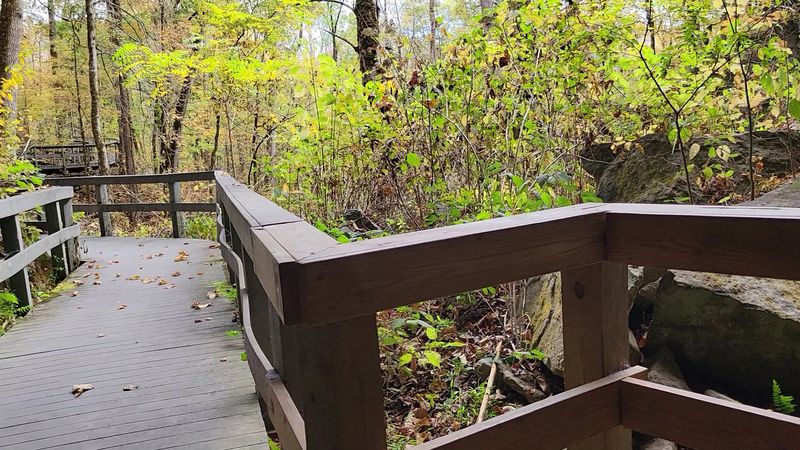
The Cave Boardwalk Trail was designed so wheelchairs and strollers roll the entire way to the cave viewing area without a struggle. The surface stays smooth and even, and the railings run continuously along both sides.
Only two mild grades exist, one just past the trailhead and another as the path rises toward the shelter. Neither requires much effort.
For families juggling a toddler and a grandparent on the same outing, that matters enormously. Everyone sees the same view, at the same time, without anyone waiting behind in the parking lot.
Restrooms near the visitor center are clean and updated, which removes one more worry from the trip.
Benches and a shaded picnic area sit close to the building, so resting before or after the walk is simple. Packing lunch is wise since no food is sold on site.
Leashed dogs are welcome on the trails too, and the park runs a BARK Ranger program for four-legged visitors. Bring water on warm days, for pets and people both.
An Easy Boardwalk That Ends 12,000 Years In The Past
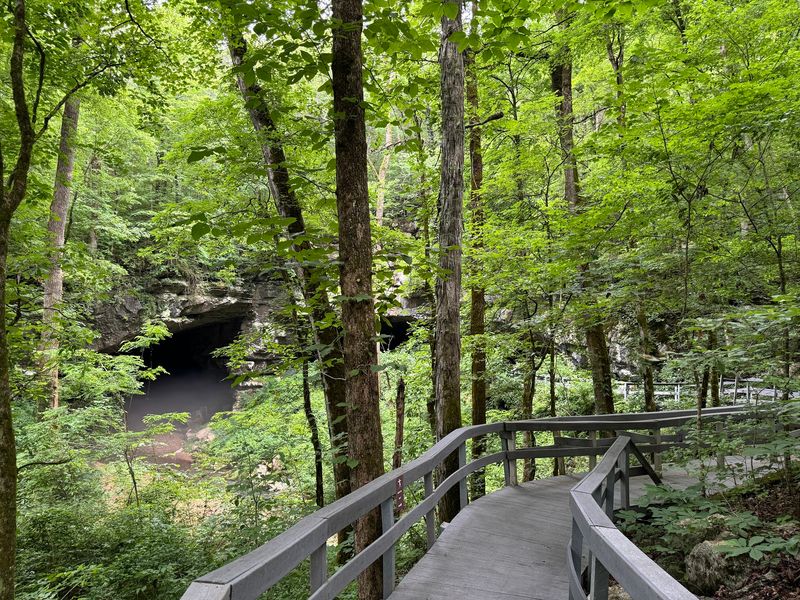
Six minutes. That is roughly how long the walk takes from the visitor center door to the mouth of one of the oldest known shelters in the eastern United States.
The boardwalk runs about 0.2 miles, somewhere near 385 steps, and it is built from recycled materials that hold up well in the damp Alabama air. Slight inclines appear at the start and again near the cave, but nothing that would leave anyone winded.
Hardwoods lean over the railing the whole way, so the path stays shaded even in July. Birdsong fills the gaps between footsteps.
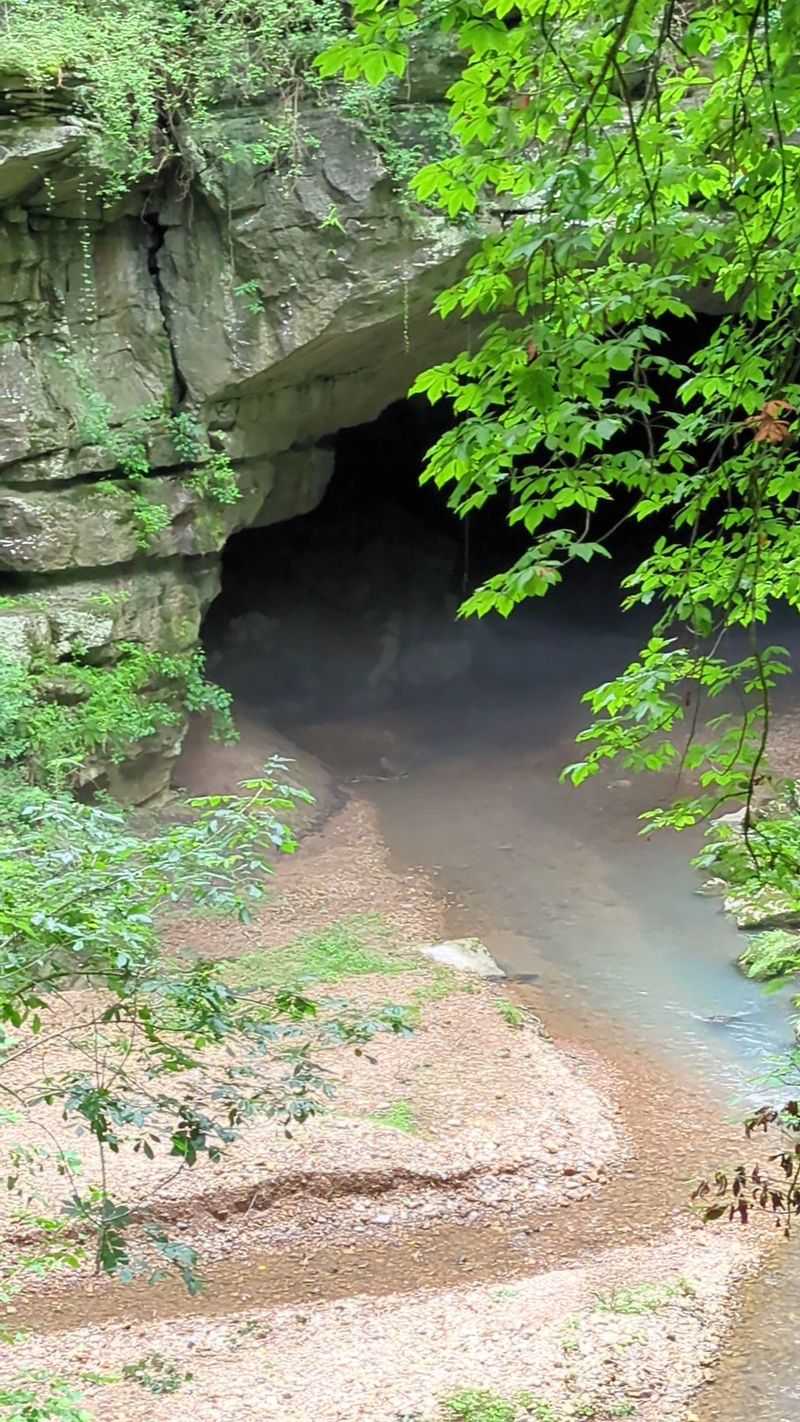
What makes the short distance so striking is the payoff waiting at the end. A wide limestone opening yawns out of the hillside, with a stream sliding from beneath it and running down into the valley below.
People lived here from roughly 6500 BCE all the way to 1650 CE, using the shelter mostly through the cold months. Standing at the viewing area, the scale of that timeline settles in quickly.
Interpretive signs are spaced along the boardwalk and clustered at the cave entrance, explaining who came here and why. Reading them slowly is half the experience.
Plan for about thirty minutes if reading everything, less if just soaking in the view. Either way, the walk delivers far more than its length suggests.
The Rock Shelter Itself, Carved By Water And A Lucky Collapse
Geology handed early people a gift here, though it took millions of years to wrap.
Water working slowly through limestone hollowed out the cave system long before anyone arrived. Then, somewhere between 9,000 and 11,000 years ago, a large section of rock collapsed.
That rockfall pushed a sizable stream off to one side and lifted part of the cave floor above the waterline. Suddenly there was dry ground under a solid stone roof.
Orientation helped too. The entrance faces east, which blocked the bitter north winds of winter while letting morning sun reach straight into the shelter.
A natural heater, essentially, with a built-in windbreak.
Beyond the shelter, the cave keeps going, and going. Surveyors have mapped 7.2 miles of passages, ranking it the third-longest mapped cave in Alabama.
Only researchers head past the viewing platform. Entry is restricted to protect fragile archaeological deposits and the bats that roost inside, including brown bats and northern long-eared bats.
That restriction disappoints some visitors at first, then makes sense once the reasoning sinks in. Preserving the record matters more than a few extra steps.
From the platform, the sheer size of the opening and the pale water pooling below still deliver plenty. Photographs rarely capture how large it feels in person.
Two Tons Of Artifacts And The Story They Tell
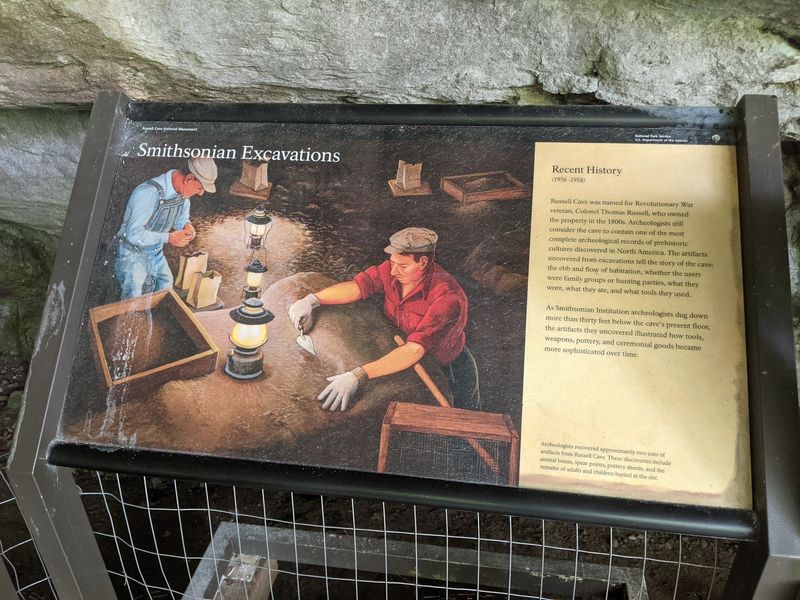
Digging here in the 1950s and 1960s, teams from the Smithsonian Institution and the National Geographic Society hauled out an estimated two tons of material.
Spear points. Stone tools.
Pottery fragments, animal bones, and charcoal from fires that burned thousands of years ago.
Layer by layer, those objects built one of the fullest archaeological records of prehistoric life anywhere in the Southeast. Paleo-Indian, Archaic, Woodland, and Mississippian peoples all left traces in the same soil.
The Gilbert Grosvenor Visitor Center, named for a longtime National Geographic editor and president, holds the museum where a selection of artifacts and reproductions is displayed. Admission costs nothing.
A short orientation film, running seven or eight minutes, sets up the human history before the walk begins. Watching it first makes the cave view land harder.
Exhibits explain how tools changed across thousands of years, from chipped stone to fired clay. Small shifts, enormous implications.
Rangers on duty know the collection well and enjoy fielding questions, including the odd ones children ask.
The monument came into being on May 11, 1961, after the National Geographic Society donated 310 acres to the public. Five years later it joined the National Register of Historic Places.
Spend twenty minutes inside before heading out. Context transforms the whole trail.
Rangers Who Throw Spears For A Living
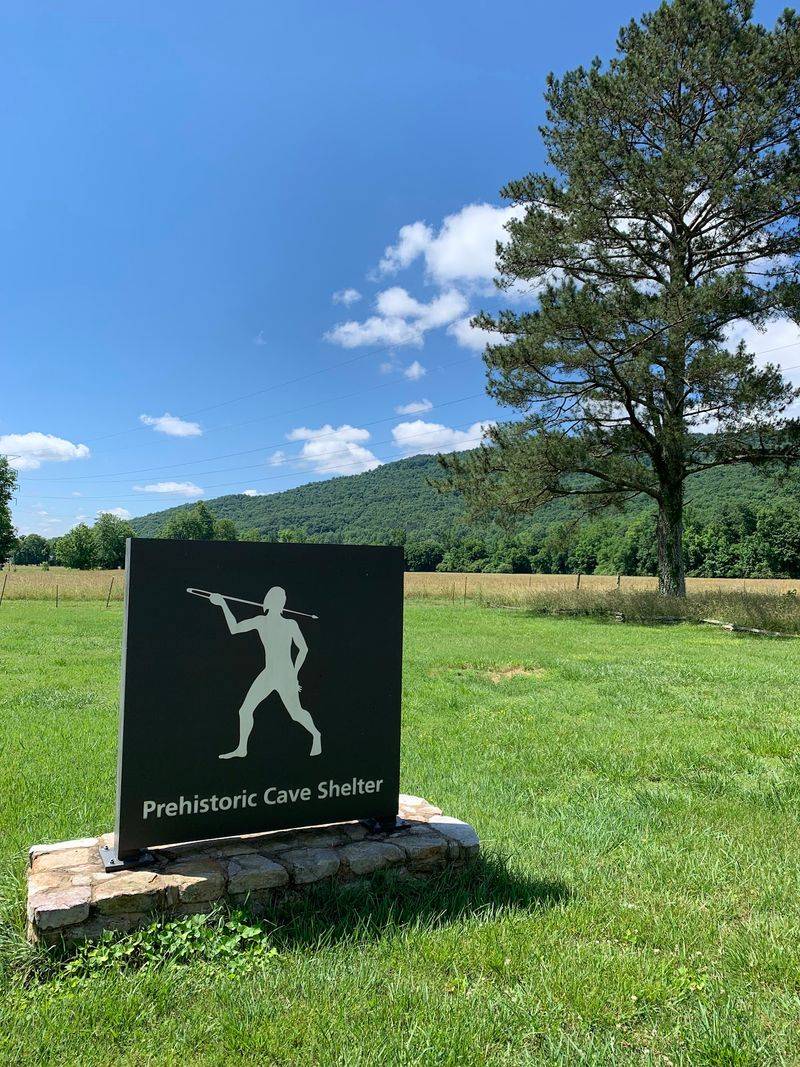
Watching an atlatl launch a spear across an open field is the kind of thing that sticks with a kid for years.
Rangers here sometimes demonstrate prehistoric tools and weapons, including the atlatl and the blowgun, often on summer weekends. The atlatl is basically a throwing stick that adds leverage to the arm, and it was the go-to hunting technology long before bows arrived.
Seeing one in action explains more in ten seconds than a paragraph ever could.
Guided walks to the cave shelter run at times too, with rangers pointing out details easy to miss alone. Their enthusiasm for the site is obvious and genuinely contagious.
Younger visitors can pick up a Junior Ranger booklet at the visitor center, work through the activities during the visit, and earn a badge. Booklets can also be mailed in afterward if time runs short.
Staff have a reputation for patience with curious children, which takes real pressure off parents.
Programs vary by season and staffing, so checking nps.gov/ruca or phoning ahead helps with planning. Weekends generally offer more.
The park operates daily from 8 AM to 4:30 PM, giving reasonable flexibility for a morning or early afternoon stop.
Downloading the NPS app beforehand unlocks an audio tour, useful when no ranger program is scheduled.
Birders Know This Place By Number
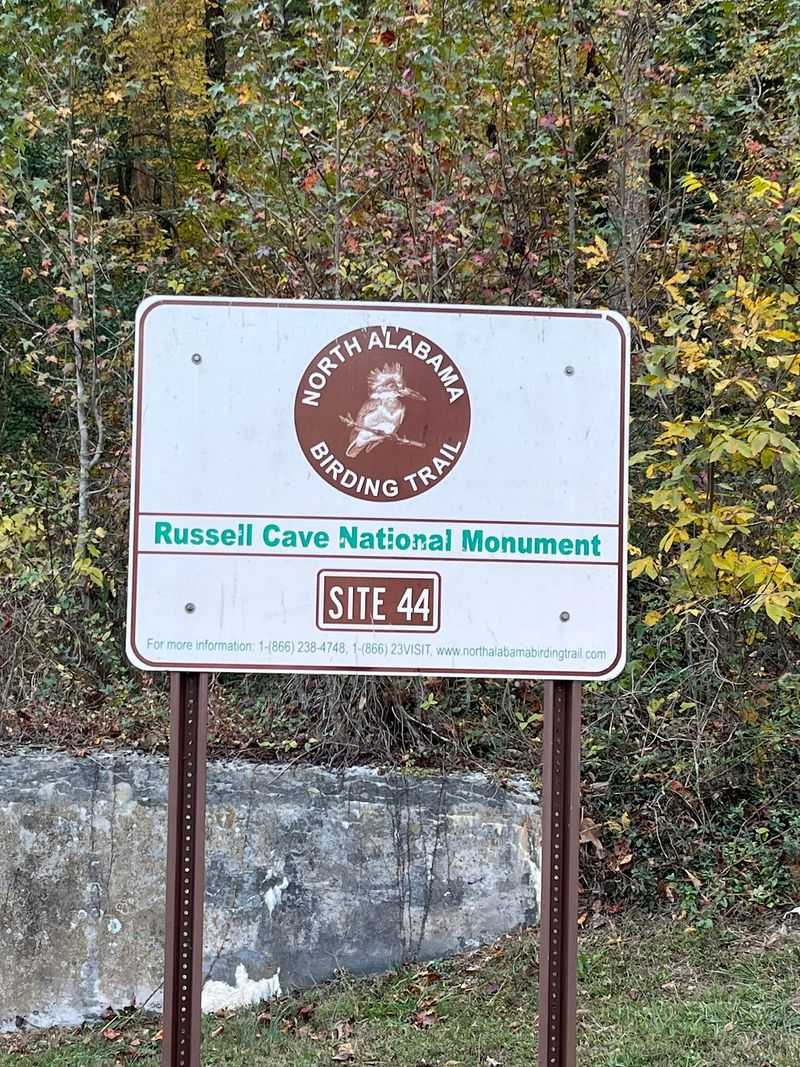
Site 44 on the North Alabama Birding Trail sounds bureaucratic until the binoculars come out.
More than 130 bird species have been recorded across the monument’s 310 acres. Scarlet tanagers flash red through the canopy, pileated woodpeckers hammer away on dead trunks, and red-tailed hawks ride thermals above the ridge.
Northern cardinals and American robins are practically permanent residents.
Mammals turn up regularly too. Deer, squirrels, chipmunks, raccoons, opossums, armadillos, and beavers all use the woodlands, meadows, and creek corridor.
Bobcats and coyotes live here as well, though sightings are rare and usually fleeting.
Those same resources drew people to the cave in the first place. Reliable water, deer, turkey, fish, and small game made winter survival possible in a way few other spots allowed.
Snakes share the habitat, including copperheads and timber rattlesnakes alongside harmless rat snakes and kingsnakes. Staying on the boardwalk and paved paths keeps encounters unlikely.
Rainy weekdays tend to be the quietest, and quiet is exactly when wildlife relaxes.
Near the visitor center grows a stand of longleaf pines, the Alabama state tree, worth a pause on the way back to the car.
Bring binoculars. The valley acoustics carry birdsong beautifully, and something is almost always calling from the trees.
Stretch The Visit With A Climb Up Montague Mountain
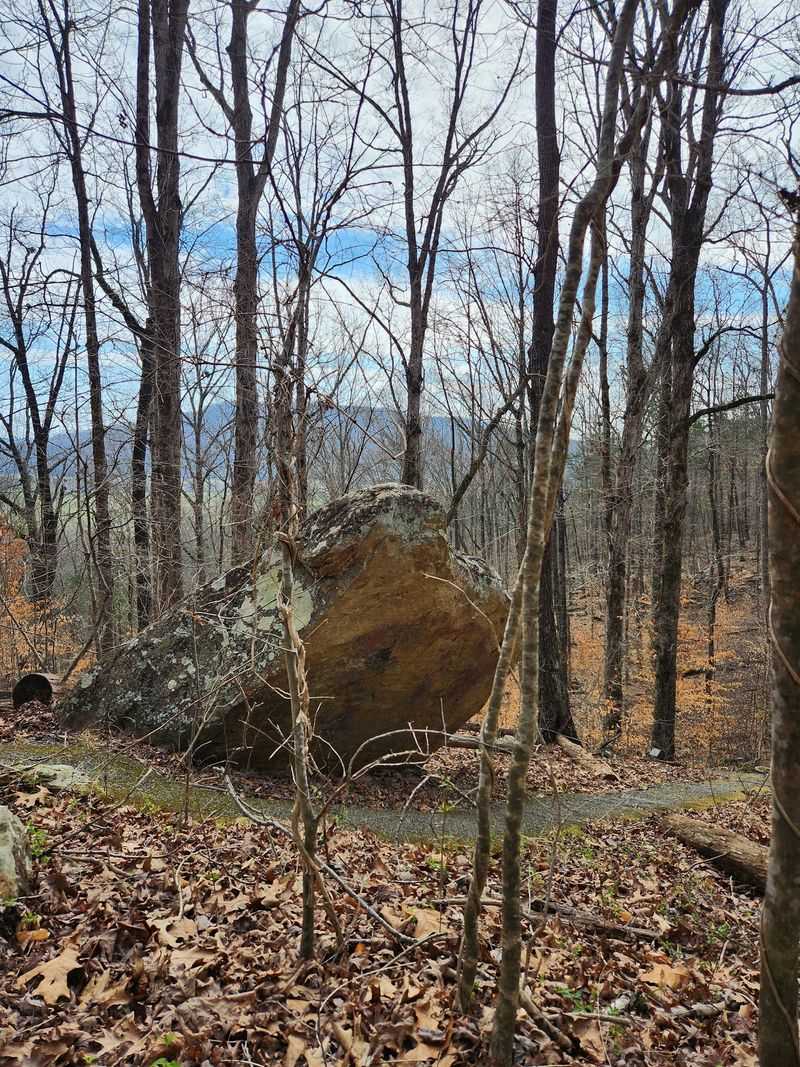
Anyone wanting more than a boardwalk stroll has two solid options waiting.
A 0.6-mile paved nature trail loops through nearby woods at a relaxed grade, with signs identifying plants along the way. Easy, shaded, pleasant.
The other choice is considerably steeper. A hiking trail of roughly 1.2 miles branches off and climbs Montague Mountain through a series of switchbacks, gaining elevation fast.
Poured concrete forms the surface, but fallen leaves cover it much of the year and can turn slick. Shoes with real tread are the smart call.
Budget forty-five minutes to an hour for the round trip, longer with rest stops. Summer humidity in this part of Alabama is no joke, so carry water.
Wildflowers line portions of the route in warmer months, black-eyed Susans and purple coneflowers among them. Spring and fall are the most comfortable seasons for the climb.
Tree canopy keeps most of the trail shaded, a genuine relief on hot afternoons.
Trail conditions change after storms, and sections occasionally close for clearing, so confirming access at the visitor center first is worthwhile.
Back at the bottom, shaded picnic tables make a fine landing spot for a packed lunch before the drive back toward Bridgeport or across the Tennessee line.
