Okay, hot take: some of the most jaw-dropping history in America is hiding in plain sight along quiet country roads in Virginia, and most people drive right past it. Deep in Lancaster County, stands a brick church so remarkably intact it feels like the colonial era never left.
Built under the patronage of one of Virginia’s most powerful men, this landmark has survived wars, neglect, and centuries of change without losing a single original detail. My visit left me genuinely speechless, and I have a feeling it will do the same to you.
A Colonial Patron Like No Other: Robert “King” Carter
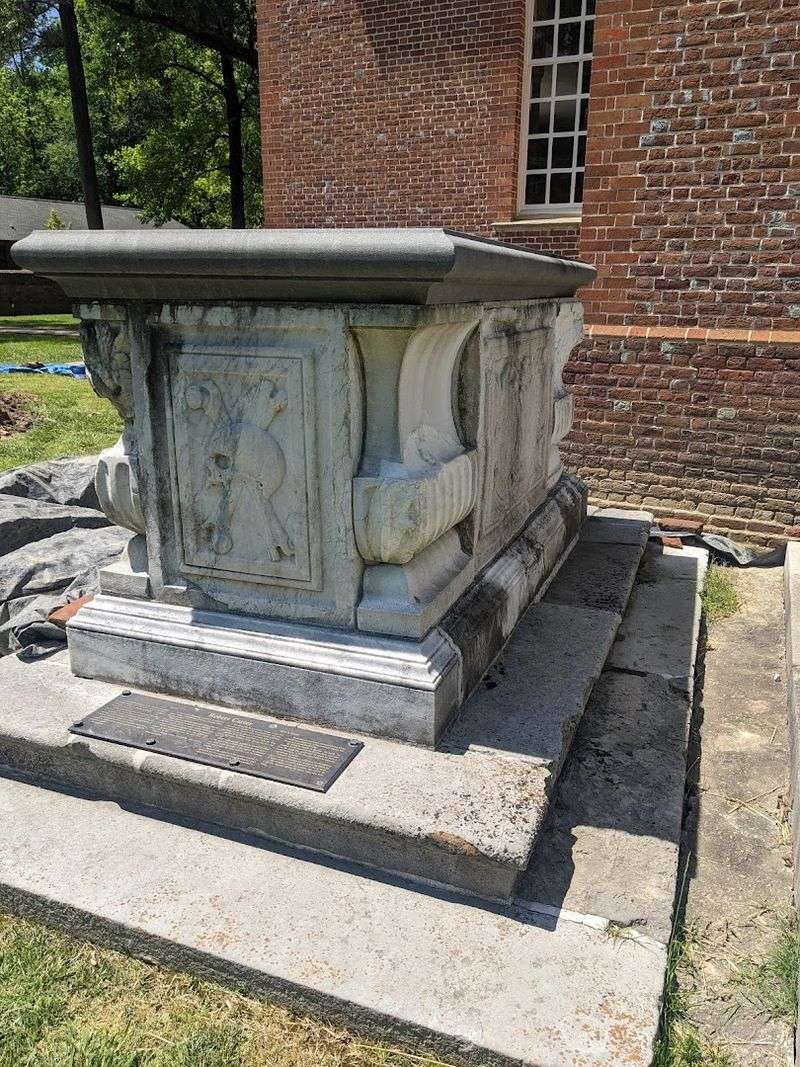
Robert “King” Carter was not a man who did things halfway. One of colonial Virginia’s wealthiest and most politically connected figures, he commissioned this extraordinary brick church as a personal statement of faith and power, funding its construction almost entirely out of his own considerable fortune.
Carter controlled vast tracts of land across Virginia and held enormous influence in both church and government. His decision to replace an earlier wooden structure with a permanent, architecturally ambitious brick building reflected exactly the kind of bold ambition that defined his character.
What makes his legacy at Historic Christ Church and Museum so fascinating is how completely it survives. His elaborate tomb, located inside the church, is a commanding centerpiece that visitors still gather around today.
The inscription on his tomb cover is written entirely in Latin, which was a deliberate choice that set him apart from ordinary colonists. His wives’ inscriptions, by contrast, are in English, a detail that sparks curiosity and debate among history lovers.
Standing beside that tomb, you genuinely feel the weight of colonial Virginia’s social hierarchy pressing down through the centuries.
Georgian Architecture That Stops You in Your Tracks
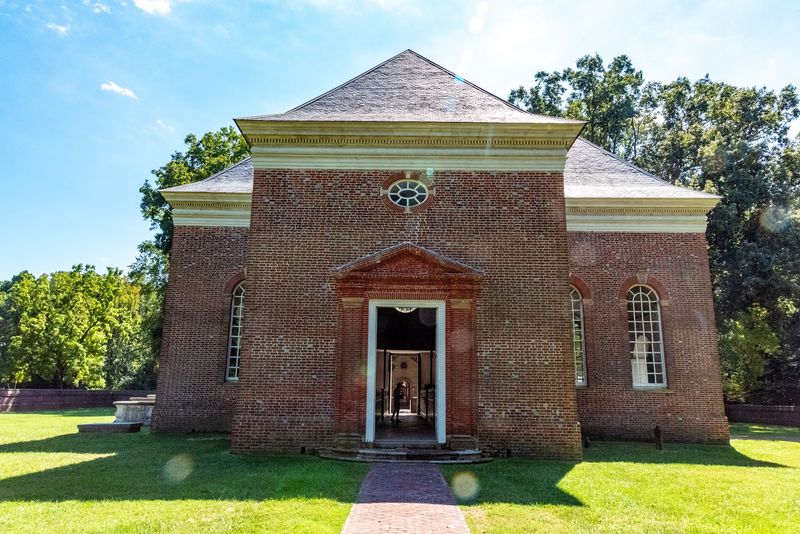
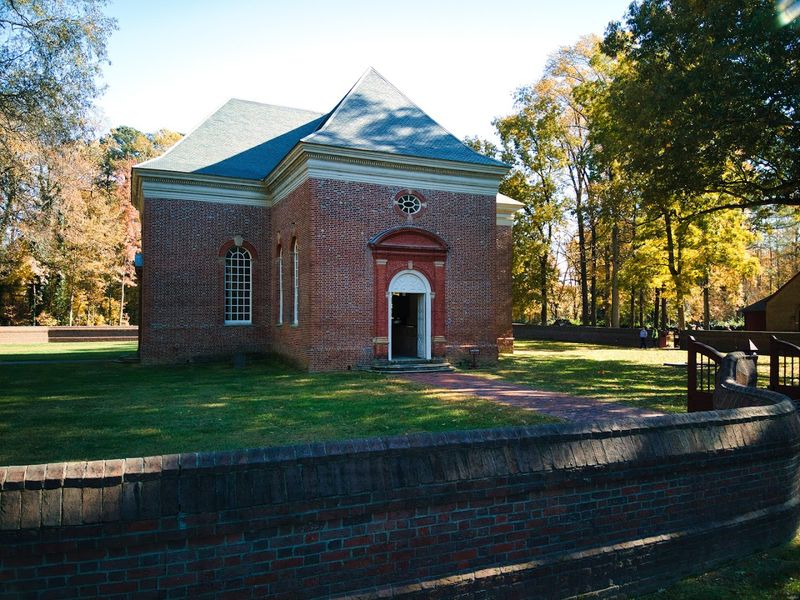
The moment you spot Historic Christ Church rising above the treeline, your brain does a double-take. The building’s symmetrical Georgian design is so perfectly executed that it looks like an architectural textbook illustration brought to life in Lancaster County, Virginia.
Thick, precisely laid brick walls rise to meet a full classical entablature, a rare and impressive detail that signals serious craftsmanship. The arched windows are evenly spaced, the proportions are immaculate, and the overall effect is one of quiet, confident authority.
Georgian architecture was the dominant style of the British colonial world, emphasizing balance, order, and restrained elegance. This church delivers all three in abundance, and the fact that it has remained structurally sound for nearly three centuries makes the achievement even more remarkable.
Walking around the exterior before stepping inside, I kept stopping to look at the brickwork up close. The craftsmanship is extraordinary by any era’s standards.
Virginia has no shortage of historic buildings, but few achieve the kind of cohesive architectural integrity that this church wears so effortlessly.
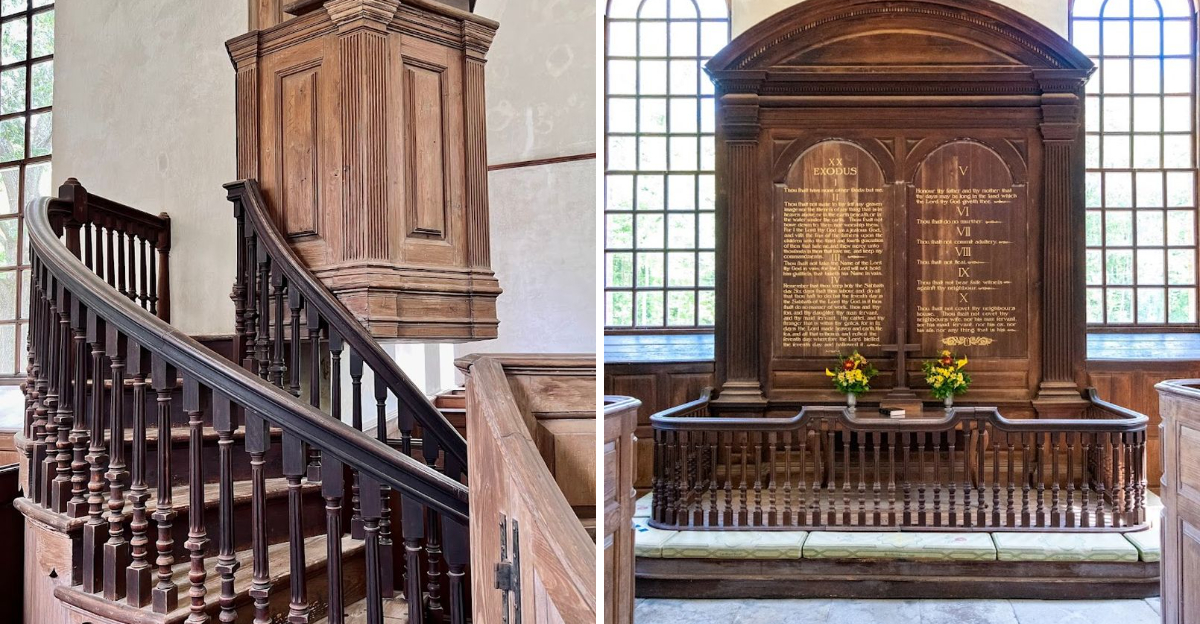
The Triple-Decker Pulpit That Survived the Centuries
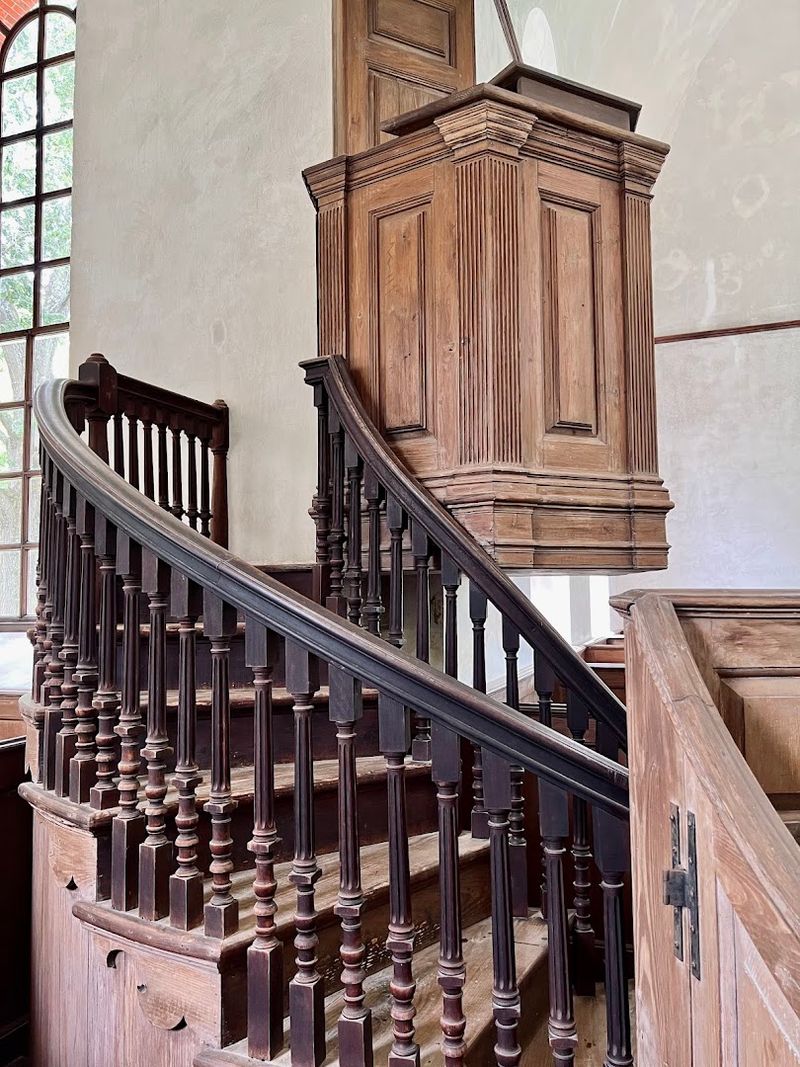
Here is a fact that genuinely blew my mind: Historic Christ Church and Museum contains one of only two surviving triple-decker pulpits from the entire colonial era in America. Two.
On the whole continent. And this one is still standing exactly where it was installed nearly three centuries ago.
A triple-decker pulpit is exactly what it sounds like: a towering, three-tiered wooden structure used during colonial Anglican services. The bottom level was for the clerk, the middle for readings, and the top for the sermon, placing the minister dramatically above the congregation.
The symbolism was intentional and powerful. Colonial church services were highly structured events where hierarchy mattered enormously, and the pulpit’s physical height reinforced the minister’s spiritual authority in a very literal way.
Seeing it in person is genuinely thrilling. The wood is original, the craftsmanship is extraordinary, and the sheer scale of it commands the room.
Most churches from this period lost their original furnishings through renovation, fire, or simple neglect. The fact that Virginia’s Northern Neck preserved this one feels like a small miracle.
High-Backed Box Pews and the Social Order of Colonial Worship

Forget everything you picture when you think of church pews. The original high-backed box pews at Historic Christ Church are a completely different animal, and they tell a surprisingly revealing story about colonial Virginia’s social structure.
Each box pew was essentially a private enclosure with tall wooden sides, almost like a small room within the church. Families purchased or were assigned specific pews based on their social standing, and the height of the walls provided both privacy and a visual marker of status.
Wealthier families sat in more prominent, larger pews. The arrangement made the congregation’s hierarchy visible to everyone in the room at a single glance.
It is a fascinating window into a world where faith and social rank were deeply intertwined.
The pews at Historic Christ Church and Museum are original, not reproductions, which is extraordinary. Running your hand along the worn wood, you feel a direct connection to the people who sat in these exact spots during colonial Virginia’s most formative decades.
It is the kind of tactile history that no textbook can replicate, and it makes the visit genuinely memorable.
Oyster-Shell Plaster Walls and Purbeck Stone Floors
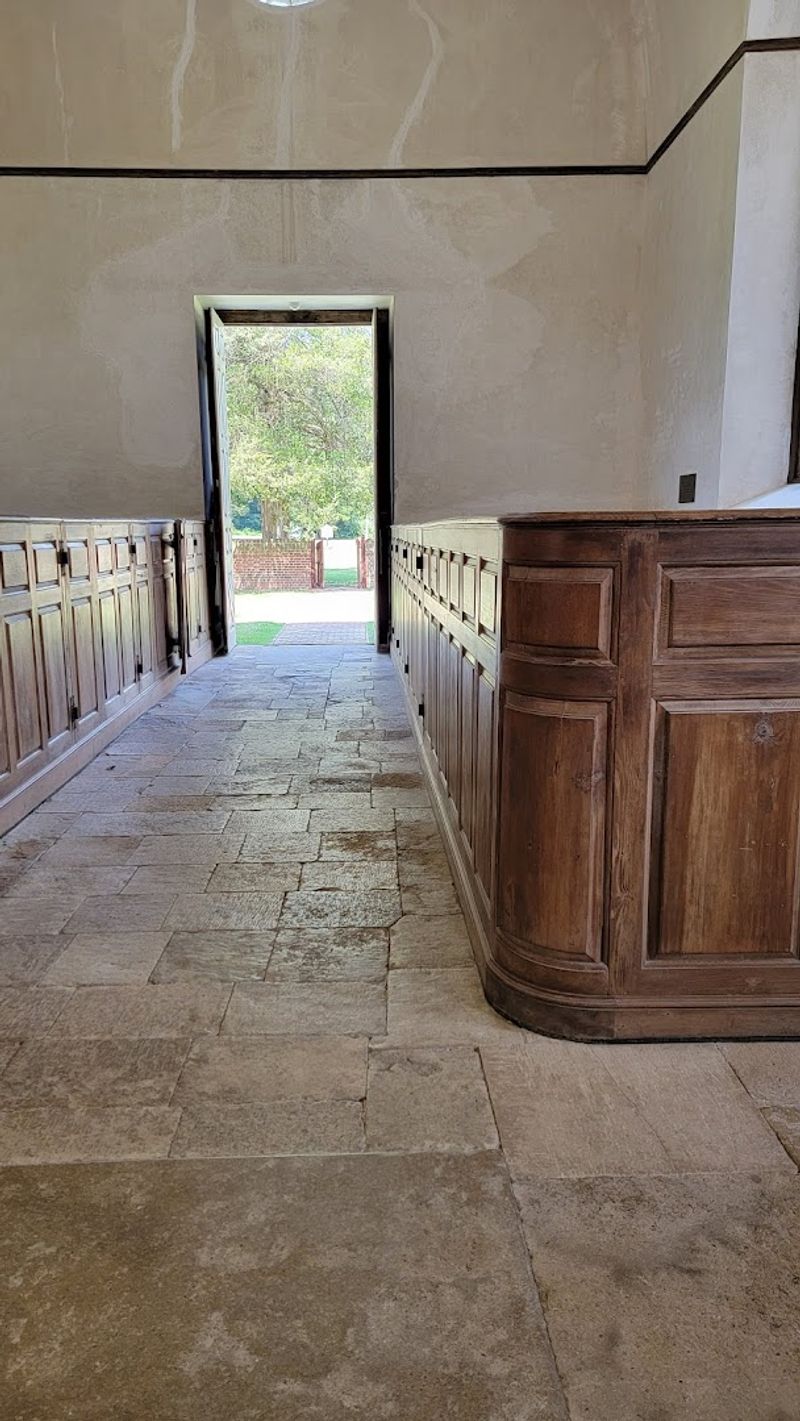
Not every historic building can boast original walls and floors that have been in place since the early 18th century, but Historic Christ Church and Museum pulls it off with remarkable style. The interior walls are finished with oyster-shell plaster, a colonial-era technique that used crushed oyster shells as a key ingredient in the lime-based mixture.
The result is a surface with a subtle, warm texture that catches light beautifully and has aged with incredible grace. Oyster shells were abundant along Virginia’s waterways, making them a practical and locally sourced building material for the region’s craftsmen.
Underfoot, original Purbeck stone pavers cover the floor, imported from England specifically for this project. Purbeck stone is a dense, polished limestone quarried in Dorset, and its presence here speaks to the ambition and resources Carter brought to this commission.
Together, the walls and floors create an interior atmosphere unlike anything else in Virginia. The combination of local ingenuity and imported prestige captures the colonial mindset perfectly: rooted in the New World but deeply connected to British tradition.
Every surface in this space has a story worth slowing down to appreciate.
The Walnut Altarpiece and Sacred Focal Point
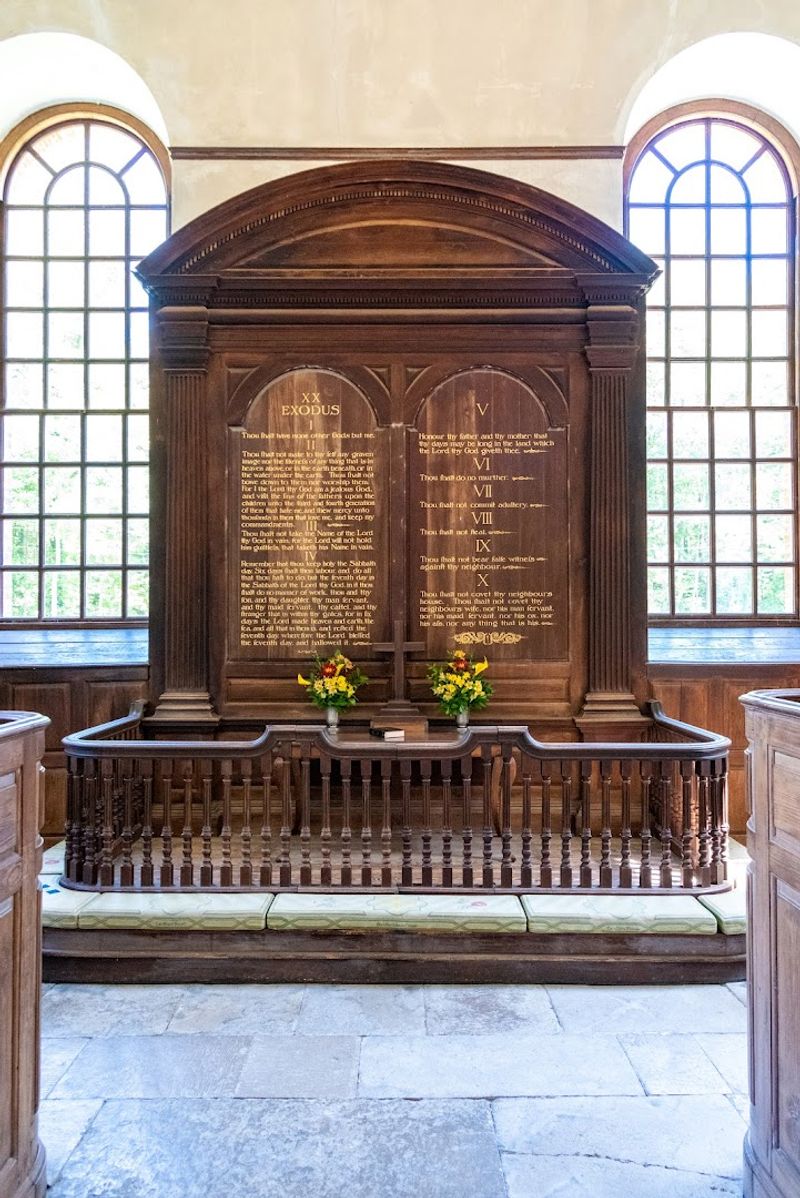
Every great church has a focal point that draws your eye and anchors the entire space. At Historic Christ Church, that role belongs to the original walnut altarpiece, a beautifully crafted wooden structure positioned at the east end of the church that has presided over services and ceremonies for nearly three centuries.
Walnut was a prized hardwood in colonial Virginia, valued for its rich color, fine grain, and durability. The choice of walnut for the altarpiece was both practical and symbolic, signaling the importance of this sacred space within the building’s overall design.
The altarpiece frames the Ten Commandments, the Lord’s Prayer, and the Apostles’ Creed, text panels that were standard in Anglican churches of the period. Seeing them displayed in their original setting gives the space a liturgical completeness that is rare in surviving colonial churches.
What strikes me most is how naturally it all fits together. The walnut tones warm the interior, balancing the cool white of the plaster walls and the grey of the stone floors.
Historic Christ Church and Museum achieves a visual harmony in its interior that feels effortless, even though every element was meticulously planned.
The Museum Experience: Artifacts, Videos, and Colonial Context
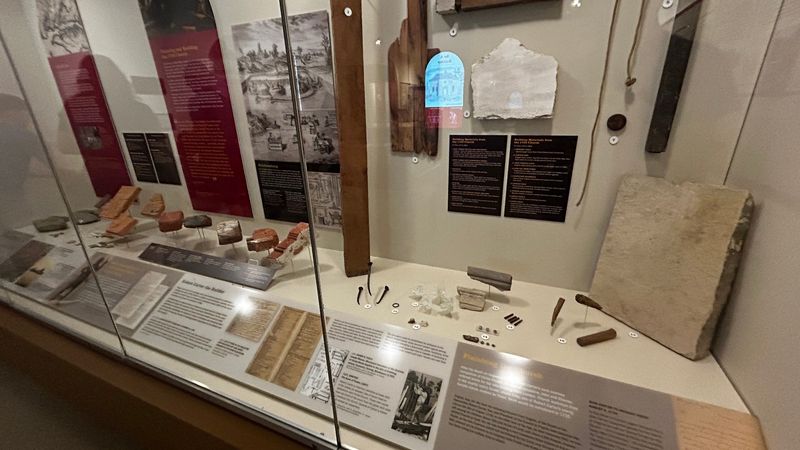
Before stepping into the church itself, my first stop was the museum, and I am genuinely glad I did not skip it. The experience sets the stage beautifully, giving visitors the historical context that makes every detail inside the church land with so much more meaning.
The museum features a well-produced introductory video that walks through the church’s history, the Carter family’s role in colonial Virginia, and the preservation efforts that brought the site back from decades of neglect. It is informative without being dry, which is a harder balance to strike than it sounds.
Display cases hold an impressive collection of artifacts recovered from archaeological digs on the property, including clay pipes, ceramic fragments, plates, and personal trinkets that belonged to people who worshipped here centuries ago. Each object is small, but the cumulative effect is powerful.
The museum team at Historic Christ Church and Museum clearly cares deeply about presenting this history accurately and engagingly. The exhibits are thoughtfully organized, well-labeled, and genuinely kid-friendly, making this a solid destination for families exploring Virginia’s remarkable colonial heritage.
Spend at least thirty minutes here before heading outside.
The Historic Cemetery and the Row of Goodly Cedars
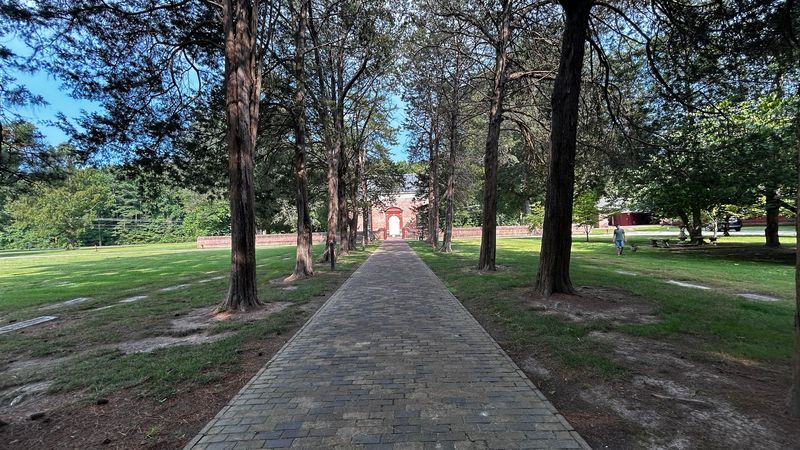
Step outside the church walls and the grounds themselves become part of the story. The historic cemetery surrounding Historic Christ Church is one of the most atmospheric spots in Lancaster County, a quiet, beautifully maintained space where centuries of Virginia history rest beneath weathered stone markers.
One of the most visually striking features is the Row of Goodly Cedars, a dramatic line of ancient cedar trees that frames the approach to the church. These towering trees create a natural cathedral effect, their branches arching overhead to form a living canopy that has welcomed arrivals here for generations.
The cemetery holds the graves of prominent colonial families, including members of the Carter family whose influence shaped so much of early Virginia. Walking among the headstones, reading the names and dates, feels genuinely moving.
Some markers are worn nearly smooth by centuries of weather, their inscriptions fading into the stone.
Even on a casual visit when the museum itself is closed, the grounds remain open and worth exploring. The combination of ancient trees, historic graves, and the imposing brick church creates a setting that is quietly spectacular.
Virginia does not have many places quite like this.
Preservation, Restoration, and the Foundation That Saved It All
Great historic buildings do not preserve themselves, and the story of how Historic Christ Church and Museum survived to reach the present day is almost as compelling as the building’s original history. After the Anglican Church was disestablished in Virginia following the Revolution, the church lost its institutional support and fell into a long period of neglect.
By the mid-20th century, the building was at serious risk. The Foundation for Historic Christ Church was established in 1958 specifically to reverse that decline, launching restoration efforts that carefully returned the structure to its original condition without compromising its authenticity.
The work done by the Foundation is a model for historic preservation. Rather than modernizing or adapting the space, the restorers committed to maintaining the church’s 18th-century character in every detail.
No electric lights were added. No climate control was installed.
The space remains true to its origins in a way that is increasingly rare.
Today, the Foundation continues to steward the property, fund ongoing research, and host educational programs that keep the history alive for new generations. Virginia is richer for their dedication, and Historic Christ Church and Museum stands as proof that committed preservation really does make a difference.
Planning Your Visit to 420 Christ Church Road, Weems, Virginia
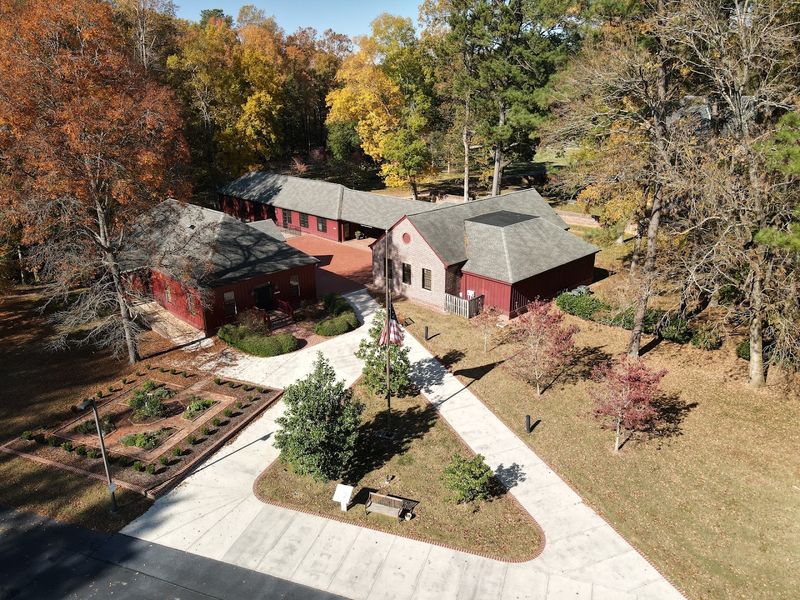
Getting to Historic Christ Church and Museum is part of the adventure. The drive through Lancaster County’s Northern Neck is genuinely lovely, winding past farmland, creeks, and the kind of quiet Virginia countryside that feels like it belongs to a different century entirely.
The site is located at 420 Christ Church Road in Weems, Virginia, and the Foundation for Historic Christ Church can be reached at (804) 438-6855. Calling ahead is a smart move, especially during the off-season, when tours can be arranged with advance notice.
My strong recommendation is to start in the museum, watch the introductory video, and take your time with the artifact displays before heading into the church. The guided tour that follows is genuinely excellent, covering architectural details, family history, and the fascinating stories embedded in every corner of the building.
The grounds are beautiful in every season, and the cemetery is open even when the museum is not. Special events, including historic lectures and community gatherings, take place throughout the year, so checking the Foundation’s website at christchurch1735.org before your visit is always a good idea.
Virginia history does not get more vivid than this.
Dear Reader: This page may contain affiliate links which may earn a commission if you click through and make a purchase. Our independent journalism is not influenced by any advertiser or commercial initiative unless it is clearly marked as sponsored content. As travel products change, please be sure to reconfirm all details and stay up to date with current events to ensure a safe and successful trip.
