Nestled in Montgomery, Alabama, a historic religious campus is more than just a church. It is a living monument to faith, courage, and the long fight for equality.
Founded in the early 20th century, this 36-acre site became a beacon of hope for the African American community during a time when opportunity and dignity were often hard to find.
Its grounds include striking Romanesque-style architecture, peaceful green spaces, and buildings that have played meaningful roles in the Civil Rights Movement.
Today, it stands not only as a place of worship but also as an important cultural and historical landmark that continues to educate and inspire visitors.
From its powerful legacy to its serene atmosphere, there are many compelling reasons to make this destination part of a deeper, more meaningful journey through American history.
You Can Walk the Same Ground as 25,000 Marchers
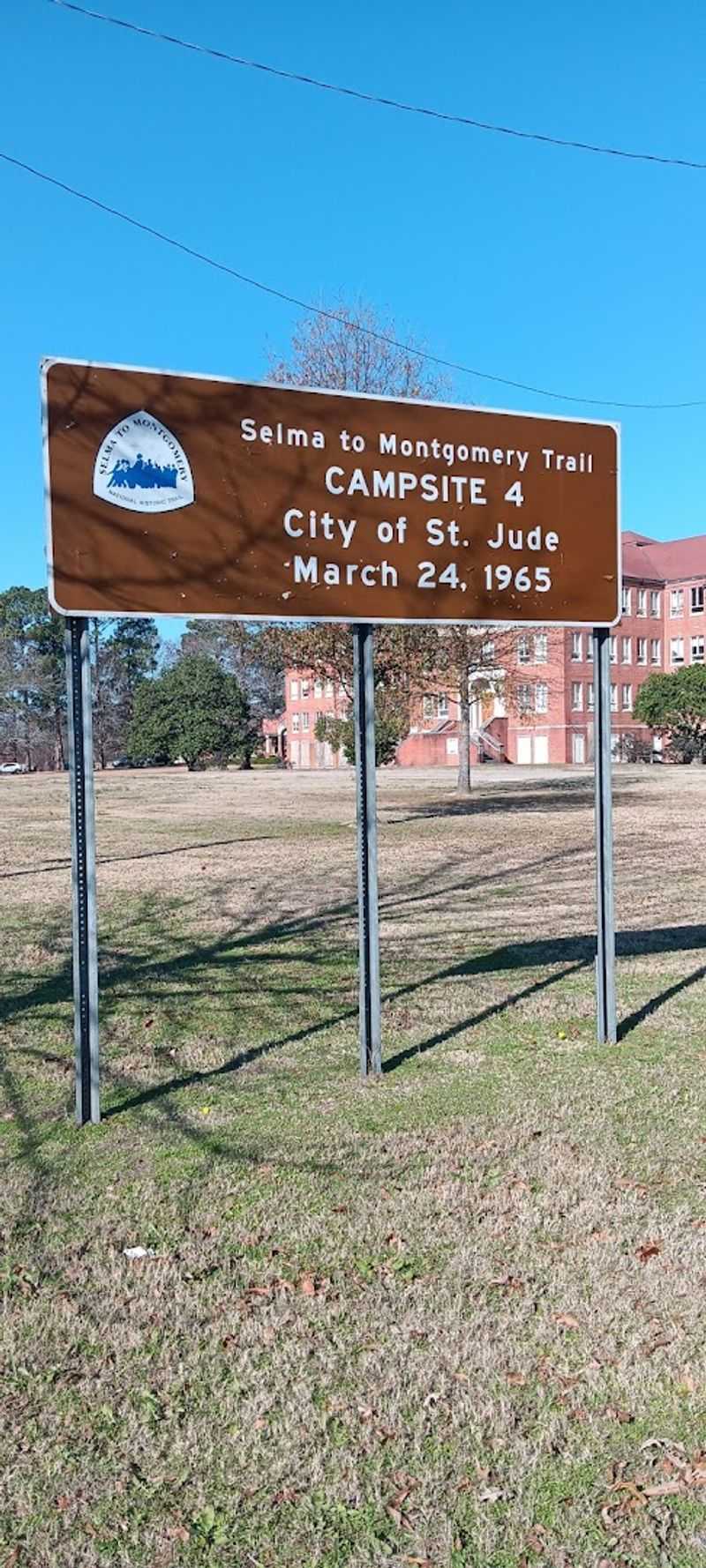
Few places in America carry the weight of history the way this campus does. On March 24, 1965, more than 25,000 people rested on these very grounds after a grueling march from Selma.
They were exhausted, determined, and on the edge of something that would change the nation forever.
The City of St. Jude, located at 2048 W Fairview Ave, Montgomery, AL 36108, served as the fourth and final campsite for the Selma to Montgomery marchers. No other institution in Montgomery was willing to open its doors and grounds to the protesters.
That act of courage alone made this place legendary.
Walking the campus today, you can almost feel the energy of that night. The grounds are quiet now, but the significance never fades.
Knowing that Dr. Martin Luther King Jr. stood here, that thousands of ordinary people stood here and chose bravery over comfort, gives every step a deeper meaning. It is the kind of place that reminds you what people are capable of when they believe in something bigger than themselves.
Plan enough time to absorb it slowly.
Come See the Stars for Freedom Rally Stage History
Imagine standing outside on a cool March night in 1965, surrounded by thousands of marchers, and suddenly hearing Mahalia Jackson sing. That is exactly what happened on this campus the night before the final walk to the State Capitol.
The Stars for Freedom Rally was one of the most extraordinary concerts ever staged in American history.
Harry Belafonte organized the event to lift the spirits of exhausted marchers. Performers like Sammy Davis Jr., Joan Baez, Pete Seeger, Leonard Bernstein, and Nina Simone all took the stage on these grounds.
These were not just performances. They were acts of solidarity, proof that the arts and justice have always walked side by side.
Visiting the City of St. Jude today means standing where that music once filled the air. The Interpretive Center on campus keeps this memory alive with photographs and historical records that document the rally in vivid detail.
You can see the faces of the performers and the crowd and feel the electricity of that moment across decades. It is a completely different kind of concert venue experience, one rooted not in entertainment alone but in the raw power of human dignity.
Bring your curiosity and leave with a story worth telling for years.
Plan a Visit to the Romanesque Church Built on Donations
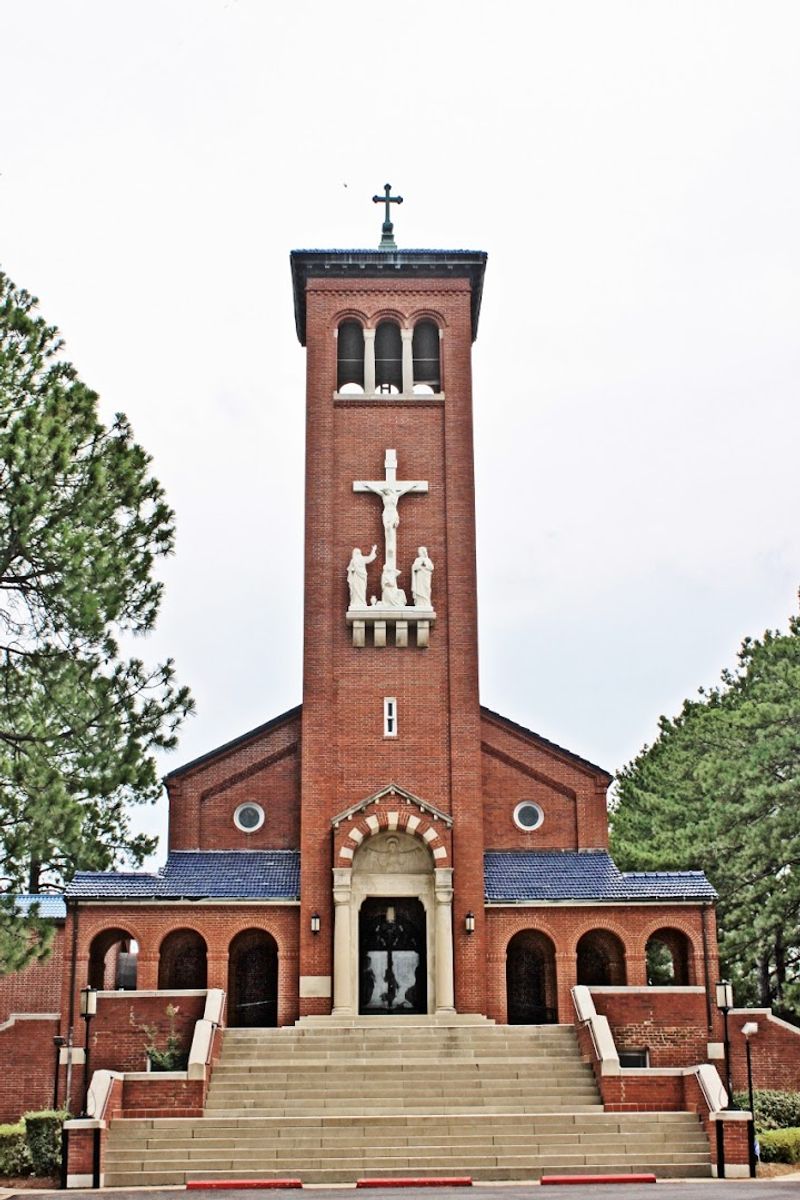
There is something quietly remarkable about a building constructed entirely from small donations sent by ordinary people across the country. The St. Jude Church, dedicated in 1938, is exactly that kind of place.
Every brick and beam carries the generosity of thousands of people who believed in its mission even if they never set foot inside.
Architects William Callahan and Joseph Maschi designed the church in the Romanesque style, drawing inspiration from the Church of Santa Maria in Cosmedin in Rome. The result is a structure that feels both ancient and deeply American.
A magnificent Carrara marble crucifixion scene is mounted on the church tower, and statues of Christ, St. Jude Thaddeus, and the Virgin Mary stand on the grounds, each one a striking focal point.
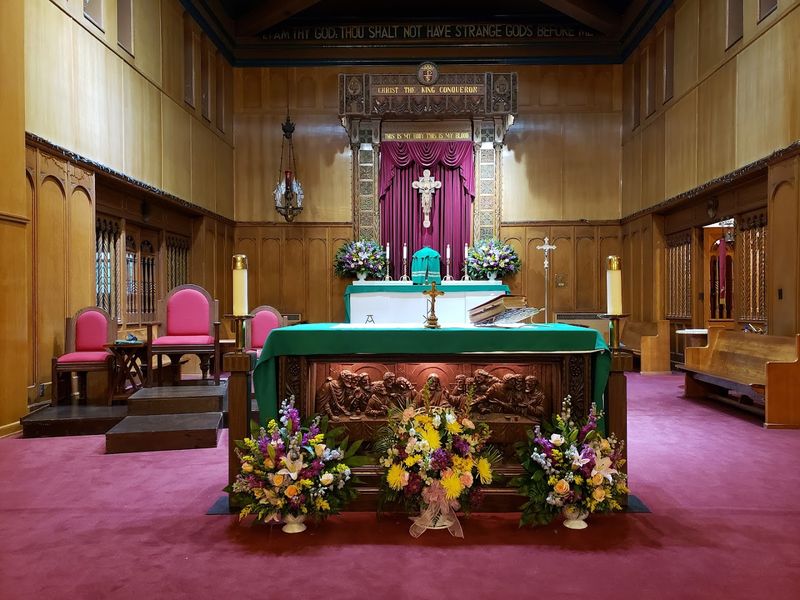
Inside, the word of God is literally inscribed on the walls and ceiling. Stained glass windows tell stories of faith in vivid color, and the Ten Commandments appear overhead, making the entire interior feel like an open scripture.
The parish is racially diverse and welcoming to visitors. Arriving with open eyes means leaving with a full heart and a deep appreciation for what community-funded faith can build.
Do Not Miss the Interpretive Center Photo Collection
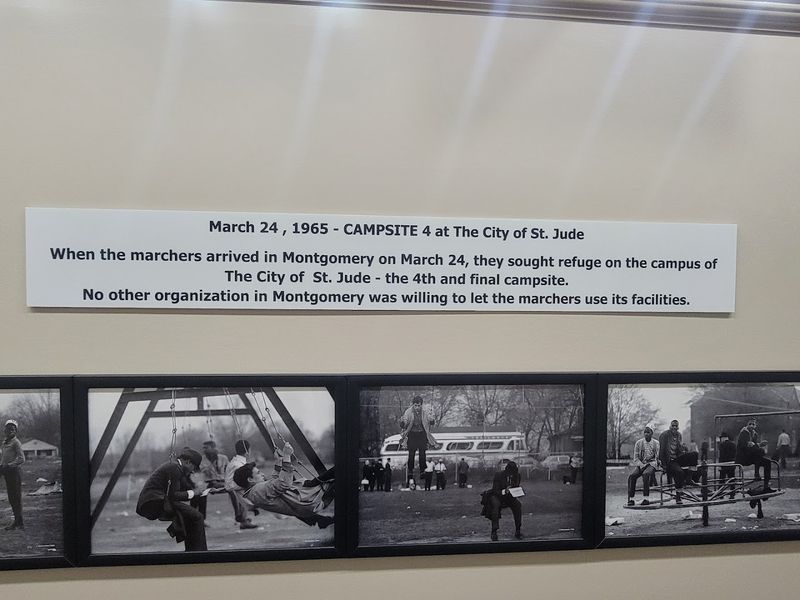
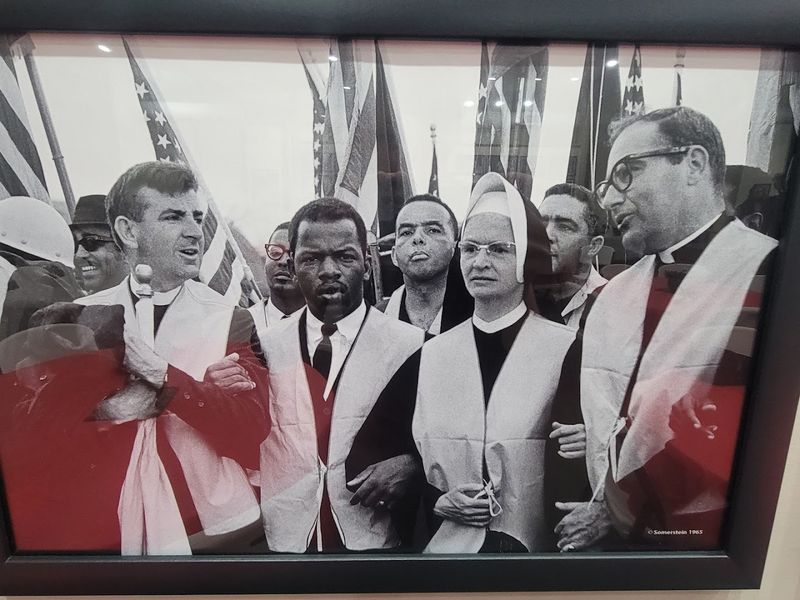
Photography has a way of making history feel immediate. The Interpretive Center at the City of St. Jude holds an extensive collection of photographs that document the Selma to Montgomery march with remarkable detail.
These are not distant images behind glass. They pull you in close to faces, moments, and emotions that shaped American history.
The center was designed with a specific purpose in mind. Beyond education, it aims to inspire visitors to become catalysts for social change.
That is a bold goal for a museum, and somehow this one earns it. The combination of visual storytelling and historical context creates an experience that feels both personal and universal.
Even if you think you know the Civil Rights Movement well, the Interpretive Center will show you angles and stories you have never encountered before. Local details, personal accounts captured in images, and the specific role of the City of St. Jude all come together here in a way that broader histories often miss.
Set aside at least an hour for this part of your visit. The center is open during regular campus hours, Monday through Friday, 8:30 AM to 4:30 PM.
Going slowly and reading every caption is absolutely worth the time. You will walk out with a sharper, more personal understanding of what happened here and why it still matters deeply today.
Make Time for the First Integrated Hospital in the Southeast
In 1951, at a time when segregation ruled nearly every institution in the South, St. Jude Catholic Hospital opened its doors to all patients regardless of race or creed. That single decision made it the first integrated hospital in the entire southeastern United States.
The weight of that fact is hard to fully absorb even now.
The hospital carried enormous historical significance beyond its open-door policy. Dr. Martin Luther King Jr. and Coretta Scott King welcomed their two eldest children, Yolanda and Martin Luther III, into the world within these walls.
The building also received civil rights activist Viola Liuzzo after she was fatally shot by Klansmen following the Selma to Montgomery march in 1965. Doctors worked to save her life here on this campus.
The hospital closed in 1985 and was later converted into low-cost apartments in 1992. The building still stands on the campus grounds, and its presence carries a quiet power that visitors often find unexpectedly moving.
Knowing what happened inside those walls, the births, the injuries treated after the march, the simple act of treating every human being with equal care, makes it one of the most meaningful stops on the entire campus.
Alabama has many historic sites, but few speak as directly to the meaning of human dignity as this one does.
Skip Nothing in the Interpretive Garden with Homeless Jesus
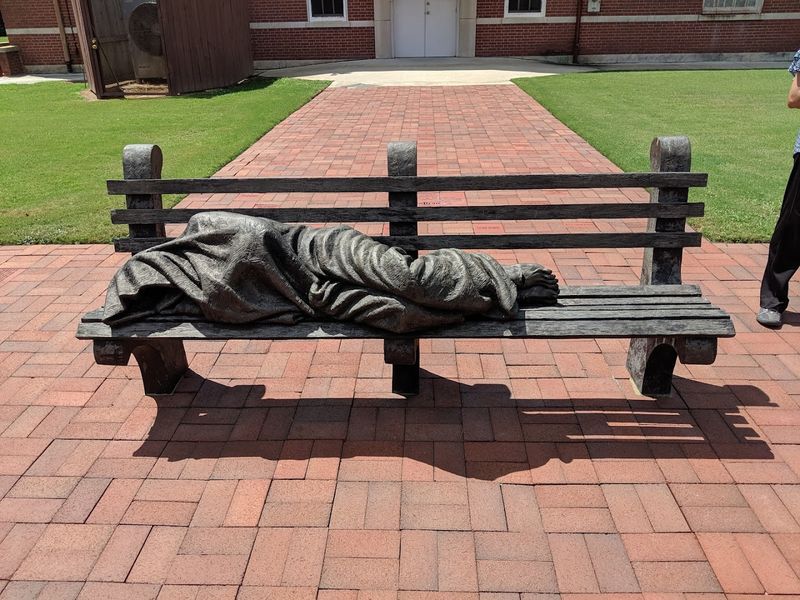
Not every memorial takes the form of a grand monument. The Interpretive Garden at the City of St. Jude is a quiet, reflective space that holds two deeply meaningful focal points.
One is the resting place of Father Harold Purcell, the priest who founded this entire campus in 1934 with a vision of dignity and inclusion. The other is a sculpture called Homeless Jesus.
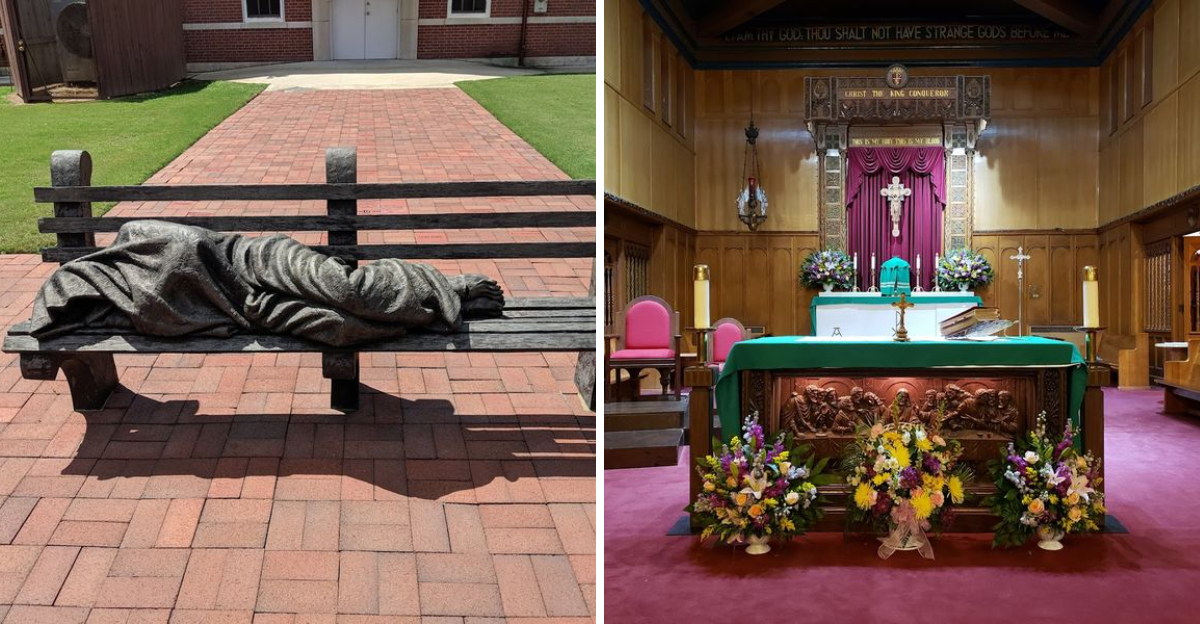
The Homeless Jesus sculpture depicts a figure lying on a bench, wrapped in a shroud, with only the nail wounds on the feet visible to identify the subject. It is a piece that asks hard questions about how society treats its most vulnerable members.
Placed in this particular garden, next to the grave of a man who dedicated his life to serving the poor, the sculpture takes on even greater meaning.
Father Purcell believed in providing light, hope, and dignity to people regardless of race or background. He built an entire campus on that belief, funded by small donations from people who shared his vision.
Standing in this garden, you feel the continuity of that mission. The garden is accessible during regular campus hours.
It is the kind of place where you might arrive expecting a quick look and end up staying much longer than planned. Bring a quiet mind and a willingness to sit with big questions for a moment.
Try Attending Mass Inside the Scripture-Covered Walls
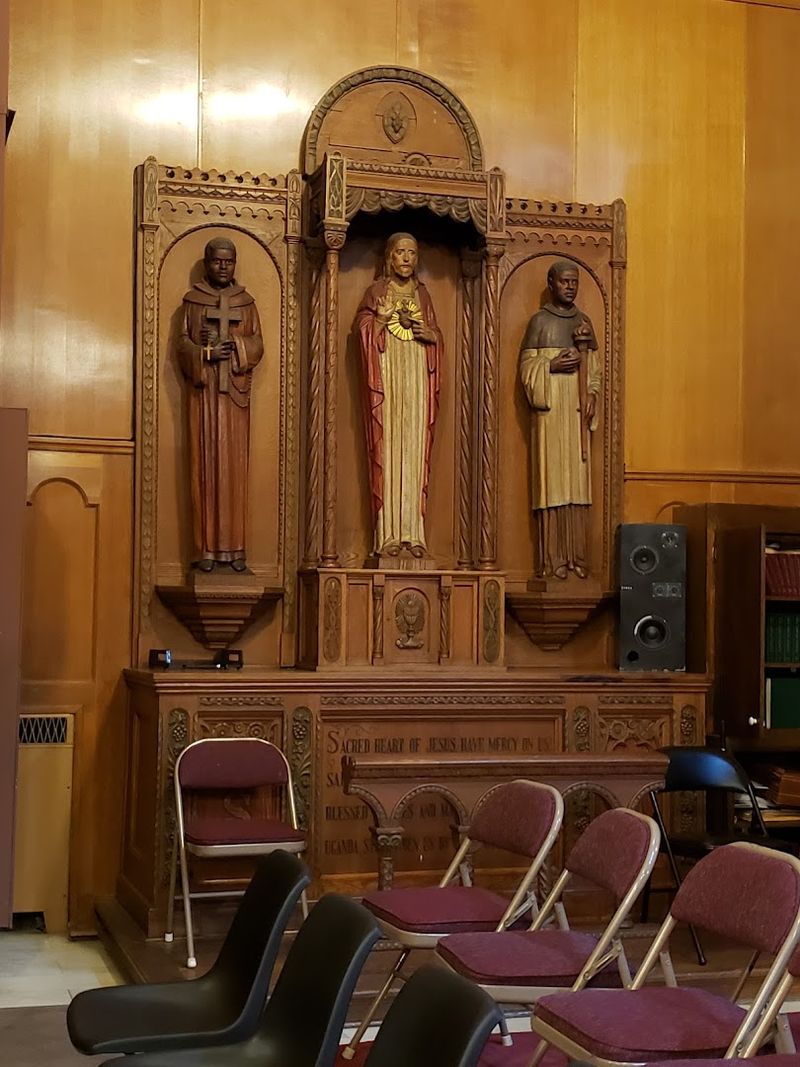
Attending a service at the City of St. Jude is unlike walking into most churches. The moment you look up, you realize the ceiling itself is covered in scripture.
The walls carry the word of God in visible text. Stained glass windows teach the Creed and the sacraments in brilliant color.
The entire building functions as both a house of worship and a living lesson in faith.
The parish community here is genuinely diverse. Past visitors have described the atmosphere as warm, lively, and welcoming to strangers.
The liturgical music often incorporates jazz elements, giving the service a distinctly Southern character that feels both rooted and joyful. Visitors who arrive not knowing anyone often leave feeling like they were always part of the community.
Sunday services and Saturday evening masses at 5 PM offer a more casual worship atmosphere, according to parishioners. Weekday masses are also available.
Come without expectations and you will almost certainly leave with something you did not know you were looking for.
