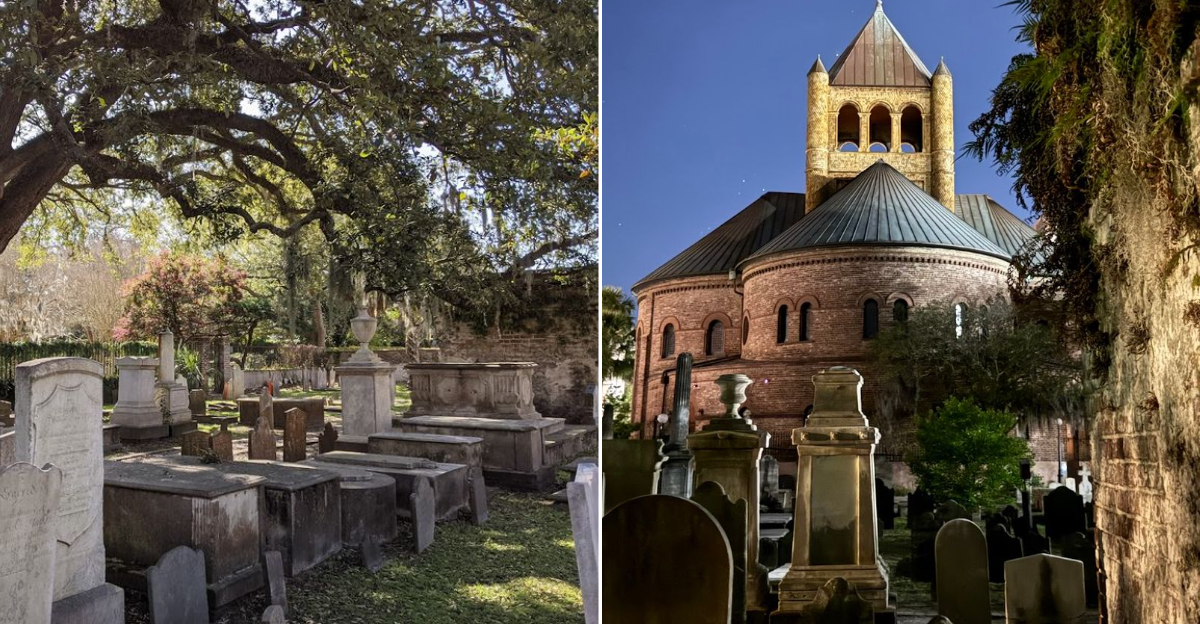
The sun dips behind the oaks, and the iron gate swings shut with a heavy clank. That is your signal to leave this historic haunted cemetery in South Carolina, a place that welcomes respectful visitors by daylight but locks its gates tight after dark.
The gravestones lean at soft angles, draped in moss and memory. By morning, you can walk the peaceful paths, read the old inscriptions, and admire the weathered ironwork.
But locals share a quiet warning: do not linger when the shadows grow long. The air changes somehow, not with danger, but with a feeling that the living are no longer the only ones present.
You do not need to believe in ghosts to respect the shift in atmosphere. Visit before noon, take your photos, and be back through the gate well before the last light fades.
Some places are best explored with the sun at your back and the exit still in sight. South Carolina holds many historic spots, but this one asks for your respect and your watch.
The First Feeling You Get At The Gate
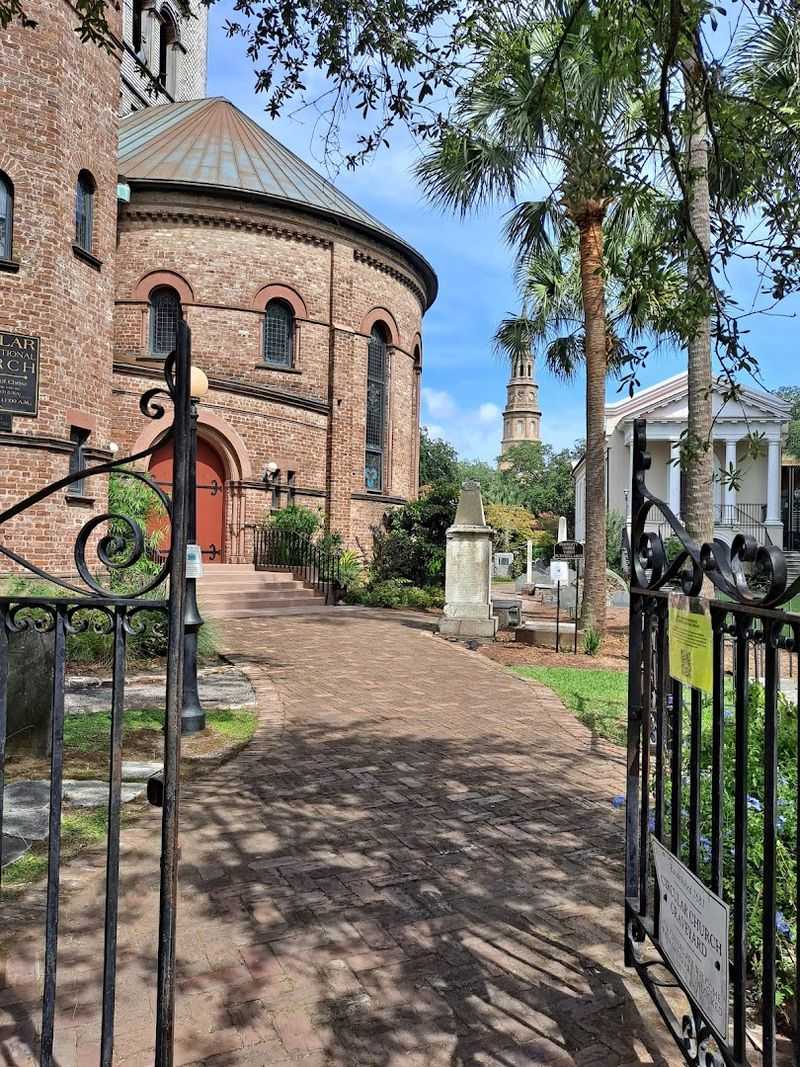
The first thing that hits you is how calm it looks, which somehow makes it feel even stranger once you know the stories. From the sidewalk, the graveyard seems gentle and almost tucked away, but the gate gives off that clear message that this is not a place to wander thoughtlessly.
You can feel the difference right there before you ever step inside.
That mood is a huge part of why people talk about it the way they do in Charleston. It is beautiful, yes, but it is also deeply old, layered with loss, and just closed off enough to make your imagination start filling in the blanks.
I think that is why the haunted reputation sticks, because the space never feels fully finished explaining itself.
And once you hear that the gates are shut tight after dark, the whole place takes on another level of mystery. It stops being just a historic churchyard and starts feeling like a line the city does not want casually crossed at night.
In South Carolina, where old places carry their stories close, that kind of boundary says a lot without saying much at all.
Where It Sits In The Middle Of Charleston
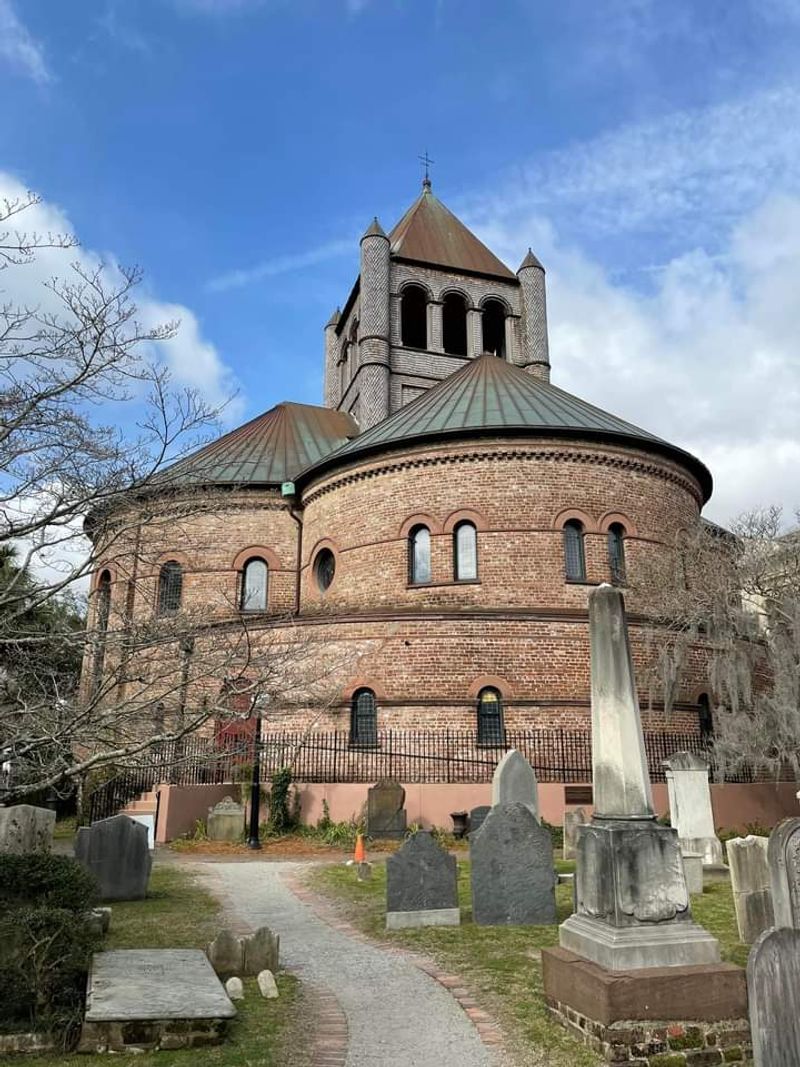
What makes this spot even more interesting is where it sits, right at Circular Congregational Church Graveyard, 150 Meeting Street, Charleston, South Carolina. You are not out on some lonely edge of town where a spooky cemetery would feel expected, and that contrast changes everything.
The city keeps moving around it while this little pocket of stillness holds its own mood.
That location gives the graveyard a weird kind of tension that I really noticed. You can be walking through busy, polished Charleston, hearing everyday city sounds, and then suddenly you are face to face with stones that have been standing there longer than most things nearby.
It feels less like entering an attraction and more like brushing up against a part of the city that never really left.
I also think that is why the nighttime closure feels so meaningful here. During the day, the graveyard belongs to the visible city, to history lovers, church visitors, and people willing to move slowly.
After dark, with the gates closed, it feels like Charleston hands the space back to silence and whatever stories people have been attaching to it for generations.
Why The Old Stones Feel So Personal
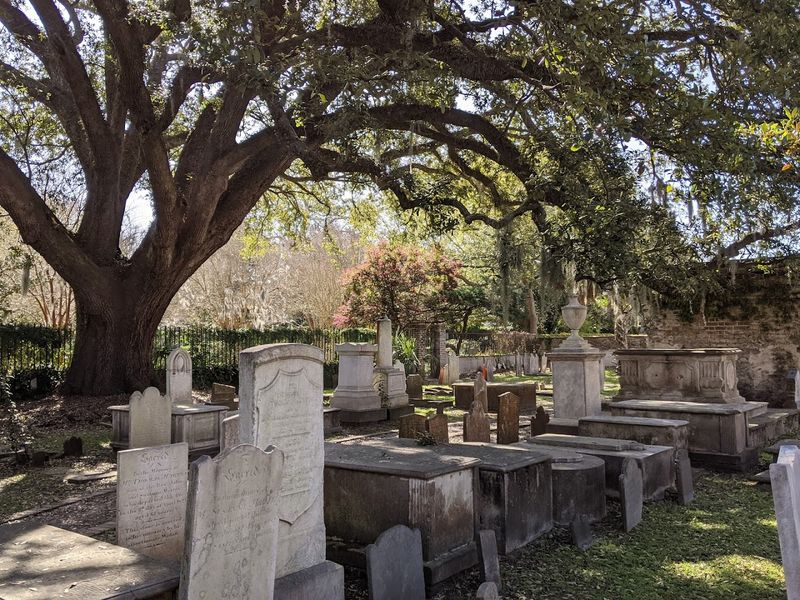
I was surprised by how personal this graveyard feels once you start looking closely at the stones. They are not arranged in some neat, distant way that lets you stay detached, and instead they lean, crowd together, and seem to carry the pressure of centuries right on their surfaces.
You do not have to know every name to feel the weight of real lives there.
That is where the place stops being abstract history and starts feeling intimate. The markers are worn in a way that makes time feel physical, almost as if the air, rain, and heat have been slowly writing over each story without ever fully erasing it.
In a city like Charleston, that sense of memory hanging on can feel almost louder than any spoken ghost tale.
I think people often call places haunted when what they really mean is emotionally crowded, and this graveyard definitely has that quality. You are standing among reminders of illness, grief, family, and survival, and none of that feels far away.
By the time evening comes around, it makes perfect sense that the gates close and the place is left to its own quiet, because it already feels deeply occupied.
The Stories People Still Whisper About
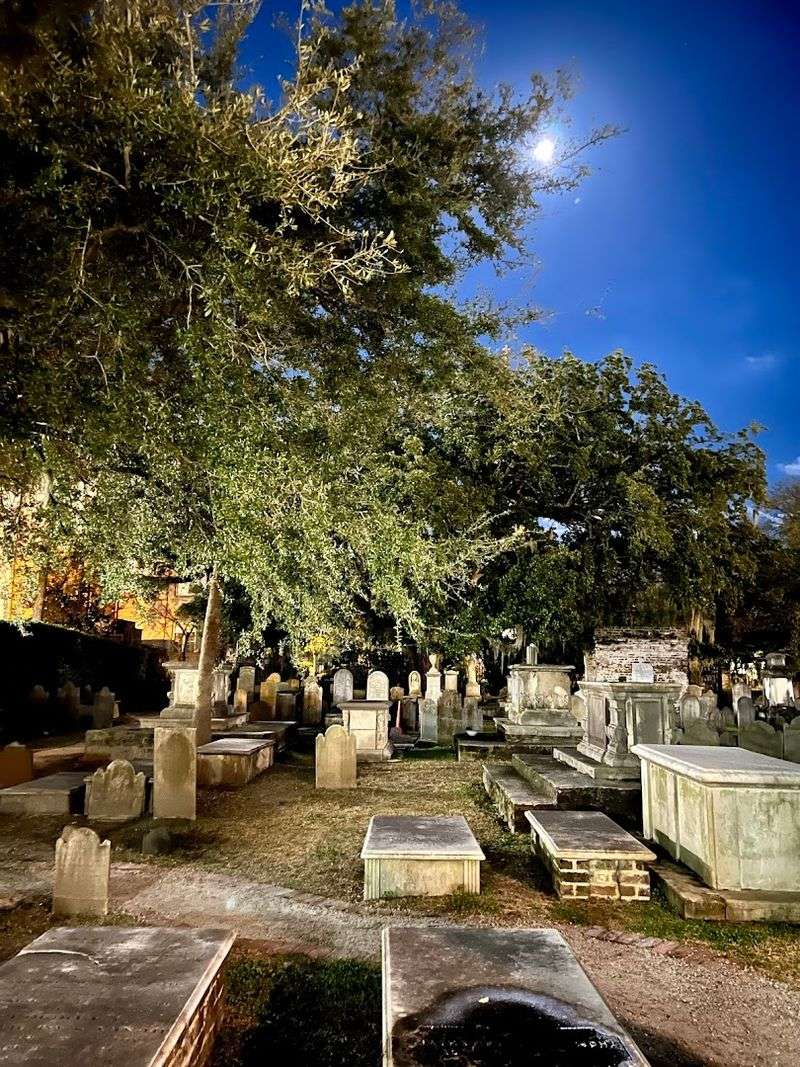
You cannot talk about this graveyard without getting into the stories, because people in Charleston absolutely have them. Some mention whispers, some talk about shadowy figures, and others swear the place gives them that unmistakable feeling of being watched even when nobody else seems to be around.
Whether you believe all of that or not, the stories have clearly settled into the identity of the place.
What I find interesting is that the tales are not all flashy or theatrical. They often sound sad, unresolved, and tied to the kind of losses that would have shaped a burial ground like this in a very real way.
That makes them harder to dismiss, because they feel rooted in emotion rather than just spectacle.
Maybe that is also why the nighttime restrictions feel less like a gimmick and more like common sense. Once the sun starts dropping, those stories seem to fit the space a little too well, and the atmosphere does a lot of the work for them.
South Carolina has plenty of beautiful old cemeteries, but this one really knows how to make folklore and physical place lean toward each other.
Daylight Really Changes The Whole Experience
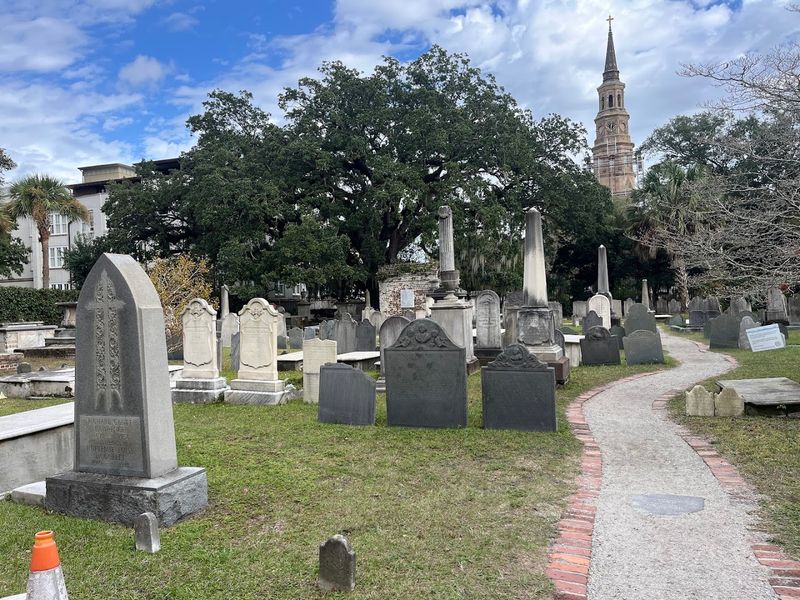
Honestly, this is one of those places where daylight matters more than you might expect. In the sun, you can actually take in the details, the carved stones, the church nearby, the plants softening the edges, and the way the whole space fits into old Charleston without rushing you.
It still feels eerie, but it also feels readable, like the graveyard is willing to show you its face.
That changes as the light starts thinning out, and you can almost sense why visitors are not simply left to roam there after dark. Shapes flatten, corners deepen, and every little movement of leaves starts pulling your attention.
It becomes less about history you can study and more about atmosphere you cannot quite control.
I think that is why the closure does not feel disappointing so much as appropriate. Some places are best met when you can really see them, and this is one of them, because the emotional texture is already strong enough without adding darkness to the mix.
If you want the full effect, go in daylight and let the place speak in a voice that is quieter, but somehow more convincing.
The Church Beside It Adds To The Mood
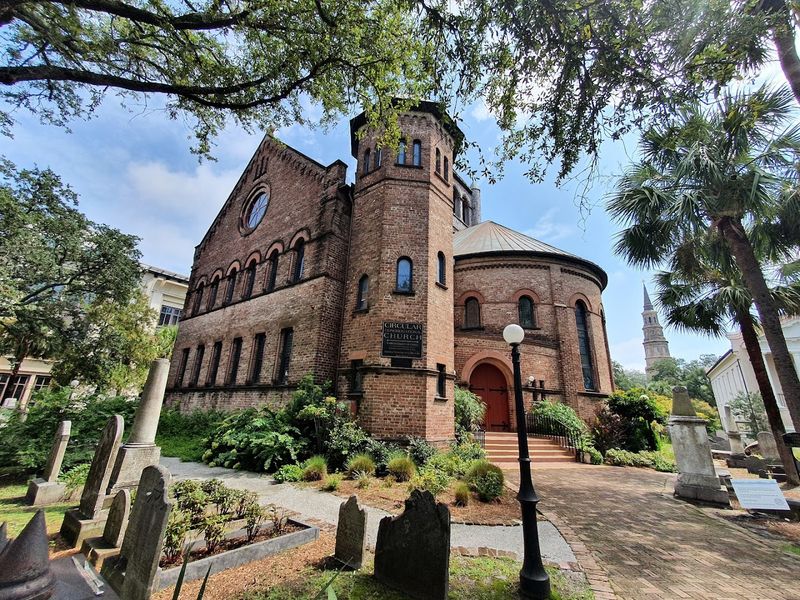
Part of what makes this graveyard linger in your mind is the church standing right there with it. The architecture has that old Charleston presence that feels graceful at first glance, but then you notice how perfectly it matches the cemetery’s quiet intensity.
Together they create a setting that feels less like a stop on a walk and more like a preserved emotional landscape.
I always think places like this work because the buildings and the burial ground are speaking the same language. The church adds dignity and structure, while the graveyard adds the human side of memory, sorrow, and time wearing things down.
You are not just looking at a pretty historic corner of South Carolina, because you are watching faith, community, and mortality sit beside each other in plain view.
That pairing also explains why after-dark access feels especially restricted in spirit, even before you get to any practical rule. Once night falls, the site no longer reads as architecture and landscaping so much as silhouette and suggestion.
When a place already carries that much presence in full daylight, you can understand why the gates close and the experience has a clear ending point.
It Feels More Quiet Than Scary
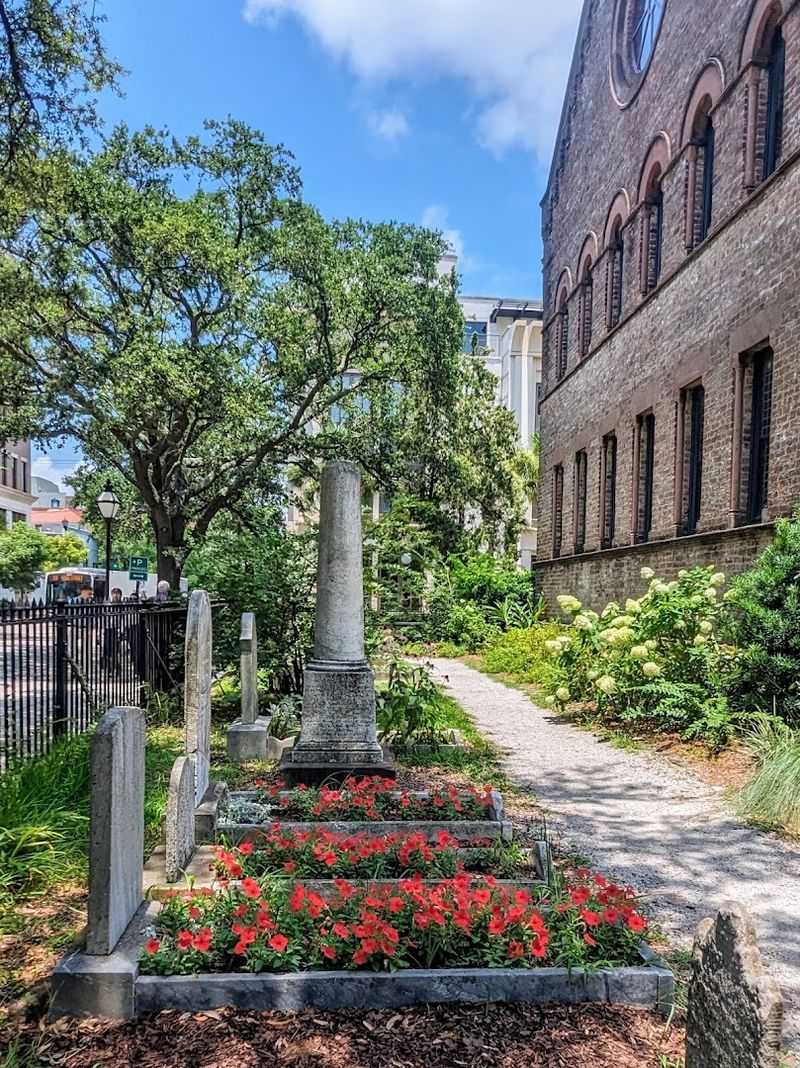
If you are expecting something loud or theatrical, that is not really what this place gives you. The feeling here is quieter than that, almost like the graveyard is asking you to pay attention instead of trying to startle you.
For me, that softer kind of unease is always more memorable, because it sneaks up on you.
You notice little things, like how the path narrows your focus, how the stones seem to gather in uneven clusters, and how the whole space absorbs sound in a way that makes you lower your voice without thinking. That is not jump-scare energy, and it is something much more grounded.
It feels like a place where grief has settled deeply enough that people eventually began calling it haunted because no other word felt close enough.
That is why I would never sell this as just a spooky stop in Charleston. It is more reflective than that, even when the stories lean supernatural, and that gives it a stronger pull.
By night, I can only imagine how much that quiet intensifies, which makes the closed gates feel less mysterious in a dramatic way and more respectful in a human one.
Why The Locked Gates Matter So Much
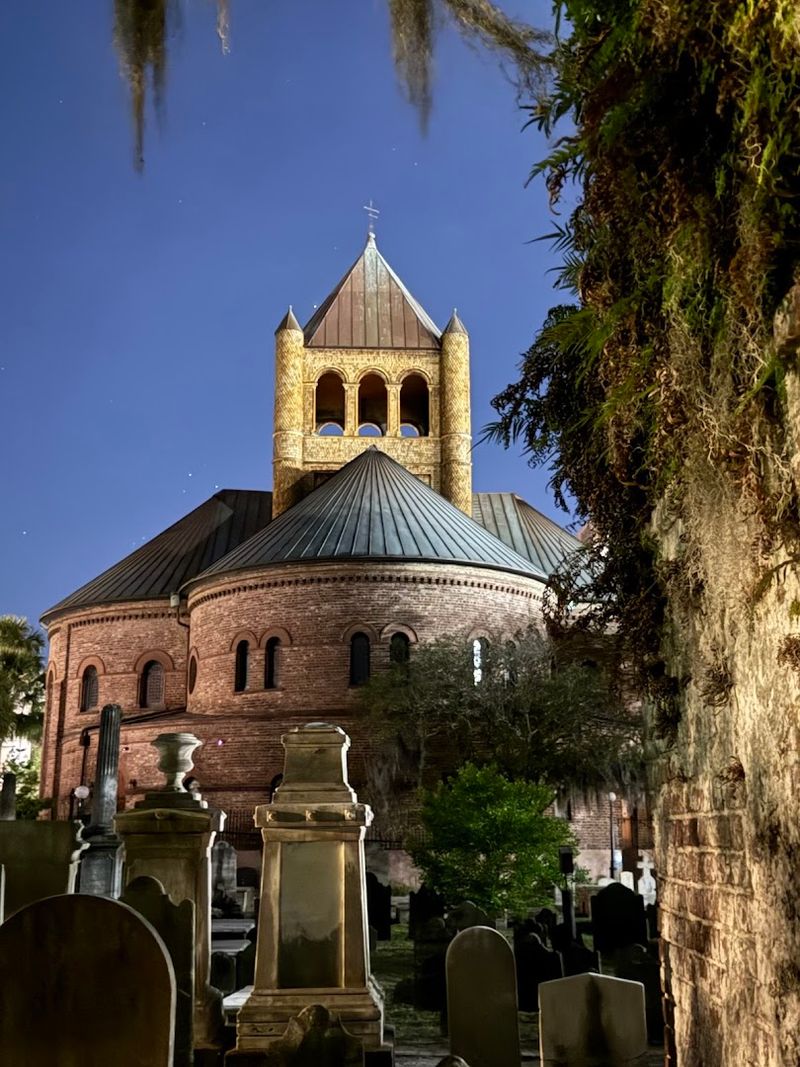
The locked gates are not just a practical detail here, and that is what makes them memorable. They create a real boundary between the version of the graveyard you are allowed to know and the version that belongs to the night.
Even if you are not especially superstitious, that kind of cutoff gets into your head.
I think we all respond to places differently once access is limited, because restriction sharpens curiosity fast. In this case, though, it does something else too, and it protects the atmosphere from turning into casual entertainment after sunset.
The closure tells you this is still a burial ground first, not just a backdrop for spooky storytelling.
There is something very Charleston about that balance, where history, legend, and manners all seem to overlap in the same space. South Carolina has no shortage of haunted lore, but this graveyard feels especially defined by the fact that you cannot just drift in whenever you want.
The gate becomes part of the story, and honestly, that may be one reason the place feels so enduring, because mystery always grows a little stronger when a city decides certain hours are simply not yours.
What To Notice If You Visit Respectfully
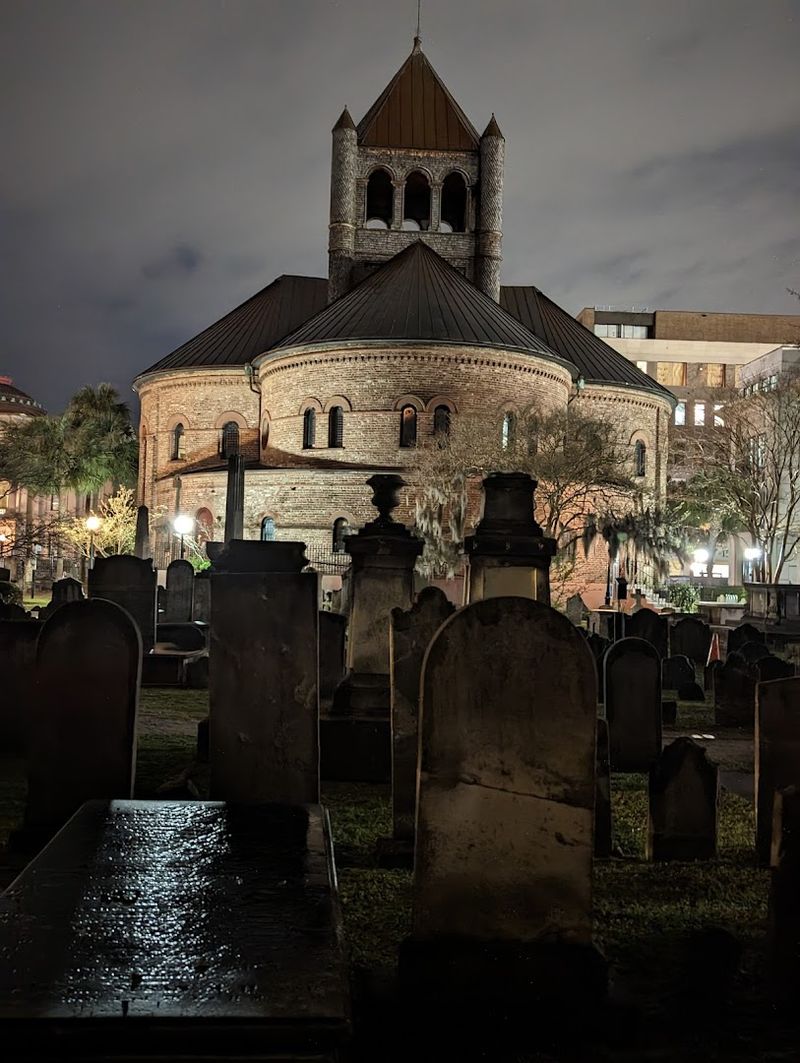
If you go, I would not rush in trying to chase the ghost angle right away. Give yourself a minute to notice the layout, the textures on the stones, the way the church and graveyard share the same patch of light, and how the city noise seems to soften at the edges.
That slower approach tells you much more than any dramatic story ever could.
You will probably get more out of the visit if you treat it like a conversation with the place instead of a checklist. Look for the worn inscriptions, the irregular spacing, the old trees, and the sense that generations of Charleston life and death are pressed close together there.
The haunting reputation starts making more sense once you realize how much memory the site is carrying in plain sight.
I also think respect changes what you notice emotionally. When you are not trying to force an experience, the graveyard has room to feel moving, strange, and unexpectedly intimate all at once.
That is the real reason to see it during open hours, because daylight lets you pay attention in a way that feels fair to the people remembered there and honest about why the gates close later.
