The ribs come out looking almost too big for the plate, and then you notice the fried catfish waiting beside them. Suddenly, choosing just one thing sounds like a bad idea.
That is the kind of problem waiting at this historic Indiana barbecue joint, where slow-smoked ribs have been drawing hungry diners since 1968.
The family behind the restaurant built its reputation on generous portions, a memorable sauce, and food that has stayed remarkably consistent through the years.
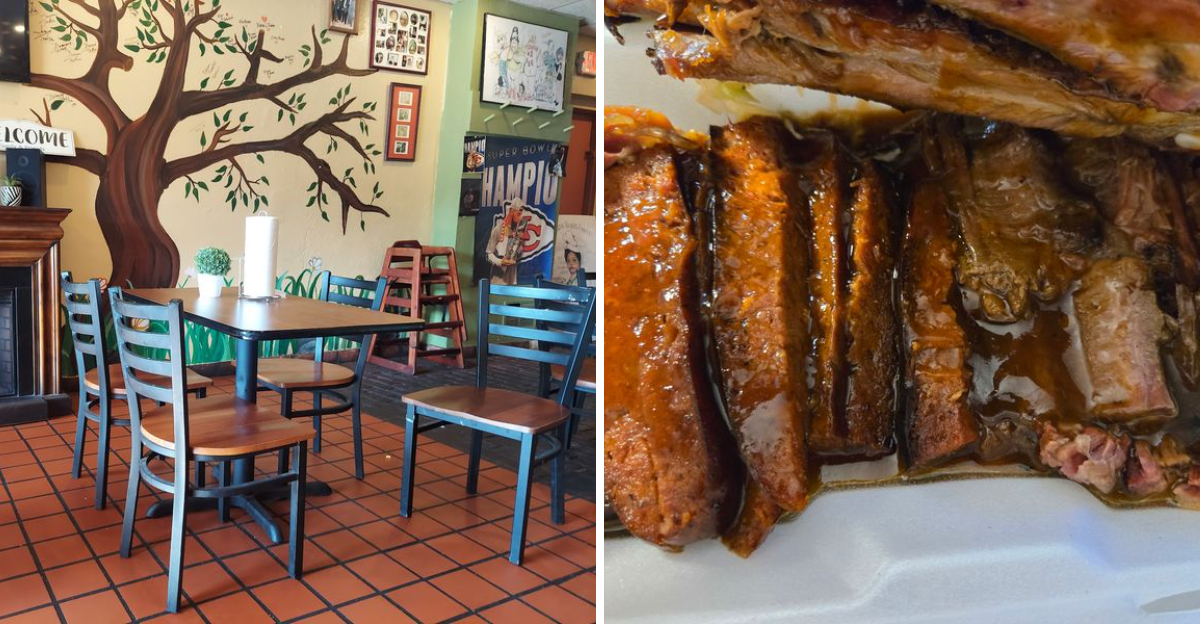
Look around while you wait, and the walls tell another part of the story. Newspaper clippings, sports jerseys, and signed photos cover the room, reflecting the neighborhood and the restaurant’s long history.
Rib tips, pulled pork, brisket, catfish, and fresh Southern sides make the menu just as tempting. When a barbecue spot has been feeding people for decades and still knows how to make you wonder whether one plate will be enough, that is a pretty good reason to make the detour.
Ribs That Have Been Smoked the Same Slow Way Since 1968
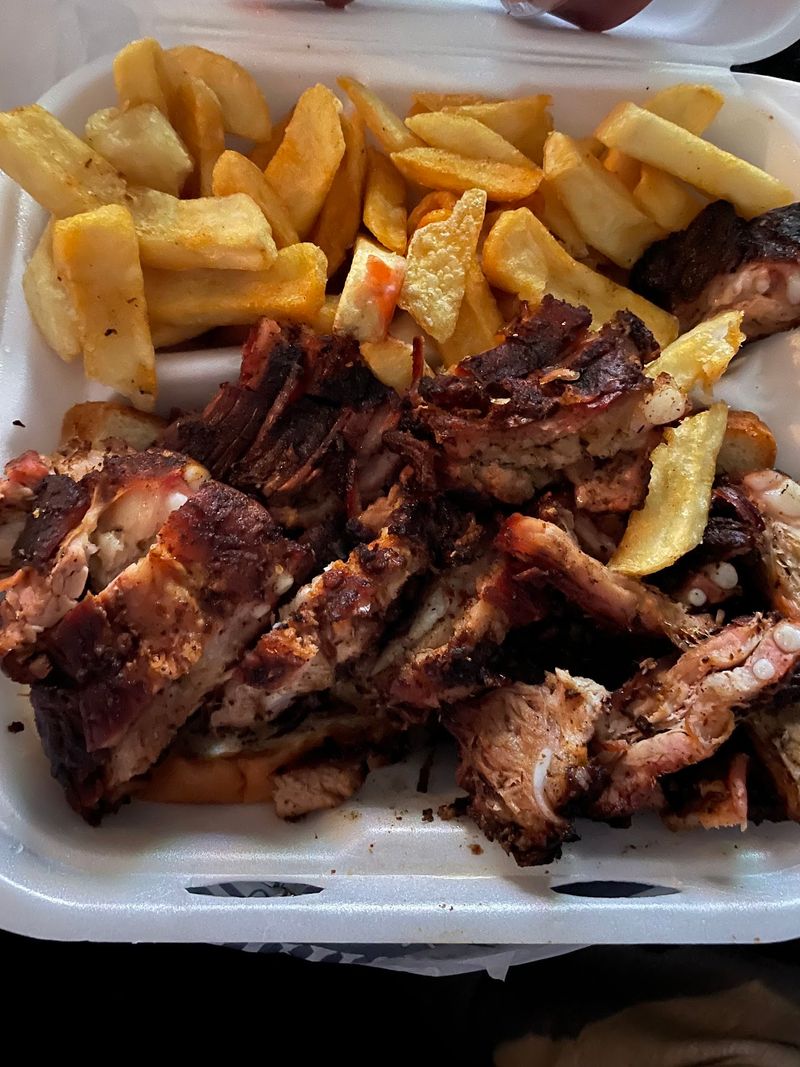
Ribs are the reason most first-timers pull into the lot here, and the kitchen has had more than five decades to get the method right. Low and slow is the whole philosophy.
Hickory smoke does the heavy lifting, working through the meat until it loosens from the bone without falling apart into mush. Regulars order half slabs and full slabs, sometimes with sauce brushed on, sometimes with sauce on the side so the smoke flavor stays front and center.
What makes the ribs feel different from chain barbecue is the consistency of the seasoning. Nothing fancy gets layered on top.
The rub stays simple, letting the pork and the wood do the talking, which is exactly why longtime customers can taste the difference.
Ordering tip worth remembering: ribs are among the most requested items on the menu, so arriving during the middle of a weekday afternoon usually means a shorter wait than the dinner rush.
Portions run generous enough that many visitors split a slab between two people and still take food home. Pair the ribs with fries and let the sauce run over everything, a move locals swear by.
For a first visit, ribs make the clearest introduction to what this pit has been doing since Lyndon Johnson was in office.
Fried Catfish Worth Ordering Alongside the Smoke
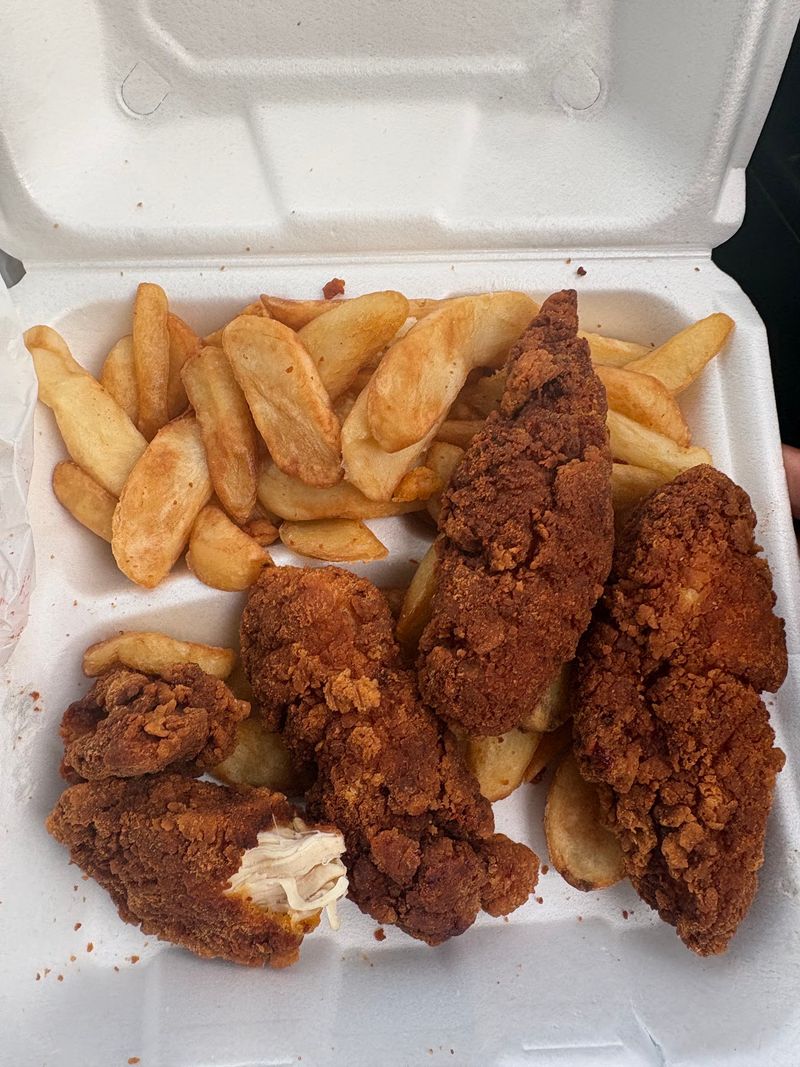
Barbecue joints do not always bother with fish, which makes the catfish here a small surprise on the menu board. It fries up golden, crisp on the outside, flaky underneath.
Southern kitchens have paired smoked meat with fried fish for generations, and Frankie’s carries that tradition into Indiana. The breading stays light rather than heavy and doughy, so the catfish itself comes through with every bite.
Order it with fries and coleslaw for the full effect. A little barbecue sauce on the side works better than expected, though plenty of people prefer hot sauce or nothing at all.
Because catfish is fried to order, timing matters. Calling ahead at 574-287-8993 saves standing around, especially on Friday evenings when the counter stays busy.
Anyone bringing a group with mixed tastes will find the catfish handy. Not everyone in a family wants ribs, and this gives the non-barbecue eater something substantial instead of a sad side salad.
The kitchen also turns out shrimp, chicken sticks, and fried mushrooms, so the fryer clearly gets as much attention as the pit.
Consider the catfish the sleeper pick. Plenty of visitors come for the smoke and leave planning a second trip built entirely around the fish plate.
A Sauce With a Reputation Bigger Than the Building
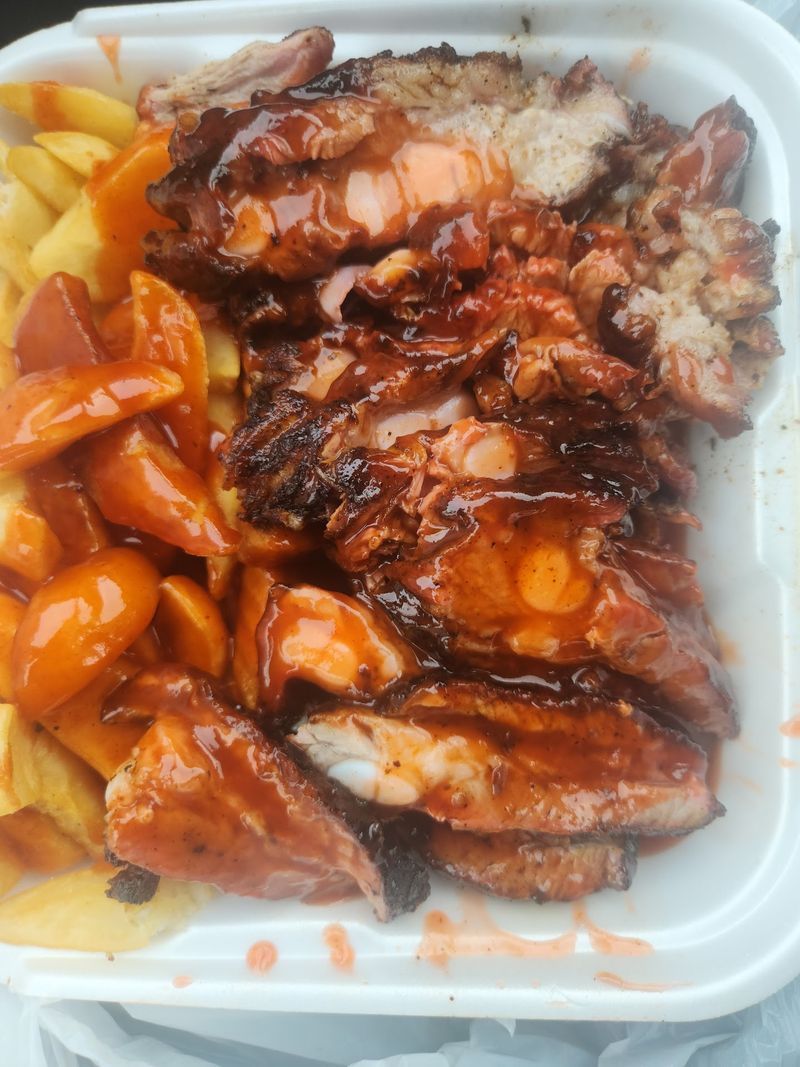
Some restaurants are built on a recipe, and this one was built on a sauce. Tangy, a little sweet, with enough backbone to stand up to smoked pork, it has been the signature since the early days.
Customers buy it by the container to take home, which says plenty. Others order extra cups just to keep dunking long after the meat is gone.
The most repeated piece of advice from longtime visitors is simple: get sauce on the fries. Crispy potatoes underneath, sauce and meat drippings on top, and suddenly a side dish becomes the thing people remember.
Rib tips get the same treatment, arriving saucy and messy in the best way. Napkins are not optional.
What is interesting about the sauce is how it ties the menu together. Pulled pork, brisket, smoked chicken, chicken sticks, even the fries all run through the same flavor, giving the whole lineup a family resemblance.
Fun bit of history: the sauce is often credited as the element that truly established the business back when it opened in 1968, spreading by word of mouth across the neighborhood.
Grab a bottle before leaving. Home cooking gets an easy upgrade, and the drive back feels shorter with barbecue sauce riding shotgun.
More Than 50 Years of Family Hands Behind the Counter
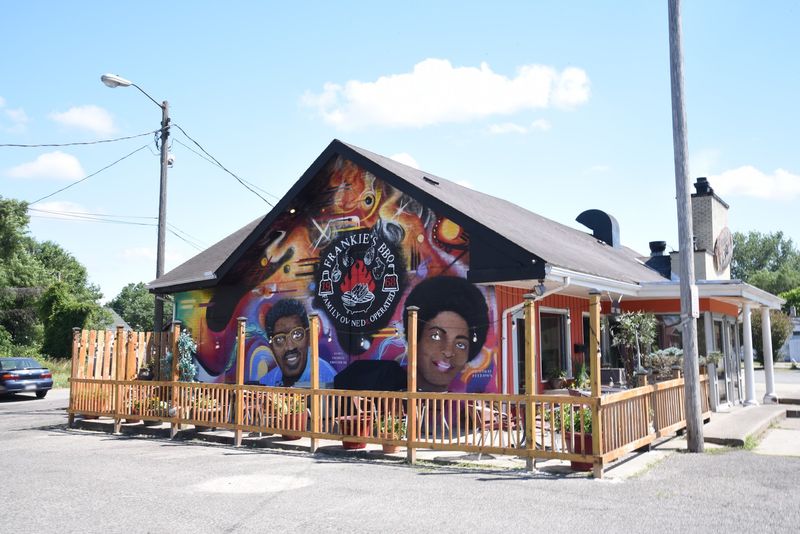
Family businesses that reach fifty years are rare anywhere. Reaching that mark in the same neighborhood, under the same name, is rarer still.
Frankie’s traces back to 1968 and the work of James Charles Trotter Sr. and Frankie Fellows. Their son, Sean Pierre Trotter, runs the operation now, keeping the recipes and the routines that built the place in the first place.
Generational ownership shows up in small ways. The way orders move, the familiarity between staff and repeat customers, the sense that nobody is reinventing anything just to chase a trend.
It also stands as one of the oldest Black-owned businesses still operating in South Bend, opening during a period when the surrounding west side held a busy district of Black-owned shops and services.
Understanding that history changes how the food tastes. A rib slab becomes a link to decades of local life rather than just dinner.
Visitors interested in the story can read plenty of it on the walls while waiting for an order, since clippings and photos fill the space.
Supporting a long-running neighborhood kitchen is part of the appeal for many travelers. Money spent here stays close to home, which is a nice thing to think about while working through a tray of smoked pork.
Walls Covered in Clippings, Jerseys, and South Bend Memory
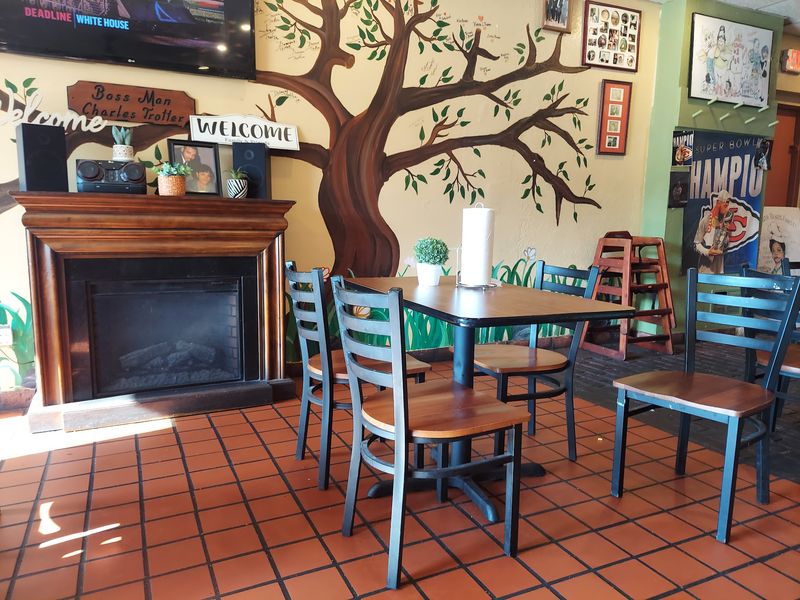
Decor here was never designed by anyone with a mood board. It accumulated, year after year, and that is exactly the charm.
Newspaper articles hang beside signed photographs. Sports jerseys share space with framed accolades, and basketball memorabilia nods to a region that takes the game seriously.
Reading the walls while waiting turns a few minutes into a mini history lesson about the restaurant and the city around it. Names, headlines, dates, all stacked up in no particular order.
The old school barbecue feel comes through in the layout too. Orders pass through glass at the counter, the dining area stays small, and the focus sits squarely on food rather than furniture.
Anyone hoping for a sprawling dining room should adjust expectations. Many customers treat the place as a carryout stop, grabbing bags and heading out.
Still, sitting for a few minutes has its rewards. The smell of hickory settles into the room, and the visual clutter tells a story no renovation could replicate.
Photographers will find plenty to like. The mix of faded clippings and bright jerseys makes for the kind of authentic, unpolished interior that travel photos rarely capture anymore.
Bring curiosity along with an appetite, and the wait becomes part of the visit.
Portion Sizes That Make Leftovers a Guarantee
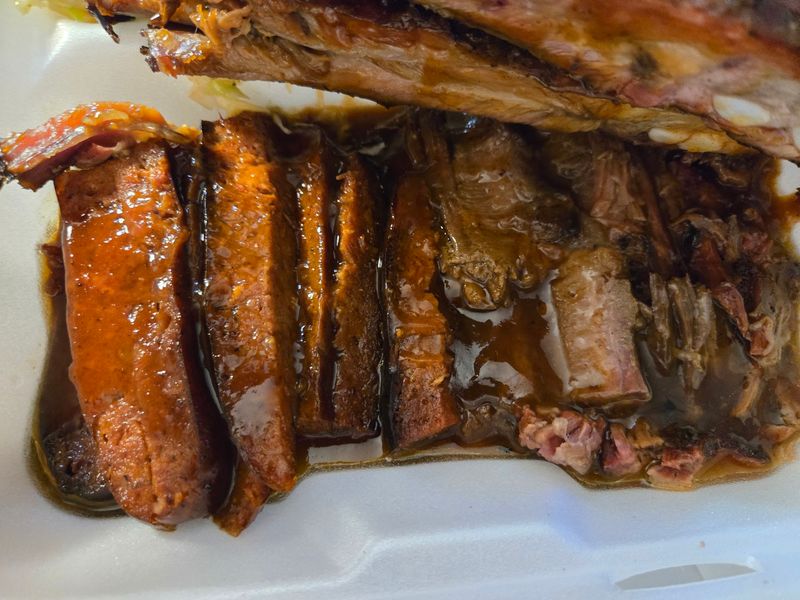
Anyone who has carried a bag out of this place knows the weight of it. Plates arrive piled, not plated with tweezers.
Rib tip dinners, half slabs, chicken stick baskets, and catfish plates all come with sides, and the sides are not afterthoughts. Fries, coleslaw, and Southern staples made fresh daily fill out the tray.
Splitting an order between two people works well, especially for anyone who wants to sample more than one thing. Two people, one dinner, one extra side, and nobody leaves hungry.
Leftovers reheat nicely, which is worth knowing for road trippers with a cooler in the back seat. Rib tips the next day with a fresh cup of sauce hold up better than most barbecue.
Portions this size explain why the restaurant has stayed busy across generations. Value shows up in the quantity, and the flavors are rich enough that pacing yourself is genuinely necessary.
A practical note: bring cash-free payment options and patience during peak hours, since the counter fills up fast between noon and evening.
Hungry travelers coming off the highway will appreciate the honesty of it all. No small plates, no garnish, just a heavy tray of smoked meat and sides that tastes like it was made for people who work for a living.
An Easy Detour Off the Highway on the West Side
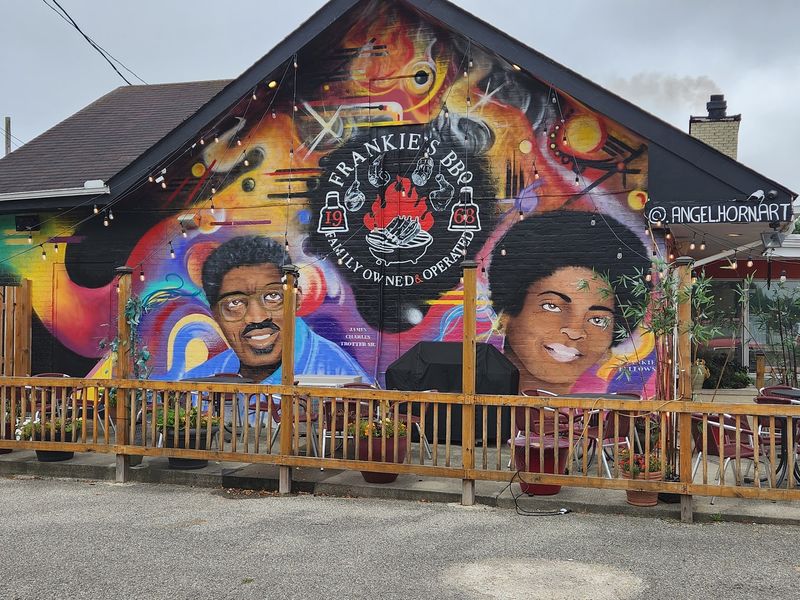
Location plays a real part in the experience. Sitting at 1621 W Washington St, the restaurant occupies a stretch of the west side that once formed a busy Black business district.
Getting there from downtown South Bend takes just a few minutes by car. Parking is straightforward, and the hickory smell usually confirms the right address before the sign does.
Hours run 11 AM to 9:30 PM Monday through Saturday, with Sunday closed, so plan accordingly. Sunday travelers have caught that closed door more than once.
Pairing a stop here with other South Bend attractions makes for a full day. The University of Notre Dame campus, the East Race waterway, and the city’s riverfront trails all sit within a short drive.
Calling ahead helps during busy stretches.
Carryout suits the setup best. Grab a bag, find a picnic table or a park bench nearby, and let the food do what it has done for South Bend since 1968.
For road trippers crossing northern Indiana, few detours deliver this much flavor for so little driving.
