The college tour usually comes with a calculator. Tuition.
Housing. Books.
Then this Indiana campus throws one very large wrench into the math. For students from families earning under $100,000, tuition can be fully covered.
Suddenly, everyone is paying attention. The campus itself helps.
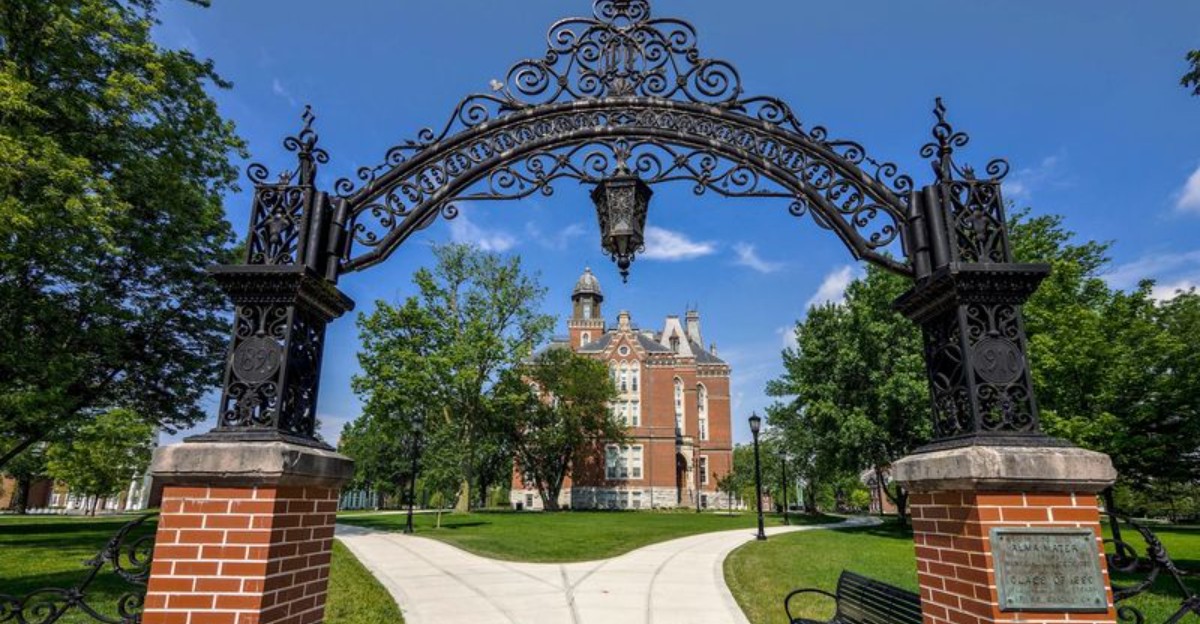
A bell tower rises above old limestone buildings. The school dates to 1837.
Nearby, a former quarry has been turned into a nature park. Free art galleries give the afternoon another stop.
Even lunch is easy, with a deli just off campus. It is a strange combination.
A very old college. A very modern financial promise.
And a small town that turns out to be much more interesting than expected.
East College and Its Mansard Roof Show Off
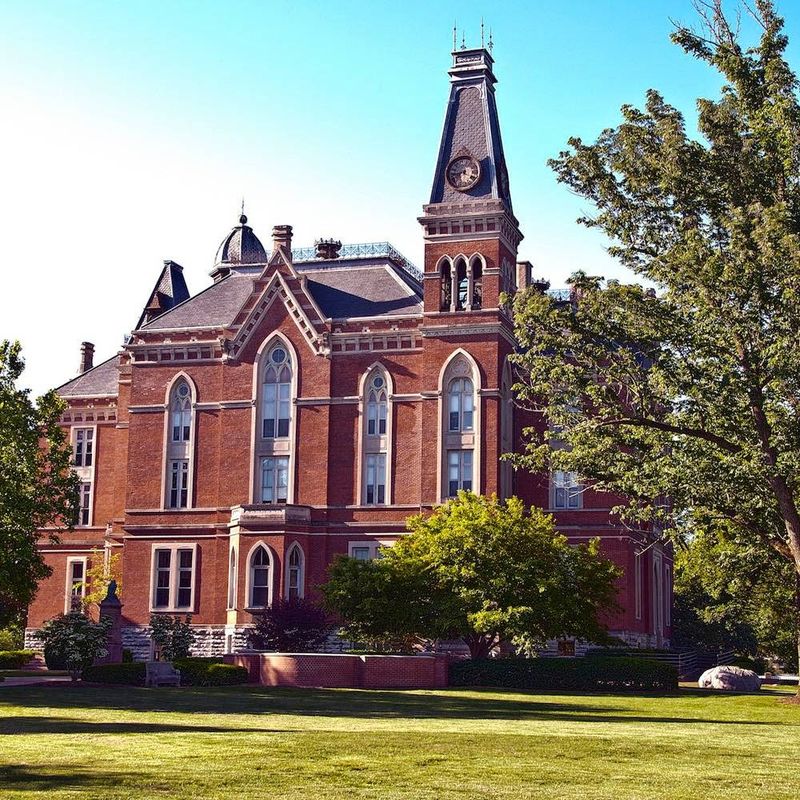
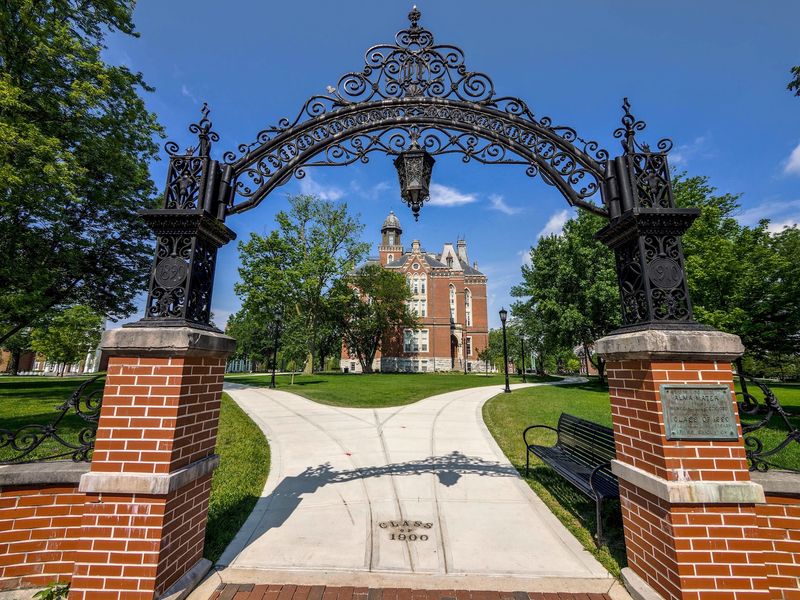
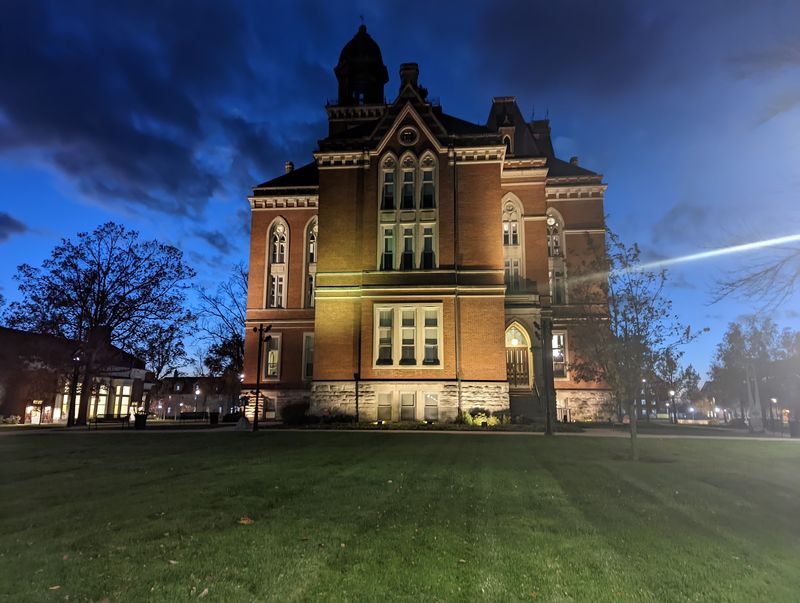
Few buildings in Indiana command a lawn the way East College does. Completed in 1877 and listed on the National Register of Historic Places, it is the oldest structure on campus and easily the most photographed.
The style is Second Empire, which sounds fancy until the details come into focus. French mansard roofs slope steeply above Italianate columns, and Gothic arches frame the windows like something borrowed from a European cathedral.
Architects rarely mix that many ideas in one building without it falling apart visually. Somehow this one holds together.
The surrounding lawn, shaded by old trees, functions as the unofficial center of campus life. Students cut across it between classes, and visitors tend to slow down without meaning to.
Morning light hits the east face first and makes the brick glow a deep rust color. Late afternoon flips the effect entirely, throwing long shadows across the grass.
Interior access depends on the academic calendar, so checking the university visitor page before arriving saves some guesswork. Even from outside, the scale is impressive.
Worth knowing: the school opened as Indiana Asbury College and took the DePauw name in 1884, honoring benefactor Washington C. DePauw.
Greencastle residents raised $25,000 to bring the college to their frontier village in the first place, a detail that explains why town and campus still feel woven together rather than separate.
Nine Miles of Trails Carved Into an Old Limestone Quarry
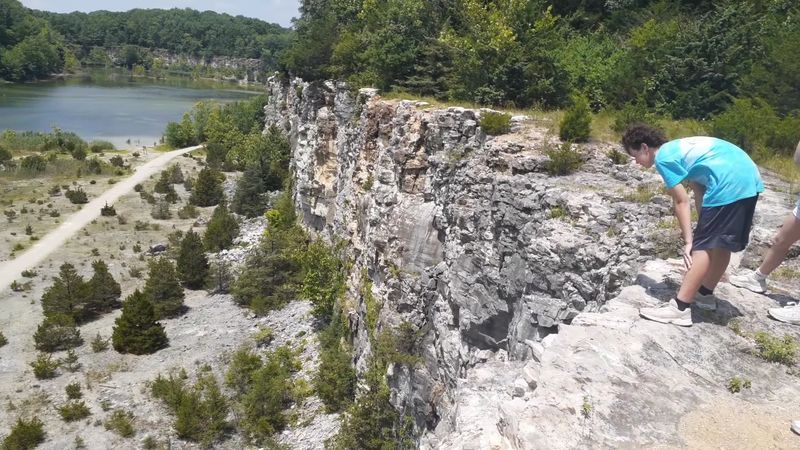
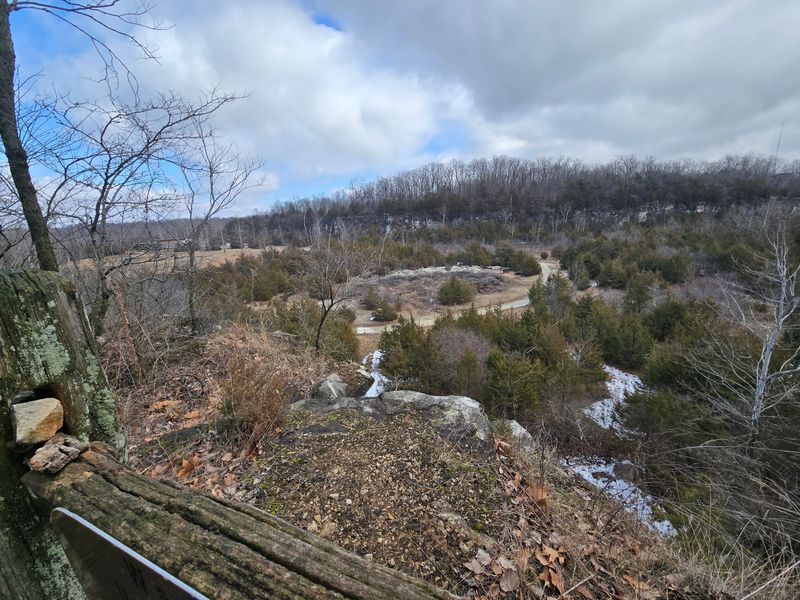
A working limestone quarry became 520 acres of public trails, and the transformation is still visible in the rock faces. Pale cliff walls rise beside the paths, edges squared off by old cutting equipment rather than weather.
Over nine miles of trail wind through forest, past ponds, and along the quarry floor. Some routes are flat and easy, others climb enough to get the heart moving.
Bikes are welcome on designated sections. Birdwatchers do well here, especially in spring migration.
The quarry floor holds a strange, almost lunar quality, with sparse vegetation pushing up through crushed stone. Wildflowers appear in unexpected patches, and the contrast between bare rock and thick woods keeps the scenery from ever feeling repetitive.
Two thoughtful buildings sit within the preserve. The Janet Prindle Institute of Ethics hosts programs and discussions, while the James and Sue Bartlett Reflection Center offers a quiet indoor space with views of the surrounding land.
Footwear matters more than usual since loose gravel is common on the quarry sections. Water is smart to carry, as shade disappears completely in the open areas.
Fall brings the strongest color, with maples and oaks lighting up above the gray stone. Winter strips everything back and reveals the geology in full detail, which has its own appeal for anyone who likes rock formations.
Free Galleries at the Peeler Art Center
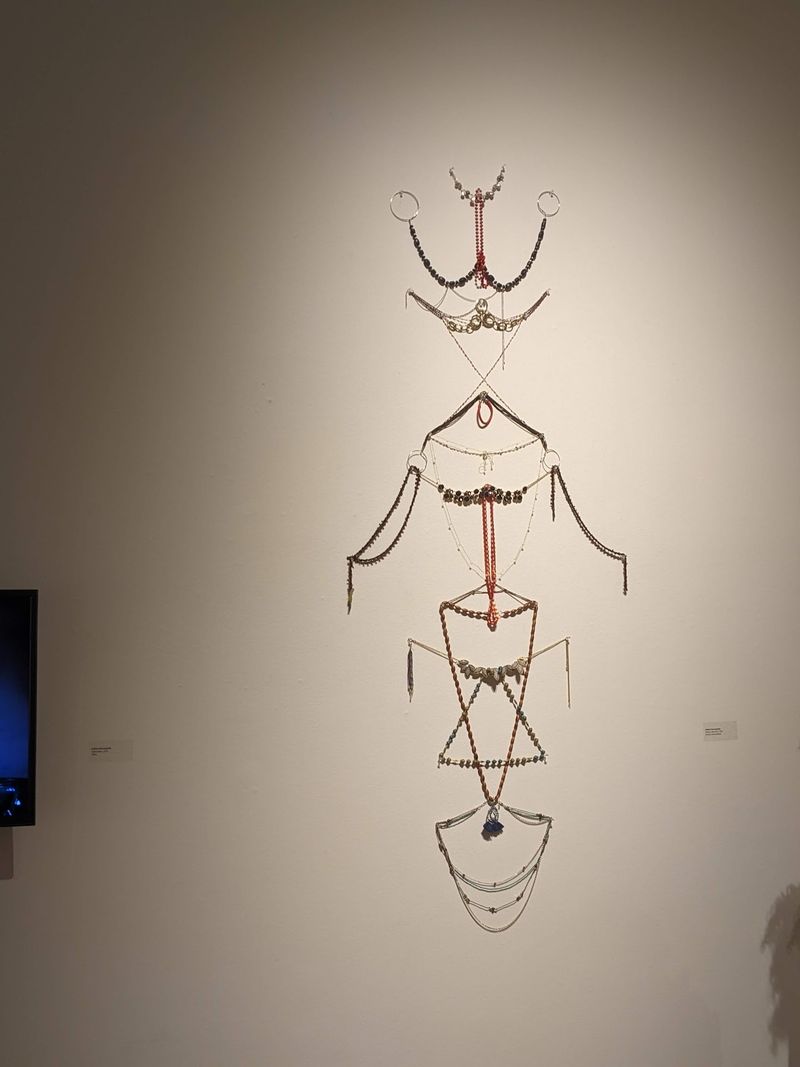
Three spacious galleries, more than 3,700 objects in the permanent collection, and no admission charge. The Richard E.
Peeler Art Center makes a strong case for small-town art stops.
Architect Carlos Jimenez designed the building, and the interior handles natural light beautifully. Ceilings are high, walls are clean, and the artwork gets room to breathe.
Collection pieces span continents and centuries. Rotating exhibitions keep the galleries from settling into sameness, so repeat visits rarely feel like a rerun.
A 90-seat auditorium with carefully engineered acoustics sits inside the same building, used for lectures, screenings, and smaller performances. Sound quality in there surprises people who expect a standard classroom setup.
Student work shares space with professional exhibitions throughout the year, which gives the place an energy that established museums sometimes lack. Conversations in the galleries tend to be livelier as a result.
Gallery hours follow the academic calendar closely, so summer and holiday breaks bring reduced schedules. A quick check of the university arts page prevents a wasted trip.
Plan on roughly an hour to see everything without rushing. Photography rules vary by exhibition, and signage near the entrance usually spells out what is allowed.
The building pairs naturally with a campus walk, sitting close enough to East College that both fit comfortably into a single morning.
A Campus Where Greek Life Actually Started
Sorority history has a starting line, and it runs through Greencastle. Kappa Alpha Theta, the world’s first Greek-letter fraternity for women, was founded at DePauw in 1870.
Alpha Chi Omega’s founding chapter also began here. Two national organizations, one small Indiana campus.
The firsts do not stop there. Indiana’s first Phi Beta Kappa chapter was established at DePauw, and the Society of Professional Journalists, originally Sigma Delta Chi, was founded on this campus in 1909.
Historical markers and plaques scattered around campus point out these origins, and following them turns an ordinary walk into a loose scavenger hunt. Some markers sit in plain view near main walkways, others hide beside quieter buildings.
Context matters for understanding why any of this happened here. DePauw began admitting women in 1867, an unusually forward move for the era, which created the conditions for women to organize formally just three years later.
Journalism students and alumni sometimes make the trip specifically for the Sigma Delta Chi connection. The founding site carries real weight in that profession.
Fraternity and sorority houses line several streets near campus, many of them architecturally interesting on their own. Exteriors are visible from public sidewalks year-round.
For anyone who has ever worn Greek letters, this campus reads a little differently than the average college tour.
Courthouse Square, Brick Sidewalks, and a Deli Worth the Detour
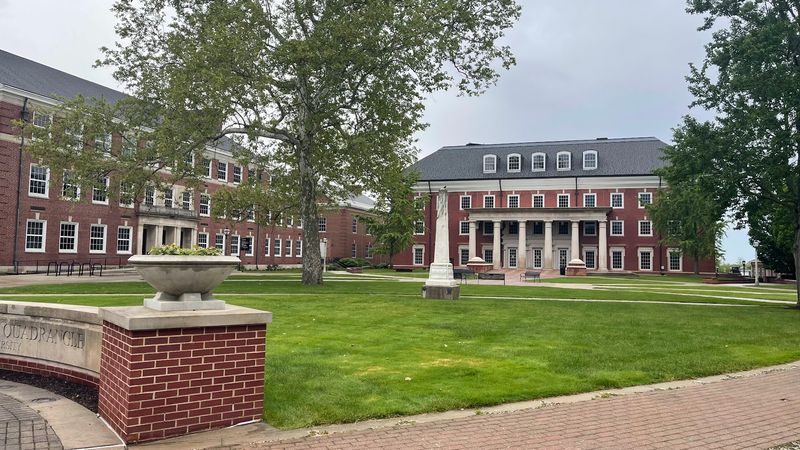
Downtown Greencastle wraps around a courthouse square with brick-paved sidewalks and storefronts that have not been scrubbed of character. The scale is walkable in the truest sense, with everything reachable in a few minutes.
Myers’ Market sits at 302 E. Washington St. and handles lunch better than most places its size.
Sandwiches and smoked meats are the draw, and the line moves at a pace that suggests plenty of regulars.
Eli’s Books, the official university bookstore, anchors the square. Browsing there mixes textbooks with local interest titles and university gear.
Shop windows change with the seasons, and a slow lap around the square reveals more than expected. Benches make it easy to sit and watch the town operate.
First Friday celebrations bring local vendors and live music into the streets on a regular schedule. A Downtown Farmers Market runs from spring through fall, filling the square with produce and handmade goods.
Parking is straightforward and rarely a struggle, which is a small mercy for anyone used to city visits. Most of campus sits within easy walking distance of the square.
Timing a visit around a market morning or a First Friday evening adds noise and movement to a place that otherwise moves gently. Either way, the square rewards unhurried attention.
Covered Bridges and Waterfalls Just Outside Town
Putnam County holds nine historic covered bridges, and chasing them makes for an excellent afternoon drive. Dunbar Covered Bridge sits closest to downtown Greencastle, which makes it the easiest starting point.
Wooden trusses, weathered siding, and the sound of water underneath. Simple pleasures, well preserved.
Cataract Falls, located in the Lieber State Recreation Area near Cloverdale, delivers the biggest scenic payoff in the region. Water tumbles over layered rock ledges, and short trails lead to several viewing points.
Spring runoff makes the falls loudest and most dramatic. Autumn trades volume for color, framing the water in orange and gold.
Robe-Ann Park stays closer to home with walking paths and sports courts, useful when a full excursion is not on the agenda. Locals treat it as an everyday green space rather than a destination.
Country roads connect most of these spots, and cell service can be spotty in places. Downloading a map ahead of time saves frustration.
The Putnam County Playhouse stages community theater productions, and the Putnam County Museum runs rotating exhibits on regional history. Both add indoor options when weather turns.
Stringing two or three bridges together with a stop at the falls fills a half day comfortably. The pace is slow by design, and the scenery along the way is half the point.
Music, Stargazing, and the Case for a Real Campus Visit
Evenings on this campus often come with a soundtrack. The Green Center for the Performing Arts hosts student recitals, faculty concerts, guest artists, opera, and musical theater across the academic year.
Performance schedules are posted publicly, and many events welcome community members. Checking the calendar before a visit can turn a daytime stop into a full day.
McKim Observatory, built in 1884, adds a different kind of evening appeal. The small domed building is a campus landmark in its own right, and public viewing events happen periodically.
Old telescopes and old architecture pair well together. There is something satisfying about looking at stars through equipment housed in a building that predates the automobile.
The tuition policy behind the headline deserves a plain explanation. Families earning under $100,000 annually receive full-tuition financial packages, which removes a major barrier for middle-income students considering a private liberal arts education.
Prospective students and their families can schedule official campus tours through the university, starting from 204 E Seminary St in Greencastle. Tours cover academic buildings, residence areas, and the broader 175-acre campus with its 36 major buildings.
Self-guided walking works fine for casual visitors who simply want to see the grounds. Either approach ends the same way, with a better sense of why this small Indiana town keeps drawing people back.
