Hidden inside a small Indiana town is a museum that holds some of the most surprising stories from World War II. This unique historical destination in Seymour preserves captured enemy aircraft parts, civil rights history, and the legacy of thousands of American pilots who trained there.
Not many people realize that the old airfield grounds were connected to actual enemy aircraft brought over from Germany, Japan, and Italy for study and training purposes.
Beyond the military history, the museum also shares the stories of the people who lived, worked, and served during a defining era in American history.
Whether you are a history fan, a curious traveler, or simply looking for a meaningful weekend stop, this gem offers an experience that is both educational and unforgettable.
See Unearthed Axis Aircraft Parts in the Museum Hangar
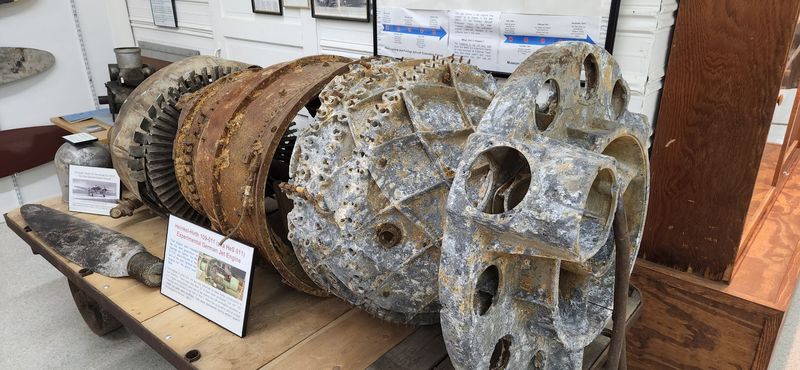
Not every museum can say it literally dug up its collection from the ground. Starting in the early 1990s, organized archaeological recovery efforts began unearthing buried Axis aircraft remains right on the Freeman Field grounds.
What they found was extraordinary.
Hundreds of engine parts, airframe fragments, and mechanical components from German, Japanese, and Italian aircraft were pulled from the soil. One standout piece is an eight-stage compressor from a Junker Jumo 004 engine, the same type that powered the feared Me-262 jet fighter.
Some of the recovered parts are even traced back to aircraft once flown by German ace Josef Priller.
Many German planes that now sit in major institutions, including the Smithsonian, once passed through Freeman Field for evaluation. The museum at 1035 A Ave, Seymour, IN 47274, proudly displays these recovered pieces with detailed plaques explaining their origins.
Rumors of complete buried aircraft were largely disproven, but the sheer volume of parts recovered still tells a remarkable story. Each fragment on display represents a real machine that was once part of a global war.
Walking past these pieces gives you a very different feeling than reading about them in a textbook. This is hands-on history in the most literal sense possible.
Do Not Miss the Foreign Aircraft Evaluation Center Story
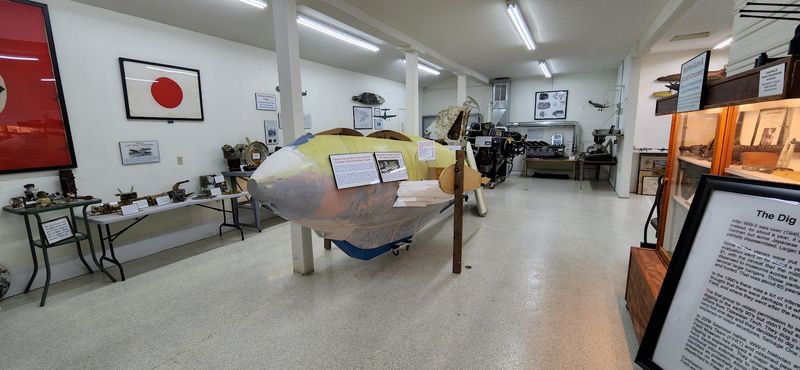
After pilot training wrapped up in early 1945, Freeman Field took on a completely different mission. The base was officially redesignated as the Foreign Aircraft Evaluation Center in June 1945.
Its job was to receive, recondition, study, and store captured enemy aircraft from the war in Europe and the Pacific.
Around 160 enemy planes arrived at the base, with most coming from Germany and others from Japan and Italy. Some of the larger German bombers were actually flown directly from Europe to Indiana for evaluation.
Engineers and military specialists then disassembled many of these aircraft to analyze their technology and performance capabilities.
A few aircraft were even reassembled and test-flown from the Freeman Field runways. The program ran for about a year before ending in late 1946, after which many planes were scrapped or buried on site.
One curious historical footnote involves the wife of base commander Colonel Dorney, who became the first woman to fly as a passenger on a jet aircraft during this very program.
The museum brings this intelligence-gathering chapter to life with recovered components and detailed explanatory displays.
Understanding this postwar chapter adds a completely new layer to what Freeman Field meant beyond its training years. It was quietly one of the most significant aviation intelligence sites in postwar America.
You Can Learn About 4,000 Pilots Who Trained Here
More than 4,000 American pilots earned their wings at Freeman Army Airfield between December 1942 and February 1945. That number alone tells you how important this place was to the U.S. war effort.
The airfield served as an advanced training school focused on twin-engine aircraft operations.
Cadets arrived at Freeman Field already knowing how to fly. Their mission here was to master multi-engine planes and complex instrument-only flying under realistic conditions.
Their main training aircraft was the Beechcraft AT-10 Wichita, a no-frills two-seat plane built for serious instruction. At one point, roughly 250 of these trainers were operating from the base at the same time.
One of the most notable names connected to this training program is Gus Grissom, who would later become one of America’s earliest astronauts. He enlisted in the Army right here at Freeman Field in February 1944.
The airfield also briefly hosted the very first U.S. military helicopter training program, using the Sikorsky R4 Hoverfly. Museum exhibits walk visitors through the full arc of this training legacy with photographs, equipment, and personal stories.
Indiana played a quietly massive role in preparing American airmen for combat, and this museum makes that contribution impossible to ignore. Plan to spend real time with this section because the depth of detail is impressive.
Try the Flight Simulators Built Right Inside the Museum
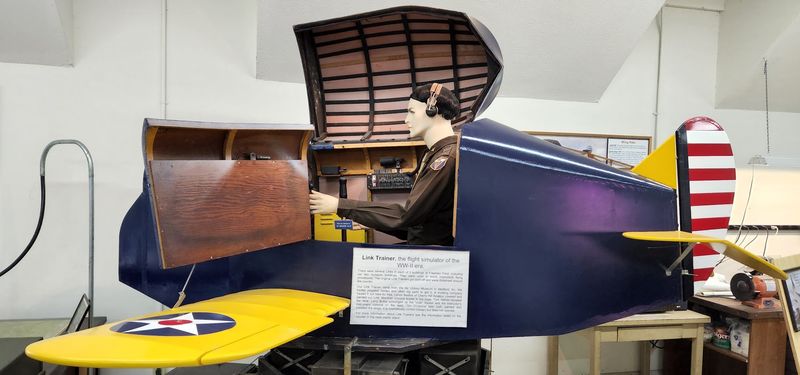
Few history museums offer you a chance to actually sit in the pilot’s seat, but Freeman Army Airfield Museum does exactly that. Visitors of all ages can try out modern flight simulators set up inside the exhibit space.
One of the contemporary simulators on display was even built as an Eagle Scout project, which makes it a point of pride for the local community.
Beyond the modern simulators, the museum also preserves an original Link Trainer from the World War II era. The Link Trainer was a mechanical flight simulator used to teach pilots how to fly using instruments alone, without being able to see outside the cockpit.
During the war, these machines were absolutely critical for preparing pilots to handle bad weather and nighttime flying conditions.
Seeing both generations of flight simulation side by side gives you a powerful sense of how far aviation technology has come. Kids especially love getting behind the controls, and parents often find themselves just as absorbed.
The experience is interactive in a way that most small museums simply cannot offer. It breaks up the exhibit-viewing rhythm nicely and gives everyone in the group something active to do.
Whether you are eight years old or eighty, sitting in a simulator and imagining what those wartime pilots felt is genuinely moving. This is one of the most memorable stops in the entire museum.
Come See the Historic Link Trainer Buildings Themselves
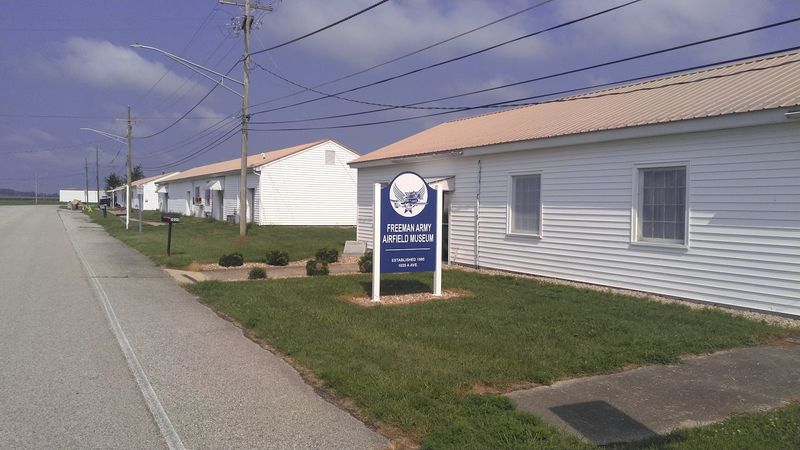
The buildings that house the Freeman Army Airfield Museum are themselves pieces of living history. The museum occupies two surviving former Link Trainer buildings, each measuring approximately 3,000 square feet.
These structures are among only 11 remaining from the original 413 buildings that once covered the sprawling 4-square-mile airfield.
Walking through these spaces means walking through the same rooms where wartime airmen once trained and prepared for combat missions overseas. The museum first opened in 1997 inside one of these buildings.
A second building was acquired in 2002 and opened as an annex in 2009, expanding the exhibit space significantly.
The original Freeman Field was massive by any measure. Its concrete runways alone covered about 175 acres, which is roughly the equivalent of an 80-mile-long two-lane highway laid end to end.
Most of that infrastructure is gone now, but these two buildings anchor the memory of everything the base once was. The architecture is plain and functional, exactly the way military buildings from that period were designed to be.
There is something powerful about standing in a space that has survived while so much else around it disappeared. Visiting Indiana and stopping here means connecting with a place that looks and feels authentically wartime, not reconstructed or polished for tourism.
The buildings do as much storytelling as the artifacts inside them.
Plan to Honor the Tuskegee Airmen Civil Rights Stand
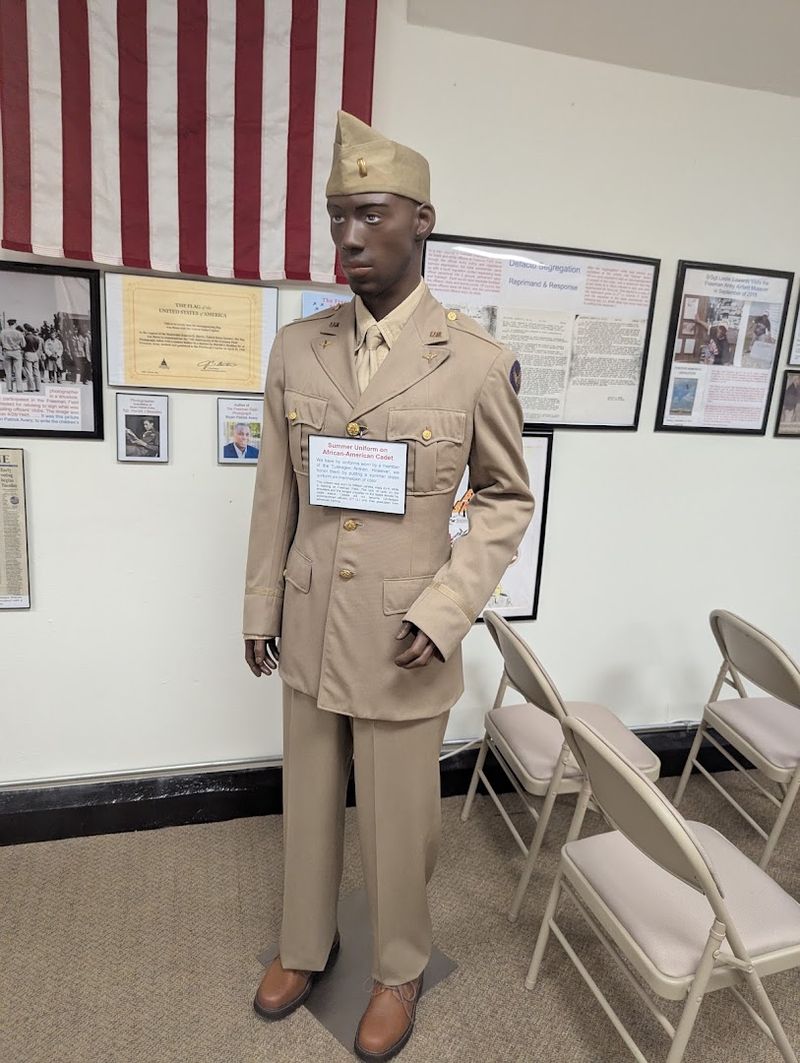
In April 1945, Freeman Field became the site of one of the most courageous acts of nonviolent protest in American military history. The 477th Bomb Group, which included Black officers who were part of the Tuskegee Airmen program, was stationed at the base for continued training.
Despite military regulations that technically prohibited racial segregation, the officer clubs at Freeman Field were being run in a segregated manner.
More than 100 Black officers were arrested after attempting to enter the whites-only officers club and refusing to sign a base regulation that enforced that segregation. They knew the risks.
They acted anyway. This event became known as the Freeman Field Mutiny, and its impact extended far beyond the airfield itself.
Historians widely credit this protest as one of the key events that built momentum toward President Harry Truman signing Executive Order 9981 in 1948, which officially desegregated the U.S. armed forces.
The museum dedicates a substantial exhibit to this chapter, filled with photographs, documents, and personal accounts.
A memorial plaza honoring the Tuskegee Airmen stands as a permanent tribute on the grounds. Spending time with this exhibit is not just about learning military history.
It is about understanding how ordinary people in extraordinary circumstances pushed an entire nation toward fairness. This section of the museum alone makes the trip worthwhile for visitors of any background or age.
Make Time for the Women of WWII Exhibit Inside
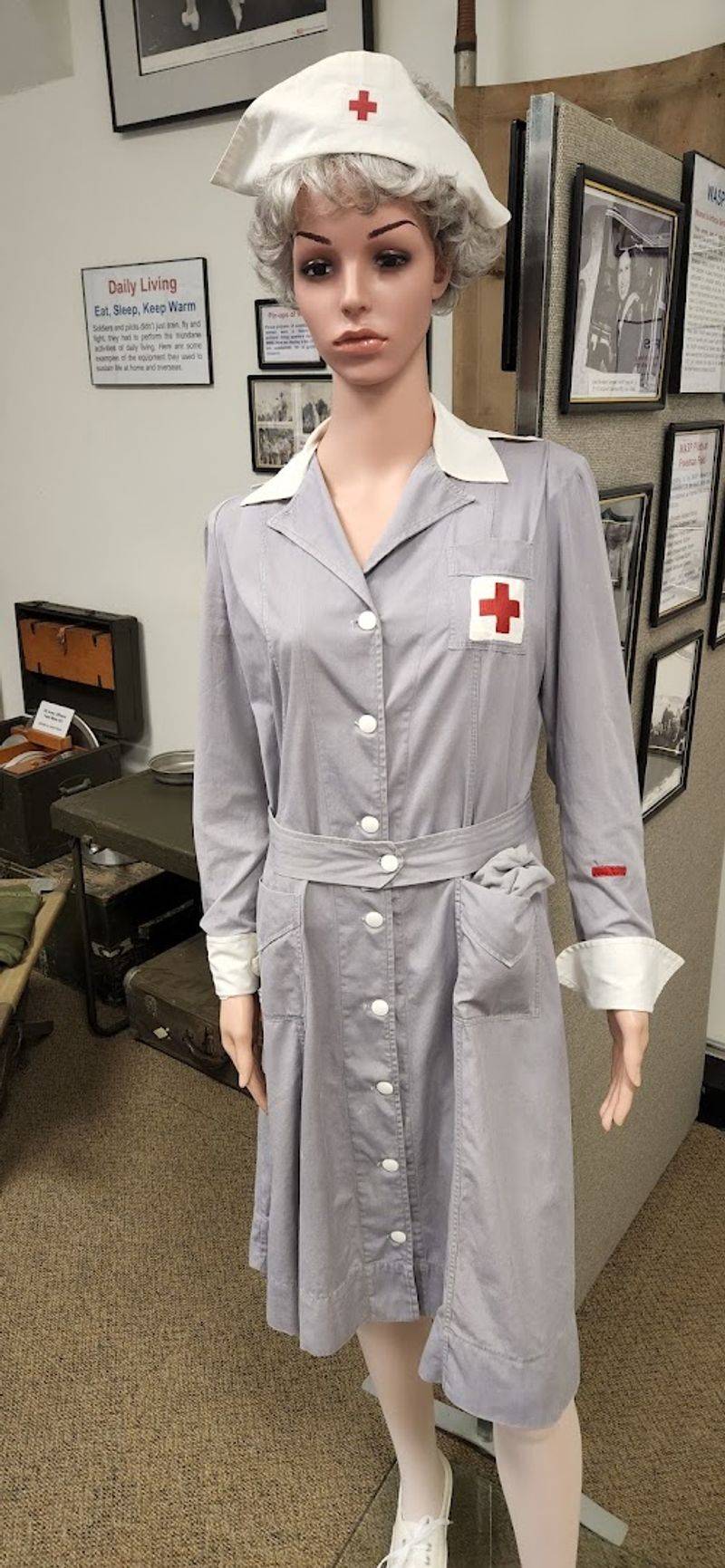
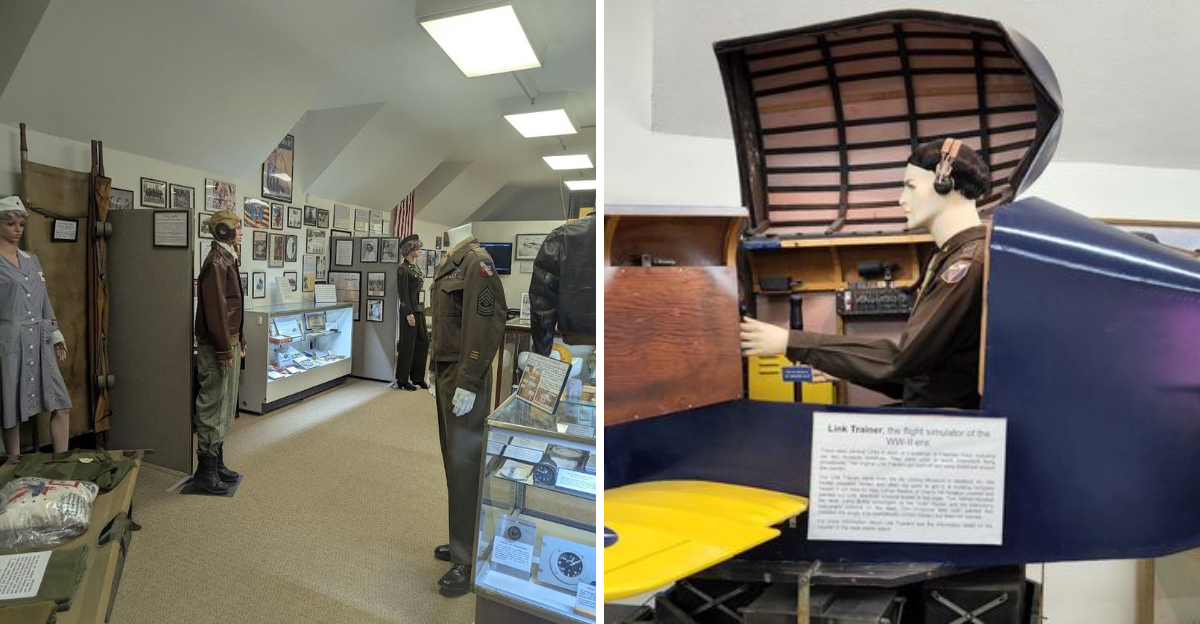
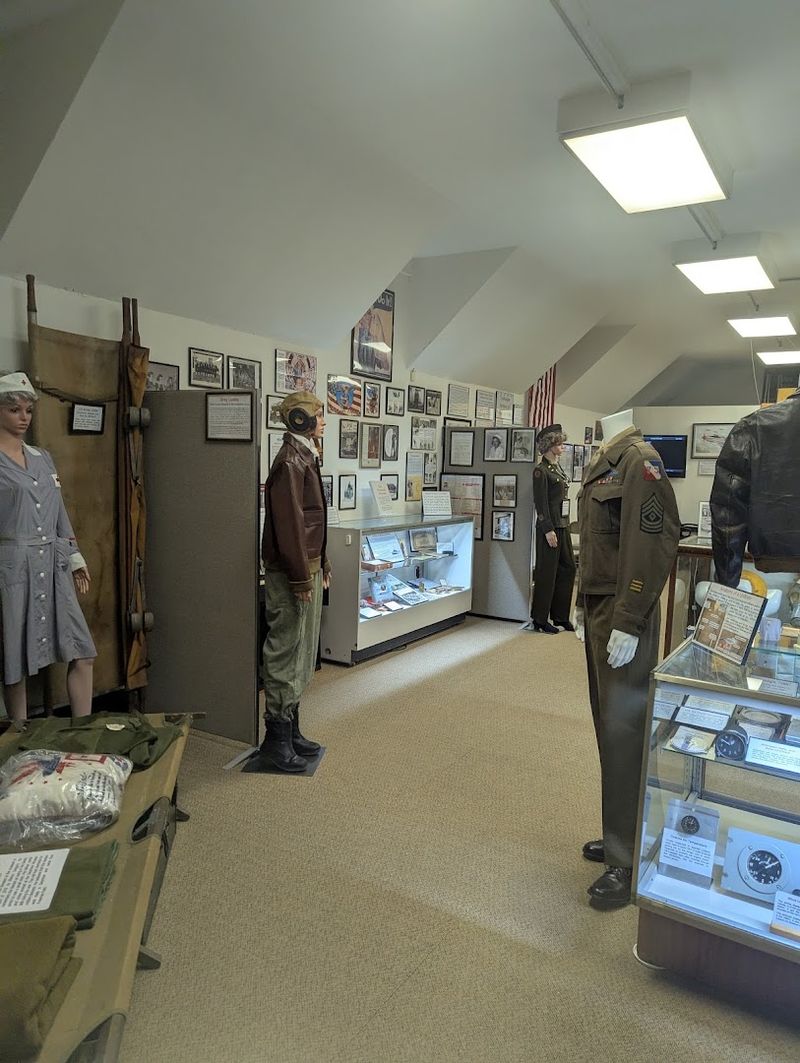
One of the most moving sections of the Freeman Army Airfield Museum focuses on the women who made the entire war effort possible. A dedicated exhibit highlights the wide range of roles women filled during World War II, both at home and in uniform.
Displays cover iconic figures like Rosie the Riveter alongside real women connected directly to Freeman Field itself.
Visitors can see a mannequin dressed in an authentic Army nurse uniform, sourced by one of the museum founders. Another mannequin represents a Red Cross Gray Lady volunteer, showing the variety of service roles women held.
A remarkable centerpiece of the exhibit is the original switchboard that once operated at Freeman Field, later used at Schneck Memorial Hospital, complete with a photograph of Zelda Seibert operating it.
The exhibit also introduces visitors to figures like Virginia Kerth, who worked in recruiting at Freeman Field, and includes personal belongings from women of the era.
Women Airforce Service Pilots, known as WASPs, and Women’s Auxiliary Ferrying Squadron pilots also contributed to operations at the base by performing test and ferry flights.
Their stories are told here with the same care and detail given to the combat pilots. Recognizing these contributions adds important texture to the full picture of what wartime service actually looked like.
This exhibit gives every visitor something personal to connect with, regardless of their background or reason for visiting.
