Along the scenic banks of the Ohio River sits a mansion so grand and elegant that it looks like it belongs in the countryside of ancient Greece rather than the heart of small-town Indiana. The Lanier Mansion in Madison is a stunning example of Greek Revival architecture that has captivated visitors for nearly 180 years.
Built in 1844 by wealthy banker James F.D. Lanier, this magnificent home tells the story of one family’s incredible influence on Indiana’s history.
It also showcases architectural beauty that rivals the finest estates of Europe.
With its towering columns, spiral staircase, and meticulously preserved interiors, the mansion offers a fascinating glimpse into life during the mid-1800s.
It stands as a testament to the vision and craftsmanship of its creators.
Greek Revival Masterpiece Recognized Nationally
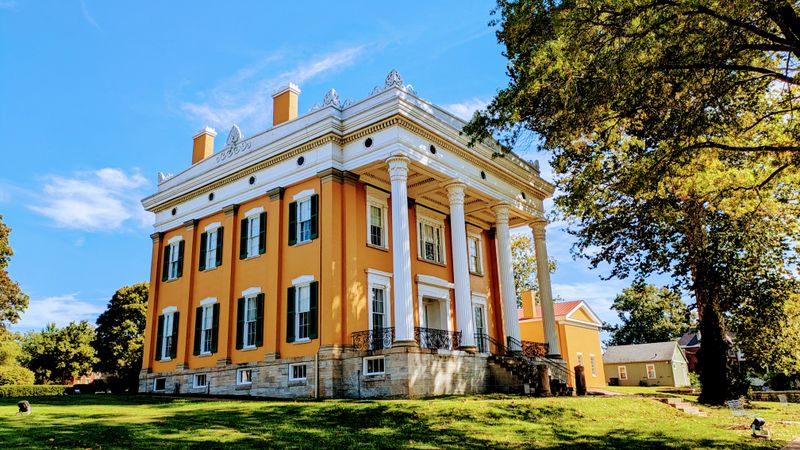
The Lanier Mansion stands as one of the most remarkable examples of Greek Revival architecture in the entire United States. It has earned recognition from the National Park Service for its exceptional design and historical significance.
Completed in 1844, the mansion showcases the architectural style that swept through America in the early 19th century. This movement was inspired by ancient Greek temples and democratic ideals.
Walking up to the mansion, visitors are immediately struck by the massive Corinthian columns that grace the south portico. The entrance feels imposing yet elegant and would feel at home in Athens or Rome.
These towering columns support a grand entablature. They demonstrate the craftsmanship and attention to detail that architect Francis Costigan brought to every aspect of the design.
The columns alone took skilled artisans months to complete. Their construction required precise measurements and expert masonry work.
Beyond the impressive columns, the mansion features intricate classical details throughout its exterior. Doric pilasters frame windows and doorways with geometric precision.
An ornamental cupola crowns the roofline. It adds both visual interest and practical ventilation to the structure.
This architectural element became a signature feature. It helps the mansion stand out even among other Greek Revival homes of the period.
The combination of these classical elements creates a harmonious whole. Visitors are transported back to an era when American architecture looked to ancient Greece for inspiration and guidance.
Every detail follows principles laid down by ancient architects thousands of years ago. These ideas were adapted brilliantly to the Indiana landscape and climate of the 1840s.
A Banker Who Saved Indiana During the Civil War
James Franklin Doughty Lanier wasn’t just a wealthy banker who built a beautiful home. He was a genuine hero who helped save Indiana from financial ruin during one of the most critical periods in American history.
When the Civil War erupted in 1861, the Indiana state legislature found itself deeply divided over whether to fund the Union war effort. Political disagreements prevented lawmakers from appropriating money for troops and military supplies.
Faced with the possibility that Indiana soldiers would go without proper equipment and that the state might default on its debts, Lanier stepped forward with an extraordinary offer.
He personally loaned the state of Indiana more than one million dollars, an astronomical sum in the 1860s. The money was used to outfit troops and pay interest on state obligations.
This funding allowed Indiana to equip its regiments, pay soldiers, and maintain its financial credibility during the war years.
Lanier’s financial intervention came at considerable personal risk. There was no guarantee the state would be able to repay such a massive loan.
His willingness to put his own fortune on the line demonstrated his commitment to the Union cause and his faith in Indiana’s future. The loan was eventually repaid with interest.
Lanier’s actions during those critical years earned him lasting recognition as one of Indiana’s most important citizens.
Today, visitors to the mansion learn not just about beautiful architecture and fine furnishings, but about the remarkable character of the man who built it.
Lanier’s legacy extends far beyond the walls of his home. It touched the lives of thousands of Indiana soldiers and their families during the nation’s darkest hour.
The Iconic Three-Story Spiral Staircase
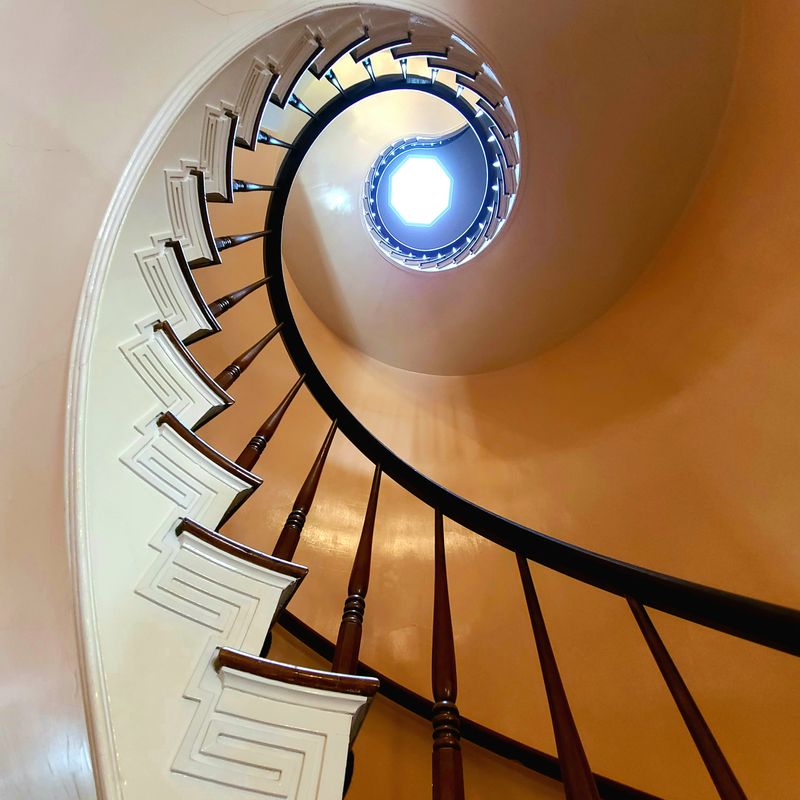
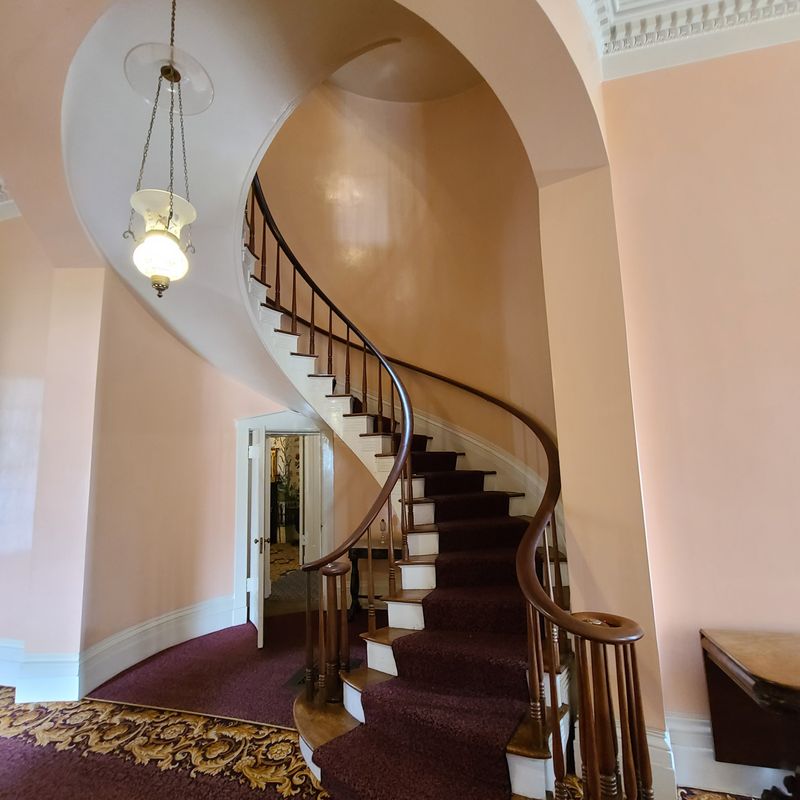
Among all the architectural marvels inside the Lanier Mansion, none captures visitors’ imagination quite like the breathtaking three-story spiral staircase that winds its way from the first floor all the way up to the lantern of the cupola. This engineering masterpiece is completely self-supporting and does not rely on a central column or external walls to hold its weight.
It literally holds itself up through the precise arrangement of its curved components.
Standing at the base of the staircase and looking upward creates a dizzying and unforgettable visual experience. From the center of the ground floor, visitors can gaze straight up through the heart of the house, following the graceful curves of the staircase as it spirals higher and higher.
The view ultimately reaches the skylight at the very top of the cupola. This vertical perspective creates a sense of openness and grandeur that was extremely unusual in homes of the 1840s.
The construction of such a staircase required extraordinary skill and mathematical precision from the craftsmen who built it. Each step had to be carefully shaped and positioned to distribute weight evenly throughout the structure.
Authentic European Wallpaper From France
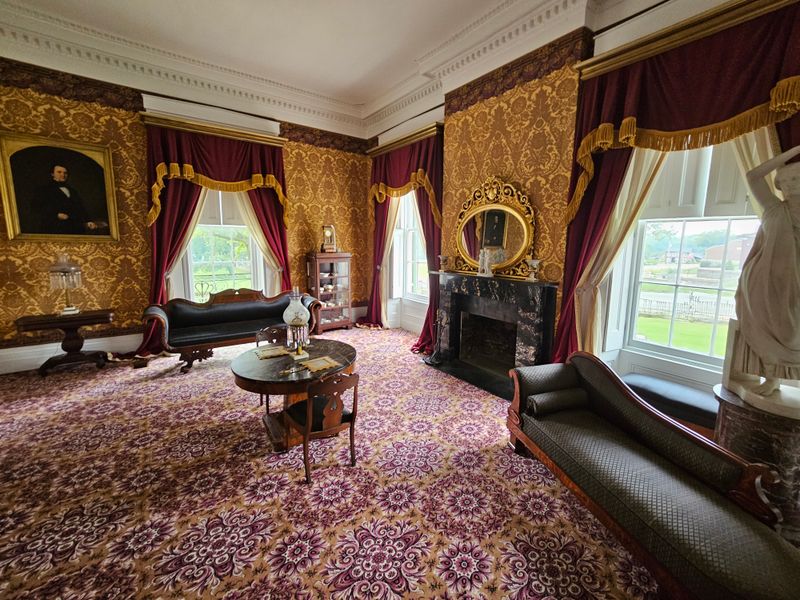
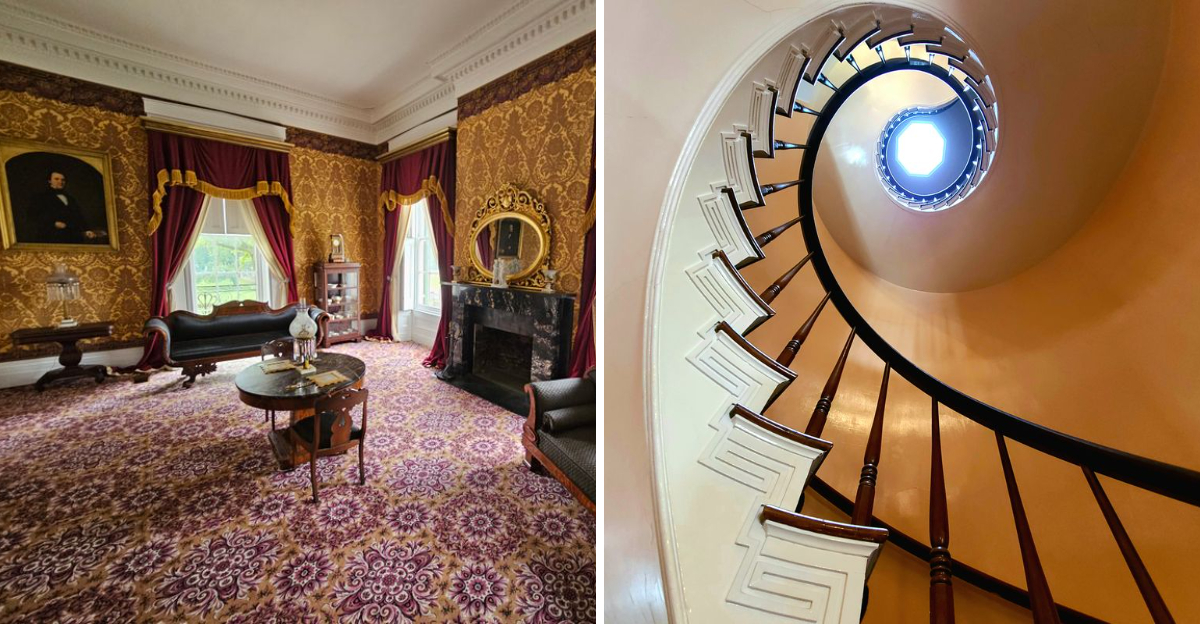
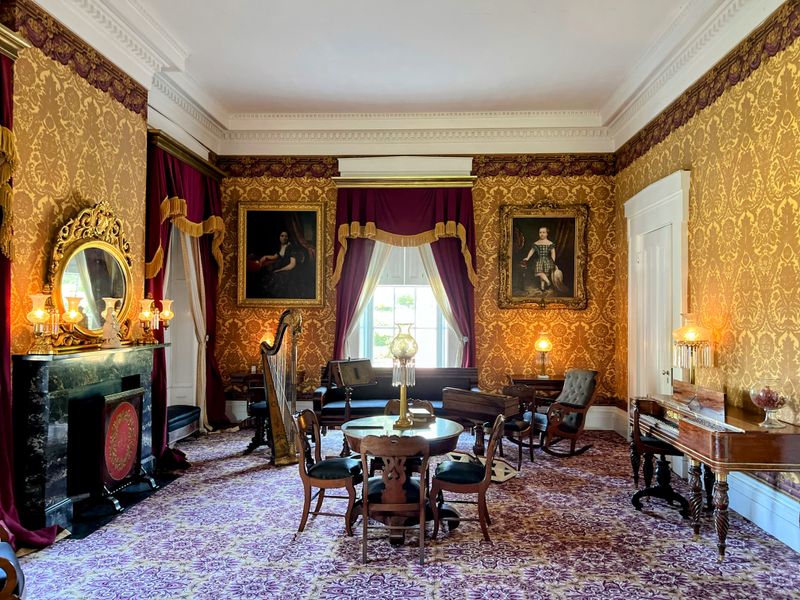
Maintaining historical accuracy in a restored mansion requires attention to countless details, and the Lanier Mansion’s curators have gone to extraordinary lengths to ensure that even the wallpaper reflects the home’s original 1844 appearance. The mansion features reproduction wallpaper manufactured by Zuber, a prestigious French company located in Rixheim, France, that has been producing luxury wallpapers since 1797.
What makes this choice particularly significant is that Zuber is the very same company that originally provided decorative papers for the White House and other important American buildings during the 19th century.
The Lanier family would have had access to the finest decorative materials available in their era. Choosing French wallpaper from a renowned manufacturer would have been a mark of sophistication and wealth.
By sourcing reproduction papers from the same company, the mansion’s restoration team has captured the authentic look and feel of the original interiors.
These hand-blocked wallpapers feature intricate patterns and rich colors that were typical of the period. Designs range from classical motifs to elaborate scenic panels.
The manufacturing process used by Zuber has remained largely unchanged for over two centuries. It involves skilled artisans who hand-print each section using traditional wooden blocks.
Built From Local Indiana Materials
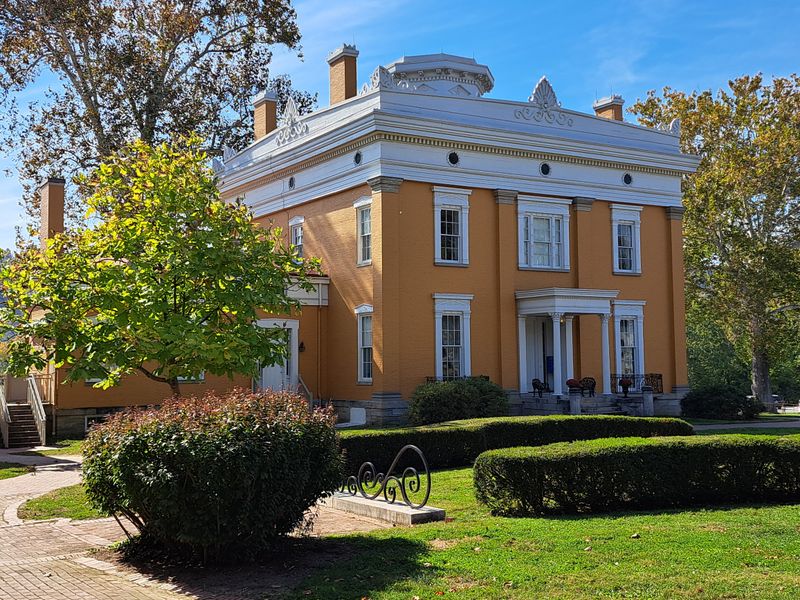
Despite its distinctly European appearance and classical Greek inspiration, the Lanier Mansion was constructed almost entirely from materials sourced in the Madison, Indiana area. This demonstrates the abundance of natural resources and skilled craftsmen available in the region during the 1840s.
This combination of international design and local materials creates a uniquely American architectural achievement. It blends Old World elegance with New World practicality and ingenuity.
The thousands of bricks that form the mansion’s walls were manufactured at a brickyard located near the construction site. The bricks were made using clay deposits found in the area.
Local brick makers worked for months to produce the massive quantity of uniform, high-quality bricks needed for such an ambitious project.
The foundation of the mansion rests on blue limestone quarried from nearby sources. It provides a solid and durable base that has supported the structure for nearly 180 years without significant settling or structural problems.
Perhaps most impressive is the extensive interior woodwork, which showcases the beautiful grain and workability of tulip poplar. This tree species was extremely plentiful in Indiana forests during the mid-19th century.
Craftsmen shaped this local wood into elegant moldings, door frames, window casings, and other decorative elements throughout the house.
Innovative Ventilation and Space-Saving Features
Architect Francis Costigan didn’t just create a beautiful building. He incorporated several innovative features that were remarkably forward-thinking for the 1840s, demonstrating his understanding of both aesthetics and practical functionality.
These clever design elements helped make the mansion more comfortable to live in. They also solved common architectural challenges in creative ways that impressed both contemporary observers and modern visitors.
The cupola that crowns the mansion serves a practical purpose beyond its decorative appeal. Costigan designed it with carefully positioned vents that control heat and ventilation throughout the entire house.
This natural airflow system draws hot air upward and out of the living spaces below. During Indiana’s warm summers, this passive cooling system would have made the mansion significantly more comfortable than most homes of the period.
Many houses at the time became stifling and unbearable during heat waves.
Another ingenious feature found throughout the mansion is Costigan’s use of curved doors in the hallways and transitional spaces. These specially designed doors swing on curved tracks, allowing them to tuck neatly against curved walls and maximize usable space.
This solution addressed a common problem in Greek Revival homes. Grand proportions and wide doorways could otherwise create awkward traffic patterns and wasted space.
The architect also incorporated other thoughtful details, such as strategically placed windows to maximize natural light and cross-ventilation. He carefully calculated room proportions to create a sense of harmony and balance throughout the interior.
Indiana’s First State Memorial and Ongoing Preservation
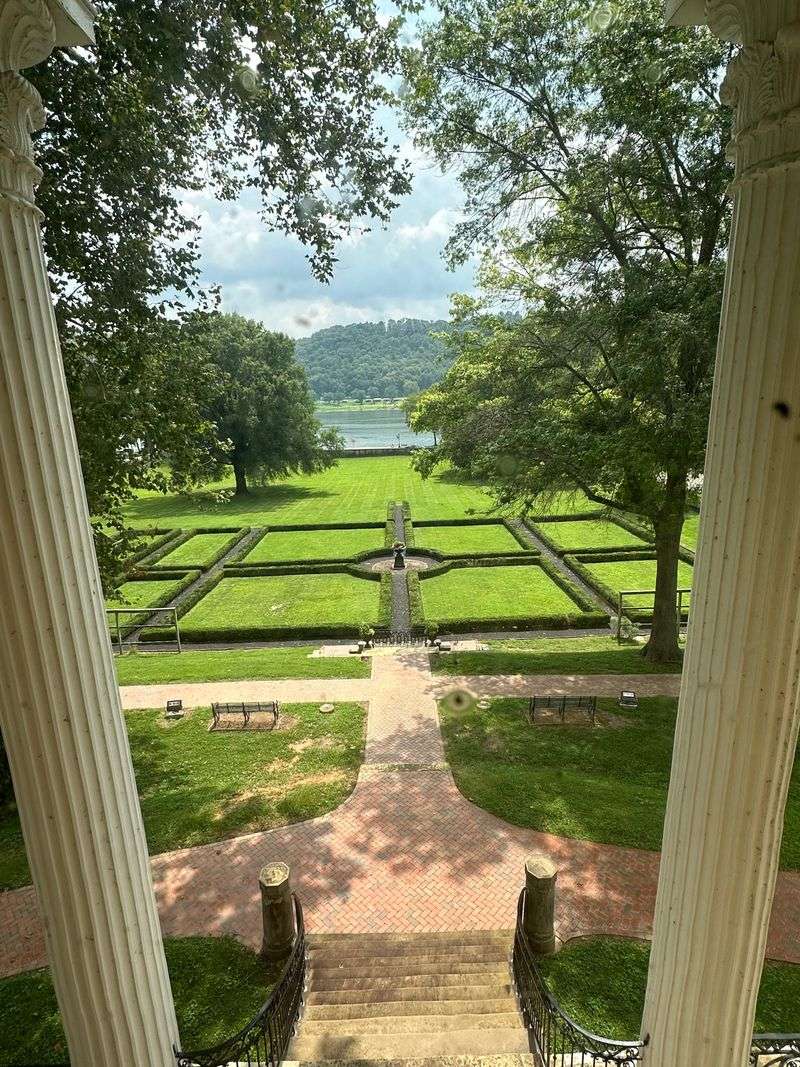
The story of the Lanier Mansion did not end with the Lanier family. Its most important chapter began in 1926 when the family generously donated the property to the state of Indiana, making it the state’s very first memorial property.
This landmark donation established a precedent for historic preservation in Indiana. It ensured that future generations would be able to experience this architectural treasure and learn about the family’s contributions to state history.
Since becoming state property, the mansion has undergone meticulous restoration work to return it to its 1844 appearance. Historians and preservationists researched every detail to ensure accuracy.
This painstaking process involved analyzing paint layers to determine original colors. It also included studying 19th-century lithographs to recreate the formal gardens and tracking down period-appropriate furnishings.
Most of the furniture pieces are period-appropriate rather than original to the family. A few genuine Lanier possessions remain in the collection.
The formal gardens surrounding the mansion have been recreated based on historic lithographs and descriptions. They feature plantings and layouts typical of wealthy estates in the 1840s.
These landscaped grounds provide a beautiful setting for the mansion. They also help visitors understand how the entire property would have appeared during the Lanier family’s residency.
Seasonal plantings ensure that the gardens remain attractive and historically appropriate throughout the year.
Located at 601 W 1st St, Madison, IN 47250, the mansion is open for tours Wednesday through Sunday from 10 AM to 5 PM. Knowledgeable guides lead visitors through the rooms and share the fascinating stories of the Lanier family and their home.
The site continues to serve as an educational resource and tourist destination. It attracts thousands of visitors each year.
Dear Reader: This page may contain affiliate links which may earn a commission if you click through and make a purchase. Our independent journalism is not influenced by any advertiser or commercial initiative unless it is clearly marked as sponsored content. As travel products change, please be sure to reconfirm all details and stay up to date with current events to ensure a safe and successful trip.
