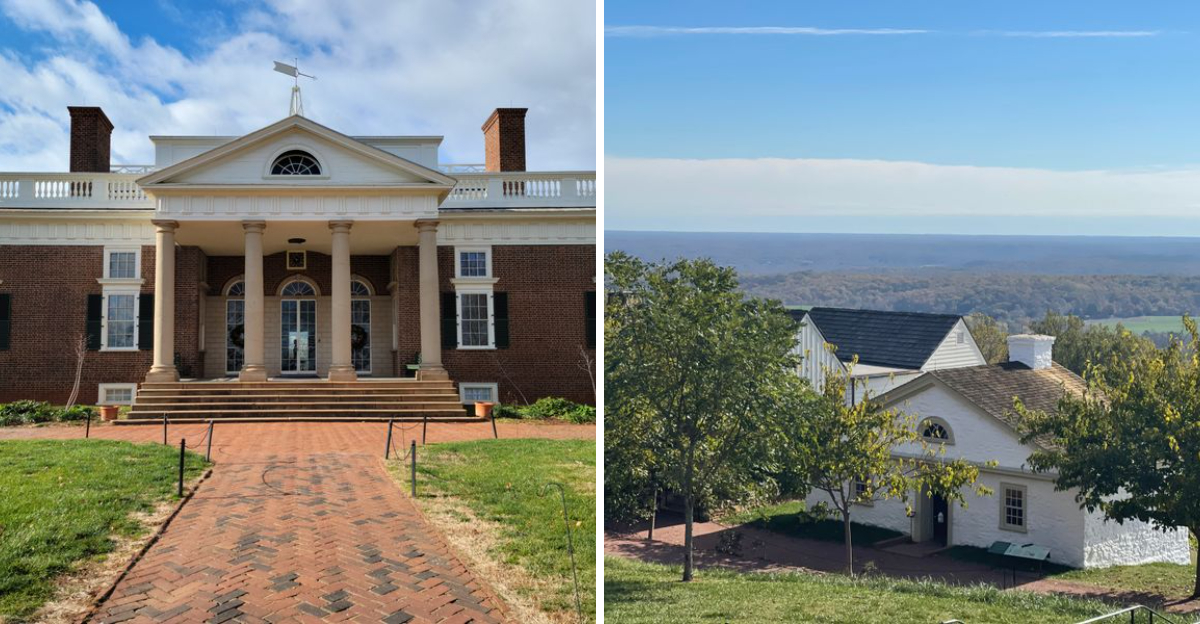
What happens when one of America’s most celebrated founding fathers built a stunning estate on the backs of enslaved people? Monticello sits atop a Virginia hill, a testament to Thomas Jefferson’s genius and a stark reminder of his contradictions.
This historic mansion at 1050 Monticello Loop in Charlottesville doesn’t just tell the story of the man who penned the Declaration of Independence. It forces visitors to confront the uncomfortable truth about freedom, equality, and the institution of slavery that built this nation.
Debates rage on about how we should remember Jefferson and places like Monticello. Should we celebrate his contributions to democracy or condemn his ownership of human beings?
The answer isn’t simple, and that’s exactly why this place sparks such heated conversations. Walk these grounds and you’ll see why Monticello remains one of Virginia’s most controversial and essential destinations.
The Man Who Wrote All Men Are Created Equal Owned Over 600 Slaves
Thomas Jefferson penned some of the most beautiful words about liberty ever written, yet he enslaved hundreds of people throughout his lifetime. That paradox sits at the heart of every argument about Monticello and its place in American memory.
Visitors walking through the elegant rooms see Jefferson’s impressive book collection and ingenious inventions. They admire his architectural brilliance and intellectual curiosity.
But step outside to Mulberry Row, and you’ll find the reconstructed slave quarters where men, women, and children lived in bondage.
Tour guides don’t shy away from this contradiction anymore. They discuss how Jefferson inherited slaves, purchased more, and never freed most of them even in death.
He wrote against slavery in early drafts of the Declaration, yet built his wealth on it.
Some guests appreciate this honest reckoning with history. Others feel it tarnishes Jefferson’s legacy unfairly.
The arguments get passionate because they touch on how we define American values.
Jefferson himself wrestled with this hypocrisy, writing about slavery’s evils while profiting from it. That internal conflict mirrors our national struggle to reconcile the ideals we proclaim with the realities we’ve lived.
Sally Hemings and the Relationship That Changed Everything
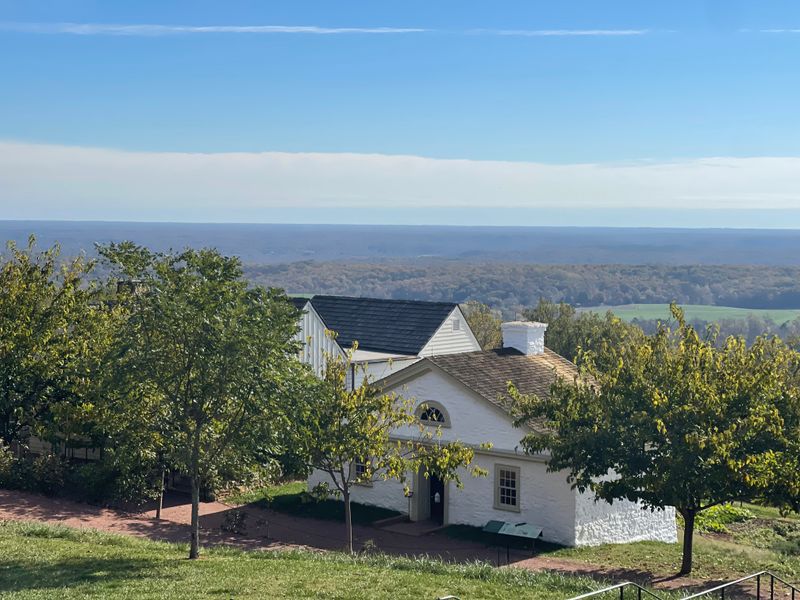
Few historical relationships generate more debate than the one between Thomas Jefferson and Sally Hemings, an enslaved woman at Monticello. DNA evidence confirmed what descendants had claimed for generations: Jefferson fathered at least six children with Hemings.
The power imbalance makes consent impossible in such circumstances. Hemings was enslaved, making any relationship inherently coercive.
Yet some Jefferson defenders still frame it as a love affair, which infuriates those who understand the brutal realities of slavery.
Monticello now tells Sally Hemings’s story prominently, dedicating exhibition space to her life and her children. You’ll learn she traveled to Paris with Jefferson’s daughter and lived in rooms adjacent to his at Monticello.
Her children received privileges other enslaved people didn’t, and Jefferson freed all of them.
Critics argue the site has gone too far in emphasizing this narrative. Supporters counter that ignoring it would be historical malpractice.
The tension reflects broader cultural battles about whose stories deserve telling.
Hemings remained enslaved her entire time at Monticello. Jefferson never formally freed her, though his daughter allowed her to live freely after his death.
That complicated legacy resists simple storytelling.
Mulberry Row Reveals the Hidden Foundation of Jefferson’s Paradise
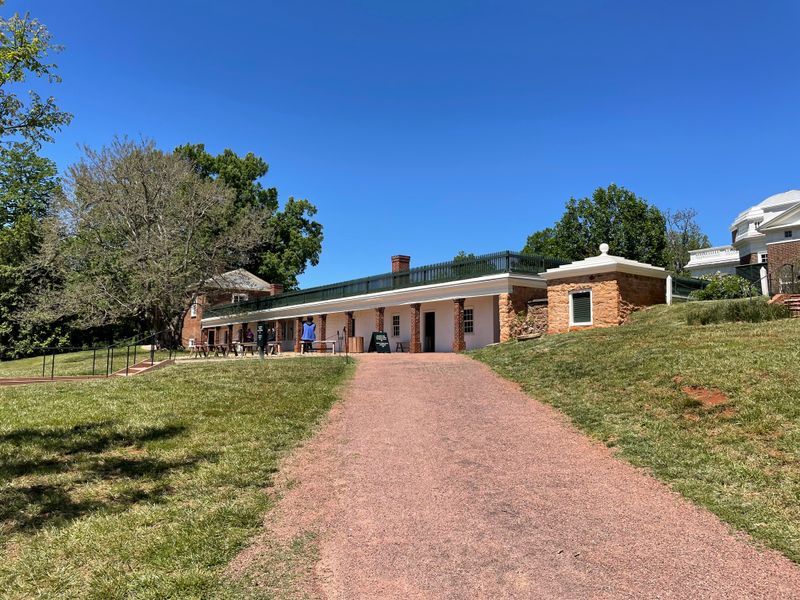
Stroll down Mulberry Row and you’ll walk the same path enslaved workers traveled daily. This thousand foot road was Monticello’s industrial and residential hub, where blacksmiths, carpenters, cooks, and textile workers labored to maintain Jefferson’s mountaintop estate.
Archaeological excavations continue uncovering artifacts from the slave quarters, workshops, and storage buildings that lined this street. Buttons, tools, pottery shards, and building foundations tell stories that written records often omit.
These objects belonged to real people with names, families, and dreams.
The contrast between the mansion’s grandeur and these humble dwellings shocks many visitors. Jefferson designed his estate so enslaved workers remained largely invisible to guests, using underground passages and strategic landscaping.
That architectural choice reflected his desire to enjoy slavery’s benefits without confronting its human cost.
Modern interpreters now make those invisible people visible again. They share names like Isaac Granger, who worked as a blacksmith and tinsmith, and Edith Fossett, whose culinary skills made Monticello famous for its French cuisine.
Their labor built Jefferson’s legacy.
Some tourists find this focus depressing or politically motivated. Others consider it essential truth telling that honors forgotten lives and complicates our understanding of American history.
The Architecture Celebrates Enlightenment Ideas While Hiding Brutal Realities
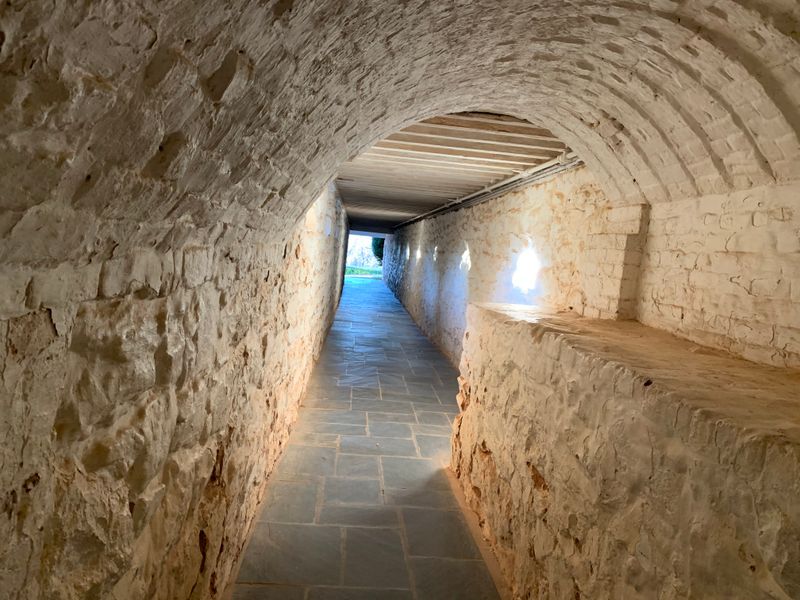
Jefferson’s architectural genius shines throughout Monticello, from the iconic dome to the ingenious dumbwaiters and revolving serving doors. He designed a home that embodied Enlightenment principles of reason, beauty, and progress.
Look closer and you’ll notice how the design concealed the enslaved workforce. Narrow staircases kept servants out of sight.
Underground passageways allowed them to move between buildings without disturbing the aesthetic experience of guests. Even the kitchen was separated from the main house.
This architectural sleight of hand let Jefferson and his visitors enjoy cultured conversation and refined dining without acknowledging who made it possible. The building itself participated in the dehumanization of enslaved people by rendering them invisible.
Tour guides point out these features now, explaining how spatial design reinforced social hierarchies. The same dome that represents Jefferson’s innovative spirit also caps a building constructed partly by enslaved laborers using bricks they made themselves.
Architecture enthusiasts sometimes bristle at this critique, arguing it diminishes Jefferson’s artistic achievements. But understanding the full context makes those achievements more complex and historically accurate, not less impressive.
Beauty and injustice coexisted in these walls, just as they did throughout the antebellum South.
The Tours Have Changed and Not Everyone Is Happy About It
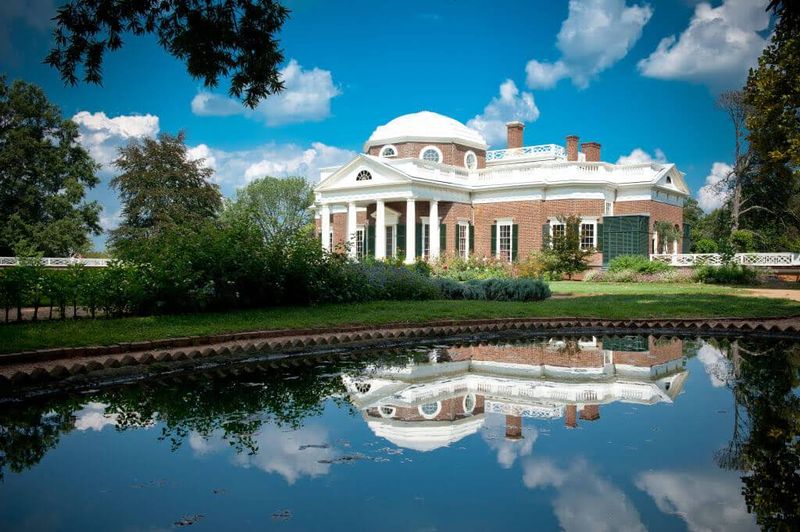
Monticello tours look dramatically different than they did a generation ago. Guides once focused almost exclusively on Jefferson’s accomplishments, inventions, and political philosophy.
Today’s tours devote significant time to discussing slavery and the people Jefferson enslaved.
This shift reflects decades of scholarship and advocacy by descendants of Monticello’s enslaved community. Organizations like Getting Word have collected oral histories and documented family trees, giving voice to people history tried to erase.
Their work transformed how Monticello tells its story.
Not all visitors appreciate the change. Some reviews complain about guides who seem to hate Jefferson or push political agendas.
They came to celebrate a founding father and feel ambushed by uncomfortable truths. Others praise the honesty and say previous tours whitewashed history.
Monticello’s management walks a tightrope, trying to honor Jefferson’s contributions while acknowledging his profound moral failures. Staff training emphasizes presenting facts without modern political commentary, though what counts as political often depends on your perspective.
The debates in online reviews mirror larger cultural battles about historical memory. Should we judge historical figures by modern standards?
Can we celebrate achievements while condemning moral failures? Monticello forces these questions on everyone who visits, making it Virginia’s most thought provoking historic site.
Jefferson’s Grave Sits Near Descendants He Never Acknowledged
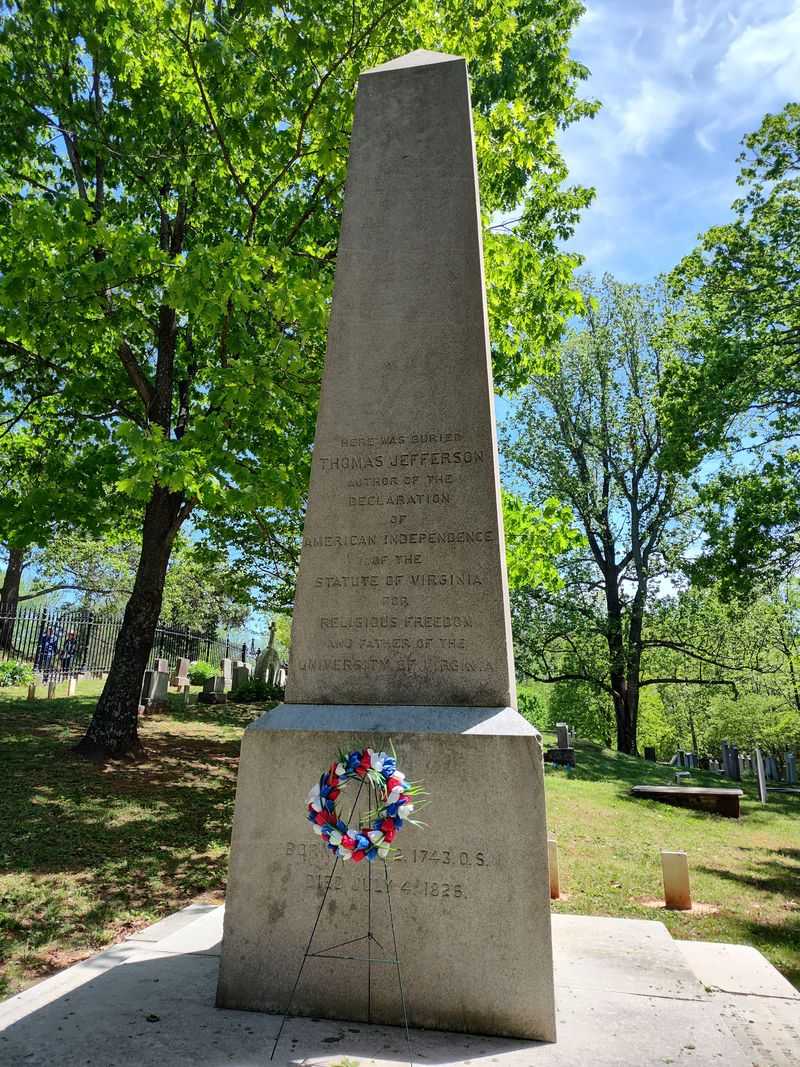
Walk down to the family graveyard and you’ll find Thomas Jefferson’s tombstone, marked with the accomplishments he chose to be remembered for. Notably absent: his presidency.
He listed author of the Declaration of Independence, the Virginia Statute for Religious Freedom, and father of the University of Virginia.
Nearby rest other Jefferson family members, including descendants who continue to be buried there today. But for generations, this cemetery excluded descendants of Sally Hemings despite their Jefferson bloodline.
The Monticello Association, which manages the graveyard, long denied their membership applications.
That exclusion became a flashpoint in debates about Jefferson’s legacy. Hemings descendants organized their own gatherings at Monticello, demanding recognition.
Some Monticello Association members supported their inclusion, while others fought it, creating bitter family feuds.
The cemetery’s landscape tells a story about which families count and which don’t, about legitimacy and shame, about how we literally memorialize the past. Even in death, Jefferson’s contradictions persist.
Recent years have seen progress toward inclusion, though tensions remain. The graveyard represents in microcosm America’s ongoing struggle to reckon with slavery’s legacy and determine who belongs in our national family.
These debates won’t end anytime soon, and Monticello remains ground zero for them.
The Grounds Are Breathtaking But That Beauty Has a Dark History
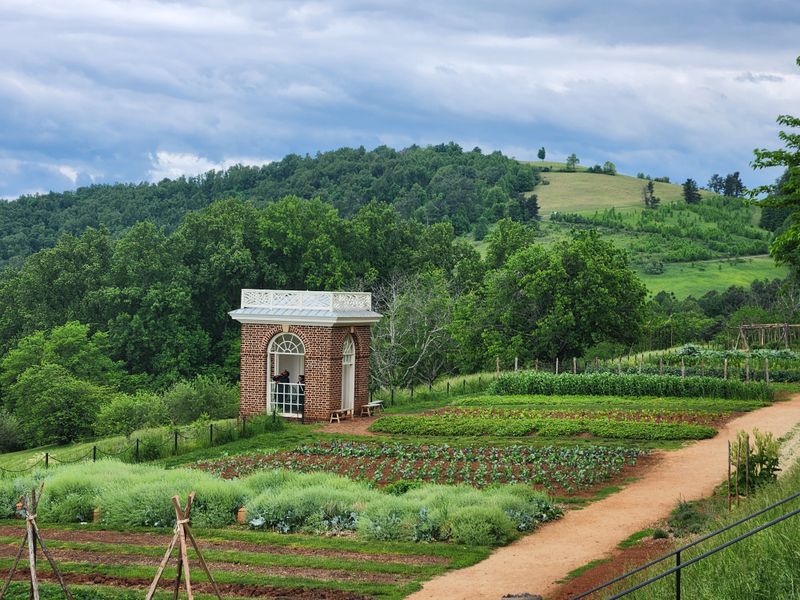
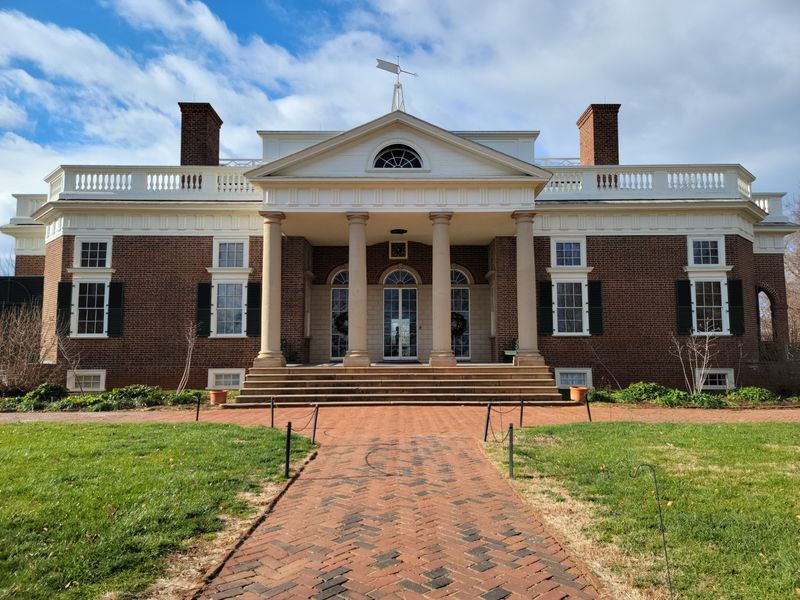
Stand on Monticello’s terrace and you’ll understand why Jefferson never wanted to leave. The Blue Ridge Mountains roll across the horizon in layers of purple and green.
The meticulously maintained gardens showcase Jefferson’s passion for botany and experimentation. Peacocks sometimes strut across the lawn.
Every bit of this beauty required enslaved labor. Workers terraced the hillside, planted and maintained gardens, constructed buildings, and performed the endless maintenance a mountaintop estate demands.
The pastoral landscape Jefferson cherished existed because hundreds of people had no choice but to create it.
The vegetable garden still grows heirloom varieties Jefferson cultivated, tended now by paid staff rather than enslaved gardeners. You can buy seeds from these plants in the gift shop, a connection to Jefferson’s agricultural experiments that feels both fascinating and uncomfortable.
Visitors often describe the views as breathtaking, and they genuinely are. But that aesthetic pleasure comes freighted with historical knowledge that’s impossible to ignore once you know the full story.
Can you enjoy beauty built on suffering? Should you?
These questions don’t have easy answers. The landscape itself becomes a teaching tool about American history’s complexities.
Virginia’s natural beauty and its brutal past intertwine here in ways that force reflection and debate.
The Declaration of Independence Was Written by a Slave Owner
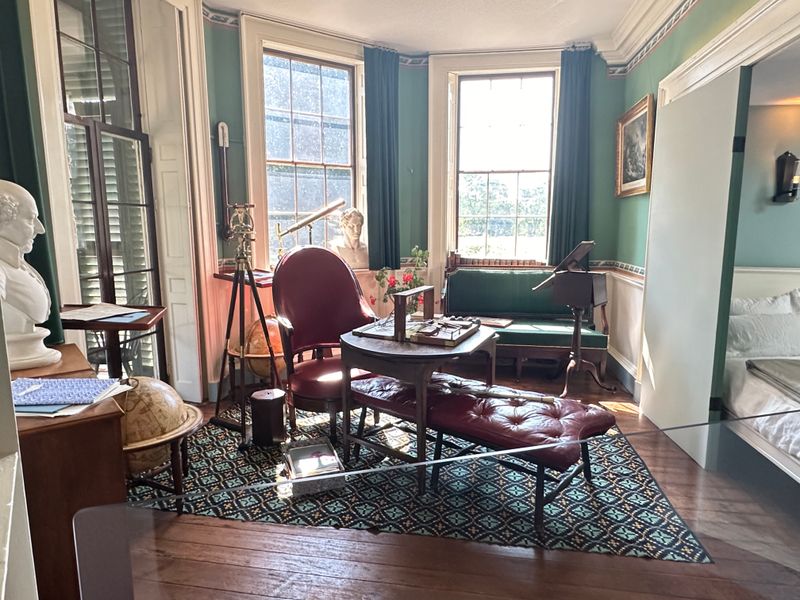
Jefferson’s study at Monticello is where he retreated to read, write, and think. This room represents the intellectual birthplace of ideas that shaped American democracy.
He drafted the Declaration of Independence elsewhere, but refined his political philosophy here, surrounded by books and scientific instruments.
The irony burns hot for many visitors. Jefferson wrote that all men are created equal with unalienable rights to life, liberty, and pursuit of happiness.
Meanwhile, people he owned cooked his meals, cleaned his chamber pot, and raised his children by Sally Hemings.
How do we hold both truths simultaneously? Jefferson genuinely believed in human rights and democratic governance.
He also participated in and profited from a system that denied those rights to millions. His words inspired liberation movements worldwide while his actions perpetuated bondage.
Some argue we should separate the ideas from the man, celebrating the Declaration’s principles regardless of its author’s hypocrisy. Others contend that hypocrisy fundamentally undermines those principles and must be confronted.
Monticello doesn’t resolve this tension, it amplifies it. Standing in Jefferson’s study, you feel the weight of that contradiction.
The room holds both his brilliance and his moral blindness, forcing visitors to grapple with uncomfortable complexity rather than comfortable hero worship.
Modern Archaeology Keeps Uncovering Uncomfortable Truths
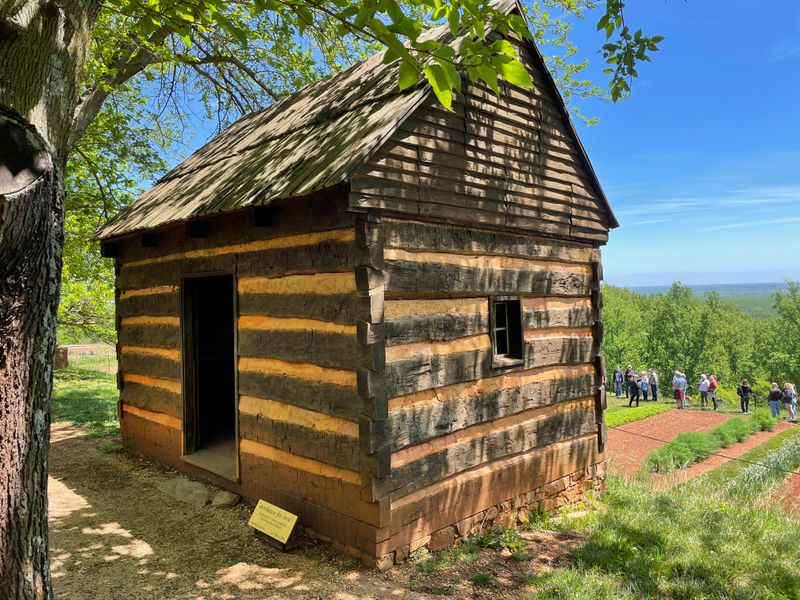
Active archaeological digs continue at Monticello, and visitors can sometimes watch researchers at work. These excavations consistently reveal details about enslaved people’s lives that written records omitted or distorted.
Every artifact adds depth to our understanding.
Recent digs uncovered the sites of slave dwellings, workshops, and even a stone house where enslaved overseers lived. Researchers found buttons, beads, ceramics, and tools that enslaved people owned and used.
These objects humanize people whom Jefferson’s records often reduced to names on inventory lists.
The archaeology program explicitly centers enslaved people’s experiences, using scientific methods to recover stories that powerful people tried to erase. This approach represents a significant shift in how historic sites operate, prioritizing marginalized voices over famous figures.
Critics sometimes question this emphasis, arguing Monticello has become too focused on slavery at the expense of Jefferson’s achievements. Supporters respond that ignoring slavery in favor of a sanitized narrative does historical violence to people who suffered and deserve recognition.
The digs continue because there’s so much we still don’t know. Each season brings new discoveries that complicate our understanding.
Monticello has become as much about the enslaved community as about Jefferson himself, reflecting changing priorities in how we study and present American history in Virginia and beyond.
Visiting Monticello Means Confronting America’s Original Sin
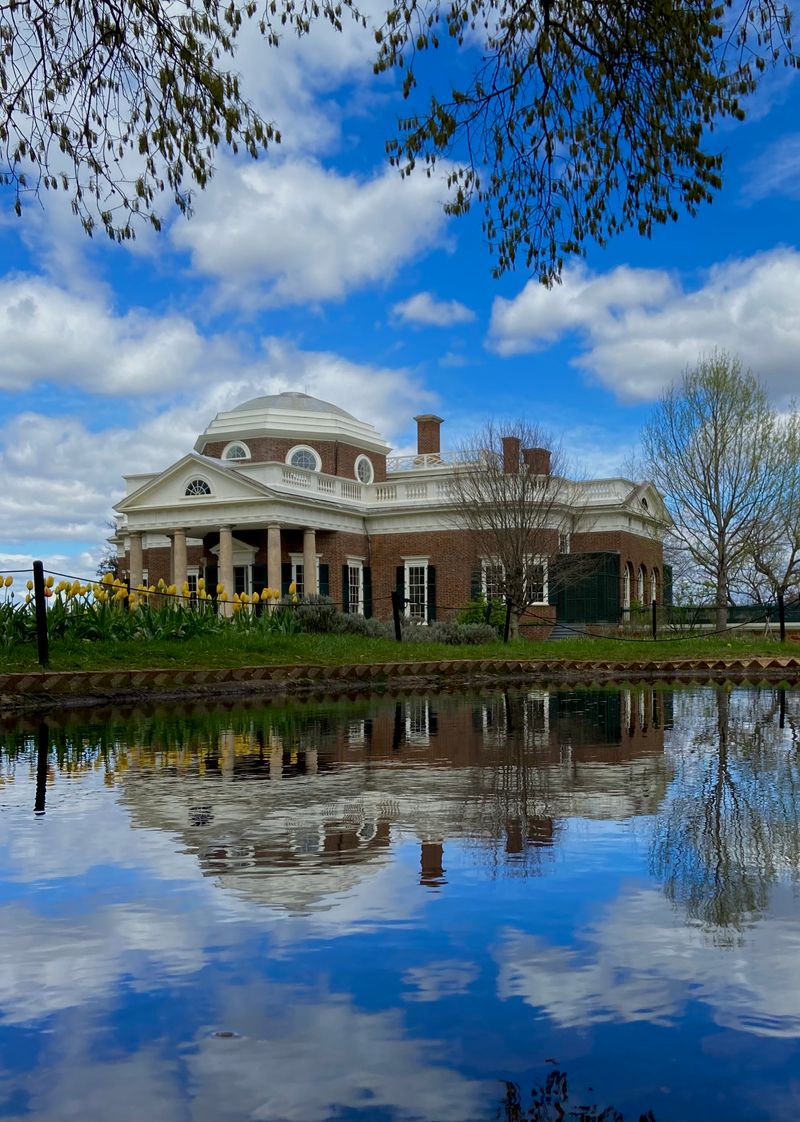
Monticello ultimately serves as a mirror reflecting America’s deepest contradictions back at us. This isn’t just about one man’s hypocrisy, it’s about the nation he helped create and the compromises that made it possible.
Slavery wasn’t incidental to America’s founding, it was foundational.
The debates Monticello sparks aren’t really about Jefferson or even about how we interpret the past. They’re about who we are now and who we want to be.
How we remember history shapes how we understand ourselves and our responsibilities to each other.
Some visitors leave Monticello feeling angry or disillusioned, their childhood heroes diminished by adult understanding. Others feel grateful for honest storytelling that treats them as capable of handling complexity.
Many experience both reactions simultaneously, which might be the most honest response.
The site doesn’t offer easy answers or comfortable conclusions. It presents evidence and asks questions, leaving visitors to wrestle with implications.
That approach frustrates people seeking either pure celebration or pure condemnation.
But maybe that discomfort serves a purpose. Monticello at its best forces us to think harder about freedom, equality, and the distance between our ideals and our actions.
Those conversations matter now as much as ever, making this Virginia hillside one of America’s most important destinations.
Dear Reader: This page may contain affiliate links which may earn a commission if you click through and make a purchase. Our independent journalism is not influenced by any advertiser or commercial initiative unless it is clearly marked as sponsored content. As travel products change, please be sure to reconfirm all details and stay up to date with current events to ensure a safe and successful trip.
