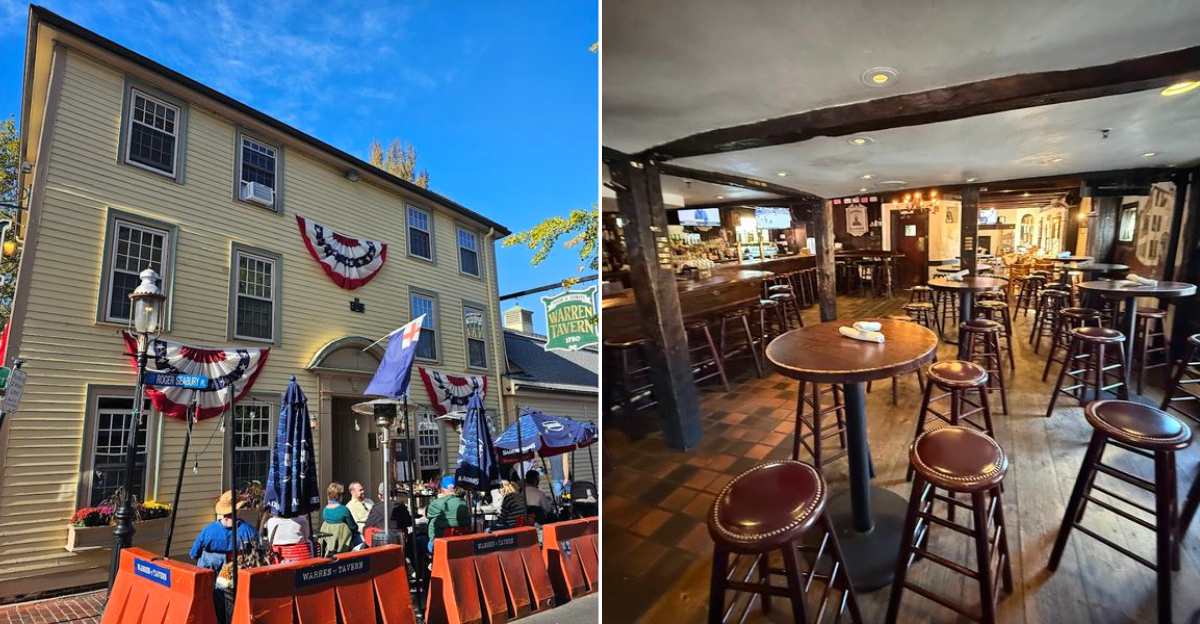
George Washington once stopped here for a drink. Paul Revere loved the place so much it became his favorite neighborhood haunt.
And the building itself? It was constructed from repurposed shipyard beams, salvaged from the nearby navy yard, making the wood even older than the walls around it.
This historic Massachusetts tavern has been hiding inside a perfectly preserved 1780 building since the day it opened, making it the oldest continuously operating tavern in the state. After Charlestown burned to the ground in 1775, this was one of the very first structures to rise from the ashes.
The low wooden ceiling beams creak with stories, and the Federal?style architecture has barely changed in more than two centuries. You can still sit where Revolutionary heroes once gathered, order a pint, and feel the weight of history in every corner.
Just do not ask for a TV. The only entertainment here is the ghost of Paul Revere, and he prefers you listen closely.
Welcoming Guests Since 1780
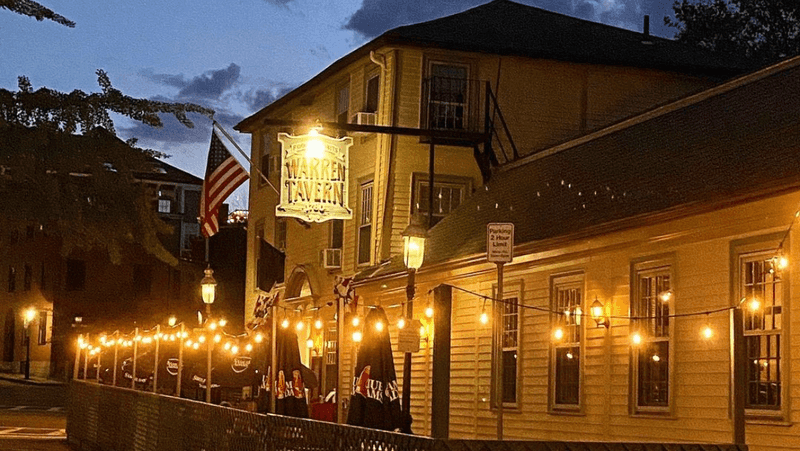
You know that instant settle you feel when a place just understands how to greet you without trying? That is the doorway moment here, the kind where the threshold quietly says you made it.
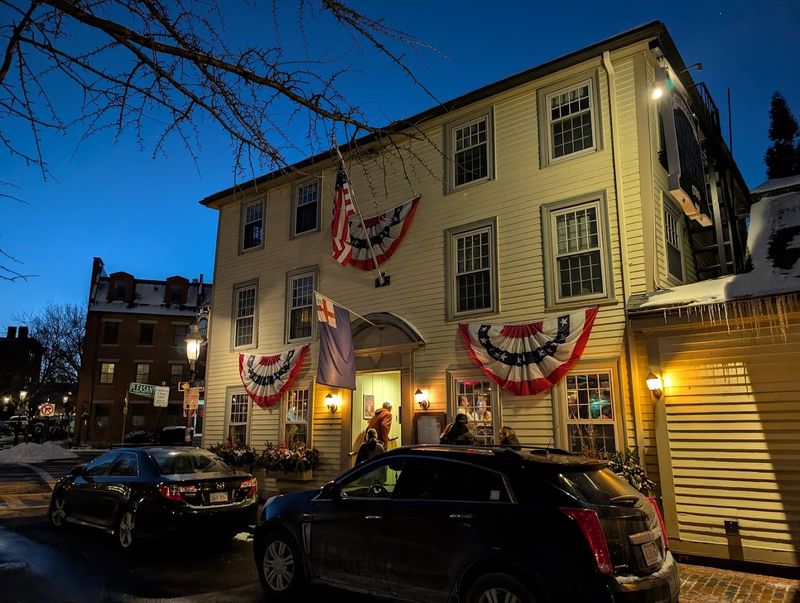
The exterior keeps its voice low and friendly, and the windows glow like a handshake you do not have to overthink, which feels rare and kind of perfect.
Inside, the room keeps an honest rhythm, with steps on old boards and the subtle shuffle of chairs that sound like a promise to linger. You get the sense that people have been arriving for ages, finding their spot, and catching their breath before anything else happens.
That familiar pattern repeats itself, and you fall right into it without effort, almost like muscle memory you did not know you had.
What gets me is how natural it feels to pause, look around, and let the atmosphere do the talking. The place carries stories without making them into speeches, and you can listen as much or as little as you want.
In Massachusetts, that mix of history and welcome lands differently, because the roots feel close and personal. So when you arrive, do not rush the next move, because the best hello here is the quiet one that lingers.
Rebuilt After The Town Burned
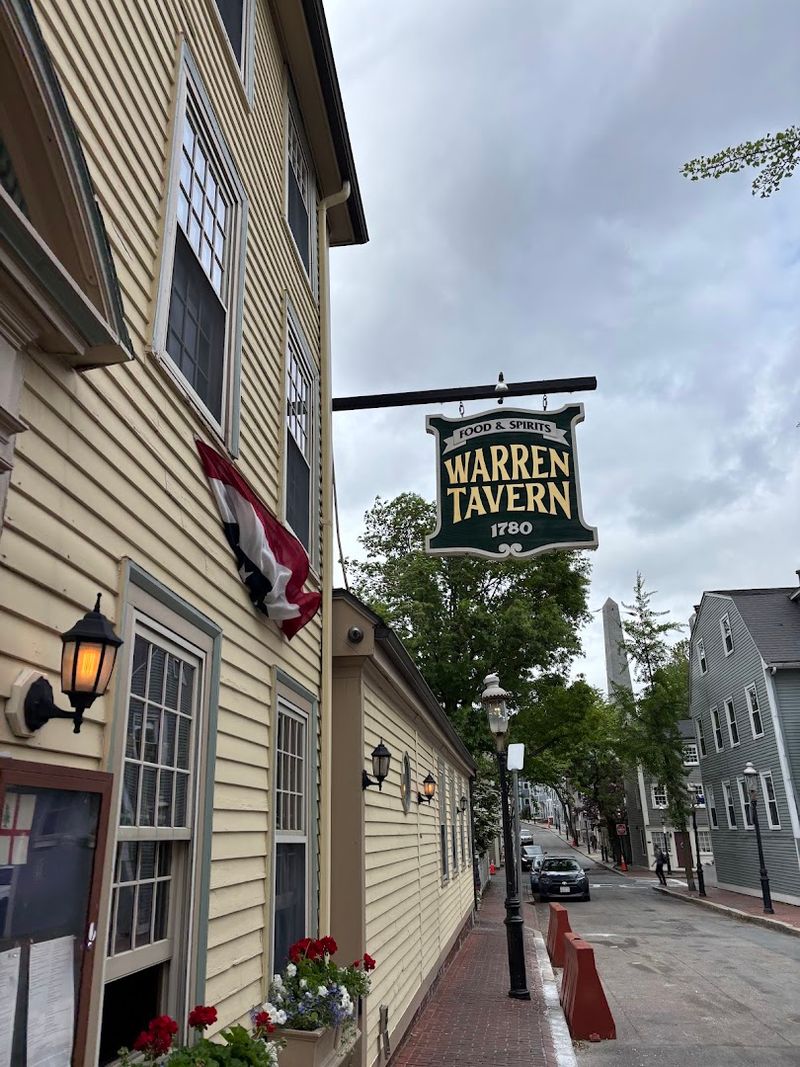
Here is the part that hits hardest when you stand outside and breathe for a second. This neighborhood did not just age into character, it clawed its way back and decided to keep standing.
You feel that resolve in the siding, the corners, and the way the building holds its line against the street like a steady shoulder.
There is something about Massachusetts towns that fold loss into their backbone and keep moving, and Charlestown wears that truth without flinching. The tavern sits as proof that rebuilding can look graceful and lived in at the same time, never precious, never fragile.
You sense the grit in the quiet way the place refuses to lean on drama.
If you want a moment of perspective, face the door and let your eyes trace the frame, the grain, and the edges that caught a second life. Think about the hands that made choices, plank by plank, and trusted the result would matter.
The address tells you exactly where you are, and it deserves the full breath it demands: 2 Pleasant St, Charlestown, MA 02129. You are not just visiting a building, you are meeting a recovery that decided to last.
Wooden Beams And Wide Plank Floors
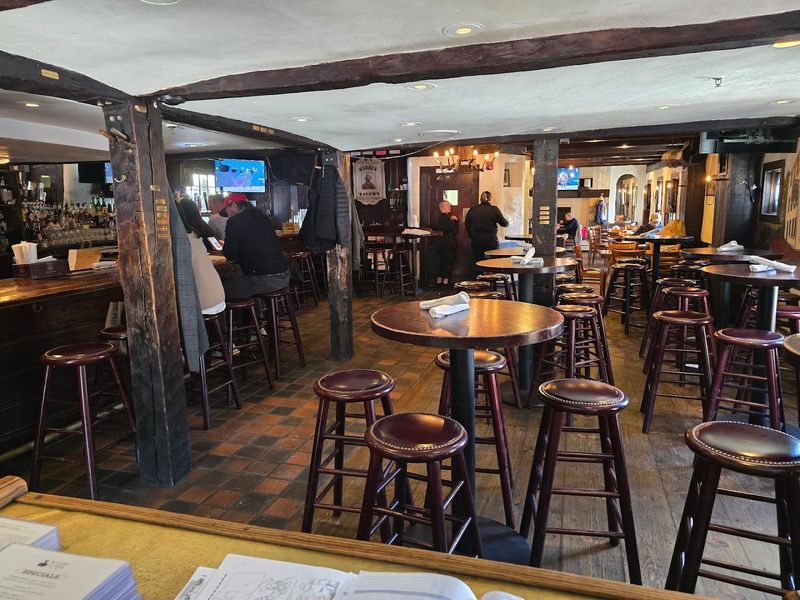
Look up for a second, then look down, and let both views tell the same story from different angles. Overhead, those beams run like calm sentences, measured and sturdy, carrying more than weight.
Underfoot, the wide planks talk in soft creaks that never demand attention, yet they mark each step like a friendly timestamp.
What I love most is how the wood does not try to be flawless, because the scuffs and tiny waves are the point. Your feet learn the room as you move, and the room quietly learns you back.
That is the kind of give and take that makes a quick visit feel like a stay, even if you are just passing through on your way across Massachusetts.
The light lands differently on old wood, pooling along edges and warming the tones from honey to toast. Take a slow lap and watch how the boards guide your pace, then pause where the grain bunches near a doorway.
If you listen closely, the floor will suggest where to stand, where to lean, and where to let a thought finish. It is a conversation with good manners and long memory.
A Cozy Fireplace For Revolutionary Gatherings
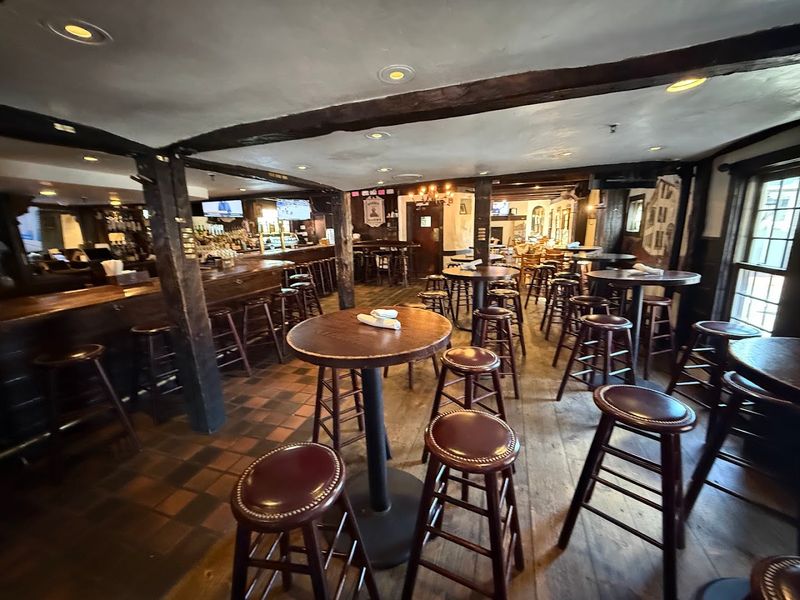
If you drift toward the back, the room starts to glow a little warmer, and that is your cue. The fireplace does not grandstand, but it pulls a gentle circle around itself the way a campfire gathers a quiet crowd.
You can feel conversations settling into low gear, with faces tipping toward the light like moths that know their limits.
I always end up near the bricks, letting the warmth iron out the chill that sneaks in from the street. It is easy to picture the talk that once found shape here, not as speeches, but as steady exchanges with patience and purpose.
The hum in the space is comfortable, like a page turning in a book you already love.
Firelight has a talent for making time behave, slowing the edges so you can hear yourself think. Sit near the andirons, watch the color shift in the coals, and let your shoulders drop.
In Massachusetts, a hearth like this is not decoration, it is an anchor that steadies the room. When you step away, you carry that steadiness with you for a while.
Named For Dr Joseph Warren
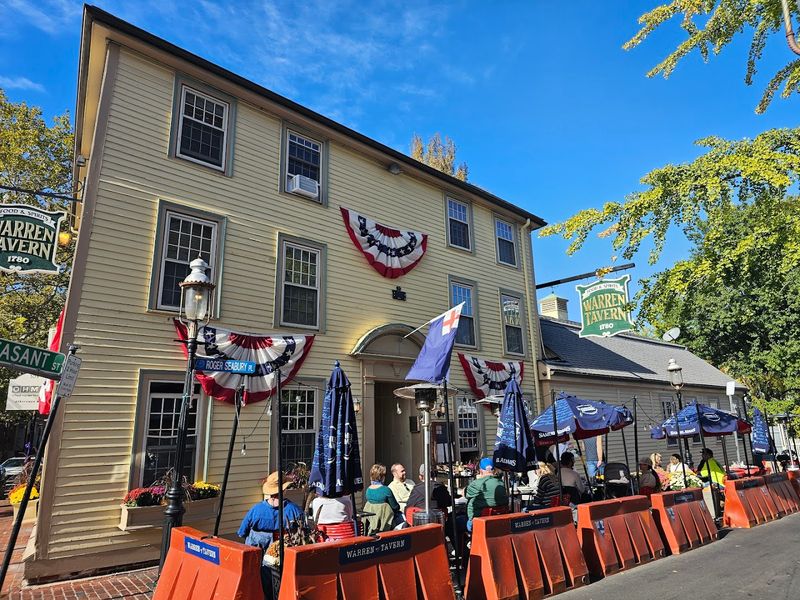
Names matter, and this one carries weight you can actually feel when you say it out loud. Dr Joseph Warren was not background, he was central, and the building wears his name like a pledge.
You pick up that respect in the small details, from framed nods to the quiet care given to the space.
Walking through, you sense the room pointing back toward a person who stood firm when the air got tight. There is humility in how the tribute lands, never loud, never theatrical, just present and steady.
It makes the visit feel less like a tour and more like paying attention to someone who earned it.
I like to pause under a portrait and let the stillness do its work. You can almost hear how the place draws a line from then to now without needing a lecture.
In Massachusetts, history often shows up with a handshake, and this is one of those moments that feels sincere. You are not required to know every detail, only to stand there and listen.
Paul Revere’s Favorite Watering Hole
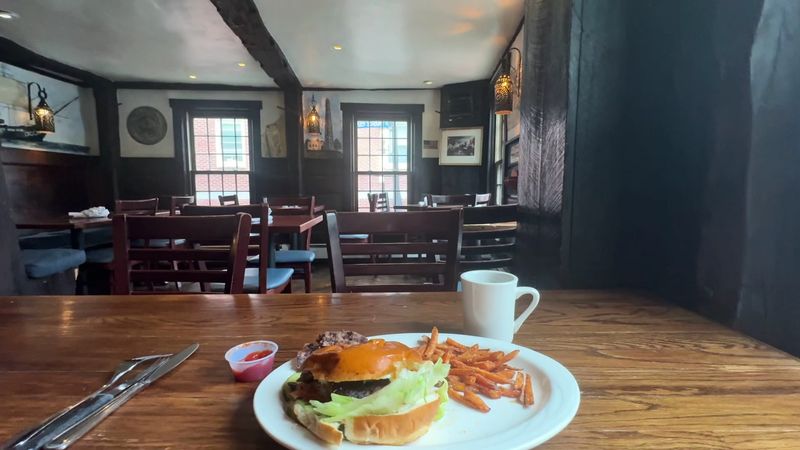
Here is a fun one to picture while you claim a seat and glance around for a likely corner. Imagine Paul Revere choosing a table, leaning in, and keeping the conversation focused and calm.
Not a performance, just a person finding a familiar room where plans could turn into actions without showy noise.
The charm is how ordinary it feels, which makes the story more believable. You can see why someone with a schedule would drift back to a place that runs on dependable rhythm.
The paths from door to chair feel well worn, and the sightlines encourage trust without making a big deal of it.
Lean back, check the distance to the door, and notice how the ceiling tucks the room into a private pocket. That simple geometry keeps voices low and thoughts clear, which is all you really need.
In Massachusetts, legend and daily life often shake hands in small rooms like this. When you stand to leave, you feel like you borrowed a little of that steadiness.
Low Wood Beamed Ceiling Throughout
Duck just a touch as you move, and you will sense how the ceiling shapes the whole mood. The beams stretch across the rooms like careful lines on a page, keeping everything grounded and close.
That closeness does not crowd you, it simply reminds you that conversations belong to the people actually having them.
The scale makes voices soften, and the softening makes time behave, which is a neat trick for a ceiling. You start to measure your steps with the grid overhead, falling into a pace that minds its manners.
It is hard to rush under wood that patient, and honestly, why would you want to?
I like finding the spot where two beams meet and using it as a mental bookmark. When you return to that mark after a wander, the room greets you like you never left.
In Massachusetts, old buildings know how to keep you present without preaching. This one uses height, grain, and hush to hold you in the moment.
The Last Stop On The Freedom Trail
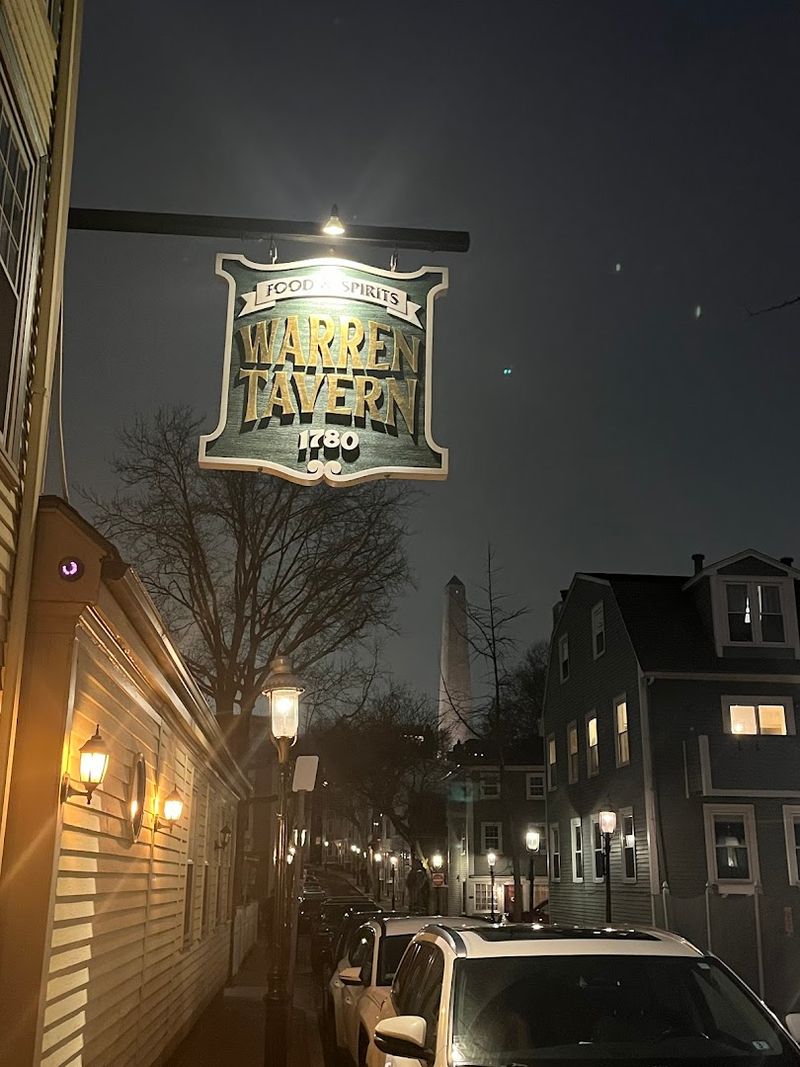
If you have been tracing bricks and stories across the city, this place feels like the exhale at the end. It is not part of the formal script, yet it plays the closing notes with satisfying calm.
You arrive, you breathe, and the momentum slides into reflection almost without trying.
I always think of it as a gentle landing, where the sights you just collected can stack into something you actually remember. The rooms are small enough to keep your focus, and the walls carry enough texture to reward a slow look.
You notice details you missed outside, and that noticing helps the day click into shape.
Would you start here next time just to change the rhythm a little? There is a case for that, because the tone is patient and the welcome is unhurried.
In Massachusetts, finishing well matters, and this spot knows how to close the circle with grace. Step out afterward and the street feels newly familiar.
A Living Landmark For Nearly 250 Years
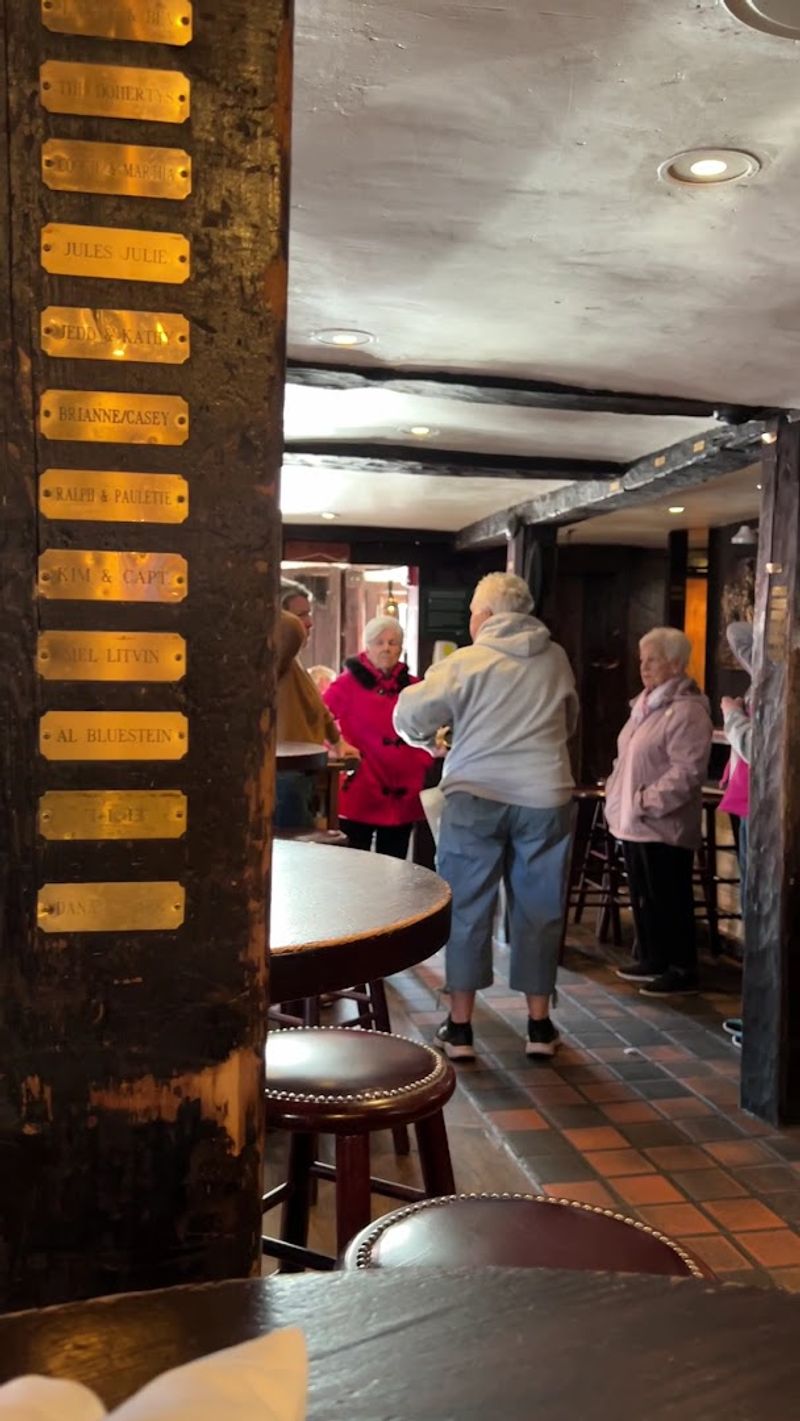
Some places wear the word landmark like a costume, but this one earns it day by day. The building breathes with ordinary use, which keeps the story from getting dusty.
Doors swing, chairs slide, and the place keeps its balance between memory and motion without breaking a sweat.
What makes it feel alive is how the neighborhood treats it like a neighbor, not a museum. You hear greetings at the threshold, and you catch people comparing notes about weather, errands, or weekend plans.
That hum says the landmark part matters, but the living part matters more, and I love that.
Take a slow circuit around the rooms and look for little signs of care, from polished rails to thoughtfully patched corners. Those quiet repairs are love letters in plain sight, and they carry more weight than plaques ever could.
In Massachusetts, history lasts because people keep choosing it in small, steady ways. You can feel those choices under your fingertips every time you touch the banister.
Where George Washington Once Sat
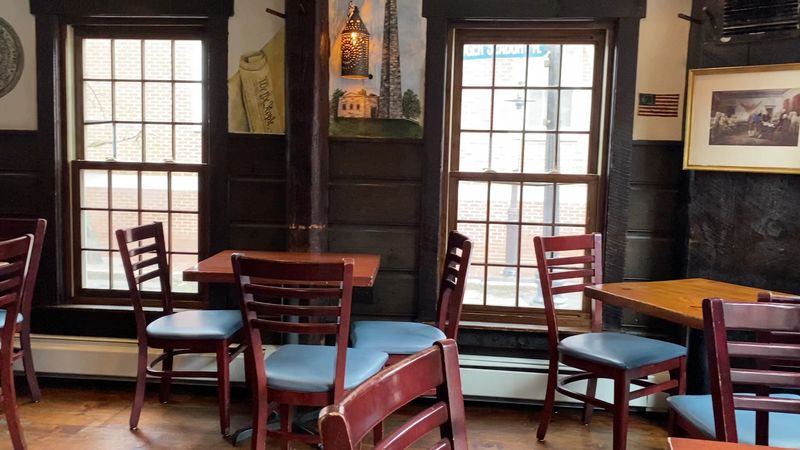
There is a particular seat that makes your shoulders square up without you even thinking about it. People say George Washington once sat here, and whether you stand or sit, the room straightens a little.
It is not precious, it is just a pinpoint where the past brushes your sleeve and keeps moving.
I like to approach slowly and give the moment a beat, because a little quiet makes the idea land. You are not reenacting anything, you are just sharing space with a memory that knows how to mind its business.
That simplicity keeps the whole thing honest and strangely moving.
If you do take the chair, give yourself a minute to look outward and trace the sightlines. The door, the beam, the window, the hearth, they all stack into a view that makes sense for focus and calm.
In Massachusetts, these spaces stick around because they keep working, not because someone said they must. When you finally stand, you will feel taller than when you arrived.
