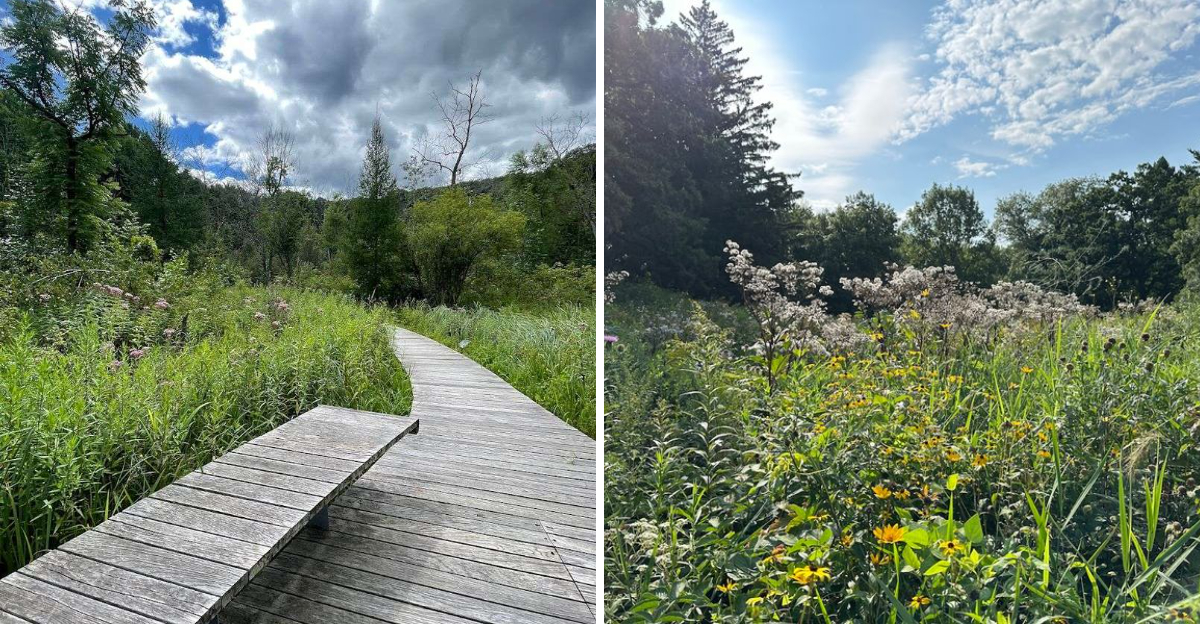
America’s oldest wildflower garden sits quietly in Minnesota and most people have no idea it exists. No flashy entrance or admission booth, and no gift shop pushing overpriced souvenirs.
You simply walk in and find yourself surrounded by native blooms that have been growing here for over a century. The paths wind through woodland areas where trilliums, lady slippers, and wild columbine pop up in unexpected places.
Birds dart between the branches while you stand still trying to identify every new color. The sanctuary feels like a secret even though it has been around since 1907.
School children visit on field trips. Elderly couples hold hands on the wooden bridges.
Solo walkers bring books and find quiet benches near the creek. Minnesota has harsh winters that make you forget spring exists, but this garden wakes up every year like a reliable old friend.
No appointment needed. No pressure to hurry.
Just flowers doing their thing while you breathe in the freshness. Bring a camera because the light filtering through the trees makes everything look like a painting.
Leave your wallet at home because you will not need it.
The Remarkable History Behind America’s Oldest Wildflower Garden
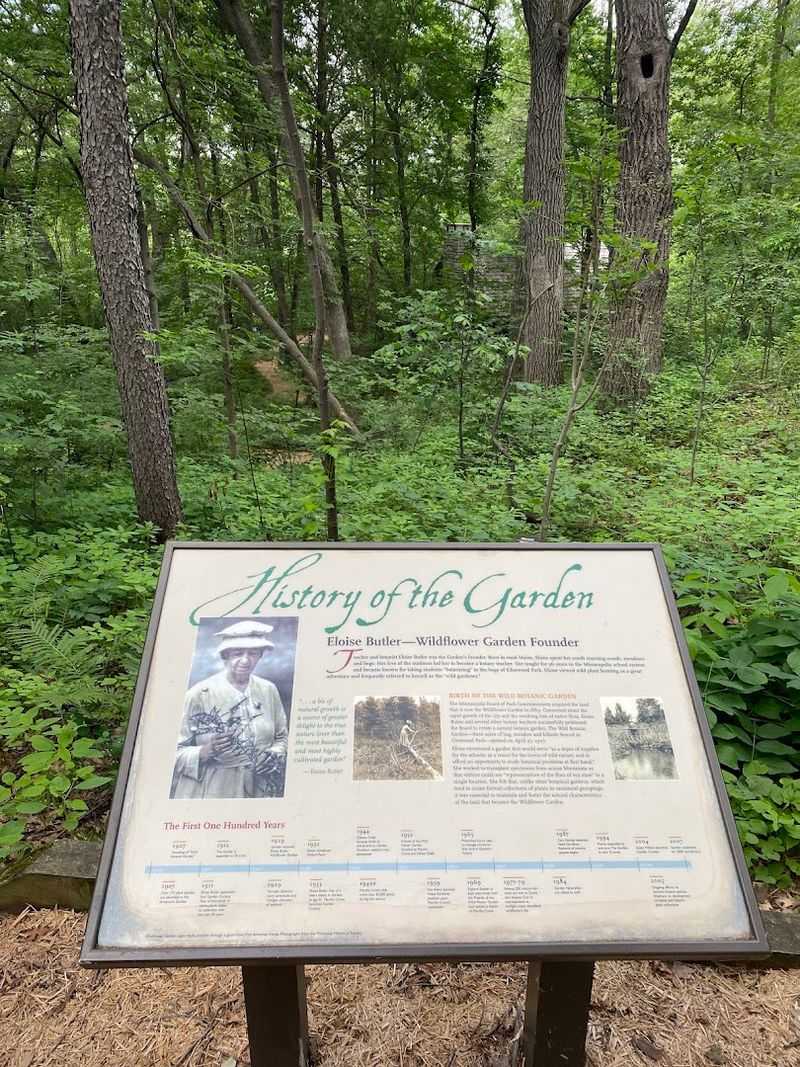
Back in 1907, a Minneapolis schoolteacher named Eloise Butler convinced city officials to set aside a small bog in Theodore Wirth Park for native plants. That decision turned into something extraordinary.
Over a century later, the garden she started still stands as the oldest public wildflower garden in the entire United States.
Butler spent decades collecting and planting native Minnesota species. She worked tirelessly to preserve plants that were disappearing from the local landscape.
Her passion was rooted in education, and she regularly brought students here to learn directly from nature.
After her death in 1933, she was actually buried within the garden itself, honoring her lifelong connection to the land. A small marker commemorates her legacy near the trails.
Visiting feels like walking through a living tribute to one woman’s remarkable vision. The garden has been carefully maintained ever since, growing into the beloved sanctuary it is today.
Knowing that history makes every step feel more meaningful.
Over 500 Plant Species Waiting to Be Discovered
Five hundred plant species is a number that sounds impressive on paper. Walking through the garden, that number becomes very real very quickly.
Flowers appear around nearly every bend in the trail, and labeled signs help identify them along the way.
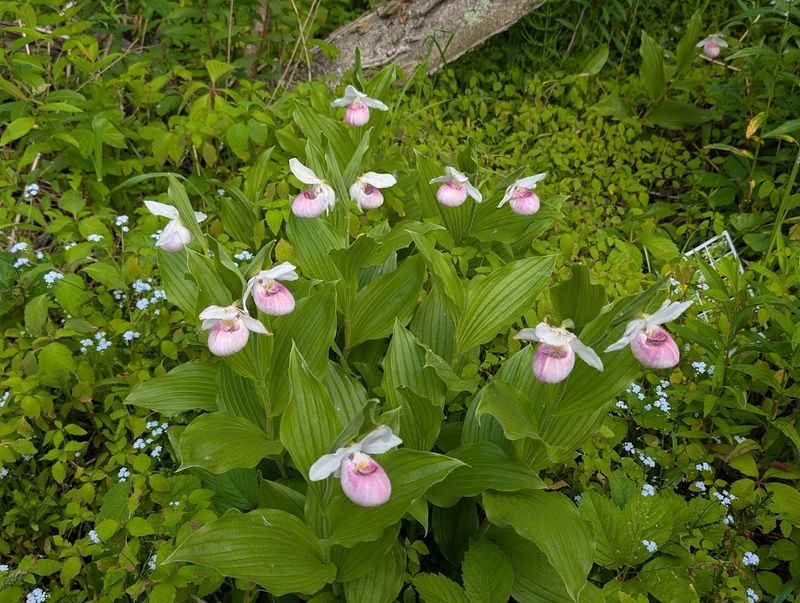
Spring brings trilliums, trout lilies, and the famous Showy Lady’s Slipper, which is Minnesota’s state flower. Summer fills the meadow with black-eyed Susans, prairie blazing star, and wild bergamot.
Fall shifts the palette dramatically, with goldenrod and asters painting the landscape in warm gold and purple tones.
Plant labels throughout the trails make learning easy without feeling like a classroom. Informative message boards add context about plant relationships, pollinators, and seasonal cycles.
Visiting in different months genuinely reveals a completely different garden each time. The volunteers and naturalists on site are happy to point out rare or newly blooming species.
I spotted milkweed loaded with monarch butterflies on my last visit, which felt like a small, perfect gift.
A Bird Sanctuary That Earns Its Name
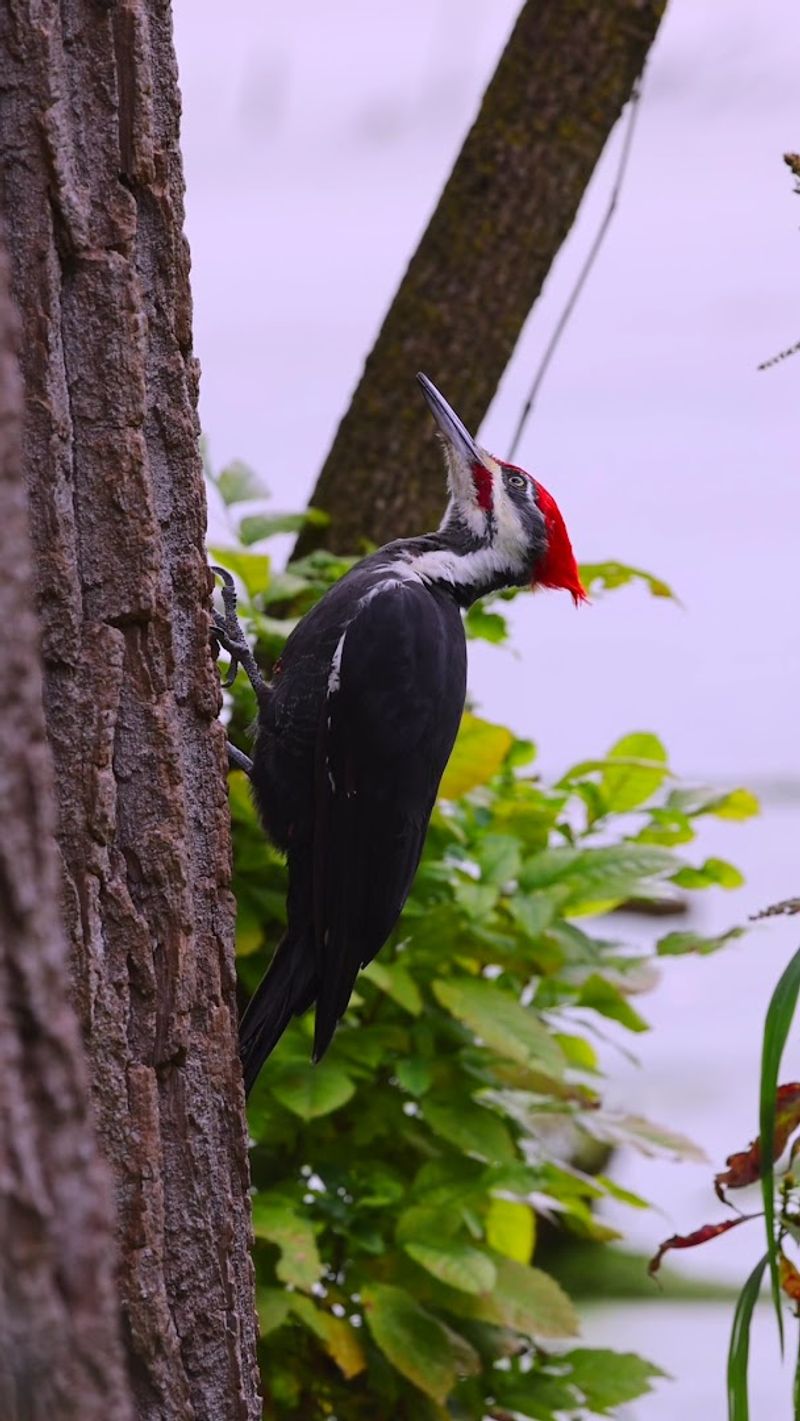
The bird sanctuary side of this place is no afterthought. Over 130 bird species have been recorded within the garden’s boundaries, drawn in by the dense native plantings that provide food and shelter year-round.
The soundscape alone is worth the visit.
Early morning is the best time to catch the most activity. Warblers, woodpeckers, and thrushes move through the canopy while the light is still soft.
Saturday morning early birding walks start at 7:30 AM and offer a structured way to spot species with others who share the same enthusiasm.
I stood completely still near the bog boardwalk once and counted five different bird calls within a single minute. Sandhill cranes, great blue herons, and even owls have been spotted here by lucky visitors.
The garden’s dense plantings create natural corridors that attract migrating species in spring and fall. Bringing binoculars is a good idea.
Even without them, the birds here are often close enough to observe in satisfying detail.
Completely Free Entry for Everyone
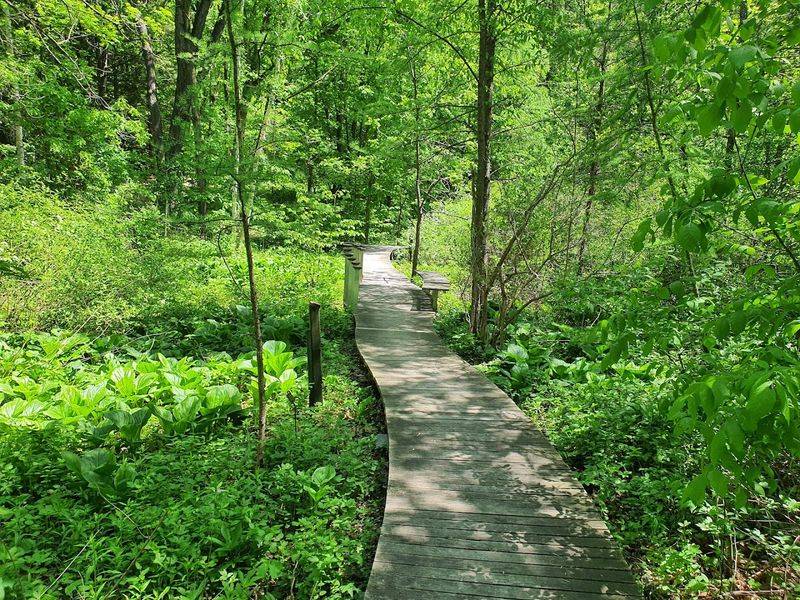
Free admission to a place this well-maintained feels almost too good to be true. There is no entry fee, no membership required, and no reservation needed.
Just show up, walk in, and start exploring whenever the garden is open.
Parking in the small lot near the entrance does carry a fee, charged by the hour or by the day. Arriving early on weekends is smart because the lot fills quickly.
Street parking options nearby can reduce that cost if you do not mind a short walk.
The no-cost entry makes this garden genuinely accessible to everyone in the community. Families, solo walkers, school groups, and retirees all share the trails without anyone being priced out.
That spirit of open access reflects exactly what Eloise Butler herself believed in: nature education should be available to all people. The garden connects to the broader Minneapolis park trail system too, making it easy to combine with a longer outdoor adventure.
Generosity built into the very foundation of this place is rare and worth celebrating.
18 Acres of Pure Native Minnesota Wilderness
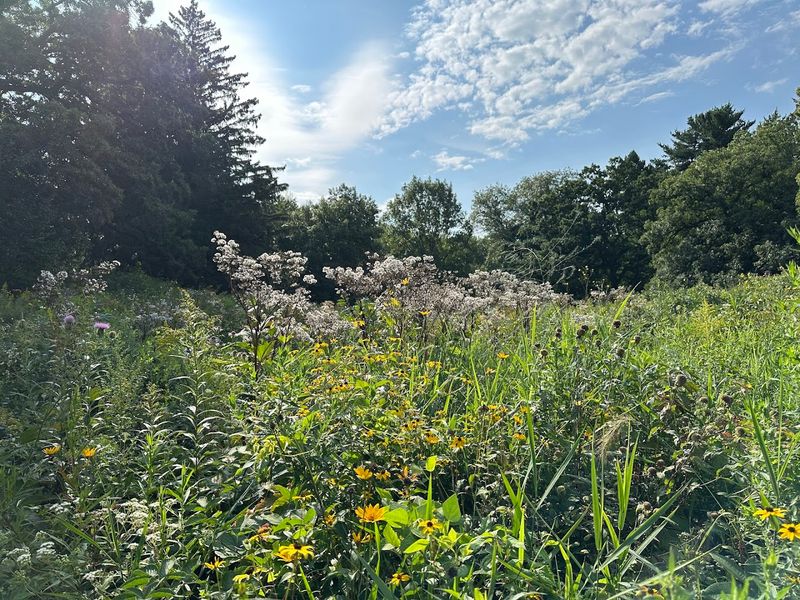
The garden packs a surprising amount of variety into its 18 acres. Walking the full loop, you move through shady woodland, open prairie meadow, and a quiet wetland bog, all within a single visit.
Each zone has its own personality and its own collection of plants.
The woodland section feels cool and dimly lit, with ferns carpeting the ground beneath tall oaks and maples. Then the trail opens suddenly into bright meadow, where wildflowers stretch toward the sun in every direction.
The bog section is genuinely unique, home to plants you rarely see outside of wild Minnesota landscapes.
The full loop trail measures about three-quarters of a mile, making it manageable for almost everyone. Mulched paths keep your feet dry even after rain.
Wooden boardwalks carry you over the wettest sections smoothly. There are benches scattered throughout, so stopping to just sit and absorb the surroundings is easy.
The Visitor Center and Its Hands-On Activities
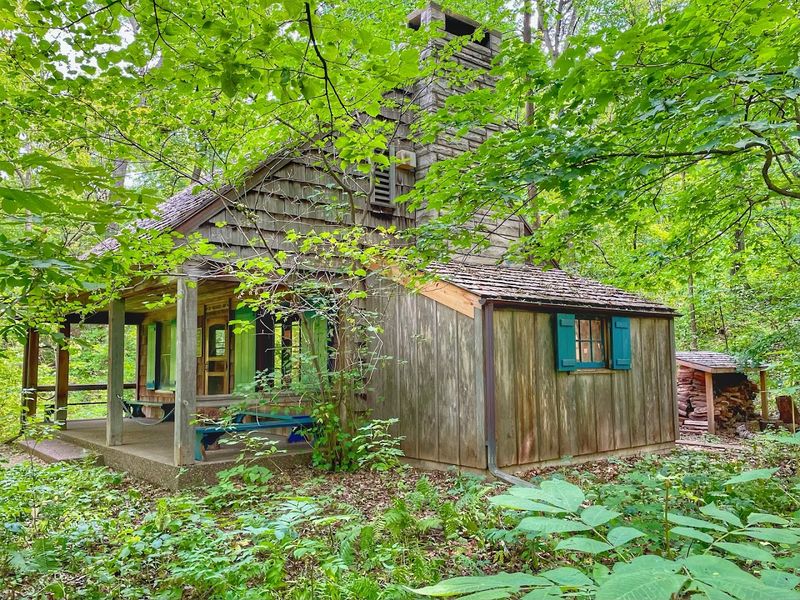
A small cabin near the garden’s heart serves as the visitor center, and it punches well above its size. Inside, nature displays, hands-on activities, and knowledgeable staff make it a worthwhile stop before or after hitting the trails.
Kids especially seem to light up inside this space.
One popular activity involves collecting milkweed seeds to take home and plant in your own garden, supporting monarch butterfly populations across the region. Staff and volunteers explain the importance of native plants with genuine enthusiasm.
The information feels practical rather than lecture-like, which keeps it engaging.
Maps of the garden are available at the visitor center, and picking one up before you wander is genuinely helpful. The layout can feel maze-like on a first visit, especially in the woodland section where trails branch off unexpectedly.
Friendly naturalists are usually available to answer questions and suggest what is currently blooming. The visitor center also connects to the garden’s seasonal programming, including guided tours.
Seasonal Changes That Keep Every Visit Fresh
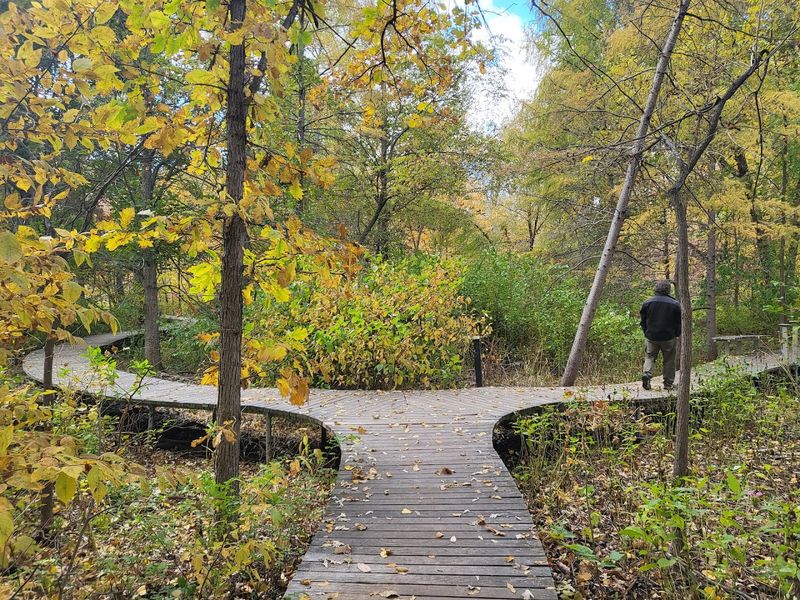
Returning to the same garden across different seasons is one of the best ways to truly understand a landscape. Here, that idea plays out beautifully with every visit offering something the last one did not.
The transformation from early spring through late fall is genuinely dramatic.
April and May bring the first woodland wildflowers pushing through leaf litter, including the delicate and rare dwarf trout lily. Summer layers in prairie color and buzzing pollinator activity.
Fall shifts everything toward amber, rust, and gold as the meadow grasses dry and the woodland canopy ignites.
Even visiting monthly reveals measurable change, with different plant species cycling through bloom at their own pace. Labeled plants help track which species you have seen before and which ones are new.
The garden rewards repeat visitors with a sense of seasonal rhythm that feels deeply satisfying. Firefly events in July offer a particularly magical evening experience.
Family-Friendly Trails Built for All Ages
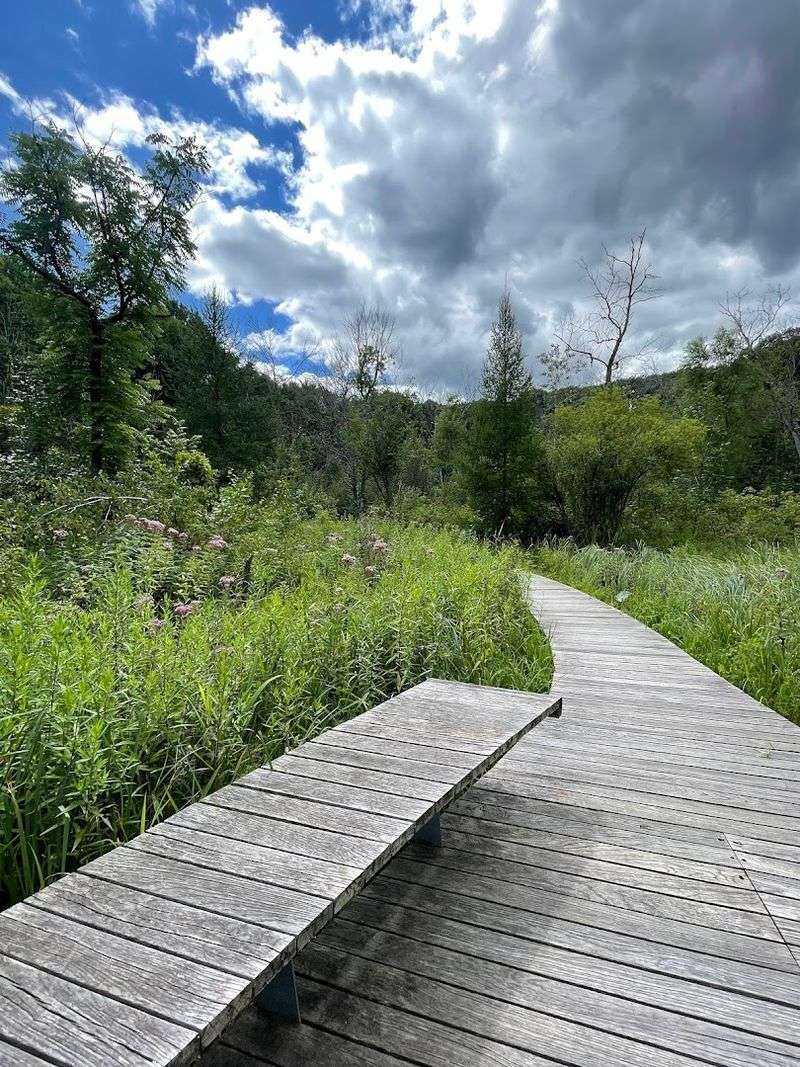
Bringing kids here is a genuinely good idea. The mulched trails are soft underfoot, making them comfortable for small feet and easy for toddlers exploring independently.
There are no steep climbs or technical sections that would make anyone nervous.
The wooden boardwalk over the wetland section is a particular hit with younger visitors. Frogs, dragonflies, and water plants create a natural sensory experience that holds attention well.
Searching for specific flowers like the Showy Lady’s Slipper turns the walk into a casual scavenger hunt that keeps kids engaged throughout.
Benches appear regularly along the trails, giving everyone a chance to rest without cutting the visit short. Bathrooms are available on the property, which parents will appreciate.
Water fountains are positioned throughout the grounds as well. The visitor center’s hands-on activities add another layer of engagement for curious young minds.
Well-Maintained Paths and Thoughtful Amenities
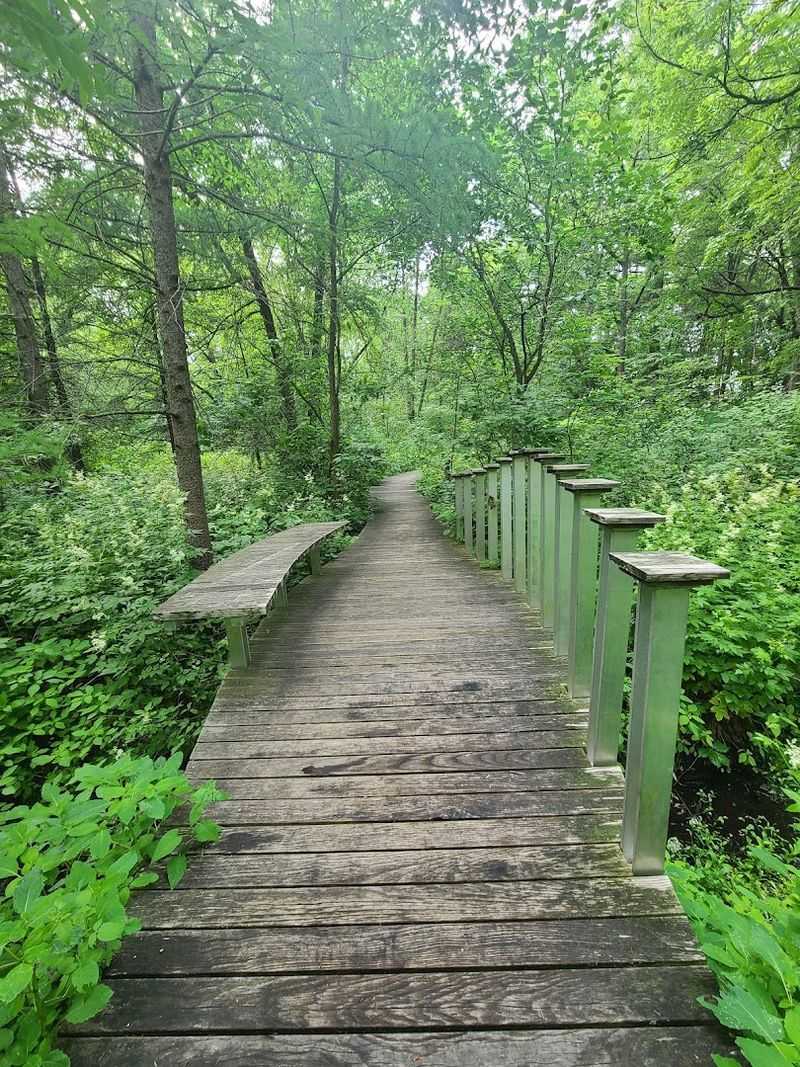
The quality of trail maintenance here is noticeably high. Mulched surfaces stay firm and dry even after rain, which makes the walk comfortable regardless of weather.
Wooden boardwalks handle the wettest sections with smooth, even footing that feels solid underfoot.
Informative message boards appear at key points along the trails, offering context about specific plant communities, seasonal cycles, and ecological relationships. The signs are readable without being overwhelming.
They add depth to the walk without slowing it down unnecessarily.
Bathrooms are available on the property, a detail that matters more than people admit when planning outdoor visits. Water fountains are scattered throughout the grounds.
The parking area is small but functional, and arriving before 9:00 AM on weekends usually secures a spot without frustration. Benches positioned at scenic viewpoints make sitting and listening a genuinely enjoyable option rather than just a rest stop.
Guided Tours, Events, and Community Connection
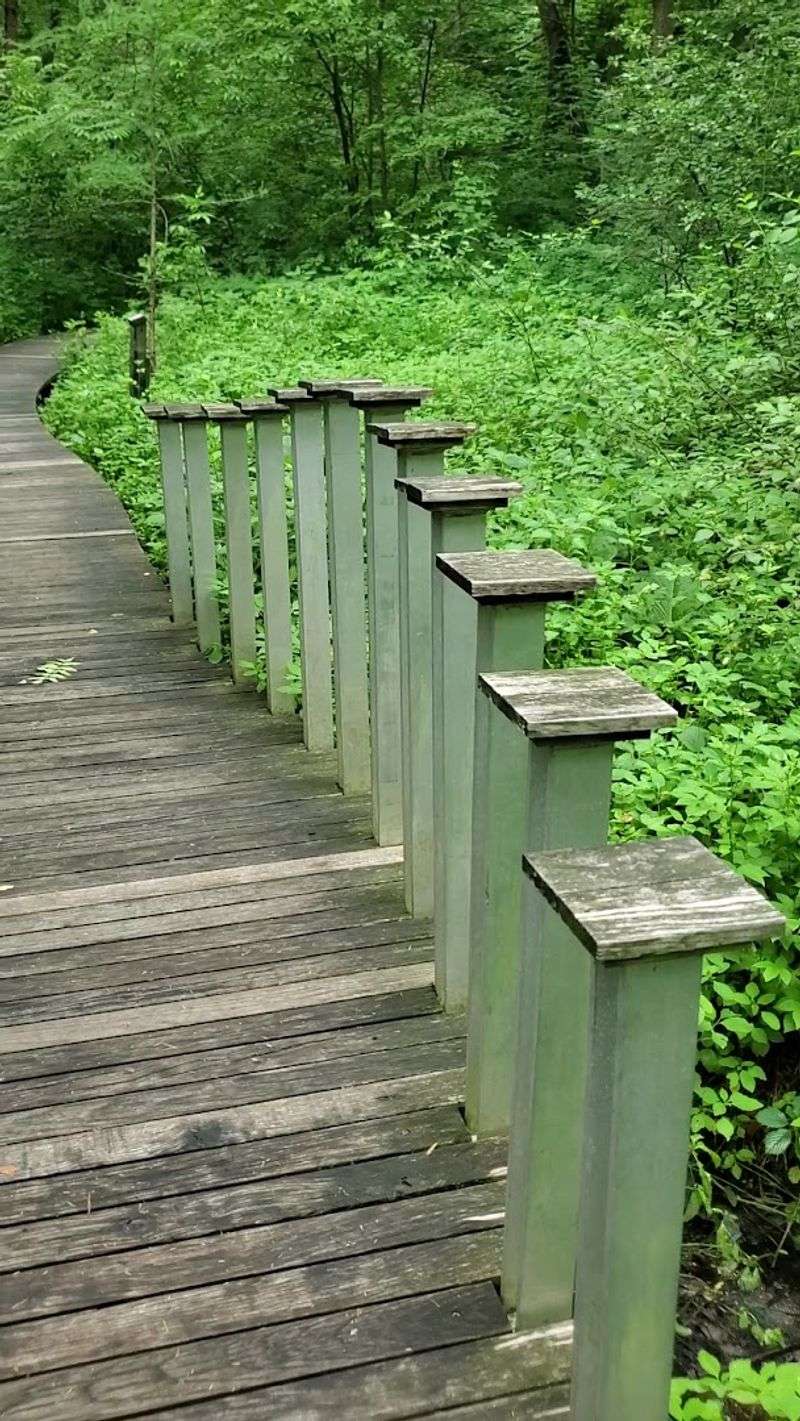
The garden is not just a place to wander alone, though that is absolutely a valid way to enjoy it. Guided tours run regularly throughout the open season, led by naturalists and knowledgeable volunteers who bring the landscape to life with real insight.
Joining one of these tours shifts the experience entirely.
Early morning birding walks on Saturday mornings attract a regular crowd of birders and curious newcomers alike. The July firefly event draws visitors who want to experience the garden after dark in a completely different light.
Programming for families, school groups, and adult learners runs throughout the season.
The community of regulars who visit consistently creates a warm, welcoming atmosphere on the trails. Volunteers at the entrance gate greet visitors with maps and genuine enthusiasm.
The garden feels less like a managed attraction and more like a shared neighborhood treasure. Eloise Butler believed strongly in connecting people to native landscapes.
Address: Eloise Butler Wildflower Garden and Bird Sanctuary, 1 Theodore Wirth Pkwy, Minneapolis, MN 55405
