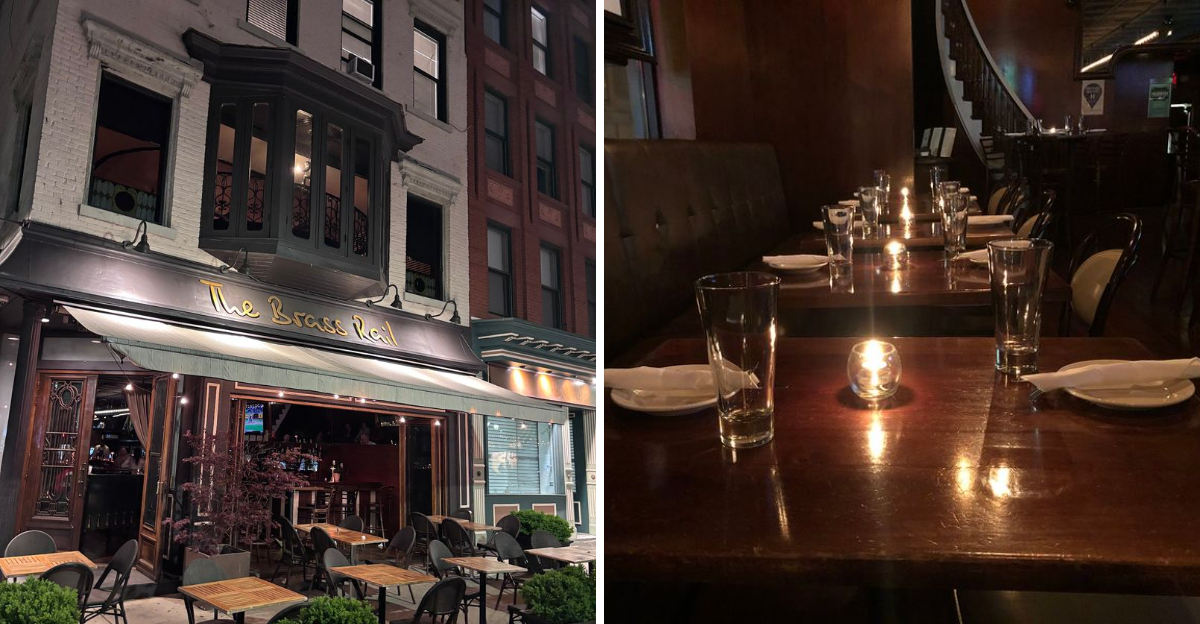
A bride in white. A groom in despair.
A tragic fall down the stairs on what should have been the happiest night of their lives.
That is the legend that haunts this New Jersey restaurant.
The bride tripped and fell. She never made it out alive.
The groom could not bear the loss and followed soon after. Staff have reported strange sightings late at night while cleaning up.
A figure in white passing through the dining room. Footsteps on the stairs when no one is there.
Is it true? Who knows.
But the stories have a way of sticking around. The French-inspired menu and historic charm make this place unforgettable regardless.
And who knows? You might just leave with a ghost story of your own.
Dinner and a legend. Not a bad combination.
The Washington Street Building That Started As A Saloon
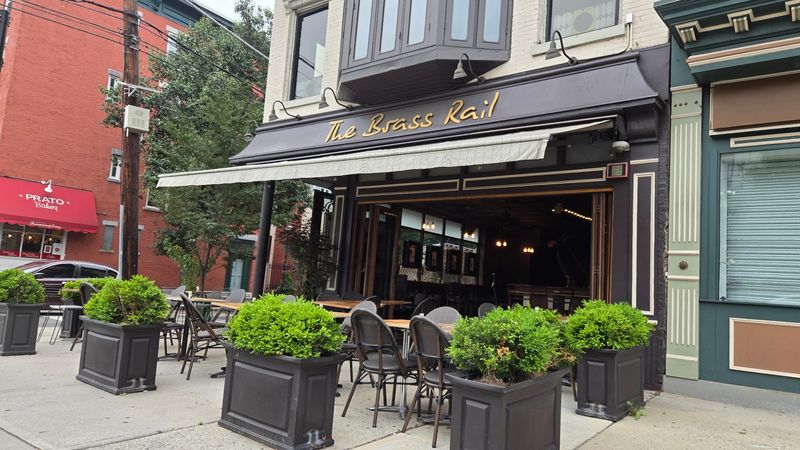
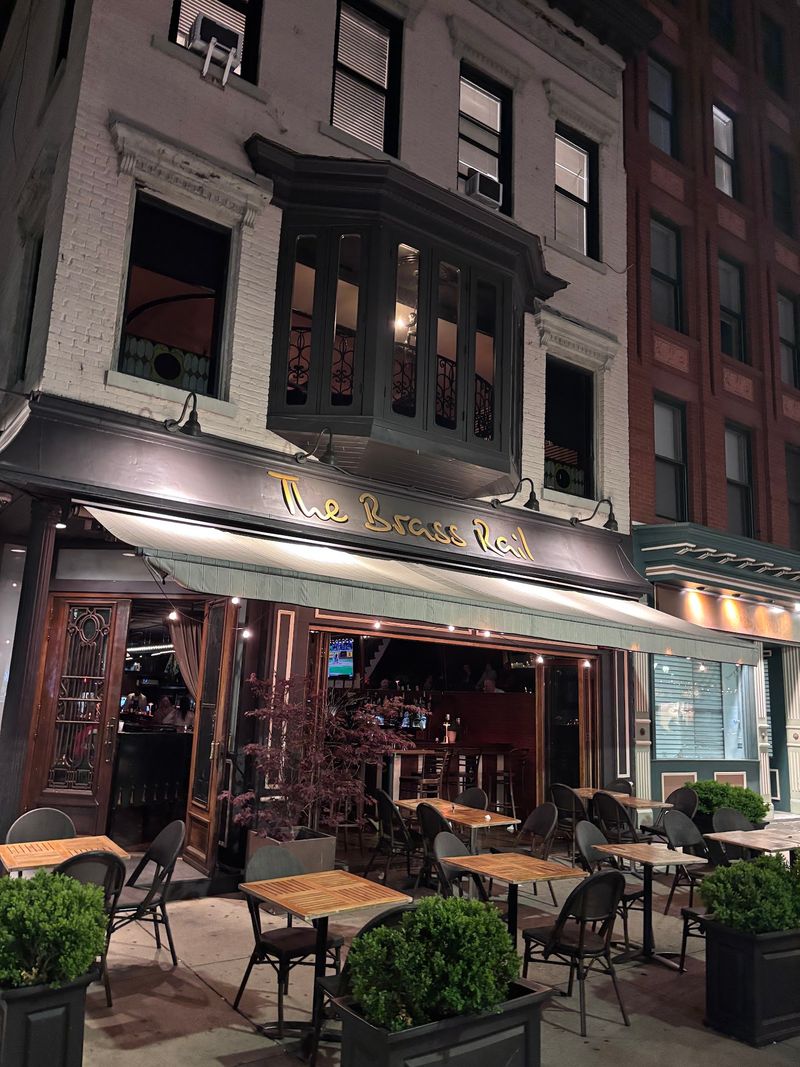
Long before it served brunch to weekend crowds, the corner spot at 135 Washington Street opened as a saloon around the 1890s. Two floors, thick walls, and a location right on Hoboken’s main artery gave it staying power.
By the 1940s, renovations turned the old drinking hall into a proper restaurant, and that shift set the tone for everything that followed. The building kept its bones while its purpose changed, which is a rare thing in a city that rebuilds constantly.
What I find fascinating is how the facade still hints at its age. Look up while you wait for a table and you notice proportions that belong to another century, taller windows and heavier trim than anything built nearby today.
Practical tip for visitors who care about history: arrive a little early and walk the block first. Washington Street rewards slow looking, and seeing the neighboring storefronts helps you understand just how long this particular address has been part of Hoboken’s daily rhythm.
That Wooden Spiral Staircase Everyone Talks About
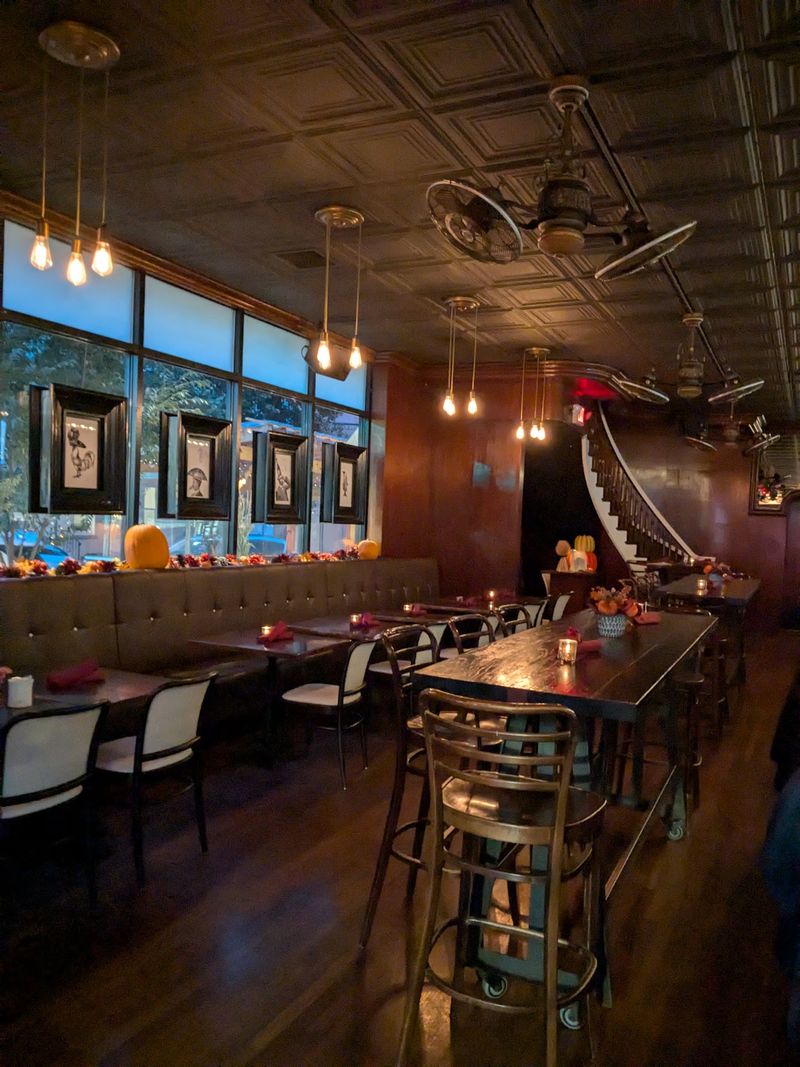
Some architectural features are just pretty. Others carry weight, and the wooden spiral staircase here does both.
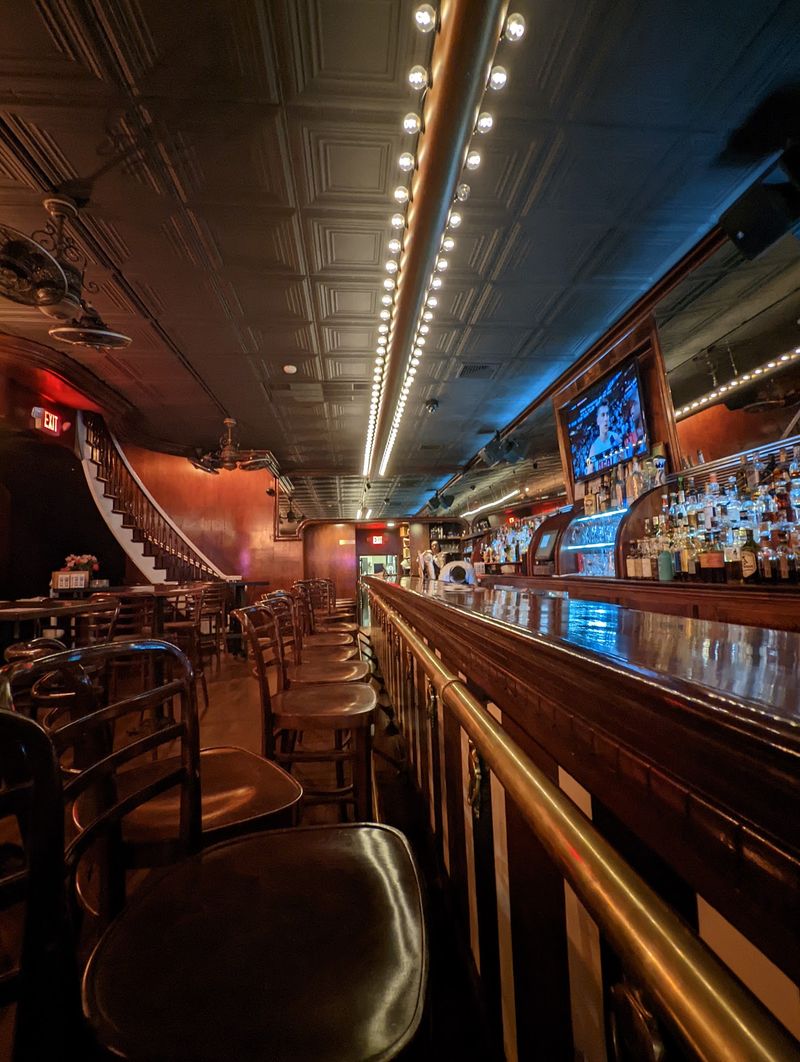
It curves along the wall facing Washington Street, drawing your eye upward the moment you step inside. Guests heading to the second-floor dining room use it constantly, usually without a second thought, which makes its role in the restaurant’s legend feel almost surreal.
According to the story passed around Hoboken for generations, this is where a bride fell in 1904, a tumble from the upper floor that ended her life instantly on what should have been the happiest day of it.
Whether or not you believe a place can hold onto sorrow, the staircase does something to your imagination once you know the tale.
If you want a good look without blocking traffic, pause near the base while the room is quiet, early in the evening before the dinner rush builds. The craftsmanship deserves more than a glance, and the polished handrail has clearly been touched by thousands of hands over the decades.
A Wedding Day In 1904 That Locals Still Recount
Ask around Hoboken and you will eventually hear the version everyone knows. A wedding celebration filled these rooms in 1904, all laughter and music, until the bride reportedly tripped on the staircase and fell to the floor below.
She died from a broken neck, and the party turned into something unspeakable within seconds.
The story sticks because it is so human. There is no monster in it, no curse, just an accident at the exact moment a life was supposed to begin.
That contrast between joy and loss is what keeps people retelling it more than a century later.
Visitors sometimes expect the restaurant to lean hard into the legend with signs and gimmicks, but it does not. The tale lives mostly in conversation, which honestly makes it more powerful.
My suggestion is to read up before you go rather than quizzing the staff mid-service. Knowing the outline of the story ahead of time lets you notice the room differently the moment you arrive.
The Groom’s Heartbreak And The Second Half Of The Legend
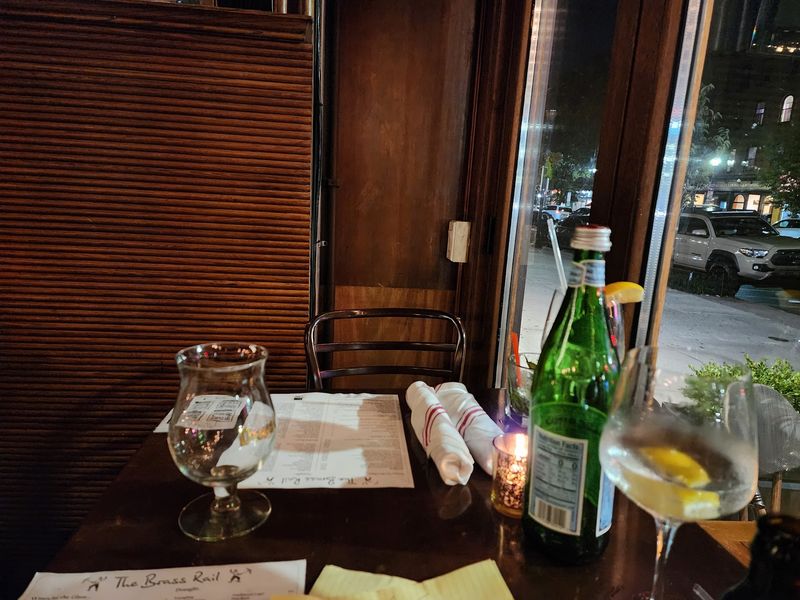
Most ghost stories stop after one tragedy. Not this one.
Accounts of the 1904 wedding continue with the groom, who reportedly could not survive the loss of his new wife. Different versions vary in the details, but they agree on the outcome.
He died by his own hand in a room near the staircase, leaving behind a note that spoke of having no reason left to live.
That second loss is what transformed a sad accident into the layered legend Hoboken remembers. A wedding became a double funeral, and the building became the setting for both.
People often say the reason these stories endure is fear, but I think it is empathy. Grief that enormous feels like it should leave a mark somewhere, and a century-old room is as good a place as any.
Worth remembering while you visit: this part of the tale is genuinely somber. Treating it with a bit of respect rather than treating it as entertainment makes the whole experience feel more meaningful.
Odd Happenings Reported By People
Closing time is when the stories tend to surface. Guests over the years have described footsteps upstairs when nobody is up there, whispers with no source, and trays sliding off counters on their own.
Items reportedly vanish and then turn up in plain sight somewhere odd, which is the kind of small mischief that makes a place feel occupied rather than menacing.
Other reports include flickering lights, sudden cold spots, and phone calls with silence on the other end. One of the strangest accounts involves an adding machine switching itself on during a meeting and tallying numbers with no explanation.
None of it is dramatic in a movie sense. It is quieter than that, a series of small wrong notes in an otherwise normal shift.
If you are hoping to notice something yourself, late seating is your best chance, when the room thins out and the noise drops. Just keep expectations low and your attention on the details instead of waiting for a big moment.
When Paranormal Investigators Brought Their Equipment Inside
Stories this persistent eventually attract people with gear. In November 2004, an investigator from the New Jersey Ghost Hunters Society named Laura Lindeman visited the restaurant with a journalist along for the ride.
She brought a camera, tape recordings, and an electromagnetic field reader, the standard toolkit for anyone trying to document what cannot easily be seen.
Later visits followed. The same society returned with an EMF reader and recorder, and John Cifarelli of New Jersey Paranormal Research reportedly approached the owner about an investigation in 2007.
At that point the owner expressed belief in the haunting, pointing to photographs and readings that seemed to show something unusual.
No definitive proof exists, and that is fine. What strikes me is that the interest never faded, decade after decade.
For readers curious about how these investigations work, the takeaway is simple. Equipment records anomalies, not answers, and the value lies in the documentation rather than any single dramatic conclusion drawn from it.
Fire, Closure, And The 1989 Rebuild That Saved It
Here is the part of the history that almost ended everything. A serious fire in the 1980s, reportedly started by a careless smoker, caused enough damage to shut the restaurant down completely.
The owner at the time, Michael Peters, sold the place. For a while, Hoboken looked like it might lose a landmark.
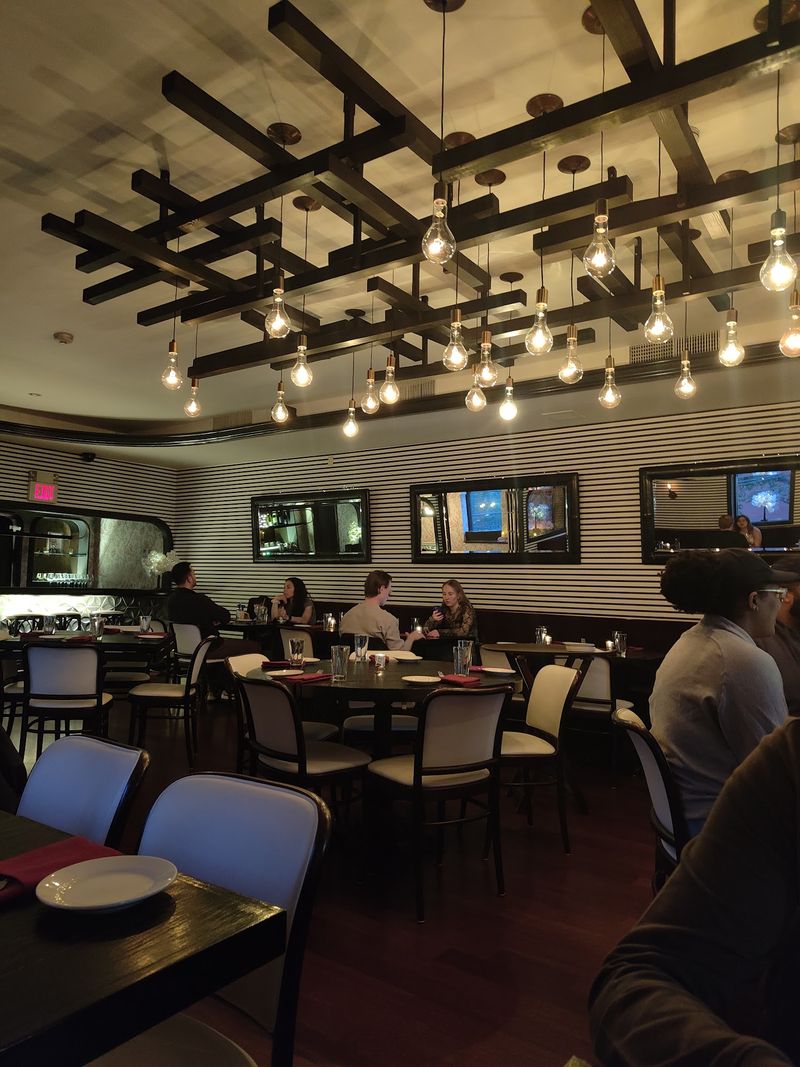
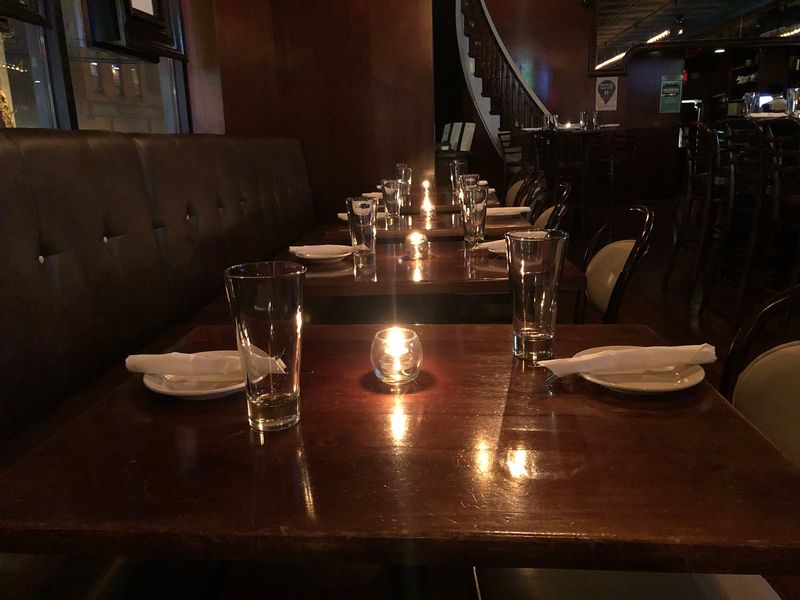
Instead, the building came back. By 1989 it had been carefully rebuilt to echo its 1900s appearance, complete with etched-glass doors, deep red velvet banquettes, and painted cherubs on the ceiling in a classic French salon style.
A large oil mural depicting Hoboken’s history went up on one wall, turning the dining room into a kind of visual archive.
Restorations can feel like costumes, but this one reads as genuine because the original layout stayed intact.
When you visit, spend a minute with that mural. It quietly explains why the building matters to the city, and it gives you something to look at while you wait for your table upstairs.
The Neighborhood Crowd Through The Decades
Not every chapter of this building’s story involves tragedy. During the late 1970s and early 1980s, the place became a gathering spot for poets during a literary revival in Hoboken, a room where people came to read work aloud and argue about words.
That detail always makes me smile. A century-old saloon turned into a stage for a creative scene.
The pattern has repeated in different forms ever since. Street level stays lively and social, while the upstairs room handles birthdays, group dinners, and quieter occasions.
Guests regularly mention renting the top floor for celebrations, and the staff seem practiced at handling large parties without much fuss.
If you are organizing something for a group, calling ahead is genuinely worth it. The second floor has its own separate feel, and reserving it turns a normal dinner into an occasion, ghost stories entirely optional but always available as conversation fuel.
Sitting Down To Eat In A Room Full Of Stories
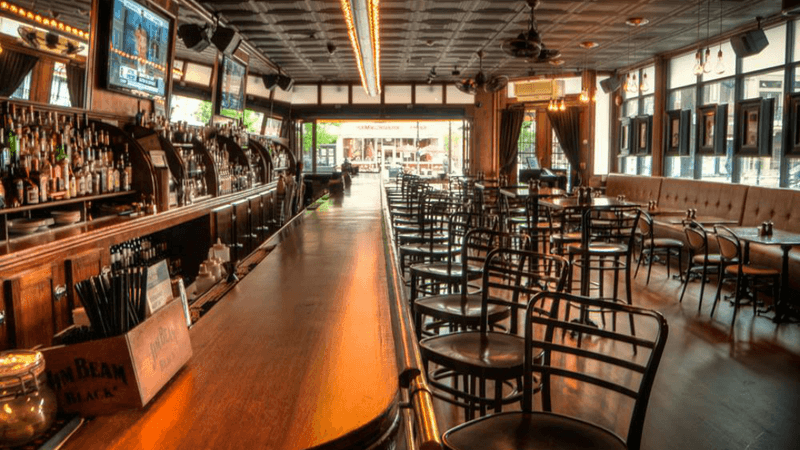
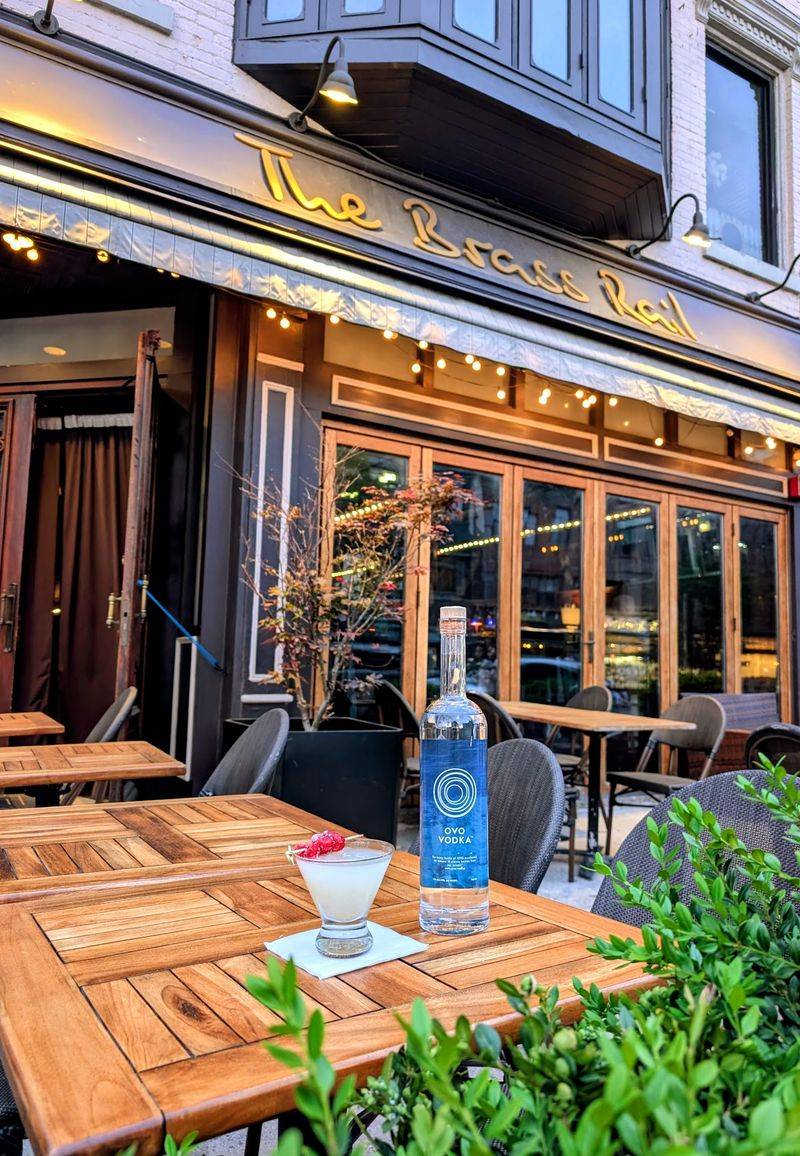
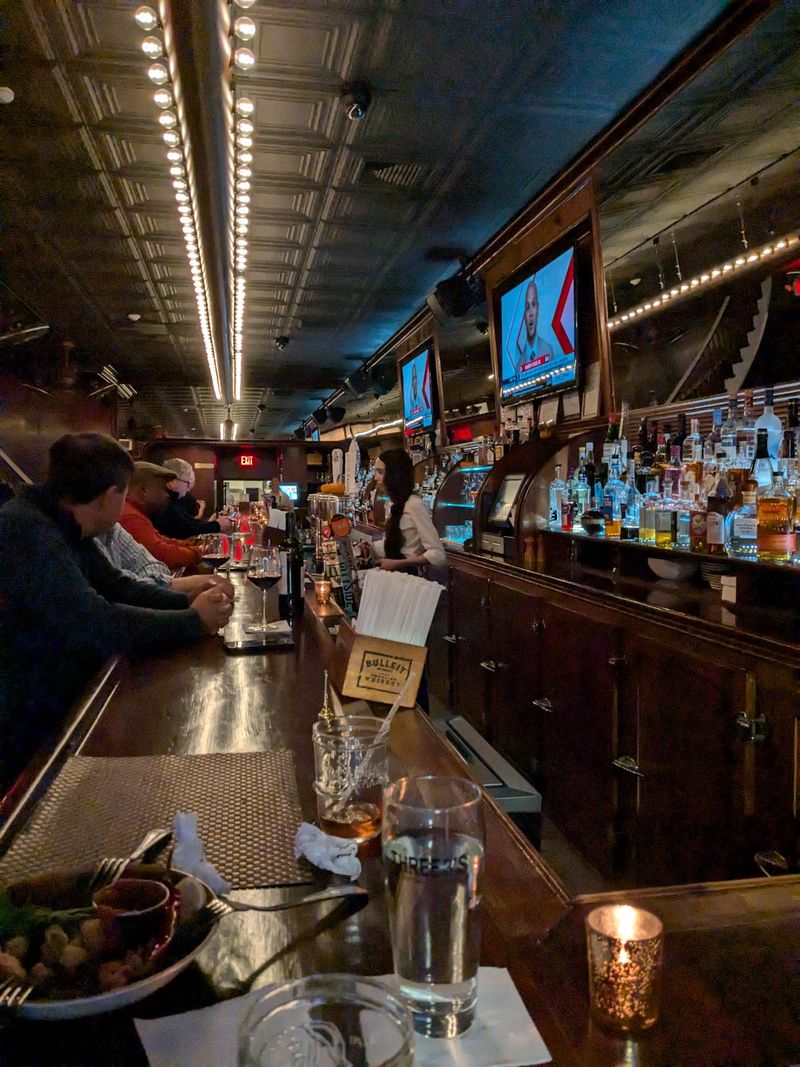
Food is the reason most people walk through the door, and the kitchen keeps things seasonal with a New American menu. Regulars talk about the lobster roll, the short rib sandwich, the gnocchi, and the French onion soup more than anything else.
Brunch runs on Saturday and Sunday, which is when the outdoor seating turns into prime people-watching territory.
What makes eating here different is the setting. Velvet seating, etched glass, that mural on the wall, and a staircase with a legend attached to it.
Service gets consistent praise for attentiveness, and the upstairs room stays calm enough for actual conversation rather than shouting across the table.
Timing advice from someone who pays attention to these things: weekday evenings open at 3 PM and feel noticeably more relaxed than Friday or Saturday nights.
Reservations help on weekends, especially if you want the upstairs room where so many of the stranger stories are said to have taken place.
Why The Legend Still Draws Curious Visitors Today
Something about this story refuses to fade, and it is not the spooky details. It is the love inside it, cut short in the most sudden way possible.
Hoboken residents pass the tale along without much fanfare, and the restaurant itself does not advertise it heavily. That restraint keeps the legend feeling like a local secret rather than a marketing hook.
Visitors come for dinner and leave with a story, which is a pretty good deal. Skeptics and believers both find something here, whether it is the architecture, the food, or the small chill you get glancing up that staircase at the right moment.
My honest take is that the building earns its reputation through atmosphere more than evidence. It feels old in a way modern rooms simply cannot fake.
Come hungry, stay curious, and give yourself time to look around before you leave.
Address: The Brass Rail, 135 Washington Street, Hoboken, New Jersey
