Honestly, I had no idea what I was getting myself into when a friend casually mentioned an old railroad bridge hiding inside a park in New Jersey.
My expectations were somewhere between “mildly interesting” and “why did I drive here,” but reality had other plans entirely.
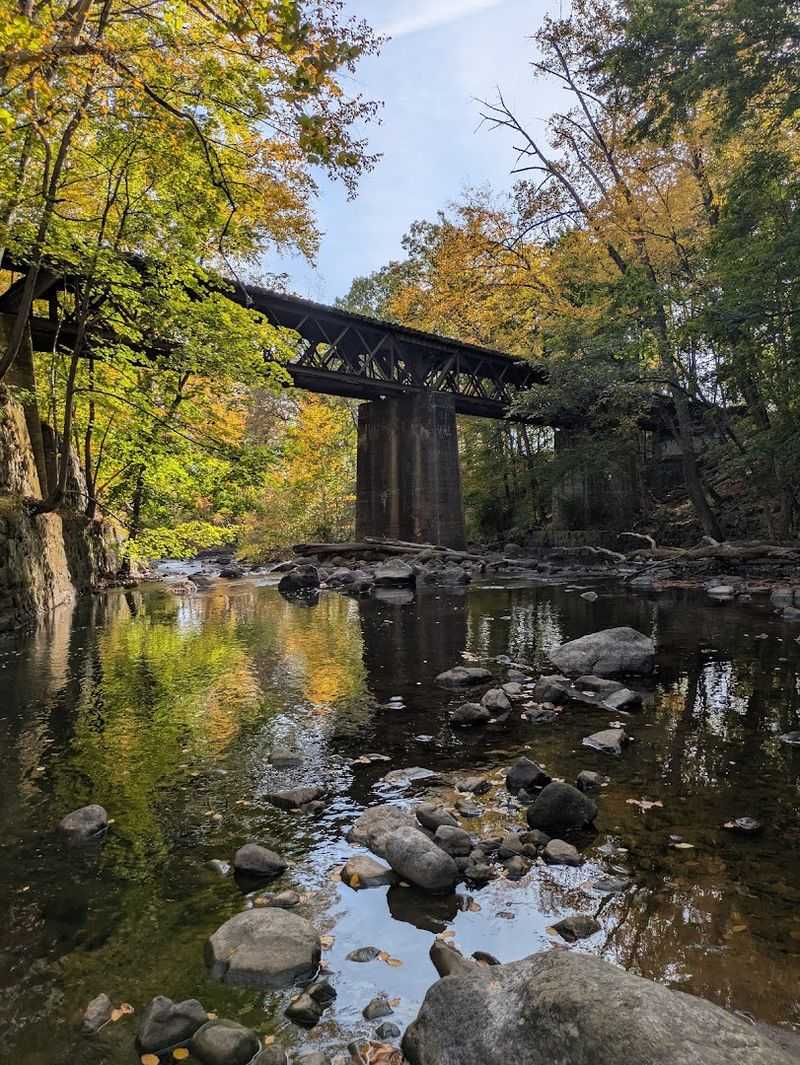
Standing near the edge of the Rockaway River, staring up at this massive steel structure draped in decades of rust and silence, something clicked in my brain that I can only describe as historic awe mixed with mild obsession.
The whole scene felt like stumbling onto a movie set that nobody told you about.
If you have ever wanted to feel like a time traveler without buying a single ticket, this trestle is your spot.
The Origins of the Wooden Trestle in 1867
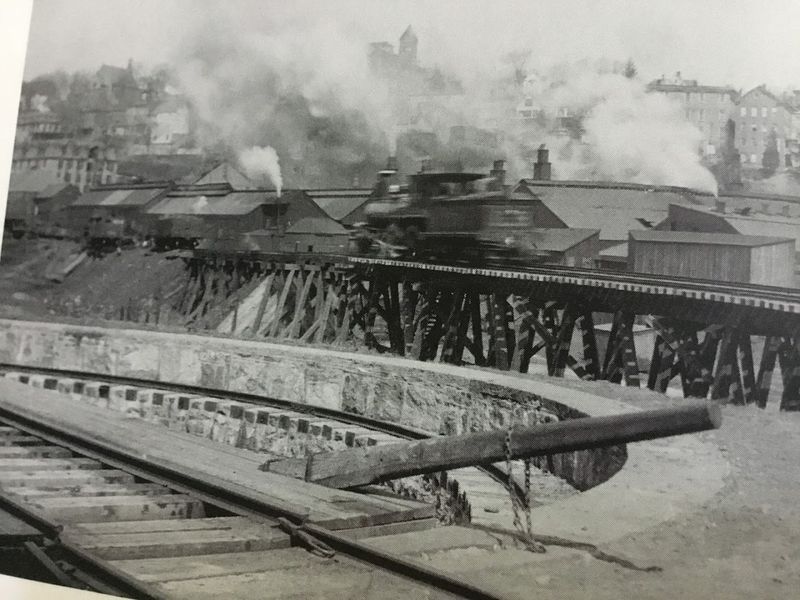
Back in 1867, when the Civil War had barely cooled down and New Jersey was deep in its industrial boom, a wooden trestle was quietly constructed over the Rockaway River in Boonton. It was not built for scenery or sightseeing.
The structure served a very specific industrial purpose, carrying a spur of the Morris and Essex Railroad directly to the Boonton Ironworks, which was one of the region’s most active manufacturing operations at the time.
Raw materials came in, finished iron products went out, and this wooden bridge made it all possible. It first appeared on a recorded map in 1888, giving historians a concrete timestamp for its documented existence.
The trestle represented the kind of engineering ambition that defined mid-19th century America, practical, rugged, and built to move goods fast.
Knowing that this whole story started with timber and determination makes standing near the current steel structure feel even more layered. History has a funny way of stacking up quietly in places most people drive right past.
How a Flood in 1905 Changed Everything
Floods have a way of rewriting history without asking permission, and that is exactly what happened in 1905 when a powerful surge of water tore through Boonton and took the original wooden trestle with it.
One storm erased nearly four decades of industrial infrastructure in what must have felt like an overnight disaster for the community and the railroad operations that depended on it.
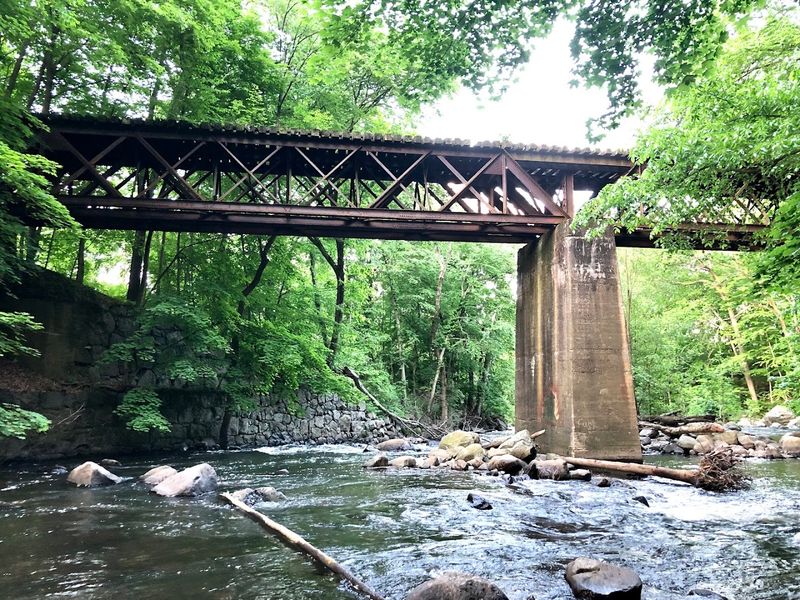
The loss was significant, but the response was swift. By 1906, a replacement structure was already rising over the same river, this time built from steel rather than wood.
The Elmira Bridge Company had already contributed approach spans back in 1900, so the framework for a stronger crossing was partly in place before the flood even struck.
That kind of rapid rebuilding says a lot about how essential this crossing was to the region’s economy. Losing the bridge was not an option anyone was willing to accept for long.
The new steel structure would go on to outlast the ironworks, the railroad, and most of the industry that originally justified its existence.
The 1906 Replacement Bridge
There is something satisfying about the story of the 1906 replacement bridge, mostly because it did not just patch things up, it upgraded everything.
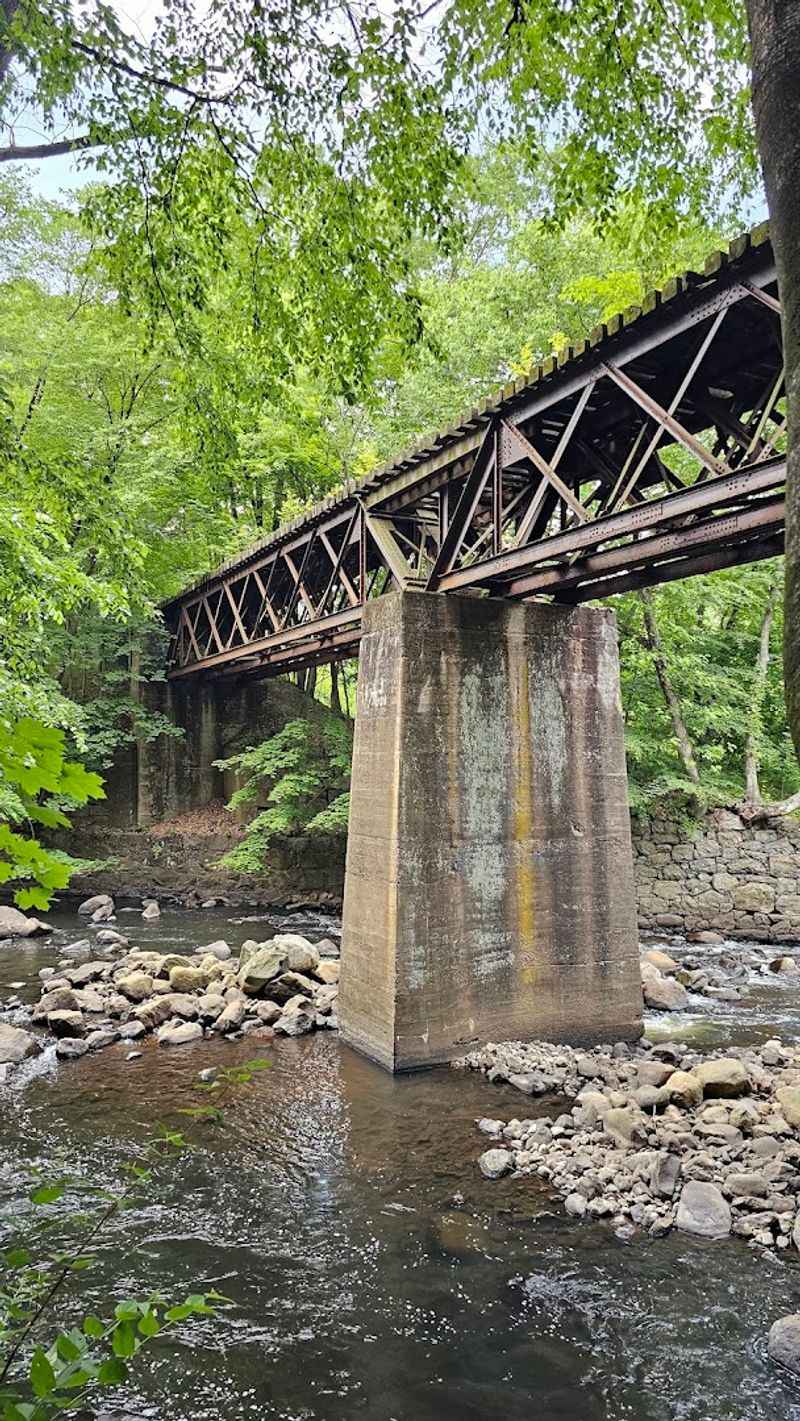
The new structure featured Metal 8 Panel Rivet-Connected Double-Intersection Warren Deck Truss spans, which sounds complicated but basically means it was built to last and built to carry serious weight.
The Elmira Bridge Company contributed the plate girder approach spans, which were actually constructed in 1900 before the flood even happened.
The truss spans themselves appear to date even further back, possibly to the 1880s, suggesting they may have been relocated from another site and repurposed here.
That kind of resourceful reuse was common in railroad engineering during that era.
Standing near the bridge today, you can still see the riveted connections and the heavy steel panels that have held their shape for well over a century. The engineering is not flashy.
It is honest and utilitarian, built for function rather than admiration, which somehow makes it more admirable in hindsight. Few structures from that period have survived with this much of their original character intact.
The Boonton Ironworks Connection
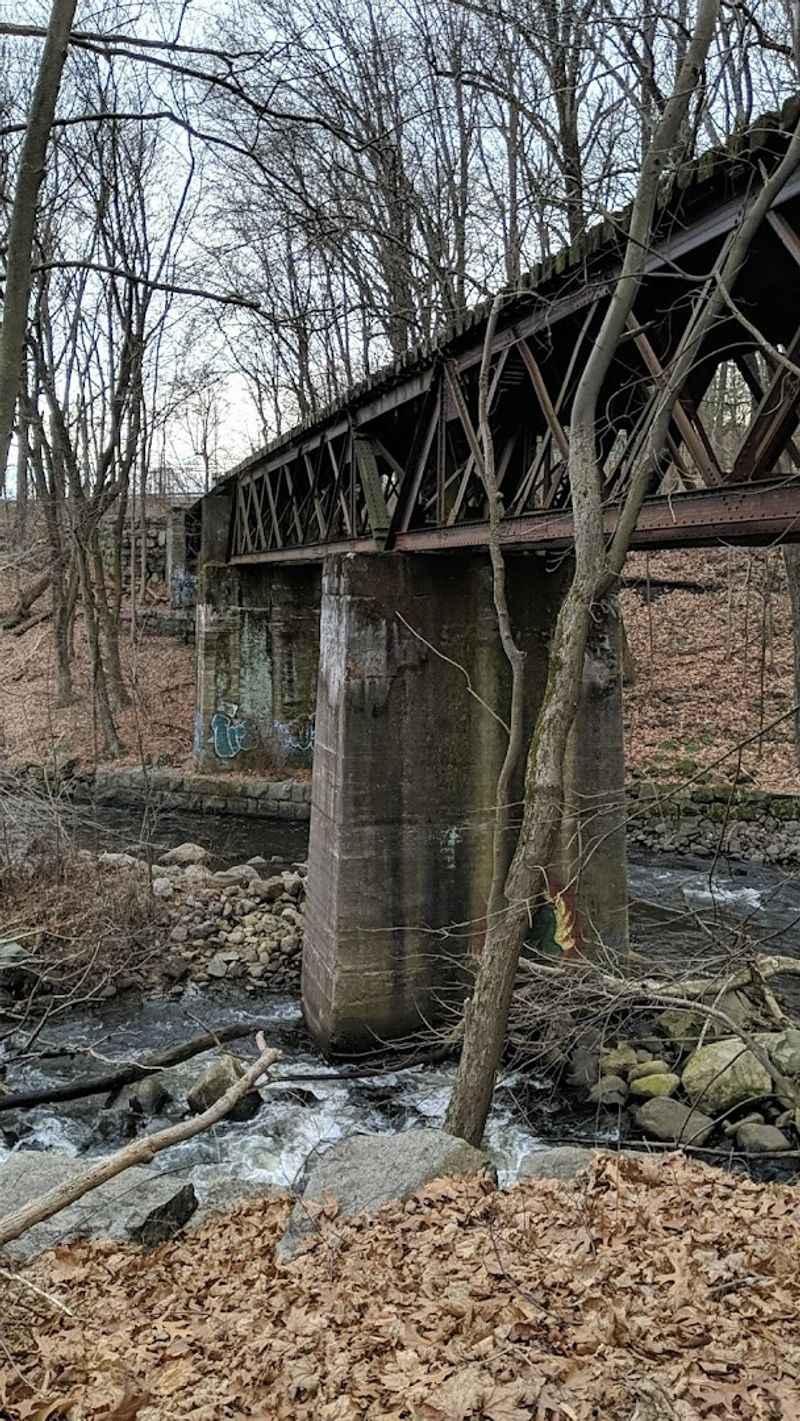
The trestle and the Boonton Ironworks were practically inseparable for most of their shared history. The ironworks was a cornerstone of Boonton’s identity for decades, producing iron goods that fed the demands of a growing nation.
Without the trestle, getting materials in and products out would have been a logistical nightmare.
The railroad spur that crossed the trestle was the ironworks’ lifeline. It connected the facility to the broader Morris and Essex Railroad network, which linked Boonton to markets across the region.
Every load of raw material that arrived and every shipment of finished iron that left passed over the Rockaway River on this very crossing.
When the ironworks finally closed in 1911, it marked the end of an era, but not the end of the bridge. The trestle kept working, serving other industrial operations in the area for decades after the ironworks went quiet.
That resilience is part of what makes the structure so fascinating to explore today. It outlived the very industry that gave it a reason to exist in the first place, and it is still standing to tell that story.
The Unexpected Setting
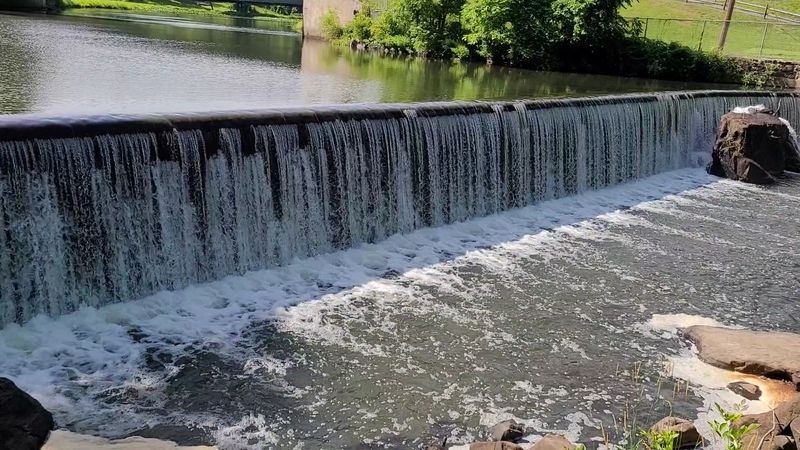
Few things are more surprising than expecting a gritty industrial ruin and finding yourself inside a genuinely beautiful park instead. Grace Lord Park in Boonton is the home of the Lackawanna Railroad Trestle, and the setting is far more scenic than the bridge’s industrial origins might suggest.
The park sits alongside the Rockaway River, where small rapids tumble over settled river stones for several hundred yards in each direction from the bridge.
Sandy patches and flat rocks make it easy to wander along the water’s edge and take in the scenery at a relaxed pace.
The sound of moving water combined with the sight of that old steel structure overhead creates an atmosphere that feels genuinely unlike anywhere else in New Jersey.
Boonton Falls is nearby, adding another natural feature to the visit without requiring any extra effort. The park feels like a reward for showing up, the kind of place that surprises you with how much it offers once you actually get out of the car and start walking.
Wear comfortable shoes with decent grip and give yourself more time than you think you need.
The Abandoned Railroad Tracks Still Crossing the Bridge
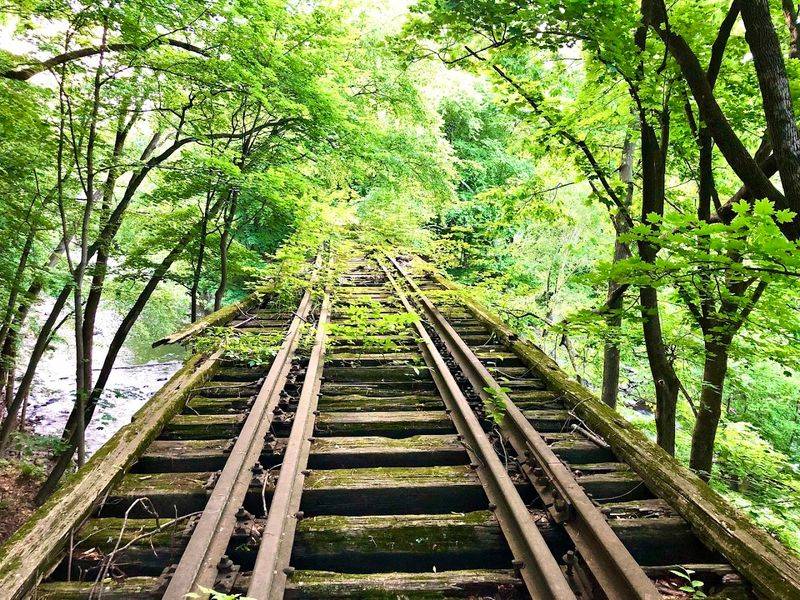
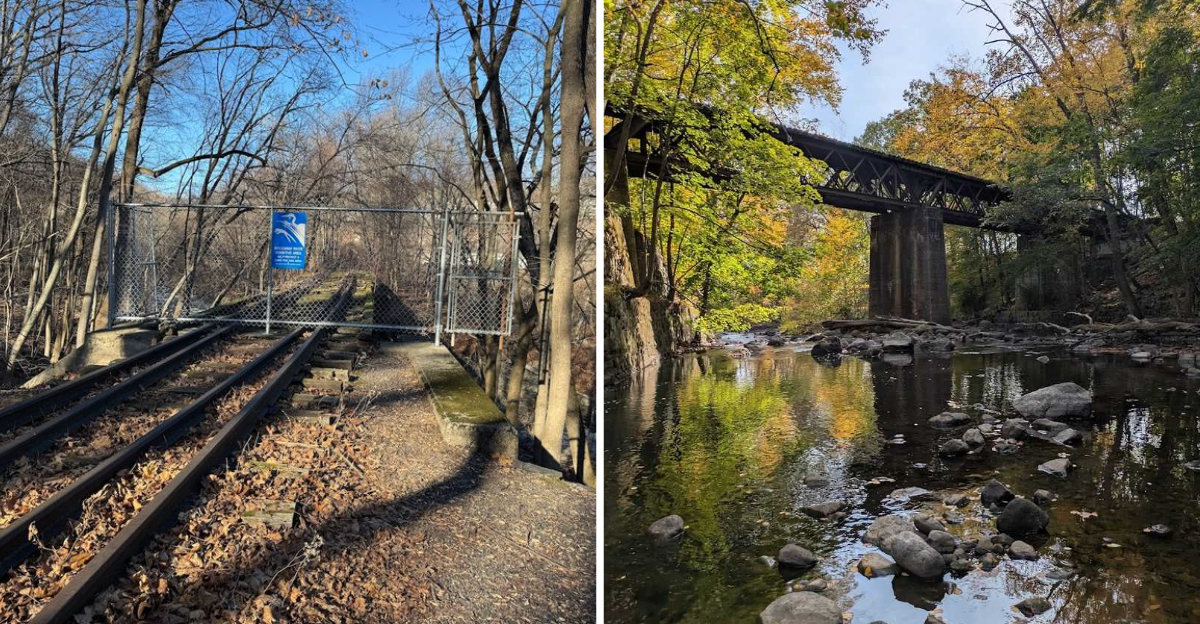
One of the most striking details about the trestle is that the railroad tracks are still there.
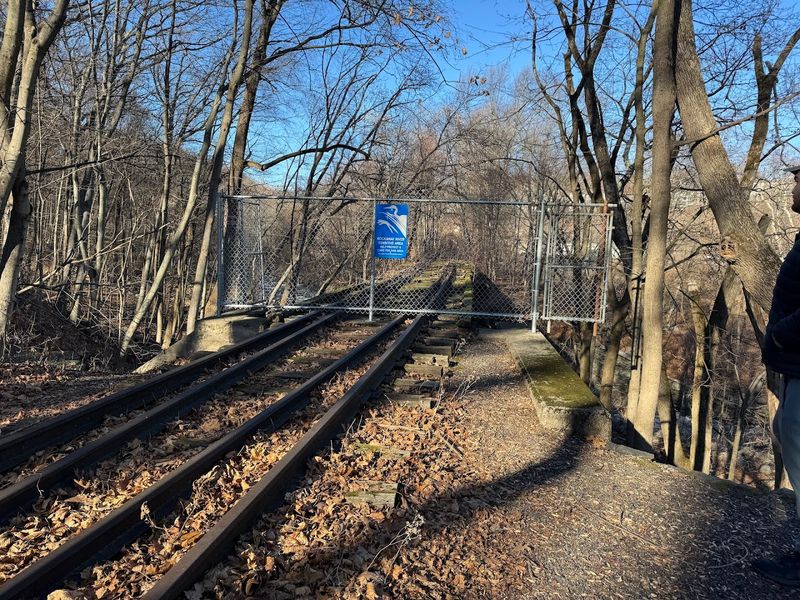
Rusty, overgrown, and fenced off, they cross the bridge and continue down the line toward the Boonton Recycle Center, creating a ghostly corridor of industrial memory that feels frozen in time.
The tracks serve no trains now, but their presence adds a layer of authenticity to the experience that a cleaned-up historic site simply cannot replicate. You get the sense that the last train to cross here left and just never came back, which is essentially what happened when operations ceased in 1970.
The bridge and its rails were simply left in place as the surrounding world moved on.
Fences and locked gates prevent pedestrian access onto the bridge itself, which makes sense given the structure’s age and condition. But the view from the riverbank and the park paths nearby is more than enough to appreciate the scale and the history.
Sometimes the best way to understand an old structure is to stand back and let it speak for itself, and this one has plenty to say.
The Morris and Essex Railroad Legacy
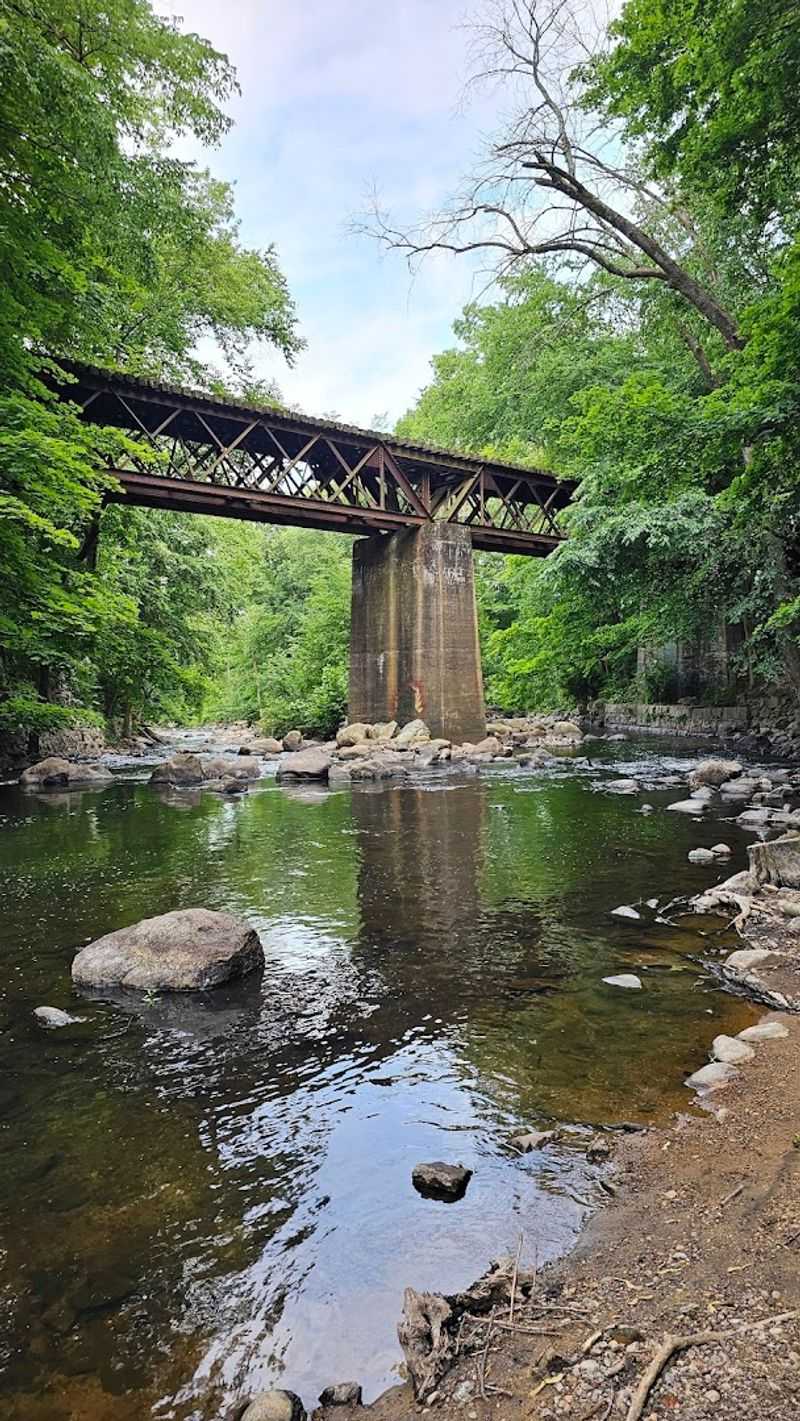
The Lackawanna Railroad Trestle did not exist in isolation. It was part of the larger Morris and Essex Railroad network, a system that played a major role in shaping the economic geography of northern New Jersey during the 19th century.
The Boonton Branch of that line began construction in 1869 and was completed in 1870, primarily designed as a freight bypass route.
Over time, the Delaware, Lackawanna and Western Railroad took control of the Morris and Essex system, which is where the trestle gets the “Lackawanna” name that most people associate with it today.
The DL&W was one of the most significant railroad companies operating in the northeastern United States, known for connecting New Jersey to markets further inland and north.
The original Boonton Line through Paterson was eventually abandoned in 1963 when Interstate 80 was constructed, cutting through the route. Passenger service on the Boonton Line under NJ Transit finally ended in 2002.
The trestle outlasted all of it, standing quietly through every shutdown, merger, and infrastructure change that swept through the region over more than a century of railroad history.
Visiting the Trestle and What to Expect
Getting to the trestle requires a bit of a descent from the parking area, so comfortable footwear with solid grip is genuinely useful rather than optional. The path down to the river is manageable but does involve uneven terrain, especially if recent rain has made things slippery.
Waterproof shoes are a smart call if you plan to walk along the water’s edge.
Once you reach the river level, the reward becomes obvious pretty quickly. The rocky shores stretch out in both directions, and the sound of the rapids creates a surprisingly peaceful atmosphere given how close everything is to town.
Small sandy patches offer spots to sit and take in the view without feeling like you need to keep moving.
The trestle itself is fenced off for safety reasons, so the experience is more about appreciating it from a distance than exploring it up close. That distance actually works in the structure’s favor, giving you the full visual sweep of the steel truss design against the river and tree line.
Visiting after heavy rain reportedly makes the water level and energy of the rapids even more dramatic and worth the trip.
Why This Trestle Still Matters Today
There is a particular kind of place that makes you feel connected to something larger than your own daily routine, and the Lackawanna Railroad Trestle is exactly that kind of place.
It has been standing over the Rockaway River since the 1860s in one form or another, surviving floods, industrial decline, railroad abandonment, and decades of changing landscapes around it.
People come here simply because the history and the setting are compelling enough on their own. That says something meaningful about what makes a place worth visiting.
Preserving awareness of sites like this one matters because they represent the kind of unglamorous, working history that built the region. Not every important structure gets a museum or a restoration fund.
Some of them just stand quietly in parks, waiting for curious people to show up and pay attention. The Lackawanna Railroad Trestle has been waiting patiently for over 150 years, and it is still worth every minute of the visit.
Address: Lackawanna Railroad Trestle, Boonton, NJ 07005
