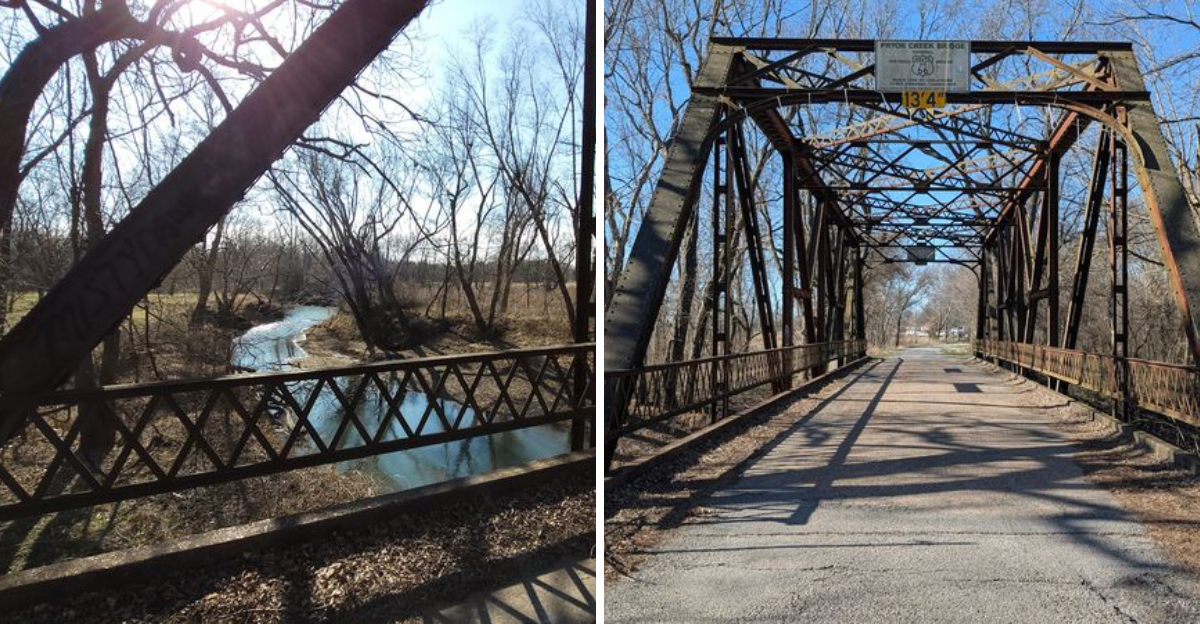
Standing on the northeast edge of Chelsea, Oklahoma, this historic bridge looks like something a film director would choose for a late-night thriller scene.
Rust crawls across its through-truss steel frame, and the old road surface beneath your feet feels like it belongs to another era entirely. This is not just a crossing over water.
It is a living relic of America’s most legendary highway, sitting quietly in Rogers County while the modern world speeds past just a short distance away.
If you have ever wanted to feel like you stepped back into the 1920s without buying a time machine, this is your spot.
A Bridge Born from the Golden Age of American Road Travel
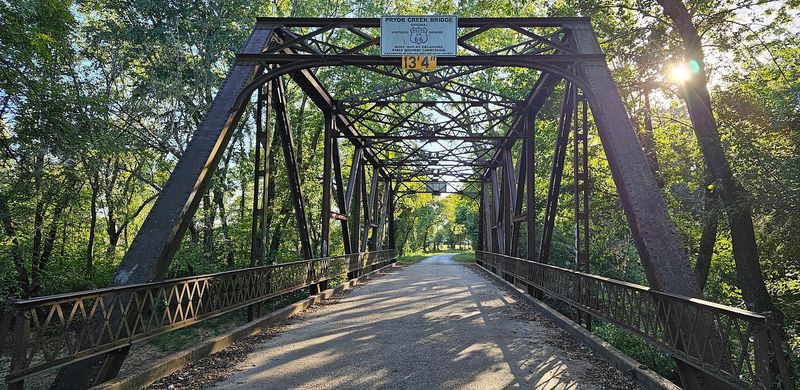
The Pryor Creek Bridge was built in the mid-1920s, around the same time Route 66 was established, and later became part of the highway’s historic alignment. It was a workhorse of its era, plain and functional by design.
The steel truss construction was standard for the 1920s and 1930s. Engineers favored this style because it used less material while still supporting heavy loads.
Standing beside it today, you can almost picture the old cars rattling across the wooden planks. The bridge connected communities that would otherwise have been isolated from each other.
Oklahoma has a deep connection to Route 66. The state contains the longest remaining continuous stretch of the original highway in the entire country.
The Pryor Creek Bridge is one small but meaningful piece of that larger story. It reminds us that every great road is really just a series of small crossings, each one quietly holding the whole thing together.
The Eerie Visual Appeal Stops You in Your Tracks
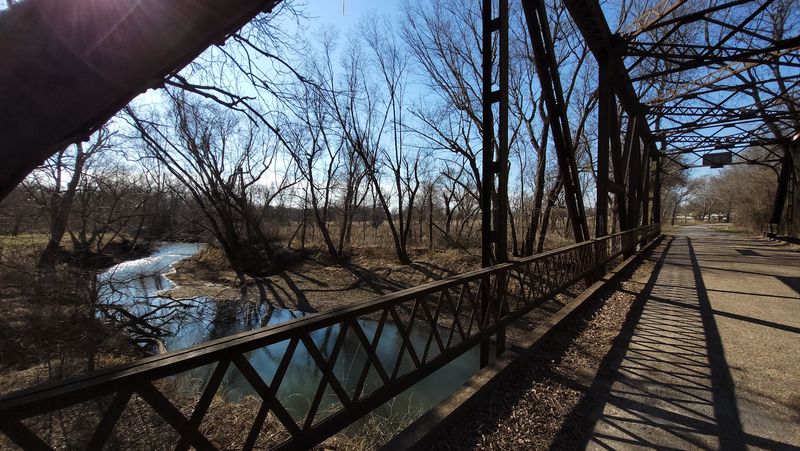
The first thing you notice about this bridge is the color. Decades of Oklahoma weather have turned the steel into a deep, layered shade of rust that almost glows orange in afternoon sunlight.
The texture of the corroded metal is surprisingly beautiful up close. Every rivet, every beam, every joint tells a small story about time passing.
The through-truss design creates a tunnel-like effect when you walk across. Steel frames rise on both sides and arch overhead, giving the impression that you are passing through a skeletal gateway.
On overcast days, the atmosphere shifts completely. The grey sky pressing down on rusted metal makes the whole scene feel pulled from an old black-and-white photograph that somehow gained color.
Photographers regularly make the trip to Chelsea just to capture this bridge. The contrast between decaying steel and the quiet green creek below is genuinely striking.
Horror movie comparisons are easy to make here, but the bridge earns them honestly. There is nothing fake or staged about its appearance.
Nature and time did all the work, and the result is something that feels both haunting and oddly beautiful all at once.
What Through-Truss Actually Means and Why It Matters
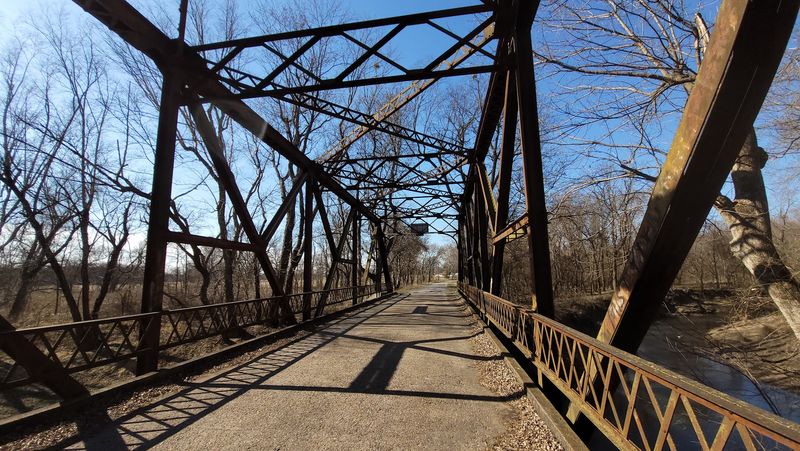
Not everyone arrives at a historic bridge knowing what a through-truss is, and that is perfectly fine. It is actually a simple and clever concept once you see it in person.
In a through-truss bridge, the road deck runs through the middle of the truss structure rather than on top of it. The framework rises above the road on both sides and connects overhead, forming a rigid cage around the travelers crossing it.
This design was popular during the early twentieth century because it maximized strength without requiring enormous amounts of steel. The triangular geometry of the trusses distributes weight efficiently across the entire span.
The Pryor Creek Bridge uses this approach in a straightforward, no-frills way. There are no decorative flourishes or ornamental details.
It was built to do a job, and it did that job for decades.
Understanding the engineering makes the visit richer. You start to appreciate how much thought went into something that most people once crossed without giving it a second glance.
Oklahoma preserved this bridge not because it is flashy, but because it represents a genuine piece of construction history. Simple things, done well, deserve recognition too.
The Location Along Route 66 in Northeast Oklahoma
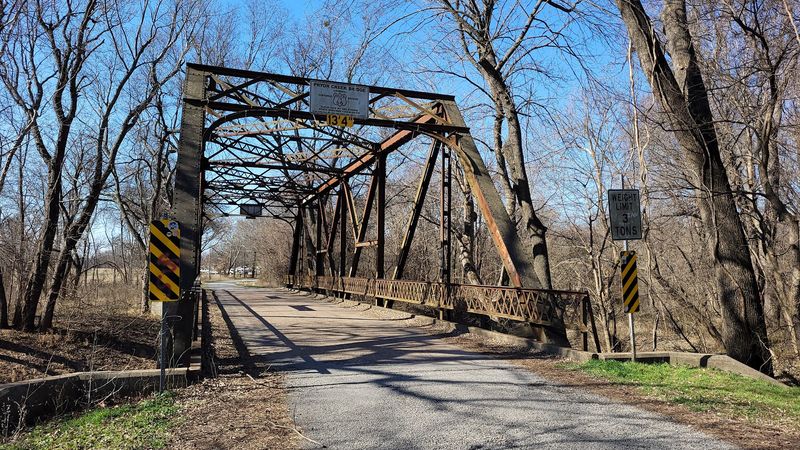
Chelsea sits in Rogers County in northeast Oklahoma, a small and unhurried town that most travelers pass through without slowing down. That is their loss.
The Pryor Creek Bridge is found just on the northeast side of town, close enough to walk to from the main road if you are the type who likes to stretch your legs. The coordinates place it at approximately 36.5383 latitude and -95.4151 longitude for anyone navigating by GPS.
The address associated with the site is Chelsea, OK 74016. The surrounding landscape is classic Oklahoma countryside, with rolling green hills and open sky that stretches in every direction.
Northeast Oklahoma has a quieter, more wooded character than the flat western plains. The creek below the bridge flows through a gentle valley, and the vegetation along the banks softens the industrial feel of the rusted steel above.
Getting here is straightforward if you are already driving the old Route 66 corridor. The bridge appears almost without warning, a sudden reminder that the road you are on has a very long memory.
The peacefulness of the location makes the bridge feel even more atmospheric, like discovering an old photograph tucked inside a book you found at a yard sale.
Walking Across the Bridge and What You Actually Feel
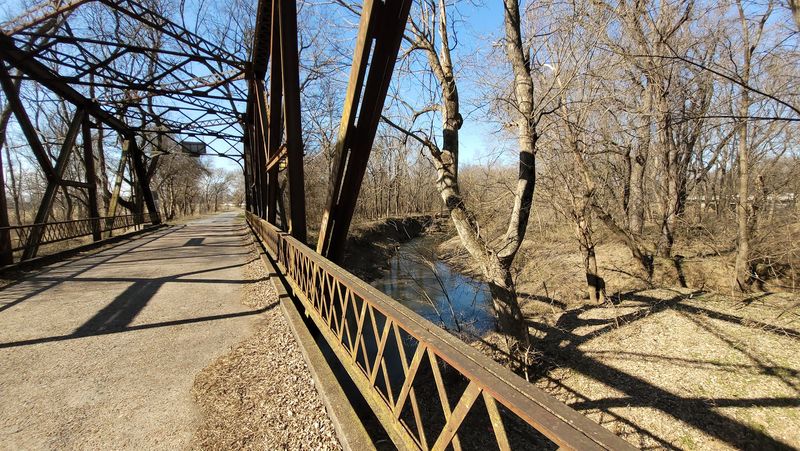
Stepping onto the bridge deck feels different from standing beside it. The structure has a presence that is hard to describe until you are actually on it.
The old road surface underfoot is worn and uneven. Your footsteps sound different here than they would on a modern sidewalk, a little hollow, a little more deliberate.
Looking through the truss framework at the creek below gives you a sense of height that surprises you, even though the bridge is not particularly tall. The water moves quietly, and the banks are lined with trees that lean in from both sides.
The steel around you creaks faintly in the wind. Not dramatically, not dangerously, just enough to remind you that this is a real structure with real age behind it.
Standing at the midpoint of the span, you can look back toward Chelsea or forward toward open countryside. Both views are peaceful and unhurried in a way that modern life rarely offers.
The whole crossing takes only a minute or two, but most people slow down without meaning to. Something about the bridge asks you to pay attention, and paying attention here turns out to be a genuinely rewarding thing to do.
The Horror Movie Atmosphere and Why the Comparison Works
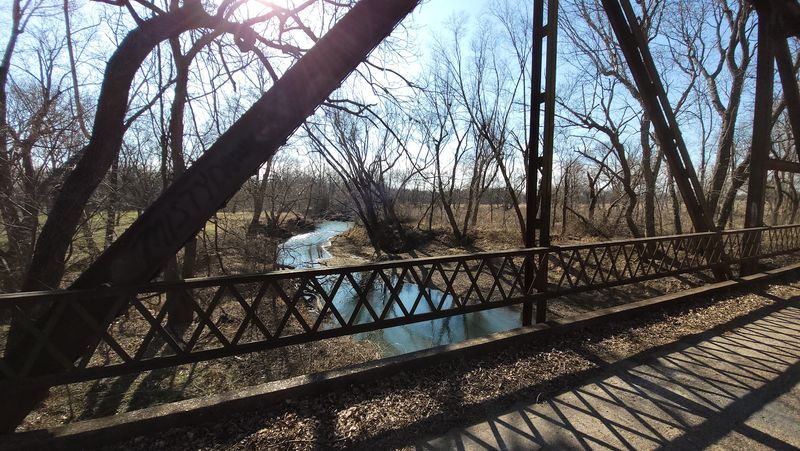
The title of this article is not just clickbait. Spend ten minutes at this bridge and you will understand exactly what the comparison is about.
The combination of isolated location, corroded metal, and complete silence creates an atmosphere that most horror film sets spend serious money trying to fake. Here, it is entirely natural and free to experience.
At dusk, the rusted steel catches the last light of the day and turns a deep, almost blood-orange color. The shadows from the truss framework fall across the road in long, dramatic bars.
The creek below disappears into the shade before the rest of the landscape does. That small detail, the water going dark early, adds a layer of unease that is hard to shake.
Even in full daylight, the bridge carries a quiet intensity. It is not a scary place in any real sense.
But it has the kind of atmosphere that makes your imagination work a little harder than usual.
Oklahoma is full of places where history and landscape combine to create something unexpectedly powerful. This bridge is one of the best examples of that, wearing its age like a costume that happens to fit perfectly.
The History of Route 66 and Why This Bridge Still Matters
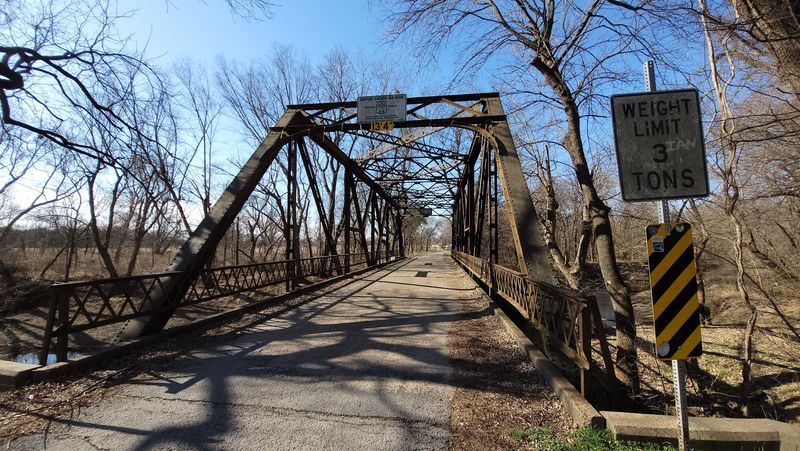
Route 66 was officially established in 1926, connecting Chicago, Illinois to Santa Monica, California across more than 2,400 miles of American landscape. It became one of the most culturally significant roads in the country.
During the Dust Bowl years of the 1930s, thousands of Oklahoma families used Route 66 to migrate west in search of better conditions. The road carried real human weight during some of the hardest years in American history.
The Pryor Creek Bridge was part of that original alignment. It stood while the great migration happened, while the war years came and went, and while the postwar travel boom transformed the highway into a symbol of freedom and adventure.
When interstate highways arrived in the 1950s and 1960s, Route 66 was gradually bypassed and eventually decommissioned in 1985. Many of its bridges and roadside structures were abandoned or demolished.
The Pryor Creek Bridge survived. That alone makes it remarkable.
Oklahoma has worked to preserve several of these old Route 66 structures as historical landmarks.
Visiting this bridge connects you to a much larger American story. It is a small crossing over a small creek, but it carries an outsized amount of history on those old rusty shoulders.
Best Time to Visit and Practical Tips for the Trip
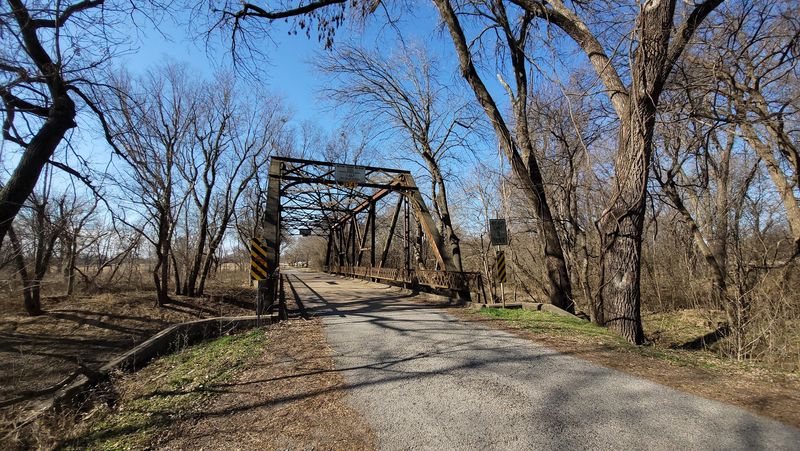
The bridge is accessible year-round, which is one of its best qualities. There are no tickets to buy, no hours to check, and no crowds to navigate on most days.
Spring and autumn are the most rewarding seasons to visit. In spring, the vegetation along Pryor Creek fills in with fresh green growth that contrasts sharply with the rust on the bridge.
In autumn, the same trees turn gold and orange, creating a color palette that photographers dream about.
Summer visits are perfectly fine but come with Oklahoma heat, which can be intense from June through August. Morning visits during summer are cooler and often misty, which adds to the atmospheric quality of the place.
Winter strips the trees bare and opens up longer sightlines through the valley. The exposed landscape gives the bridge a starker, more skeletal appearance that suits its character well.
Wear comfortable shoes with good grip if you plan to walk the bridge deck. The surface is uneven and can be slippery when wet.
Bring a camera regardless of the season. Every lighting condition produces a different version of this bridge, and no two visits feel exactly the same.
Plan to stay longer than you think you need to.
Why This Bridge Deserves a Spot on Your Oklahoma Road Trip
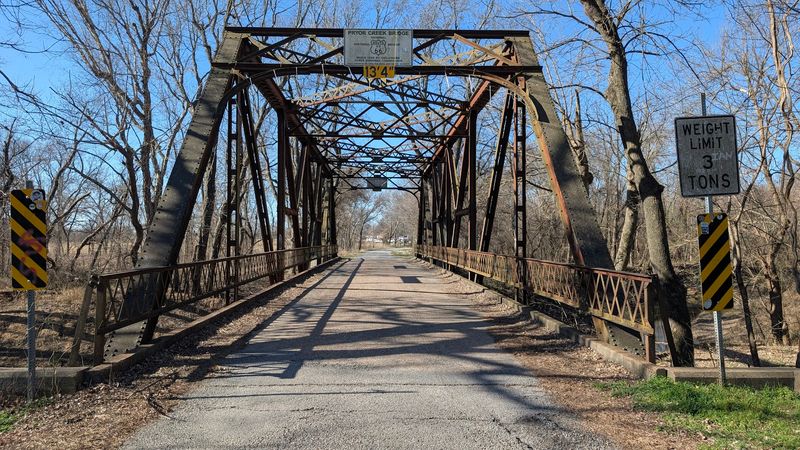
Oklahoma road trips along Route 66 offer a mix of roadside attractions, historic towns, and unexpected natural beauty. The Pryor Creek Bridge belongs on that list for reasons that go beyond simple sightseeing.
It is one of those places that rewards curiosity. If you are the kind of traveler who likes to pull over and look at something unusual, this bridge will not disappoint.
The stop requires almost no planning. You drive to Chelsea, find the northeast side of town, and the bridge is right there waiting.
The whole detour from the main Route 66 corridor takes maybe fifteen to twenty minutes if you are in a hurry.
But most people find themselves staying longer. The combination of history, atmosphere, and visual interest makes it easy to linger.
Pairing the Pryor Creek Bridge with other stops along the Oklahoma stretch of Route 66 makes for a genuinely memorable day. There are old neon signs, diners, and other preserved landmarks within a short drive.
Oklahoma has a talent for holding onto things that the rest of the country has forgotten. This bridge is proof of that instinct, a quiet, rust-covered reminder that some things are worth keeping around just a little bit longer.
Dear Reader: This page may contain affiliate links which may earn a commission if you click through and make a purchase. Our independent journalism is not influenced by any advertiser or commercial initiative unless it is clearly marked as sponsored content. As travel products change, please be sure to reconfirm all details and stay up to date with current events to ensure a safe and successful trip.
