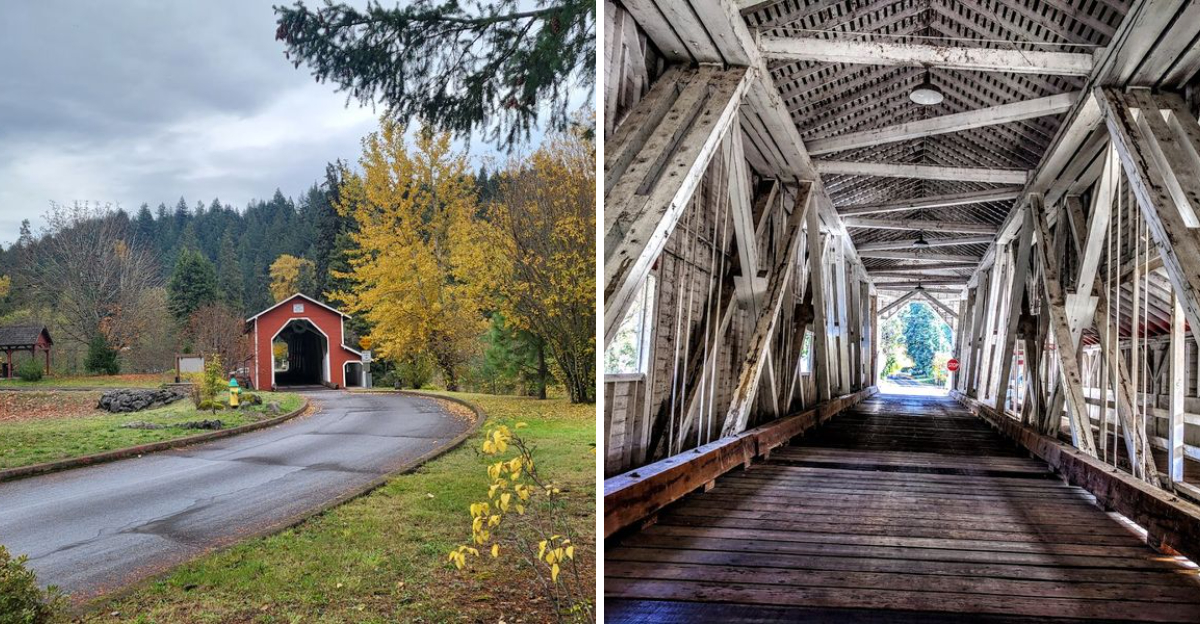
An old Oregon covered bridge like this doesn’t just connect two sides – it feels like it connects eras. I step inside and immediately notice the rare triple truss design stretching overhead, almost like a piece of engineering art frozen in wood.
The structure creaks softly with every step, but it feels steady in that timeless way only historic bridges manage. Locals cross it like it’s just part of daily life, while I slow down just to take in the details above and around me.
Then I spot the hidden pedestrian walkway, tucked away like a quiet bonus level. It turns a simple crossing into something a little more curious, a little more memorable.
And suddenly, a bridge becomes less about getting somewhere and more about the experience of being on it.
Oregon’s Longest Driveable Covered Bridge
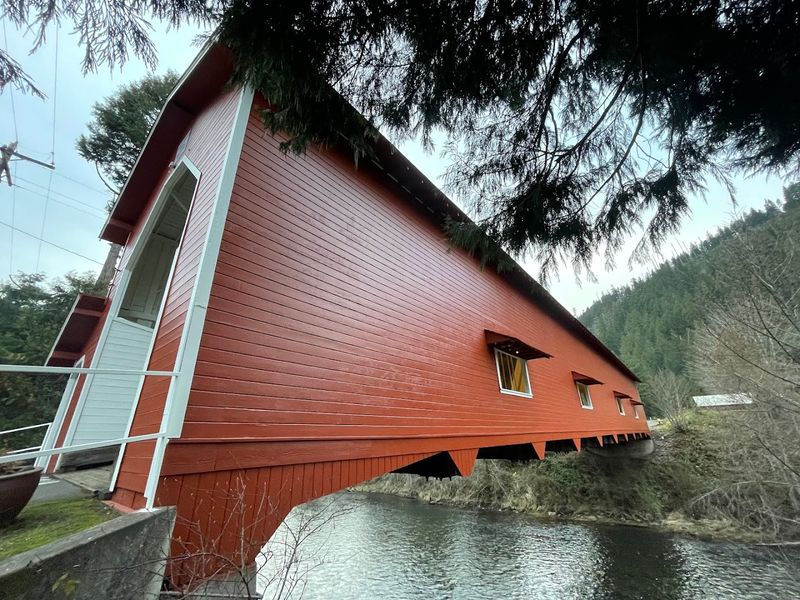
Stretching 180 feet across the river, this bridge earns its title in the most understated way. No flashy signs.
No crowd barriers. Just a long, dark wooden tunnel over rushing water, open to anyone who drives or walks up.
Oregon has many covered bridges, but most are closed to vehicle traffic. This one still lets cars and trucks roll right through.
That alone makes it worth the short detour off the highway.
The single-lane setup keeps things interesting. Drivers on each side take turns, and there is a small open area at both ends to wait.
It creates a slow, almost old-fashioned rhythm that feels rare today.
The bridge was built in 1944 and has been maintained carefully since. It does not look tired or worn.
It looks like something people actually care about, which makes the whole stop feel more meaningful than a typical roadside landmark.
The Rare Triple Truss Construction
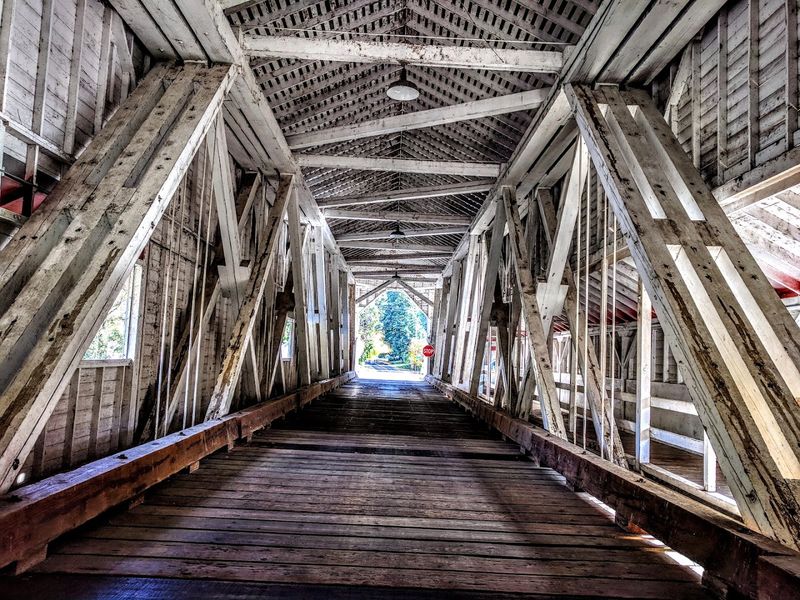
Most covered bridges use a single truss system. The Office Covered Bridge uses three.
That makes it one of the rarest structural designs among all of Oregon’s historic covered bridges.
Walking inside and looking up at the beams, you start to understand why the structure has lasted this long. The interlocking timber pattern creates a kind of visual rhythm.
It is almost hypnotic to follow the angles from one end to the other.
The triple Howe truss design was chosen to handle heavier loads. Lumber trucks once crossed this bridge regularly, and the engineering had to match that demand.
That industrial history is still visible in the bones of the structure.
Running your hand along the rough timber feels like touching something that has absorbed decades of Pacific Northwest weather. The wood is dense and darkened.
It has a weight to it, not just physically but historically, that you do not find in newer construction.
The Hidden Pedestrian Walkway
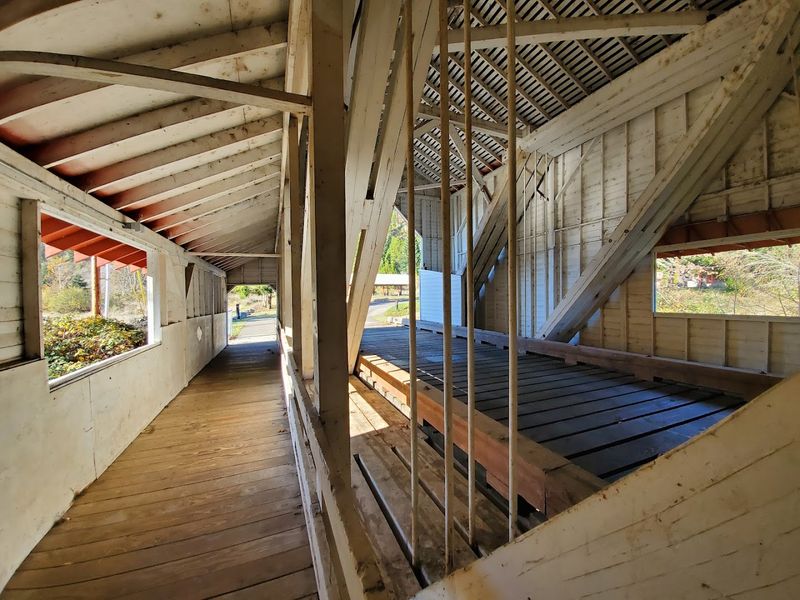
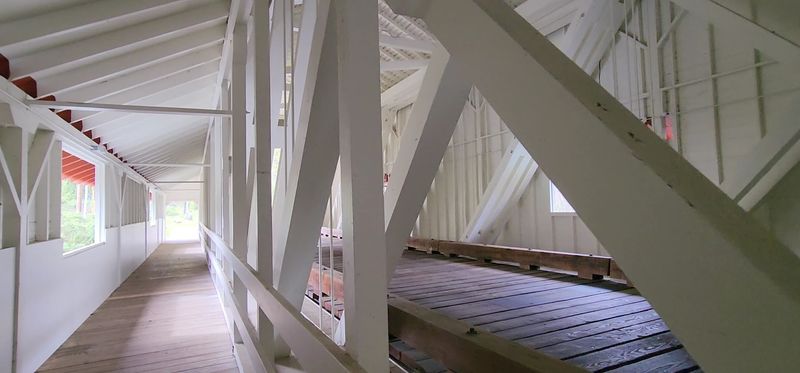
Tucked along the side of the main vehicle span is a separate pedestrian walkway. It is narrow, enclosed, and a little mysterious, almost like a secret corridor running parallel to the road inside.
Very few covered bridges in the country include a dedicated pedestrian passage built into the original structure. This one did from the start.
That detail speaks to how thoughtfully the bridge was designed for a working community.
Walking through it while a car crossed the main span was genuinely memorable. The vibrations moved through the floorboards.
The sound bounced off the walls. It felt like being inside something alive.
Peeking out through the small openings along the walkway gives you framed views of the river below and the forest beyond. Each gap becomes its own little photograph.
It is one of those small surprises that turns a quick stop into something you keep thinking about later.
The North Fork Middle Fork Willamette River Views
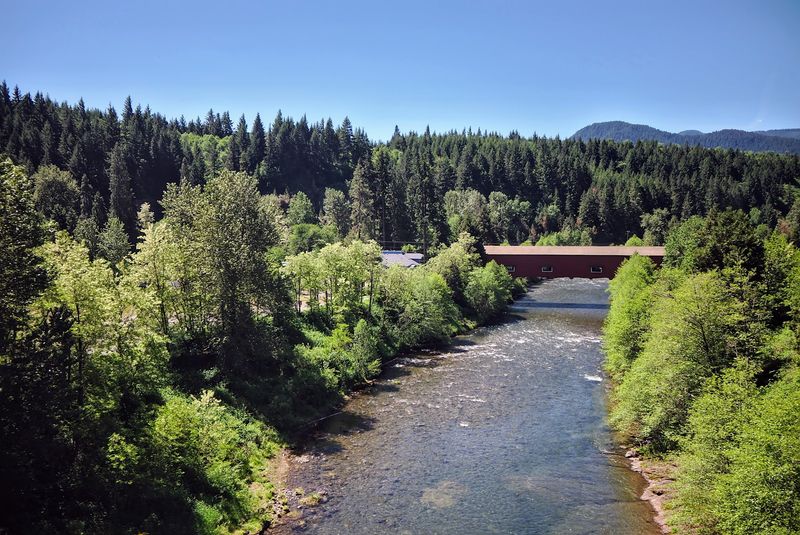
Standing at either end of the bridge and looking out over the river is one of those moments that makes you stop talking mid-sentence. The water is clear and cold-looking, moving steadily over rounded stones.
The Willamette River system runs deep through Oregon’s identity, and this stretch near Westfir feels like one of its more peaceful corners. No crowds.
No noise except the current and the occasional bird.
In autumn, the scene gets even more dramatic. The surrounding trees shift into oranges and yellows, and their colors reflect off the surface of the water.
Several visitors have described the backside view of the bridge against the Cascades as stunning, and it is easy to understand why.
River access is available near the park area on the far side of the bridge. Getting close to the water and just sitting quietly for a few minutes is something worth doing.
The place has a stillness that is genuinely hard to find.
The Park and Picnic Area on the Far Side
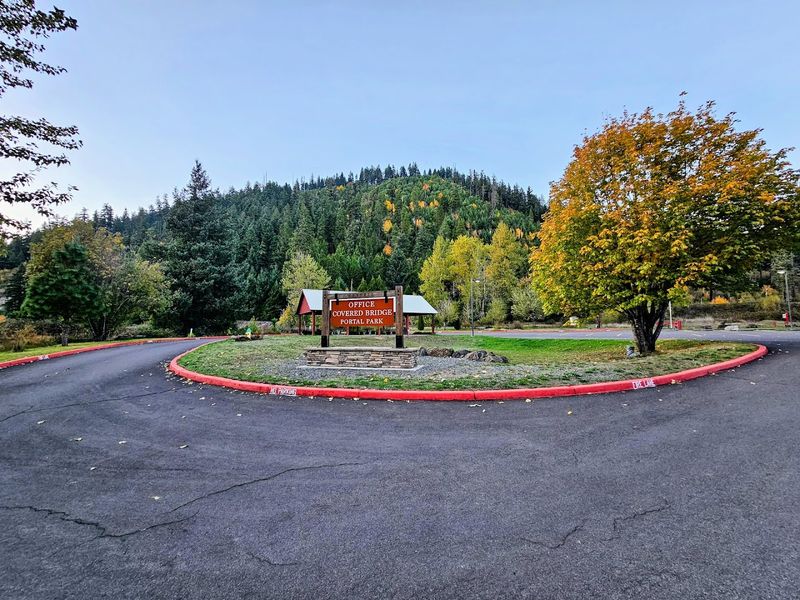
Cross the bridge and the landscape opens up into a well-kept park. There are picnic tables, covered shelters, and a grassy area that feels genuinely welcoming rather than just functional.
Public restrooms are available, which is always a relief on a road trip. The whole space is clean and maintained with obvious care.
It does not feel like a forgotten rest stop. It feels like a place people visit on purpose.
Families set up lunches here. Cyclists rest after a trail run.
Solo travelers sit quietly and watch the trees. The park works for everyone without trying to be everything.
A BBQ area and playground make it a solid stop for families traveling with kids. Spending an hour here instead of just five minutes at the bridge actually changes the experience.
The park gives the whole visit more room to breathe, and that unhurried feeling is part of what makes Westfir so easy to return to.
The North Fork Trail Access Point
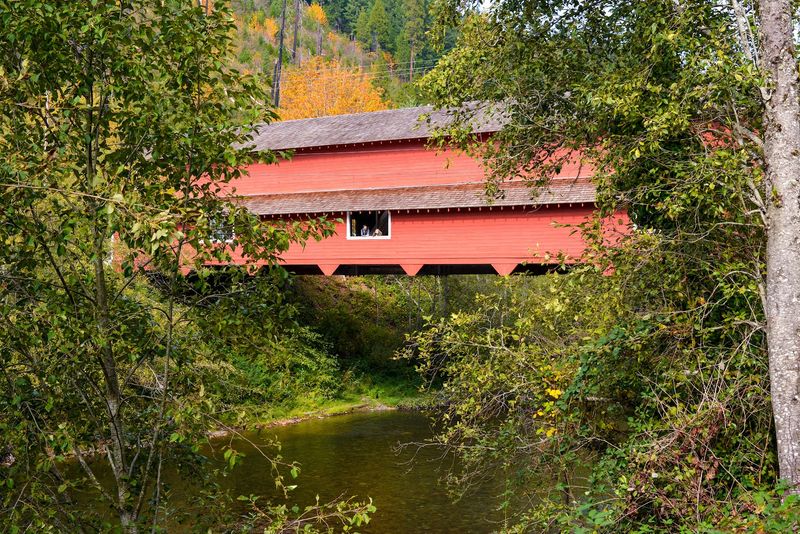
Just past the park, the North Fork Trail begins. It is a well-regarded route for both hikers and mountain bikers, cutting through dense Pacific Northwest forest along the river corridor.
The trail is one of those finds that rewards people who do a little extra research before a road trip. Many visitors stumble onto it by accident and end up spending far more time in Westfir than they originally planned.
The terrain is lush and green in a way that feels almost exaggerated. Ferns crowd the path edges.
The canopy closes in overhead. Sound softens.
It is a genuinely immersive forest experience that begins just steps from a parking lot.
Mountain bikers rate this trail highly for its flow and scenery. Hikers appreciate the relatively accessible terrain and the river views along the way.
Either way, having a trailhead this close to a historic landmark makes the Office Covered Bridge area feel like a full outdoor destination rather than a single attraction.
The Disc Golf Course Nearby
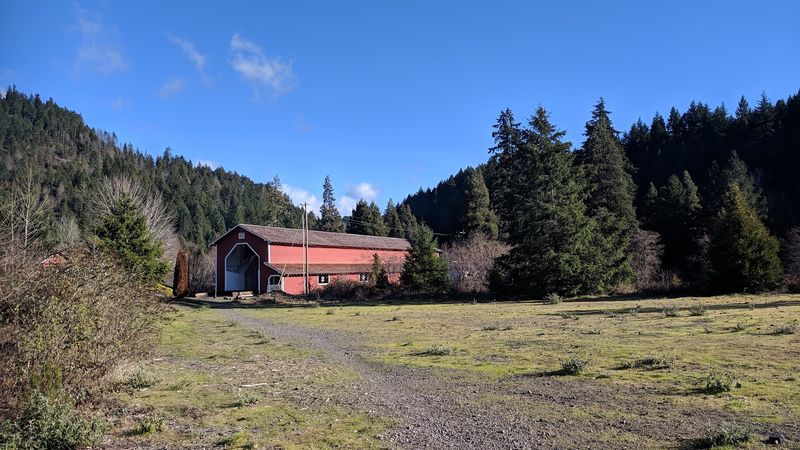
Disc golf was not something I expected to find near a 1944 covered bridge. But there it is, reportedly one of the largest courses visitors have encountered in the area, spreading out across the parkland surrounding the bridge.
The course adds a playful, active energy to a spot that might otherwise feel purely historical. Kids, adults, and serious players all show up.
It turns the park into a multi-hour destination rather than a ten-minute photo stop.
The layout weaves through open areas and tree lines, giving the course a natural feel that fits the surroundings. You are not playing on a manicured field.
The forest is part of the game.
Bringing a disc on a road trip through this part of Oregon is genuinely worth considering. The combination of trail access, river views, a historic bridge, and a disc golf course in one compact location is unusual.
Westfir manages to pack a surprising amount of outdoor activity into a very small, very quiet town.
The Bike Repair and Cleaning Station
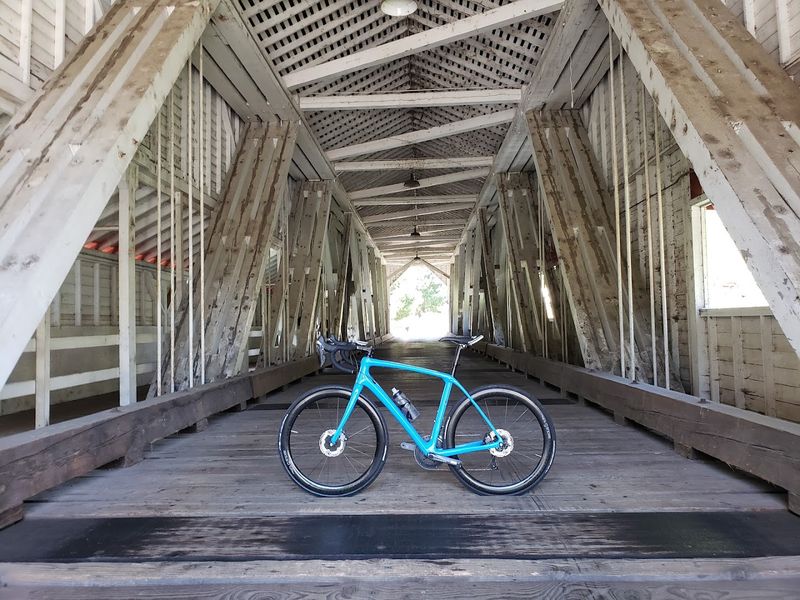
Tucked into the park area near the bridge is a bike repair and cleaning station. It is a small detail, but it says a lot about how seriously this community takes outdoor recreation.
Cyclists riding the North Fork Trail can pull in, clean their gear, and fix minor mechanical issues without needing to drive back to town. That kind of practical infrastructure makes a real difference on a long ride.
The station was mentioned by multiple visitors who seemed genuinely surprised to find it there. It is the kind of amenity that shows up in well-funded trail systems.
Finding it in a small town like Westfir feels like a bonus.
For anyone planning a cycling trip through the Willamette Valley or the Cascade foothills, this area deserves a spot on the route. The bridge, the trail, and the repair station together create a cyclist-friendly stop that is hard to match anywhere else along this stretch of Oregon highway.
The History Behind the Name Office Bridge
The name Office Covered Bridge does not come from a building next door. It refers to the company office of the Hines Lumber Company, which once operated in this area and used the bridge as a critical crossing for its operations.
Built in 1944 by Lane County, the bridge was designed to support the weight of loaded lumber trucks. That industrial purpose shaped every design decision, from the triple truss system to the reinforced floor planking.
Westfir itself grew around the lumber industry. The town’s name is a blend of West and fir, reflecting both its location and its economic backbone.
The bridge was as much a working tool as it was a piece of infrastructure.
Knowing that history changes how you look at the structure. The heavy beams and wide span are not just engineering choices.
They are the physical record of an industry that shaped this corner of Oregon for decades. That context gives the bridge a depth that goes beyond its good looks.
Planning Your Visit to Westfir
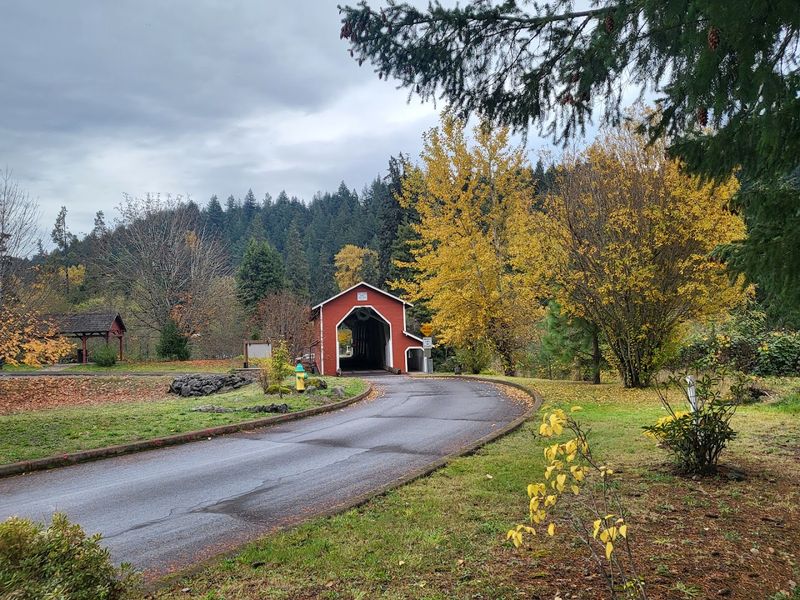
Westfir sits just a couple of miles off Highway 58, making it an easy detour on a drive between Eugene and the Cascade Lakes. The bridge is open 24 hours and there is no fee to visit.
The surrounding area rewards slower travel. Hot springs are within reach.
The drive in along Highway 58 through the Willamette National Forest is scenic on its own. Autumn is a particularly good time to visit, when the foliage frames the bridge in warm color.
A small cafe near the bridge offers snacks and coffee, making it easy to extend your stay without driving back to a bigger town. Spending an unhurried morning here, walking the trail, crossing the bridge on foot, and sitting by the river, is a genuinely restorative experience.
The Office Covered Bridge is the kind of place that earns a second visit. It is quiet without being empty.
Historic without feeling preserved behind glass. Westfir keeps it real, and that is exactly what makes it worth finding.
Dear Reader: This page may contain affiliate links which may earn a commission if you click through and make a purchase. Our independent journalism is not influenced by any advertiser or commercial initiative unless it is clearly marked as sponsored content. As travel products change, please be sure to reconfirm all details and stay up to date with current events to ensure a safe and successful trip.
