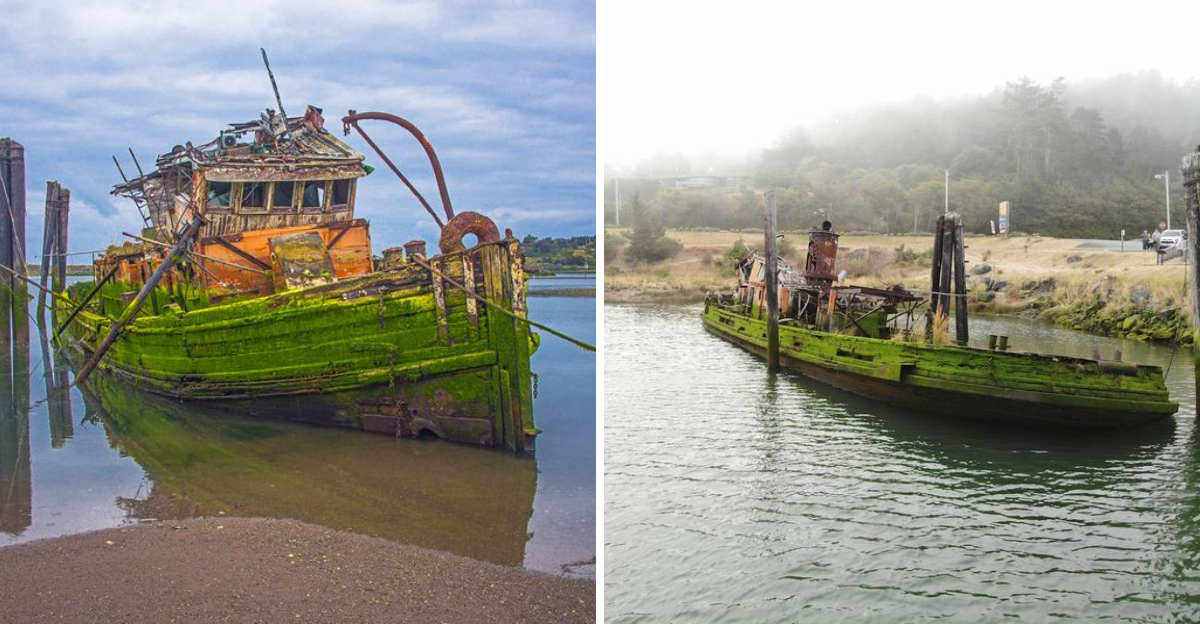
A historic Oregon shipwreck like this doesn’t just sit still – it carries decades of stories with it. I arrive and immediately see how it’s become part of the river itself, like the water decided to keep it as a landmark.
It once served for years before time and nature slowly pulled it into something new. Locals treat it like a familiar point along the water, while I keep circling it trying to imagine its life before it ended up here.
The wood is weathered, the shape half-lost, but it still holds presence in a strange way. Every angle feels like a reminder of how long it’s been part of this landscape.
And somehow, it doesn’t feel forgotten – it feels repurposed by time.
The Birth of a Legend: Mary D. Hume’s Origins
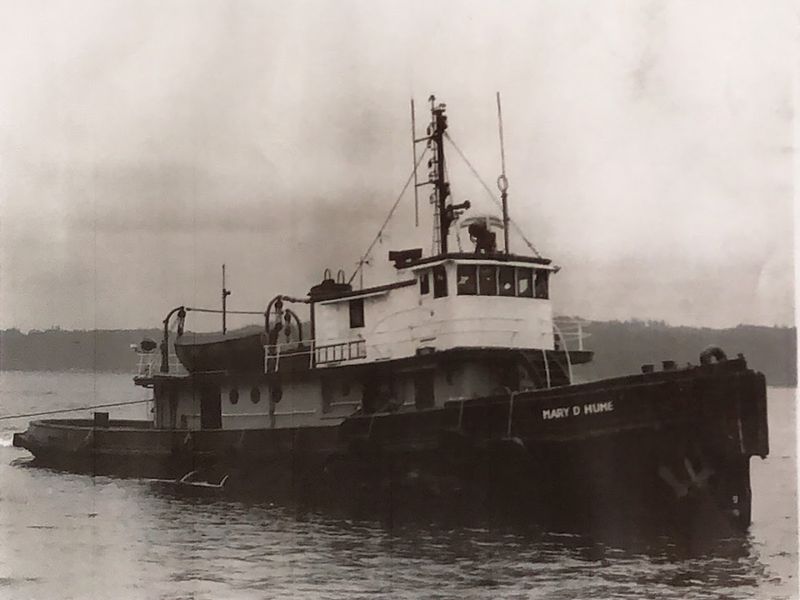
Few ships have a backstory as gripping as the Mary D. Hume.
She was built in 1881 at Gold Beach, Oregon, right along the very river where she now rests. That feels poetic, almost like she never truly left home.
Robert Hume, a well-known salmon canner and businessman, commissioned the vessel. He named her after his mother, Mary D.
Hume. The ship was constructed from local wood and built to handle the rough Pacific Coast waters.
At just over 100 feet long, she was a sturdy steam-powered schooner. She was designed for hard work, not comfort.
Her hull was thick, her engine powerful for the era.
What makes her origins remarkable is how local her story truly is. Gold Beach shaped her.
The Rogue River launched her. And decades later, the same river claimed her as its own permanent landmark.
Knowing that history makes standing beside her feel genuinely moving, not just like checking off a tourist stop.
A Working Life on the Pacific Coast
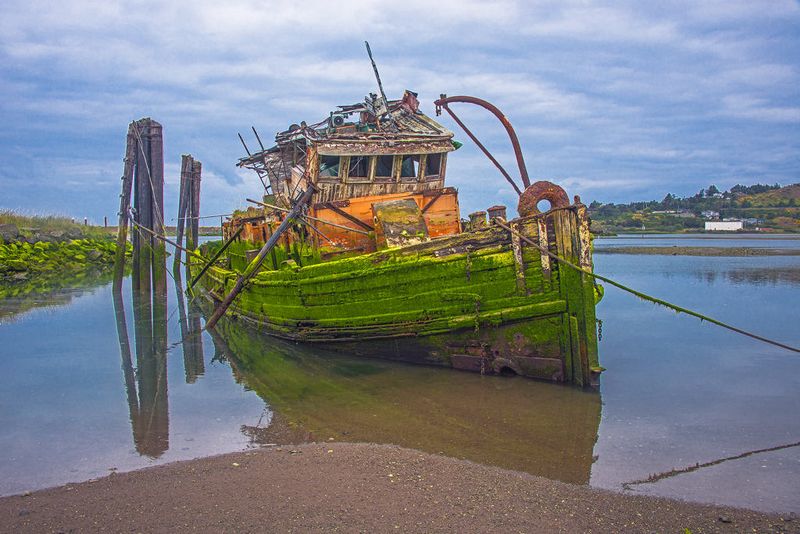
The Mary D. Hume was not built to sit still.
For decades, she moved constantly up and down the Pacific Coast, doing serious, demanding work. Her career reads like an adventure novel packed into logbooks.
She started out in the salmon trade, carrying canned fish from Oregon canneries to markets. That work alone kept her busy and valuable.
She knew these coastal waters better than most vessels of her time.
Her career shifted dramatically when she entered the whaling industry. She worked as a whaling tender, supporting larger operations hunting in the North Pacific.
That role took her far from home, all the way to Alaska.
Later, she transitioned into tugboat work, towing barges and other vessels along the coast. Each chapter of her working life showed real versatility.
She adapted to whatever the industry needed from her. That kind of durability across different trades over so many decades is genuinely rare in maritime history and worth appreciating fully.
Her Role in the Whaling Industry
Not every ship gets to say it helped support a whaling fleet. The Mary D.
Hume can. Her time in the whaling industry is one of the most fascinating chapters of her long career.
She served as a tender for whaling operations in the North Pacific. Tenders are support ships.
They carry supplies, transport crew, and keep the bigger operation running smoothly. It is unglamorous but absolutely essential work.
Her voyages took her north toward Alaska, into colder, more treacherous waters. The Pacific in those latitudes is no gentle place.
Storms hit hard and fast. The fact that she survived decades of that environment says everything about her construction quality.
Standing beside her rusting hull today, it is hard to picture her battling Arctic swells. But she did exactly that, repeatedly, for years.
That contrast between her quiet, mossy stillness now and her wild working past is part of what makes visiting her such a strangely emotional experience.
Tugboat Years and Coastal Towing Work
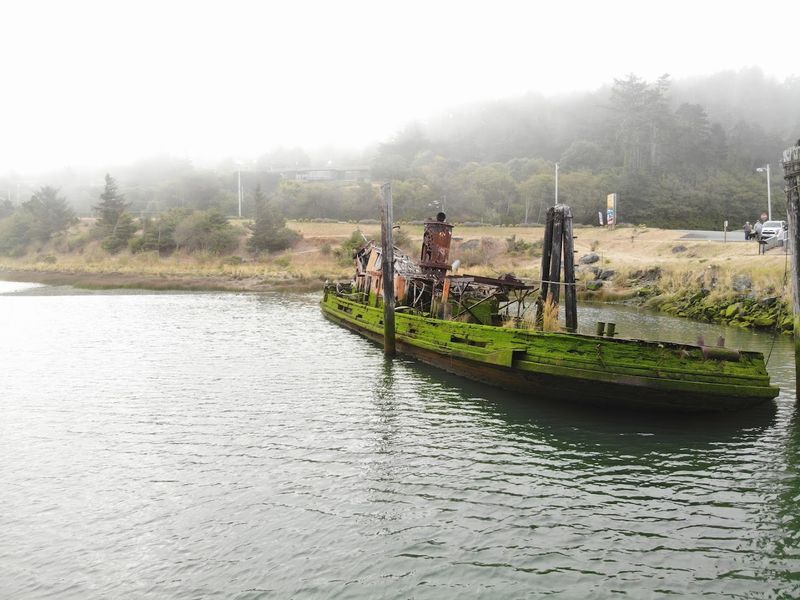
After her whaling days wound down, the Mary D. Hume found a new purpose.
She became a tugboat, towing barges and vessels along the Pacific Coast. It was a different kind of work, but she handled it with the same toughness she always had.
Tugboat work sounds simple but it is physically demanding on a vessel. Constant tension on the hull, unpredictable tows, and long hours at sea all take a serious toll.
Yet she kept going for years in this role.
Her work during this period was based out of various Pacific Northwest ports. She became a familiar sight in harbors from Oregon to Washington.
Dock workers and sailors knew her well.
American Tugboat Company eventually operated her, and at least one crew member recalled riding aboard her as a child during fueling runs. That personal connection to real people and real memories makes her more than just a rusting hull.
She was someone’s workplace, someone’s adventure, and someone’s memory.
Her Final Journey Back to Gold Beach
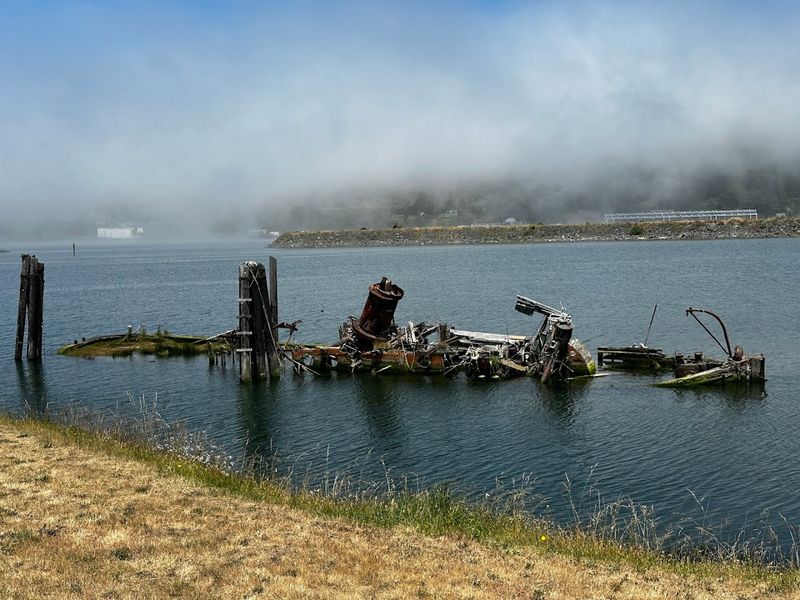
Every working life eventually reaches its end. For the Mary D.
Hume, that ending brought her full circle. She returned to Gold Beach, the very town where she was born more than a century earlier.
By the time she was retired from active service, she had outlived most vessels of her era by decades. Her hull was tired.
Her machinery was long outdated. But she had earned her rest.
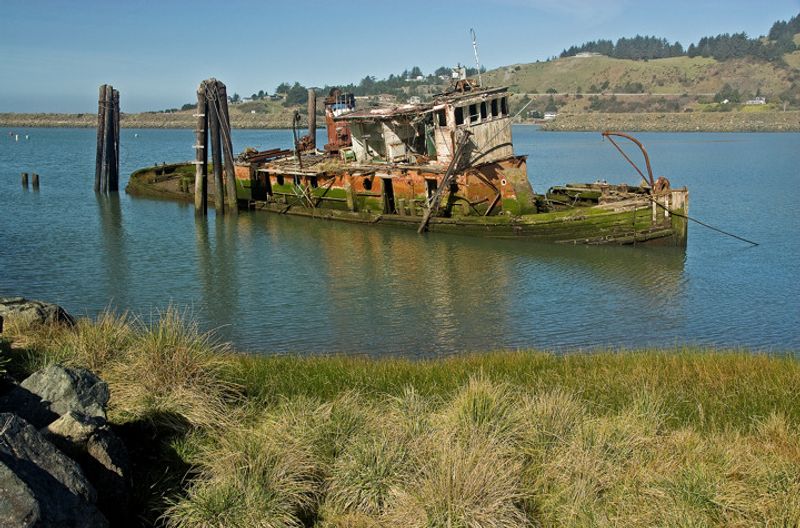
She was moored in the Rogue River near the harbor. Over time, she settled deeper into the riverbed.
The process was slow and quiet, nothing dramatic. Nature simply began reclaiming what it had once provided in timber and iron.
Today she sits partially submerged, her upper structure still visible above the waterline. Moss and rust have decorated her in shades of green and orange.
She looks almost like she grew there naturally. Returning to Gold Beach to see her feels like watching a very long story reach its gentle, unhurried conclusion.
What Visitors See at the Site Today
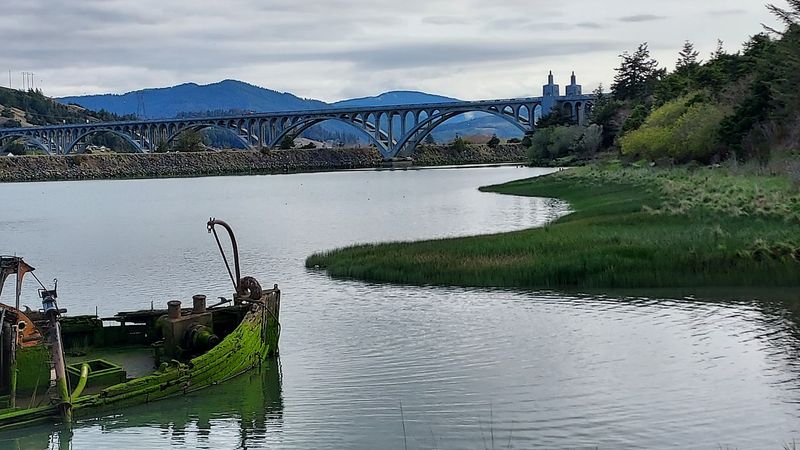
Pulling into the small parking lot off Harbor Way, the first thing I noticed was how easy the access was. No long hike required.
No admission fee. Just a short walk and suddenly you are standing beside a piece of living history.
The ship sits right along the riverbank, clearly visible from the path. Her hull is heavily rusted and draped in green moss.
At low tide, more of her structure becomes visible, which regulars say is the best time to visit.
A nearby informational display tells her story in detail. Reading it adds real depth to the experience.
Without that context, she might just look like an old wreck. With it, every rusted beam starts to mean something.
Sea lions often gather on a small island just behind the ship. Watching them bark and lounge while you take in the history is an unexpected bonus.
The Patterson Bridge frames the background perfectly, making every photo feel effortlessly composed and genuinely worth keeping.
The Foggy Atmosphere That Makes It Magical
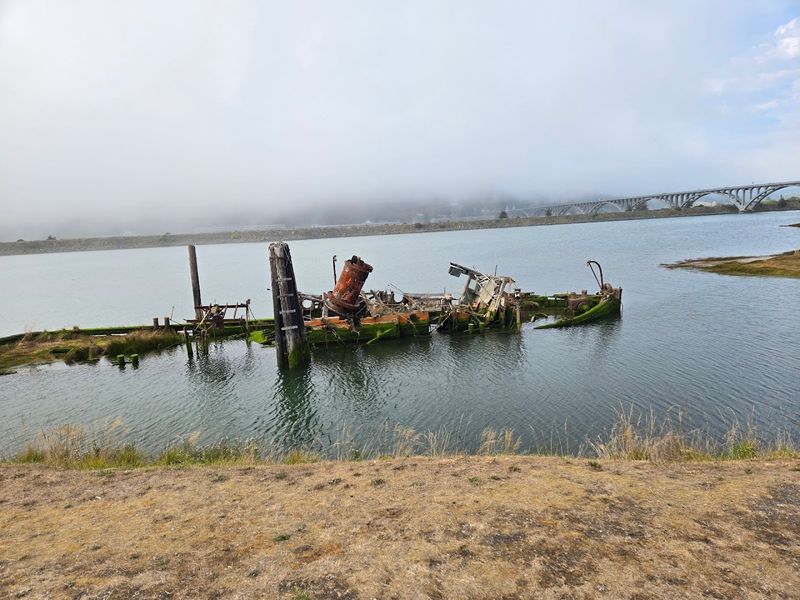
Timing matters when you visit a place like this. Arriving on a foggy morning turns an already interesting stop into something genuinely atmospheric and hard to forget.
The Oregon Coast fog rolls in thick and low. It softens the edges of everything.
The rusted hull of the Mary D. Hume becomes a dark silhouette rising from the mist.
It looks almost cinematic, like a scene from an old maritime film.
Even without fog, the light here changes constantly. Morning brings cool blue tones.
Afternoon sun turns the rust warm and golden. Each visit feels visually different depending on the hour and weather.
That shifting quality is part of why locals who live nearby say they never tire of watching her through the tides and seasons. She looks different every single time.
For visitors passing through on Highway 101, even a brief stop in any weather delivers something memorable. The atmosphere does most of the storytelling on its own.
Sea Lions and Wildlife Around the Wreck
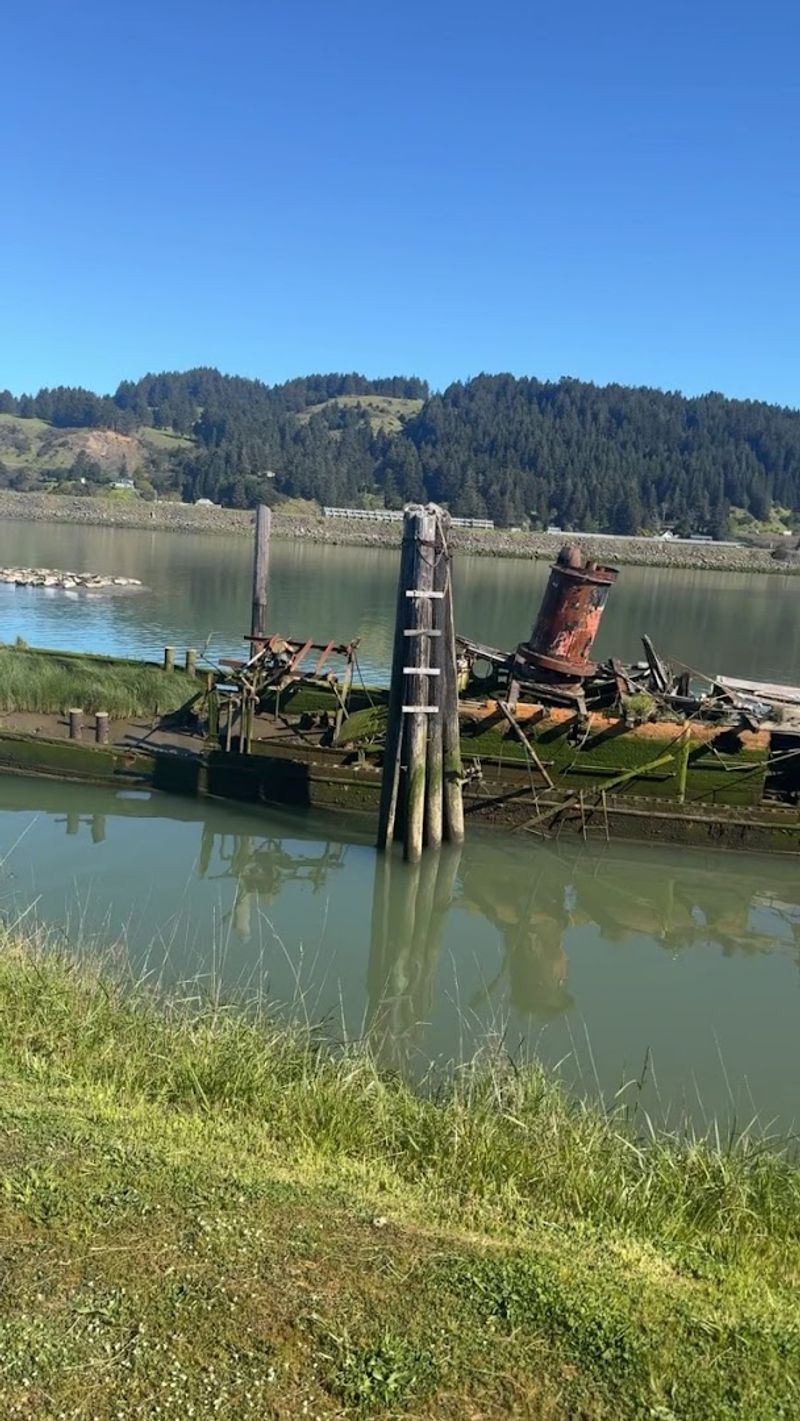
Nobody mentioned the sea lions when I planned this stop. That made stumbling upon them feel like a genuine surprise gift from the Oregon Coast.
A small rocky island sits just behind the Mary D. Hume.
Sea lions have claimed it as their own. They bark, shuffle around, and occasionally plop into the water with dramatic splashes.
Watching them is completely free entertainment.
Visitors have noted that the sea lions can get surprisingly close to the walkway. Close enough that you definitely notice them.
Their smell is powerful and unmistakable, but somehow it adds to the wild, coastal authenticity of the whole scene.
Ospreys have also been spotted hunting nearby. One visitor described watching an osprey battle the wind while clutching a large fish high in a tree.
That kind of unexpected wildlife encounter is exactly what makes Oregon’s coast so rewarding for anyone who pays attention. The Mary D.
Hume site offers far more than just a shipwreck.
Why You Should Visit Before She Disappears
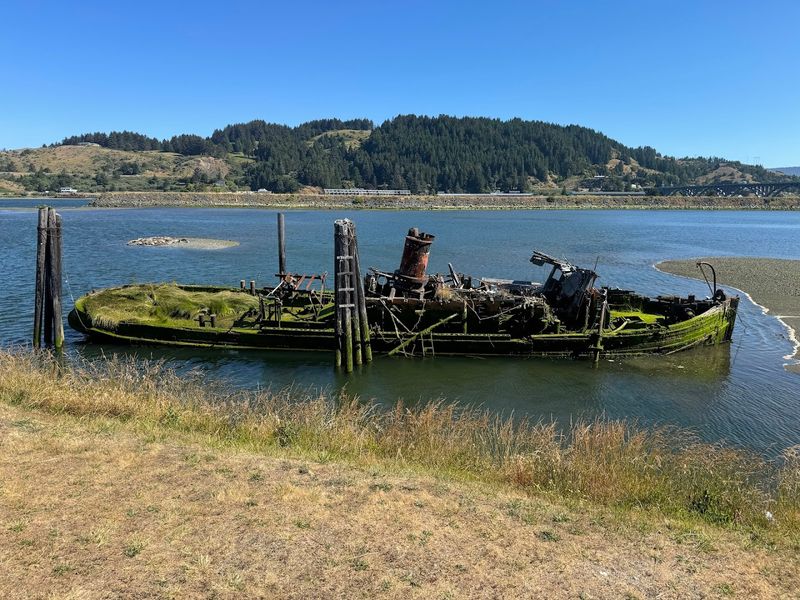
The urgency is real. Multiple visitors have pointed out that the Mary D.
Hume is disappearing faster than most people realize. Each passing season takes a little more of her structure away.
Sections of her hull that were visible just a few years ago are now submerged. The wooden elements have rotted significantly.
What remains above the waterline grows smaller and more fragile with every winter storm.
That impermanence actually adds emotional weight to a visit. Knowing you are seeing something that will not exist in this form much longer makes you look more carefully.
You slow down. You actually read the historical display instead of skimming it.
Photographs taken years apart show dramatic differences in how much of her remains visible. If seeing the Mary D.
Hume is on your list, sooner genuinely is better than later. She is not going to wait.
The river is patient and slow, but it is also absolutely certain about what it is doing to her.
Planning Your Stop at Gold Beach
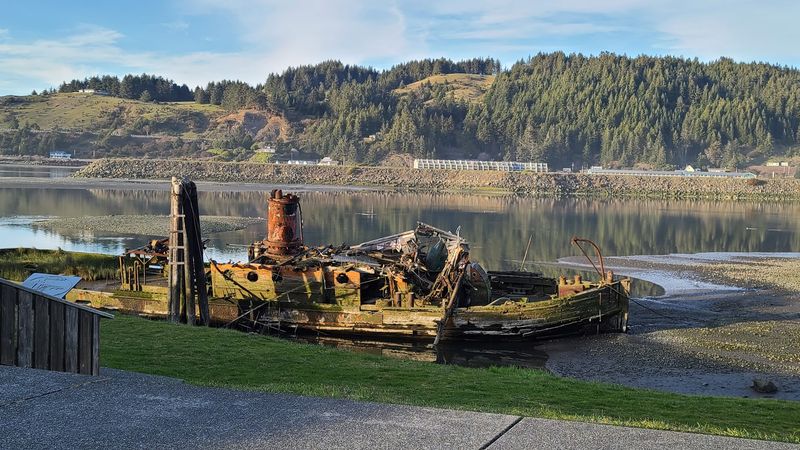
Gold Beach sits right along Highway 101, making the Mary D. Hume an easy addition to any Oregon Coast road trip.
You do not need to detour far. The parking lot off Harbor Way is small but usually manageable.
Low tide is widely recommended as the best time to visit. More of the ship is exposed, and the surrounding riverbank becomes easier to explore on foot.
Checking a tide chart before you go takes about thirty seconds and makes a real difference.
The area around the harbor has places to grab food nearby. After your visit, wandering around Gold Beach itself is worth the extra time.
The town has a relaxed, unhurried pace that pairs well with the reflective mood the shipwreck tends to inspire.
Bring a camera, even just your phone. The combination of the wreck, the bridge, the river, and any wildlife present makes for genuinely striking photographs.
This stop rewards curiosity and a slow pace far more than a rushed glance from the parking lot.
Address: 29980 Harbor Way, Gold Beach, OR 97444
Dear Reader: This page may contain affiliate links which may earn a commission if you click through and make a purchase. Our independent journalism is not influenced by any advertiser or commercial initiative unless it is clearly marked as sponsored content. As travel products change, please be sure to reconfirm all details and stay up to date with current events to ensure a safe and successful trip.
