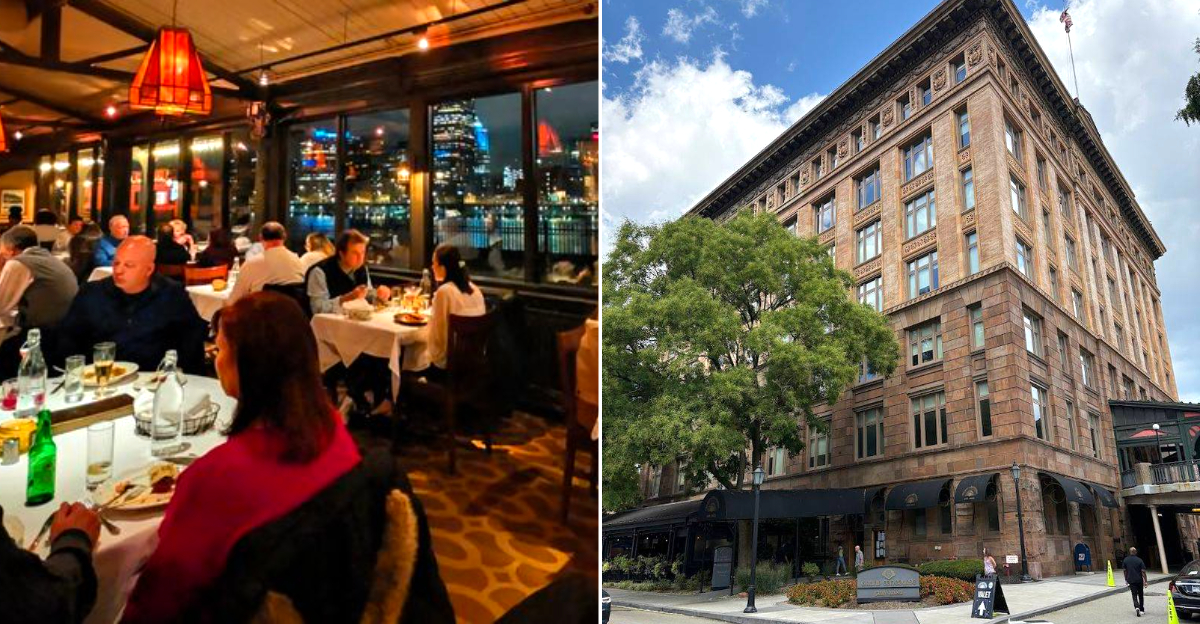
Have you ever sat down to dinner in a train station so magnificent that its ceiling had to be painted over in secrecy? That is the unexpected magic of this historic Pennsylvania restaurant, home to the most grand dining hall in the state.
The building opened in 1901 as a bustling passenger hub for the Pittsburgh & Lake Erie Railroad, a gateway for travelers until the 1960s. After falling into disuse, a preservation foundation stepped in to save it.
The magnificent vaulted dome, designed by the same engineer who created New York’s Hell Gate Bridge, was covered in decades of grime and a thick coat of black paint applied during World War II for camouflage. Cleaning it took four hundred cans of oven cleaner.
Today, that restored stained glass ceiling glows above diners enjoying everything from seafood to steaks. So which Pennsylvania spot turns a forgotten train station into a dining experience you will never forget?
You will find it in Pittsburgh, where the only thing more breathtaking than the history is the room you are sitting in.
The Tan Building With The P And Rr Sign On Top
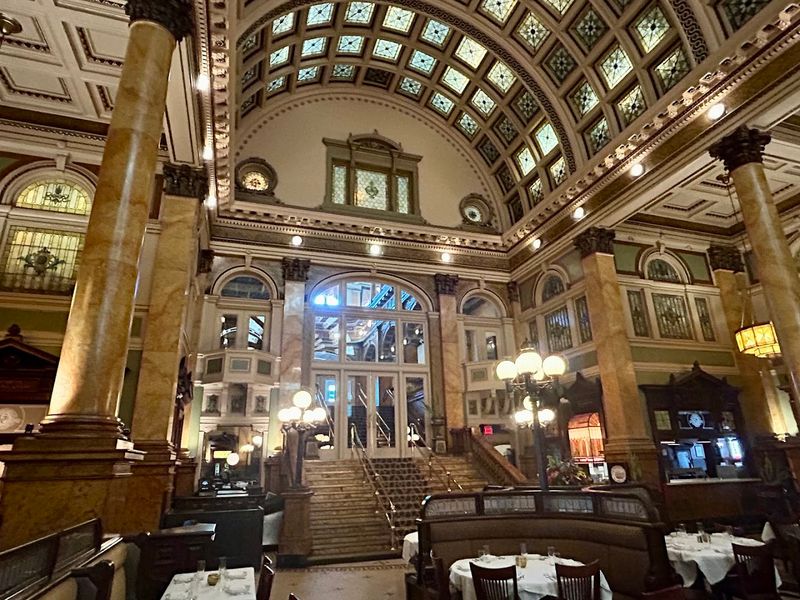
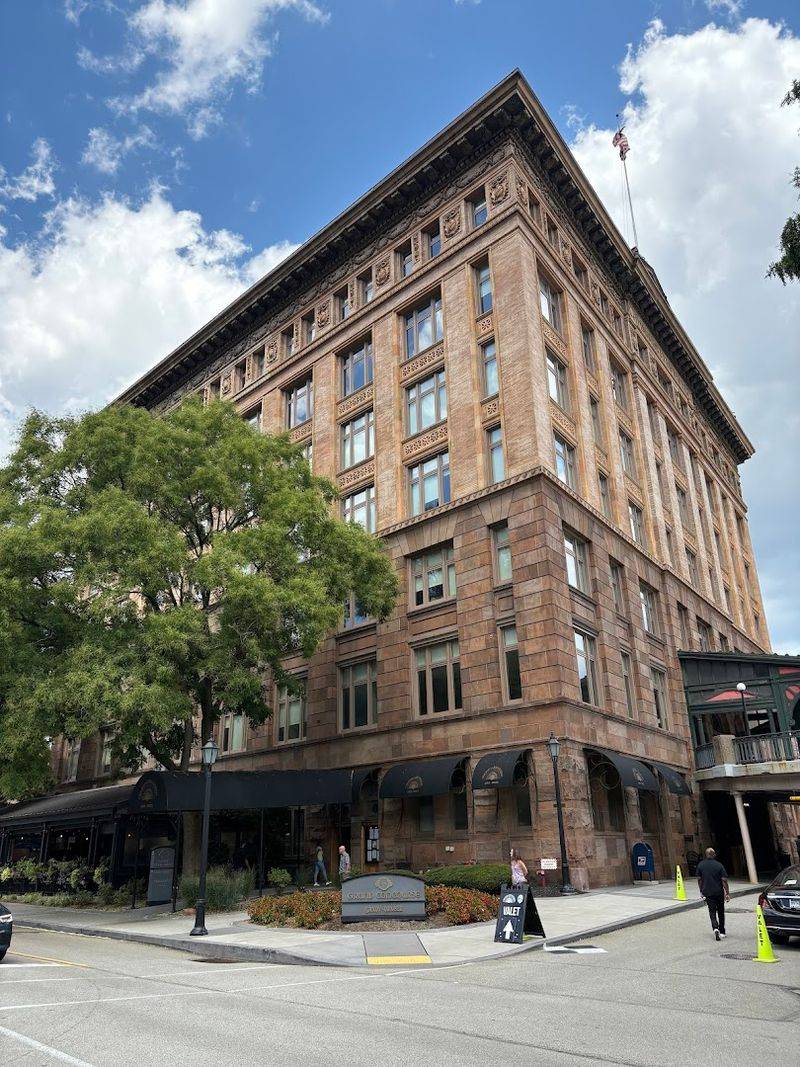
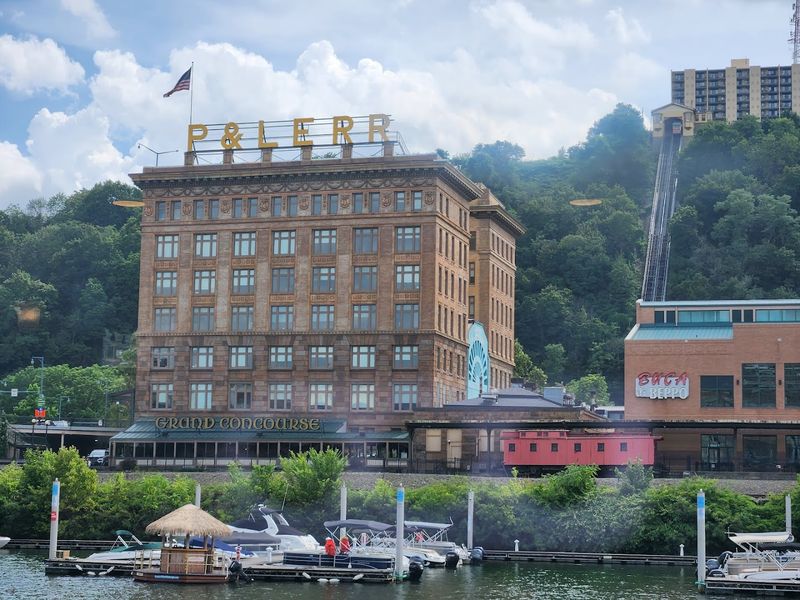
You see it before you really register it, that tan facade rising by the river like a chapter left open on purpose, with the P and RR sign sitting up high, calm and sure. The building looks sturdy without being stern, like it remembers bustle but is fine with a slower rhythm now.
I like how the stone holds the day’s light, turning warm at the edges, almost like the whole place is taking a long breath.
From the plaza side, the symmetry feels friendly rather than strict, and you catch reflections of the water in the windows if you stand at the right angle. People pause out front, even if they are not going inside, because the shape reads as history in big, clear letters.
There is a nice hush to the spot, despite the trains long gone, like the building decided to keep part of the station’s steady heartbeat.
Walk closer and those details sharpen, trim lines and decorative corners that reward a slower gaze. Pennsylvania does this well, letting old transportation hubs become anchors that still face the street with purpose.
You can sense how many hellos came through these doors, and how many see you laters probably floated out along the river. If you stand under the sign and look up, it feels like the city tips its hat back at you.
Ready to head inside and see what this place kept safe?
The Original Wooden Benches From The Train Days Still In The Lobby
These benches are the kind of survivors that make you smile, because they are still doing the job they were built to do. The wood has that deep, earned sheen, like a story polished a thousand times by coats and bags.
You can picture travelers leaning back, eyes on a clock, thinking about what came next, and somehow that feeling still hums along the grain.
Sit for a second and you notice how the lobby frames everyone with a sense of direction. The benches face the natural flow, not fussy, just practical in a way that feels generous.
Pennsylvania stations had a knack for that balance, useful and handsome, simple and thoughtful at once. Every edge is softened by time, which makes the space feel easy to share.
What I like most is the sense of continuity, like the benches never retired, they just changed uniforms. You can listen for echoes, and you get small ones, a rhythm that suggests doors opening and a suitcase being set down.
This is a lobby that remembers, but it also welcomes the now without any drama. Take a breath, sit back, and let the wood tell you a quick story.
When you are ready, the next room waits with a quiet grin.
Stepping Inside A Former Pittsburgh And Lake Erie Railroad Station
The moment the doors swing in, the air changes, like stepping into a saved scene from an old Pennsylvania travel reel. The foyer is roomy without shouting, and your pace naturally slows a notch.
You notice polished wood, quiet brass, and the way footsteps sound a little fuller on the stone. The past is not a display case here, it is the room you just walked into.
Here is the full address in case you need it for the map: Grand Concourse, 100 W Station Square Dr, Pittsburgh, PA 15219. I love how the flow still feels like a station, with pathways that suggest arrivals, pauses, and onward motion.
If you tilt your head, you can almost read the old routes in the lines of the hall. It is not a trick, just good bones speaking up.
There is a warmth in the trim, a brightness in the transoms, and a steadiness to the thresholds that sets up the drama beyond. Pennsylvania buildings like this favor texture over flash, and it pays off as your eyes adjust.
The foyer is a promise that the main hall will bloom open, and it does. You can take your time, because the space invites lingering in a kind, unfussy way.
Ready to see where the trains once funneled everyone forward?
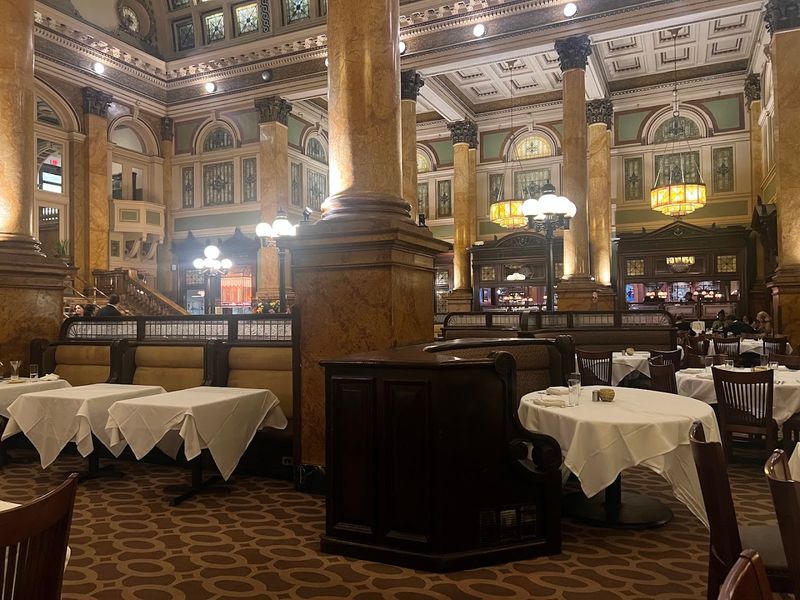
A Cathedral Stained Glass Vaulted Ceiling Spanning The Main Dining Hall
Look up and your whole sense of the room lifts with it, because that stained glass vault is not shy about taking center stage. Colors filter the daylight into a gentle wash that drifts across marble, wood, and brass.
It feels like standing inside a sunrise that decided to linger, slow and gracious, with a halo that keeps moving as the clouds pass.
The ceiling’s sweep makes the hall read as one grand, continuous breath, a single gesture that ties the room together. You see little medallions and panes that seem to hum with quiet energy, like the patterns are still whispering old station schedules.
Pennsylvania has a few ceilings that make you pause, but this one makes you stay, because the light keeps changing. Every glance upward lands on a new patch of color.
I like how the vault does not crowd you, even though it could easily overpower the space. Instead, it guides your eye into an easy loop, from arches to glass to floor and back again.
The room ends up feeling both ceremonial and friendly, which is a rare two step. If you bring someone here, they will absolutely look up first, and then again, and then once more.
That is the best part, because it means the ceiling keeps its promise every time.
Marble Columns And A Grand Staircase From A Bygone Era
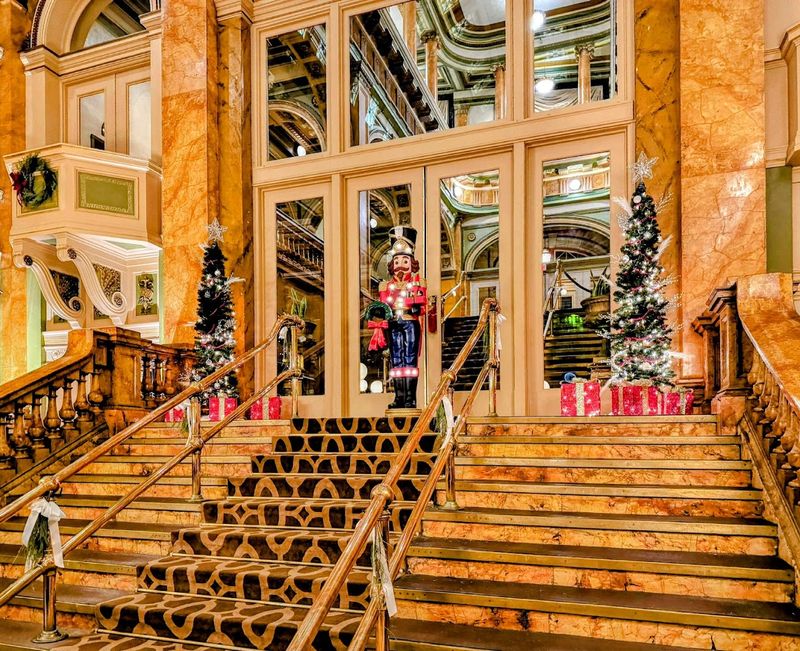
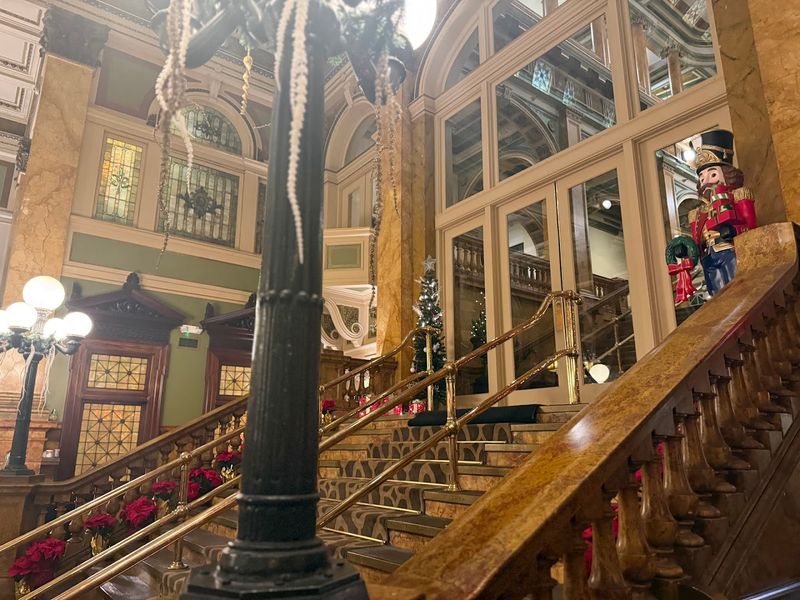
There is a moment when the marble columns come into your periphery and suddenly you are standing a little taller without thinking about it. The stone has that cool confidence, smooth yet carrying faint marks that prove its years.
Each column feels like a reliable friend holding the room steady, and the light rolls over them with a patient gleam.
Then the staircase draws you, broad and gracious, inviting an unhurried climb that turns the landing into a small stage. You do not rush it, because the curve is part of the whole performance, and the railing has that reassuring hand fit.
Pennsylvania stations built with this kind of care make movement feel ceremonial in a low key way. You go up, you come down, and both directions feel like a little event.
Stand at the base and look across the columns to the stairs, and the geometry lines up like a quiet conversation. The stone, the latticework, and the gentle sweep give your eye an easy route to follow.
It is stately without any stiffness, the kind of elegance that gets friendlier the longer you look. If you take a slow lap around the perimeter, you will catch two or three angles that feel like postcards.
It is a small thrill that keeps repeating as you circle back.
The Gandy Dancer Saloon In The Old Ticket Sales Area
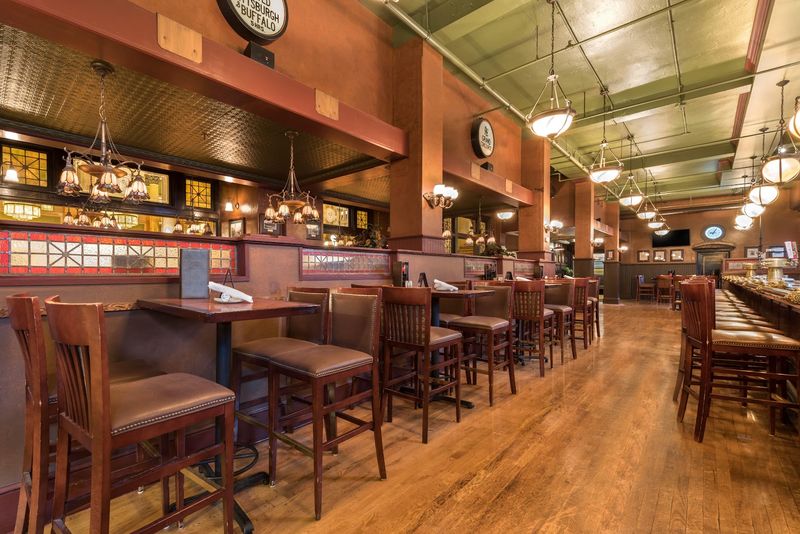
The name tips you off to the railroad roots, and the space confirms it the second you see the old ticket windows woven into the walls. The counters and frames still suggest transactions, only now it feels like conversation instead of departure times.
Warm wood, classic fixtures, and that steady buzz of voices give the room a lived in ease that suits the building.
What I love is how the layout respects the original function, keeping the flow that once organized lines and questions. You can spot where clerks would have leaned forward to help, and where travelers would have shifted bags while checking a schedule.
Pennsylvania rail culture hangs in the details, not as a museum piece, but as an easy reference. Your eyes keep bouncing between present and past without any friction.
Look up to catch subtle trim and soft light pooling around the frames, which turns the old service spots into little stages. Corners feel intentional, thresholds feel purposeful, and the whole room keeps that station hum, just tuned to a friendlier key.
It is fun to trace the edges and imagine the clicks and stamps that used to rule this zone. If you wander out from here, the main hall opens like a greeting, and you will probably grin without meaning to.
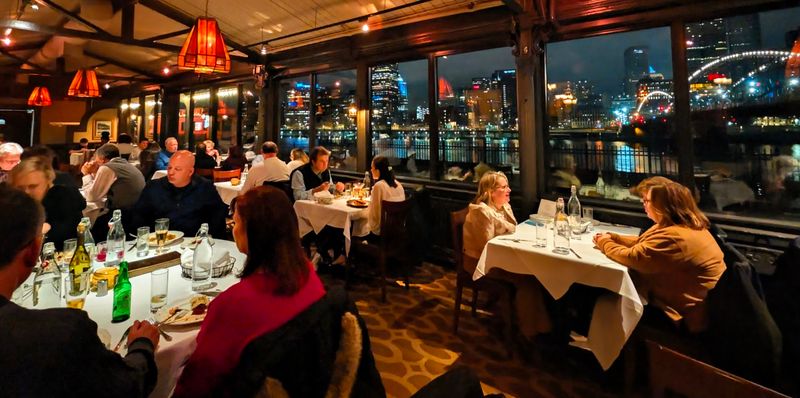
A Glass Enclosed River Room With Panoramic Waterfront Views
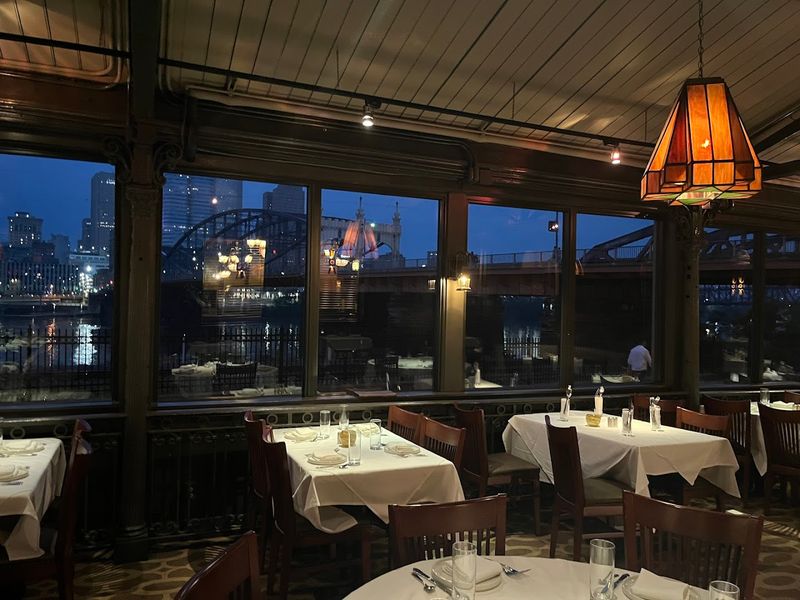
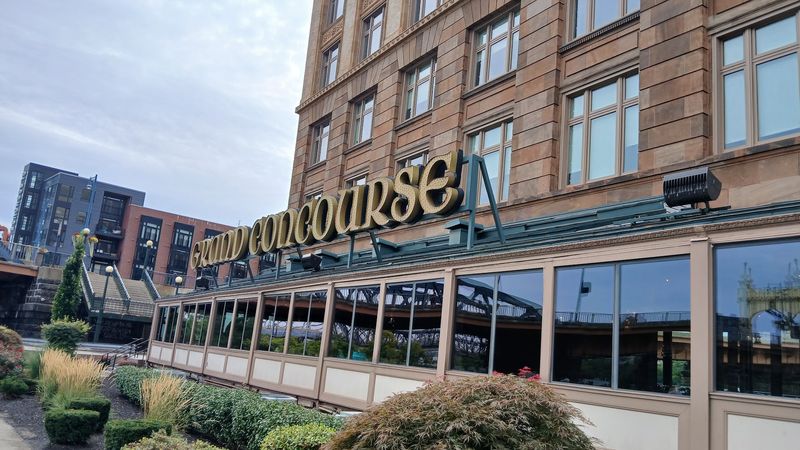
The River Room is where the building turns and looks straight at the water, and the glass makes that conversation feel close. You get a sweep of the Monongahela stretching past bridges and moving light, and the room just leans into it.
On a bright day, the reflections dance along the frame, and the whole space feels like it is breathing with the current.
Angles are gentle here, lines are clean, and sightlines carry you out to the river and back again without any fuss. Pennsylvania’s riverfront keeps changing pace, and this room lets you sit inside that rhythm without stepping outside.
You can read the day by the color on the water, which is a small luxury all its own. Even cloudy afternoons have a calm that sneaks up on you.
I like to stand by the glass for a minute, then step back and take in the room as a whole, because the interior holds its own. Trim stays refined, floors settle into a steady tone, and the geometry of tables creates a soft grid.
It is a quiet spectacle, which might be my favorite kind. If the ceiling was the exclamation point, this room is the long, contented pause.
You walk out feeling more anchored than when you came in.
The Original Flooring And Bathrooms Kept Intact For Authenticity
Details on the ground tell the truth, and the floors here speak in a steady, confident voice. You notice patterns set with care, edges meeting corners like a handshake that still fits.
There is a pleasing weight underfoot, the kind that makes every step feel chosen instead of casual. It is a quiet way of saying the building remembers everything.
The bathrooms keep that same energy, preserved with respect so the fixtures read as original without feeling fussy. Tiles line up in neat sequences, mirrors sit with a touch of old world charm, and hardware keeps a satisfying solidity.
Pennsylvania does preservation with a practical streak, and this is a great example you can actually experience. It is not staged, it is simply maintained as it was meant to be.
I always think the truest test of care is where people rarely look first, and these spaces pass that test easily. The seams are thoughtful, the materials patient, and the overall effect is calm.
If you like to notice craft, you will find yourself smiling at grout lines and trim transitions. That is when you realize the big gestures work because the small ones were honored too.
It is a full circle kind of feeling, and it sticks with you.
Why This 1901 Depot Became A Pittsburgh Dining Landmark In 1978
So why did this old depot cross that line from memory to must see? Simple, it kept its character and invited people back into it, not as visitors, but as participants.
The restoration aimed for continuity, and you can feel that intention in every surface that still does its job. Instead of staging a set, they revived a place.
What makes it a landmark in Pittsburgh and across Pennsylvania is how often it shows up in personal stories. People propose a plan to meet here, then they return years later to look up at the glass again and trade the same grin.
The building holds those threads because it was designed to host arrivals, reunions, and lingering goodbyes. You feel included the second you walk in.
There is no single trick, just layers of preserved craft, honest materials, and a room that makes daylight an active partner. The station past is not treated as a novelty, it is the backbone the present leans on.
That balance keeps the energy fresh without drifting from its roots. Every time you pass through, the place reminds you that architecture can still gather people with a light touch.
That is the kind of landmark that keeps earning the word.
One Last Look Up At The Tiffany Glass Before Stepping Outside
Before you head out, take that last look up and let the glass do its slow magic one more time. Colors sit there like they have all afternoon, not in a hurry, ready to give you a final, steady glow.
It feels like a soft sendoff, the kind that makes the sidewalk feel brighter once you reach it.
I always find that the final glance unlocks a detail I missed earlier, a tiny pattern or a seam where color changes its mind. Pittsburgh has a way of tucking beauty into ceilings, bridges, and river bends, and this room fits that pattern perfectly.
Pennsylvania’s pride in these spaces reads as warmth rather than theater, which is why it lands so well. It is grand, sure, but it is also kind.
Step toward the door and the lobby gathers you again, the benches nod, and the exterior waits with that calm tan face. Out by the river, the light plays a new tune against the stone you recognized on the way in.
You are leaving, but the place keeps a small piece of your attention for later. That is the mark of a room that knows what it is doing, and it does not need to say a word.
