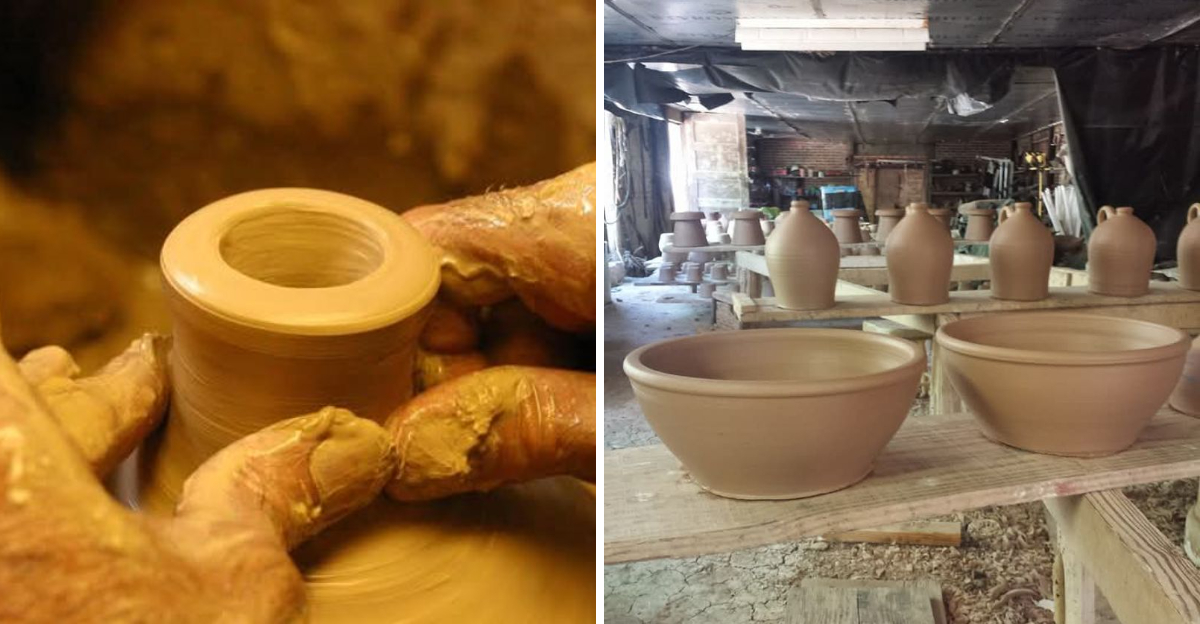
What if you could watch a craft that has been passed down for generations still taking shape right in front of you? Some roadside stops offer a quick break, while others give you a chance to see a piece of history that has survived through changing times.
One Alabama pottery workshop continues a remarkably long tradition of hand-thrown ceramics, where skilled craftsmanship remains at the heart of the experience. The finished pieces are beautiful, but seeing how much care goes into creating them is what makes the visit especially memorable.
If you enjoy discovering places where traditional skills are still practiced by hand, this is a roadside stop worth seeking out.
Witness a Living History Unfold
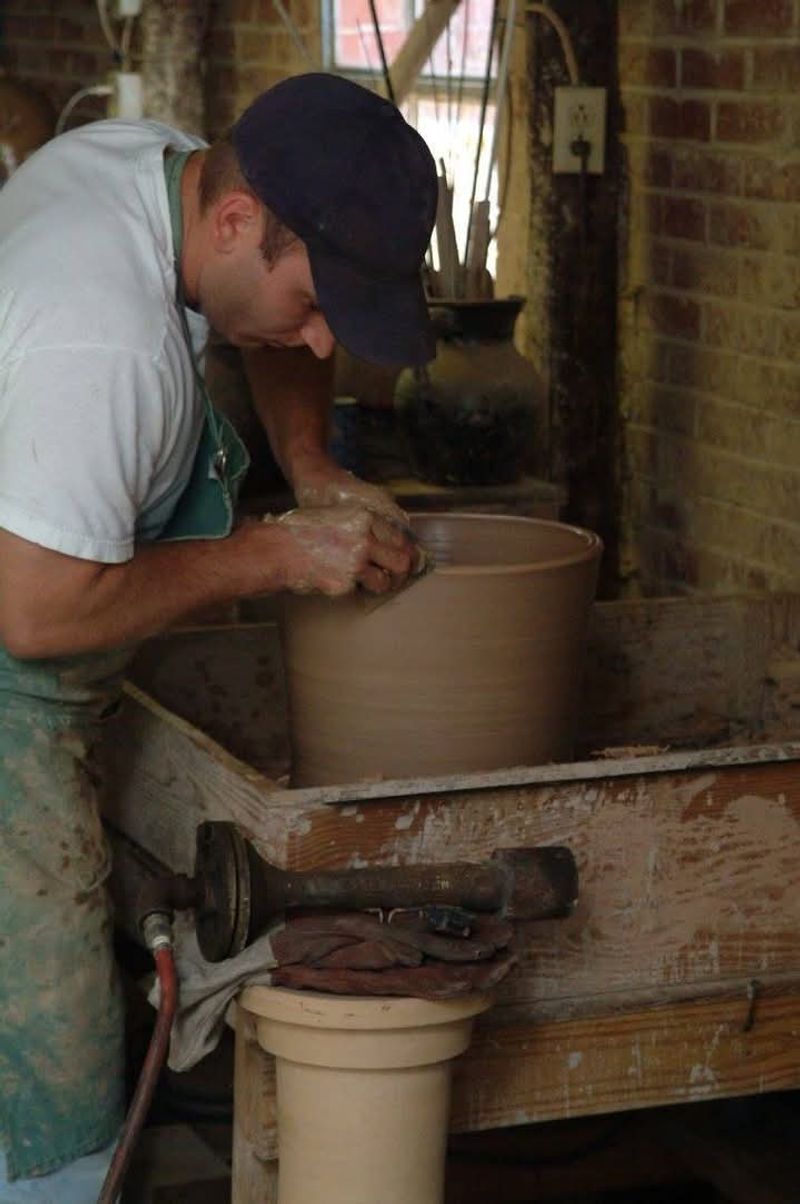
History has a way of feeling distant when it lives only in textbooks. At Miller’s Pottery, it’s right there in front of you, spinning on a wheel.
The workshop has been operating continuously since 1865, making it a living, breathing piece of American craft heritage that very few places in the country can match.
The story begins with Abraham Miller, a Pennsylvania native who traveled south after the Civil War and learned the pottery trade from the French LaCoste family near Mobile, Alabama. He eventually settled in Perry County and established his own pottery business before relocating to Brent.
That founding spirit hasn’t faded one bit.
Today, Eric Miller, the fourth generation of his family to throw pots in this workshop, continues the tradition alongside his son Steve, who proudly represents the fifth generation. They hope to pass the craft on even further, keeping this remarkable chain unbroken.
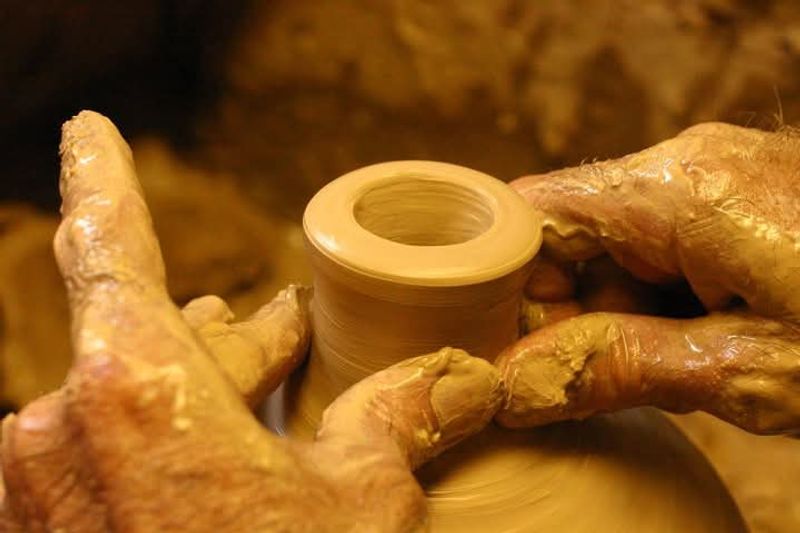
Watching Eric center a lump of raw clay and coax it into a graceful form is genuinely moving. It’s not a performance or a demonstration put on for tourists.
It’s simply Tuesday at the shop. The ordinariness of it, the quiet focus, the practiced ease, that’s what makes it extraordinary.
You’re not watching a reenactment; you’re witnessing a real trade practiced with the same dedication it has always carried.
See the Raw Earth Transformed Right Before Your Eyes
Most pottery shops buy their clay pre-packaged and ready to use. The Millers dig theirs out of the ground.
That single detail tells you everything about how seriously this family takes authenticity. Their stoneware clay comes from a pit in Perry County, the same site their ancestors have relied on for generations.
The preparation process is surprisingly involved, and seeing it described step by step makes you appreciate every finished pot even more. First, the raw clay soaks in a pit to break down large clumps.
Then it moves through a mill, originally powered by a mule and now electric, to create a uniform, workable consistency.
After that, it passes through a filter mill to remove rocks and debris. A third mill takes out air pockets, ensuring the clay won’t crack during firing.
Each stage requires attention and patience, qualities that define everything the Millers do. By the time the clay reaches the wheel, it has already been on quite a journey.
There’s something deeply satisfying about knowing that a pitcher or a churn sitting on the shop shelf started as dirt pulled from Alabama soil. The connection between the earth and the finished object is real and direct here, not abstract.
That kind of transparency in the making process is something most modern manufacturing would never offer.
Experience True Hand-Thrown Artistry Up Close
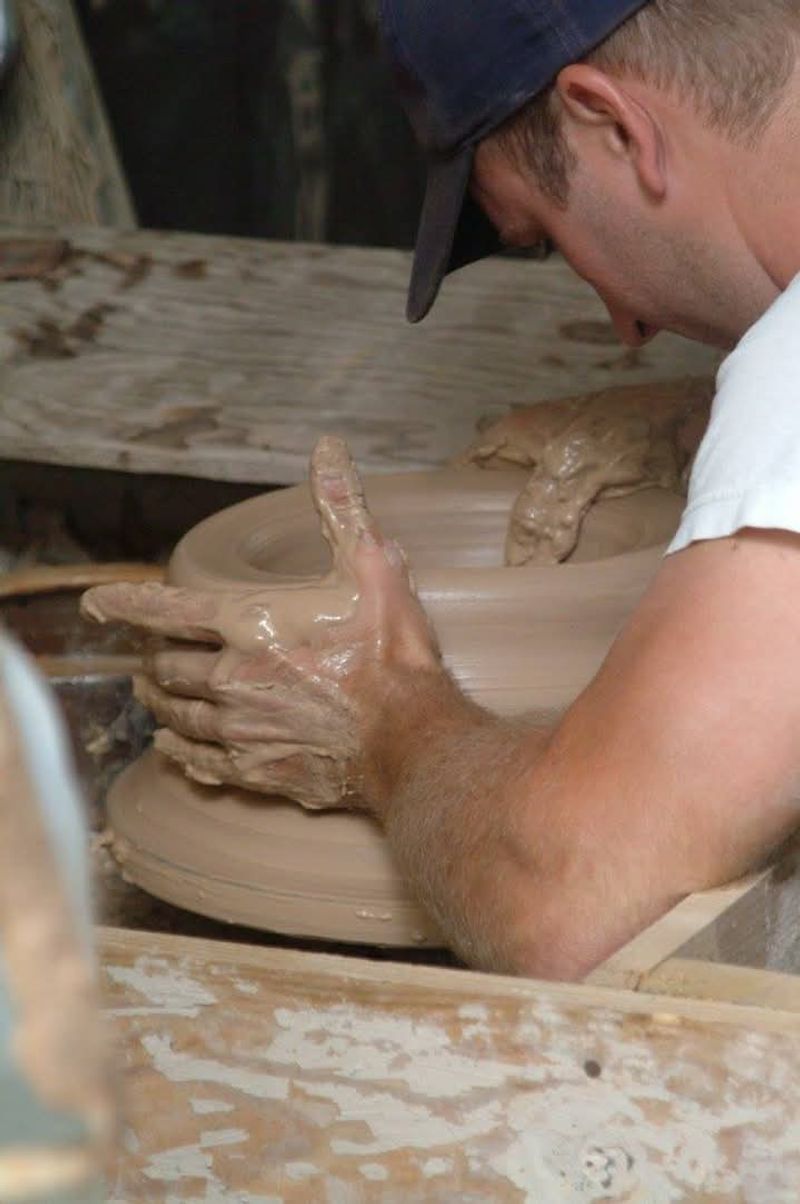
There is a particular kind of quiet that settles over you when you watch a skilled potter work. No machines hum, no conveyor belts move, just hands, clay, and a spinning wheel.
At Miller’s Pottery, every single piece is hand-thrown, meaning each item carries the subtle imprint of the person who made it.
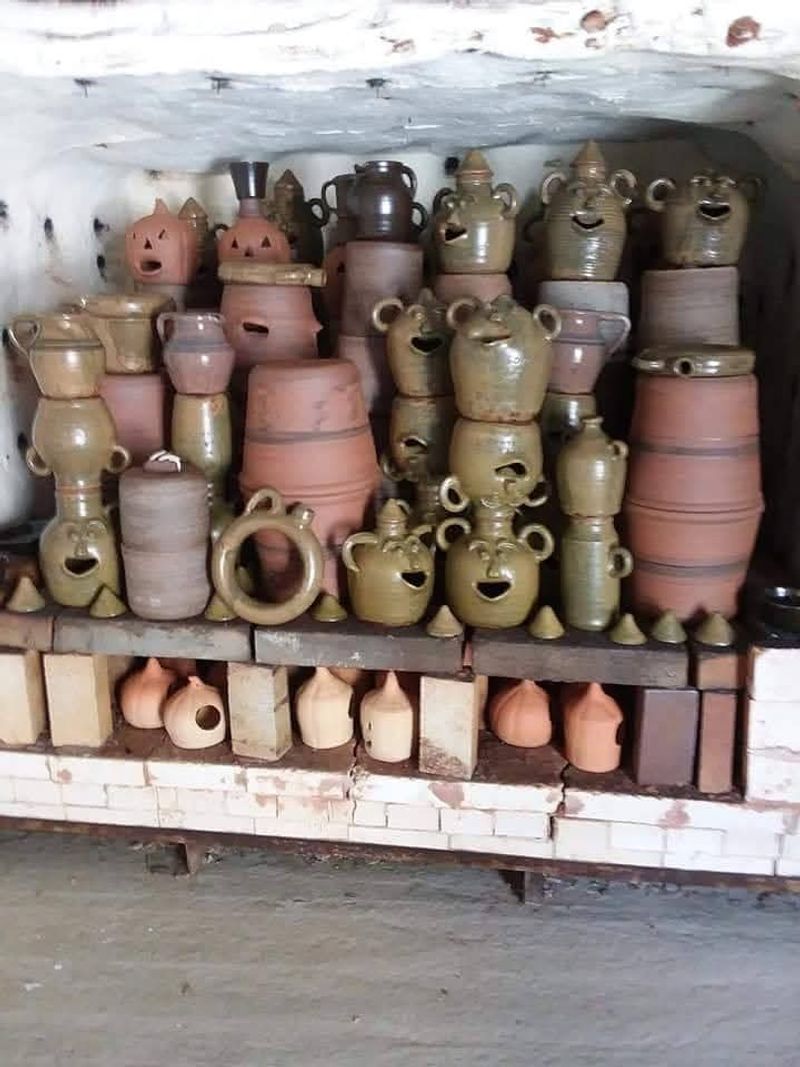
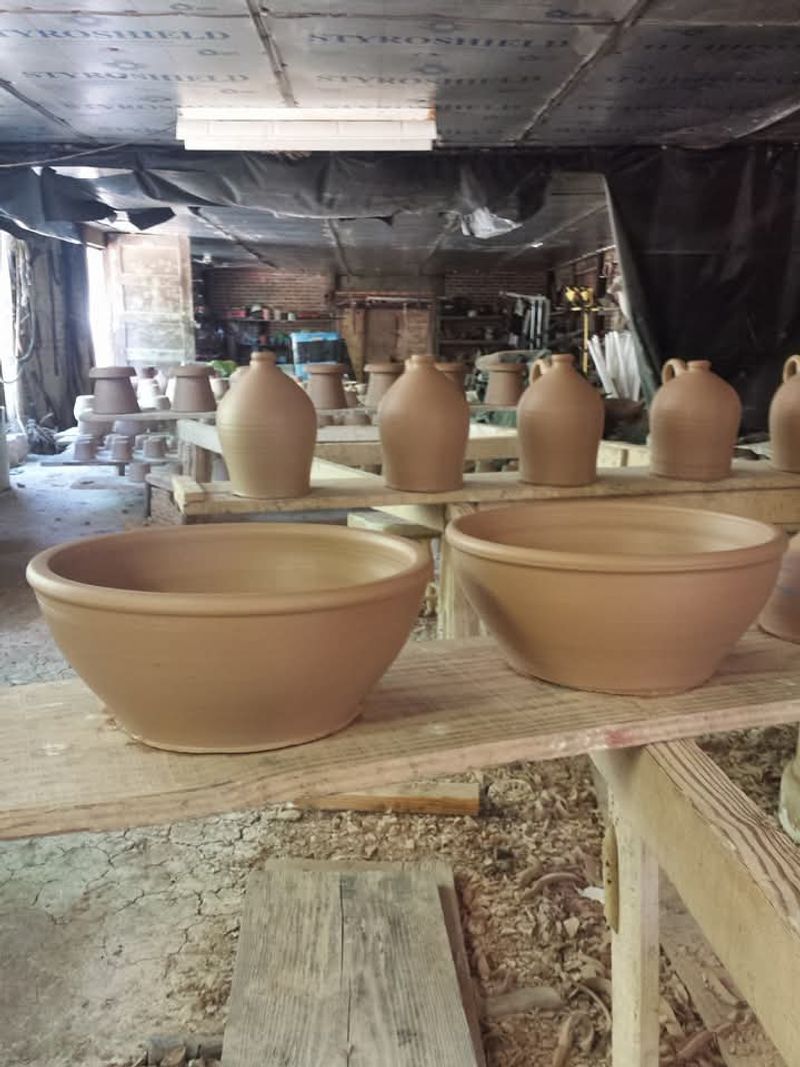
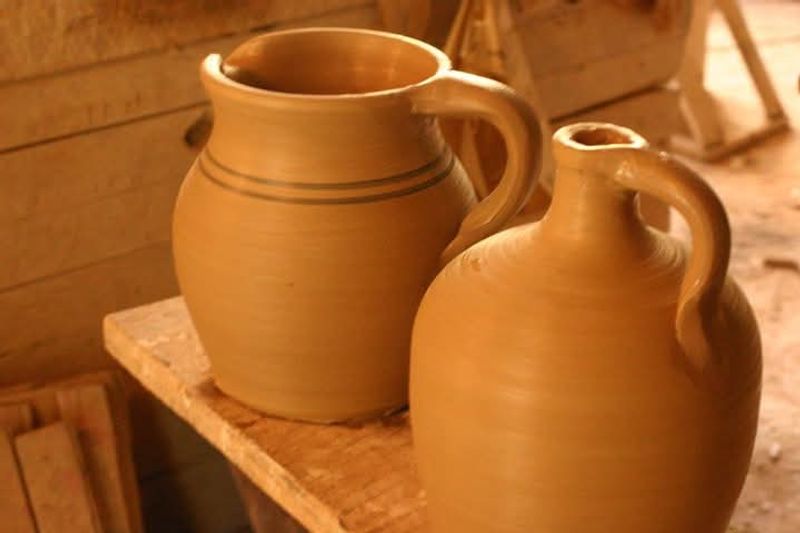
The range of what the Millers produce is wider than you might expect. Sturdy pitchers, traditional churns, charming piggy banks, flower pots, and glazed stoneware pieces line the shelves of the shop.
Some pieces are purely functional, designed to be used daily without a second thought about their origins. Others are detailed enough to display proudly.
What sets hand-thrown pottery apart from factory-made ceramics is personality. No two pieces are exactly the same.
A slight curve here, a gentle ridge there, these aren’t flaws; they’re signatures. Eric Miller has long emphasized that his pottery is made to be used, not just admired.
That philosophy gives the work a refreshing honesty. You’re not buying something fragile and untouchable.
You’re buying something meant to hold water, store food, or sit on a windowsill catching afternoon light for the next fifty years. Holding one of these pieces and knowing a real person’s hands shaped it from Alabama clay is a feeling that’s hard to replicate anywhere else.
Discover a Legacy of Utilitarian Beauty
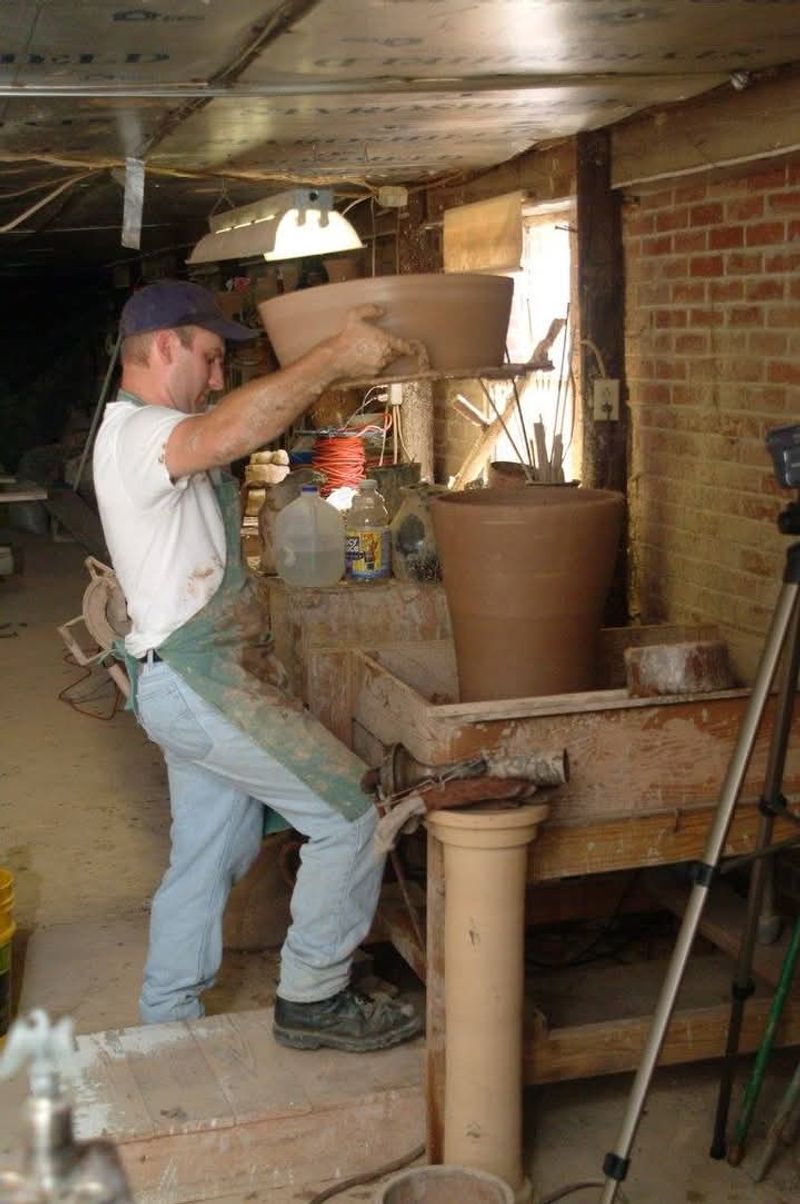
Long before plastic containers and refrigerators became household staples, pottery was essential. Families relied on ceramic jugs, jars, and crocks to store food, carry water, and keep daily life organized.
Miller’s Pottery grew out of that very practical need, and that spirit of usefulness has never left the work.
The pieces made here aren’t decorative objects that sit behind velvet ropes. They’re built to last and built to serve.
A Miller churn can actually churn. A Miller pitcher can actually pour.
That dedication to functional craftsmanship is increasingly rare and genuinely worth celebrating in a marketplace flooded with things that look nice but don’t hold up.
After being shaped on the wheel, each piece dries for several weeks before being fired in the kiln over a three-day process. That slow, careful approach is what gives the finished stoneware its density and durability.
When you pick up one of these pots, the weight of it tells you something. It’s substantial.
It’s serious. It was made by someone who cared about how it would perform, not just how it would photograph.
Collectors across the country have taken notice, and folk art enthusiasts seek out Miller’s pieces specifically because they represent a kind of honest craftsmanship that the broader art world is finally giving the recognition it always deserved.
Are You Ready To Discover One of Alabama’s Most Authentic Hidden Treasures
Not every destination makes it onto the glossy travel brochures, and honestly, some of the best ones never do. Miller’s Pottery sits quietly along Highway 5 in Brent, easy to miss if you’re not paying attention, but impossible to forget once you’ve stopped.
It’s the kind of find that makes you feel like you’ve uncovered something real.
Visitors here aren’t treated like customers moving through a retail transaction. The atmosphere is open and unhurried, and you’re genuinely welcome to watch the work happen.
That access to the creative process is something most artisan shops don’t offer, and it transforms a simple shopping trip into something closer to an education.
The national folk art community has long recognized what makes this place significant. Miller’s Pottery has attracted collectors from across the country who value the authenticity and provenance of each handmade piece.
Owning a Miller pot means owning a documented piece of American craft history, not a reproduction, not an interpretation, but the real thing made by the real family that’s been doing this for 160 years.
If you’re the kind of traveler who gravitates toward places with genuine stories behind them, this workshop belongs on your list.
Alabama has plenty of beautiful destinations, but very few that offer this kind of direct, unfiltered connection to living tradition.
You Definitely Need To See This Family Business in Action
Some businesses feel like businesses. Miller’s Pottery feels like a family.
The workshop has been shaped by the same bloodline since 1865, and that continuity shows in the way the place operates. Nothing here feels corporate or calculated.
It feels personal, because it genuinely is.
Abraham Miller married Francis LaCoste, the daughter of the French potter who first taught him the craft, blending two pottery traditions into one household and one legacy. That merger of influences gave the Miller style its distinctive character.
Their descendants have carried that character forward through every decade since.
The current shop location was chosen by Hendon Miller, Eric’s father, in 1964. He picked the Highway 5 site specifically because it had access to a natural gas line, which made a gas-fired kiln possible, a practical upgrade from the wood-fired kilns used in earlier generations.
Cousin Allen Ham also works alongside the family, adding his own touch to the pottery and bringing the collaborative spirit of the workshop to life. Every person who has shaped clay here has contributed to what Miller’s Pottery is today.
Seeing Eric and Steve work together, father and son, each with their own style but sharing the same foundation, is quietly powerful. It’s a reminder that some things are worth protecting, and that the best way to protect a tradition is simply to keep doing it, every single day.
Connect with a Timeless Art Form That Belongs to Everyone
Art doesn’t always hang on gallery walls. Sometimes it sits on a shelf along a quiet Alabama highway, waiting for someone to pick it up and take it home.
Miller’s Pottery has been exhibited at the Smithsonian’s American Folk Festival in Washington, D.C., and featured at the Alabama Clay Conference, recognition that places this workshop firmly in the conversation about American artistic heritage.
But the shop itself never feels intimidating or exclusive. You can walk in, browse the shelves, feel the weight of a glaze-finished jug in your hands, and have a real conversation with the people who made it.
That accessibility is part of what makes the experience so memorable.
The earthy smell of the workshop, the soft sound of a wheel spinning, the sight of finished pieces cooling in rows, all of it creates an atmosphere that slows you down in the best possible way.
Taking a piece of Miller’s stoneware home means more than adding something handsome to your kitchen shelf.
It means carrying a fragment of a story that stretches back 160 years, through generations of one Alabama family, through two centuries of American life. Few souvenirs carry that kind of weight, literally and figuratively.
Plan the visit, take the detour, and let this quiet roadside workshop remind you how much beauty lives in the simple act of making something by hand.
Address: 2324 Alabama 5, Brent, AL 35034
