Golden bluffs glow in the late afternoon along that stretch of California coast, and the beach below stretches wide and unhurried. The road opens up to the ocean like someone pulled back a curtain, and the whole town seems to breathe at a slower pace than anywhere else on the coast.
I drove down on a warm afternoon, the Pacific catching the light in a way that made me slow down without thinking. That town sneaks up on you, quiet and unassuming, but it holds something real.
Locals have been showing up for those beaches for decades, planting native plants, hauling out trash, and pushing back against anything that might chip away at what makes that coastline so worth protecting. I sat on the bluffs watching the sun drop, and understood exactly why they care so much.
The Quiet Beaches That Locals Have Kept That Way
Most people driving through Del Mar never realize how much coastline hides just beyond the main beach access points. The northern stretch past Dog Beach opens into a wide, breezy expanse that feels almost private on a weekday morning.
Sandpipers dart along the waterline, and the only soundtrack is the rhythm of the waves.
Then there is the Pocket Beach below 11th Street, tucked behind a narrow staircase squeezed between coastal homes. It is the kind of spot that rewards curiosity.
The cliffs wrap around it on both sides, and at mid-to-low tide, the light hits the sand in a way that makes even a simple walk feel cinematic.
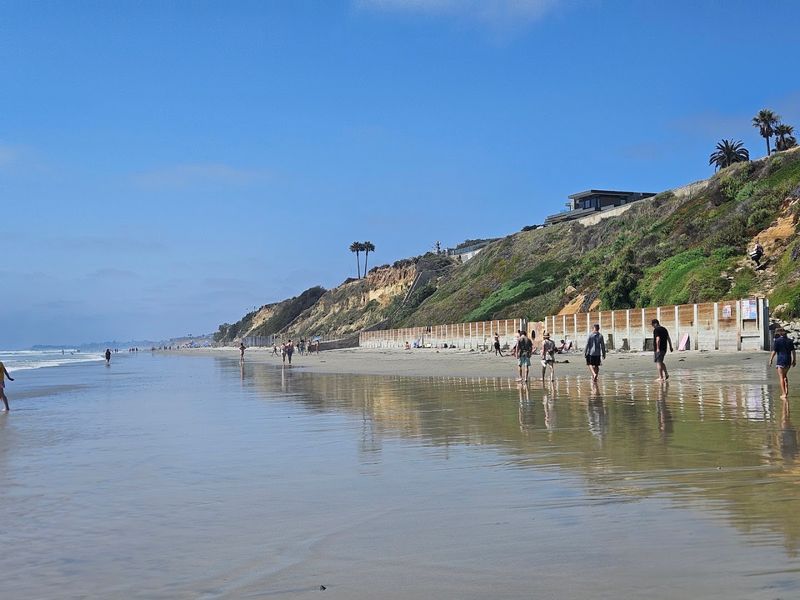
South Beach, reached by heading past Powerhouse Park and Seagrove, is another stretch that locals genuinely treasure. The bluffs rise on either side as you move south, and at low tide the beach stretches out long and flat toward Torrey Pines.
No volleyball nets, no vendors, no noise. Just open coastline.
The 15th Street Beach is narrow and easy to miss, but regulars know it well. A pathway between bluffs leads down to a strip of sand that is better for swimming and surfing than lounging, and at sunset the surf glows in shades of amber.
These pockets of calm are not accidents. They exist because generations of Del Mar residents decided, quietly and consistently, that some things are worth guarding.
How the Del Mar ShoreSaver Program Is Changing Beach Cleanups

In April 2024, something small but meaningful launched on Del Mar’s shoreline. The Del Mar ShoreSaver Program placed mobile docking stations equipped with reusable baskets at key beach access points, inviting anyone passing through to grab a basket, pick up litter, and return it when done.
It is a simple idea with a surprisingly powerful effect on how people interact with the beach.
The program grew out of a partnership between the Del Mar Village Association, the City of Del Mar, EDCO, and Relic Coastal Collaborative. What started as a pilot with a single station has since expanded to four locations, including the 17th Street lifeguard station, the 20th Street lifeguard station, the 25th Street beach access point, and North Beach near Dog Beach.
Each station is easy to find and even easier to use.
The goal is not just cleaner sand. It is about shifting the mindset of both visitors and longtime residents toward active environmental participation.
When you hand someone a basket and a clear purpose, something shifts. People who might have walked past a piece of trash suddenly stop and pick it up.
The ShoreSaver Program also raises awareness in a way that does not feel preachy. It meets people where they are, literally on the beach, and turns a casual outing into a small act of stewardship.
For a town that has always cared deeply about its coastline, this program feels like a natural extension of who Del Mar already is.
WILDCOAST and the Community Groups Fighting for Del Mar’s Shoreline

Not every conservation story starts with a government mandate. Some begin with a group of people who simply refuse to watch something they love disappear.
WILDCOAST Coastal Conservation is one of those stories. Based in San Diego, this organization works to protect ocean ecosystems, beaches, and coastal wildlife across both California and Baja California.
Their work covers an impressive range. From protecting sea turtles and whales to restoring mangroves and fighting the effects of climate change on coastal wetlands, WILDCOAST operates at a scale that goes far beyond any single beach.
But their local presence in Del Mar is deeply felt, through beach cleanups, educational programs, and environmental outreach that brings kids and adults into the conversation equally.
The Del Mar Beach Preservation Coalition takes a more focused approach. Their primary concern is keeping sand on Del Mar’s beaches through nourishment and replenishment efforts, while also maintaining existing seawalls and barriers.
They have been vocal opponents of managed retreat policies, which they argue would threaten public coastal access and put homes and public facilities at risk. The City of Del Mar has formally rejected managed retreat as a policy direction, a decision supported by the coalition.
Then there are the community cleanup events organized by the Del Mar Village Association under the Keep Del Mar Green banner. Volunteers gather at the 17th Street lifeguard station and spread out across beaches, parks, and streets.
These events are not flashy, but they are consistent, and consistency is exactly what coastal preservation requires over the long run.
Torrey Pines State Natural Reserve and the Wild Edge of Del Mar
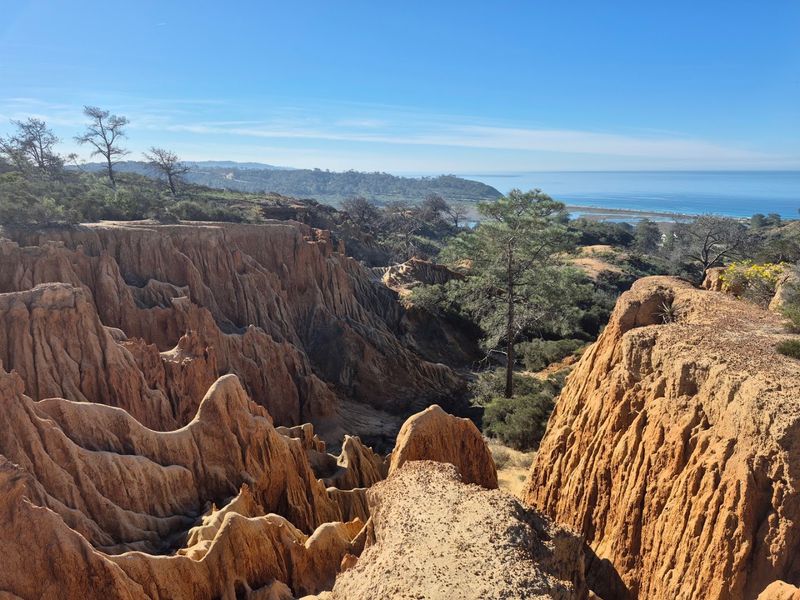
Just south of Del Mar’s city limits, the landscape shifts in a way that feels almost prehistoric. Torrey Pines State Natural Reserve rises above the coast on a series of eroded sandstone cliffs, and the trees that grow here exist almost nowhere else on earth.
The Torrey Pine is America’s rarest native pine, and this reserve was established specifically to protect it and the fragile salt marsh ecosystem below.
The Beach Trail is the one I keep coming back to. It winds down from the mesa through coastal scrub, past cliffs streaked in rust and cream, and opens onto a wide, uncrowded stretch of sand.
At the north end of Torrey Pines State Beach, the crowds thin out considerably. You can walk for stretches without passing another person, which feels almost surreal given how close you are to one of the most populated regions in the country.
Wildlife sightings here are common and unhurried. Hawks circle the cliffs, rabbits dart through the brush, and during the right season you might spot a California gnatcatcher or a peregrine falcon overhead.
The reserve covers over 2,000 acres and includes several trails beyond the Beach Trail, each offering a different angle on the same extraordinary landscape.
What makes Torrey Pines feel connected to Del Mar’s conservation story is the shared understanding that some places need to stay exactly as they are. The reserve and the town sit side by side, each reinforcing the other’s commitment to keeping this coastline intact for whoever comes next.
Powerhouse Park, Seagrove Park, and the Heart of Del Mar’s Coast
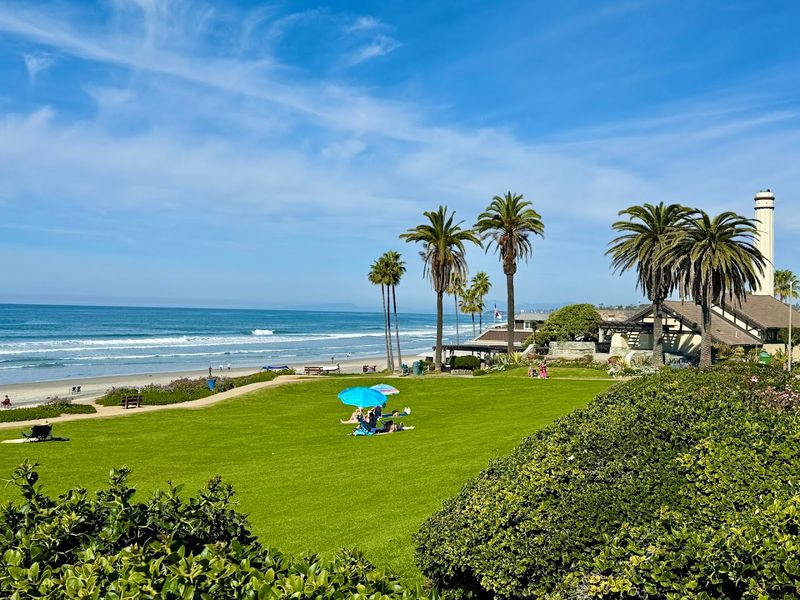
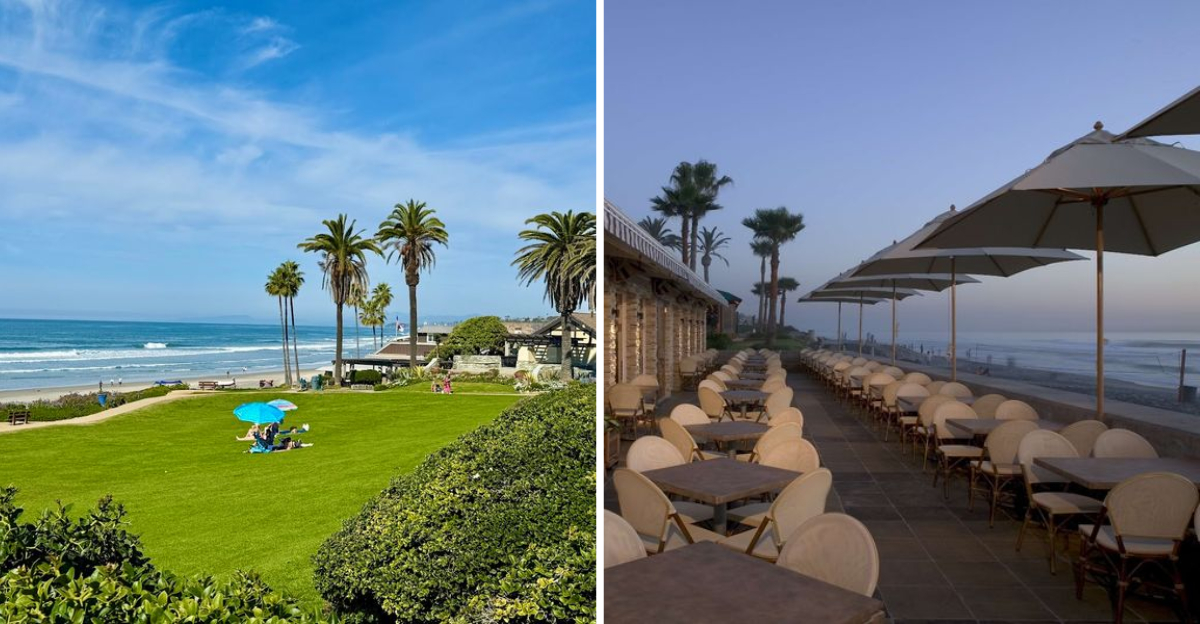
There is a particular kind of afternoon that Del Mar does better than almost anywhere else in Southern California. The air cools just enough, the light turns golden, and if you are sitting on the grass at Powerhouse Park, the Pacific stretches out in front of you like it has nowhere else to be.
This small coastal park above the 15th Street surf break is one of those places that becomes a habit.
Powerhouse Park has a playground that draws families throughout the week, and a grassy lawn that invites everyone from readers to picnickers to people who just want to sit quietly and watch the waves. The view from the bluff edge is genuinely breathtaking, the kind that makes you stop mid-conversation.
Seagrove Park sits just next door and carries a slightly different energy. It is quieter, a bit more tucked away, and has become a popular spot for outdoor weddings thanks to its open grassy space and ocean backdrop.
On weekend mornings it is often nearly empty, which makes it feel like a personal discovery even though it has been there for decades.
Together, these two parks represent something important about Del Mar’s character. The town could have developed every inch of its blufftop real estate.
Instead, these green spaces remain open to everyone, free to use, and carefully maintained. They are not grand or flashy, but they are genuinely beloved, and that distinction matters more than any amenity list could capture.
Where to Eat, Explore, and Experience Del Mar Beyond the Beach
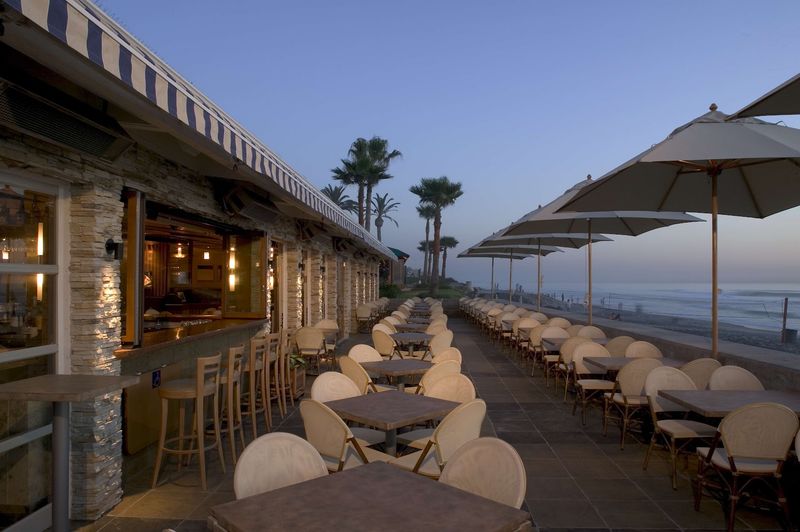
Del Mar is a town that rewards slow exploration. The main strip along Camino Del Mar is compact enough to walk end to end without rushing, and the restaurants along it range from laid-back seafood spots to places with proper ocean views and carefully crafted menus.
Poseidon Restaurant Del Mar sits right on the sand, which makes it one of those dining experiences that feels more like a memory than a meal.
Jake’s Del Mar offers a similar beachfront experience with a menu that leans into fresh, local ingredients. Pacifica Del Mar, perched atop Del Mar Plaza, delivers panoramic Pacific views alongside inventive seafood dishes that change with the seasons.
For something a bit more casual, Sbicca serves California cuisine in a setting that feels genuinely comfortable rather than performative.
Beyond food, the town offers a surprising range of outdoor activities. Cyclists can follow miles of coastal paths.
Surfers know the 15th Street break well. Golfers have access to the legendary Torrey Pines Golf Course nearby.
The San Dieguito River Lagoon at the northern edge of town has been recently restored and offers stunning views and wildlife watching without requiring much effort.
San Dieguito County Park adds even more variety, with over five miles of trails, playgrounds, duck ponds, and a butterfly park that delights visitors of all ages. Del Mar Plaza itself functions as a European-style outdoor marketplace where you can sit on a bench, breathe the ocean air, and feel absolutely no pressure to be anywhere else.
Address: Del Mar, California 92014
