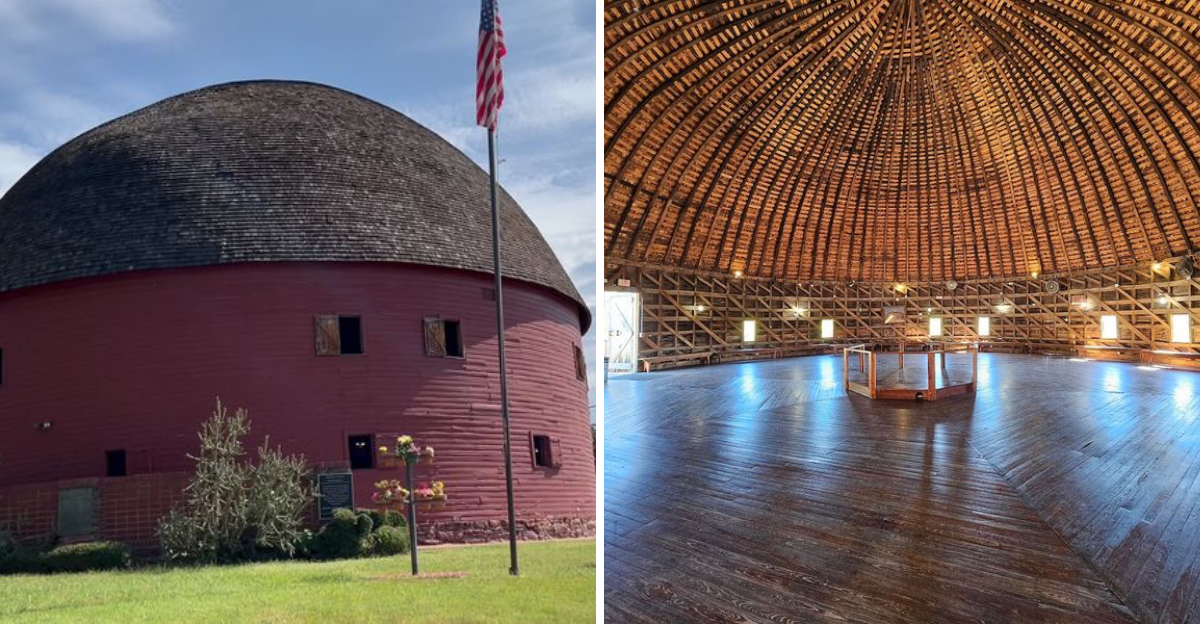
Most barns hold hay and livestock. This one holds a mystery.
Standing proud along the mother road in Oklahoma, it has been confusing architects and delighting travelers since 1898.
No one knows exactly why its builder decided a circle made more sense than four corners, but the result is a quirky, beloved landmark that survived a roof collapse and decades of neglect before the community rallied to save it.
Today, visitors climb to the second floor, run their hands along the curved wooden beams, and wonder what the original builder would think if he could see the line of cars still pulling over to admire his work.
Bring a camera, bring your curiosity, and bring a moment of silence for a man who looked at a barn and said, “Let’s try something different.” Route 66 has many stories.
This one is delightfully odd.
The Story Behind the Round Barn’s Birth in 1898
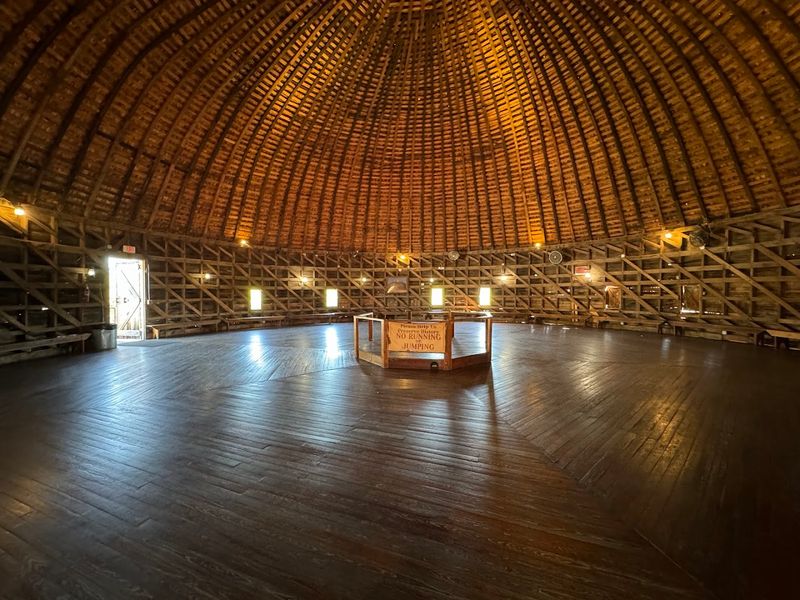
Long before Route 66 became the road that defined American road trip culture, a farmer named William Odor built something truly unusual on his Oklahoma land.
In April 1898, he raised a round barn on his property in what would become Arcadia, Oklahoma, and nobody around him had ever seen anything quite like it.
Round barns were considered structurally superior in that era. Farmers believed the circular shape could better withstand powerful prairie winds, which anyone who has spent time in Oklahoma knows can be absolutely ferocious.
The design also allowed for more efficient use of interior space, making feeding and managing livestock easier during cold months.
Odor used native bur oak to construct the barn, carefully steam-bending the wood into curved shapes. This was painstaking, skilled craftsmanship that most builders of the time would have avoided entirely.
The result was a 60-foot-diameter structure with walls that curved seamlessly around the entire perimeter.
Standing in front of it today, knowing it was built by hand over 125 years ago, makes the whole thing feel almost unreal. Few structures from that period in Oklahoma have survived this well, and even fewer carry this much original character.
How the Barn Nearly Fell Apart and Then Came Back to Life
For decades after its construction, the Arcadia Round Barn served its original agricultural purpose without much fanfare. But time, weather, and neglect eventually took a heavy toll on the structure.
By the late 20th century, the barn had fallen into serious disrepair, and its iconic roof had collapsed entirely.
What happened next is one of the more heartwarming chapters in Oklahoma preservation history. In 1992, a local man named Luke Robinson led a remarkable community-driven restoration effort.
He was 97 years old at the time, which makes the whole undertaking even more extraordinary to think about.
Robinson worked alongside community volunteers and local businesses to rebuild the roof using the same traditional steam-bending techniques that had been used nearly a century earlier. The project became a symbol of what a community could accomplish when it decided something was worth saving.
The restoration was so successful that the barn was added to the National Register of Historic Places, cementing its status as a landmark worth protecting for future generations. Walking through the barn today, it is hard to believe it was ever in danger of being lost.
The care put into every curved beam and wooden plank is still visible, and it tells its own story.
What the Exterior Looks Like Up Close
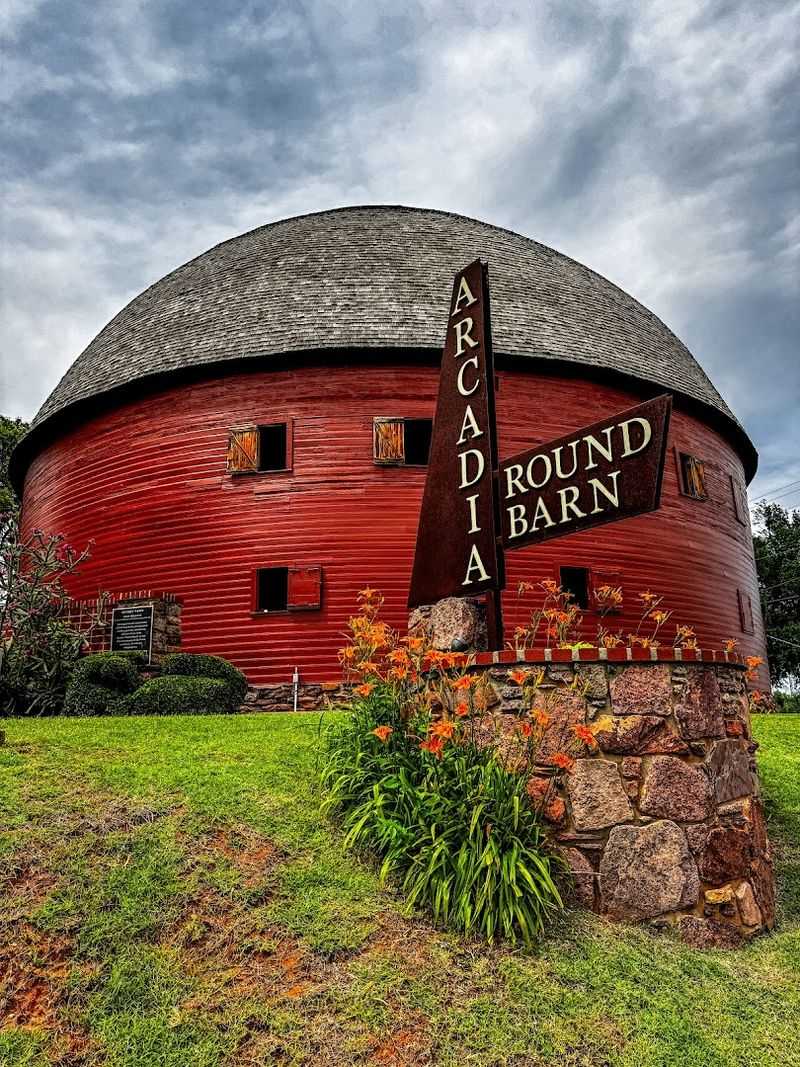
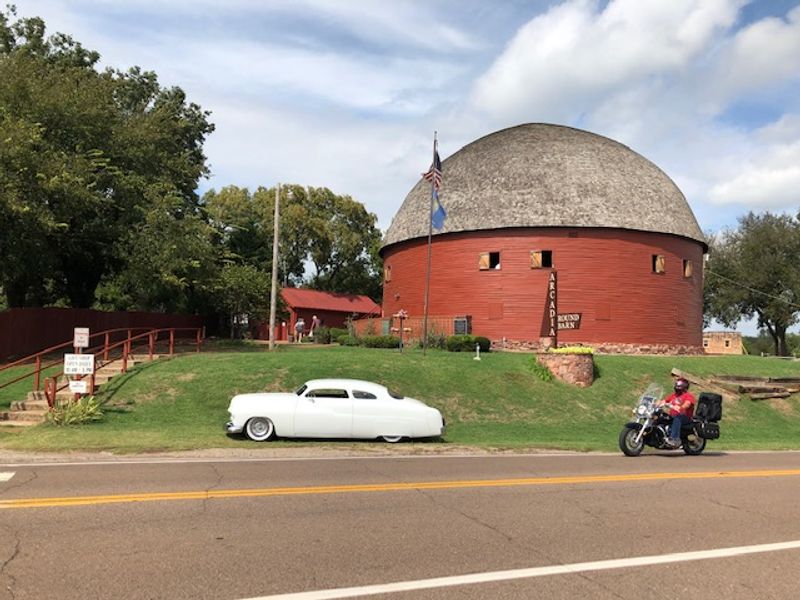
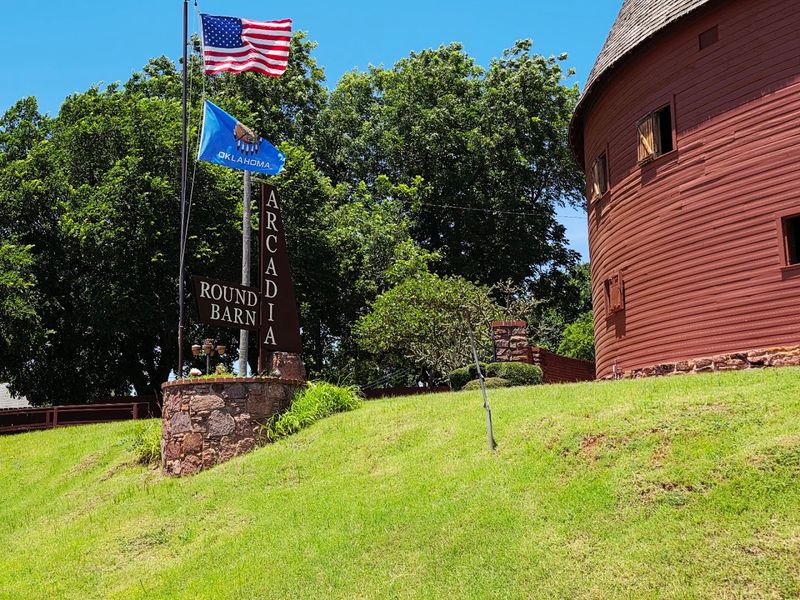
Pulling up to the Arcadia Round Barn for the first time is a genuinely satisfying moment. The barn is painted a bold, classic red that pops against the flat Oklahoma sky, and the circular shape immediately makes it stand apart from every other roadside building you pass on Route 66.
The structure is 60 feet in diameter and rises impressively from the ground, topped with a conical roof that gives it a slightly storybook quality. Old farming equipment is displayed around the grounds outside, adding a layer of agricultural character that feels authentic rather than staged.
The address is 107 OK-66, Arcadia, OK 73007, and it sits right on the historic highway, making it easy to spot even at highway speed. Parking is available behind the barn, which keeps the front facade clear for photographs and unobstructed views.
Even if the barn happens to be closed when you arrive, the exterior alone is worth the stop. The curved walls, the weathered wood details, and the overall scale of the building make for compelling photographs at any time of day.
Early morning light hits the red paint in a particularly warm way that feels almost cinematic against the open Oklahoma landscape stretching out around it.
Stepping Inside the Ground Floor Museum and Gift Shop
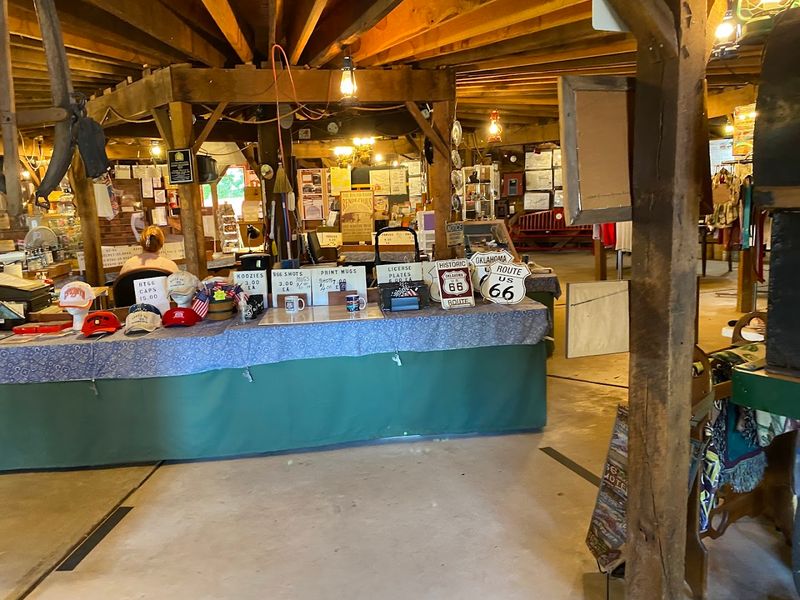
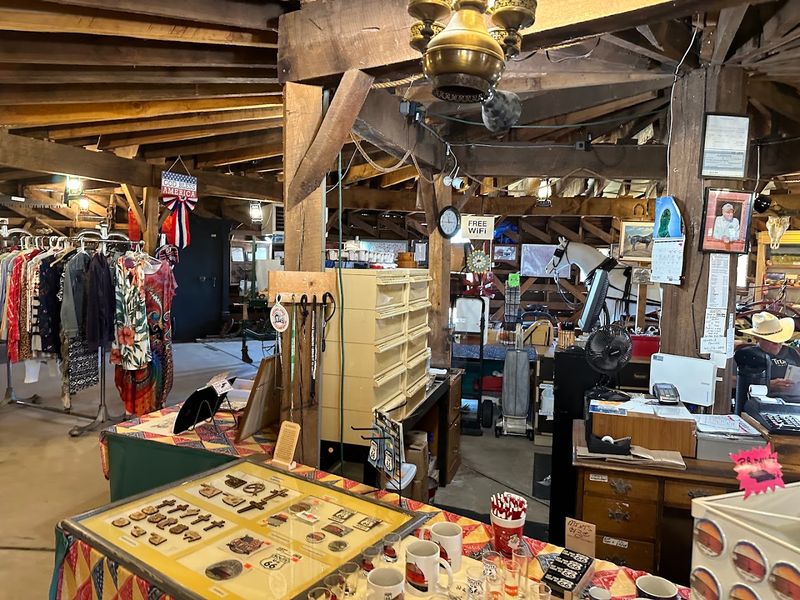
The ground floor of the Arcadia Round Barn is where the history really starts to speak for itself. The space functions as a small museum, with historical photographs, informational displays, and time-period artifacts arranged throughout the curved interior walls.
Exhibits cover the early days of Arcadia, Oklahoma, the construction and original purpose of the barn, and the broader story of Route 66 and its significance to the region.
There are old tools, photographs, and documents that paint a vivid picture of what life looked like in this part of the country over a century ago.
Alongside the museum displays, the ground floor also operates as a gift shop stocked with Route 66 souvenirs, locally made items, and regional curiosities.
One particularly charming detail is the availability of rose rocks for sale, a mineral formation found naturally in Oklahoma and deeply connected to the state’s identity.
The whole setup feels like a cross between a cozy antique shop and a neighborhood museum, and it works surprisingly well. Everything is laid out in a way that invites you to wander slowly and read carefully.
The barn’s circular shape means there are no corners to rush past, just a continuous loop of stories waiting to be discovered around every curved wall.
The Breathtaking Loft Space Upstairs
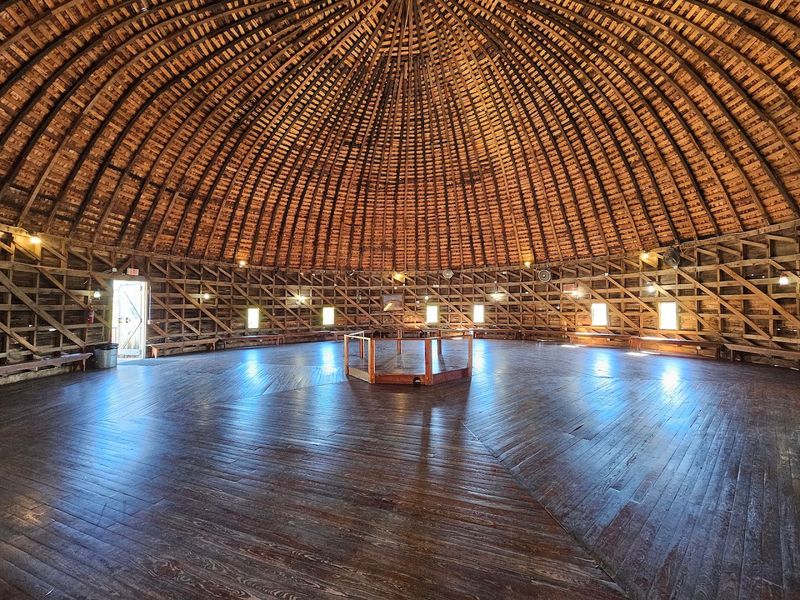
If the ground floor is the brain of the Arcadia Round Barn, the upper loft is absolutely its soul. Climbing the 15 steps to the second level reveals one of the most visually striking interior spaces you are likely to encounter anywhere along Route 66.
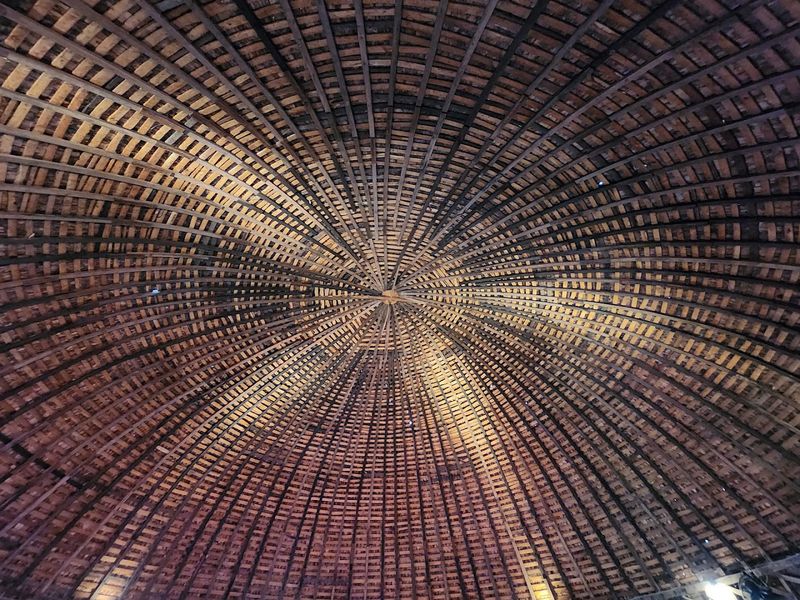
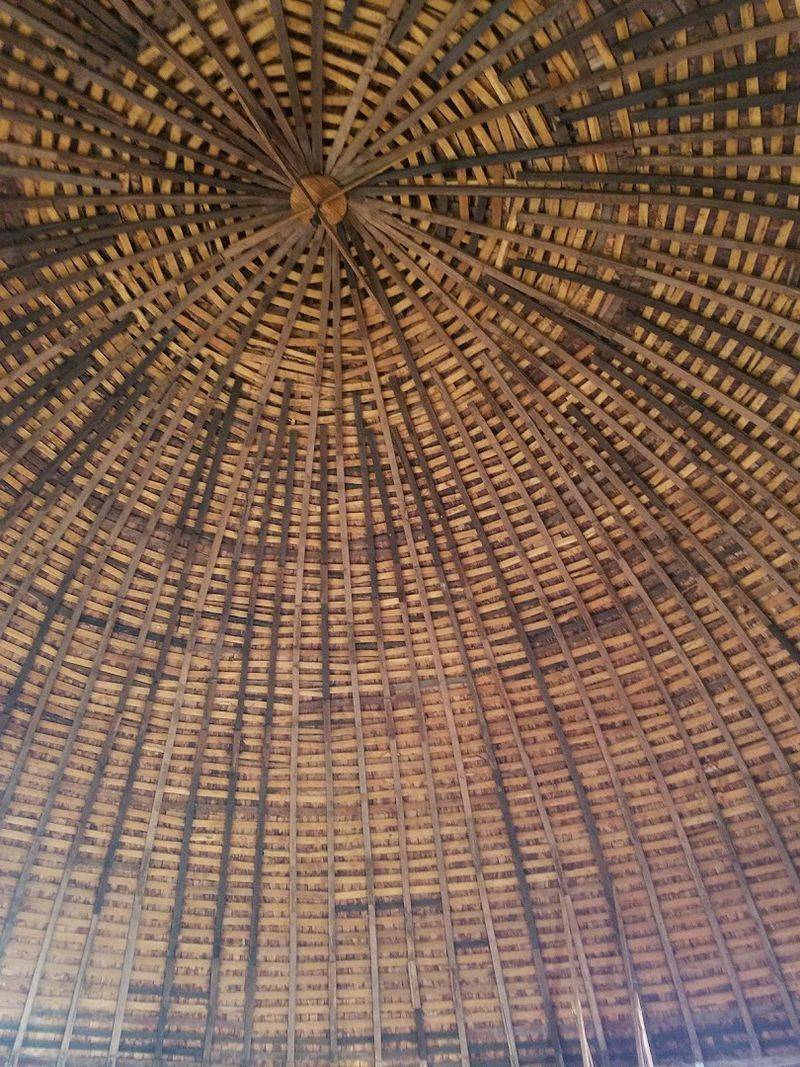
The ceiling of the loft is constructed from steam-bent wooden beams that radiate outward from a central point, creating a pattern that resembles the inside of an enormous woven basket. Looking straight up at it produces a mild sense of vertigo, in the best possible way.
The craftsmanship required to build this structure without modern tools or technology is genuinely staggering.
The loft is a large, open wooden floor space that can be rented for private events. Over the years it has hosted live music performances, making good use of the barn’s reportedly excellent natural acoustics.
The circular shape and wooden construction create a warm, resonant sound environment that musicians and audiences alike appreciate.
Standing in the middle of that loft and looking up at those curved beams is one of those quiet travel moments that stays with you long after you have moved on down the road.
Oklahoma has no shortage of remarkable places, but this particular ceiling might be the most underrated architectural sight in the entire state.
Route 66 and Why This Barn Became an Icon
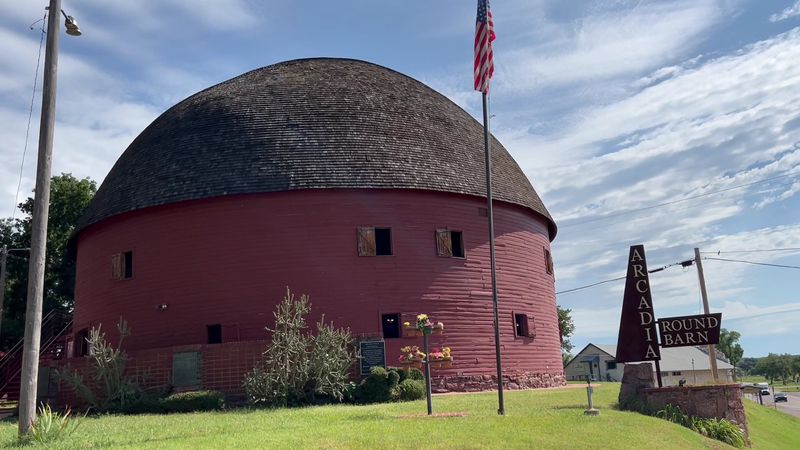
Route 66 stretches from Chicago, Illinois all the way to Santa Monica, California, passing through eight states and thousands of miles of American landscape.
Oklahoma claims a particularly significant portion of the original Mother Road, and the Arcadia Round Barn is one of the most photographed stops along the entire Oklahoma stretch.
Part of what makes this barn so central to the Route 66 experience is its age. Most of the iconic roadside attractions along the highway were built in the 1920s through 1950s, during the highway’s commercial heyday.
The Arcadia Round Barn predates the highway itself by nearly three decades, which gives it a depth of history that few other roadside landmarks can match.
When Route 66 was officially established in 1926, the barn was already nearly 30 years old and had already become a local landmark. As the highway brought travelers through Arcadia, the barn’s unusual shape made it an irresistible stopping point, and that tradition has never really stopped.
Today, road trippers driving the historic route through Oklahoma make a point of including this stop on their itinerary.
The barn represents something that Route 66 has always stood for, the idea that the journey itself is the destination, and that the most memorable moments often happen when you pull off the main road.
The Oklahoma Passport Stamp You Can Collect Here
There is a particular kind of joy reserved for people who collect passport stamps, and the Arcadia Round Barn offers one of the more satisfying stamps available anywhere in Oklahoma. If you are traveling with an Oklahoma Route 66 passport book, this is a must-stop location to get your pages filled.
The Oklahoma Department of Tourism has long promoted a passport program that encourages travelers to visit historic and scenic sites across the state. The Arcadia Round Barn is one of the designated stamp locations, which adds an extra layer of purpose to the stop beyond just sightseeing.
Bringing a passport book to the barn and getting it stamped feels like a small ceremony, a way of officially marking that you were here, that you stood inside this 125-year-old structure and took a moment to appreciate what it represents.
It is the kind of souvenir that costs nothing but means quite a lot.
For families traveling Route 66 with kids, the passport stamp concept is a brilliant way to keep younger travelers engaged and excited about each new stop.
Oklahoma has put real effort into making its historic highway accessible and interactive, and the stamp program at the Arcadia Round Barn is one of the better examples of that commitment in action.
Visiting Hours, Admission, and Practical Planning Tips
Planning a stop at the Arcadia Round Barn is refreshingly straightforward. The barn is open every day of the week from 10 AM to 5 PM, which gives travelers a generous window to work with regardless of which direction they are heading on Route 66.
Admission is completely free, which makes this one of the most accessible historic landmarks in Oklahoma. The barn operates on a donation model, meaning any contribution you make goes directly toward maintenance and preservation of the site.
Given the quality of what is preserved here, a donation feels like a genuinely worthwhile gesture.
Parking is available behind the barn, accessible by going a block or two off Route 66. The lot is a decent size and handles the flow of visitors comfortably.
Public restrooms are located in a separate building on the property, which is a practical detail worth knowing before you arrive.
A typical visit to the barn runs about 20 minutes if you move through at a comfortable pace, though history enthusiasts and architecture lovers could easily spend longer exploring every display and detail.
For those driving the full Oklahoma stretch of Route 66, the barn pairs well with a stop in nearby Edmond or Oklahoma City, both of which are just a short drive away along the historic highway.
The Architecture That Makes Engineers Do a Double Take
There is something almost defiant about the Arcadia Round Barn’s construction. Building a round structure out of wood in 1898, without power tools or modern engineering software, required a level of ingenuity and patience that most people today would find hard to fully appreciate.
The key technique was steam-bending, a process in which native bur oak planks were heated with steam until they became flexible enough to curve around the circular frame. Once cooled, the wood retained its curved shape permanently.
This required careful timing, skilled hands, and a deep understanding of how the material would behave.
The result is a building that has no straight walls anywhere in its interior or exterior. Every surface curves continuously, and the structural integrity of the whole design depends on that continuous curve distributing weight and wind pressure evenly around the entire perimeter.
For anyone with even a passing interest in construction or architecture, the barn is a hands-on lesson in pre-industrial building techniques. Oklahoma is home to plenty of historic structures, but very few demonstrate this level of specialized craftsmanship.
The barn stands as proof that remarkable engineering does not require modern technology, just skill, patience, and a clear vision of what you want to build.
Why the Arcadia Round Barn Deserves a Spot on Every Oklahoma Road Trip
Some places earn their reputation through marketing, and others earn it simply by existing and being exactly what they claim to be. The Arcadia Round Barn falls firmly into the second category.
It is a genuine piece of Oklahoma history that has survived more than 125 years through community effort, skilled craftsmanship, and sheer staying power.
A stop here checks multiple boxes at once. It is a photogenic roadside landmark, a small but genuinely informative museum, a showcase of remarkable historic architecture, and a living piece of Route 66 heritage, all wrapped up in one circular building on a quiet stretch of Oklahoma highway.
The barn also connects visitors to a broader story about preservation and community pride. The 1992 restoration was not funded by a government agency or a large corporation.
It was carried out by local people who decided that this particular piece of their history was worth fighting for, and that spirit is still present every time the doors open at 10 AM.
Whether you are a dedicated Route 66 road tripper, a first-time visitor to Oklahoma, or simply someone who happened to spot a round red barn from the highway and pulled over on instinct, this place will reward your curiosity every single time.
