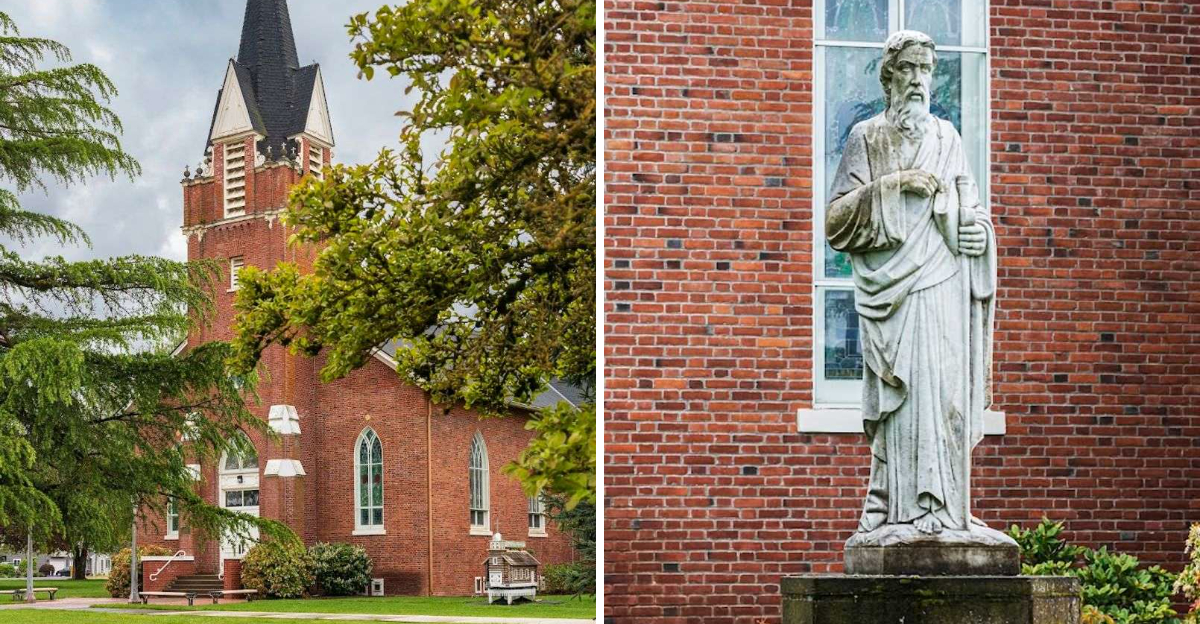
A historic stone church in Oregon quietly stands as if it’s been waiting for visitors since 1846. I walk up and instantly feel like I’ve stepped into a different century, where time moves a little slower and everything feels heavier in the best way.
The stonework alone tells stories – weathered, solid, and somehow still standing proud after all these years.
Locals treat it like a familiar landmark, while I keep circling it like I’ve just discovered a secret from another era. Even the air around it feels different, almost like history decided to linger here a little longer.
It’s simple, it’s striking, and it doesn’t try too hard to impress. And that’s exactly what makes it unforgettable.
A Church Built in 1846 That Still Stands Strong
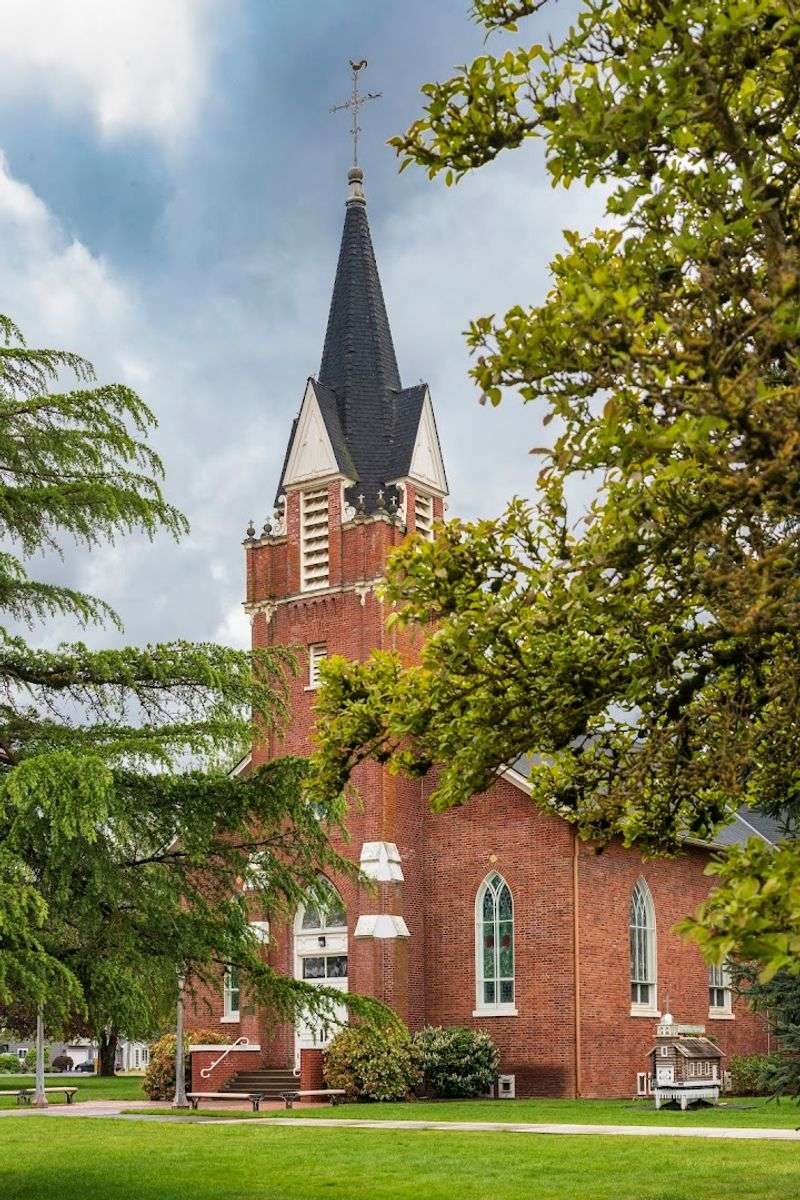
Walking up to the front of this church, the first thing you notice is how solid it looks. The stone walls have survived nearly 180 years of Oregon weather.
That is not something you see every day.
St. Paul Roman Catholic Church was completed in 1846. It is widely recognized as the oldest Catholic church building in Oregon.
Some records even point to its founding roots going back to the 1830s, making its legacy even deeper.
The structure was built using locally sourced stone. Craftsmen of that era worked without modern tools or machinery.
The result is a building that feels grounded, almost immovable, like it grew right out of the earth beneath it.
Standing here, you get a real sense of permanence. Oregon was barely a territory when this church was raised.
Settlers, missionaries, and Native communities all witnessed its early years. Visiting now feels like touching something genuinely rare.
This is not a replica or a restoration. It is the real thing, still in active use today.
The Oldest Catholic Parish in All of Oregon
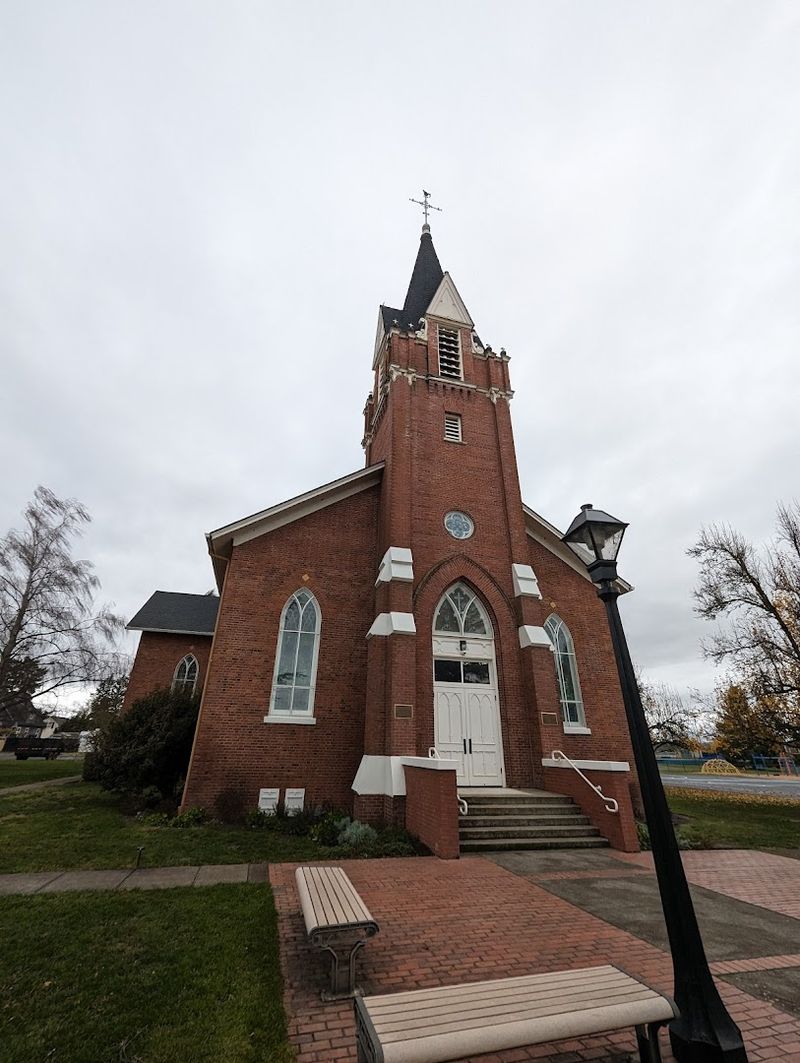
Not every church can claim the title of oldest in its state. St. Paul Roman Catholic Church holds that distinction with quiet confidence.
It was established as the first Catholic parish in Oregon, a fact locals have celebrated for generations.
The parish traces its roots to early missionary activity in the region. French-Canadian settlers and missionaries worked together to build a faith community here.
Their efforts created something that outlasted almost everything else from that era.
Being the oldest does not just mean having old walls. It means this parish carries stories, traditions, and memories that no other Oregon Catholic church can claim.
Generations of families have worshipped, married, and said their goodbyes here.
Visitors who know their Pacific Northwest history often make a special trip just to see this place. It sits quietly in a small farming town.
Yet its place in Oregon history is enormous. Walking through the door, you feel the weight of that history in the best possible way.
It is genuinely humbling.
Stone Walls That Tell a Story of Craftsmanship
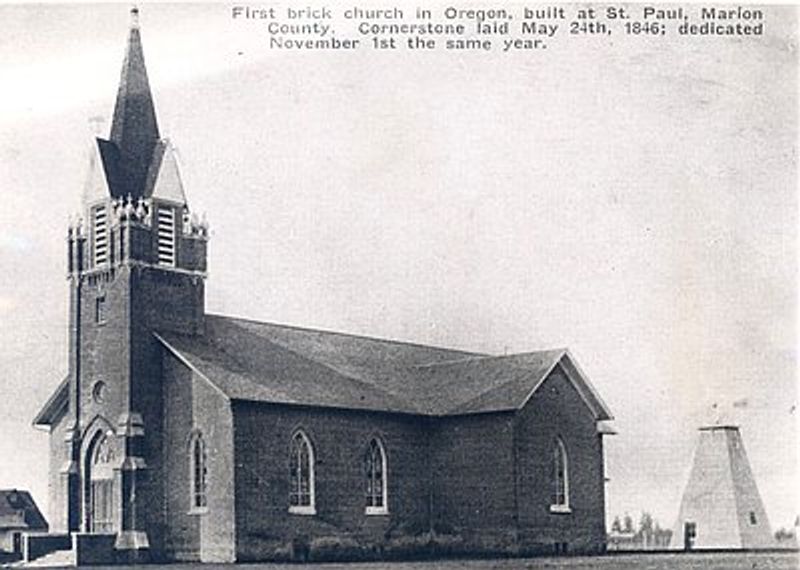
Running a hand along the exterior stone feels like reading a sentence written in a language older than words. The blocks are rough-cut and uneven.
Every imperfection is a reminder that human hands shaped each one.
The church was constructed using a technique common in the mid-1800s. Local volcanic stone gave the walls their distinctive look.
The color shifts slightly depending on the light, sometimes gray, sometimes almost golden in afternoon sun.
What makes the craftsmanship so impressive is the context. There were no hardware stores nearby.
No power tools. Workers relied on skill, patience, and sheer determination.
The fact that the walls still stand plumb and solid is a testament to their dedication.
Architectural historians find the building fascinating for exactly these reasons. It represents a moment when European building traditions met the raw conditions of the American frontier.
The result is something you cannot manufacture or replicate today. Every stone feels intentional.
Every joint feels earned. This is craftsmanship in its truest, most honest form.
A Beautiful Interior That Feels Like Europe
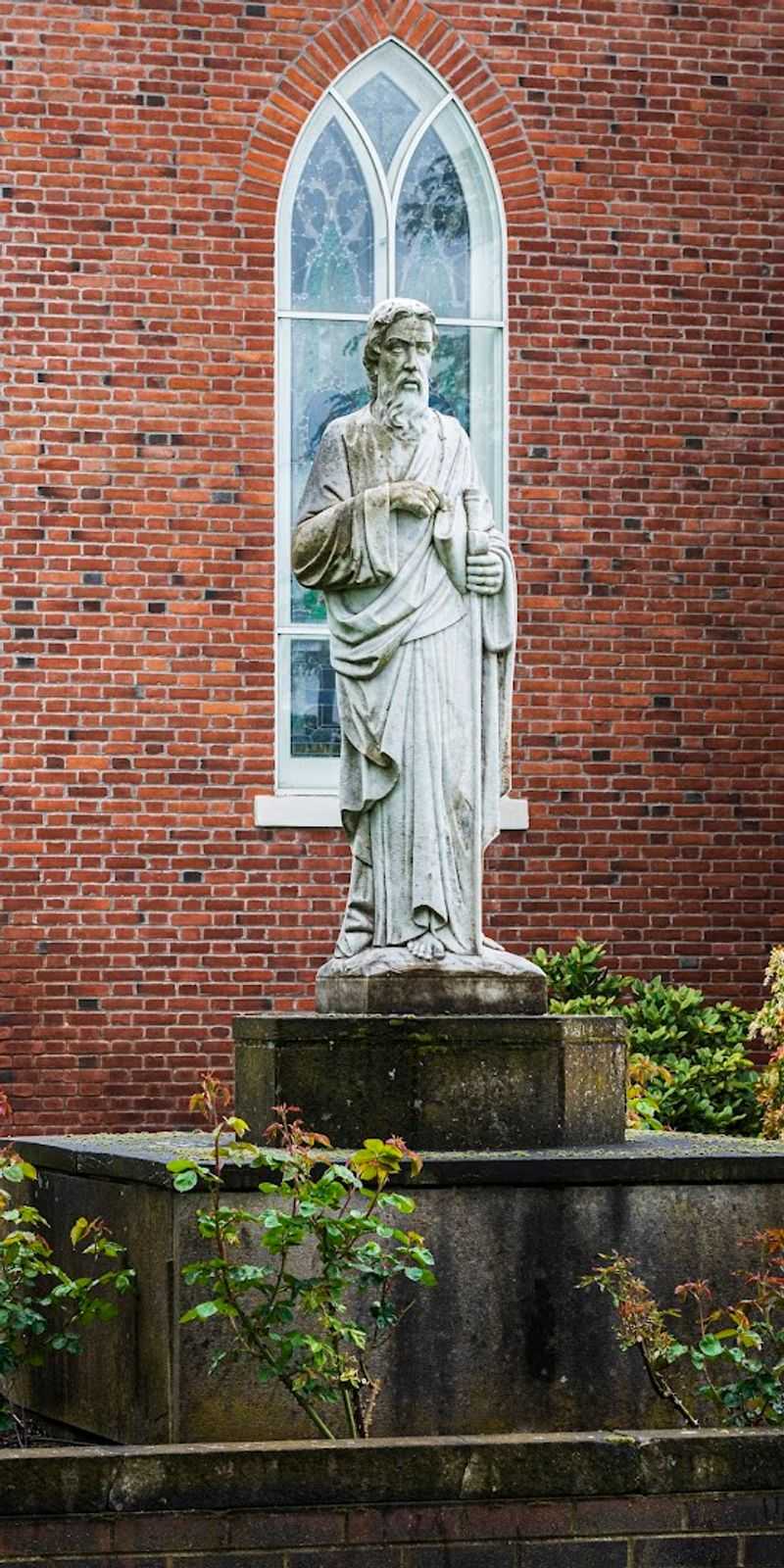
Stepping inside, the outside world disappears completely. The air is cooler.
Everything feels hushed and respectful. The interior of St. Paul Roman Catholic Church carries a beauty that genuinely surprises first-time visitors.
The decorative style draws clear inspiration from European Catholic churches. Ornate details frame the altar.
Religious art lines the walls in a way that feels devotional rather than decorative. It is clear that the people who built this space wanted it to feel sacred.
The old pine floors are one of the most talked-about features. They creak softly underfoot, adding to the sense that you are walking on something with memory.
Those floors have supported generations of worshippers, wedding guests, and grieving families.
Visitors who have been to Catholic churches in France or Italy often say this interior brings those places to mind. That comparison is not an exaggeration.
The craftsmanship inside matches the ambition of the exterior. Light filters through carefully placed windows.
The overall effect is peaceful, layered, and deeply moving. You want to sit quietly and just take it all in.
The Charming Town of St. Paul, Oregon
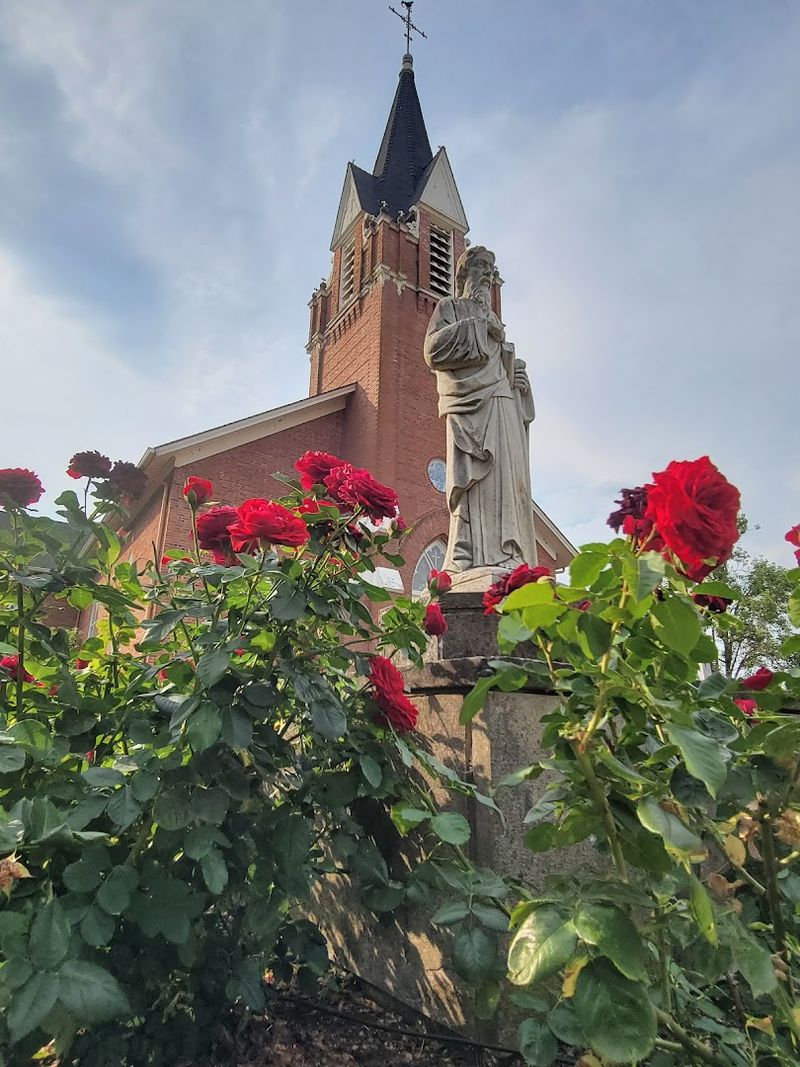
The town of St. Paul is the kind of place that makes you slow down without trying. It is small, unhurried, and genuinely charming.
The church sits at the heart of it, anchoring everything around it.
St. Paul is located in Marion County, nestled in the Willamette Valley. Agriculture defines the landscape here.
Fields stretch out in every direction, and the pace of life matches that open, unhurried scenery.
The town itself has just a handful of streets. There are no big chain restaurants or shopping centers.
What you find instead is a community that has preserved its identity across many decades. That is rare and refreshing.
Visiting the church without exploring a bit of the town would be a missed opportunity. A slow walk around the block reveals old homes, quiet gardens, and a sense of community pride.
Locals are friendly. The area feels safe and welcoming.
For anyone craving a break from busy city life, St. Paul offers something genuinely restorative. The church is the highlight, but the town itself adds real warmth to the experience.
Fourth of July Fireworks Over a Historic Landmark
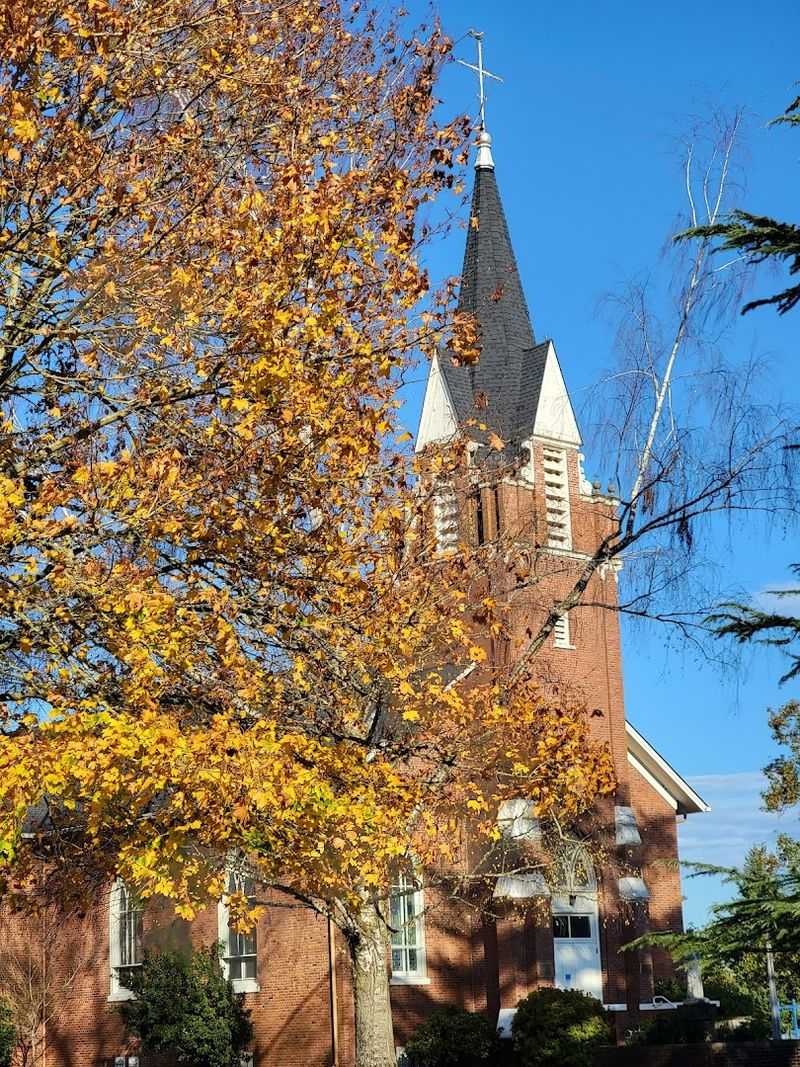
Picture this: fireworks bursting in the sky directly above a stone church built in 1846. That is exactly what happens every Fourth of July in St. Paul.
It is one of those sights that stays with you long after the sparks fade.
The St. Paul Rodeo is a beloved local tradition held around Independence Day. The fireworks that follow the events light up the sky right above the church steeple.
The contrast between the old stone structure and the modern celebration is genuinely striking.
People gather from surrounding towns for this event every year. Families set up chairs in the fields nearby.
The church glows under the colorful bursts overhead. Seeing something so ancient framed by something so festive creates a feeling that is hard to put into words.
If your travel dates align with early July, this experience is worth planning around. The rodeo itself draws big crowds and offers a real taste of Oregon rural culture.
But watching those fireworks hover over that old stone church is the moment most visitors remember longest. It feels almost cinematic.
A Welcoming Parish With a Living Community
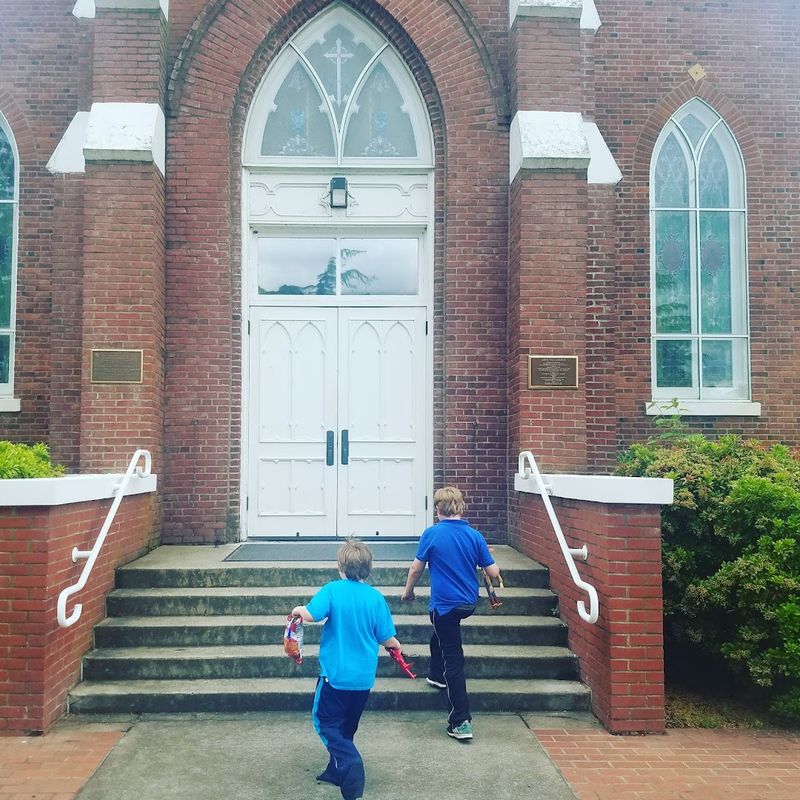
History alone does not keep a church alive. People do.
The community at St. Paul Roman Catholic Church is warm, active, and genuinely welcoming to visitors. That warmth is felt the moment you arrive.
Visitors attending mass have commented on how friendly the priest and parishioners are. There is no sense of exclusivity here.
People are happy to see new faces and share their church with curious travelers.
The parish holds regular masses and community events throughout the year. Life continues here just as it has for generations.
The pews still fill. The bells still ring.
The traditions carry forward with real intention and care.
For anyone who has been away from a Catholic church for a long time, this parish offers a gentle re-entry. The setting is intimate.
The services feel personal rather than institutional. Several visitors have noted that attending a service here felt unexpectedly meaningful, even for those who do not practice regularly.
There is something about the combination of history, beauty, and genuine community that makes this place feel alive in a way that goes beyond architecture.
Weddings and Ceremonies in a One-of-a-Kind Setting
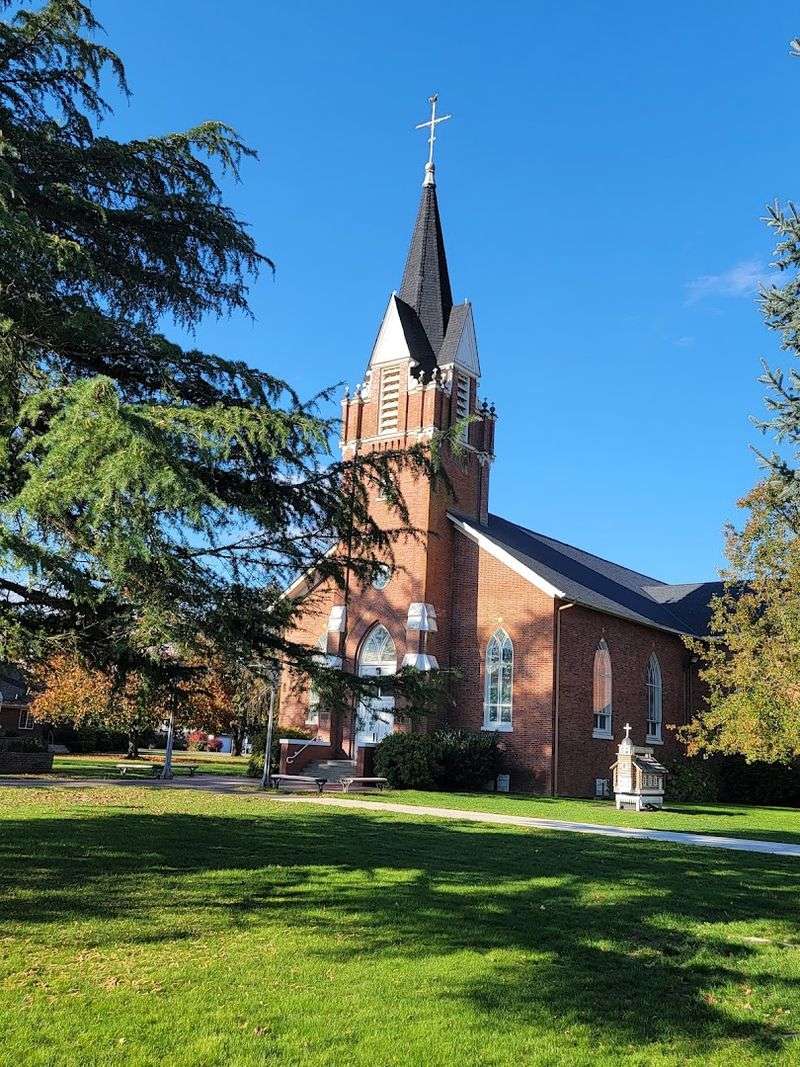
Getting married inside a church that has witnessed nearly two centuries of human milestones is something truly special. St. Paul Roman Catholic Church has hosted countless weddings, and each one becomes part of its long story.
The interior provides a naturally stunning backdrop. The carved details, old pine floors, and filtered light do most of the decorating for you.
Couples who choose this venue often say the space feels both intimate and grand at the same time.
Funerals, baptisms, and other sacraments have also been celebrated here across many generations. Families return again and again for life’s most important moments.
That continuity adds layers of meaning to every ceremony held within these walls.
Planning a ceremony here requires connecting with the parish directly. The staff is helpful and genuinely invested in making each event meaningful.
The church seats a modest number of guests, which keeps the atmosphere personal. For couples who value history, authenticity, and beauty over spectacle, this small Oregon church delivers something no modern venue can match.
It is a setting that carries real emotional weight.
A Landmark That Stands West of the Mississippi
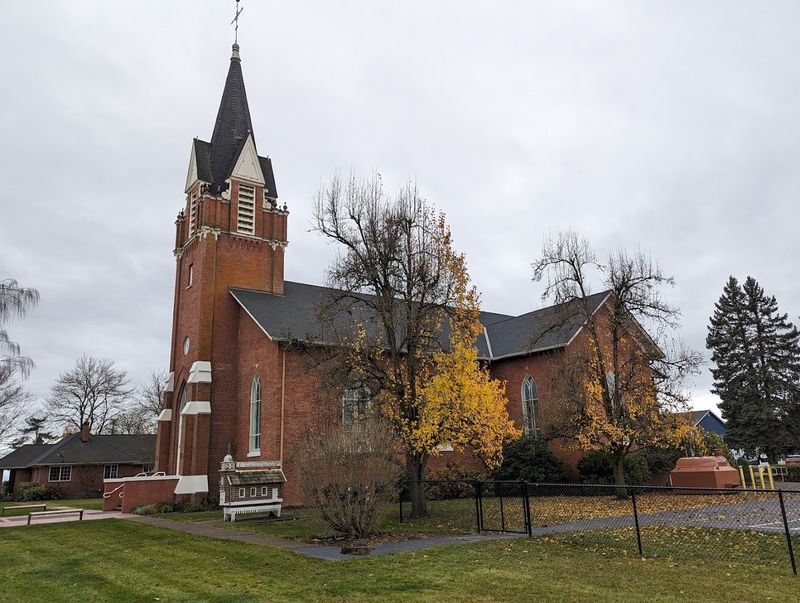
Not many buildings in the western United States can claim the kind of historical standing that St. Paul Roman Catholic Church holds. Aside from the California Missions, this church is considered one of the oldest active Catholic churches west of the Mississippi River.
That context puts the building in remarkable company. The California Missions are famous worldwide.
Being mentioned alongside them says a great deal about what this Oregon church represents historically and architecturally.
For history enthusiasts, that comparison is a powerful draw. The church sits in a quiet farming town.
Yet its significance reaches across the entire western half of a continent. That gap between its modest surroundings and its enormous historical footprint is part of what makes it so fascinating.
Travelers who focus on American religious history or frontier-era landmarks consistently put this church on their must-visit lists. It deserves to be better known outside of Oregon.
The drive through the Willamette Valley to reach it is scenic and easy. Arriving feels like discovering something that most people have overlooked.
That feeling is rare and genuinely satisfying.
Planning Your Visit to St. Paul Roman Catholic Church
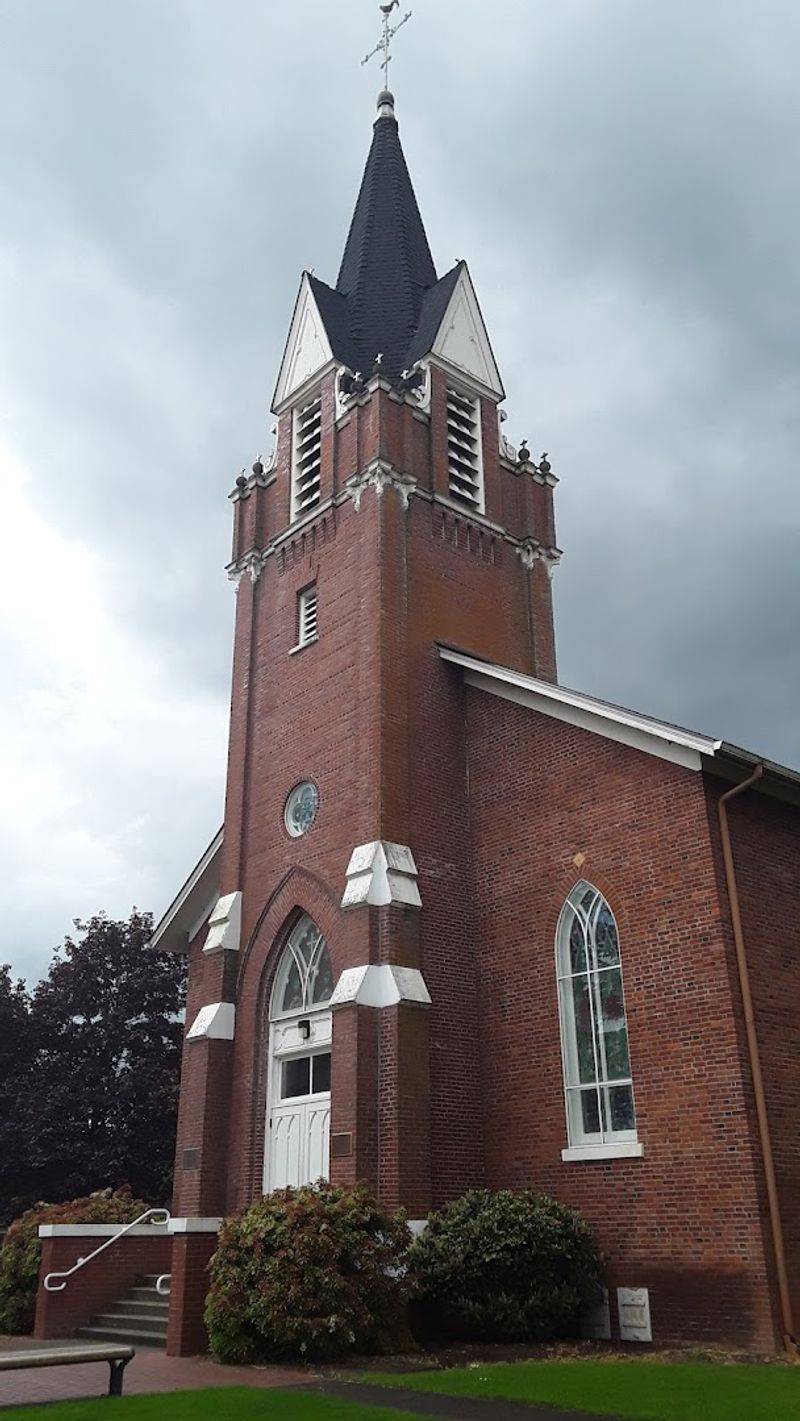
Getting to St. Paul is straightforward. The town sits about 40 minutes southwest of Portland, making it an easy day trip from the city.
The drive through the Willamette Valley is scenic and relaxing on its own.
The church is located at 20217 Christie St, St Paul, OR 97137. Parking is available nearby.
The area is quiet and easy to navigate, even for first-time visitors unfamiliar with the town.
Mass schedules and event information can be found on the parish website at stpaulparishstpaul.org. The church is not always open outside of scheduled times.
Bring a camera. The exterior alone is worth photographing from multiple angles.
Morning light hits the stone walls beautifully. If you visit in early July, check the St. Paul Rodeo schedule for an added experience.
This church rewards those who take their time. Rushing through would mean missing the quiet details that make it genuinely extraordinary.
Address: 20217 Christie St, St. Paul, OR 97137.
