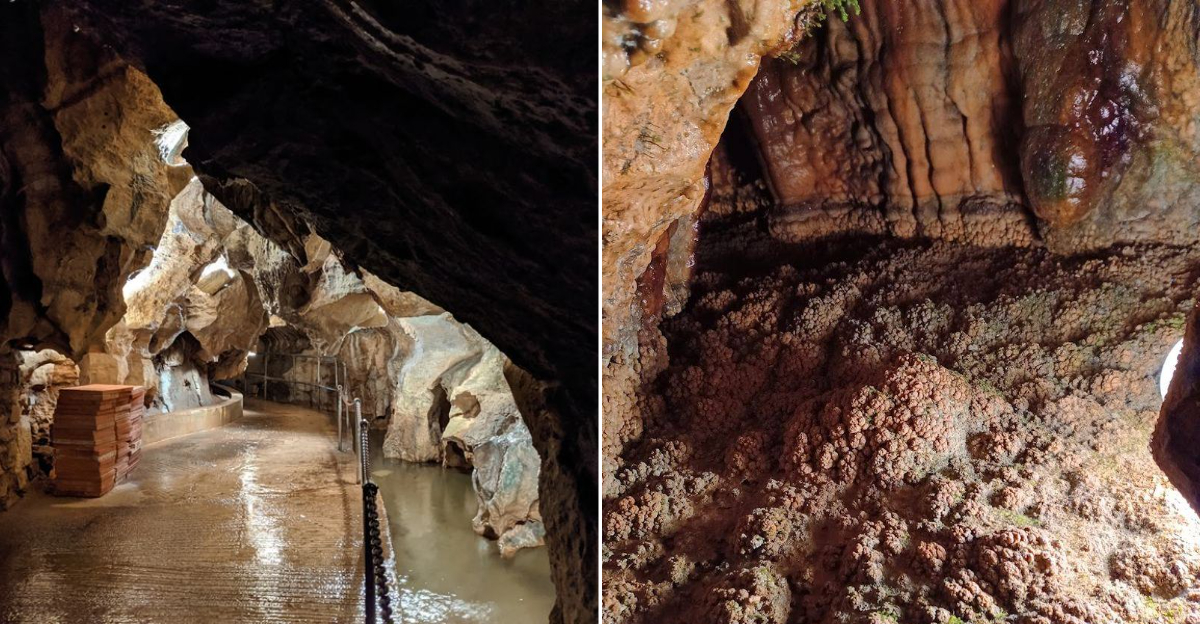
The mountain above is solid rock, yet somewhere beneath it, blind trout swim through an underground stream. That surreal image greets you inside this historic cavern, a breathtaking secret tucked beneath the North Carolina mountains.
For nearly a century, guided tours have led visitors through a subterranean world of dripping stalactites, mysterious “bottomless” pools, and a constant chill that defies the summer heat outside.
You walk the same passages where Civil War deserters once hid and where early explorers squeezed through narrow openings in search of adventure.
The temperature holds steady, the lighting reveals ancient mineral colors, and the quiet is broken only by the echo of dripping water and the guide’s voice.
A hidden lake glimmers in the darkness, and overhead, hibernating bats cling to the ceiling, indifferent to your presence.
This is not a theme park or a man-made attraction. It is nature’s own cathedral, carved drop by drop over millions of years and still changing today.
The Moment The Mountain Starts Feeling Different
The first thing that hits you is not the cave itself, but the way the whole mountain seems to lower its voice before you even get inside. You are standing in western North Carolina with trees, slopes, and all that familiar Blue Ridge scenery around you, and then suddenly the ground feels like it is hiding a whole second world.
That shift is what makes the place stick with you.
Linville Caverns is tucked beneath Humpback Mountain near Marion, and the setting almost tricks you into thinking the experience will be simple and quiet. It is quiet, sure, but not in a forgettable way, because there is this steady sense that stone and water have been doing their own slow work down there for ages.
You feel invited in, but also gently reminded that the mountain was here first.
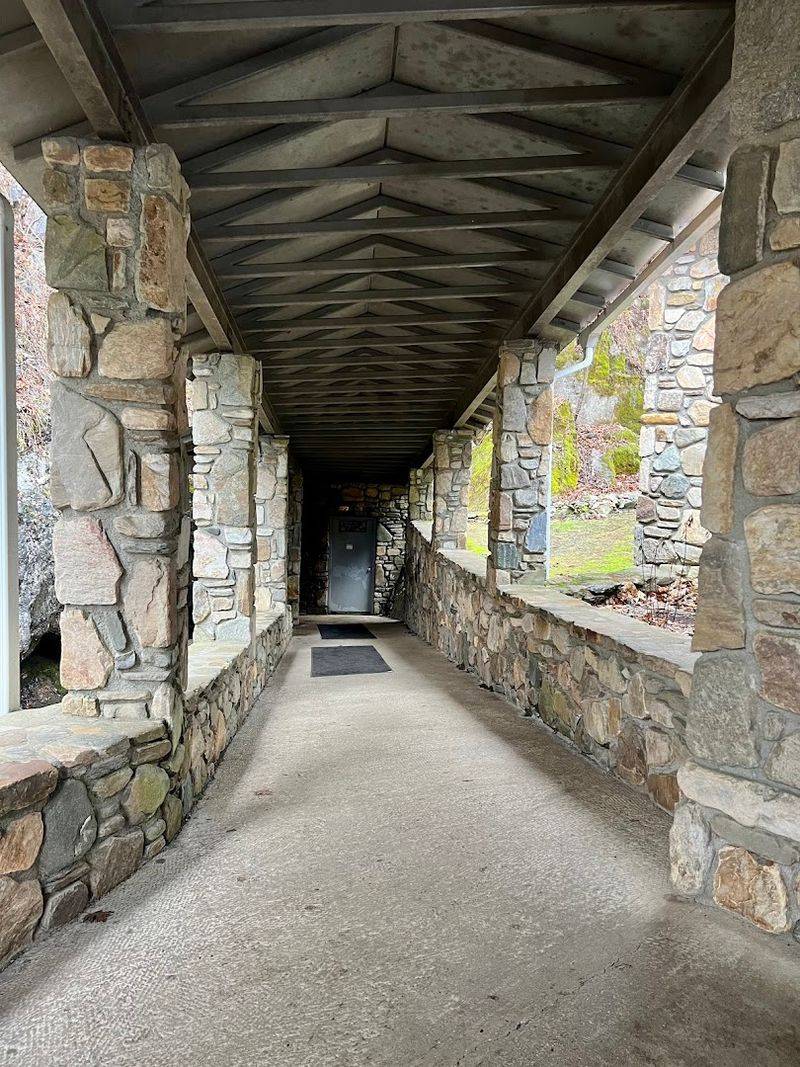
I liked that nothing about the approach felt flashy or overworked. It feels rooted in the landscape around it, which matters when you are in a part of North Carolina where the scenery already has a strong personality.
Before the tour even begins, you can tell this is going to be less about spectacle and more about paying attention.
That mood, honestly, is half the reason to come.
Where You Actually Find It
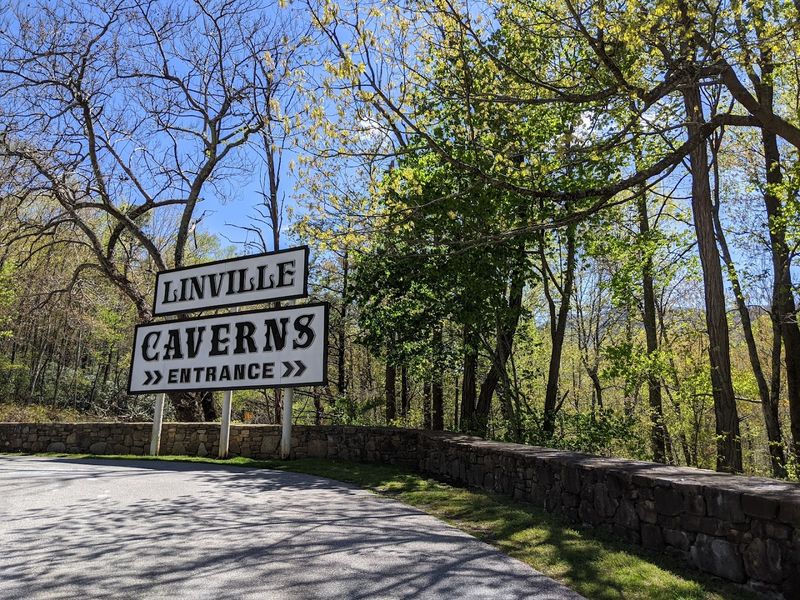
Here is what helps right away, because cave places can sometimes sound more remote than they really are when people talk about them later. Linville Caverns is at 19929 US-221, Marion, NC 28752, and once you are in that stretch of mountain road, it feels surprisingly easy to fold into a bigger day outside.
You are close to the ridges, close to trails, and still very much in that dramatic North Carolina landscape.
What I appreciated was how naturally it fits with the rhythm of the area instead of feeling detached from it. The drive itself already puts you in the mood, with wooded slopes and those winding views that make you slow down a little without trying.
By the time you arrive, the cave does not feel random at all, because the terrain has been quietly introducing it the whole way.
If you are spending time around Marion, Linville Falls, or the parkway nearby, this stop makes sense in a way that feels organic. You are not forcing an attraction into the day, and that really changes the energy.
It feels more like following the mountain to one of its less obvious rooms.
That is a better way to experience it, if you ask me.
The Walk Underground Feels Surprisingly Personal
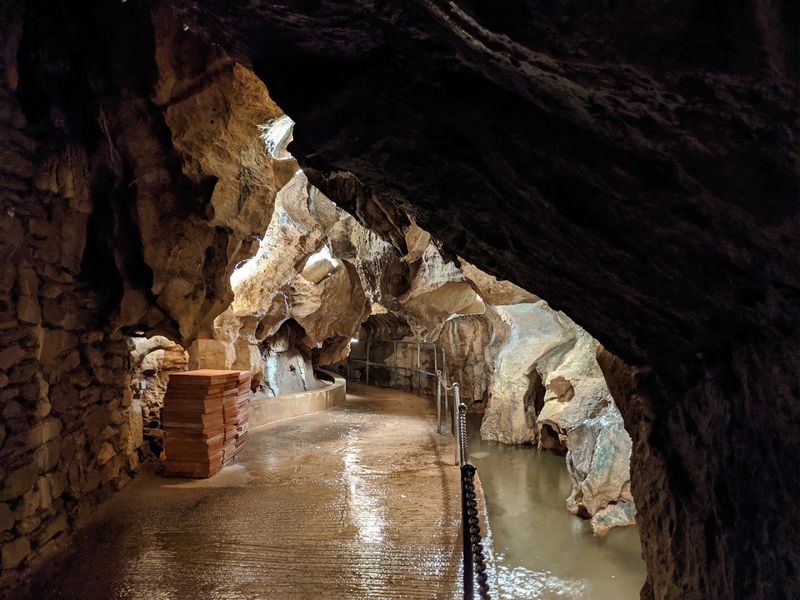
What surprised me most was how personal the tour feels once you start moving through the passageways. You are not staring at the cave from a distance like it is some museum piece behind glass, because the path brings you close enough to really notice the moisture on the rock and the way the walls seem to bend around your line of sight.
It feels immediate in a way that is hard to fake.
The guided route only covers part of the cavern, which honestly helps the experience feel more focused instead of overwhelming. You get enough time to settle into the underground rhythm while still sensing that the mountain keeps going farther than the public path allows.
That little bit of mystery makes the place feel more alive, not less accessible.
I also liked the pace, because nothing about it felt rushed or weirdly theatrical. You are given room to look, listen, and let your eyes adjust to the dimness while the cave starts revealing details you definitely would have missed at first glance.
The whole thing lands somewhere between a walk, a story, and a slow shift in perspective.
By the end of it, you feel like you have actually been somewhere.
The Stone Shapes Keep Messing With Your Eyes
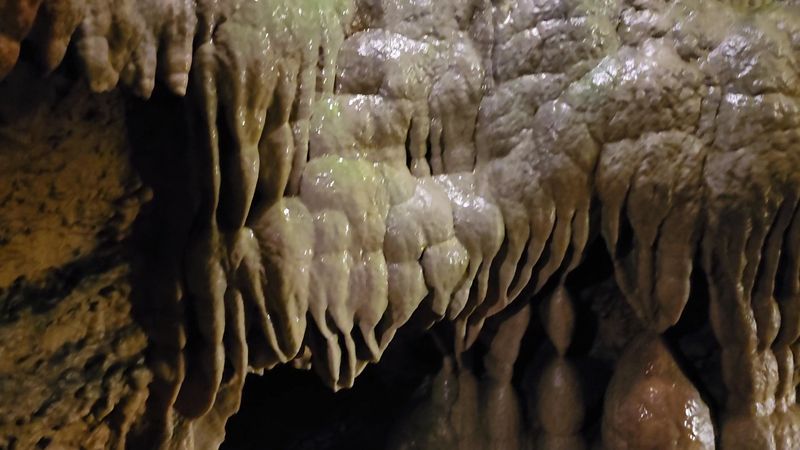
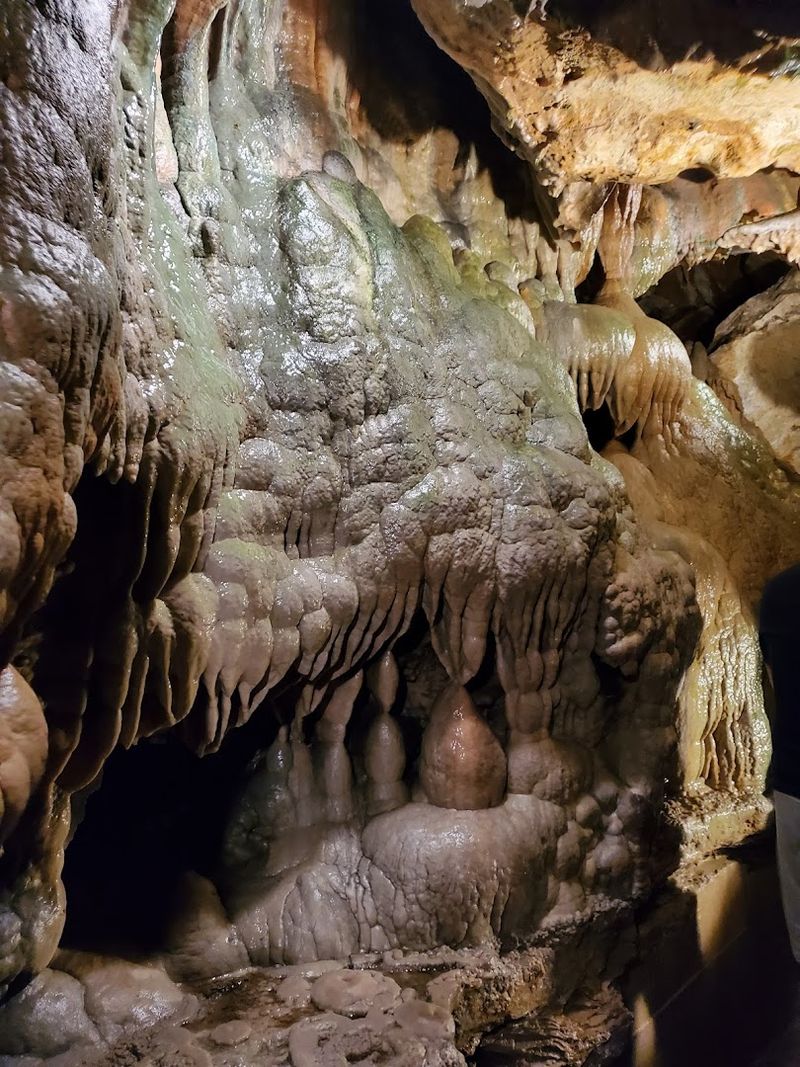
You know that thing where your brain keeps trying to turn random shapes into familiar objects? This cave leans right into that, because the formations start looking like creatures, claws, faces, and all kinds of odd little figures once the guide points them out and your imagination wakes up.
After that, it is hard to stop seeing personalities in the stone.
Linville Caverns is still an active cave, which means the rock is not just old, it is still being shaped by water in slow motion. That makes the place feel less frozen in time and more like something quietly happening while you stand there.
The dripping, the sheen on the walls, and the layered textures all remind you that geology is not as still as it looks.
What I loved was that the formations do not feel overlit or staged into submission. They stay a little mysterious, and that is exactly why they work on you.
You keep changing your mind about what you are looking at, which turns a simple glance into this ongoing little conversation between your eyes and the cave.
That playfulness gives the darker spaces a surprising amount of warmth.
The Underground Stream Changes Everything
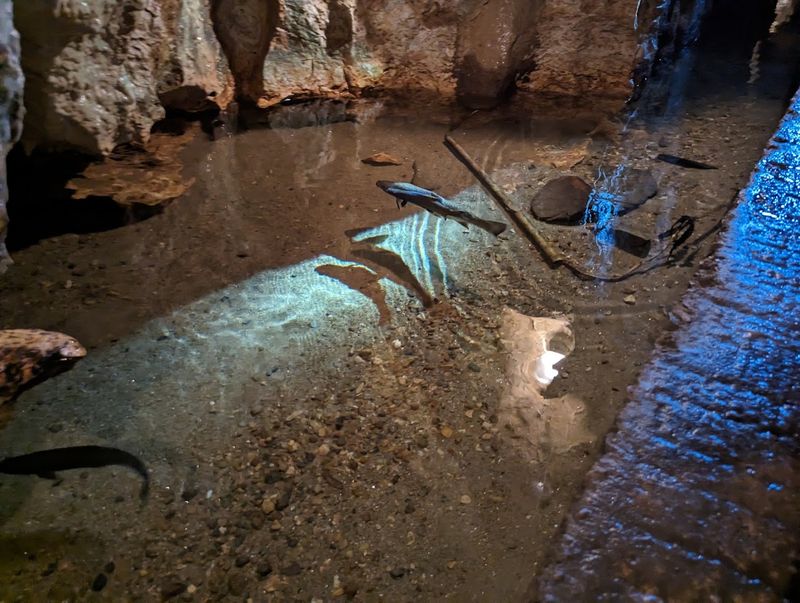
Then there is the water, and honestly, that is when the cave really shifts from interesting to unforgettable. Seeing an underground stream moving through the rock makes the whole place feel less like a collection of formations and more like a living system with its own quiet pulse.
You stop thinking about the mountain as solid ground and start thinking about what is moving beneath it.
The stream inside Linville Caverns is one of those details that gives the tour its mood, because water has a way of making silence feel fuller. You hear it, you see the reflections it throws onto the stone, and you get this steady reminder that the cave was shaped by persistence rather than force.
That slow, patient energy changes how you look at everything around you.
I found myself watching the water longer than I expected, mostly because it adds motion to a place built from stillness. It also helps explain why the cavern feels so cool, damp, and strangely calm all at once.
In North Carolina, where rivers and waterfalls get a lot of the attention above ground, this hidden current feels like the mountain keeping one of its best conversations to itself.
That part stays with you, maybe more than anything else.
That Cool Cave Air Is Not Just In Your Head
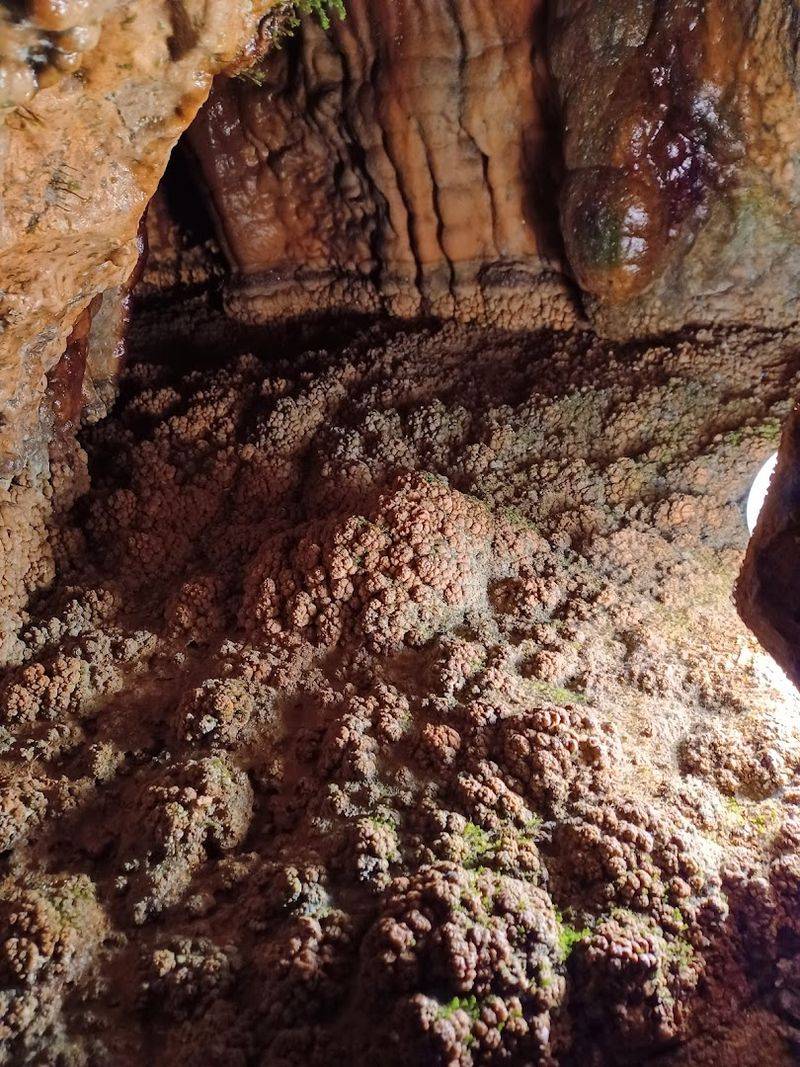
You feel the temperature change almost immediately, and it is one of those physical details that pulls you deeper into the experience without any effort. Outside, the mountain air can do whatever it wants, but inside the cave everything settles into this cool, steady calm that makes your shoulders drop a little.
It is refreshing, but it also adds to the sense that you stepped into a separate environment.
That constant chill is part of why the cavern feels so memorable. The air does not just feel cooler, it feels grounded, almost like the mountain has been storing a quieter season down there and letting you borrow it for a while.
When people talk about cave tours feeling immersive, this is the kind of thing they mean, even if they do not always say it that clearly.
I liked how that coolness sharpened the rest of the senses instead of dulling them. The sound of water seemed clearer, the texture of the stone looked richer, and even the dim light felt more noticeable against the dark.
In North Carolina, where the outdoors usually announces itself with views and weather, this cave works in the opposite direction and wins you over through temperature, sound, and stillness.
It is subtle, but that is exactly why it lands.
There Is More History Here Than You Expect
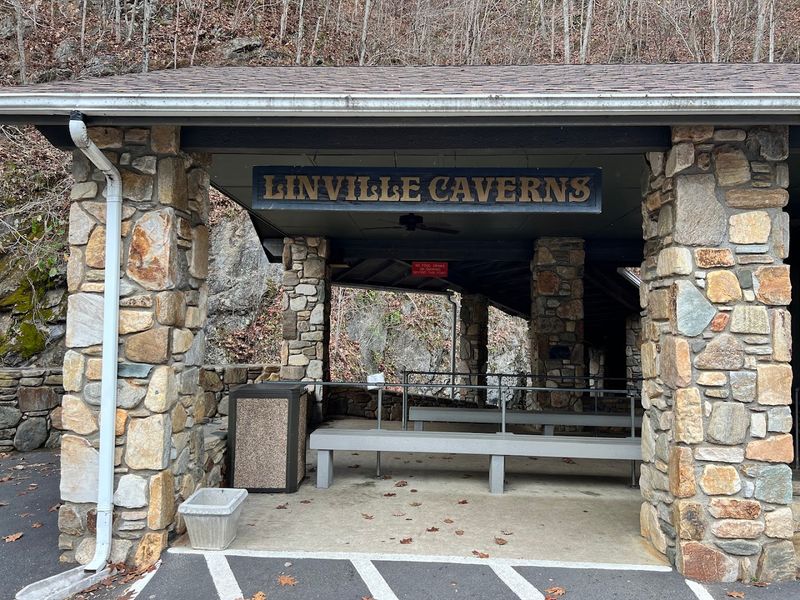
What makes this place richer than a simple cave stop is the way history keeps brushing up against the geology. Long before it became a place visitors could walk through with a guide, the cavern had already gathered stories, local curiosity, and the kind of mountain folklore that tends to form anywhere the landscape feels a little mysterious.
You can feel that layered past without the tour turning stiff or lecture-heavy.
The discovery story is one of those details that sounds almost too good to be true, which of course makes it even better to hear while you are standing there. Add in the fact that the caverns were later opened for the public and tied into older regional stories, and suddenly the place feels connected to more than rock formations alone.
It becomes part of the human map of western North Carolina as much as the geological one.
I appreciated that the history does not overwhelm the cave itself. Instead, it gives the underground spaces a little more texture, like the mountain has been quietly intersecting with human lives for a very long time.
That balance matters, because the best travel experiences never feel like you are choosing between natural wonder and local story.
Here, you get both, and they actually make each other stronger.
The Bats And Wildlife Give It Real Weight
One thing I always appreciate is when a place reminds you that you are visiting more than just a scenic feature. Linville Caverns also matters as habitat, especially for bats that use cave environments for shelter and seasonal rest, and that gives the whole experience a little more weight in the best possible way.
You are not walking through a backdrop, you are stepping into a living environment that deserves care.
That awareness shifts your mindset without making the tour feel heavy. If anything, it makes the quieter moments more meaningful, because you start noticing how stable and protected the cave feels compared with the outside world.
The darkness, the cool air, and the stillness are not just atmospheric details for visitors, they are part of what makes the space important.
I think that kind of context helps people connect with a place more honestly. Instead of asking only what you can get from the visit, you also start thinking about what makes the cave worth respecting in the first place.
In a mountain region of North Carolina known for dramatic overlooks and rushing water, this underground habitat tells a gentler story, and I liked being reminded that quiet places can be ecologically significant too.
That detail adds depth, and it lingers after the tour ends.
