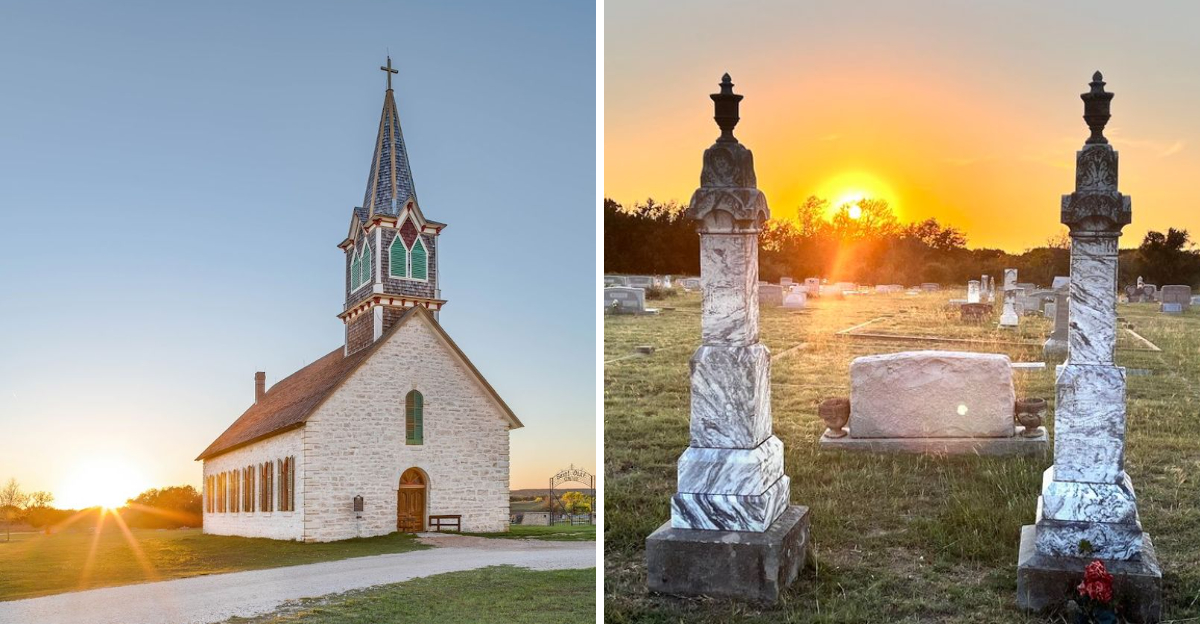
Some historic landmarks in Texas immediately stand out for the craftsmanship behind them. This small country church is one of those places, built almost entirely from carefully hand-cut stone that has stood strong for generations.
The thick walls, simple design, and peaceful surroundings give it a timeless presence that feels deeply connected to Texas history. Visitors often pause here not just to admire the structure, but to appreciate the patience and skill that went into building it piece by piece.
In Texas, where many historic sites have long stories behind them, this quiet church remains a beautiful reminder of dedication, faith, and old-fashioned craftsmanship.
The Story Behind The Rock Church
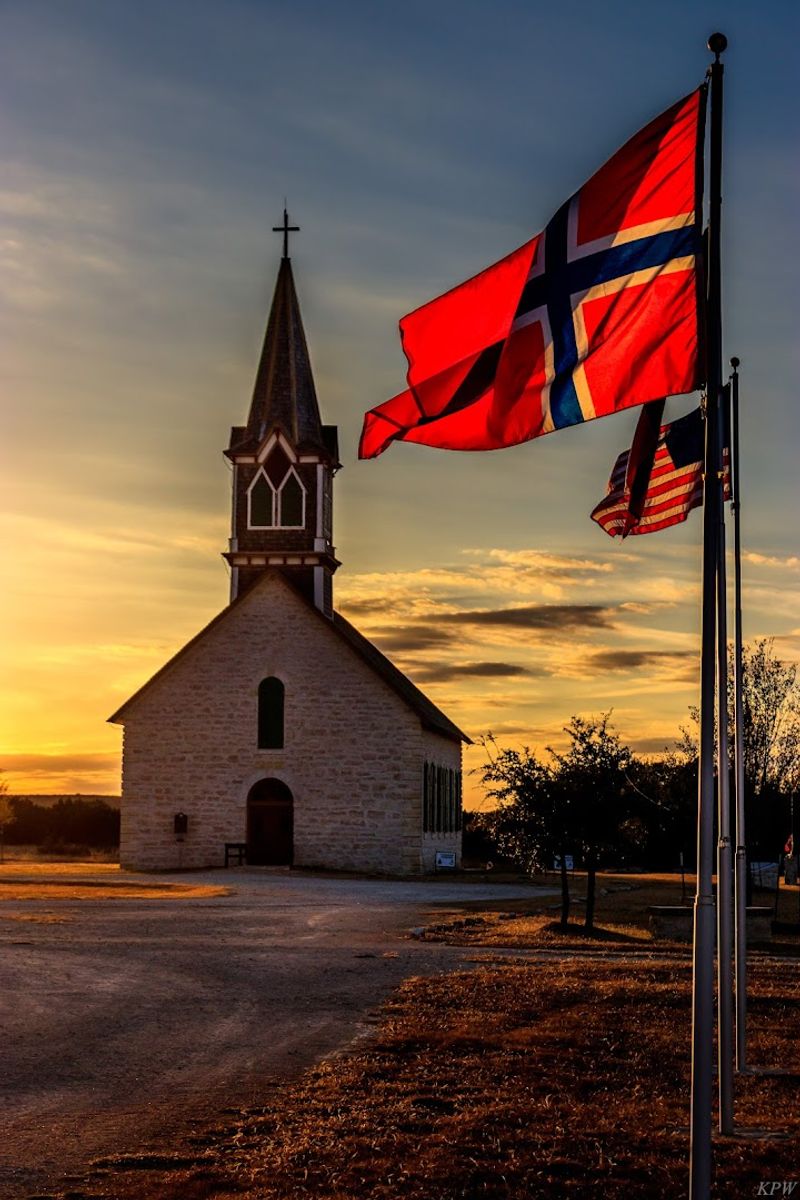
Before it was known simply as The Rock Church, this building carried the name St. Olaf’s Lutheran Church, a name that tells you everything about who built it.
Norwegian immigrants settled in Bosque County during the latter half of the 1800s, bringing their faith and their incredible work ethic with them to the Texas frontier.
The church was completed in 1886, which means this structure has been standing for well over a century. It was not built with machinery or modern tools.
Every single stone was quarried and shaped by hand, fitted together with patience and precision that is almost hard to believe when you see it in person.
The congregation eventually moved on to a newer building in town, but The Rock Church was never abandoned or forgotten. Volunteer members still maintain the property today, keeping the grounds clean and the doors open for curious visitors.
The history here is not just in the walls. It is in the very soil around it, in the cemetery beside the church, and in the guest book that visitors have been signing for decades.
This is living history you can actually touch.
Hand-Cut Limestone: A Construction Marvel
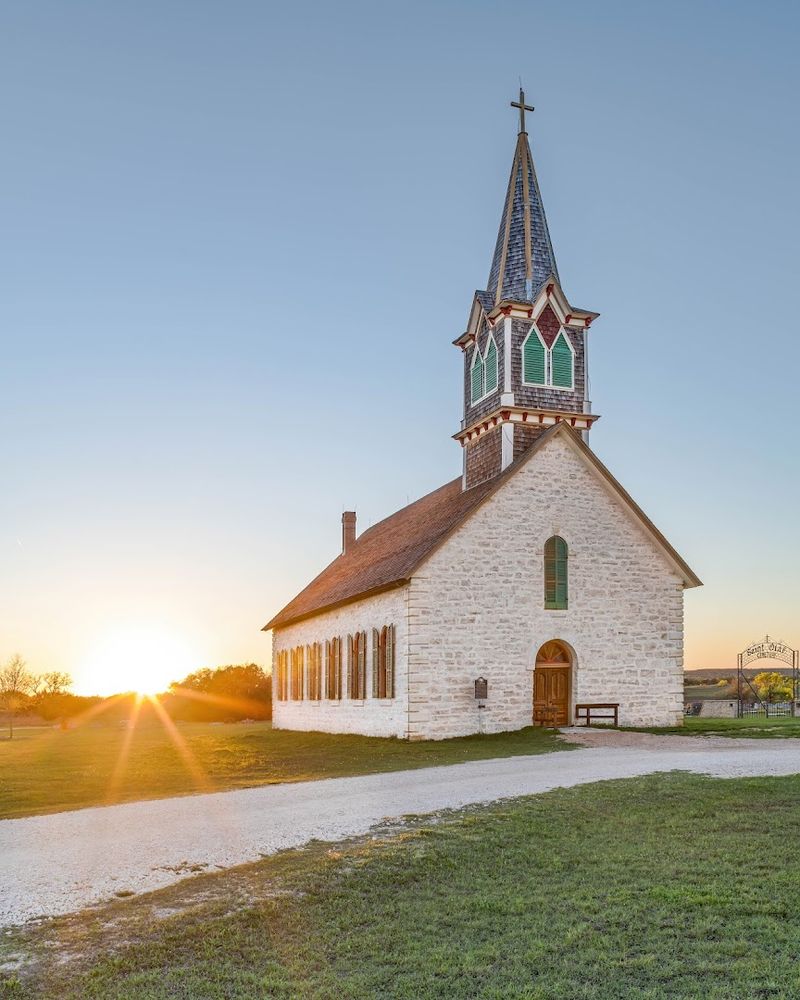
Most people do not realize just how much labor went into cutting stone by hand until they see a building like this up close. Each block of limestone was quarried from the local land, shaped with basic tools, and fitted into place without the help of power equipment or modern concrete mixers.
The result is something that feels both rugged and refined at the same time.
Look at the walls long enough and you start to notice the subtle variations in each stone. No two are exactly the same size or shape, yet they fit together with a tightness that has held for over 130 years.
That kind of craftsmanship is genuinely rare now. It takes a different kind of patience, the sort that is almost impossible to imagine in today’s world of speed and shortcuts.
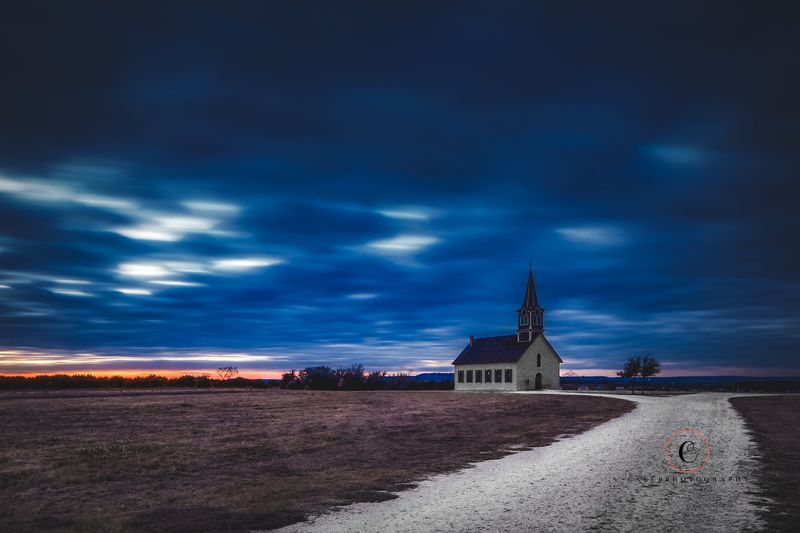
The limestone itself has a warm, honey-colored tone that shifts depending on the time of day. Early morning light makes the walls glow softly.
Late afternoon turns them a deep amber. Photographers have traveled hours just to capture those walls at the right moment.
Once you see it yourself, you will completely understand why. The stone is the soul of this place.
The Setting: A Church On A Rise
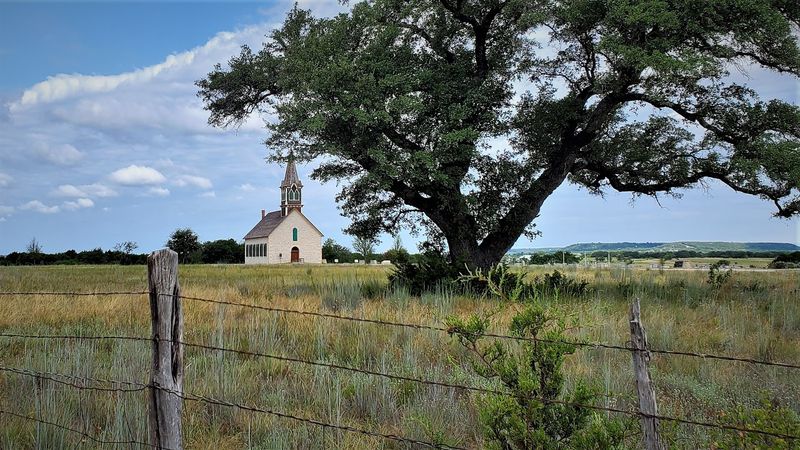
The location of The Rock Church is part of what makes visiting it feel so unexpectedly cinematic. It sits out on its own, away from the center of town, perched on a gentle rise that gives it a presence you can feel from a distance.
There are no tall buildings nearby, no strip malls or parking lots crowding the view. Just open land, big sky, and this quietly powerful stone building.
The drive out to the church is part of the experience. County Road 4145 winds through classic central Texas scenery, with cedar trees and limestone outcroppings dotting the landscape.
It does not take long to get there from the main road, but it feels like you are entering a different era the closer you get.
Once you arrive, the silence is the first thing you notice. There is a stillness out here that is hard to find anywhere near a city.
Birds, wind, and the distant sound of cattle are about all you hear. That quietness makes the church feel even more significant, like it earned its spot on this hill and has no intention of going anywhere.
It is genuinely one of the most peaceful spots in Bosque County.
Inside The Church: Simple And Stunning
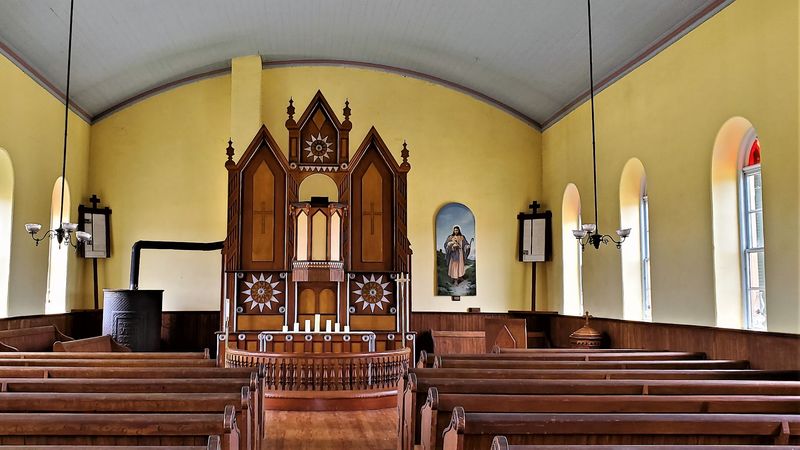
The interior is beautifully simple, with wooden pews, plain white walls, and a wooden floor that creaks softly underfoot. There is no elaborate decoration or ornate stained glass.
The beauty here comes from restraint, from the idea that the space itself is enough.
The old wood heating stove is still in place near the back of the church. It is one of those details that makes the history feel real and immediate.
You can almost picture a winter Sunday morning in the 1890s, the stove glowing, the congregation bundled up, the Norwegian hymns rising toward the stone ceiling.
Natural light filters in through the windows and bounces gently off the pale interior walls. It creates a soft, warm atmosphere that is easy to linger in.
Visitors are welcome to look around, appreciate the craftsmanship, and sign the guest book before they leave. Leaving a small donation is encouraged to help with ongoing maintenance.
The people who care for this church do so out of genuine love for its history, and that love shows in every clean corner and carefully preserved detail inside.
The Cemetery Next Door
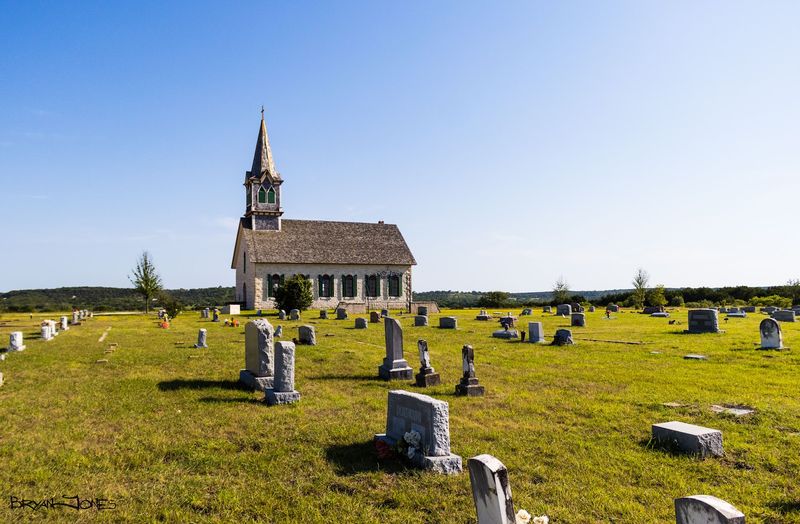
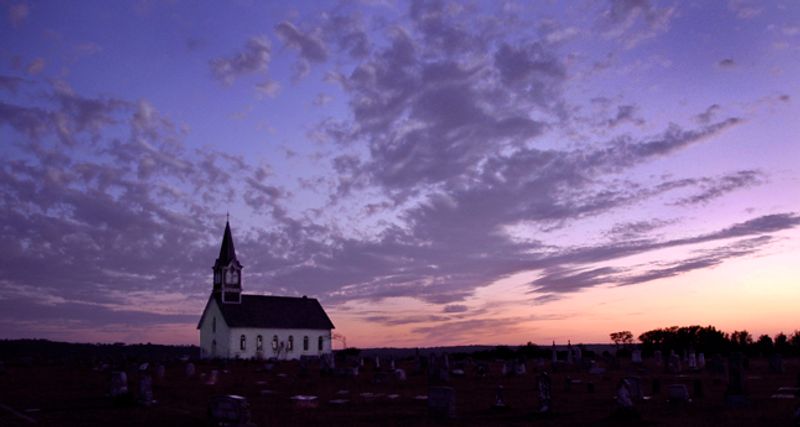
Right beside the church sits a cemetery that is just as historically rich as the building itself.
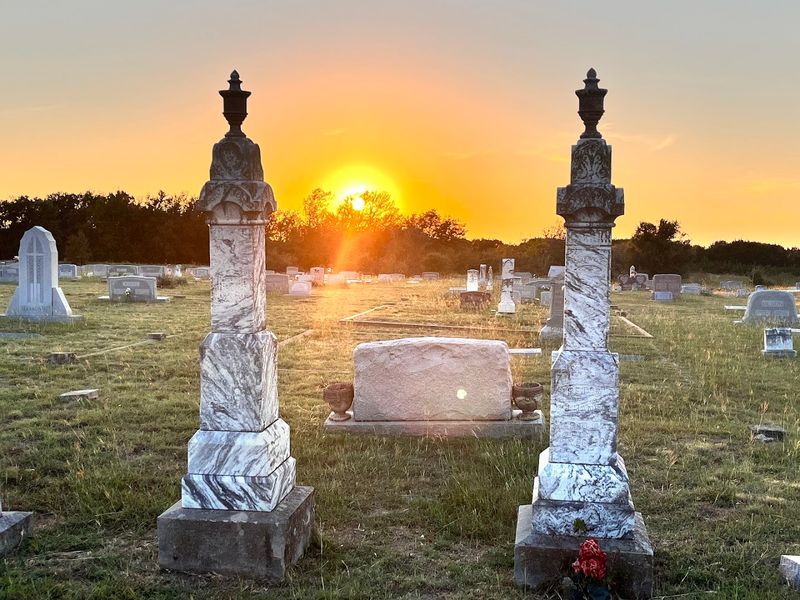
The headstones here span generations, and some of them are inscribed in two languages, English and Norwegian, which speaks directly to the heritage of the families who built this community from the ground up.
Some of the carvings on the older stones are remarkably detailed, with decorative borders and script that shows real artistry. Others are worn smooth by decades of Texas weather but still stand upright, still marking lives that mattered.
Walking through a cemetery like this is not morbid. It is genuinely moving.
The cemetery is maintained by volunteers alongside the church, and the care they put into it shows. The grounds are tidy and respectful.
Visitors are encouraged to explore but asked to treat the space with the dignity it deserves. Photographers, historians, and curious travelers all find something meaningful here.
The headstones tell micro-stories of immigration, faith, hardship, and community that no textbook could fully capture. If you visit The Rock Church and skip the cemetery, you are leaving half the story unread.
Give yourself time to wander and read the names. It is worth every quiet minute.
Photography At The Rock Church: Day And Night
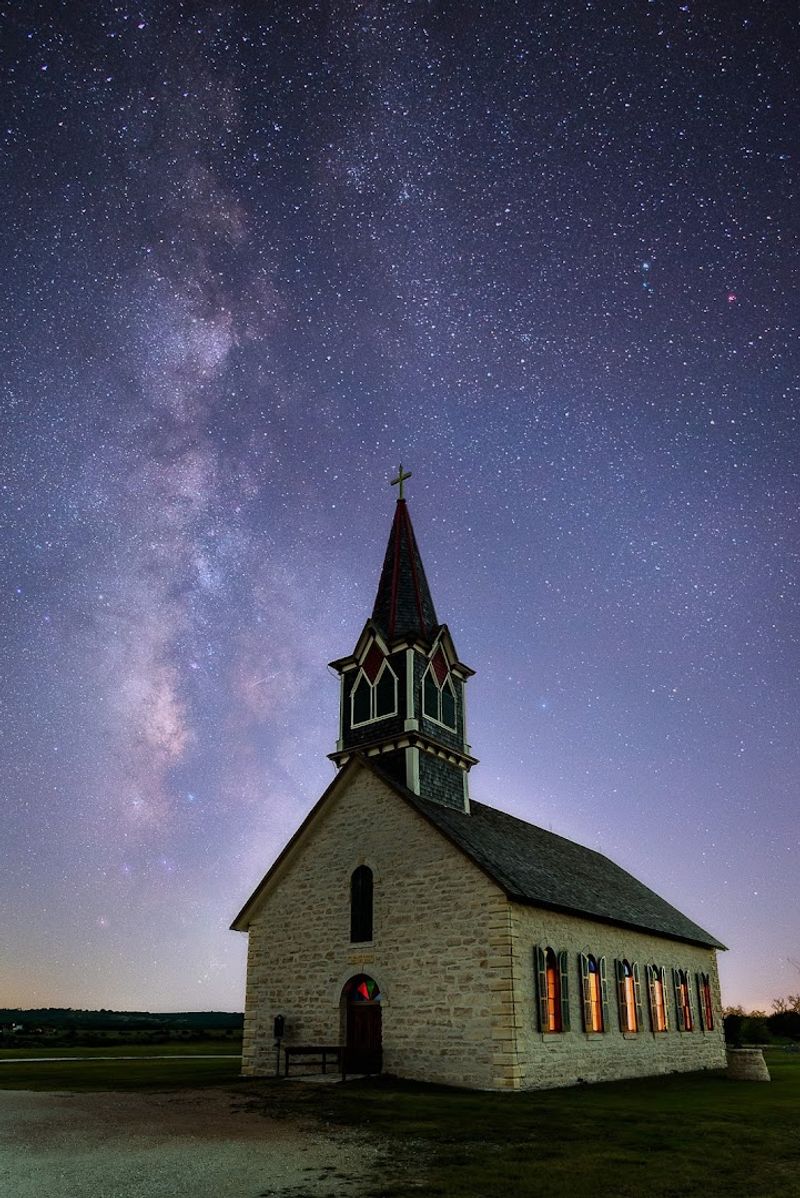
The Rock Church has become something of a pilgrimage site for photographers, and it is easy to see why once you arrive. During the day, the textured limestone walls catch light in a dozen different ways depending on the hour and the cloud cover.
Every season brings a different mood, from the lush green of spring to the dry gold of summer and the crisp blue skies of winter.
At night, the church transforms into something almost otherworldly. The dark skies of rural Bosque County make it a prime spot for astrophotography.
The Milky Way arching over those ancient stone walls is the kind of image that stops people mid-scroll on social media. Photographers have driven four and five hours just to capture that shot.
If you plan to visit after dark for astrophotography, calling ahead is required. The church is managed by volunteers who ask that you get permission before coming onto the property at night.
The phone number is available on their website at rockchurch-gap.com. They are genuinely friendly about it, so do not let the extra step stop you.
Respecting that process helps ensure the church stays open and accessible for every photographer who comes after you.
The Norwegian Heritage Connection
The story of The Rock Church is really the story of Norwegian immigrants finding their footing in an unfamiliar land while holding tightly to what they knew. Bosque County attracted a significant number of Norwegian settlers in the mid-to-late 1800s, drawn by affordable land and the promise of a fresh start.
They brought their Lutheran faith with them, and they built churches that reflected both their beliefs and their craftsmanship traditions.
St. Olaf’s was their church, named after the patron saint of Norway. Building it in stone was a deliberate choice.
Stone was permanent, dependable, and worthy of the sacred purpose the building was meant to serve. For a community that had crossed an ocean and built a new life from scratch, permanence meant everything.
That heritage is still visible in the cemetery’s bilingual headstones, in the architectural style of the church itself, and in the quiet pride that locals still carry for this building.
Bosque County is sometimes called the most Norwegian county in Texas, and The Rock Church is one of the clearest, most tangible expressions of that identity.
Coming here without knowing that history is fine. Leaving with it changes how you see the whole place.
Visiting Tips And What To Expect
Getting to The Rock Church is straightforward, and the drive itself is a pleasant part of the trip. From the main road, it is just a short detour down County Road 4145.
The road is paved and accessible for most vehicles.
The church doors are usually unlocked during daylight hours, which means you can go inside, look around, and soak in the atmosphere without needing to schedule anything in advance. Signing the guest book is a small but meaningful tradition.
Leaving a donation helps the volunteers who keep the property in such good shape.
Wear comfortable shoes if you plan to walk through the cemetery. The ground can be uneven in spots.
Bring a camera, because you will want one. Morning and late afternoon visits offer the best natural light for photos of the exterior.
There is no formal parking lot, but there is room to pull off near the church. Cell service can be spotty out here, so download your directions before you go.
The whole visit can take anywhere from 30 minutes to a couple of hours depending on how long you linger.
Why The Rock Church Stays With You
Some places are impressive and then you forget them by the next rest stop. The Rock Church is not one of those places.
There is something about it that follows you home, a quiet weight that you keep turning over in your mind days after the visit. Maybe it is the craftsmanship.
Maybe it is the silence. Maybe it is the knowledge that real people poured genuine effort into every stone of that building with no expectation of fame or recognition.
The church has a ratings from dozens of visitors, and the reviews are full of people struggling to put the experience into words. That says something.
Not every historic site earns that kind of emotional response. This one does, consistently.
It is the kind of place that reminds you what it looks like when people build something to last, not just for their own lifetime but for the generations they would never meet. That is a rare and humbling thing to witness.
Whether you are a history lover, a photographer, a road tripper, or just someone who pulled off the highway on a whim, The Rock Church has a way of making the stop feel like exactly the right decision.
Address: 2680 County Rd 4145, Cranfills Gap, Texas.
Dear Reader: This page may contain affiliate links which may earn a commission if you click through and make a purchase. Our independent journalism is not influenced by any advertiser or commercial initiative unless it is clearly marked as sponsored content. As travel products change, please be sure to reconfirm all details and stay up to date with current events to ensure a safe and successful trip.
