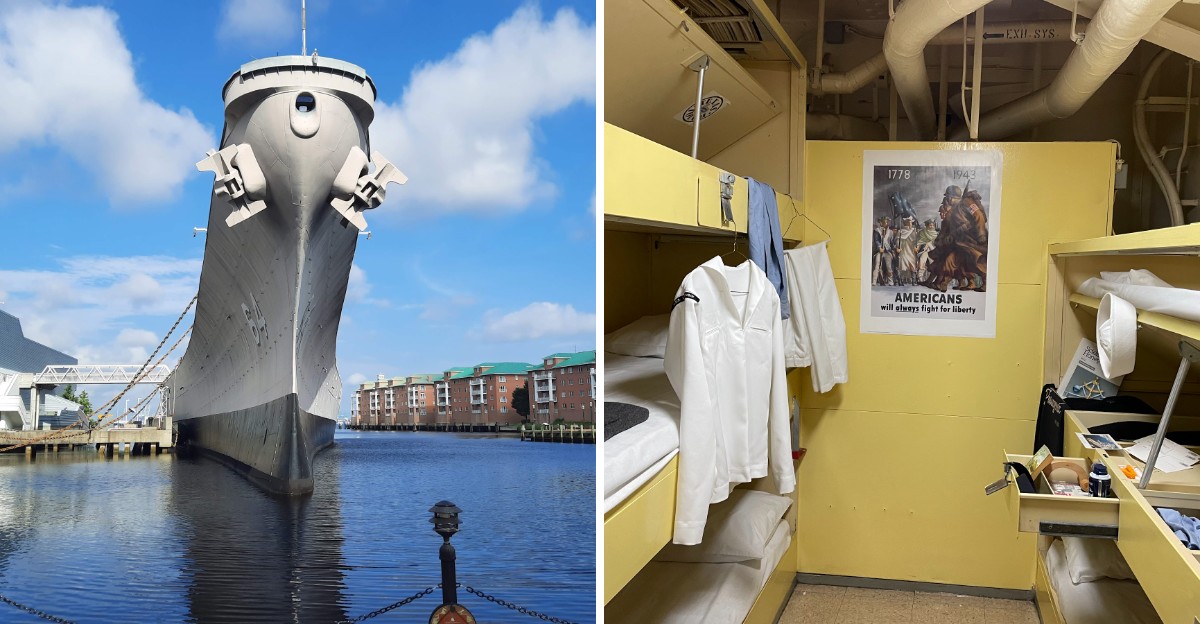
A battleship nearly as long as three football fields was recently nudged a few feet away from its pier. It was the first time the massive ship had budged in nearly 26 years.
That tiny shuffle tells a bigger story. Keeping a 1940s steel giant safe for visitors takes divers, inspections, cleanup work, and a lot of money.
I like how this ship refuses to be a dusty display. Crews still check its hull twice a year, and fundraisers are paying to restore one of its huge gun turrets.
I can’t imagine a bigger maintenance to-do list.
This floating landmark sits on the waterfront in Virginia, and you can walk its decks today. So what does it take to keep a retired battleship ready for company?
You Are Standing On One Of The Last Battleships The Navy Ever Built
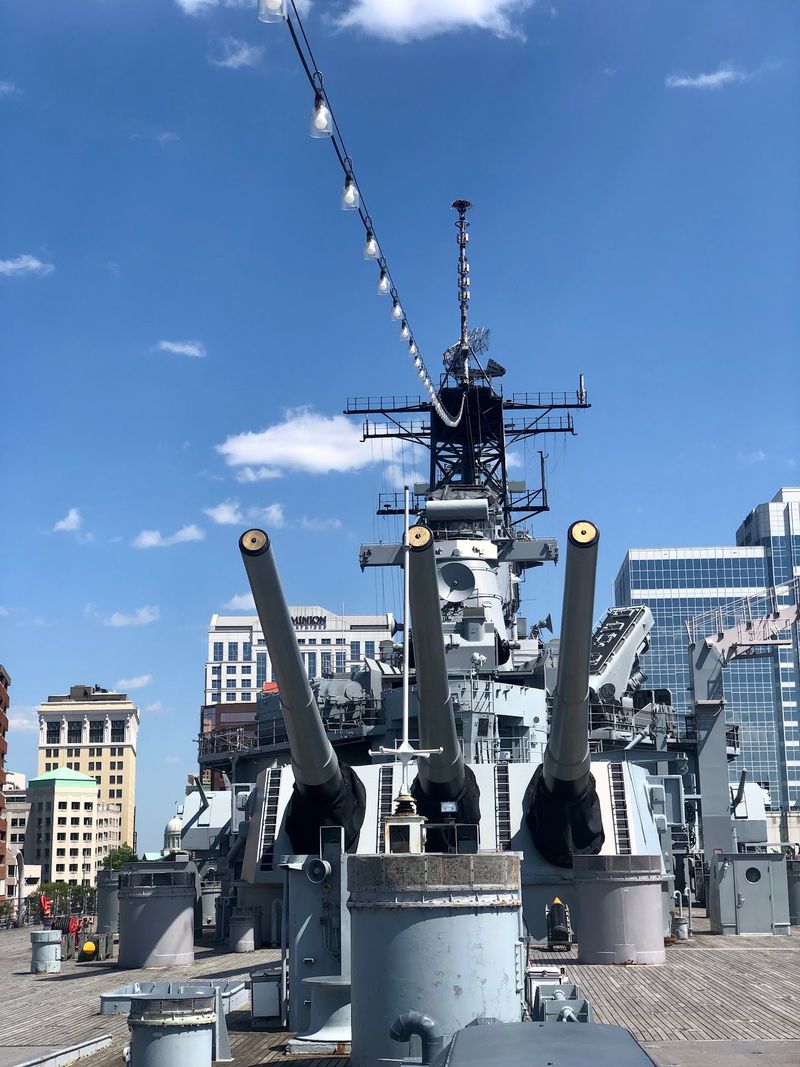
Size is the first thing that hits you here. The USS Wisconsin (BB-64), better known as Battleship Wisconsin, stretches an incredible 887 feet from bow to stern.
That length puts it close to three football fields placed end to end. Bring comfortable shoes, because your legs will notice before your brain finishes the math.
The Navy commissioned the ship on April 16, 1944. It belongs to the famous Iowa class, a group of four fast, powerful battleships.
Here’s the fun part. Battleship Wisconsin ranks among the largest and last battleships the U.S.
Navy ever built, so this is truly the end of an era.
Today the ship rests as a museum in Norfolk, Virginia, right next to the Nauticus maritime discovery center. Your Nauticus ticket includes a self-guided visit to the main deck.
I believe that makes it one of the easiest ways to touch real naval history. You don’t need a uniform or a security badge to climb aboard.
Give yourself time to just stand and look up. Steel towers, cables, and gun barrels fill the skyline in every direction.
Photos help, but they shrink everything. In person, the scale feels almost cartoonish, like someone built a city block and floated it.
Six Battle Stars And A Desert Storm Comeback Make Quite A Resume
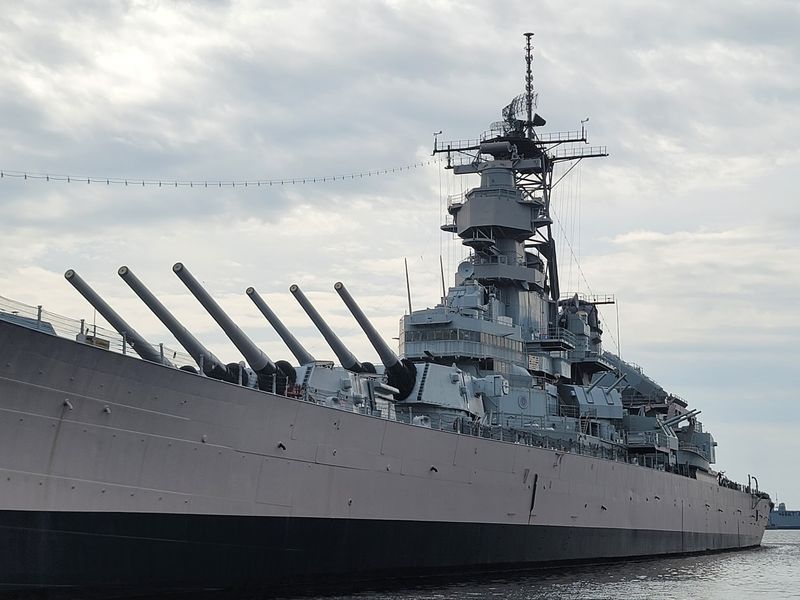
Few ships got a second act like this one. Battleship Wisconsin earned five battle stars in the 1940s and picked up a sixth during the Korean conflict.
Most ships would call it a career after that. This one went into reserve, then came back for a modern upgrade in the 1980s.
That comeback mattered. In 1991, the ship took part in Operation Desert Storm, nearly five decades after its first commissioning.
Think about that timeline for a second. The same hull served sailors whose grandkids could have served aboard it too.
The Navy decommissioned Battleship Wisconsin for the last time on September 30, 1991. After that, it waited for its next chapter.
That chapter arrived in December 2000. The ship was brought to Norfolk to become a museum, and it has stayed put ever since.
You’ll notice the 1980s updates as you explore. Newer equipment sits beside original 1940s features, which makes the ship a kind of time capsule with layers.
History fans love spotting what changed. Everyone else gets a simple lesson in how long a well-built ship can stay useful.
Before Visitors Could Roam, The Ship Needed A Serious Cleanup
Old warships come with hidden baggage. Battleship Wisconsin was built at a time when builders used asbestos heavily for insulation and fireproofing.
That material worked well at sea. It also created health risks for the workers who handled maintenance and repairs over the years.
Turning a retired fighting ship into a family attraction is no simple paint job. Hazardous materials and leftover pollutants had to be dealt with before crowds could safely explore.
That’s the part most visitors never think about. You see shiny rails and clear signs, not the careful prep work behind them.
I like knowing the ship didn’t just open its doors and hope for the best. Making Battleship Wisconsin safe meant treating it as both a landmark and a worksite.
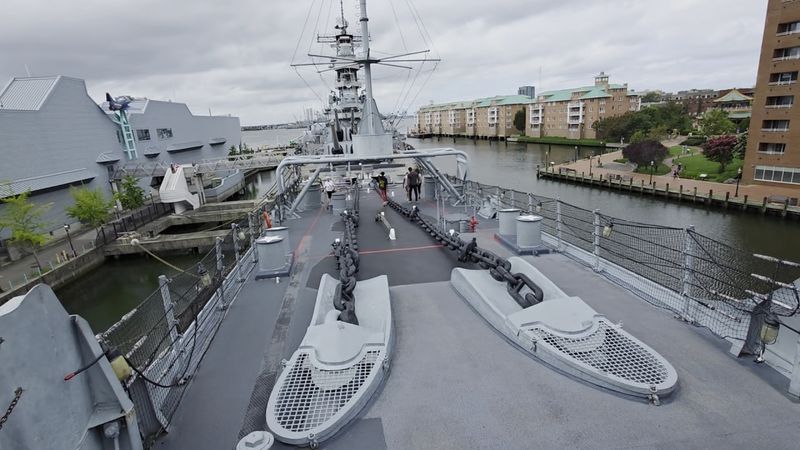
Keep that in mind as you wander the passageways. The pipes and bulkheads around you look original, yet they’ve been made fit for guests.
A friendly tip follows from all this. Stick to marked areas and follow posted guidance, since some spaces stay closed for good reasons.
Curiosity is welcome here. Just let the open routes guide it, and you’ll still find plenty to explore.
Divers Check Its Underside More Often Than You Visit The Dentist
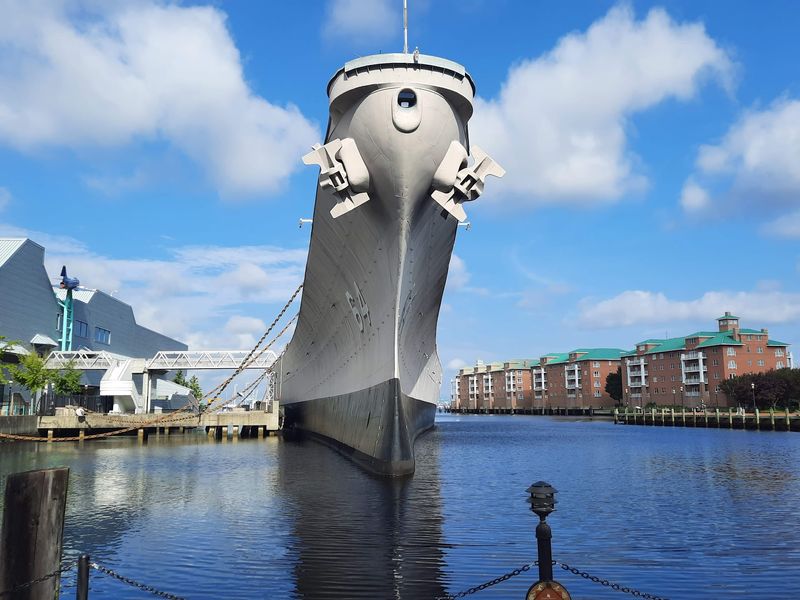
Twice a year, divers slip into the water to inspect the hull. That schedule comes from a five-year contract the City of Norfolk awarded to Seaward Marine Services.
The deal runs from October 1, 2021, through September 30, 2026. It covers underwater inspection, maintenance, and repair of Battleship Wisconsin’s hull.
There’s some cool tech involved too. Crews clean and maintain the Impressed Current Cathodic Protection System, which uses a small electric current to fight rust.
Saltwater is relentless with steel. Without that protection, the hull would slowly corrode in a very expensive way.
Divers also inspect the sea chest box blanks and the stern tube seals. Those checks keep the ship watertight where water would love to sneak in.
The big goal is pushing off dry-docking. Hauling an 887-foot battleship out of the water is a gigantic and costly job.
Officials also finished a hydrographic survey of the berth in November 2025. That survey maps the underwater area around the ship.
So while you’re snapping photos topside, the real heavy lifting happens below. Battleship Wisconsin gets more checkups than most of us do.
The Day A 26-Year Resident Finally Scooted Over
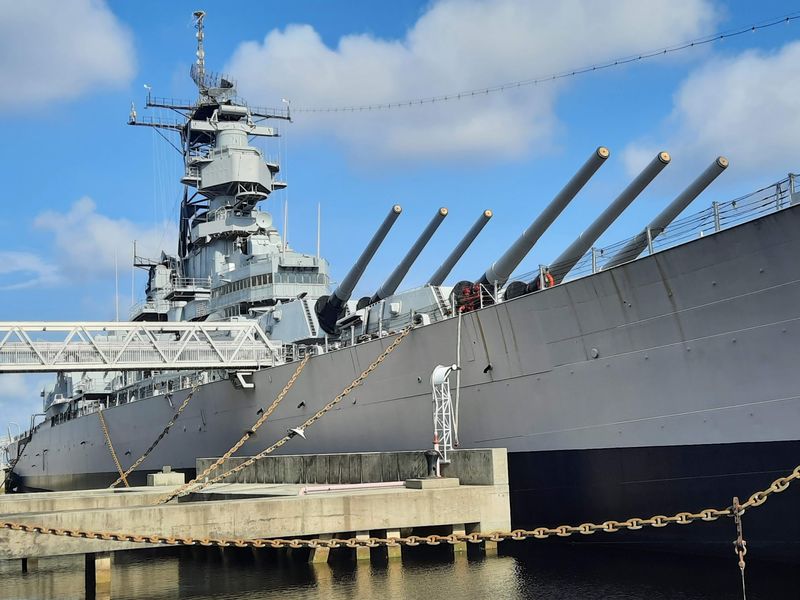
Nearly 26 years is a long time to sit in one spot. Battleship Wisconsin finally shifted a few feet from its pier for a marine fender replacement project.
A few feet sounds like nothing. For a ship this size, it’s a carefully planned move that takes real coordination.
Fenders are the cushions between a ship and its pier. They absorb bumps and keep steel from grinding against the dock.
Over time, those cushions wear out. Replacing them protects both the historic hull and the waterfront structure it leans on.
I love this detail because it proves the ship isn’t frozen in time. Battleship Wisconsin gets active care, not just a polite dusting.
It also explains why your visit might look a little different on certain days. Maintenance projects sometimes change what’s open, so checking ahead is smart.
Picture the parking-lot version of this job. You’d never move your car three feet unless something under it really needed fixing.
That’s the attitude keeping this Virginia icon in shape. Small moves today help the ship stay open to visitors for decades to come.
Millions Are Lined Up To Keep Her Looking Sharp
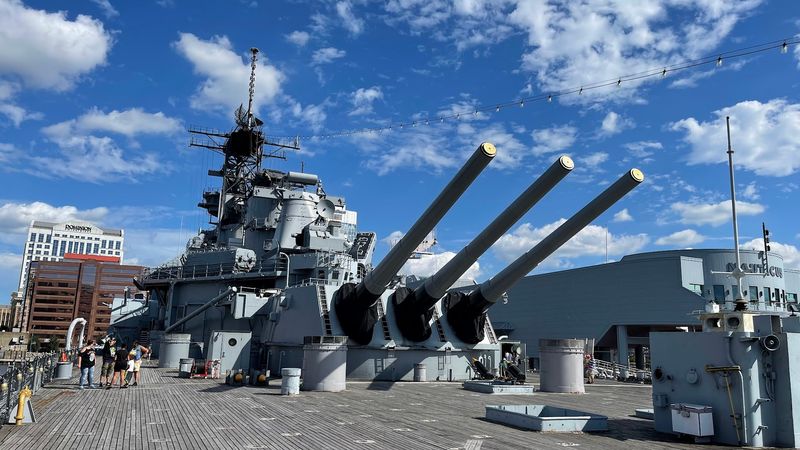
Money talk, but make it interesting. Nauticus is running the Reimagine Nauticus Capital Campaign, a 21.5 million dollar project to transform the maritime center.
That plan includes funding for restoring Battleship Wisconsin. In other words, the ship is part of a much bigger glow-up.
Smaller efforts matter too. In 2024, a 50,000 dollar campaign launched to fully restore the second main battery turret for a new museum exhibit.
A turret is the huge rotating housing that holds the big guns. Restoring one inside and out is a giant puzzle of steel, paint, and history.
The City of Norfolk took on stewardship of the ship. Admission fees help pay for its preservation and upkeep.
That means your ticket does double duty. You get a great day out, and the ship gets a little more life.
I believe that’s one of the best reasons to visit. Your curiosity directly supports the care of a national treasure.
Keep an eye on new exhibits as the work moves forward. Battleship Wisconsin may surprise repeat visitors with spaces that haven’t been shown before.
Wander The Main Deck At Your Own Pace And Gawk At Those Guns
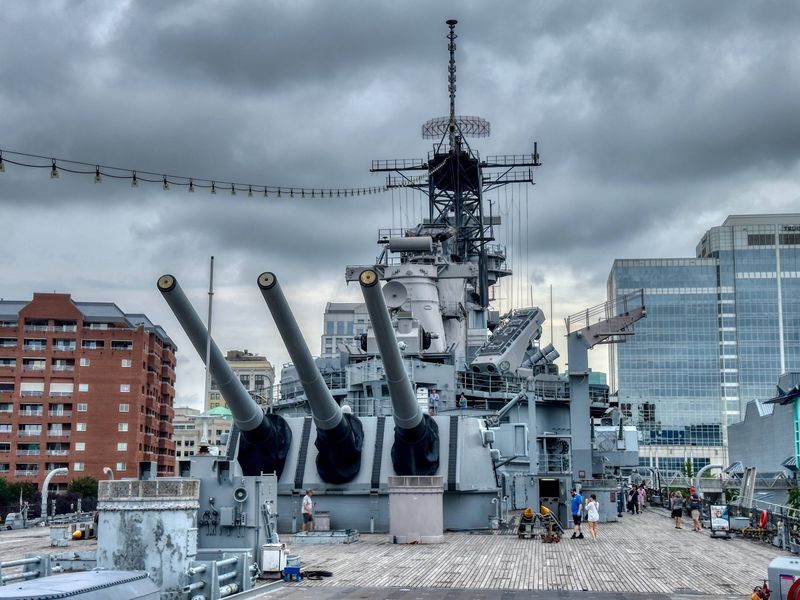
Sixteen-inch guns are not subtle. On the main deck of Battleship Wisconsin, those enormous barrels stretch out like they own the harbor.
The self-guided tour lets you move at your own speed. Linger by the guns, wander toward the bridge, or simply lean on a rail and enjoy the water views.
Getting there is simple. The ship berths at Nauticus, One Waterside Drive, Norfolk, VA 23510, right in the downtown waterfront area.
You’ll head through the Nauticus building to reach the ship. Your general admission covers the main deck, so no extra ticket is needed for this part.
Good news for accessibility, too. The main deck is wheelchair accessible, which makes it easier for more families to enjoy.
Signs along the route explain what you’re seeing. They turn random steel shapes into stories about how sailors lived and worked.
Wear sunscreen on bright days, since the deck offers lots of open sky. A hat helps too, especially near midday.
And yes, bring a charged phone. Between the guns, the bridge, and the harbor, your camera roll will fill up fast.
Want The Secret Spaces? Book A Guided Tour And Mind The Ladders
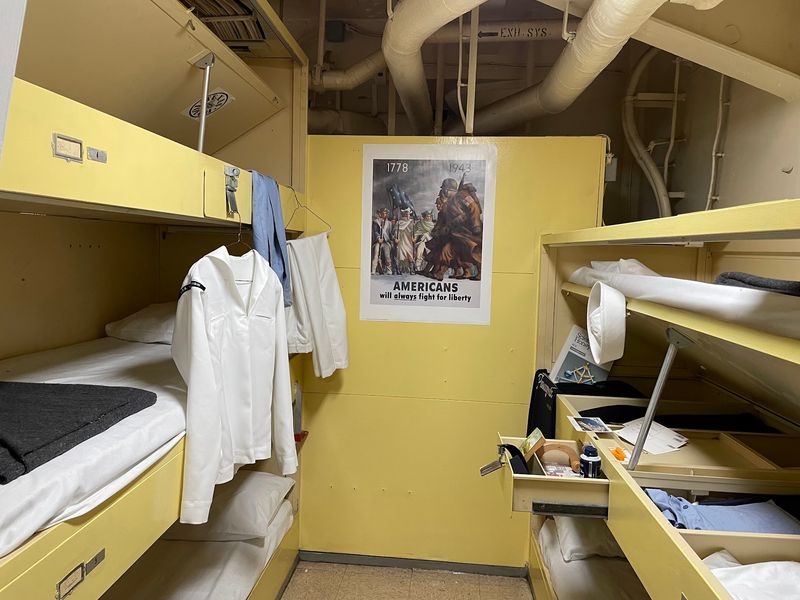
Curious types, this section is for you. Nauticus offers several guided tours of Battleship Wisconsin for an additional cost.
Battleship 101 gives a family-friendly overview. It’s a great pick if your crew wants the highlights without a deep technical lecture.
Command and Control focuses on how the ship was run. You’ll get a better sense of where decisions happened and how orders moved.
The Engine Room Tour heads below deck to the power systems. Picture giant machinery built to push a city-sized ship across oceans.
Then there’s the VIP Battleship Experience. It includes exclusive access to hidden areas and panoramic views most visitors never see.
Now the practical part. Below-deck routes often involve steep Navy ladders and tight spaces, so wheelchairs and strollers usually can’t make the trip.
Closed-toe shoes are a smart move. Keep your hands free, too, since you’ll want them for gripping rails.
Tall folks, watch your head. The Navy designed these spaces for function, not for comfortable strolling at six feet tall.
Save Energy For The Museum Next Door Because It’s Packed
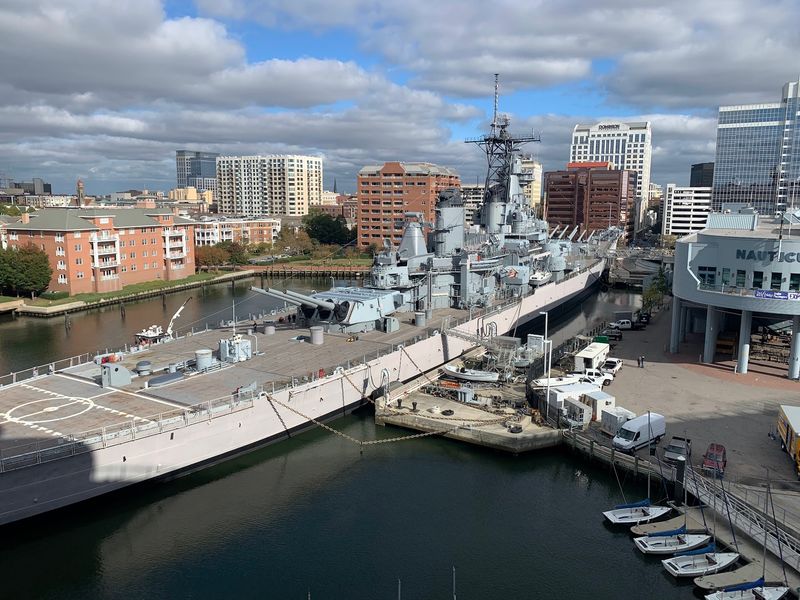
Your ticket keeps working after you leave the ship. Nauticus, the maritime discovery center beside Battleship Wisconsin, has plenty more to explore.
Little ones can head to Aquaticus, a gallery made for young visitors. It’s a nice break for kids who’ve had enough steel for one day.
The Norfolk in Time exhibition covers local history. It helps you understand why this Virginia city has such deep ties to the sea.
An aquarium showcases Chesapeake Bay aquatic life. Meanwhile, Stewards of the Sea highlights the Navy’s efforts to protect the environment, which fits the ship’s own cleanup story nicely.
Hungry? The on-site cafe, Anchor and Spoon, can refuel tired explorers.
There are also picnic tables if you’d rather eat outside.
A gift shop and a theater round things out. Ship magnets and model kits make easy souvenirs for history-loving friends.
Plan your timing before you go. Nauticus is generally closed on Mondays, and hours can shift with seasons and holidays.
The battleship usually closes about 15 minutes before the museum. Start with the ship, and finish with the exhibits for a relaxed day.
