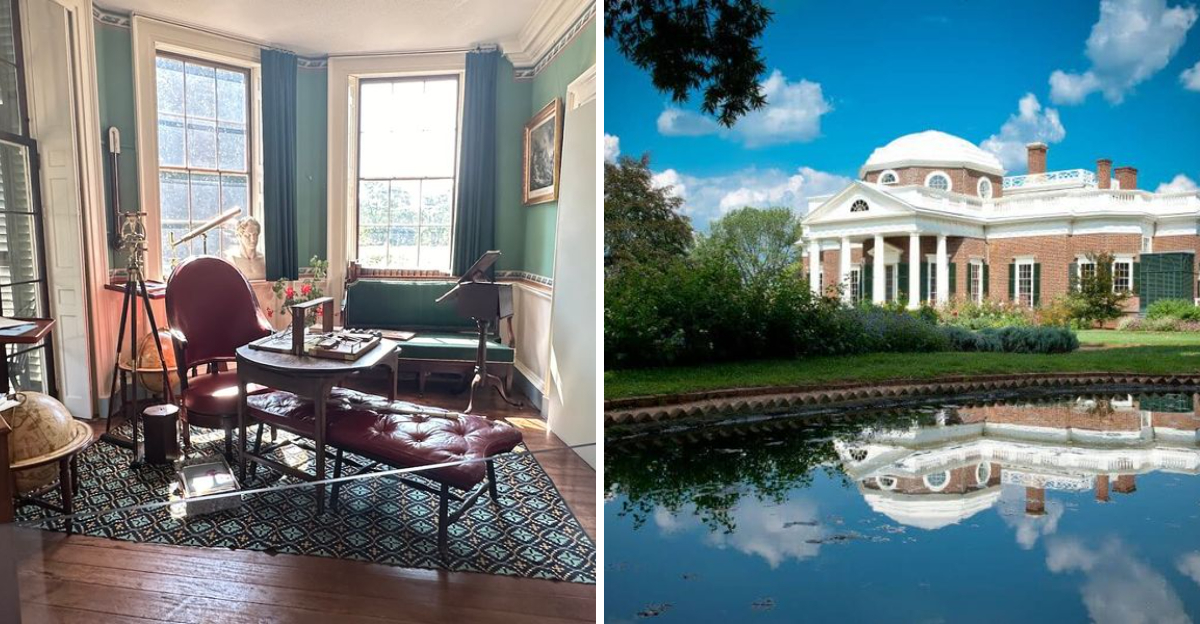
Some places just stop you in your tracks, and this spot is absolutely one of them. Perched on a mountain just outside Charlottesville, this iconic estate is the only private home in the entire United States to earn UNESCO World Heritage status, putting it in the same legendary league as the Taj Mahal and the Eiffel Tower.
Built and endlessly reimagined by Thomas Jefferson, this Virginia landmark is a jaw-dropping gem. It’s a mix of architectural genius, complex history, and breathtaking natural beauty.
If you have ever wondered what a true American original looks like up close, this is your answer.
The Architectural Masterpiece That Jefferson Never Stopped Tweaking
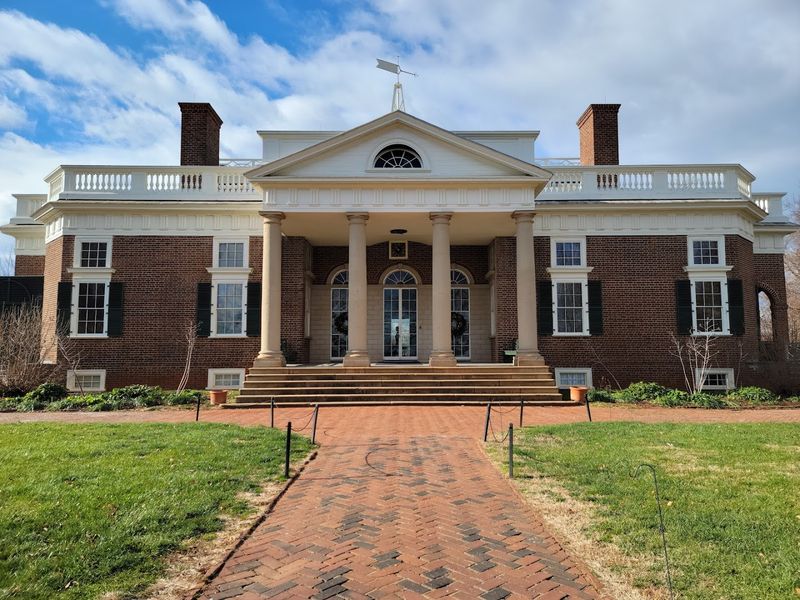
Thomas Jefferson was not the kind of man who called something finished. For over four decades, he kept redesigning, rebuilding, and reimagining Monticello, turning it into one of the most fascinating architectural experiments in American history.
The result is a neoclassical masterpiece that blends European Enlightenment ideals with a very American spirit of invention. The iconic dome, the skylights, the alcove beds, the hidden staircases, every detail reflects Jefferson’s obsessive curiosity and his deep love of European design, particularly the work of Italian architect Andrea Palladio.
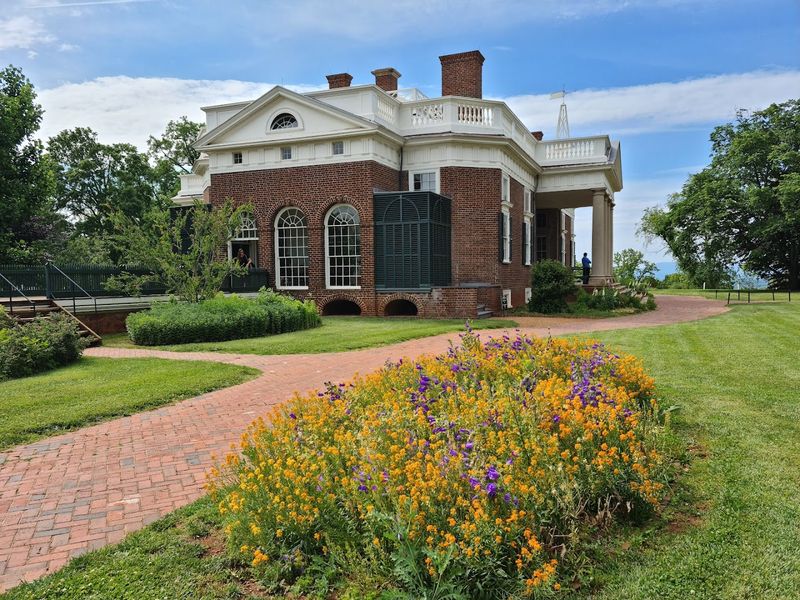
Standing in front of that famous red-brick facade for the first time genuinely takes your breath away. The house looks exactly like the image on the U.S. nickel, which is a surreal and delightful moment of recognition.
Inside, the rooms feel surprisingly intimate, packed with Jefferson’s personal inventions and clever space-saving solutions. Monticello, Virginia rewards slow, careful observation.
Every corner holds a new detail, a hidden door, a curious gadget, or a window placed just so to frame the stunning Virginia countryside beyond. It is architecture that tells a story with every single brick.
UNESCO World Heritage Status and Why It Actually Matters
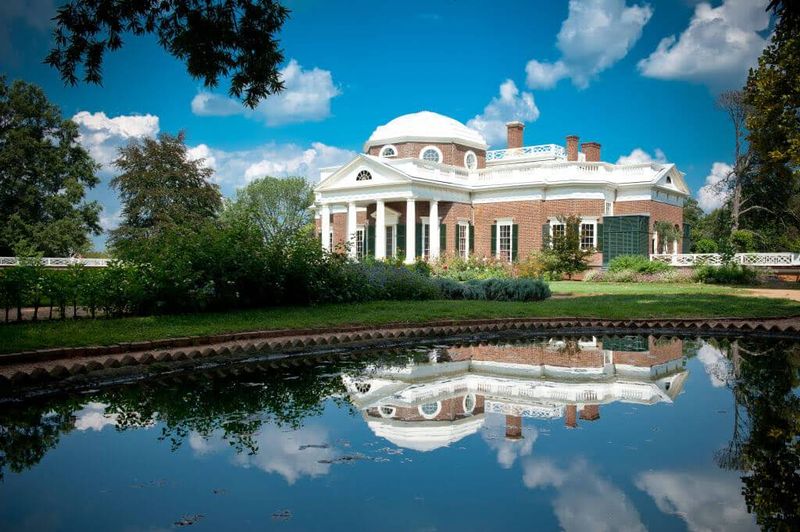
Getting a UNESCO World Heritage designation is not handed out like participation trophies. It means a place has outstanding universal value, something so significant to humanity that it deserves protection and recognition across generations and borders.
Monticello earned this honor alongside the University of Virginia’s Academical Village, both recognized as expressions of Jefferson’s Enlightenment philosophy and their lasting influence on democratic ideals worldwide. Virginia can genuinely boast that it holds one of the most prestigious cultural designations on the planet.
What makes this recognition especially meaningful is the full scope of what it honors. It is not just the pretty house on the hill.
The designation acknowledges the intellectual legacy of a man who shaped the language of freedom and democracy, even while living with the deep contradictions of enslaving other human beings. Monticello does not shy away from that complexity, and neither does UNESCO.
This is a site where big ideas and uncomfortable truths coexist, making every visit feel genuinely thought-provoking rather than just a pretty day trip through the Virginia countryside.
Mulberry Row: The Beating Heart of the Plantation
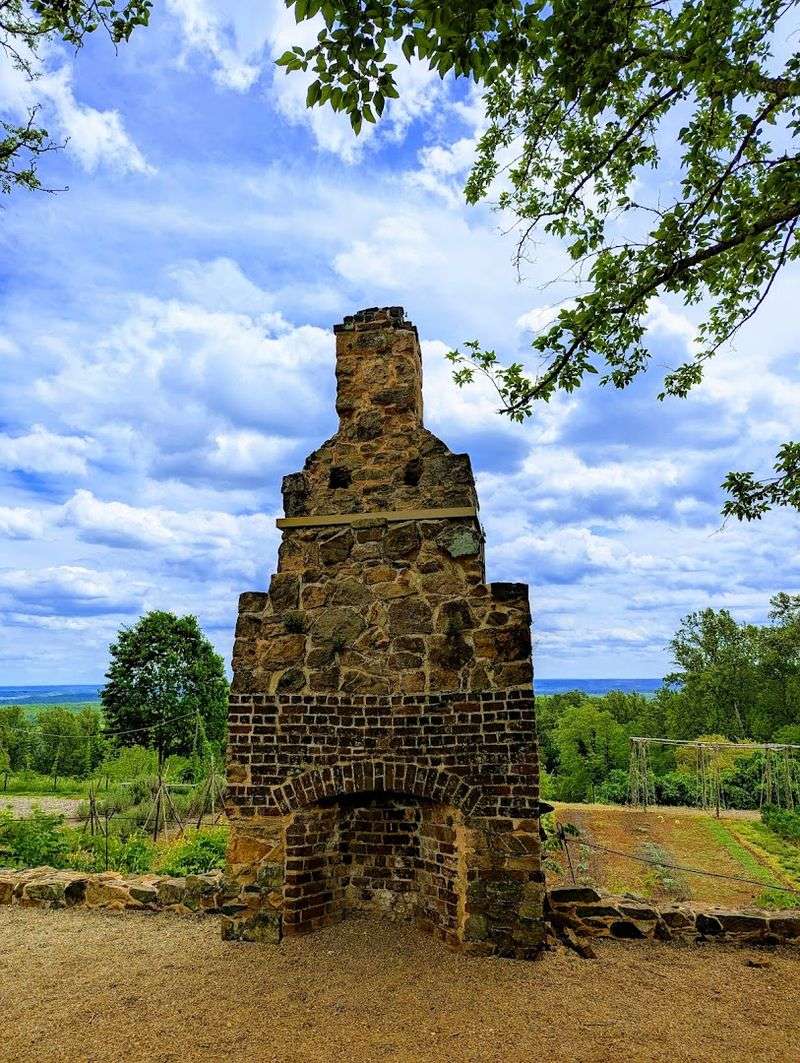
Mulberry Row was the industrial engine of Monticello, a bustling lane of workshops, cabins, and outbuildings where enslaved people lived and worked every single day. Walking along it today is a genuinely sobering and important experience.
The site has been carefully preserved and interpreted, with archaeological excavations still actively uncovering new details about the lives of the people who built and maintained this estate. Visitors can actually watch live digs happening in real time, which adds a remarkable sense of immediacy to the history.
The stories told along Mulberry Row go far beyond Jefferson himself. They center the experiences of the hundreds of enslaved men, women, and children whose labor made Monticello possible.
Named individuals like John Hemings, a master carpenter, and the Hemings family more broadly, are brought into focus with honesty and care. This part of the Monticello experience is not comfortable, nor should it be.
It is, however, essential. Virginia’s history is layered and complicated, and Mulberry Row is where that complexity becomes impossible to look away from.
The Gardens That Jefferson Obsessed Over for Decades
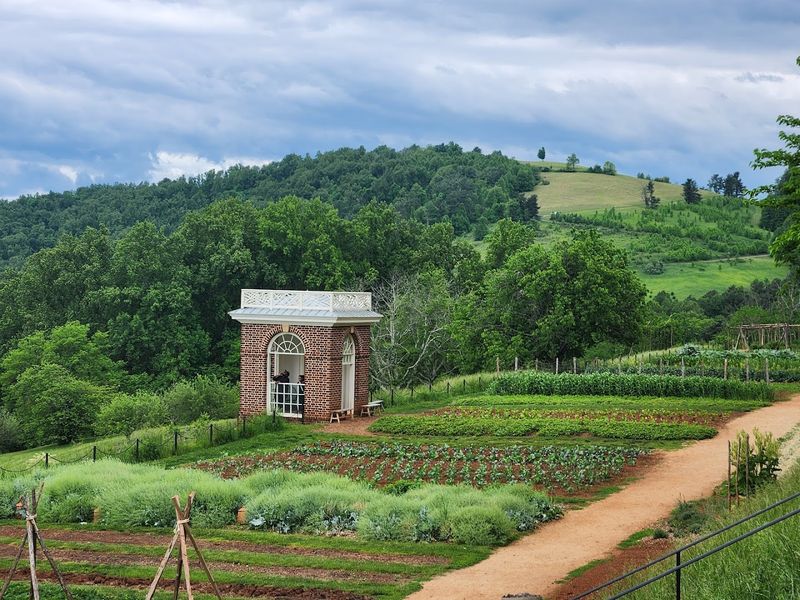
Jefferson was as passionate about plants as he was about politics. His vegetable garden at Monticello stretched nearly a thousand feet along a terraced hillside, and he used it as a living laboratory, growing varieties from across the globe and meticulously recording every detail in his garden book.
Today, the garden is maintained using heirloom seeds and traditional methods, keeping it as close to Jefferson’s original vision as possible. You can even purchase seeds from plants grown right there on the grounds, which makes for one of the most uniquely personal souvenirs imaginable.
Beyond the vegetable terrace, the ornamental flower gardens surrounding the house burst with color depending on the season. The orchard, the vineyard, and the berry squares add to a landscape that feels both historically rich and genuinely alive.
Strolling through these gardens on a warm Virginia morning, with the Blue Ridge Mountains shimmering in the distance, feels almost cinematic. Jefferson believed that gardening was among the most civilized of pursuits, and spending an hour among his beds makes it very easy to agree with him completely.
The House Tour That Gets Better With Every Room
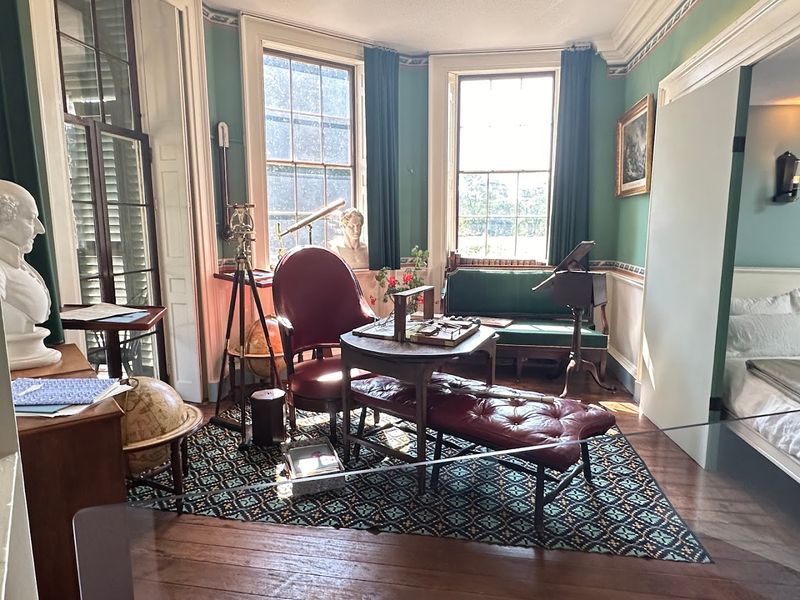
Stepping inside Monticello for the first time feels like crossing into a very specific and brilliant mind. Jefferson filled his entrance hall with curiosities from the Lewis and Clark expedition, including Native American artifacts, maps, fossils, and antlers, essentially turning his foyer into America’s first natural history museum.
Each room reveals another layer of Jefferson’s personality. His library was one of the largest in the country at the time.
His bedroom features an alcove bed tucked between the sleeping area and his study, a European concept he adapted for his own use. The skylights he installed throughout the house were revolutionary for their era, flooding rooms with natural light in a way that still feels modern.
The behind-the-scenes tour, which accesses all three floors including the attic and cellar spaces, is particularly worth booking. It adds context and detail that the standard house tour simply cannot cover.
Guides at Monticello are exceptionally well-prepared, handling questions about Jefferson’s inventions, his politics, his contradictions, and his personal life with equal knowledge and confidence. Plan at least half a day here.
Rushing through this house would be like skimming the most interesting book you have ever opened.
The Slavery Tour That Every American Should Take
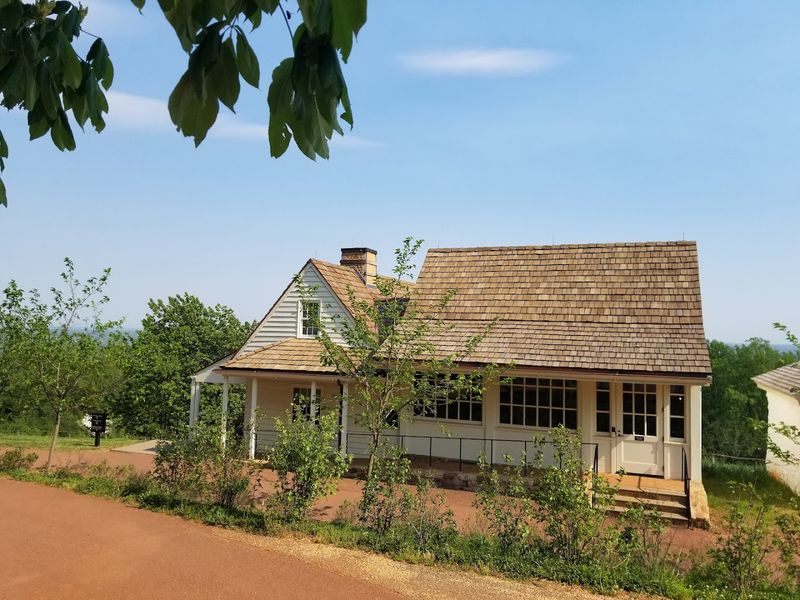
Few experiences at Monticello are as powerful as the dedicated slavery tour. It runs separately from the house tour and focuses entirely on the lives of the more than 600 enslaved individuals who lived and worked on the estate during Jefferson’s lifetime.
The tour does not soften the reality. It names names, tells individual stories, and connects the daily labor of enslaved people directly to the wealth and leisure that allowed Jefferson to pursue his intellectual passions.
That connection is made clearly and without apology, and it fundamentally changes how you see the estate.
What strikes me most is how specific the storytelling is. These are not anonymous historical footnotes.
They are people with skills, relationships, families, and histories of their own. The interpretive work done by the Monticello team to recover and honor these lives is remarkable and ongoing.
Combining this tour with the house tour creates a complete and honest portrait of the estate. Virginia has a complicated past, and Monticello is one of the most thoughtful places in the country for sitting with that complexity rather than glossing over it.
Meet Thomas Jefferson: The Living History Program Worth Catching
Imagine asking Thomas Jefferson about the Declaration of Independence and having him answer you directly. The Meet Thomas Jefferson program at Monticello makes that oddly plausible experience happen, and it is genuinely one of the most memorable things you can do on the estate.
A highly trained historical interpreter portrays Jefferson with remarkable depth and authenticity. The performance goes well beyond a simple costume and a few memorized facts.
The interpreter handles unexpected questions, engages in genuine back-and-forth conversation, and stays in character throughout, creating an immersive encounter that feels more like a time warp than a theatrical performance.
For families with kids, this program is an absolute highlight. Young visitors who might glaze over during a traditional tour suddenly light up when they can speak directly to a Founding Father.
Adults find it equally compelling, often walking away wanting to read more about Jefferson’s life and legacy. Check the schedule on the Monticello website before your visit, as the program runs on specific days and times.
Carving out time to catch this experience is one of the smartest moves you can make when planning your Virginia trip.
The Views From the Mountain That Jefferson Chose for a Reason
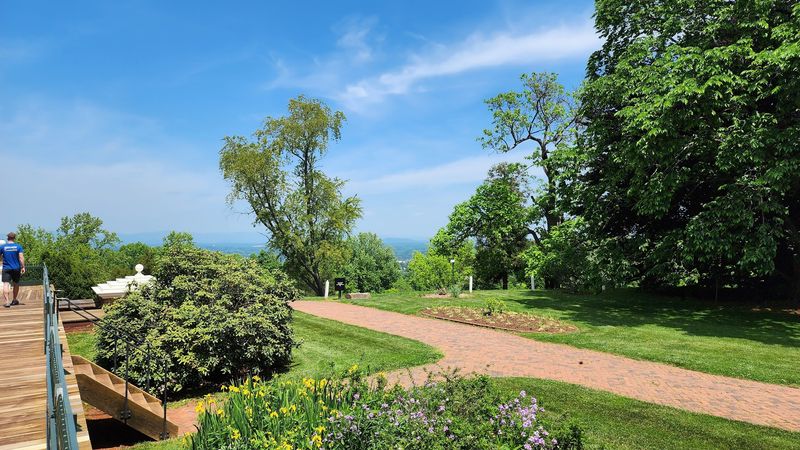
Jefferson named his home Monticello, Italian for little mountain, and the view from the top makes it immediately obvious why he chose this particular hilltop. The panorama of the Blue Ridge Mountains and the Charlottesville valley below is the kind of scenery that makes you stand very still and breathe slowly.
On a clear day, the landscape stretches out in every direction in shades of green and blue that seem almost too beautiful to be real. Jefferson wrote about this view with genuine emotion throughout his life, and standing there, it is easy to understand why he never really wanted to leave.
The walk up from the shuttle drop-off is gentle and well-maintained, winding through mature trees that provide shade in warmer months. For those who enjoy a bit more of a physical challenge, a walking trail leads up the mountain through the woods, adding a lovely naturalist dimension to the visit.
Even on overcast or drizzly days, the misty Blue Ridge backdrop has its own moody magic. This Virginia landscape is a living painting, and Monticello sits at its most spectacular vantage point.
Jefferson’s Grave and the Family Cemetery Still in Use Today
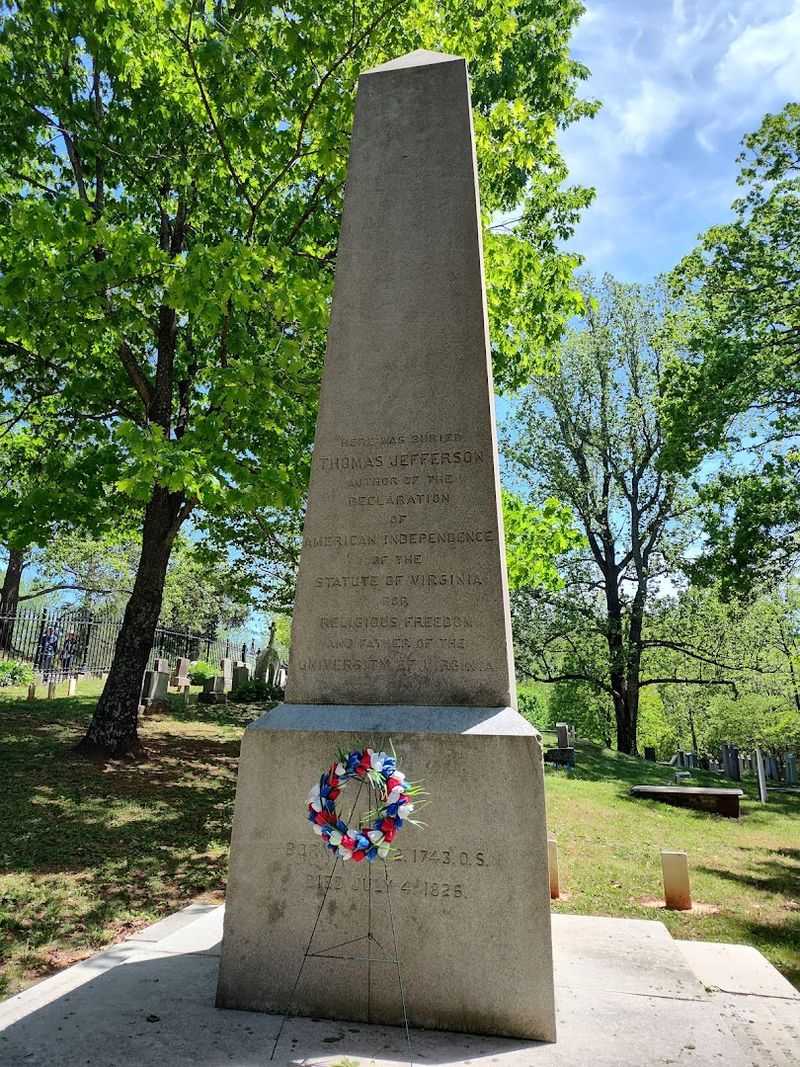
Tucked into a wooded corner of the Monticello grounds is one of the most quietly powerful spots on the entire estate. Jefferson’s grave is marked by a simple obelisk, exactly as he specified in his own instructions, inscribed with three accomplishments he chose to be remembered for: author of the Declaration of Independence, author of the Virginia Statute for Religious Freedom, and father of the University of Virginia.
Notably absent from his self-written epitaph: President of the United States. That deliberate choice reveals something profound about what Jefferson valued most about his own legacy.
The family cemetery surrounding his grave is still an active burial site, with descendants of the Jefferson family continuing to be interred there to this day. That detail adds a living, breathing continuity to what might otherwise feel like a frozen historical monument.
The cemetery is open to visitors and feels appropriately peaceful, shaded by old trees and surrounded by a wrought-iron fence. Spending a quiet moment here, away from the busier parts of the estate, offers a reflective counterpoint to the grand architecture and sweeping views that define the rest of your Monticello experience.
Planning Your Visit to Monticello, Virginia
Getting the most out of Monticello takes a little advance planning, and it is absolutely worth the effort. The estate opens at 8:30 AM daily, and arriving early is the smartest move you can make, especially during peak season when tour groups fill up fast.
Multiple ticket options are available depending on how deep you want to go. A grounds-only pass lets you explore the gardens, Mulberry Row, and the visitor center at your own pace.
Adding a house tour, the slavery tour, or the behind-the-scenes access ticket significantly enriches the experience and is highly recommended for first-time visitors.
Comfortable walking shoes are non-negotiable. The grounds involve a fair amount of uphill movement, and the shuttle buses that run between the visitor center and the hilltop are frequent and helpful.
The on-site gift shop carries books, garden seeds, and tasteful historical memorabilia that make for genuinely meaningful keepsakes. Monticello is located at 1050 Monticello Loop, Charlottesville, VA 22902, just a short drive from downtown Charlottesville.
Pack your curiosity, charge your camera, and clear your afternoon. Virginia’s most extraordinary address is waiting.
Dear Reader: This page may contain affiliate links which may earn a commission if you click through and make a purchase. Our independent journalism is not influenced by any advertiser or commercial initiative unless it is clearly marked as sponsored content. As travel products change, please be sure to reconfirm all details and stay up to date with current events to ensure a safe and successful trip.
