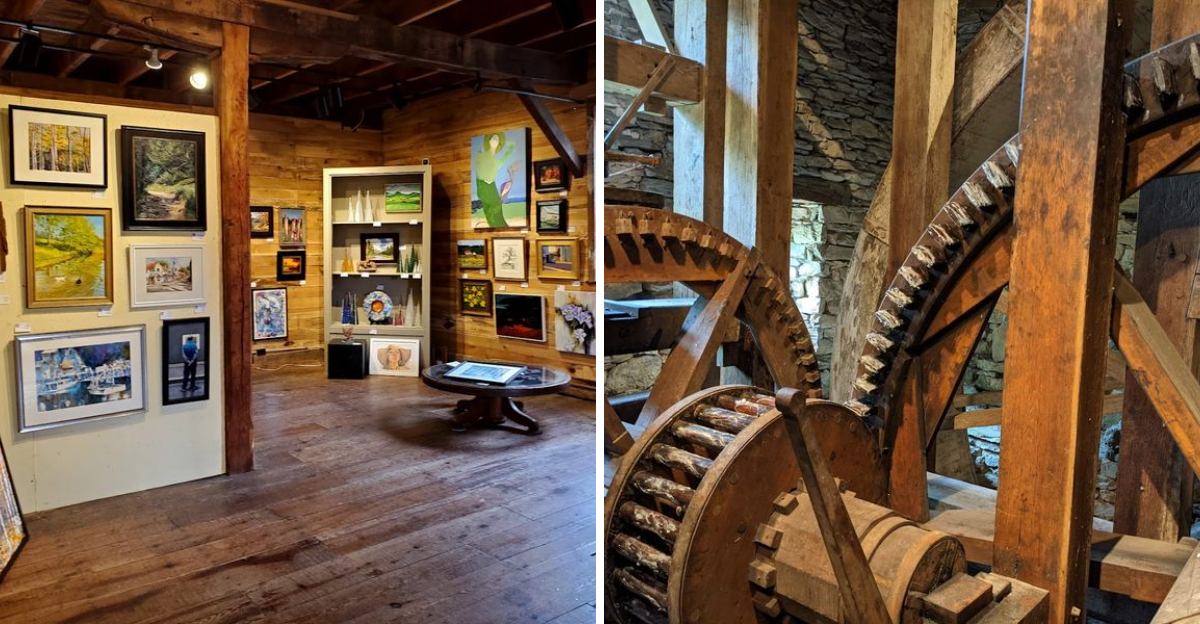
Time moves differently at this place. In Virginia’s rolling countryside, a limestone mill has been steadily at work for more than two centuries, powered only by the flow of water.
It has endured wars, economic changes, and waves of modern technology without losing its purpose. What sets it apart is not just its age, but the fact that it still operates, still produces true stone ground flour, and still attracts visitors who want to see history in motion.
The setting feels calm and grounded, yet quietly impressive. It is a rare chance to witness craftsmanship that has never been replaced, only preserved, offering a glimpse into a way of life that continues against the odds.
The Revolutionary Origins of a Milling Legend
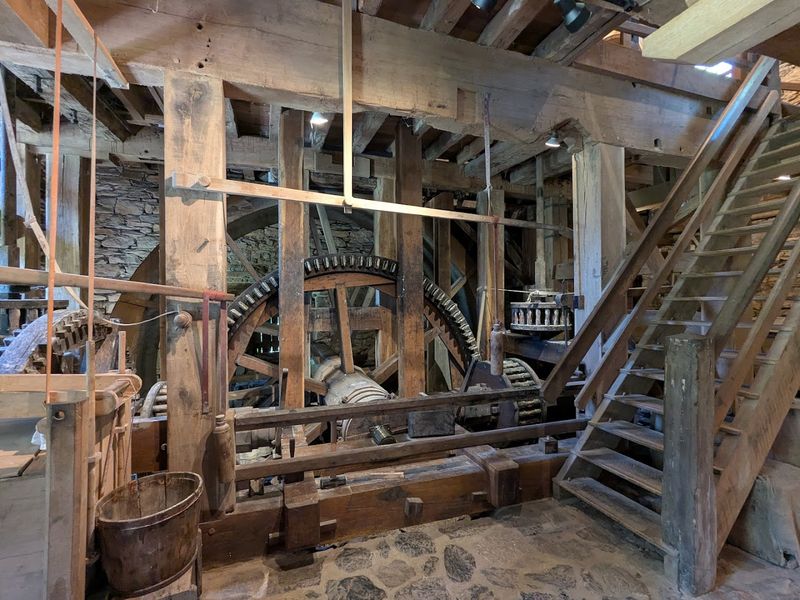
Few buildings in Virginia carry the kind of origin story that makes your jaw drop before you even step inside. Burwell-Morgan Mill was built by two heavy-hitters of the colonial era: General Daniel Morgan, a celebrated Revolutionary War hero, and Colonel Nathaniel Burwell, a prominent Virginia planter.
Together, they envisioned a mill that would serve the growing Shenandoah Valley community.
Construction wrapped up in the mid-1780s, and from day one, the mill became the beating heart of the local economy. Farmers hauled wagons loaded with wheat and corn from miles around, knowing they could count on quality grinding and fair service.
The mill processed grain destined for local tables as well as export markets further afield.
Standing inside this building today, you can almost hear the echoes of those early conversations, deals struck over freshly milled flour, and the constant rhythm of water doing its ancient work. The founders chose their site wisely, harnessing Spout Run with engineering confidence that still impresses modern eyes.
History here is not a dusty exhibit. It is alive, turning, and absolutely magnificent.
Water Power That Refuses to Quit
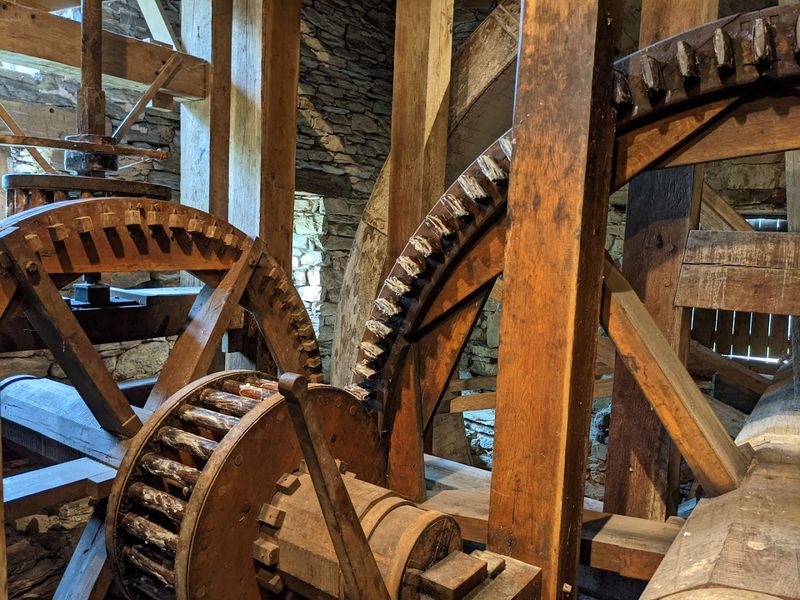
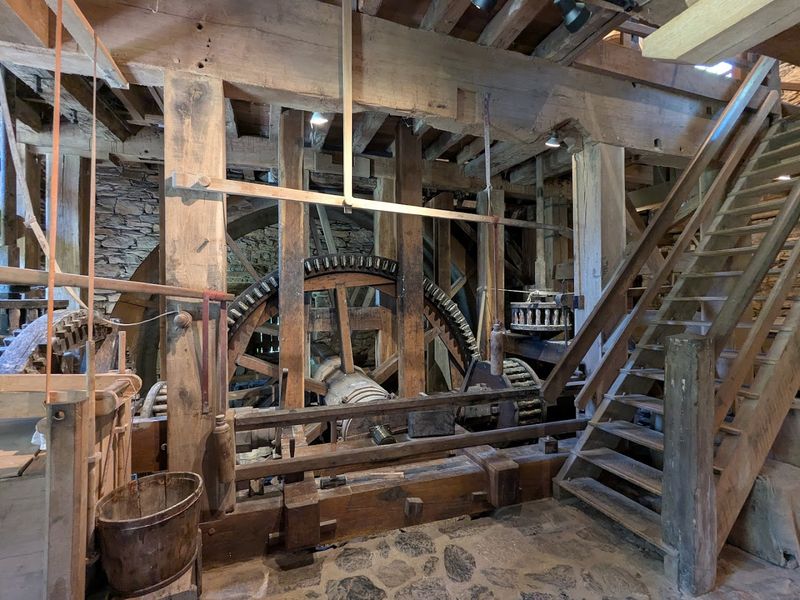
At the core of the Burwell-Morgan Mill experience is something so elegantly simple it borders on genius: a giant wooden water wheel. Measuring roughly 20 feet across, this interior wheel captures the energy of Spout Run and converts it directly into milling power.
No electricity. No fuel.
Just physics doing exactly what physics does best.
Watching the wheel turn is genuinely hypnotic. Water rushes in, paddles catch the current, and the entire mechanism groans and creaks into motion with a satisfying mechanical confidence.
The millstones above respond, spinning against each other and reducing whole grain into soft, fragrant flour right before your eyes.
What makes this even more impressive is that the basic design has not changed significantly since the 18th century. Engineers and historians who study early American industry point to mills like this as prime examples of how effectively colonial builders understood natural resources.
Spout Run feeds into the Shenandoah River, giving the wheel a reliable and consistent water source across seasons. Come on a grinding demonstration day, and you will leave with a genuine appreciation for the ingenuity of people who built things to last forever.
The Millstones That Ground a Community Together
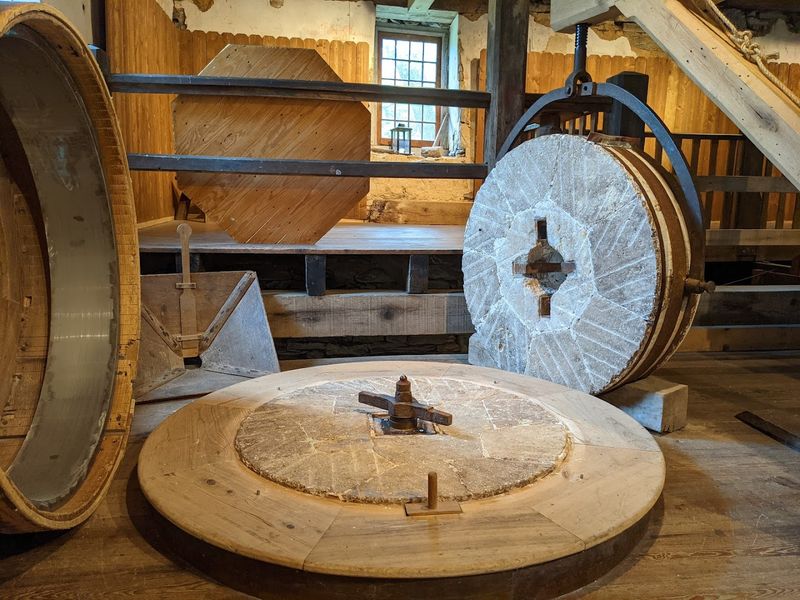
Millstones are deceptively humble objects. Two rough granite discs, stacked and spinning, seem almost too simple to be the engine behind an entire regional food supply.
Yet the millstones at Burwell-Morgan Mill did exactly that, grinding wheat and corn into the flour and meal that fed families across Clarke County and beyond for generations.
The stones work through friction and centrifugal force, cracking grain between their grooved faces and pushing finished flour outward to collection points. Getting the gap between stones just right was a skilled craft, and millers who could do it well were respected and well-compensated members of their communities.
Too tight and you scorched the grain. Too loose and you got coarse, uneven meal.
On demonstration days at the mill, you can watch this ancient process unfold in real time. The smell of freshly ground grain fills the air with a warm, nutty fragrance that is completely unlike anything from a grocery store bag.
Better still, you can actually buy stone-ground flour and grits produced right here on site. Taking home a bag of freshly milled whole wheat flour from this place feels like carrying a piece of living Virginia history straight to your kitchen.
A Limestone Beauty That Stands the Test of Time
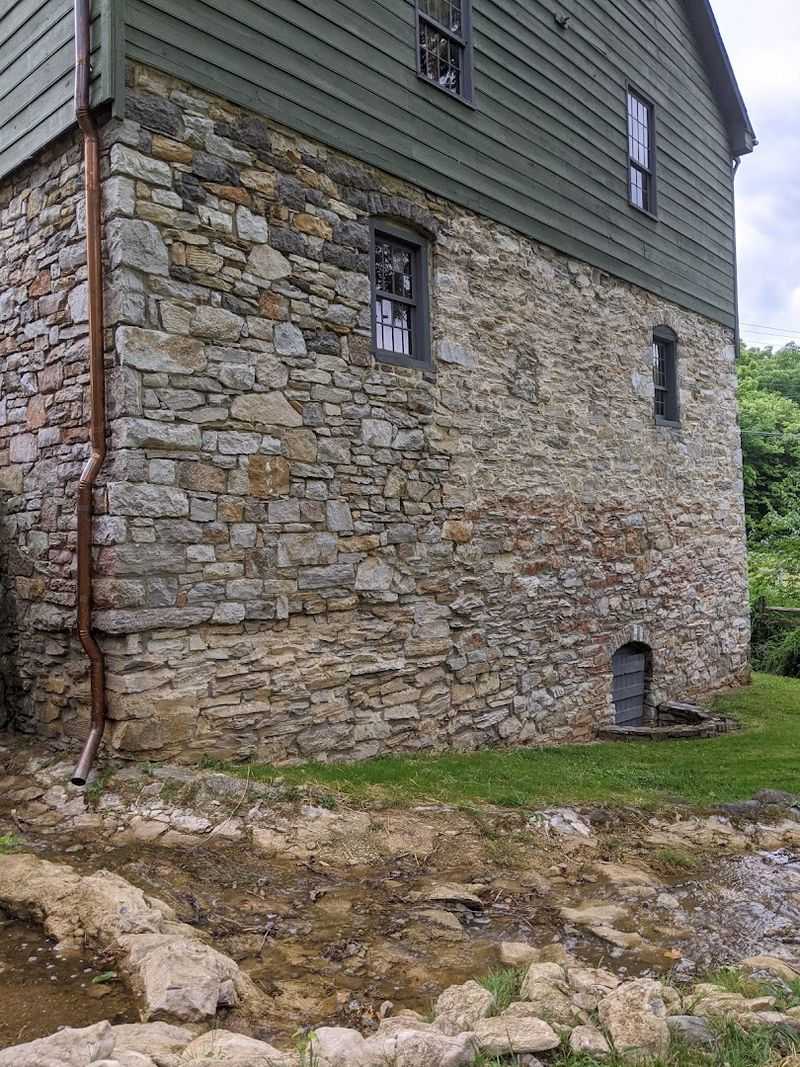
Architecture nerds, prepare yourselves. The building that houses Burwell-Morgan Mill is a stunning example of 18th-century construction craftsmanship, built from local limestone that has aged into a gorgeous silvery-grey patina.
The two-story structure with its gable roof measures an impressive footprint and manages to look both rugged and refined at the same time.
Limestone was the smart choice for a working mill. It is durable, fire-resistant, and locally abundant in the Virginia Shenandoah region, which meant construction costs stayed manageable while quality stayed high.
The thick walls also provide natural insulation, keeping the interior cool in summer and protecting the mechanical works from extreme temperature swings.
From the outside, the mill sits like a proud elder statesman of the Virginia countryside, flanked by mature trees and framed by the gentle sound of moving water. Every stone in that wall was placed by hand, fitted without modern machinery, and mortared into a structure that has now stood through more than two centuries of Virginia weather.
Photographers absolutely love this building, and it is not hard to understand why. Every angle offers a composition that looks like it belongs on a postcard celebrating American heritage at its most authentic and enduring.
Restoration, Revival, and the Clarke County Heroes
By the mid-20th century, the mill had fallen silent. Industrial flour production had made small water-powered mills economically obsolete, and the building sat idle through the 1950s, its machinery still but its bones remarkably sound.
That is where the Clarke County Historical Association stepped in with determination and a serious restoration mission.
Through the 1960s and into the 1970s, volunteers and preservation specialists worked methodically to bring the mill back to functional life. They stabilized the structure, restored the water wheel, repaired the milling machinery, and ensured the building could safely welcome the public again.
It was painstaking, careful work that deserves far more recognition than it typically receives.
The results speak loudly. Burwell-Morgan Mill earned a spot on both the Virginia Landmarks Register and the National Register of Historic Places, cementing its status as a site of genuine cultural significance.
Today, the Clarke County Historical Association continues to steward this treasure with obvious pride and dedication. Their commitment ensures that future generations of Virginia residents and curious travelers will be able to walk through these doors, hear the wheel turn, and understand exactly what life looked and felt like in early American rural communities.
Grinding Demonstrations That Bring History Roaring Back
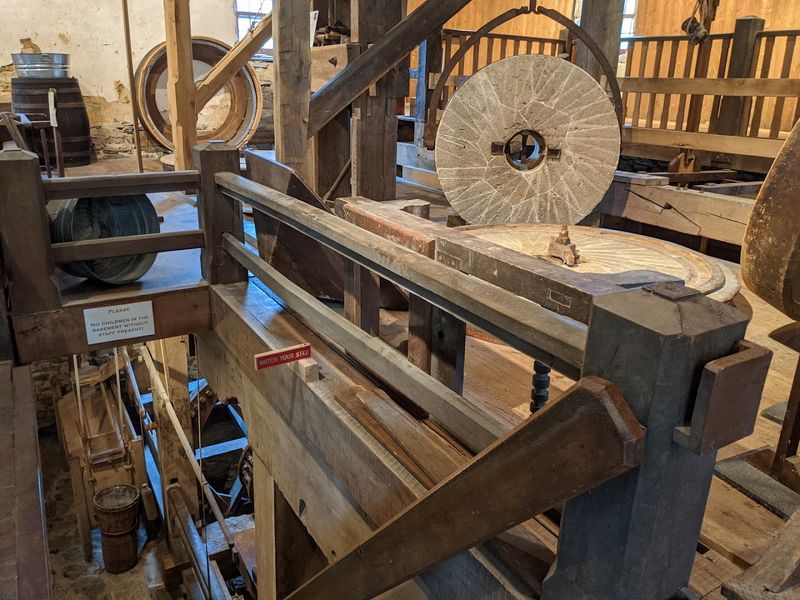
Saturday mornings at Burwell-Morgan Mill during the warmer months carry a particular kind of magic. That is when the grinding demonstrations happen, and watching the whole operation spring into motion is one of the most genuinely exciting low-key experiences Virginia has to offer.
The wheel starts turning, the millstones engage, and suddenly you are witnessing technology from the 1780s doing its job flawlessly.
Knowledgeable staff walk you through every step of the process with obvious enthusiasm for their subject. They explain how water pressure drives the wheel, how the gear systems translate that rotational energy upstairs to the stones, and how the miller would have adjusted everything by hand based on the grain type and desired grind.
It is interactive history at its most satisfying.
Children especially go wide-eyed watching the machinery in motion, and adults tend to get surprisingly quiet as the reality of the engineering sinks in. The fresh flour that comes off those stones carries a warmth and complexity that factory-milled flour simply cannot replicate.
Bags of stone-ground whole wheat flour, blue corn meal, red corn grits, and white corn meal are available for purchase, giving you a genuinely delicious souvenir to take back to your kitchen and brag about forever.
Art at the Mill: Where History Meets Creativity
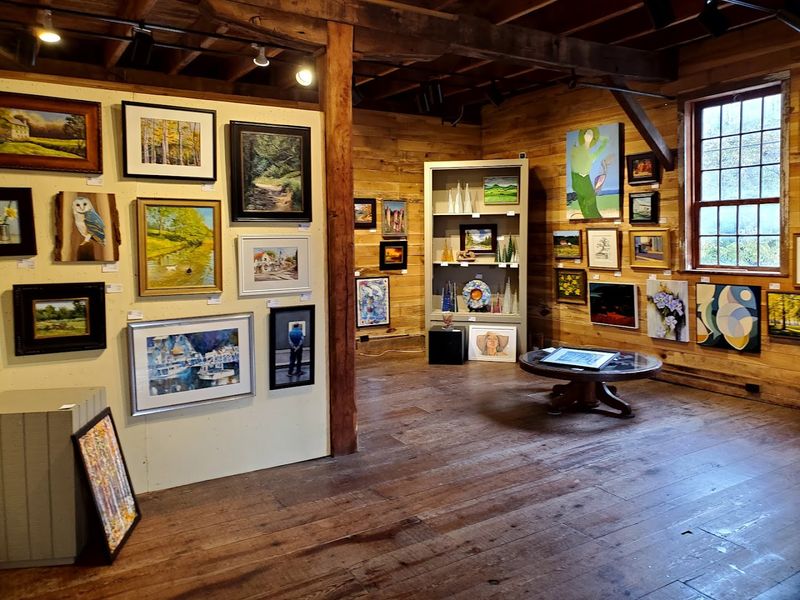
A working mill and a thriving art scene might seem like an unlikely pairing, but at Burwell-Morgan Mill, they come together beautifully twice a year during the celebrated Art at the Mill event. Local and regional artists take over all three floors of the limestone building, transforming the historic space into a gallery that feels unlike any other art show in Virginia.
Works span every medium imaginable: oil paintings, watercolors, sculpture, photography, fiber arts, and more. The rough-hewn wooden beams and stone walls create a backdrop that makes contemporary and traditional artwork alike look absolutely extraordinary.
Watching a delicate watercolor landscape hanging next to 240-year-old milling machinery is a genuinely surreal and wonderful experience.
The event also serves as a fundraiser supporting the mill’s ongoing preservation and educational programming, which means every purchase you make contributes directly to keeping this landmark alive and operational. Artists often attend in person and offer demonstrations of their techniques, adding an educational layer that complements the mill’s own history beautifully.
If your visit to the Millwood area happens to coincide with Art at the Mill, consider yourself extraordinarily lucky. Clear your afternoon, bring your credit card, and prepare to fall in love with something unexpected hanging on an ancient stone wall.
Spout Run and the Scenic Grounds Worth Lingering Over
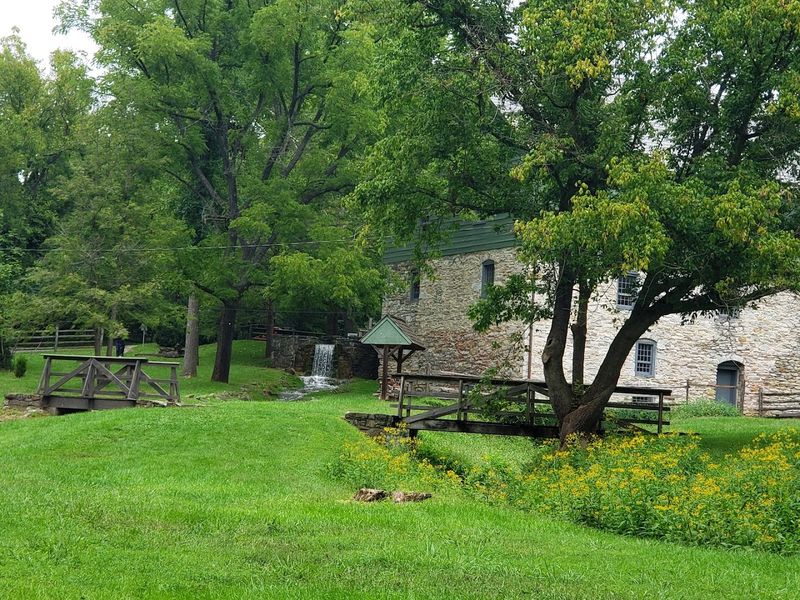
The grounds surrounding Burwell-Morgan Mill are the kind of place that makes you forget you had somewhere else to be. Spout Run flows alongside the property with a cheerful persistence, its clear water catching the light and creating a soundtrack of gentle splashing that immediately drops your stress levels several notches.
The stream eventually feeds into the Shenandoah River, which gives the whole setting a sense of flowing connection to the broader Virginia landscape.
Picnic tables dot the grassy areas near the water, making this an ideal spot to spread out a blanket, unpack a lunch, and simply exist in a beautiful place for a while. Families with young kids particularly love the stream access, where wading in the shallows on a warm day feels like a completely acceptable and thoroughly enjoyable activity.
Photographers find the combination of historic stonework, moving water, and mature tree canopy irresistible across every season. Fall foliage frames the limestone walls in amber and crimson that looks almost too perfect to be real.
Spring brings fresh green growth that softens the scene beautifully. Even winter has its charms here, with bare branches and quiet water creating a stark, elegant composition that rewards anyone patient enough to visit during the off-season months.
Millwood Village: The Charming Town That Surrounds It All
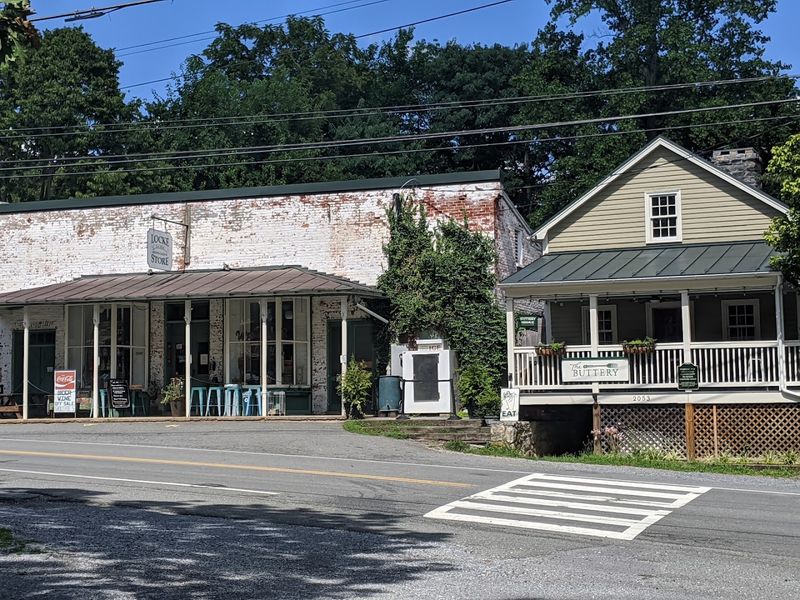
Burwell-Morgan Mill does not exist in isolation. It sits at the heart of Millwood, a tiny Virginia village that punches well above its weight in terms of charm and character.
Cross the street from the mill and you will find Locke’s General Store, a genuine old-fashioned market stocked with local goods, deli items, and regional products that make for excellent browsing and even better snacking.
The village also offers antique shops worth poking around in, scenic drives through the surrounding Clarke County countryside, and the kind of unhurried atmosphere that feels increasingly rare in the modern world. Millwood sits in the northern Shenandoah Valley, a region of Virginia that rewards slow exploration with consistently gorgeous scenery and genuinely friendly locals.
The drive approaching Millwood from the north is particularly beautiful, winding through farmland and forested hills that showcase Virginia’s pastoral landscape at its finest. Many visitors turn a mill visit into a full day of countryside exploration, combining the historic site with a leisurely drive through Clarke County’s back roads.
Small towns like Millwood remind you why road trips through Virginia’s rural heartland remain one of the most rewarding ways to experience the true character of this deeply historic and endlessly scenic state.
Plan Your Visit to 15 Tannery Lane
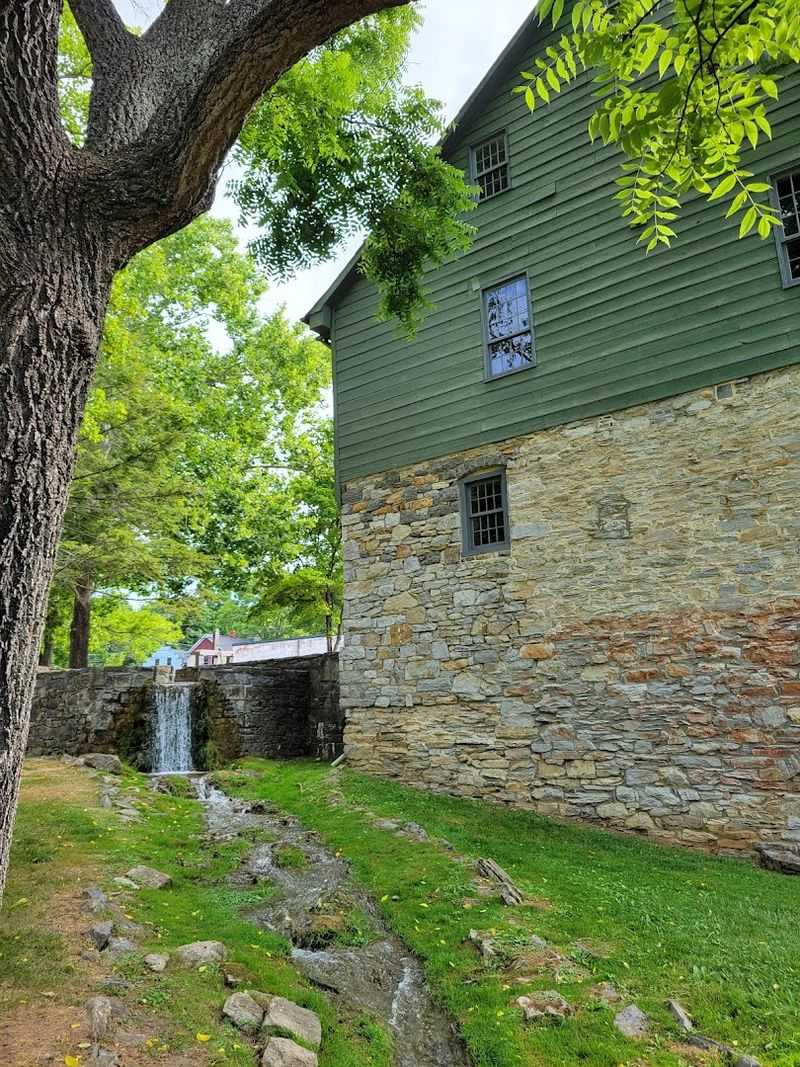
Getting yourself to Burwell-Morgan Mill takes a little planning, but the payoff is absolutely worth the effort. The mill is open Friday through Sunday from May through November, with Friday and Sunday hours running noon to five and Saturday hours starting earlier at ten in the morning.
Grinding demonstrations happen on Saturdays during the warmer months, so if watching the millstones spin is your priority, aim for a Saturday visit.
The site is fully accessible, with a well-maintained parking lot and clean restrooms available on the property. Staff are consistently knowledgeable, enthusiastic, and happy to answer questions at whatever depth of detail you prefer.
Whether you want a quick overview or a deep-dive into 18th-century milling technology, they can deliver with genuine passion for the subject.
The official address is 15 Tannery Lane, Millwood, Virginia 22646, and the Clarke County Historical Association maintains a website with current hours, event schedules, and information about upcoming Art at the Mill shows. Before you leave, check what stone-ground products are available for purchase.
Taking home locally milled flour or grits from this legendary Virginia landmark is the kind of souvenir that actually improves your life, one delicious homemade meal at a time.
