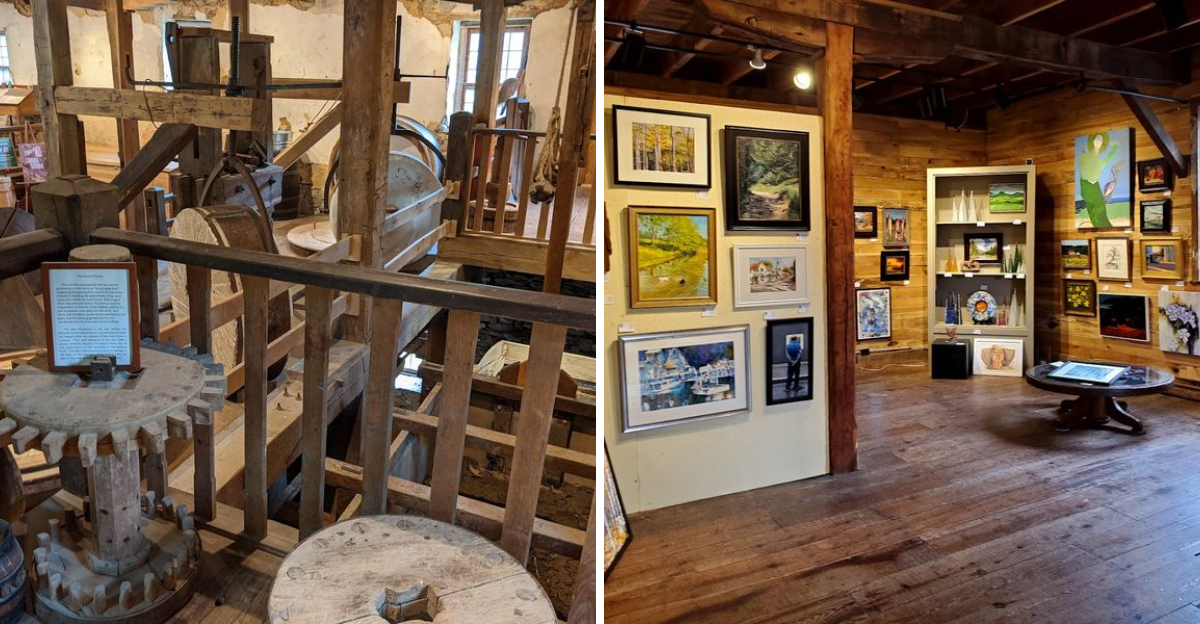
Blink and you might miss this small Virginia village that holds a place where the past is still very much alive. At its center stands a working grist mill from the late 1700s, continuing its daily rhythm with the same steady motion that powered it centuries ago.
The sound of grinding wheat and corn fills the space, turning history into something you can see, hear, and even take home. Visitors come for a glimpse of another era and end up lingering longer than expected, drawn in by how real it all feels.
This is not a preserved display behind glass, but a living piece of craftsmanship that still serves a purpose today.
The Founding Story Behind the Mill
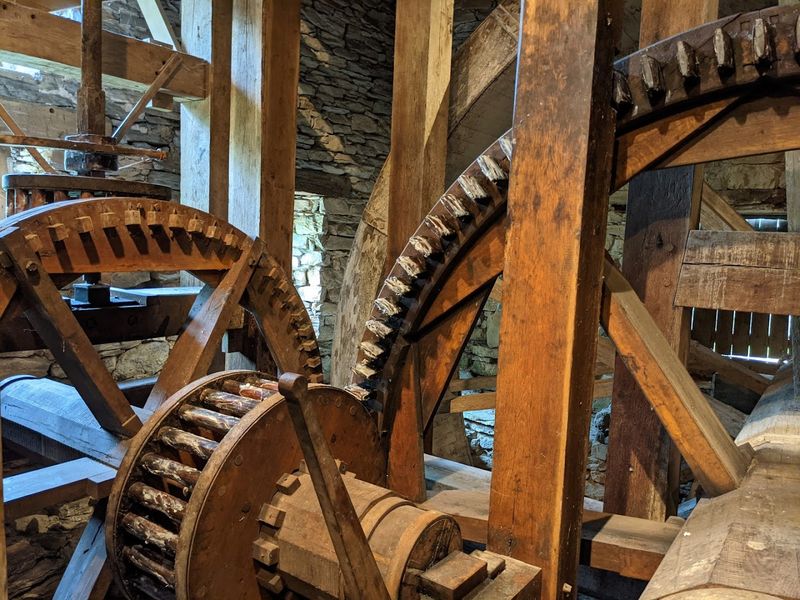
Few origin stories in Virginia history are quite as compelling as this one. Two prominent figures, Colonel Nathaniel Burwell and General Daniel Morgan, joined forces to build a working grist mill along the banks of Spout Run in the 1780s.
Their goal was practical and ambitious: create a reliable grain-processing hub for the entire region.
The location was no accident. Spout Run provided exactly the kind of consistent water flow needed to power heavy grinding stones day after day.
The site quickly became a cornerstone of local commerce, drawing farmers from across Clarke County and beyond.
At its peak, the mill processed an extraordinary volume of wheat each year, making it one of the most productive operations in the Shenandoah Valley. The partnership between Burwell and Morgan reflected the entrepreneurial spirit of post-Revolutionary Virginia, where practical infrastructure was just as important as political independence.
Walking through the mill today, you can still feel the weight of that history. Every timber beam and grinding stone carries the legacy of two men who understood that a community runs on more than ideas.
It runs on grain, water, and hard work.
The Incredible Indoor Water Wheel
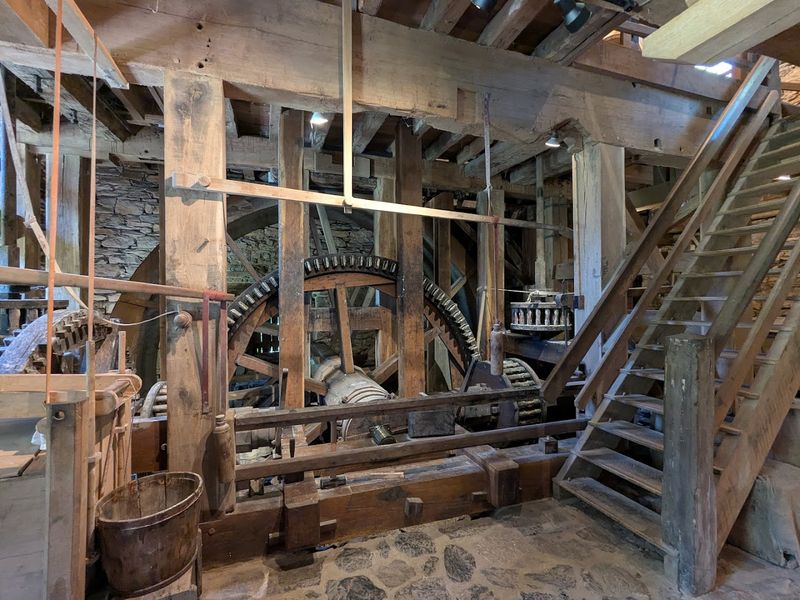
Most old mills keep their water wheels on the outside, exposed to the elements and visible from the road. The Burwell-Morgan Mill does things differently, and that difference is genuinely jaw-dropping the first time you see it.
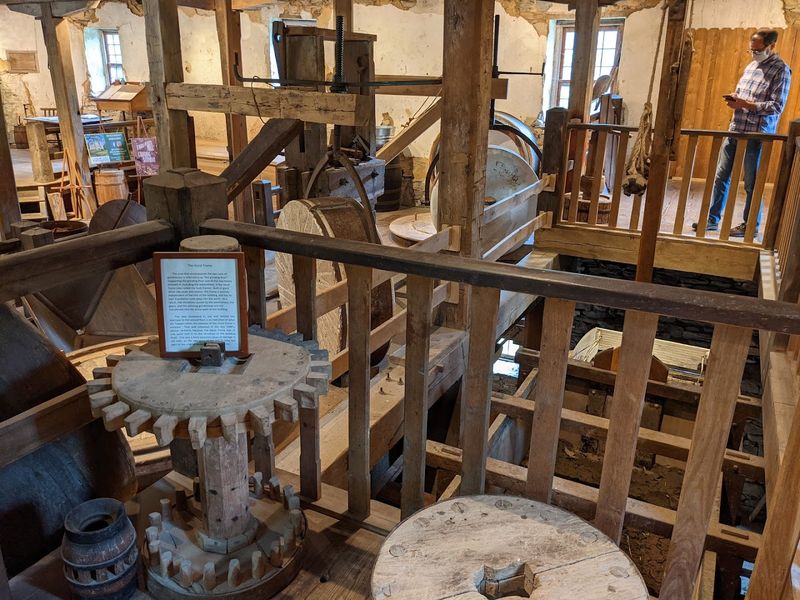
The massive wheel, roughly 20 feet in diameter, sits entirely inside the building. Watching it turn within the mill’s stone walls feels almost theatrical, like witnessing a machine that should not logically exist in such an intimate space.
The sound alone is worth the trip: a deep, rhythmic churning that fills the entire structure.
This interior wheel design is what sets the mill apart from nearly every other historic grist mill in Virginia and across the country. Engineers and history buffs alike tend to stop mid-sentence when they first lay eyes on it.
The engineering logic behind the placement has to do with protecting the wheel from freezing temperatures, a smart adaptation for a region that sees cold winters.
Getting up close to this wheel during an active grinding session is an experience that sticks with you long after you have left Millwood. It is mechanical poetry in motion, powered entirely by a stream that has been doing this job for over two centuries.
Watching the Milling Process Live
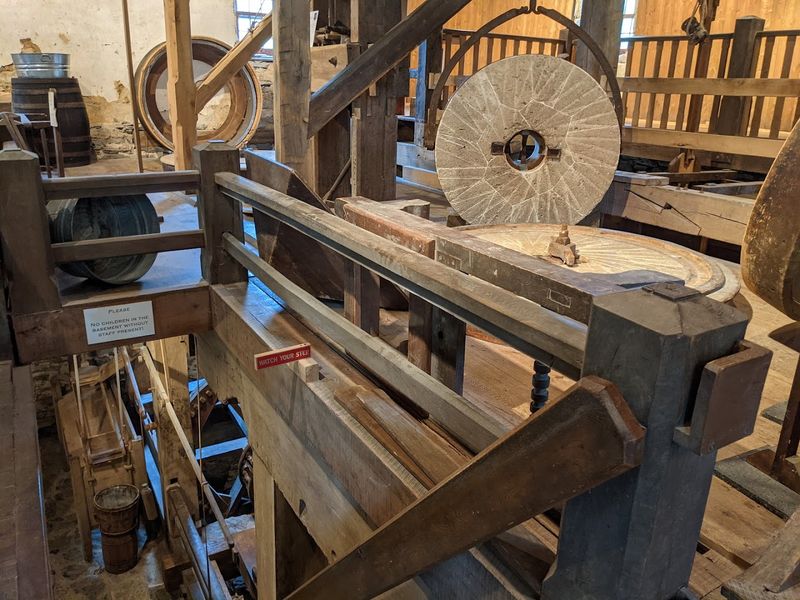
Saturdays between late spring and early November are when the real magic happens at the Burwell-Morgan Mill. That is when the grinding stones come to life, and you can stand just feet away from machinery that has been doing this exact job since before the United States had a Constitution.
Watching grain feed into the millstones and emerge as flour on the other side is oddly mesmerizing. There is a satisfying simplicity to the process, no electricity, no digital controls, just water, stone, and gravity working together in perfect mechanical harmony.
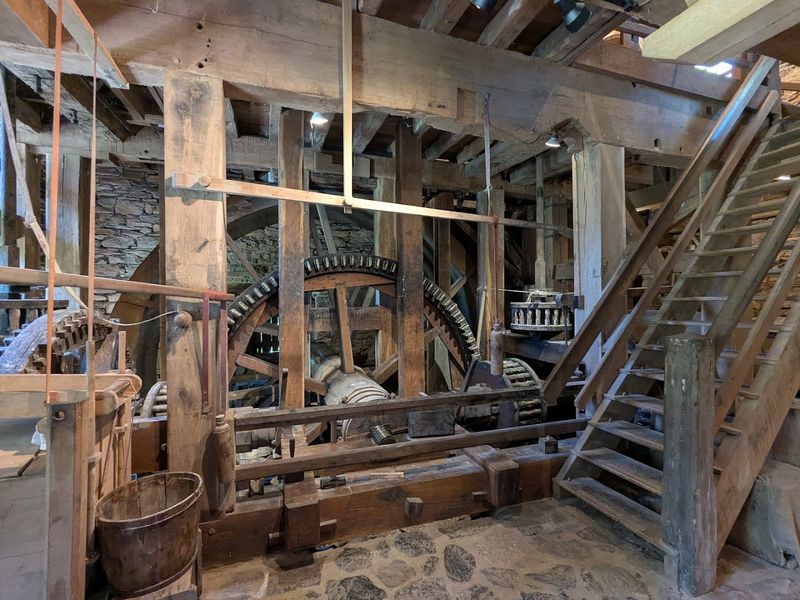
Staff members are genuinely enthusiastic about explaining every step. They walk you through how the water wheel transfers energy through a series of wooden gears and shafts until the grinding stones begin their slow, powerful rotation.
It is a full sensory experience: the smell of fresh grain, the rumble of stone on stone, the fine flour dust drifting through the air.
Grinding demonstrations typically run from 11 a.m. to 2 p.m. on Saturdays during the season. Arriving early gives you the best chance to ask questions and really soak in the atmosphere before the space fills up with other curious minds eager to see history in action.
Fresh Flour and Cornmeal You Can Actually Buy
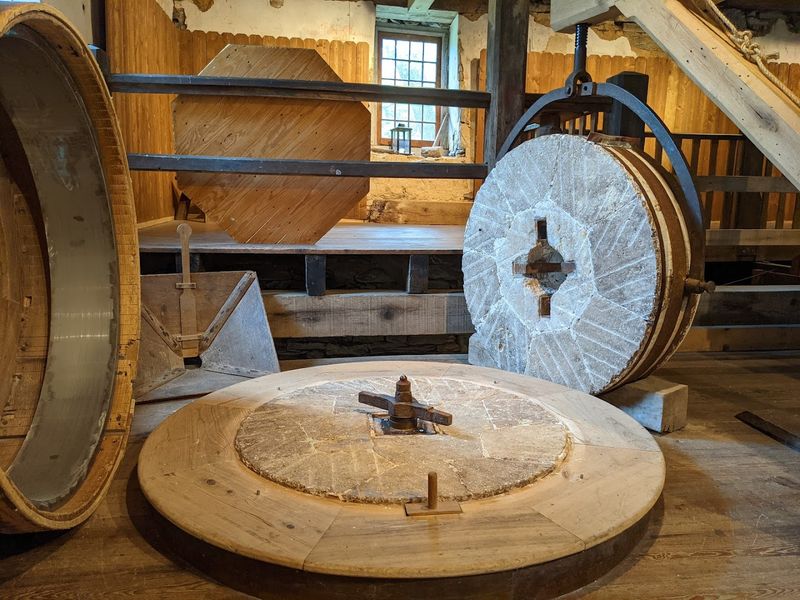
One of the most satisfying parts of a visit to this Virginia landmark is leaving with something genuinely useful. The Burwell-Morgan Mill produces and sells its own freshly milled products, including whole wheat flour, cornmeal, blue corn grits, red corn grits, and white cornmeal.
These are not mass-produced products sitting on a warehouse shelf for months. The flour and meal sold here are milled on-site using the same antique stones that have been grinding grain for generations.
The freshness is immediately noticeable when you cook with them at home.
Taking home a bag of stone-ground flour from a mill that has been operating since the 1780s feels like bringing a piece of living history into your kitchen. Many people who buy here once end up planning return trips specifically to restock their pantry.
The product selection changes slightly depending on what grains are being processed during each grinding season. Checking ahead before your visit is a smart move if you have a specific product in mind.
Either way, leaving empty-handed feels like a missed opportunity when the whole point of this place is the grain itself.
The Restoration That Saved Everything
By the mid-20th century, the mill had fallen completely silent. Operations ceased in the 1950s, and the building began its slow decline into disrepair, like so many other historic structures across rural Virginia that simply outlived their commercial usefulness.
The turning point came in 1964 when the Clarke County Historical Association stepped in and acquired the property. What followed was a years-long restoration effort that required painstaking attention to historical accuracy.
The goal was not just to preserve the building but to bring it back to full working condition.
By 1972, the mill reopened as a working museum, a designation that perfectly captures what makes it so special. It is not a replica or a recreation.
The original machinery was restored and returned to operation, making it one of the few genuinely functional 18th-century mills still operating in the entire country.
The Clarke County Historical Association continues to manage and maintain the property today, ensuring that future generations can experience the same grinding stones, water wheel, and mechanical systems that served this community centuries ago. Their dedication to authenticity is evident in every corner of the building, from the hand-hewn beams to the original millstones still in use.
The Setting Along Spout Run
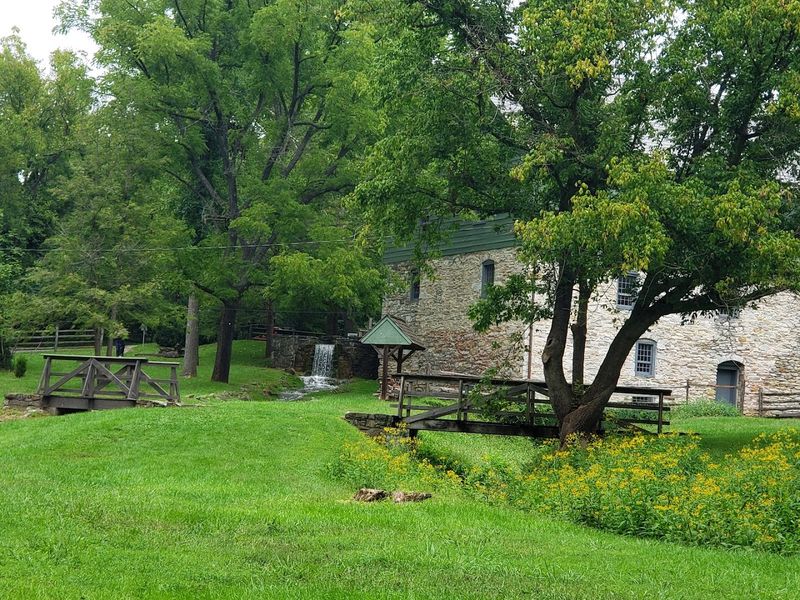
Even if you never stepped inside, the setting alone would make the trip worthwhile. Spout Run flows right alongside the mill, creating a soundtrack of moving water that immediately slows your heart rate and sharpens your senses.
Picnic tables are scattered along the grassy bank, and on a warm afternoon, this spot feels like the kind of place people used to gather before screens took over everything. Families spread out blankets, kids wade in the shallows, and the general vibe is unhurried and genuinely peaceful.
The stream eventually connects to the Shenandoah River, which means the landscape around the mill carries that classic Shenandoah Valley character: rolling hills, clear water, and the kind of natural beauty that makes Virginia feel timeless.
Autumn is arguably the most spectacular time to visit. The trees lining Spout Run explode into deep reds and golds, framing the old stone mill in a way that makes every photograph look professionally composed.
Spring brings its own charm with wildflowers and the sound of water running fast after winter thaw. No matter the season, this setting delivers something worth savoring.
Art Shows and Community Events at the Mill
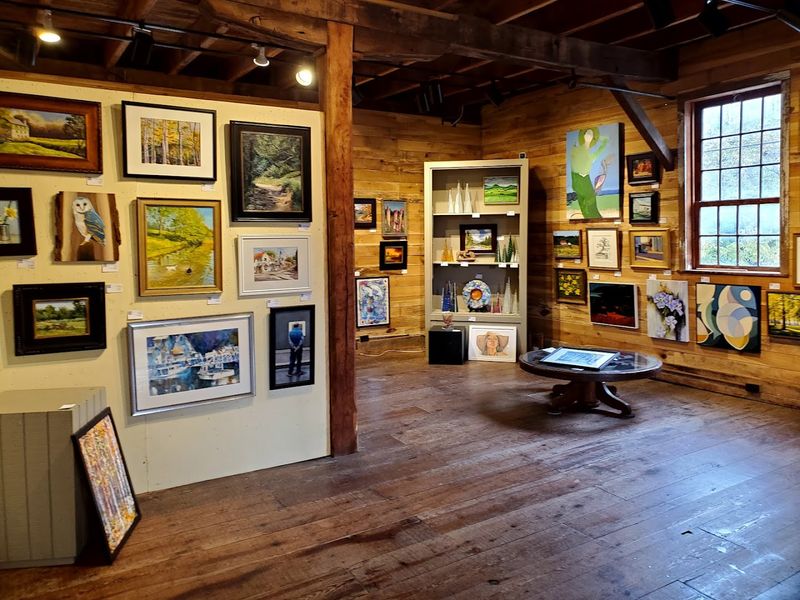
Not every visit to the Burwell-Morgan Mill is about flour. Several times a year, the mill transforms into an art gallery, hosting regional exhibitions that fill all three floors of the building with paintings, sculptures, and mixed-media works from local and regional artists.
The contrast between the raw industrial character of the mill and the delicate creativity of fine art is surprisingly effective. Stone walls and wooden beams make for a uniquely atmospheric gallery space, one that no white-walled downtown art venue can replicate.
These events draw a different kind of crowd, art lovers who might not otherwise make the drive out to Millwood but end up completely charmed by the mill itself once they arrive. It is a clever way to introduce new audiences to a historic site they might have overlooked.
The twice-yearly Art at the Mill shows are particularly popular, running for about ten days each time and featuring works across multiple mediums along with live demonstrations by participating artists. Keeping an eye on the Clarke County Historical Association’s event calendar is the best way to time your visit around one of these special programming moments.
The mill has a way of surprising you no matter when you show up.
Millwood Village: A Small Town Worth Exploring
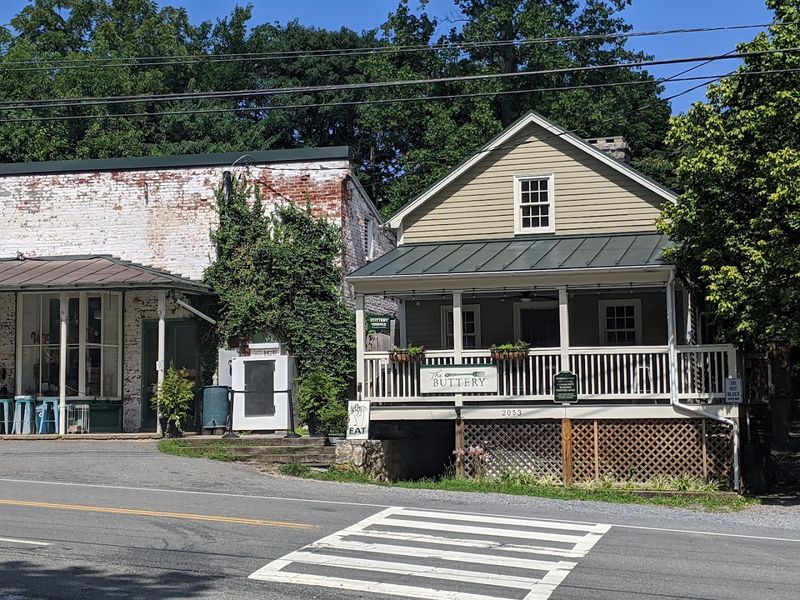
The mill sits at the heart of Millwood, and the village itself deserves more than a quick glance through your car window. Cross the street from the mill and you will find Locke’s General Store, a genuine old-fashioned market stocked with local products, including milk in glass bottles and a deli counter that handles the lunch crowd with ease.
Antique shops line the small main area, offering the kind of browsing experience that rewards patience and curiosity. You never quite know what you will find, but the quality tends to lean toward genuinely interesting pieces rather than tourist trinkets.
Millwood sits in Clarke County, one of Virginia’s most historically rich corners, and the surrounding countryside is dotted with stone walls, old farmsteads, and roads that wind through land that has barely changed in two centuries. The drive in from the north is particularly scenic, cutting through forested hills and open pastures.
Plan to spend at least half a day here. The mill, the village shops, a picnic by the stream, and a browse through the general store add up to a genuinely satisfying afternoon.
This part of Virginia rewards slow travel more than almost anywhere else in the state.
Visiting the Mill: What to Know Before You Go
A little planning goes a long way before heading out to this corner of Virginia. The mill operates on a seasonal schedule, generally open from Friday through Sunday during its active months, with the grinding demonstrations happening on Saturdays during the milling season from May through November.
Arriving on a Saturday during grinding season is the move if you want the full experience. That is when the water wheel turns, the millstones roll, and the whole building comes alive with the kind of mechanical energy that makes history feel immediate rather than abstract.
The space is wheelchair accessible, parking is available on-site, and clean restrooms are on the grounds, details that matter more than people admit when planning a day trip. The mill is well-maintained and thoughtfully organized for self-guided exploration as well as guided interaction with knowledgeable staff.
The official address is 15 Tannery Lane, Millwood, Virginia 22646. You can reach the Clarke County Historical Association directly at the mill’s phone number for current hours and special event schedules.
The official website at clarkehistory.org keeps updated information on grinding days, art shows, and seasonal programming. Confirming hours before you head out saves the frustration of arriving to a closed door.
Why This Mill Belongs on Your Virginia Bucket List
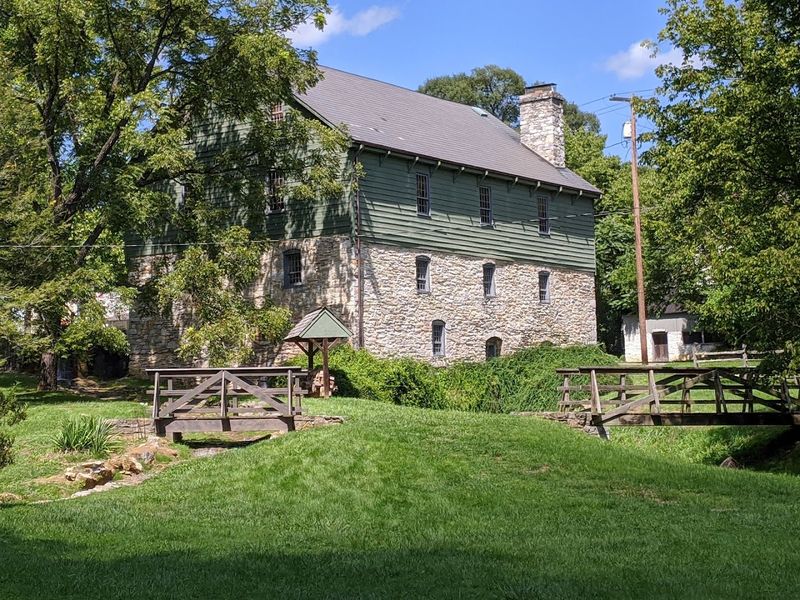
Virginia has no shortage of historic sites, but very few of them still function the way they were originally designed. That is what makes the Burwell-Morgan Mill genuinely rare.
It is not preserved behind glass or reduced to interpretive panels on a wall. It grinds grain.
It produces flour. It works.
There is something deeply satisfying about witnessing a centuries-old machine doing exactly what it was built to do, especially in a world where most old things get retired to a shelf or a photograph. Standing inside this mill while the wheel turns and the stones roll is a reminder that good engineering does not have an expiration date.
The broader experience, the village, the stream, the art shows, the fresh milled products, adds up to something that feels genuinely complete. This is not a half-hour stop.
It is a destination that earns a full afternoon and leaves you thinking about it on the drive home.
Virginia is full of places that claim historical significance, but Millwood delivers the real thing. Pack a picnic, bring a bag for your flour, and give yourself permission to slow down completely.
The Burwell-Morgan Mill has been here for over two centuries, and it is absolutely worth every mile of the drive.
Dear Reader: This page may contain affiliate links which may earn a commission if you click through and make a purchase. Our independent journalism is not influenced by any advertiser or commercial initiative unless it is clearly marked as sponsored content. As travel products change, please be sure to reconfirm all details and stay up to date with current events to ensure a safe and successful trip.
