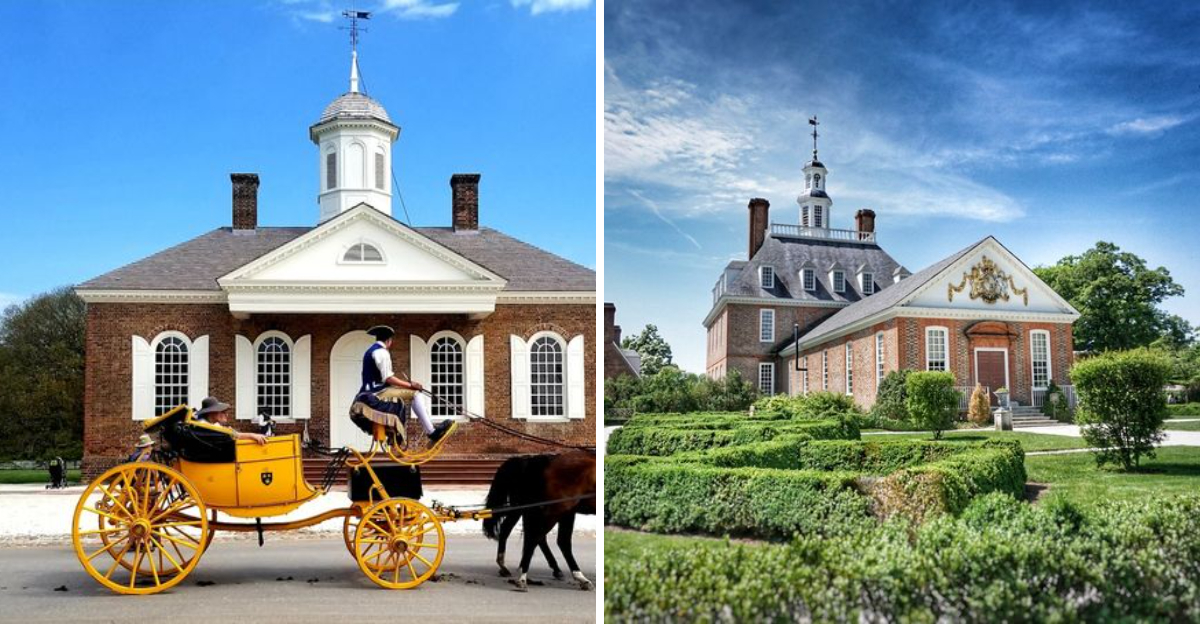
Step onto these streets and the present moment starts to fade. In the heart of Virginia lies a place so carefully preserved it feels like time itself paused, with cobblestones underfoot and the constant sense that a carriage might roll by at any second.
I wandered into this living piece of American history and did not leave for three days, carrying away sore feet, a full heart, and real admiration for the people who keep it alive. Every building, street, and trade shop reflects extraordinary attention to detail, recreating the era when this was Virginia’s colonial capital.
Visitors still debate how long it takes to see it properly, but one day never feels like enough.
The Living History Museum That Refuses to Let the Past Die
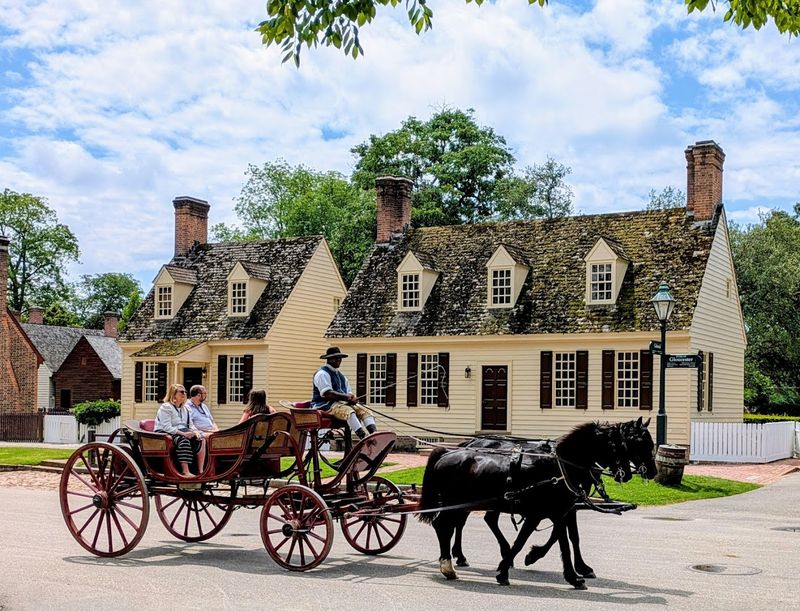
Stepping through the entrance of Colonial Williamsburg feels less like visiting a museum and more like slipping through a time portal with really good signage. The 301-acre historic area is the largest outdoor living history museum in the entire country, and that title is earned every single day.
The Colonial Williamsburg Foundation has spent decades restoring and reconstructing over 600 buildings, including 89 original 18th-century structures that have stood since the days when this city was the bustling colonial capital of Virginia. Every roofline, every garden fence, every brick pathway has been researched and rebuilt with obsessive historical precision.
Architectural historians pored over archaeological findings, old records, and surviving period buildings to ensure nothing looks out of place. The result is a streetscape so convincing that the modern world feels genuinely far away.
Car-free roads wind past timber-framed workshops, stately government buildings, and modest colonial homes that tell the full story of 18th-century American life, not just the glamorous parts.
Duke of Gloucester Street, the Heartbeat of the Historic Area
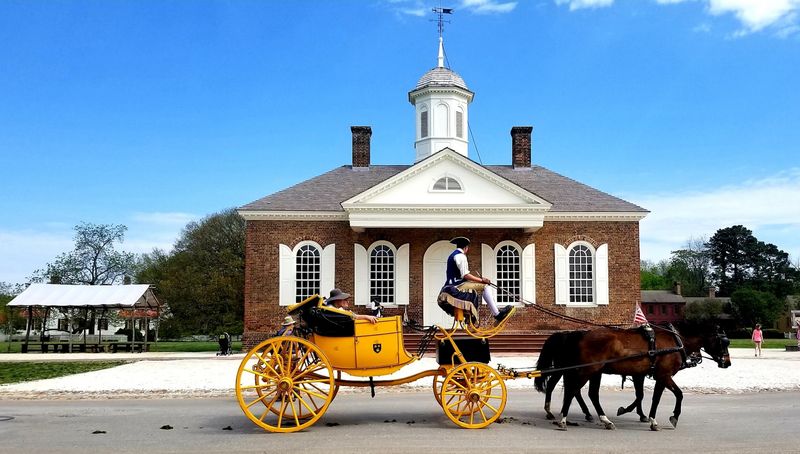
Duke of Gloucester Street is the spine of Colonial Williamsburg, and walking its length feels like flipping through a very well-illustrated history book. The wide, mostly unpaved road stretches from the College of William and Mary all the way to the Capitol building, lined on both sides with meticulously maintained colonial structures.
Trade shops, taverns, and public buildings crowd the streetscape in a way that feels genuinely organic rather than staged. Costumed interpreters drift between buildings, pausing to demonstrate crafts, debate colonial politics, or simply greet you with period-appropriate pleasantries that somehow never feel forced.
My favorite thing about this street is how it operates as a living document of American civic life. The buildings here were not just homes and shops.
They were places where colonists argued about independence, conducted business, and shaped the ideas that eventually became the United States. Virginia played a central role in that story, and Duke of Gloucester Street is where you feel that weight most vividly.
Wear your most comfortable shoes before heading out because the cobblestones are charming but unforgiving.
The Governor’s Palace, a Monument to Colonial Power and Elegance
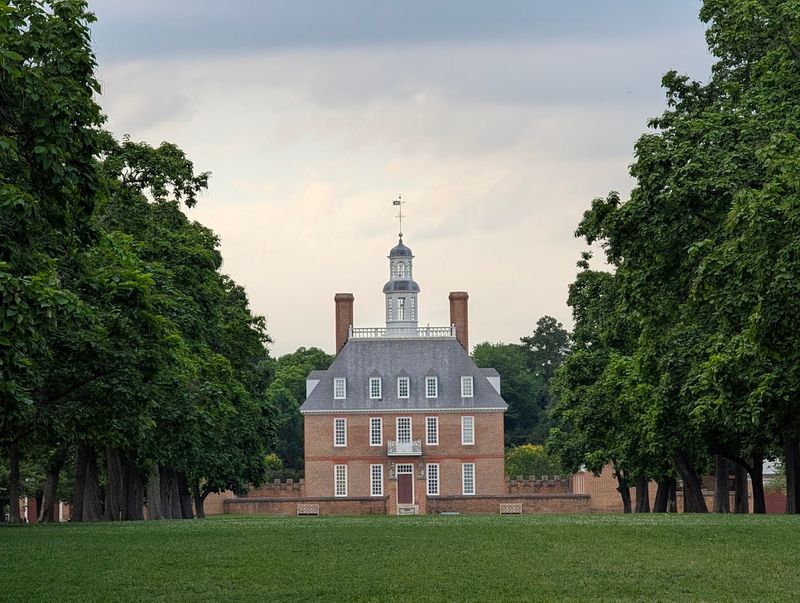
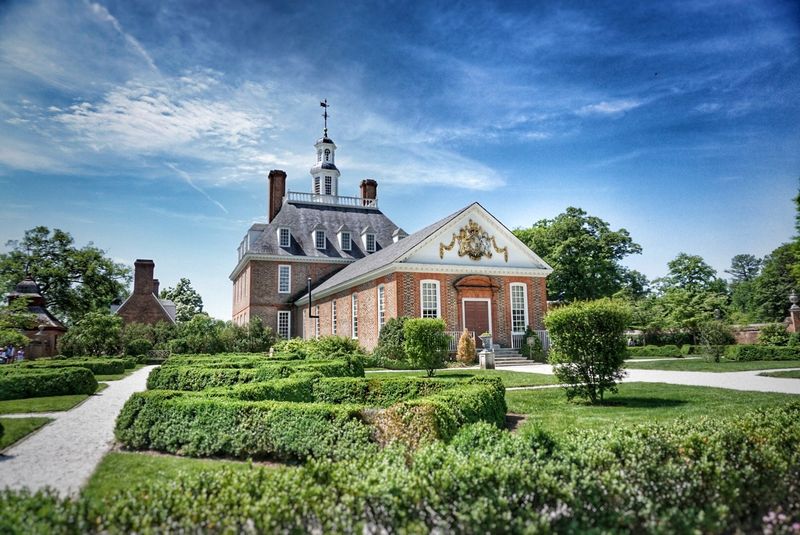
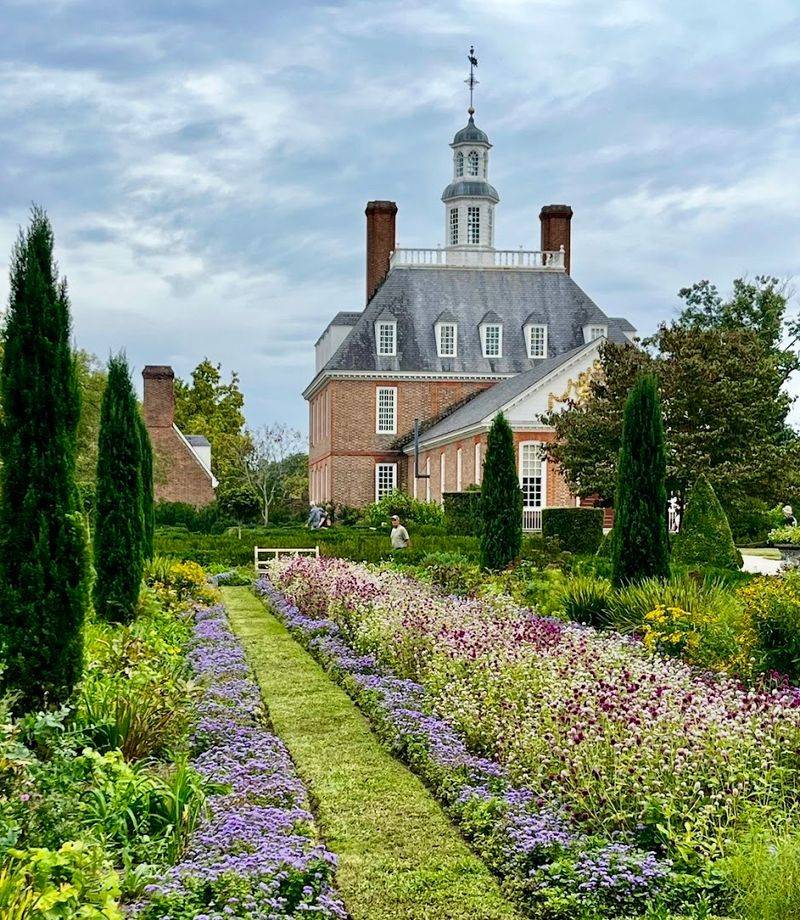
Few buildings in Colonial Williamsburg command attention quite like the Governor’s Palace, and the moment you see it rising at the end of its long formal approach, you understand exactly why colonial Virginians found it so impressive. This was the official residence of the royal governors of Virginia, and it was designed to project authority with every carved detail.
The reconstructed palace is a stunning example of Georgian architecture, featuring symmetrical facades, a formal garden laid out in careful geometric patterns, and interiors furnished with period-accurate pieces that reflect the wealth and political ambition of the era. The topiary gardens alone are worth the walk from the main street.
Inside, rooms are arranged to show how power was displayed and maintained in colonial Virginia. Weapons line the entrance hall in deliberate decorative arrangements, a visual reminder that the governor’s authority was backed by force as much as by ceremony.
The palace was home to royal governors and later to Patrick Henry and Thomas Jefferson after Virginia declared independence. Standing in those rooms, history stops feeling abstract very quickly.
The Capitol Building Where American Independence Was Debated
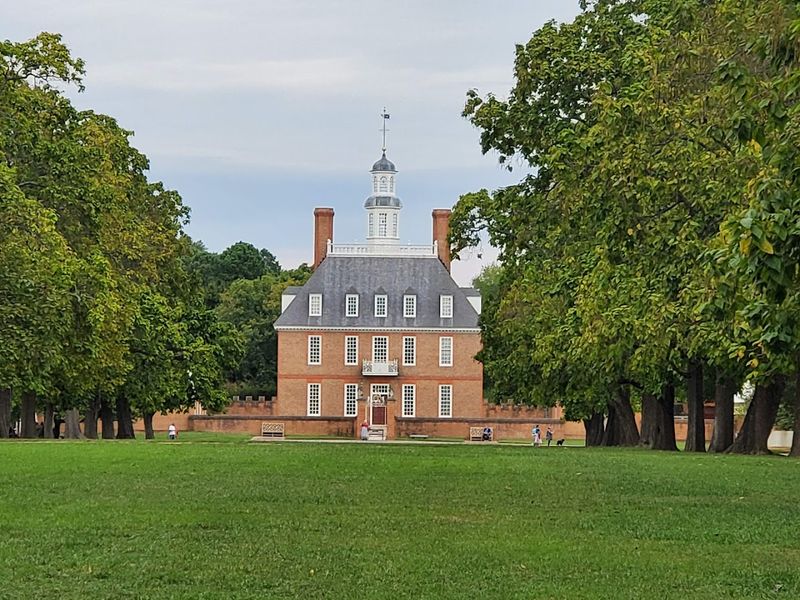
The reconstructed Capitol at the eastern end of Duke of Gloucester Street is where some of the most consequential conversations in American history took place, and Colonial Williamsburg has brought it back to vivid life. This H-shaped red brick building served as the seat of Virginia’s colonial government, and its chambers echo with the arguments that shaped a nation.
Inside, the House of Burgesses chamber looks exactly as it would have when Patrick Henry stood up and challenged British authority in language that shocked even his fellow colonists. The General Court room next door handled everything from property disputes to criminal cases, offering a surprisingly grounded look at how colonial justice actually functioned day to day.
One of my favorite details is how the building separates legislative and judicial functions into two distinct wings connected by a covered arcade. That architectural choice reflects real thinking about the separation of powers, ideas that would later become foundational to the American system of government.
Visiting the Capitol is not just a pretty building tour. It is a front-row seat to the political imagination of colonial Virginia at its most ambitious.
Costumed Interpreters Who Truly Inhabit Another Century
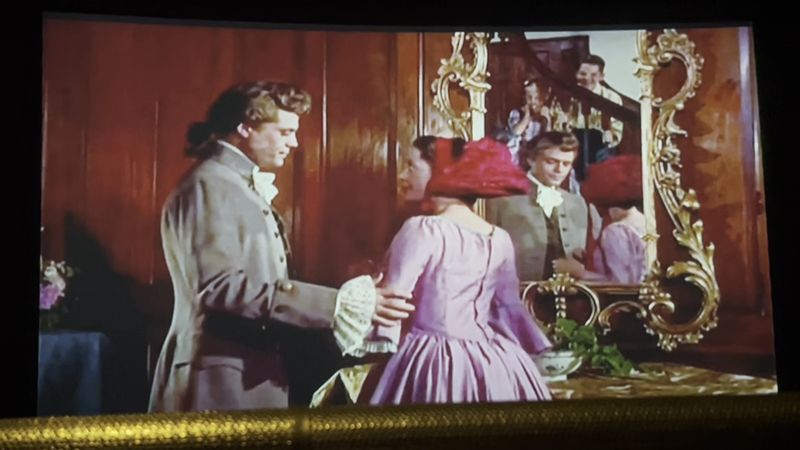
The interpreters at Colonial Williamsburg are not just people in fancy dress reciting memorized scripts. They are historians, storytellers, and performers who have committed fully to bringing the 18th century to life in a way that feels genuinely immersive rather than theatrical.
Encounters with Patrick Henry left me genuinely rattled, not because the performance was over the top, but because it was so precisely calibrated to the man’s known personality and rhetoric. The interpreter captured Henry’s fiery conviction with an intensity that made the debate feel urgent even centuries after the fact.
Other interpreters portray enslaved Virginians, tradespeople, and ordinary colonists, ensuring the full social complexity of colonial life gets represented honestly.
What sets these interactions apart is the depth of knowledge behind each character. Ask a blacksmith about the economics of his trade, and you will get a historically grounded answer delivered entirely in character.
Probe a colonial housewife about her daily routine, and she will describe it with details drawn from real period sources. Colonial Williamsburg trains its interpreters rigorously, and that investment shows in every conversation.
Plan time to simply wander and talk to people. Those unscripted exchanges are often the most memorable part of a visit.
Historic Trade Shops Where 18th-Century Crafts Are Alive and Practiced
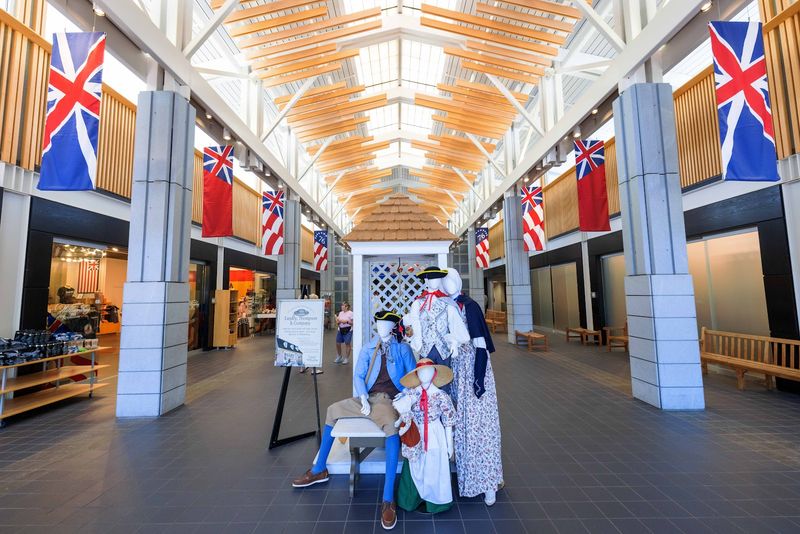
One of the most unexpectedly captivating parts of Colonial Williamsburg is watching skilled tradespeople practice crafts exactly as they were done in the 1700s. The historic area maintains over two dozen operating trade shops, each staffed by interpreters who have mastered their respective crafts using period tools and techniques.
The blacksmith shop draws crowds for good reason. The rhythmic clang of hammer on iron, the glow of the forge, and the smell of hot metal create a sensory experience that no exhibit panel could replicate.
Nearby, the shoemaker stitches leather by hand, the wig maker curls and powers elaborate hairpieces, and the printing office runs a genuine 18th-century press that still produces printed materials.
My personal favorite was the coffeehouse, where an interpreter explained the history of the coffee trade in colonial Virginia and offered a sample of drinking chocolate prepared using period methods. Each trade shop functions as a micro-museum with a human heartbeat.
The flag system is worth knowing about: a flag displayed outside a shop means it is open and active for the day. Check the Colonial Williamsburg website before your visit to see which trades will be operating during your specific trip.
The Grand Illumination, a December Tradition Unlike Anything Else
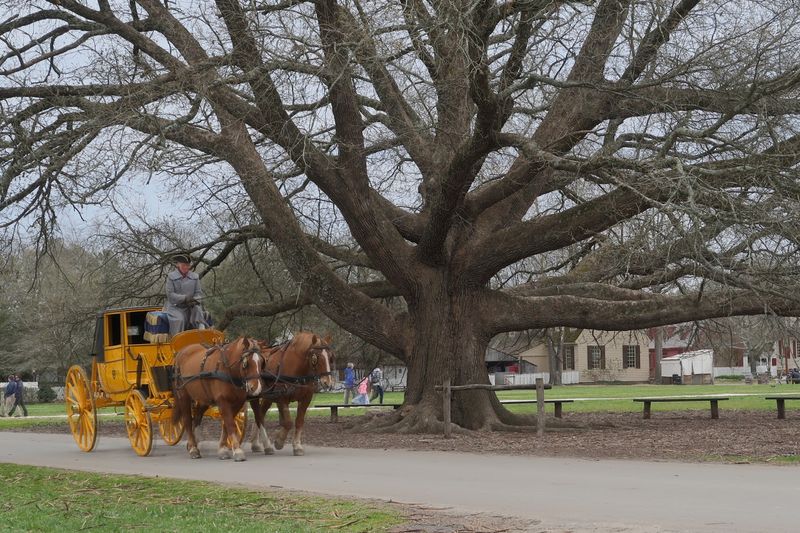
Every December, Colonial Williamsburg transforms into something so visually stunning that it pulls people back year after year, sometimes making it an annual family tradition. The Grand Illumination happens on the first three Saturdays of December, and it turns the historic area into a candlelit wonderland straight from the 18th century.
The event begins at dusk when candles appear in every window along the colonial streetscape, cressets are lit along the main roads, and bonfires crackle in public squares. Musical ensembles perform period-appropriate carols throughout the area, fife and drum corps march through the streets, and the whole atmosphere hums with a warmth that feels both ancient and completely alive.
The grand finale is a spectacular fireworks display launched simultaneously over the Capitol building and the Governor’s Palace, lighting up the Virginia night sky in a way that feels genuinely celebrious. Best of all, the core Grand Illumination events are free to the public and open to everyone regardless of ticket status.
Timing a trip to Colonial Williamsburg for one of these December evenings is one of the smartest travel decisions you can make in Virginia this year, especially with the landmark anniversary celebrations planned for 2026.
The Art Museums, Where Colonial Culture Gets a Gorgeous Frame
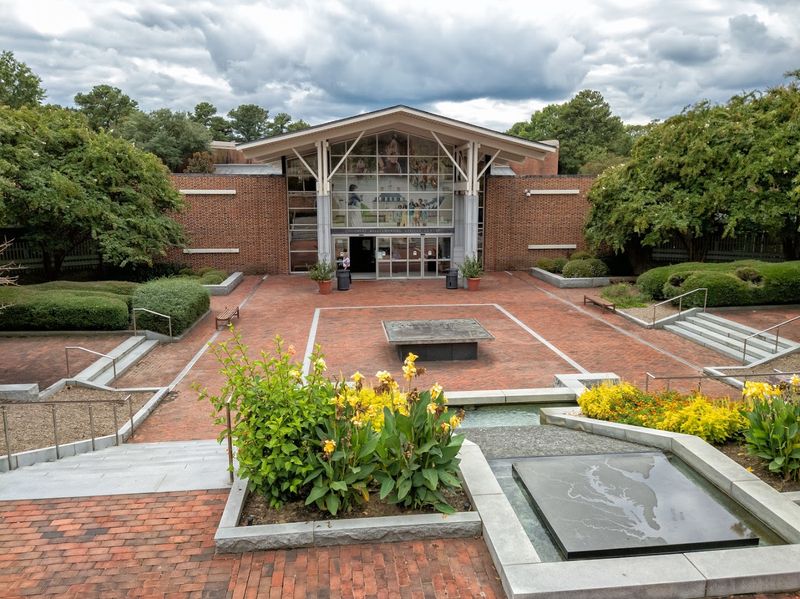
Not everyone realizes that Colonial Williamsburg is home to world-class art museums, and that oversight means the galleries are often blissfully uncrowded even on busy days. The Art Museums of Colonial Williamsburg house one of the most impressive collections of American decorative arts from the 17th through 19th centuries, and admission to the main museum is free without requiring a historic area ticket.
The collections include furniture, ceramics, textiles, paintings, and metalwork that illustrate how colonial Virginians understood beauty, status, and craftsmanship. Pieces are displayed with thoughtful context that connects the objects to the political and social world outside the museum walls.
The museum also runs regular programming, including expert talks and hands-on workshops that change throughout the year. My visit coincided with a toy-making program where participants crafted a colonial game called Shut the Box using period techniques.
It was genuinely fun, surprisingly educational, and produced a souvenir far more interesting than anything available in a gift shop. For families with younger children who might find the outdoor historic area overwhelming, starting at the Art Museums provides a gentler, climate-controlled introduction to colonial Virginia before heading out to explore the streets.
Ghost Tours After Dark, Because History Gets Spookier at Night
When the sun sets over Colonial Williamsburg, a completely different kind of history comes out to play. The ghost tours offered here are not cheap carnival haunts.
They are genuinely well-researched walking experiences that weave documented historical events with the eerie legends that have accumulated around these buildings over centuries.
Groups follow a knowledgeable guide through the dimly lit streets of the historic area, stopping at locations associated with strange occurrences, tragic histories, and colonial-era mysteries. The stories are delivered with the same commitment to historical accuracy that defines everything else Colonial Williamsburg does, which somehow makes them more unsettling rather than less.
Booking in advance is essential because these tours sell out consistently, particularly during the autumn months and the holiday season when the atmosphere in the historic area leans naturally toward the dramatic. Comfortable shoes are non-negotiable since the tour covers significant ground on uneven colonial-era surfaces.
I did the ghost tour on my second evening in Williamsburg and found it a genuinely compelling way to revisit places I had seen in daylight, discovering entirely new layers of story attached to buildings I thought I already understood. Virginia history, it turns out, has a very active afterlife.
Planning Your Visit to Colonial Williamsburg in 2026, the Year of Two Anniversaries
There has never been a better moment to visit Colonial Williamsburg than right now, and 2026 specifically is shaping up to be one of the most historically rich years this place has ever seen. The site is celebrating two massive milestones simultaneously: the 250th anniversary of American independence and the 100th anniversary of the Colonial Williamsburg Foundation itself.
New exhibits are being added, several major buildings are being restored to their exact 1776 appearance, and expanded programming is planned throughout the year to mark both occasions. The visitor center at 101 Visitor Center Dr, Williamsburg, VA 23185 is the best starting point for any trip, offering orientation materials, shuttle service to the historic area, and staff who can help you build a realistic itinerary.
A single day is genuinely not enough. Most people who know Colonial Williamsburg well recommend at least two to three days to cover the major sites, catch the trade shops, attend an interpreter program, and still have time to wander without a schedule.
Check the Colonial Williamsburg website before arriving to review the daily events calendar and flag which programs match your interests. Pack comfortable walking shoes, bring layers for the weather, and prepare to leave knowing Virginia history in a way no textbook could ever teach.
