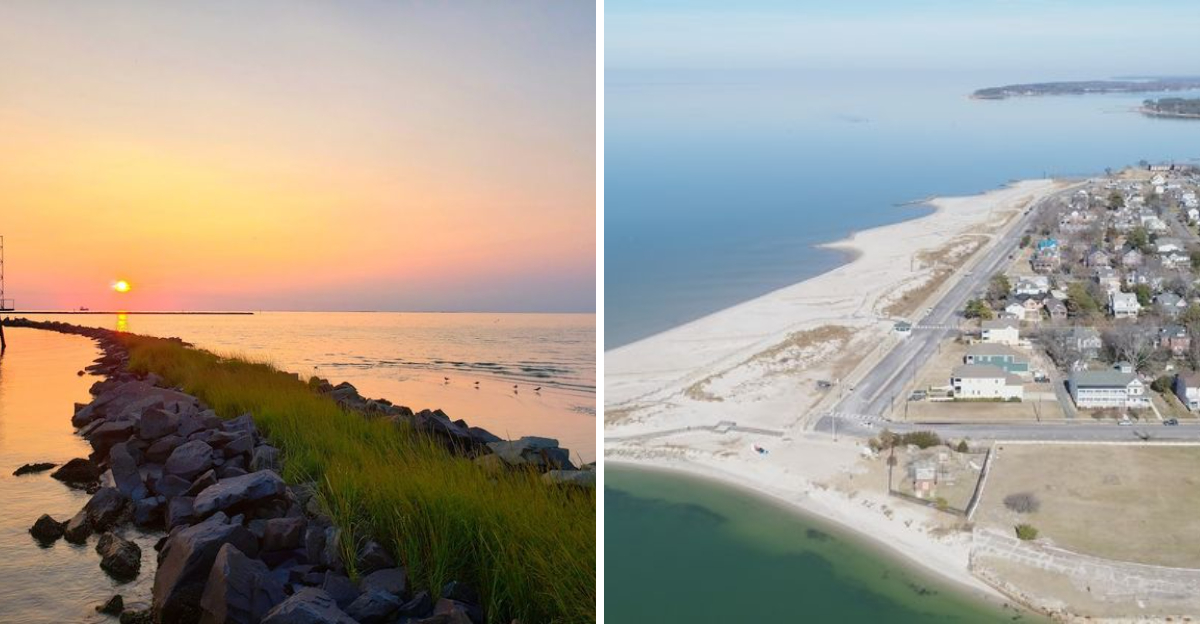
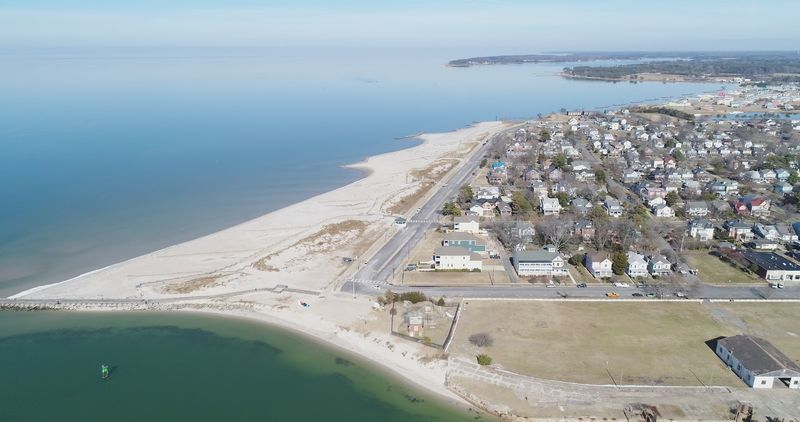
What if the ground beneath your feet marked the impact of a rock from space? This place looks like a quiet coastal town at first glance, with Victorian homes and easy waterfront views.
Beneath that calm surface lies a far more dramatic story. Millions of years ago, a comet or asteroid struck the shallow waters off the coast, carving out one of the largest and best-preserved impact craters on Earth.
That collision helped shape the Chesapeake Bay as it exists today, placing this town near the center of it all. I came across this while planning a road trip, and it completely reframed how I saw the town.
What seems unassuming at first carries a history on a planetary scale.
The Cosmic Collision That Shaped Virginia Forever
Long before Virginia was a state, a colony, or even a twinkle in any explorer’s eye, something extraordinary happened here. A comet or asteroid, estimated to be roughly two to three miles wide, came screaming out of space and plunged into the shallow waters of the western Atlantic Ocean.
The impact was so violent it makes every Hollywood disaster movie look like a minor inconvenience.
The collision happened approximately 35 million years ago, during the late Eocene epoch. That puts it well before humans, well before most modern mammals, and squarely in a time when the Earth was still figuring itself out.
The resulting crater stretched roughly 53 miles across and plunged nearly a mile and a half deep into the ocean floor.
Scientists classify this as a complex, peak-ring crater, meaning the force of the impact actually bounced rock back upward at the center, creating a ring of elevated terrain inside the main bowl. It is one of the largest confirmed impact structures ever found on Earth.
The sheer scale of what happened beneath present-day Virginia is almost impossible to wrap your head around, but standing in Cape Charles makes it feel thrillingly real.
Why Cape Charles Sits at the Bullseye
Not every town gets to say it sits on top of a prehistoric cosmic crater, but Cape Charles, Virginia, can make that claim with full geological authority. The center of the Chesapeake Bay impact crater lies directly beneath this small, charming town on the tip of the Delmarva Peninsula.
That is not a metaphor or a tourist embellishment. It is straight-up verified science, confirmed by the U.S.
Geological Survey.
When the impactor hit, it created a massive depression that gradually filled with sediment over millions of years. The layers of rock, sand, and debris piled up so thick that the crater eventually disappeared from view entirely, buried under the seafloor and later under dry land.
Cape Charles essentially grew on top of this geological time capsule without anyone knowing for a very long time.
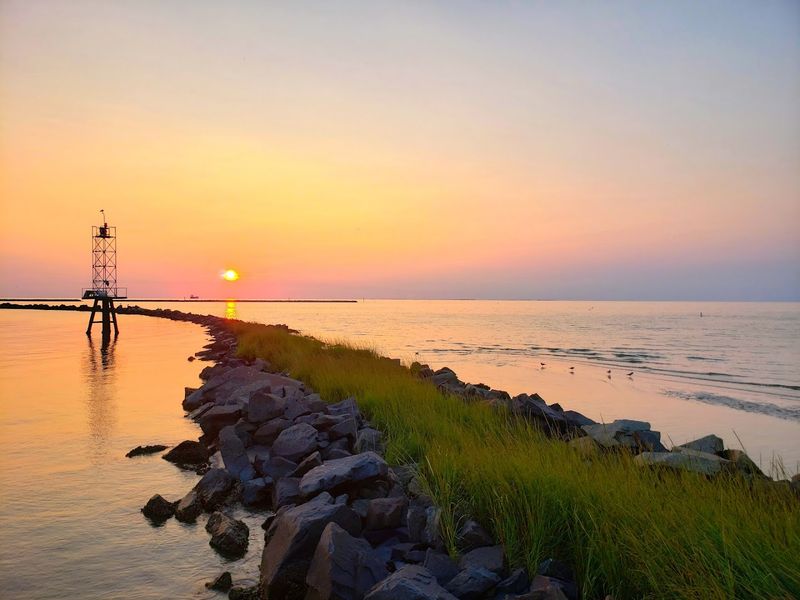
The town itself is compact and walkable, with tree-lined streets and a genuine small-town personality. Standing at the waterfront and knowing that an ancient crater rim lies beneath you somewhere gives every sunset over the Chesapeake an extra layer of cosmic drama.
Virginia has plenty of beautiful spots, but this one carries a geological backstory that genuinely earns its wow factor.
The Chesapeake Bay Impact Crater’s Mind-Blowing Discovery Story
For most of human history, nobody had a clue that a massive impact crater was hiding under the Chesapeake Bay region. The discovery only came together in the late twentieth century, when geologists studying the unusual composition of underground rock formations in Virginia started noticing something strange.
The rock layers simply did not behave the way normal sedimentary geology should.
Scientists from the U.S. Geological Survey eventually pieced together the puzzle using deep drilling, seismic surveys, and analysis of rock samples pulled from far below the surface.
What they found was a classic hallmark of an extraterrestrial impact: shattered, melted, and chaotically jumbled rock called breccia, mixed with shocked quartz that only forms under extreme pressure. No ordinary geological process produces that kind of evidence.
The Chesapeake Bay impact crater was formally identified and named in the 1990s, sending ripples through the scientific community. It turned out to be one of the most significant geological discoveries in North American history.
Researchers continue studying the site today, using it to understand not just ancient impact events but also how craters influence groundwater, sediment behavior, and even the shape of coastlines. Virginia, it turns out, has been sitting on a scientific goldmine this whole time.
Tsunamis, Chaos, and the Aftermath of Impact Day
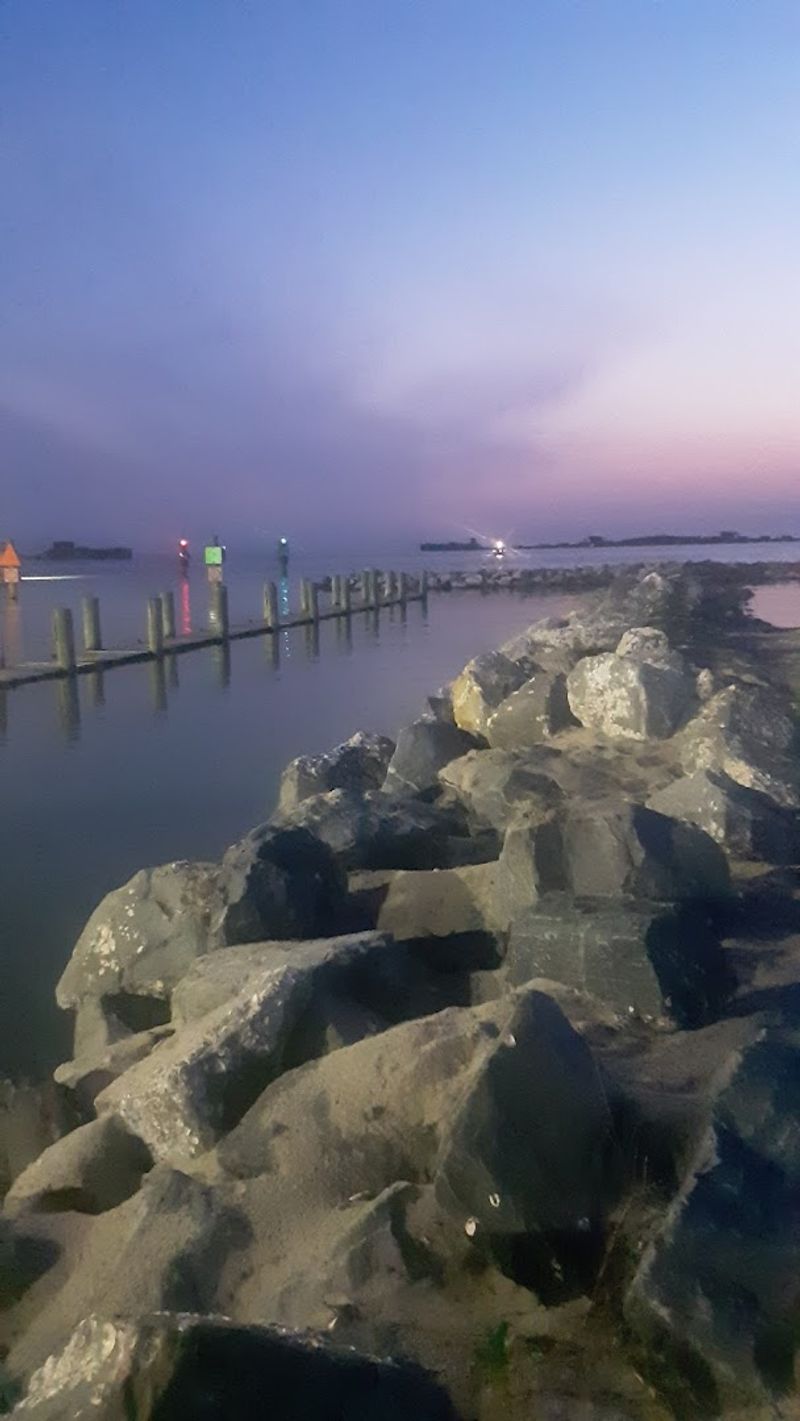
The moment that impactor hit the ocean surface, the consequences were immediate and absolutely catastrophic. The energy released was incomprehensibly enormous, vaporizing rock, water, and everything else in the immediate vicinity in a fraction of a second.
Massive tsunamis radiated outward in all directions, sweeping across what is now the eastern United States and beyond.
Debris was launched high into the atmosphere and rained back down across a wide area, leaving a layer of impact material that geologists can still identify in rock formations far from the crater itself. The local ecosystem was essentially reset to zero.
Anything living in the immediate region at the time had no chance of survival.
Over time, the ocean waters that flooded the crater basin began to settle, and sediment started accumulating layer by layer over the fractured rock below. The process was slow, measured in millions of years rather than human lifetimes.
Eventually, the crater was buried so completely that the surface showed no obvious sign of the violence that had occurred beneath it. The Chesapeake Bay itself, with its distinctive funnel shape and unusual depth patterns, is partly a result of that ancient impact reshaping the landscape of Virginia permanently.
How the Crater Secretly Shaped the Chesapeake Bay
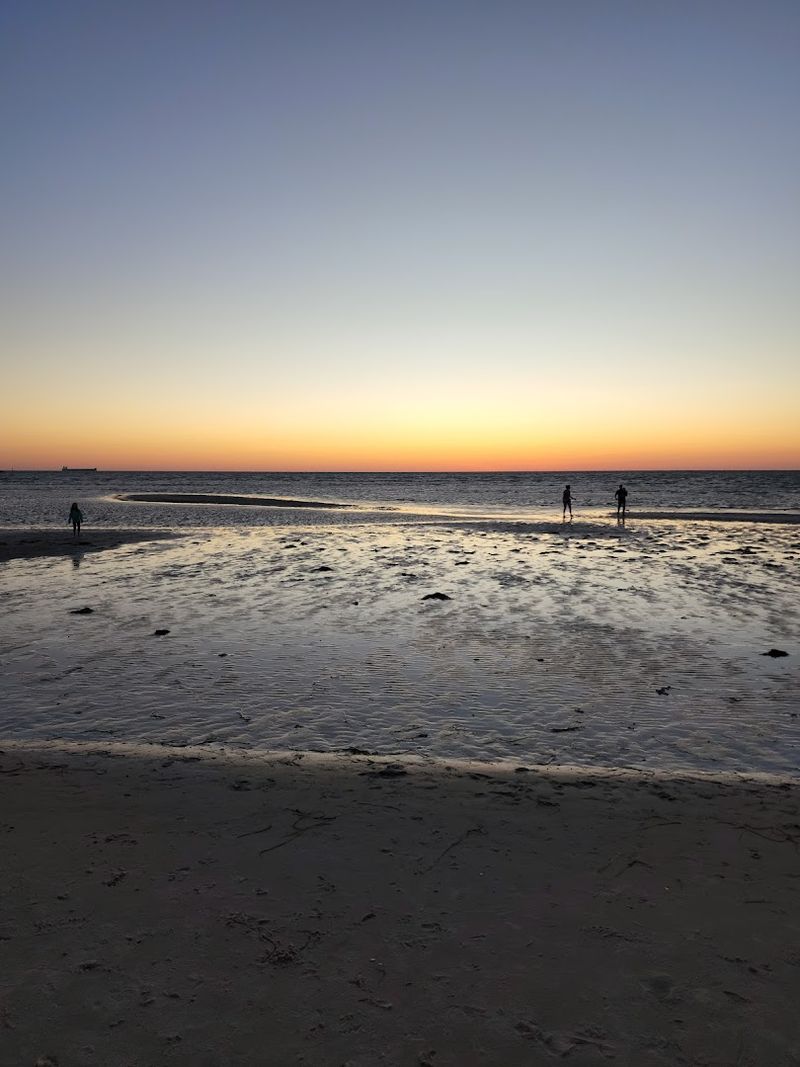
Here is something that genuinely blew my mind when I first learned it: the shape and behavior of the Chesapeake Bay itself is directly connected to that ancient cosmic impact. The bay’s unusual geometry, particularly its wide upper section tapering toward the lower bay near Cape Charles, reflects the underlying structure of the crater beneath the seafloor.
Geology does not forget, even after 35 million years.
The fractured and weakened rock inside the crater basin made it easier for rivers and ocean forces to erode the land over time. As sea levels rose and fell across geological epochs, the crater’s depression consistently guided water into its bowl.
The result is one of North America’s most ecologically important estuaries, shaped in part by a space rock that hit during the age of ancient marine mammals.
Scientists studying the bay’s hydrology have noted that groundwater behavior in the region is also influenced by the crater structure. The compressed and shattered rock beneath Cape Charles affects how water moves through underground aquifers.
Virginia’s water management researchers factor in the crater’s presence when modeling the region’s long-term groundwater supply. It is a reminder that a single event millions of years ago is still quietly running the show down here.
Cape Charles, the Town That Grew on Cosmic Real Estate
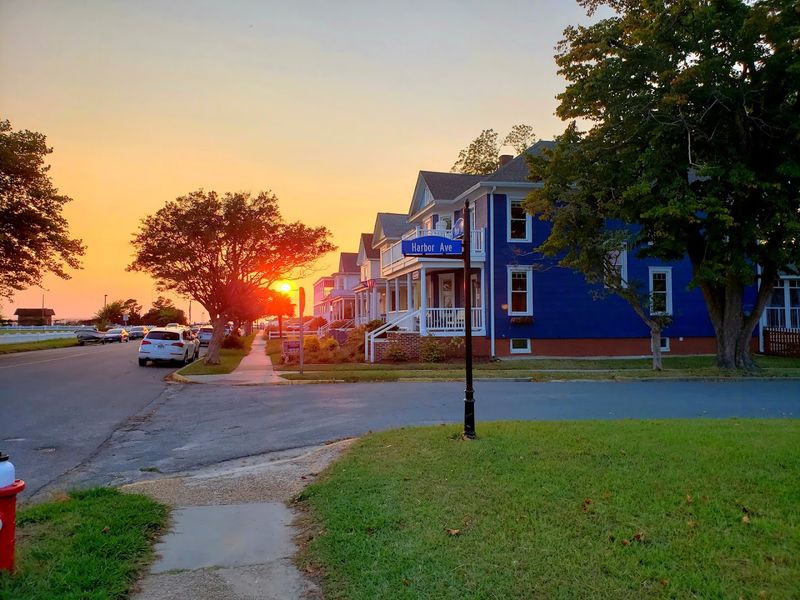
Cape Charles is the kind of place that makes you slow down without even trying. The streets are wide and tree-lined, the architecture is a gorgeous mix of Victorian and early twentieth-century styles, and the pace of life feels genuinely unhurried.
It is a real town with real character, and the fact that it sits atop one of Earth’s great geological wonders only adds to its appeal.
Founded as a railroad terminus in the late 1800s, Cape Charles grew into a modest but important hub for commerce and transportation on Virginia’s Eastern Shore. The historic district is remarkably well-preserved, with buildings that have survived long enough to develop genuine personality.
Walking those streets feels like flipping through a living history book, one that happens to have a cosmic footnote buried several thousand feet below.
The town’s small scale works entirely in its favor. Everything worth seeing is within easy walking distance, and the waterfront offers sweeping views across the lower Chesapeake Bay.
On clear days, the bridge-tunnel connecting the Eastern Shore to Virginia Beach is visible in the distance. Knowing that the ground beneath your feet marks the center of an ancient impact crater makes even a simple stroll through Cape Charles feel like something genuinely extraordinary.
What Scientists Found When They Drilled Deep Into the Crater
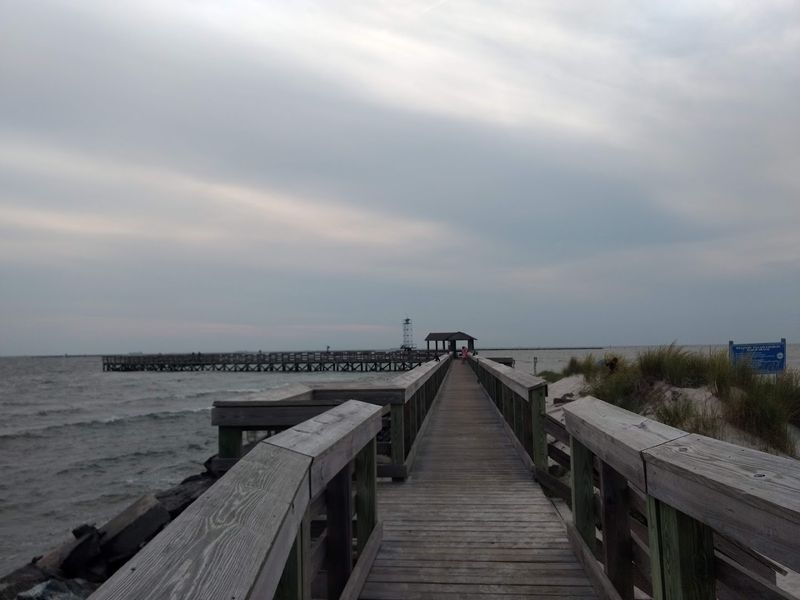
Drilling into an ancient impact crater is not a casual weekend project, but scientists committed to it because the potential discoveries were too significant to ignore. The USGS-led drilling efforts at the Chesapeake Bay impact crater recovered core samples from deep below the surface, pulling up rock that had not seen daylight since the Eocene epoch.
What came up from those boreholes rewrote our understanding of the region’s geology.
The samples revealed layers of suevite, a chaotic mixture of shattered rock fragments, glass, and impact melt that forms only under the extreme heat and pressure of a meteorite impact. Below that, geologists found the crystalline basement rock of the ancient seafloor, pulverized and jumbled in ways that no earthly geological force could replicate.
Shocked quartz grains, deformed at the molecular level by the impact’s pressure wave, showed up throughout the samples.
One particularly fascinating finding involved ancient seawater trapped in pockets within the crater’s breccia layers. This water, isolated from the surface world for tens of millions of years, has a salinity and chemical composition unlike anything found in modern oceans.
It is essentially a liquid time capsule sitting beneath Cape Charles, Virginia, offering researchers a rare window into the chemistry of ancient seas.
Visiting Cape Charles: A Geological Pilgrimage Worth Making
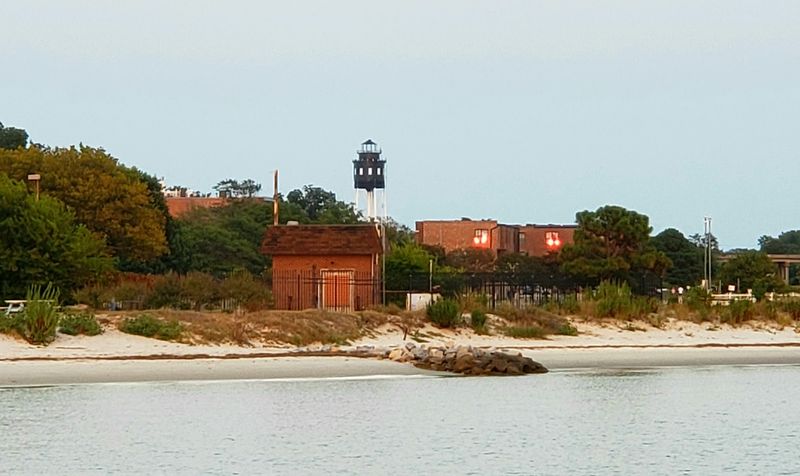
Arriving in Cape Charles for the first time feels like discovering a secret that most of the world has somehow missed. The town is not overrun with tour buses or souvenir shops.
It is calm, genuine, and utterly charming, with a waterfront that invites you to simply stand still and take it all in. And once you know about the crater beneath your feet, every moment here carries a different kind of weight.
The Cape Charles Natural Area Preserve, located nearby, offers trails through coastal habitats that sit within the broader crater region. Birding is exceptional here, with the area serving as a major stopover point along the Atlantic Flyway during migration seasons.
The combination of geological history and natural beauty makes this corner of Virginia genuinely special in a way that is hard to articulate but easy to feel.
The town beach is calm and family-friendly, with shallow waters and soft sand that make it a relaxing spot to spend an afternoon. Kayaking and paddleboarding on the bay let you appreciate the water from a perspective that feels almost meditative.
For anyone who loves the intersection of science, history, and natural beauty, Cape Charles delivers a travel experience that is impossible to replicate anywhere else on the East Coast.
The Geological Significance That Put Virginia on the Science Map
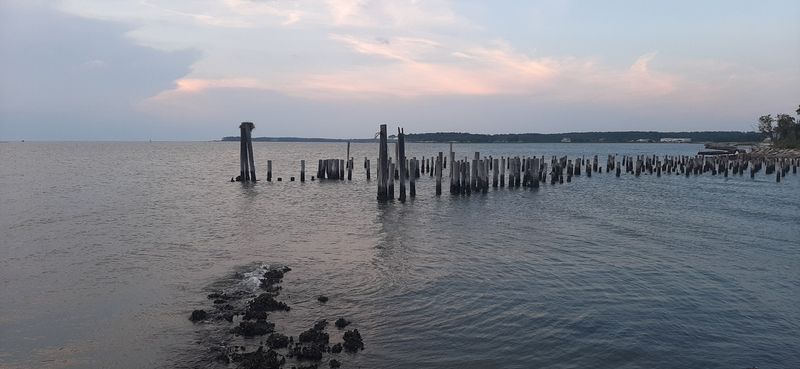
Before the Chesapeake Bay impact crater was formally identified and documented, Virginia was not exactly a headliner in the world of planetary geology. Plenty of interesting rock formations, sure, but nothing that made geoscientists drop their coffee mugs in astonishment.
The crater changed all of that almost overnight, catapulting this region into serious scientific conversation at the global level.
The structure is now recognized as one of the best-preserved large impact craters on Earth, largely because it has been protected by thick layers of sediment that kept it sealed from erosion. Most impact craters of similar age have been worn down to near-invisibility by millions of years of geological activity.
The Chesapeake Bay crater retained enough of its original structure to allow detailed scientific analysis, which is extraordinarily rare.
Research published by the USGS and other institutions has used this crater as a reference point for understanding how impact events affect groundwater systems, coastal geology, and sediment dynamics. It has even contributed to broader planetary science, helping researchers model what happens when impactors hit ocean environments on other worlds.
Virginia’s contribution to human knowledge of the cosmos, it turns out, is written in the rock layers beneath Cape Charles.
Plan Your Trip to Cape Charles and Stand on History
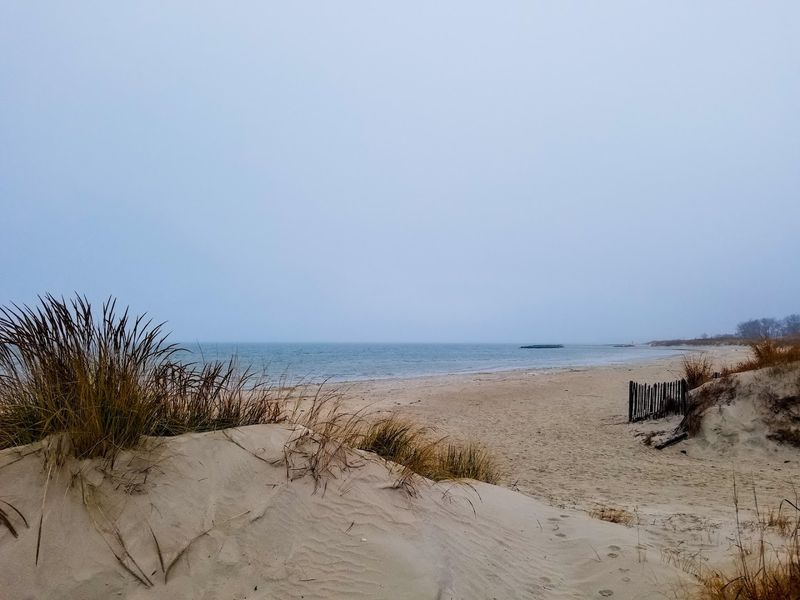
Getting to Cape Charles is part of the adventure. Driving down the Delmarva Peninsula through Virginia’s Eastern Shore puts you on a narrow ribbon of land between the Atlantic Ocean and the Chesapeake Bay, with farmland, wildlife refuges, and small towns rolling past your windows.
The landscape feels remote in the best possible way, like the rest of the world agreed to stay home that day.
The town is also accessible via the Chesapeake Bay Bridge-Tunnel from the Virginia Beach side, one of the most dramatic drives in the entire state. Crossing that engineering marvel with open water stretching in every direction, knowing you are approaching the center of an ancient impact structure, is a legitimately cinematic experience.
Cape Charles sits at Virginia 23310, right at the southern tip of the Eastern Shore.
Once you arrive, take your time. Wander the historic district, sit on the beach, look out across the bay, and let the scale of what happened here sink in slowly.
A comet hit this spot tens of millions of years ago, and the Earth absorbed the blow and kept going. Now you get to stand at the center of it all and feel just a little bit cosmic yourself.
Pack your bags and get here.
Dear Reader: This page may contain affiliate links which may earn a commission if you click through and make a purchase. Our independent journalism is not influenced by any advertiser or commercial initiative unless it is clearly marked as sponsored content. As travel products change, please be sure to reconfirm all details and stay up to date with current events to ensure a safe and successful trip.
