History books leave a lot out. Like the fact that thousands of German and Italian prisoners of war once lived in a camp right here in Texas.
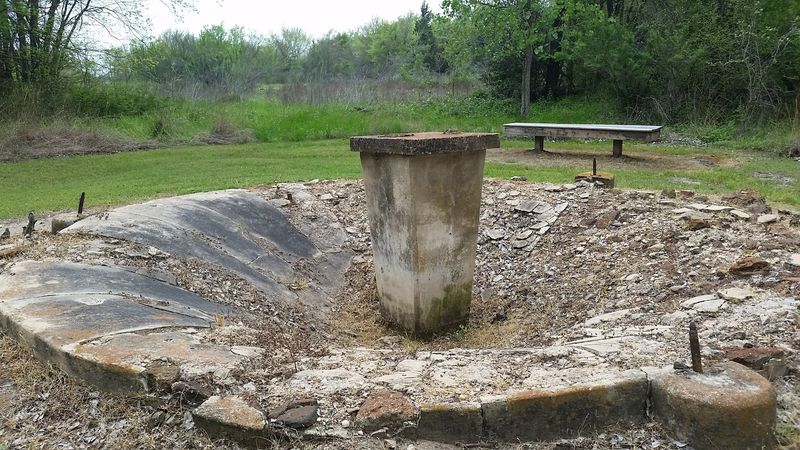
This site held nearly 5,000 POWs during World War II, which is a detail that surprises most people. The original building foundations still sit in the grass, quiet and mostly forgotten.
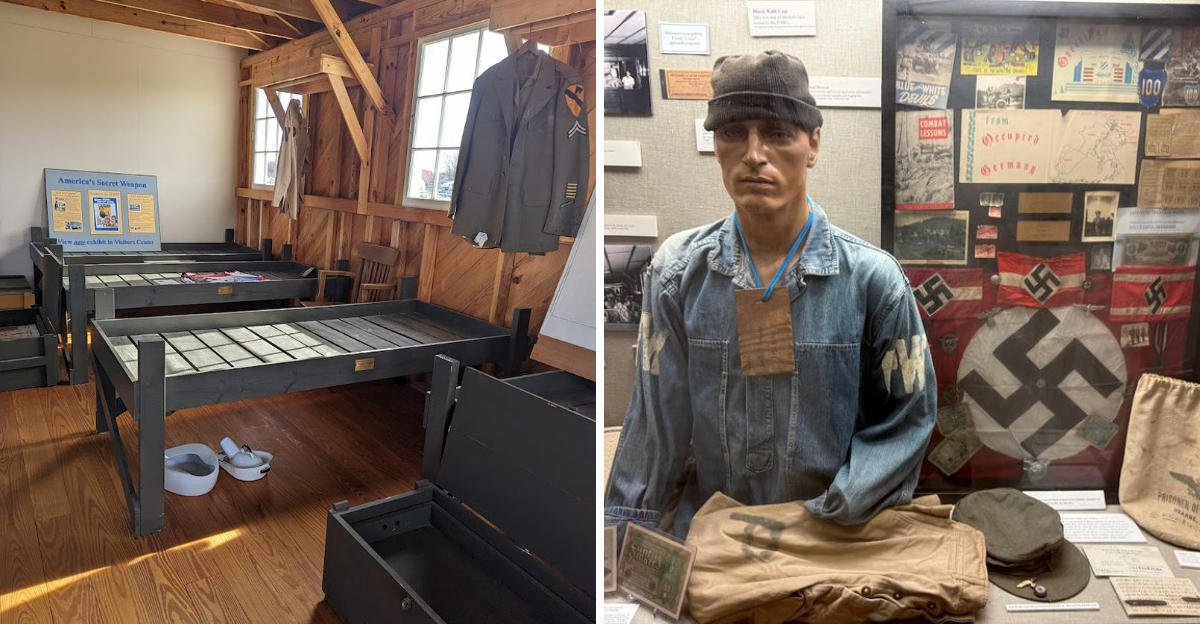
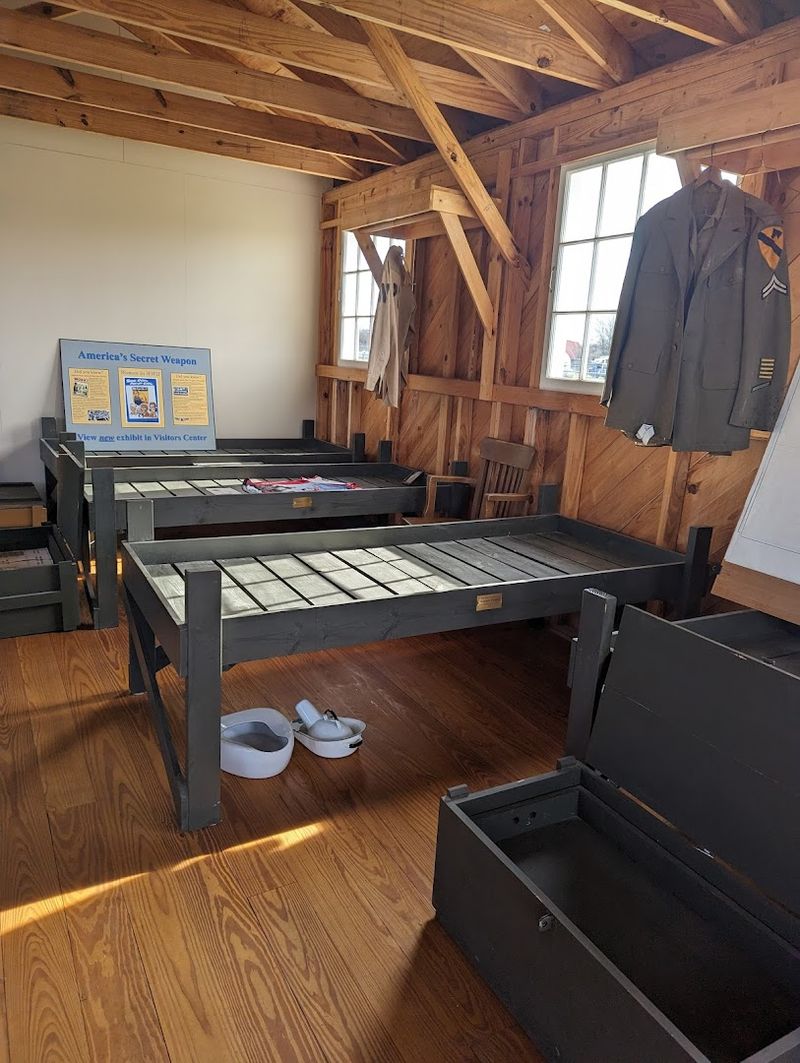
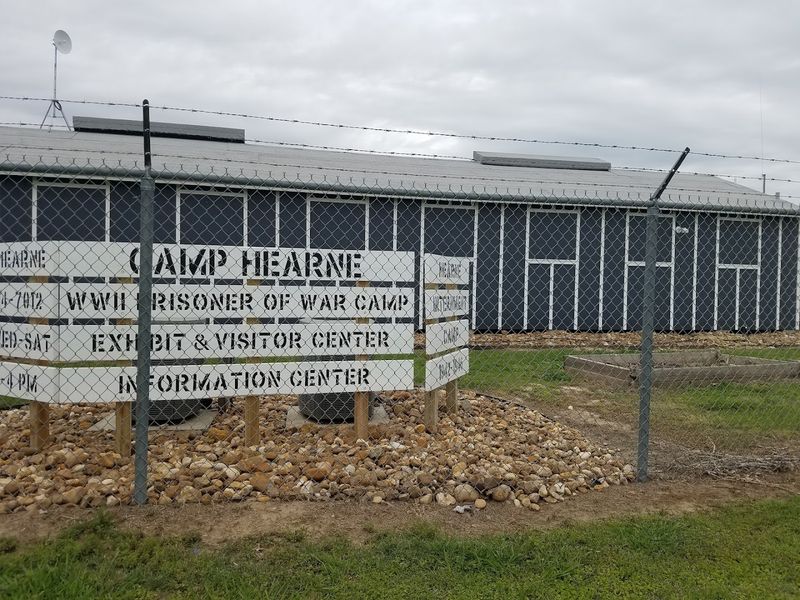
A reconstructed barracks helps tell the real story of what daily life looked like behind the fence. Not the glorified version from movies, but the actual mess of hunger, boredom, and waiting for a war to end.
Texas has plenty of battle sites and memorials, but this one feels different. It is strange to walk where prisoners once walked, to stand where they slept and ate and wondered if they would ever go home.
A person does not need to be a history buff to feel something here.
How Camp Hearne Came To Be And Why Texas Was Chosen
Not every state has the right conditions for housing thousands of prisoners of war, but Texas checked almost every box the U.S. military needed. The location in Hearne was selected for very specific reasons, and understanding those reasons makes the whole story feel more real.
The terrain here is remarkably flat, which made construction fast and surveillance practical. The town sat far enough from the coastline to eliminate escape-to-sea risks, and a functioning railroad line ran right through, making supply deliveries and prisoner transfers straightforward.
Local farms desperately needed laborers during wartime, when so many American men had shipped overseas. That practical need shaped the decision just as much as geography did.
Camp Hearne was commissioned in 1942 and officially activated in December of that year, built to hold between 4,800 and 5,000 prisoners at its peak capacity.
That made it one of the largest POW facilities in the entire state of Texas. The sparse local population also reduced the risk of outside contact or interference.
What strikes me most is how calculated and deliberate the whole setup was, a military operation hidden in plain sight across quiet Texas farmland.
The Afrika Korps Connection That Makes This Place Unique
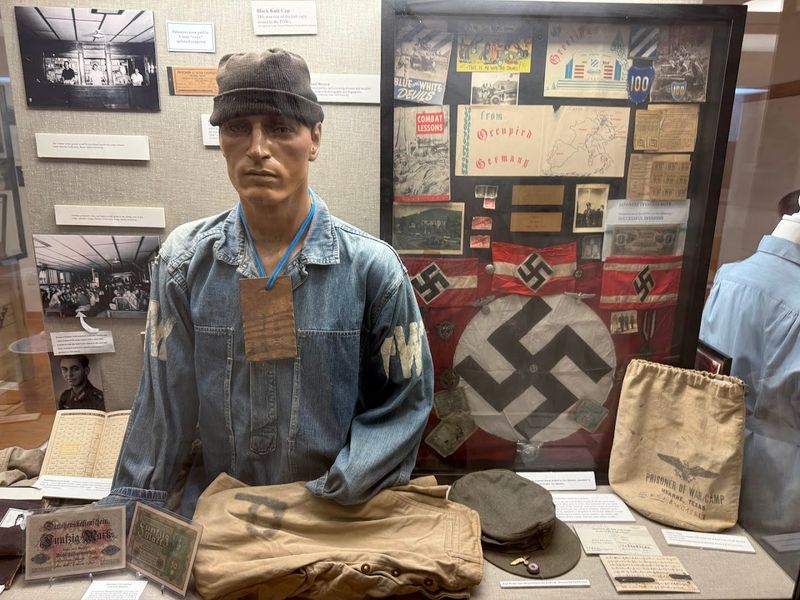
Most of the men held at Camp Hearne were not ordinary soldiers. They came from the Afrika Korps, the elite German force commanded by Field Marshal Erwin Rommel in the North African campaign.
That detail alone sets this place apart from most POW stories you have probably heard before.
These were battle-hardened, highly trained soldiers who had fought across the deserts of Libya and Tunisia. After Allied forces secured North Africa in 1943, tens of thousands of German prisoners were shipped across the Atlantic, and many of them landed in Texas.
Hearne became home to a large portion of those men.
What makes this particularly interesting is the psychological tension that came with it. These were not broken or demoralized soldiers in many cases.
They were proud, disciplined, and some were deeply committed to Nazi ideology, which created serious internal conflicts within the camp.
The Afrika Korps reputation was well known even among Allied forces, who respected their tactical skill. Seeing their story told through a small Texas museum adds a layer of depth that you rarely get from standard war history.
It reframes what it means to understand the enemy.
Fritz Ritz, The Surprising Nickname Locals Gave The Camp
Locals around Hearne had a name for the camp that says a lot about what they observed from the outside. They called it the Fritz Ritz, a playful nod to the relatively comfortable conditions the German prisoners seemed to enjoy compared to what many Americans expected a wartime prison to look like.
Under the Geneva Convention, the United States was obligated to provide prisoners with adequate food, shelter, clothing, and basic amenities. The U.S. took that obligation seriously, which meant Camp Hearne offered more than most people imagined a POW facility would.
Prisoners ate regular meals and had access to recreational programs and educational opportunities.
From the outside, it probably did look a bit like a resort compared to the deprivation many American families were experiencing with wartime rationing. That contrast was not lost on Hearne residents.
The nickname stuck and became part of the local memory of the camp.
It is a detail that complicates the simple narrative of war as pure suffering. The reality was more nuanced, shaped by international law, political calculation, and a genuine belief that humane treatment served American interests abroad.
History rarely fits into a neat box, and Camp Hearne proves that beautifully.
The Dark Side, Nazi Control And Fear Inside The Camp
Underneath the relatively comfortable surface of Camp Hearne, something much darker was happening. A faction of hardcore Nazi sympathizers within the prisoner population worked aggressively to control their fellow Germans through fear and intimidation.
It was an internal power struggle that American authorities struggled to contain.
These Nazi loyalists enforced a strict code of silence and obedience among prisoners. Anyone who showed friendliness toward Americans, expressed doubt about Germany’s war effort, or failed to demonstrate proper ideological commitment became a target.
The pressure was constant and the consequences could be severe.
This internal dynamic represented one of the most serious security failures of the entire U.S. POW program.
Camp administrators found it genuinely difficult to manage a population where some prisoners were policing other prisoners more harshly than the guards were. The ideological grip was that strong.
Learning about this aspect of Camp Hearne shifts the whole story in an unexpected direction. It is no longer just a story about Americans housing foreign soldiers.
It becomes a story about how authoritarian ideology travels, how it survives even in captivity, and how it turns people against each other in the most confined and desperate of circumstances. That is a lesson that still resonates today.
The Murder Of Hugo Krauss And What It Revealed
The most chilling moment in Camp Hearne’s history happened in December 1943, when Corporal Hugo Krauss was beaten to death by fellow German prisoners. His story is heartbreaking and complicated in equal measure, and it cuts right to the heart of what made this camp so unusual.
Krauss had immigrated to New York as a child, which meant he had lived in America before eventually returning to Germany and being drafted into the Wehrmacht. Inside the camp, he made no secret of his criticism of the Third Reich and his friendly attitude toward American personnel.
That made him a marked man in the eyes of the Nazi faction.
Seven prisoners were initially convicted of his murder. Some sentences were later reduced, and all of those convicted were eventually released by President Harry S.
Truman in 1949. The case drew attention to how difficult it was to maintain order and justice inside a camp where ideological enforcement was already so entrenched.
Hugo Krauss deserves to be remembered. His story is a reminder that the consequences of extremism do not stay on battlefields.
They follow people into camps, into barracks, and into the quiet corners of history where most people never think to look.
Camp Hearne As The Central POW Post Office For All Of America
Starting in March 1944, Camp Hearne took on a role that went far beyond housing prisoners. It became the Central POW Post Office for all German prisoner-of-war mail across the entire United States.
That is a remarkable logistical responsibility for a camp in a small Texas town.
Every letter going to or from a German POW anywhere in the country passed through Hearne. Families in Germany trying to reach their sons and husbands, prisoners writing home, all of that communication flowed through this one central hub.
The volume must have been enormous.
Unfortunately, the Nazi faction inside the camp quickly recognized the power that came with controlling this communication channel. Mail could be monitored, intercepted, or manipulated, and that is exactly what happened.
The postal operation became another tool of internal control rather than a neutral service.
There is something quietly profound about this detail. Letters are personal.
They carry fear, love, longing, and hope. The idea that even those intimate communications were caught up in the camp’s internal power struggle adds a human dimension to the history that goes beyond military strategy or policy.
It reminds you that war affects people down to their most private moments of connection.
Prisoner Life, Concerts, Gardens, And A Stadium Theater
Not everything at Camp Hearne was grim. The non-commissioned officers, who were not required to work under the Geneva Convention, had significant free time on their hands, and they filled it in ways that are genuinely surprising to learn about.
Some prisoners built elaborate garden fountains that became real points of pride within the compound. Others constructed a stadium-style outdoor theater complete with an orchestra pit.
The craftsmanship involved in these projects was serious, not just busy work.
Several of the prisoners were professional musicians from leading German orchestras. They were allowed to keep their instruments and regularly gave concerts inside the camp.
The image of a German orchestra performing in a Texas POW camp in 1944 is one of those historical details that just does not fit any simple story.
Enlisted prisoners who did work were assigned to local farms, helping harvest cotton, onions, and pecans. They earned fair wages for this work, which gave them some economic agency even in captivity.
These details paint a picture of a place where human life found ways to continue, adapt, and even create beauty under extraordinary constraints. Camp Hearne was never just a prison.
It was a temporary world unto itself.
The Research That Brought Camp Hearne Back To Life
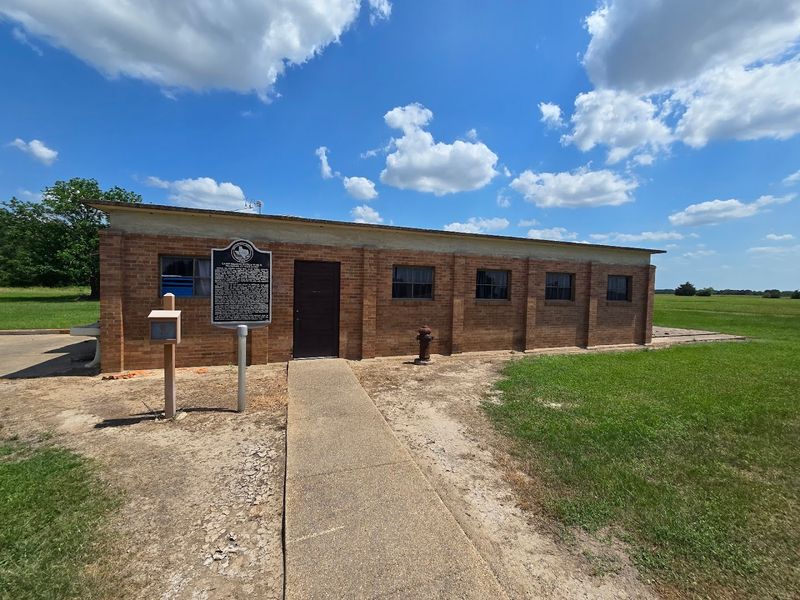
For decades after the camp closed in January 1946, the site sat largely forgotten. Structures were sold off as military surplus, and the land returned to its quiet rural existence.
Most people in the area had only faint memories or secondhand stories to go on.
That changed significantly in the mid-1990s when Dr. Michael Waters of Texas A&M University began conducting serious research into Camp Hearne’s history.
His work involved archaeological excavation, archival research, and community interviews that pieced together a much fuller picture of what life inside the camp had actually looked like.
The research uncovered physical remnants that had been hidden under years of grass and soil, including building foundations, artifacts left behind by prisoners, and traces of the structures they had built themselves. Each find added texture and specificity to a story that had nearly been lost entirely.
Dr. Waters’ contributions gave the site the credibility and documentation needed to develop it into the museum and historic landmark it is today. Academic research does not always feel exciting, but in this case it literally rescued a piece of history from oblivion.
Without that work, Camp Hearne might have remained nothing more than a fading local legend on the edge of a small Texas town.
Visiting Camp Hearne Today And What You Will Find There
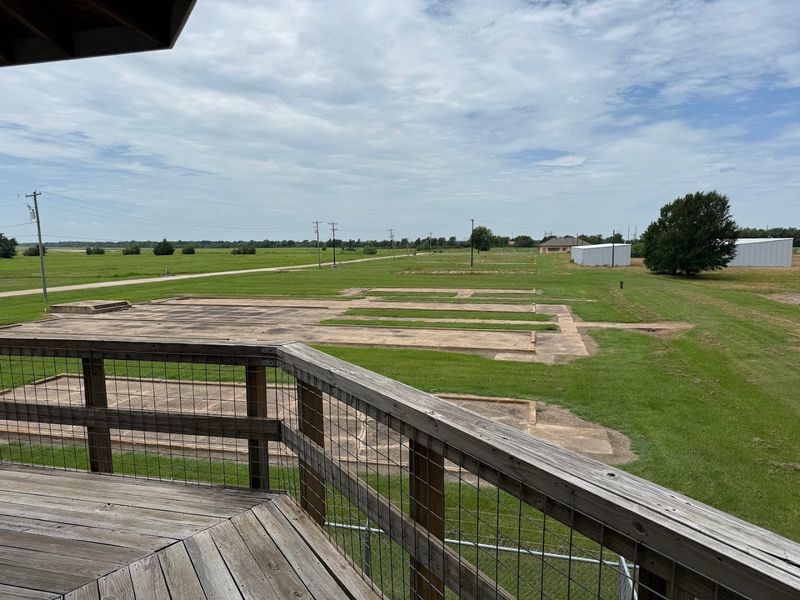
The Camp Hearne Historic Site today is a place worth making the drive for, especially if you are the kind of traveler who prefers substance over spectacle.
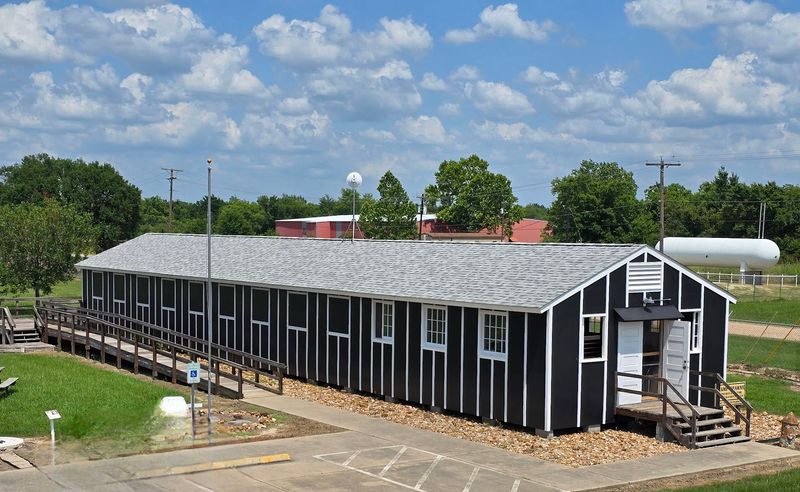
The grounds preserve building foundations, remnants of prisoner-built structures, and a replica barracks that now houses museum exhibits about the camp’s history.
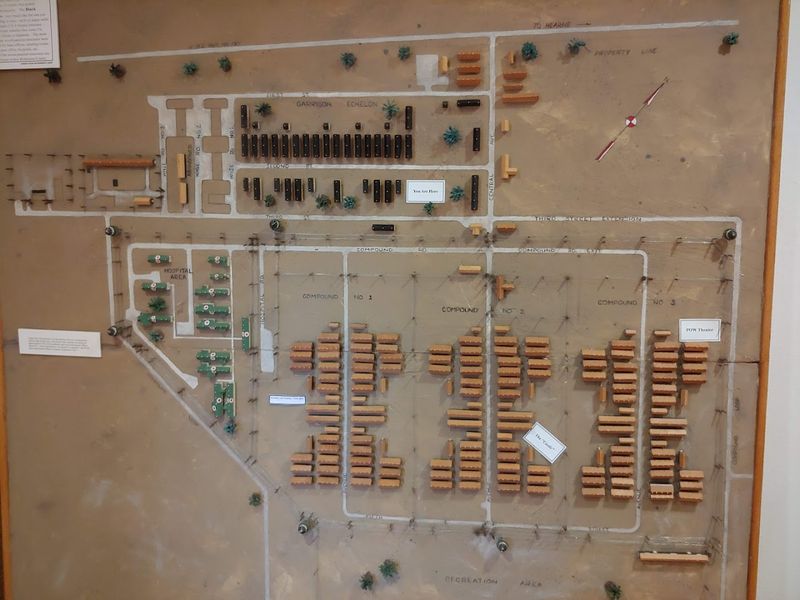
Walking the site gives you a real sense of scale. When you see how much space this camp once occupied, the numbers start to feel real in a way that reading statistics never quite achieves.
Five thousand people lived here. That is a small city, built in the middle of a Texas field.
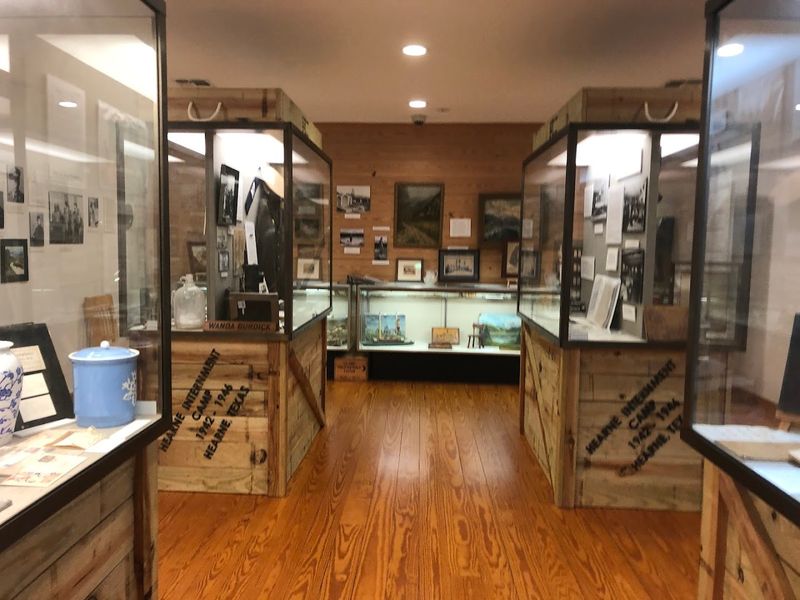
The exhibits inside the replica barracks are thoughtfully put together, covering everything from the daily routines of prisoners to the darker chapters like the Krauss murder and the Nazi faction’s influence. It does not shy away from complexity, which is exactly what good history education should do.
The site is managed with care and genuine respect for the full story, not just the comfortable parts. If you are traveling through Central Texas, Hearne is worth adding to your itinerary.
There are not many places left in America where you can stand on ground like this and feel history pressing back against you so directly.
Address: 12424 Camp Hearne Rd, Hearne, TX 77859
