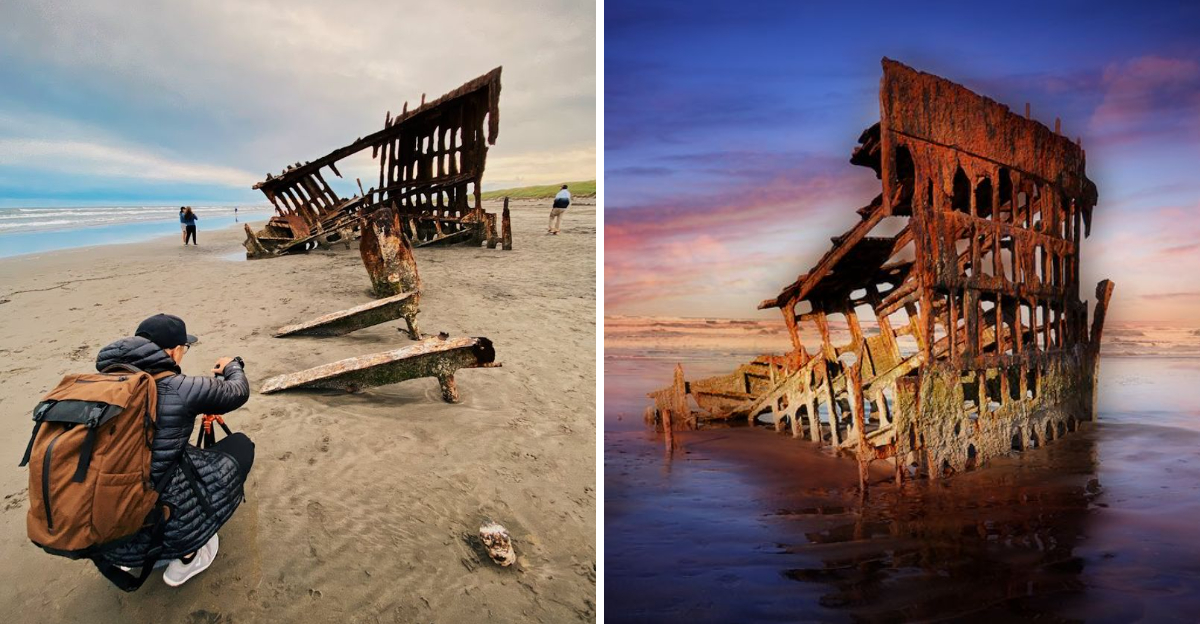
Oregon has a shipwreck that refuses to fade into history. I arrive and immediately understand why it’s one of the most photographed in the world.
The rusted remains sit right along the coast like they’ve become part of the shoreline itself.
Waves crash nearby, wind moves through the frame, and every angle feels like a postcard waiting to happen. Locals treat it like a familiar landmark, while I keep circling it trying to find a new perspective.
There’s something eerie but beautiful about it. A moment frozen from 1906 still holding attention over a century later.
And standing there, it feels less like ruins and more like a story the ocean never finished telling.
The Story Behind the 1906 Shipwreck
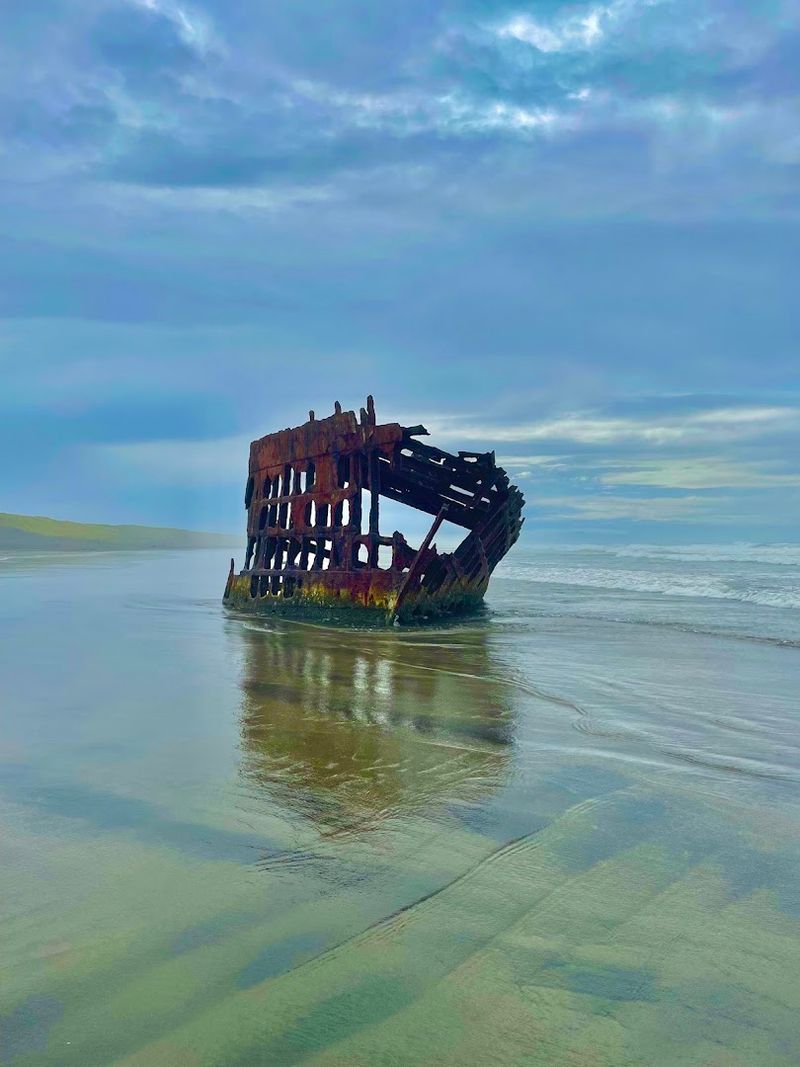
The night of October 25, 1906 was foggy and rough. A four-masted steel bark called the Peter Iredale was heading toward the Columbia River.
Strong currents and poor visibility pushed the ship off course. It ran hard into the sands near Clatsop Beach, just outside the Columbia River bar.
The crew of 25 survived the grounding. No lives were lost, which made the whole event feel almost miraculous.
The ship had sailed from Salina Cruz, Mexico, bound for Portland to pick up grain. That final voyage ended before it even truly began.
Captain H. Lawrence reportedly raised a toast to the wreck, wishing the hull “bon voyage” before walking away forever.
The ship was declared a total loss. Salvage attempts recovered very little.
Over more than a century, wind, waves, and salt have slowly eaten the hull down to its skeletal steel frame. What remains today is haunting, beautiful, and impossible to ignore.
Getting to the Wreck at Fort Stevens State Park
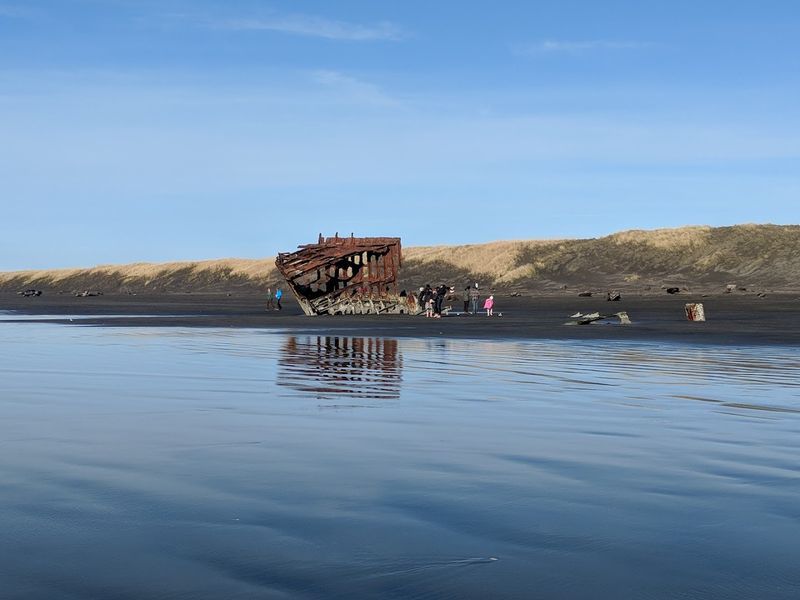
Fort Stevens State Park is easy to find off Highway 101. The park sits near Hammond, Oregon, just a short drive from Astoria.
Signs along the road point you directly toward the Peter Iredale parking area. The address is Peter Iredale Road, Hammond, OR 97121.
Parking is available close to the beach. Restrooms are located right in the parking lot, which is genuinely helpful.
The walk from the lot to the wreck is short and flat for most of the path. One section involves a gentle descent over a sand dune, so wear comfortable shoes.
Cell service near the parking lot is weak. Pay for your parking pass before you leave home or grab a day pass ahead of time.
The park is open daily from 6 AM to 10 PM. Getting there early on weekday mornings almost guarantees you a quieter, more personal experience with the wreck before the crowds arrive.
What the Wreck Actually Looks Like Up Close
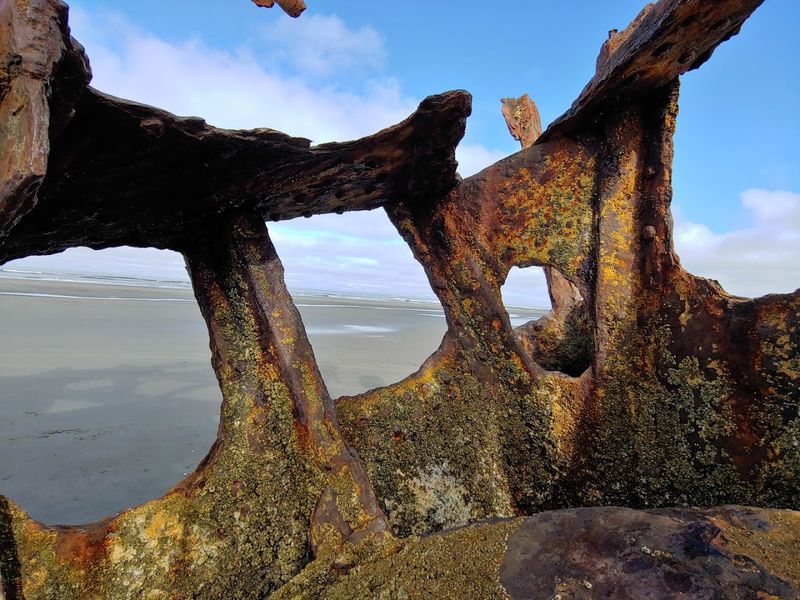
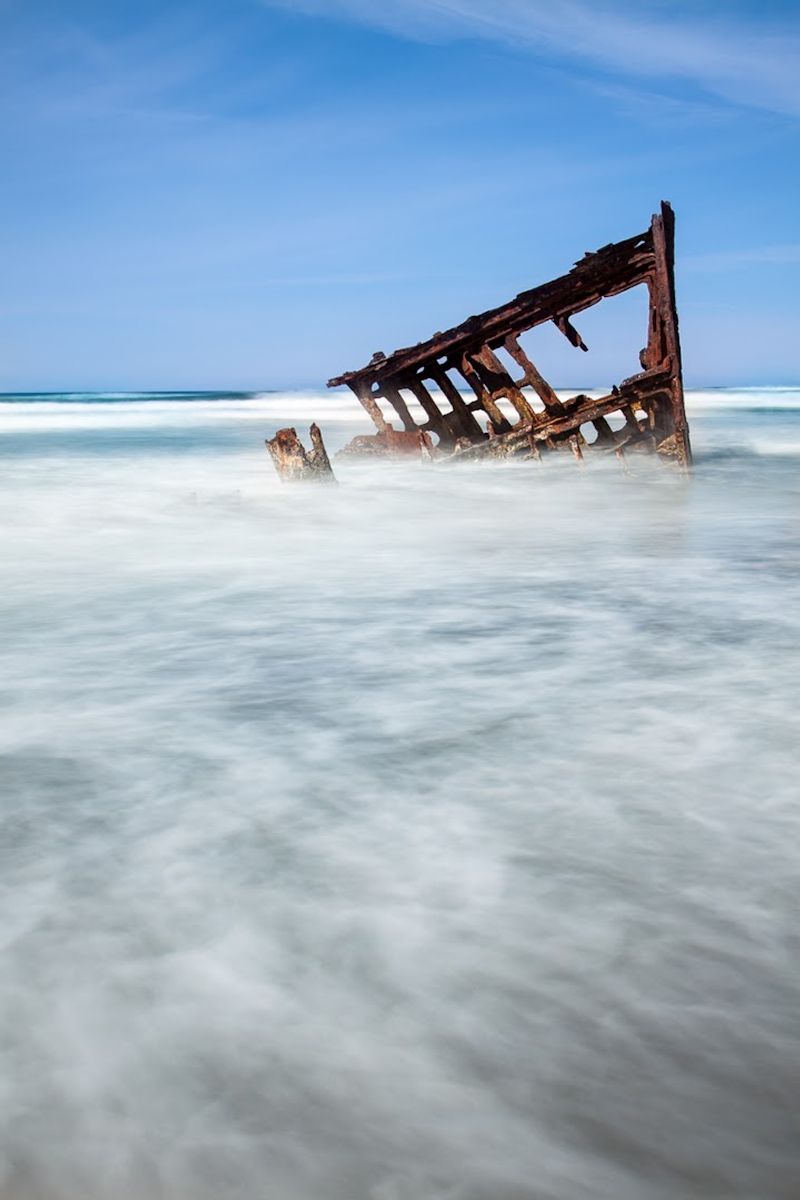
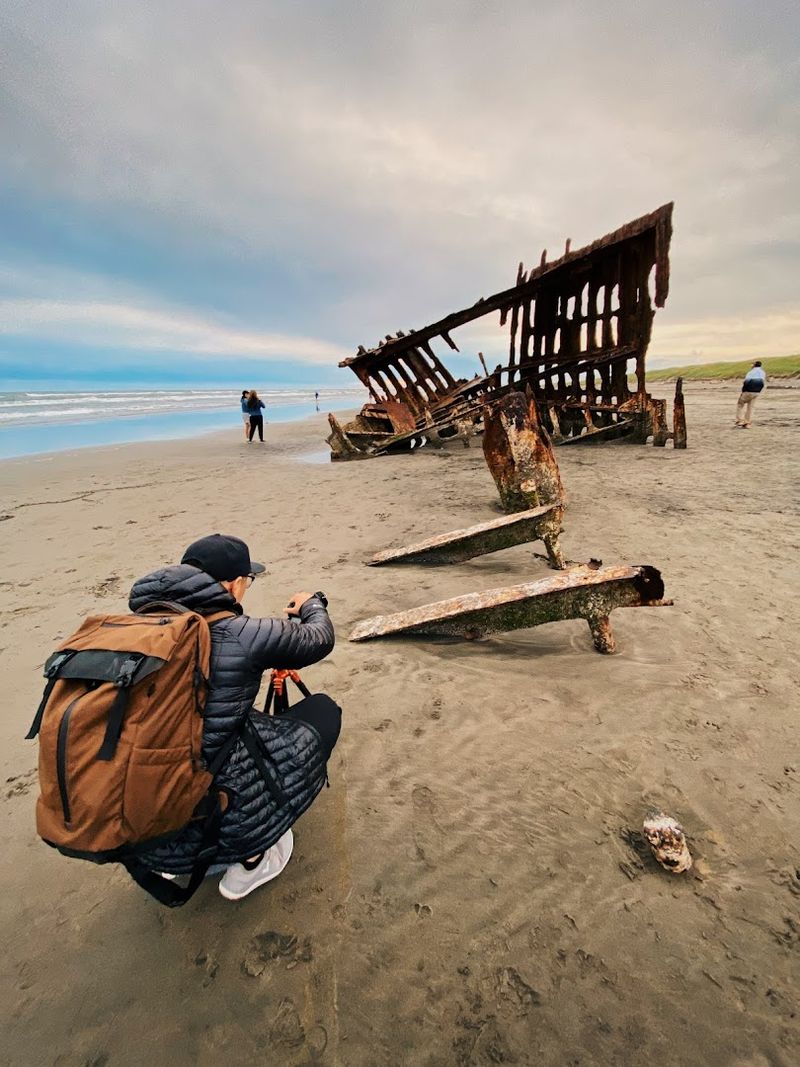
Up close, the wreck feels enormous. The rusted steel ribs curve upward like the skeleton of some massive sea creature.
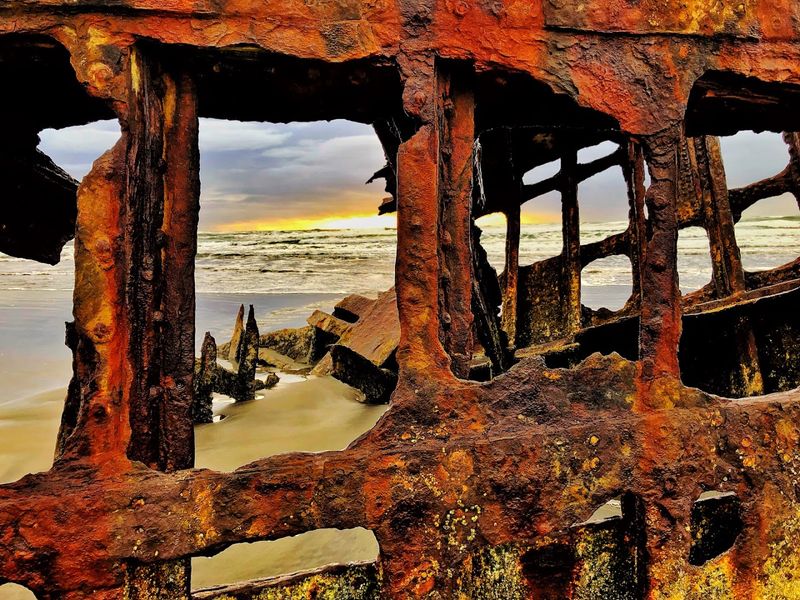
Bolts and beams twist together in shapes that look almost sculptural. Salt and time have turned everything a deep, rich shade of rust and brown.
The hull is mostly buried in sand now. Only the bow section and a few structural frames still stand above the beach.
At high tide, water swirls around the base of the metal. At low tide, more of the structure is revealed and you can walk right up to it.
Touching the metal feels strange in a good way. It is solid, cold, and covered in texture from over a century of weathering.
Barnacles cling to the lower sections. The scale of it surprises most visitors who only saw photos before arriving.
Standing inside the curved ribs and looking up at the sky through the frame is one of those small, unforgettable moments.
Best Time of Day to Visit for Photos
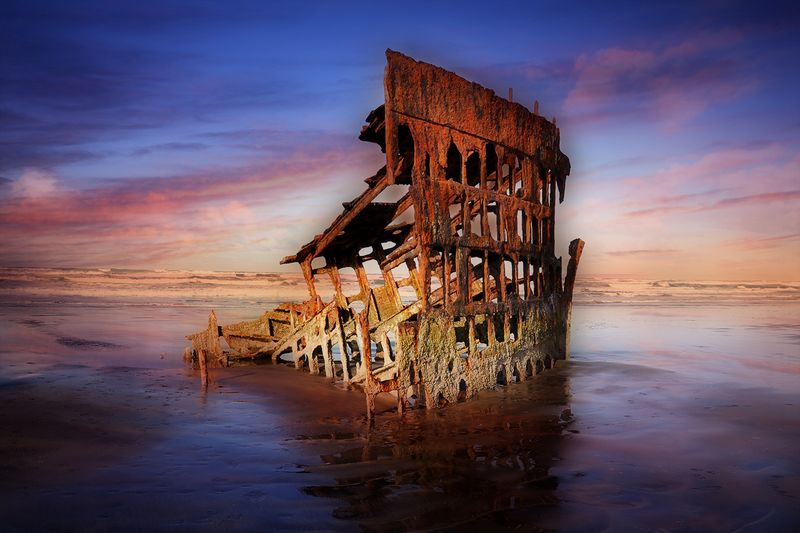
Sunset at the Peter Iredale is something else entirely. The sky turns shades of orange, pink, and deep purple behind the rusted frame.
Every photographer I have ever spoken to about this place mentions the sunset first. It genuinely earns the hype.
Early morning visits have their own reward. Fog often rolls in off the Pacific, wrapping the wreck in a soft grey mist.
The beach is quiet. Shorebirds pick through the wet sand.
The whole scene feels cinematic without even trying.
Low tide is the single most important factor for great photos. More of the ship is visible, and the wet sand creates stunning reflections.
Check tide charts before you go. The difference between high tide and low tide photos is dramatic.
Apps like Tides Near Me or a quick search for Clatsop Beach tide times will give you exactly what you need to plan the perfect visit.
Low Tide vs High Tide: Why Timing Matters
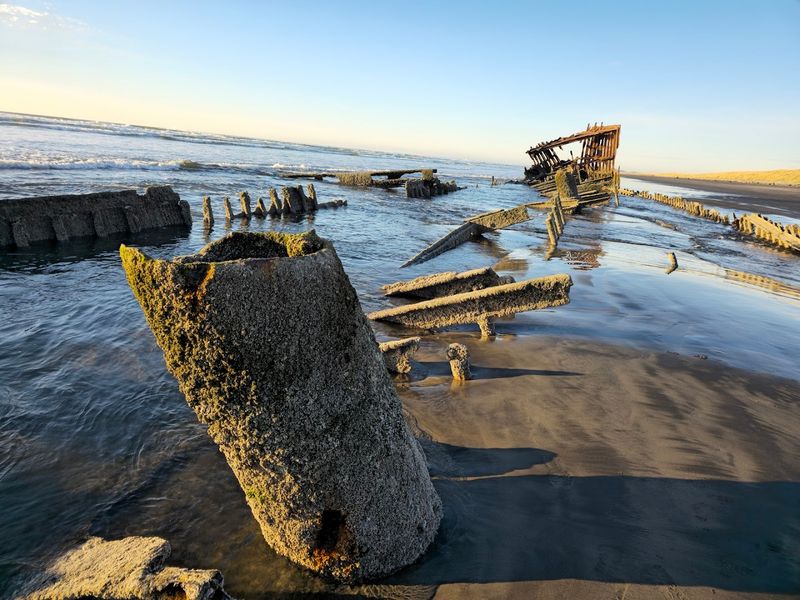
Tide timing changes everything at this beach. At low tide, the sand pulls back and exposes more of the ship’s steel frame.
You can walk around the entire structure. Kids can explore without getting their feet wet.
Sand dollars appear scattered across the flats nearby.
High tide tells a different story. Water rushes in around the base of the wreck.
The ship looks like it is rising from the sea. It is dramatic and moody, but you cannot get as close.
Some visitors actually prefer this version because it feels wilder and more raw.
Plan around the tide schedule rather than just showing up and hoping for the best. Low tide in the morning or late afternoon gives you the best combination of light and access.
Several visitors have mentioned finding five or more sand dollars during low tide walks near the wreck. Bring a small bag just in case.
The beach rewards those who pay attention to its rhythms.
Exploring the Beach Beyond the Wreck
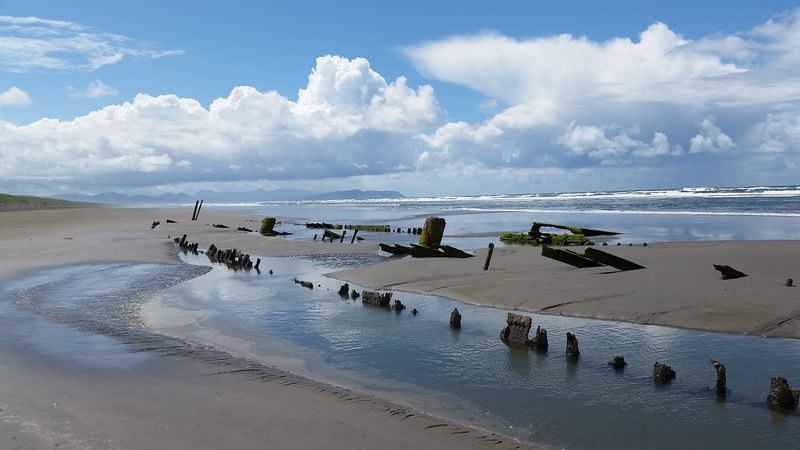
The beach stretching away from the wreck is massive and largely uncrowded. Head south and you can walk for miles along the Oregon coast.
The sand is dark and firm in many sections, almost black near the waterline. It has a texture and color unlike most beaches I have visited.
Vehicles are actually allowed on parts of this beach. Four-wheel-drive trucks and dune buggies cruise along the hard-packed sand near the water.
It adds an unexpected element to the experience. Bonfires are also permitted in designated areas, making evening visits feel especially memorable.
The dunes near the parking area are perfect for kids. Rolling down the sandy slopes kept one family I noticed entertained for a solid hour.
Shorebirds work the tide line constantly. During the right season, grey whales migrate along this stretch of coast and can sometimes be spotted from the beach.
Binoculars are worth packing for that reason alone.
The History of Fort Stevens State Park
Fort Stevens has a history that goes far beyond the shipwreck. The military fort was established during the Civil War to protect the mouth of the Columbia River.
It remained an active military installation through World War Two. It is the only military base in the continental United States to have been fired upon by a foreign enemy since the War of 1812.
A Japanese submarine shelled the fort in June 1942. No one was killed and little damage was done.
The incident became a strange footnote in American military history. The fort’s old gun batteries and earthworks are still visible throughout the park today.
Exploring those structures adds real depth to a visit. The park has miles of bike paths winding through forests and past historic sites.
Maps are available at the park entrance. History fans could easily spend a full day here without touching the beach at all.
The shipwreck and the military history together make Fort Stevens one of Oregon’s most layered destinations.
Wildlife and Nature Around the Wreck
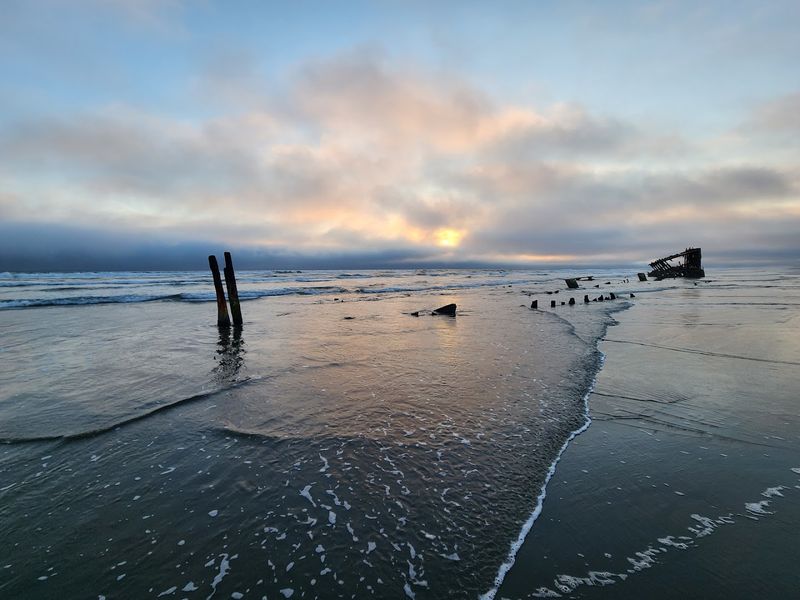
The beach around the Peter Iredale is alive in ways that sneak up on you. Sandpipers dart along the tide line in tight little groups.
Pelicans glide low over the surf in single-file formations. The whole coastline hums with bird activity, especially in the early morning hours.
Sand dollars are a genuine highlight. Visitors regularly find them scattered across the flats during low tide.
They are fragile and beautiful. The dark wet sand makes them easier to spot than on lighter beaches.
Some people find handfuls in a single walk.
Grey whale migration happens offshore during spring and fall. Spotting one from the beach is not guaranteed, but it happens often enough to keep your eyes on the horizon.
Sea foam collects along the shoreline after storms, drifting in thick white patches across the sand. The natural world at this beach feels active and present in a way that makes every visit feel slightly different from the last one.
Tips for Making the Most of Your Visit
A few small preparations make a big difference here. Download a tide chart app before you leave home.
Cell service near the parking lot is genuinely unreliable, and the parking payment system uses a QR code that requires a signal. Paying ahead online saves frustration.
Wear layers. The Oregon coast is windy even on sunny days.
A light jacket makes a long beach walk much more comfortable. Waterproof shoes are smart if you plan to walk close to the wreck at anything other than very low tide.
Bring a camera with a wide-angle option if you have one. The scale of the wreck rewards wide shots.
Arrive at least an hour before sunset for the best light. Weekday mornings are significantly less crowded than weekend afternoons.
The park is open from 6 AM to 10 PM daily. Restrooms are available at the parking lot.
Dogs are welcome but must be on a leash, and owners are expected to clean up after them throughout the park.
Why the Peter Iredale Stays in Your Memory
Some places are worth visiting once. This one pulls people back again and again.
Visitors mention returning every time they pass through the Oregon coast. The wreck looks different every single time because the sand, the tide, and the light never repeat themselves exactly.
Over a century of weathering has made it more beautiful, not less. The slow disappearance is part of the story.
Each visit captures something that will not exist in quite the same form on the next trip. That impermanence gives the place a quiet emotional weight that is hard to explain but easy to feel.
Children love it for the adventure. Adults love it for the history and the photography.
The combination of natural beauty, accessible location, and genuine historical significance is rare. Standing next to something that has survived over 118 years of Pacific storms creates a feeling of perspective that is hard to find anywhere else.
The Peter Iredale is not just a shipwreck. It is a landmark that earns its reputation every single day.
Address: Peter Iredale Rd, Hammond, OR 97121
Dear Reader: This page may contain affiliate links which may earn a commission if you click through and make a purchase. Our independent journalism is not influenced by any advertiser or commercial initiative unless it is clearly marked as sponsored content. As travel products change, please be sure to reconfirm all details and stay up to date with current events to ensure a safe and successful trip.
