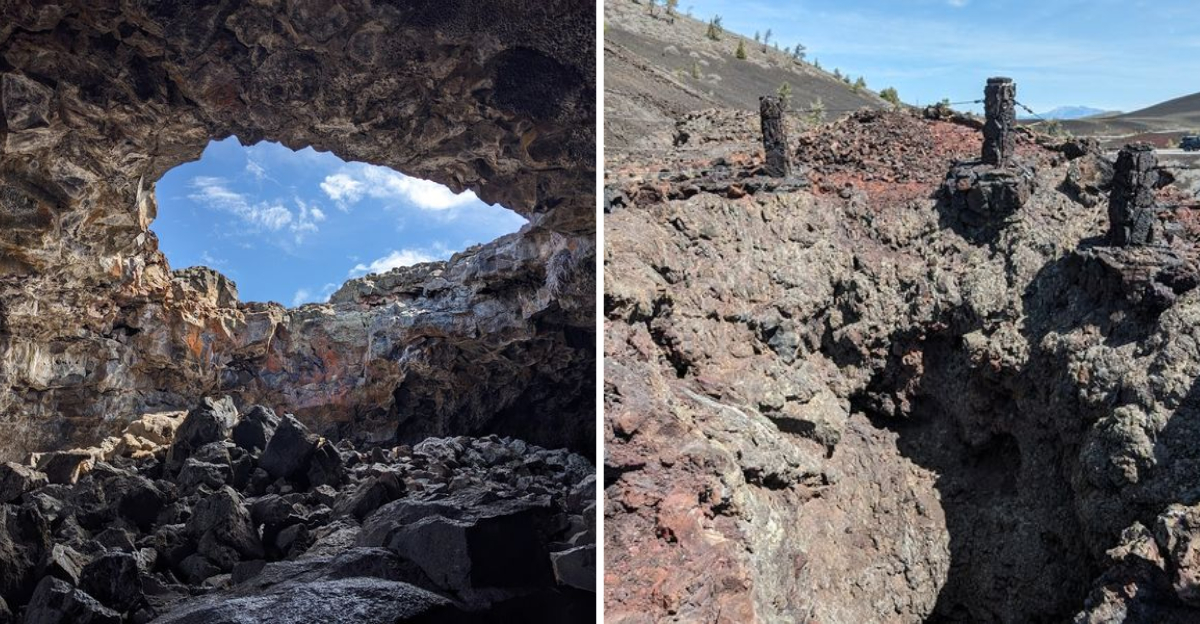
Endless black lava fields roll across the high desert of southern Idaho. Twisted rock formations, dark cinder cones, and ancient lava tubes stretch as far as the eye can see. The first time I saw it, my jaw genuinely dropped.
It looks like someone peeled back the earth and left behind a raw, volcanic canvas that time forgot. This is not your typical green and grassy park, and that is exactly what makes it so unforgettable. If you are a curious road tripper, a geology nerd, or just someone looking for something wildly different, this place delivers in ways that are hard to put into words.
The Volcanic Landscape That Looks Like Another Planet
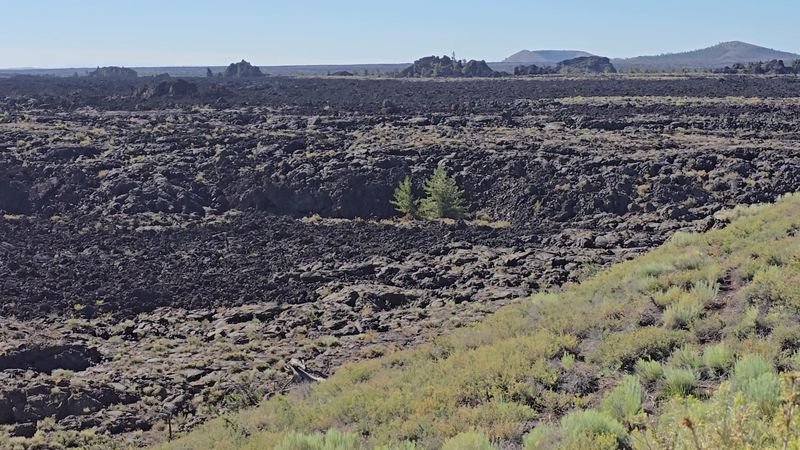
Most people do not expect Idaho to look like outer space, but that is exactly the feeling you get when you first drive into Craters of the Moon National Monument. The landscape is dominated by dark, jagged lava rock that stretches across 618 square miles of volcanic terrain.
It is raw, dramatic, and unlike anything most travelers have ever seen in the continental United States.
The lava flows here range in age from about 15,000 to just 2,000 years old, which means this land is geologically young. Basaltic fissure eruptions from the Great Rift, a 52-mile-long crack in the earth’s crust, shaped everything you see.
The result is a textured, otherworldly surface that early explorers compared directly to the surface of the Moon.
What makes this landscape so gripping is how alive it still feels despite looking so barren. Wildflowers push through cracks in the lava during spring.
Small animals dart between rocks. The contrast between the dark volcanic rock and the wide Idaho sky creates a visual drama that photographs cannot fully capture.
It is one of those rare places that earns every bit of wonder it inspires.
Hiking Trails for Every Type of Adventurer
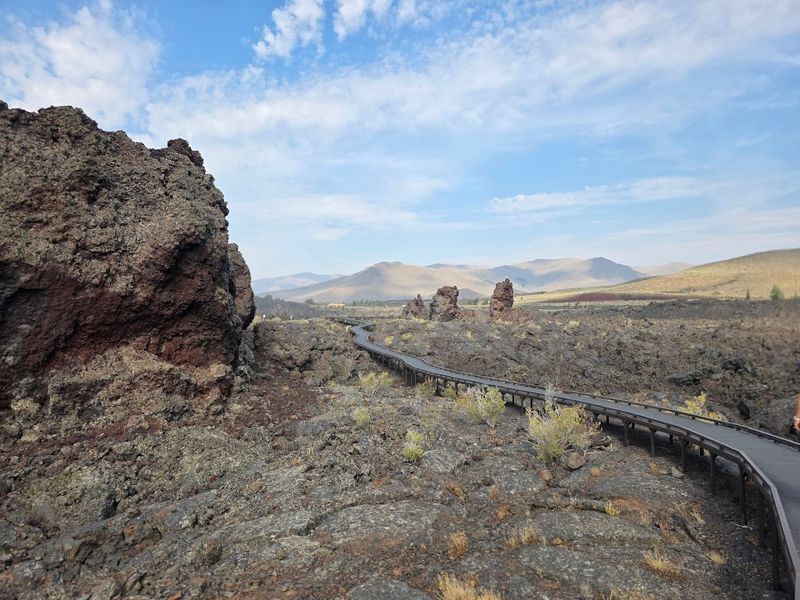
One of the best things about this park is that the trails genuinely cater to everyone. You do not have to be an experienced hiker to enjoy the place.
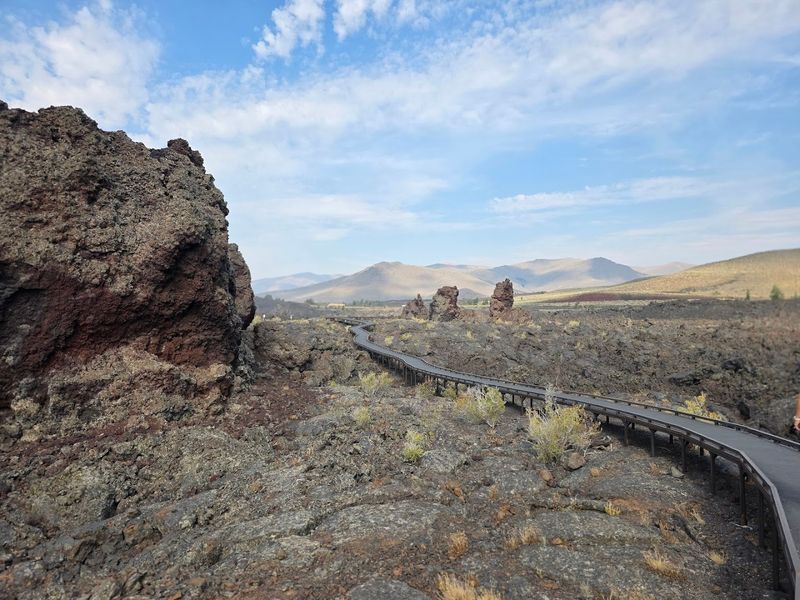
Short, paved interpretive trails like the Devils Orchard Nature Trail wind through chunky lava formations and offer informational signs that explain the geology in plain, accessible language.
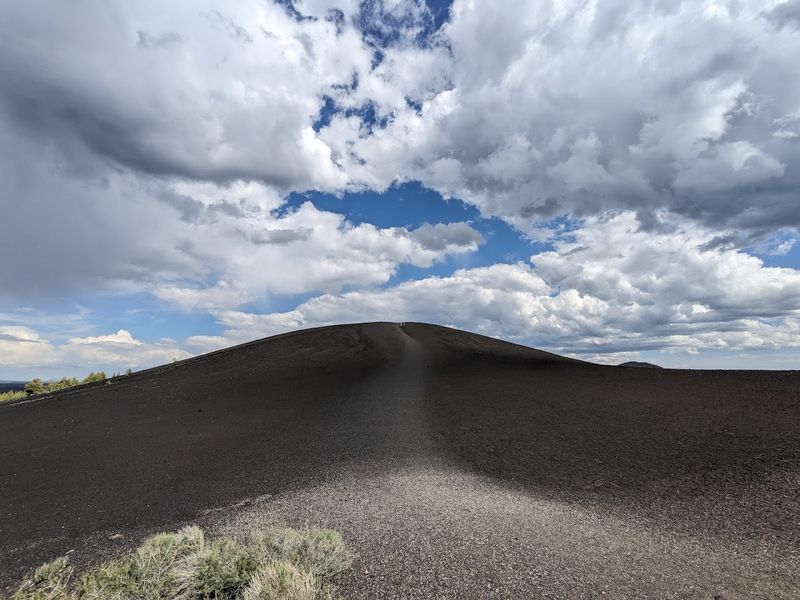
For those wanting a bit more of a workout, the hike up Inferno Cone is a must. It is steep and the loose cinders underfoot make every step feel like a small challenge, but the 360-degree panoramic view from the top is absolutely worth the effort.
You can see cinder cones, lava fields, and distant mountain ranges all at once from that single summit.
The North Crater Trail takes you through a more rugged section of the park, where the lava textures change noticeably and the silence feels deeper. Trail signage throughout the park is excellent, and many paths are even accessible for wheelchairs.
I appreciated how thoughtfully the park is designed to welcome visitors of all ages and abilities, making it a genuinely inclusive outdoor experience that does not sacrifice any of its wild, volcanic character.
Exploring the Lava Tube Caves
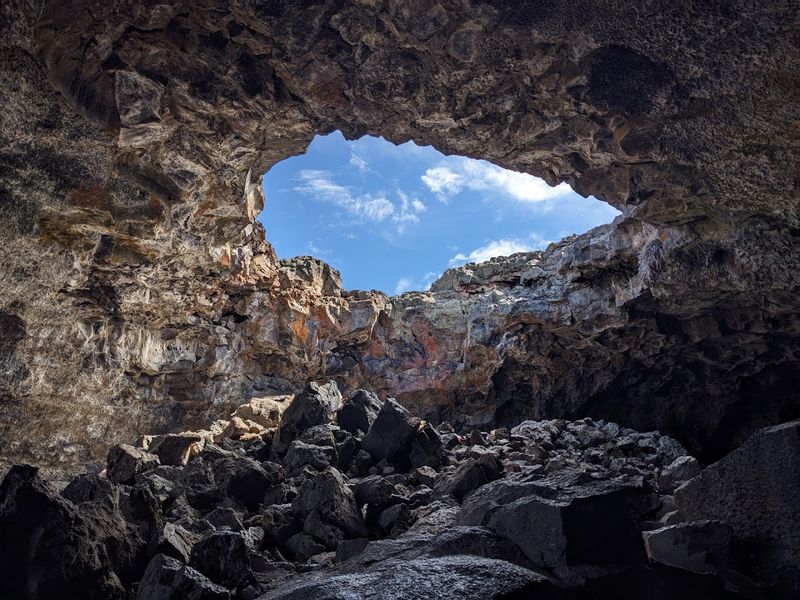
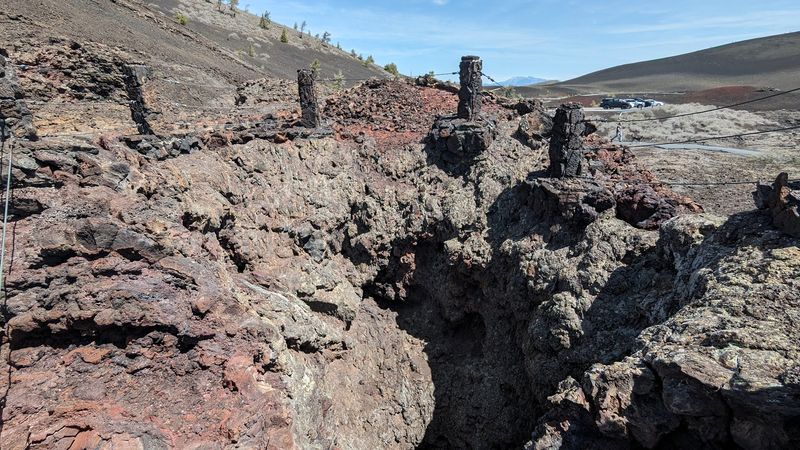
Crawling through a lava tube cave is one of those experiences that stays with you long after you have left the park. Craters of the Moon has five explorable caves, including Indian Tunnel, Dewdrop, Boy Scout, Beauty, and Buffalo Cave.
Each one has its own personality, its own challenge level, and its own strange, underground atmosphere that feels completely removed from the world above.
Indian Tunnel is the most accessible of the group, with a large collapsed ceiling that lets natural light pour in. It feels almost cathedral-like inside.
The smaller caves require more crouching and maneuvering, which honestly makes them more fun if you are up for it. Bring a good flashlight because the darkness in some sections is total and complete.
A free cave permit is required and can be picked up at the visitor center before you head out. There are strict rules about wearing clothes that have never been in another cave, and that rule exists to protect the bat population from a deadly fungal disease called white-nose syndrome.
The rangers explain this clearly and kindly. Respecting those guidelines is a small thing that makes a big difference for the wildlife living quietly in the dark.
The NASA Connection You Probably Did Not Expect
Here is a fact that tends to make people stop and look around the park with completely new eyes. In 1969, NASA sent Apollo astronauts to Craters of the Moon to train for their lunar missions.
Astronauts including Alan Shepard, Edgar Mitchell, Eugene Cernan, and Joe Engle walked this same volcanic terrain to learn how to identify rock samples and navigate a lava environment before heading to the actual Moon.
The basaltic rock found here is chemically similar to lunar rock, which is what made this location so valuable for training purposes. NASA researchers have continued to use the monument for space science studies even in more recent years.
Knowing that astronauts once practiced moonwalks right here in Idaho gives the landscape a whole new layer of meaning.
When you stand on the black cinders near Inferno Cone and look out across the silent lava fields, it is genuinely easy to understand why NASA chose this place. The visual similarity to the lunar surface is striking.
It is one of those rare moments where science, history, and natural wonder all collide in the same spot. The park even has a small mascot astronaut named Bob the Pika near the visitor center that kids absolutely love.
Stargazing at One of Idaho’s Darkest Skies
After the sun goes down at Craters of the Moon, the show is far from over. The park holds a designation as an International Dark Sky Park, which means light pollution here is minimal and the night sky is genuinely spectacular.
On a clear night, the Milky Way stretches overhead in a way that feels almost unreal if you are used to city skies.
The combination of the dark volcanic landscape below and the star-filled sky above creates a visual contrast that is hard to describe without sounding over-the-top. It just works.
The silence out there at night is deep and total, broken only by wind and the occasional sound of wildlife moving through the scrub.
Astrophotography enthusiasts make special trips to this park just for the night sky conditions. Even if you are not a photographer, simply lying back on the hood of your car and watching the stars is an experience worth planning your whole trip around.
The campground inside the park puts you right in the middle of that darkness, which makes staying overnight one of the smartest decisions you can make. One visitor described seeing a full moon rise over the bristlecone pines as genuinely enchanting, and honestly, that tracks completely.
Camping and Staying Overnight in the Lava Fields
Spending a night inside Craters of the Moon is a completely different experience from just passing through for a day hike. The campground sits right along the loop road, making it easy to access trails first thing in the morning before the day crowds arrive.
Sites are well-maintained and the park accommodates everything from tents to larger RVs up to 33 feet long.
Mornings in the campground have a particular kind of quiet that feels rare. The air is cool and clean, the volcanic landscape glows differently in early light, and the park feels like it belongs entirely to you.
Shoulder season visits, particularly in spring or early fall, offer the best balance of comfortable temperatures and fewer fellow campers.
One thing worth knowing is that summer weekends can get busy and noisier, so if solitude is your goal, aim for a weekday or an off-season visit. The park also offers backcountry camping for those who want to push even further into the wilderness.
Either way, waking up surrounded by ancient lava fields with nothing but open Idaho sky above you is the kind of morning that recalibrates your whole sense of what adventure means. Facilities are clean and well-kept throughout.
Practical Tips to Make the Most of Your Visit
A little preparation goes a long way at Craters of the Moon, and the visitor center is the best place to start. Rangers there are knowledgeable, friendly, and genuinely enthusiastic about the park.
Pick up your free cave permit here if you plan to explore the lava tubes, and ask about current trail conditions before heading out. The exhibits inside are well done and give solid geological context that makes everything you see outside more interesting.
Bring more water than you think you need. The high desert environment is dry and the dark lava rock absorbs heat intensely during summer months.
Sun protection is essential since there is almost no shade on most trails. Good closed-toe shoes with solid grip make a real difference on the uneven lava surfaces, which can be surprisingly sharp in places.
The 7-mile scenic loop road gives you access to all the major trailheads and viewpoints, and it works perfectly as an orientation route. Cell service is essentially nonexistent inside the park, so download maps or pick up a paper one at the entrance.
Winter visitors can explore the park on cross-country skis or snowshoes when the road closes to vehicles. However you choose to visit, give yourself at least half a day, a full day if possible.
Address: 1266 Craters Loop Road, Arco, Idaho
