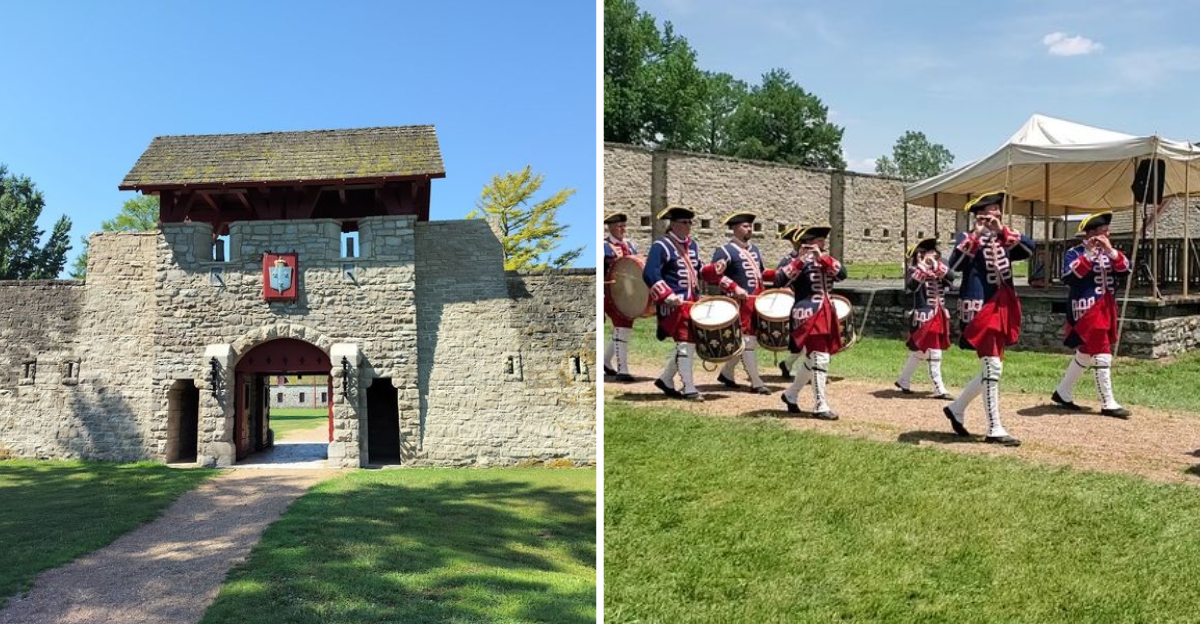
Cannon fire echoes off limestone walls once a year at this Illinois historic site. The rest of the time, the fort sits quietly in the countryside, like a secret the modern world forgot to tell anyone about.
I visited on a calm Tuesday. No crowds. No reenactors.
Just the low hum of history settling into your bones. Built by the French in the seventeen twenties, this place still carries its weight with quiet dignity. You can feel it the moment you step through the gate.
The Fort Itself: Limestone Walls That Refuse to Forget
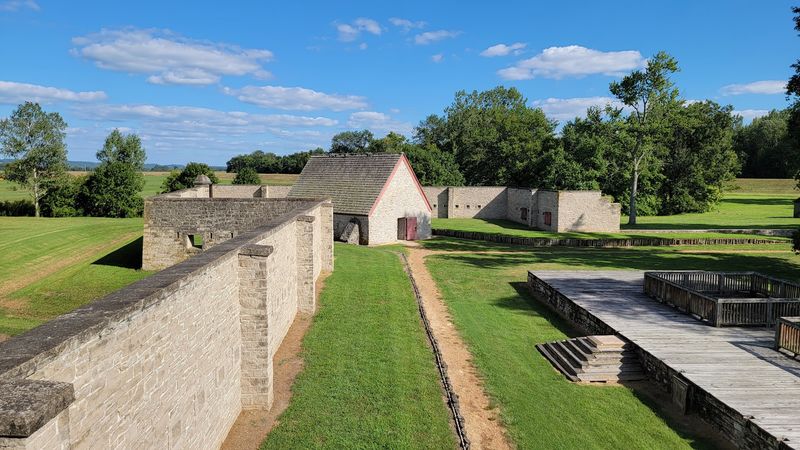
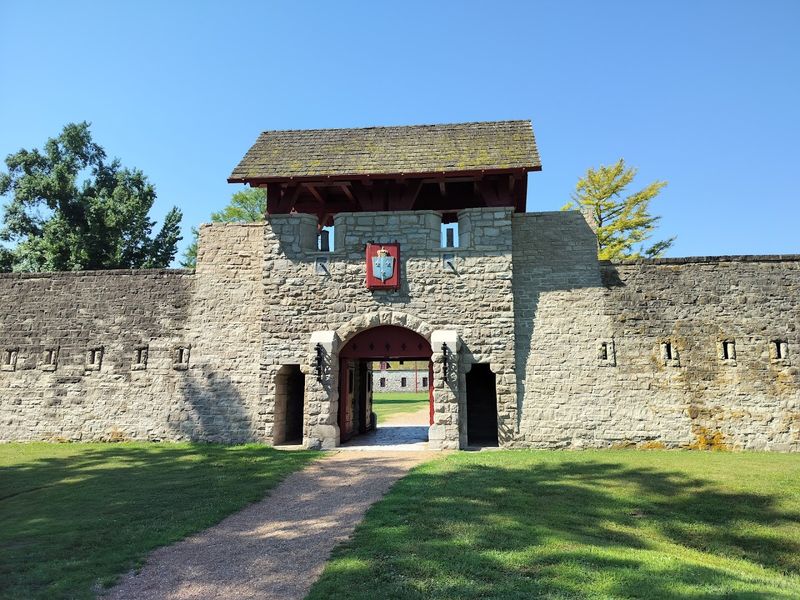
There is something almost stubborn about those walls. The limestone blocks that make up Fort de Chartres are thick, heavy, and unapologetic, stacked with the kind of confidence that says this structure was built to last longer than the empire that ordered it.
The fort was originally constructed by the French in the 1720s and served as the center of French colonial power in the Illinois Country. What stands today is a partial reconstruction, but it is still impressively large and remarkably well maintained.
The gatehouse alone is worth the drive. It rises above the entrance with a presence that makes you slow your step without meaning to.
Inside the walls, you find a layout that is both military and oddly domestic, with building foundations mapped out across the grass and a few reconstructed structures that give you a real sense of how life was organized here. The powder magazine is one of the original surviving structures and is considered one of the oldest buildings in Illinois.
The grounds are open most days of the week from 9 AM to 4 PM, and the self-guided experience lets you move at your own pace. There is no rush here, and honestly, that suits the place perfectly.
Bring comfortable shoes, a bottle of water, and maybe a lunch to enjoy at one of the picnic tables near the parking area. The fort runs along the Mississippi River, and on a clear day, the view from the walls carries a kind of stillness that city life rarely offers.
The Annual Rendezvous: When the 1700s Come Roaring Back

Once a year, usually on the first weekend in June, Fort de Chartres transforms in a way that photographs cannot fully capture. The annual Rendezvous is considered the largest 18th-century historical reenactment gathering in the Midwest, and that is not an exaggeration.
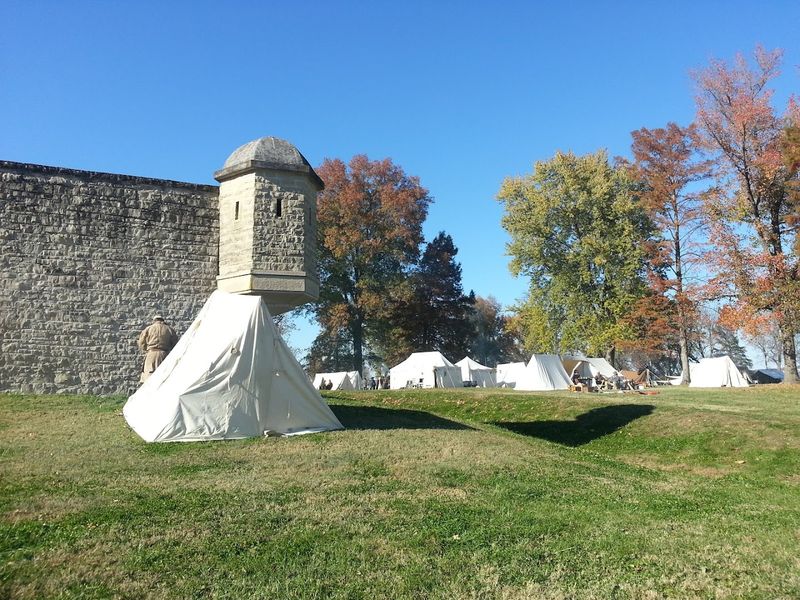
Hundreds of costumed reenactors descend on the fort grounds, setting up period camps, firing black powder muskets, and parading in uniforms so historically accurate they feel borrowed from another century.
The parade of colorful uniforms is the centerpiece of the whole event. French colonial soldiers, mountain men, Native American representatives, settlers, and merchants all move through the fort in a procession that feels genuinely theatrical.
Cannon firings shake the ground and fill the air with smoke. Military drills play out with precision while craft demonstrations nearby show visitors how to make candles, weave baskets, and cook over open fire the way people did three hundred years ago.
Period music drifts across the grounds, and somewhere between the fiddle tunes and the smell of woodsmoke, the whole scene starts to feel less like a performance and more like a memory surfacing. The title of this article calls out the spirits in the ground, and during the Rendezvous, that metaphor feels almost literal.
The fort is surrounded by centuries of buried history, and the reenactors seem to be performing not just for modern visitors but for something older and quieter that lives in the earth beneath their boots. Attending even once is the kind of experience that stays with you.
The Museum Inside the Walls: Small but Genuinely Surprising
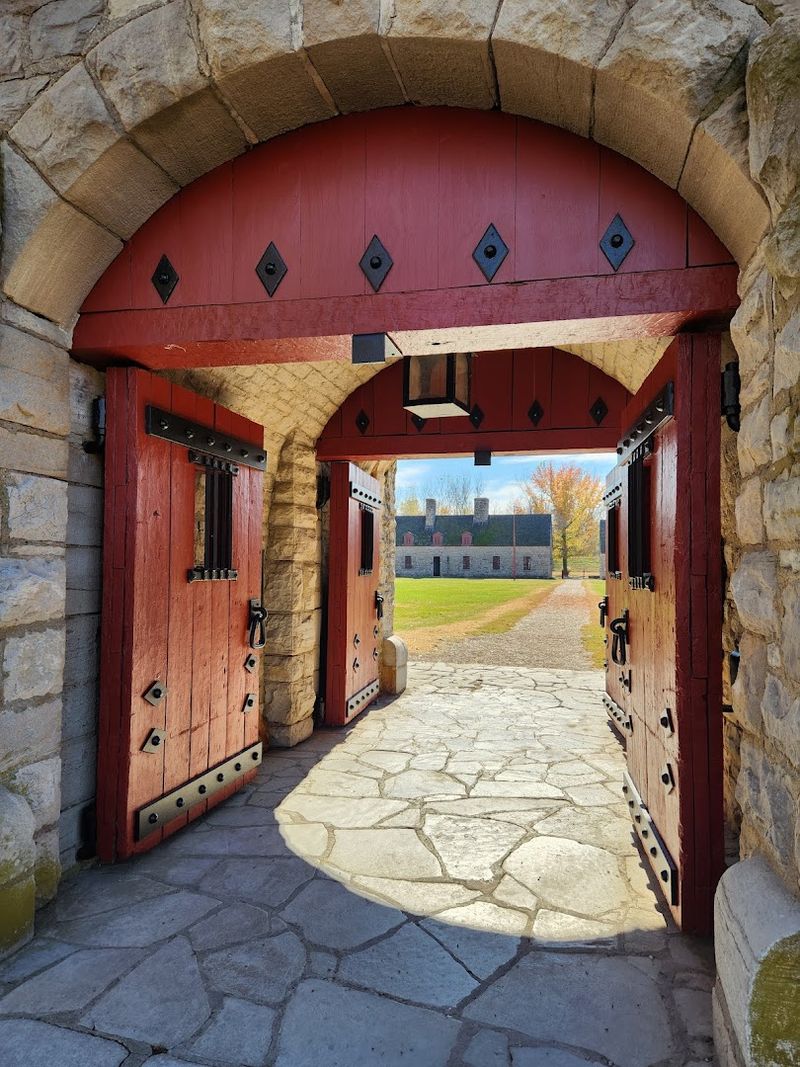
Most people do not expect much from a museum at a rural historic site, and that low expectation is exactly what makes the Fort de Chartres museum so satisfying. It is compact, yes, but the displays are thoughtful and the artifacts are the real thing.
Arrowheads, military hardware, period tools, and colonial-era objects fill the cases with the kind of quiet authority that only genuine history can carry. Informational panels in both English and French line the walls, a nod to the bicultural roots of the Illinois Country.
The museum does a solid job of contextualizing the fort within the larger story of French colonial North America. You learn about the Illinois Country, the fur trade, the relationships between French settlers and Native American communities, and eventually the transfer of the territory to British and then American control.
It is a lot of history packed into a small space, but the pacing of the displays keeps it digestible and genuinely interesting even for younger visitors.
The gift shop attached to the museum carries some lovely items, including pottery and locally relevant historical books. It is a good place to pick up something that actually connects to what you just experienced, rather than a generic souvenir.
The museum is free to enter, which is remarkable given the quality of the collection inside. I spent more time in there than I expected, which is usually the best sign that a museum is doing its job right.
Plan for at least thirty minutes, maybe more if history really pulls at you.
The Quiet That Lives Here: A Different Kind of Attraction
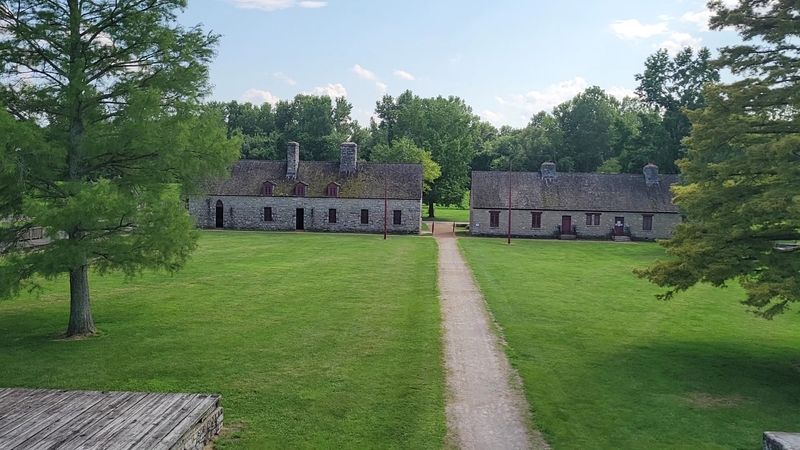
Not every great destination announces itself loudly. Fort de Chartres has this quality that is hard to name but immediately felt when you arrive on a slow weekday and find yourself completely alone on the grounds.
The silence is not empty. It carries something, a texture that comes from knowing the ground beneath your feet has absorbed three hundred years of footsteps, arguments, prayers, and cannon blasts.
Several visitors have noted that arriving alone to the fort is its own kind of peak experience. The peacefulness of the nature and the open pasture around the site creates a contrast with the weight of the history that is almost meditative.
Birds cut across the sky above the walls. The Mississippi River runs nearby, just as it did when French soldiers paced these same grounds in the 1720s.
Nothing about the setting feels manufactured or staged.
There is a mile-long trail that leads from the fort down to the river and back. It is an easy, flat walk that rewards you with views of the Mississippi that feel genuinely remote and unhurried.
Picnic tables are scattered near the parking area and offer shaded spots to sit with a packed lunch and let the atmosphere sink in. The fort is open Tuesday through Sunday from 9 AM to 4 PM, and arriving early on a weekday almost guarantees you a stretch of solitude that most historical sites cannot offer.
That quiet is not an absence. It is the whole point.
Getting There and Planning Your Visit
Prairie du Rocher is not on the way to anywhere else, and that is part of its charm. Fort de Chartres sits about an hour east of St. Louis, tucked into the rural southwestern corner of Illinois along the Mississippi River floodplain.
The drive itself is genuinely scenic, passing through flat farmland and small river towns that feel like they exist slightly outside of regular time. Following IL-155 west from the main highway puts you on a road that narrows pleasantly as it approaches the fort.
The site is free to visit, which makes it an easy decision for families, solo travelers, and history lovers on a budget. Parking is free and accessible, and the terrain inside the fort is flat and easy to walk.
Restrooms are available inside the museum building, and there is also a small playground near the parking lot that younger visitors tend to appreciate. The fort is pet friendly, so bringing a dog along for the walk is a reasonable plan.
If you are planning to attend the annual Rendezvous, booking nearby accommodations in advance is smart since the event draws large crowds to an otherwise quiet region. The Winter Rendezvous, typically held in November, is a lower-key alternative that offers a different atmosphere entirely.
Year-round visits are welcome, and the grounds are maintained with obvious care regardless of the season. Check the fort website at fortdechartres.us or call ahead at the listed number to confirm hours before making the drive.
Address: 1350 State Rte 155, Prairie Du Rocher, IL 62277.
Why Fort de Chartres Deserves a Spot on Your Illinois Bucket List
There are historical sites that feel like field trips and there are historical sites that feel like discoveries. Fort de Chartres lands firmly in the second category.
It is the kind of place that inspires people to go home and look things up, to read more about French Louisiana, to wonder about the lives of the people who once stood exactly where they are standing. That is a rare quality and it is not something you can fake with good signage or a polished gift shop.
The fort was the largest colonial fortification in French Louisiana. It never saw military action, which is part of why its story gets overlooked in the broader narrative of American history.
But that quiet history is also what makes it so compelling. The French eventually abandoned the fort after the Louisiana Purchase, and the original structure was largely destroyed.
The reconstruction that exists today took years of research and effort, and the result is something that genuinely honors the original site rather than replacing it with a theme park version.
Visitors consistently rate it as one of southern Illinois’s best kept secrets, and the reviews reflect real affection for the place. Children climb the guard towers with the same energy their parents bring to the museum.
Couples find it romantic in the way that only genuinely old places can be. Solo travelers arrive expecting an hour and end up staying most of the afternoon.
Fort de Chartres earns every bit of that loyalty, one quiet visit at a time.
