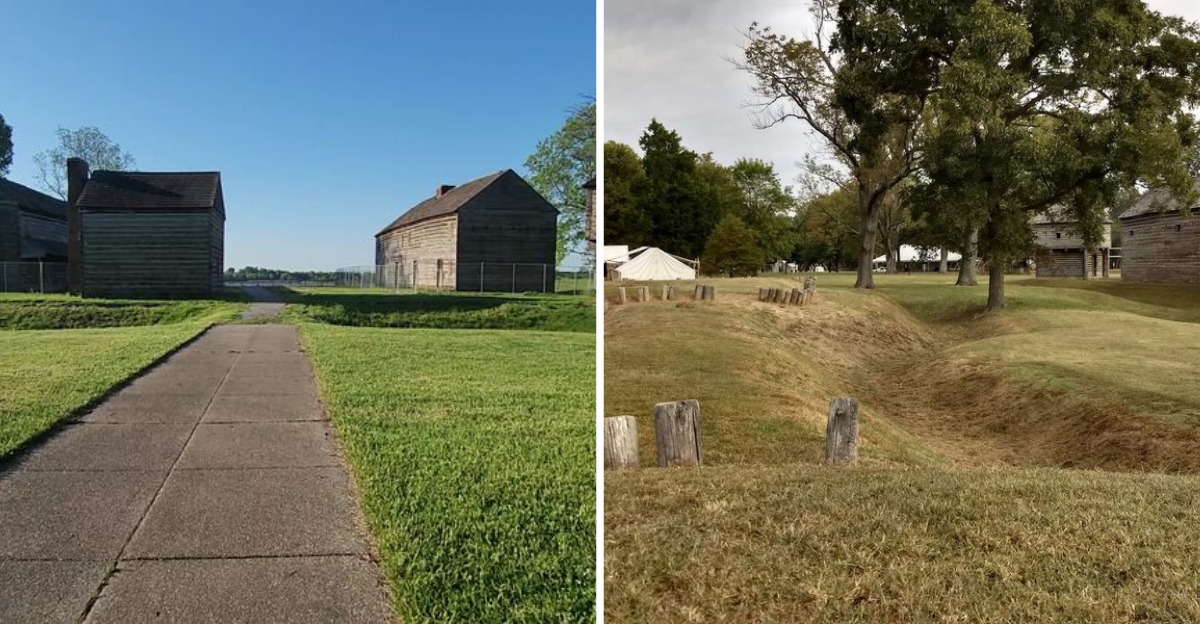
Oldest state park in Illinois sits on the Ohio River. French soldiers built the first fort here in seventeen fifty seven.
Armies came and went. Earthquakes shook the ground.
Locals pulled the old timber apart for their own homes. Somehow, through all of it, the park endured. The river bends just right there, and the light off the water hits you in a way you do not expect.
Long before the town grew up around it, this hilltop post was already watching the river, already standing guard. You walk the same paths soldiers once walked. You stand where sentries once stood.
The wind carries the same sound it always has. The lights on this hill never truly turned off.
The Fort That Refused to Disappear
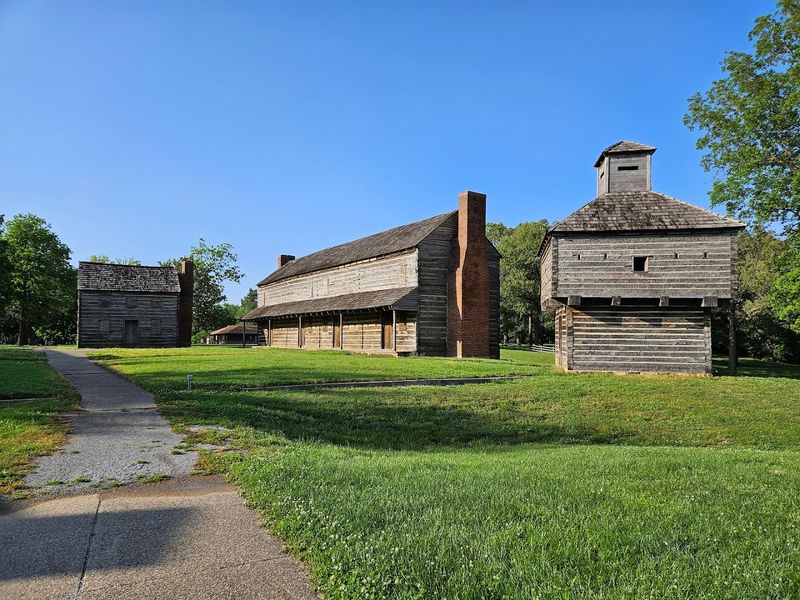
History has a funny way of refusing to stay buried, and Fort Massac is living proof of that. The first structure on this site went up in 1757 when French soldiers chose this ridge above the Ohio River as a strategic stronghold.
British forces took it over, Americans claimed it after that, and the New Madrid earthquakes of 1811 and 1812 nearly finished what wars could not.
By 1814, the fort was decommissioned. Locals quietly dismantled what was left, using the timber for their own buildings.
For a long stretch, this place existed only in records and memory.
Then something remarkable happened. Preservation efforts brought the fort back to life in the form of a detailed replica of the 1802 American fort that now stands at the center of the park.
Walking through those reconstructed wooden gates, you get a real sense of scale. The walls are tall, the interior is open, and the whole structure overlooks the river like it always did.
The visitor center adds a layer of depth to the experience. Muskets, flint tools, and historical exhibits fill the space with stories that go well beyond what the placards outside can tell you.
For anyone who thinks American history is a dry subject, this place has a way of changing that opinion fast. It is the kind of spot that makes you slow down and actually look at what is in front of you, because what is in front of you took centuries to survive.
You run your hand along the wooden walls and wonder who else stood in that exact spot. A soldier on watch.
A scout looking for movement. Someone just like you, staring out at the same river.
That connection is what makes this place work. It is not just history.
It is a conversation across time.
Illinois’ Very First State Park
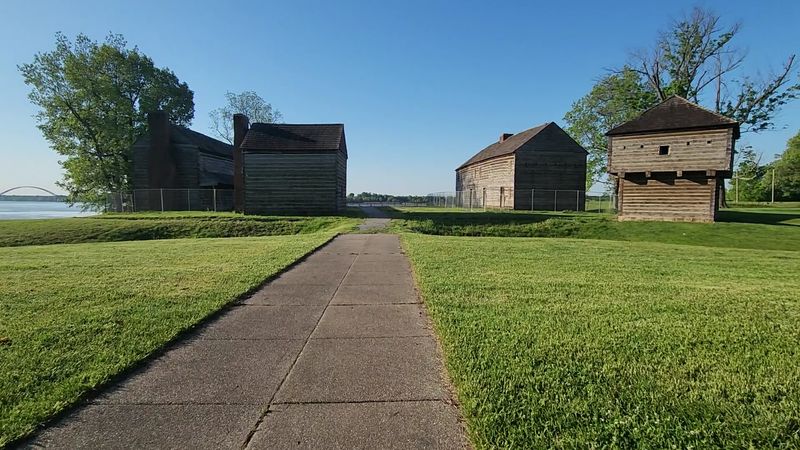
Not every place gets to carry the title of “first,” but Fort Massac wears it well. On November 5, 1908, this park was officially dedicated as the first Illinois state park, making it a landmark not just in Metropolis but in the entire state’s history of public land preservation.
That is over a century of open gates and public access, which is no small thing.
What makes that designation feel real is how lived-in the park still seems. Families spread out on the grass for picnics.
Cyclists roll along the bike paths. Campers settle into their sites as barges drift past on the Ohio River below.
The park does not feel like a museum piece sitting behind glass. It feels like a place people actually use and love.
Being the first state park in Illinois also means the land carries a certain weight of responsibility. The grounds are meticulously maintained, and the visitor center staff are genuinely helpful.
One visitor mentioned that an employee actually ran outside to hand them a brochure she thought they would want. That kind of care does not happen by accident.
The park is open 24 hours a day, every day of the week, which says a lot about how accessible it is meant to be. Whether you show up at dawn to catch the river mist or arrive in the late afternoon when the light goes golden over the water, Fort Massac makes room for you.
First in Illinois, and still one of the best.
You can feel the weight of that first title when you walk the grounds. It is not just a sign at the entrance.
It is in the way the grass is kept, the way the staff greets you, the way the river seems to know this place matters. You are standing on ground that started something.
A River View That Stops You Cold
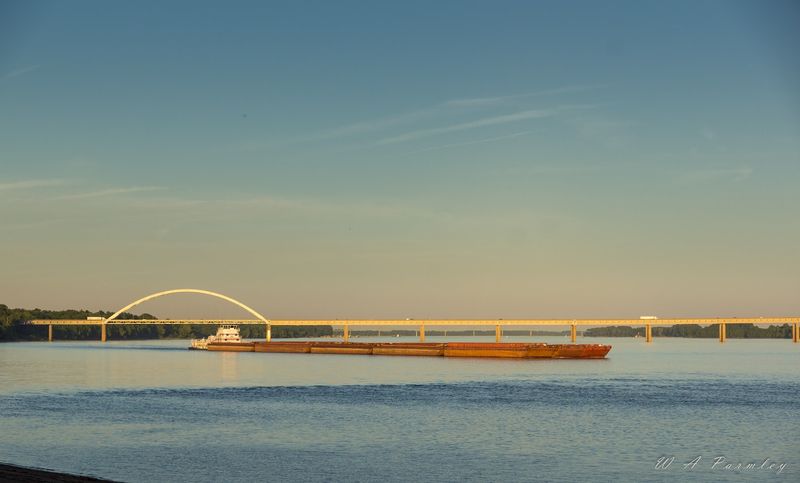
The Ohio River does not ease you in gently. You round a path or crest a small rise in the park, and there it is, wide and slow and impossibly big.
Barges push through the current like floating warehouses. The far bank sits in Kentucky, green and quiet.
On a sunny afternoon, the reflection off the water is almost blinding in the best possible way.
From the higher points of the park, especially near the fort replica, the river view gives you a clear understanding of why this spot was chosen as a military post in the first place. You can see everything coming from both directions.
The strategic logic clicks into place instantly, and suddenly the history stops being abstract.
Down closer to the water, there is a boat ramp and dock area where you can get right up to the river’s edge. The path down from the upper parking area is short but steep, so comfortable shoes make a real difference.
Once you are down there, the scale of the Ohio River hits differently. It is one thing to look at it from above and another to stand at the bank while a massive barge slides past.
Photographers tend to linger here longer than they plan to. The light changes constantly, and the combination of the wooden fort, the rolling park grounds, and that enormous river makes for a scene that is genuinely hard to leave.
Bring a snack, find a bench, and just let the river do its thing for a while.
Camping, Trails, and the Sounds of the Night
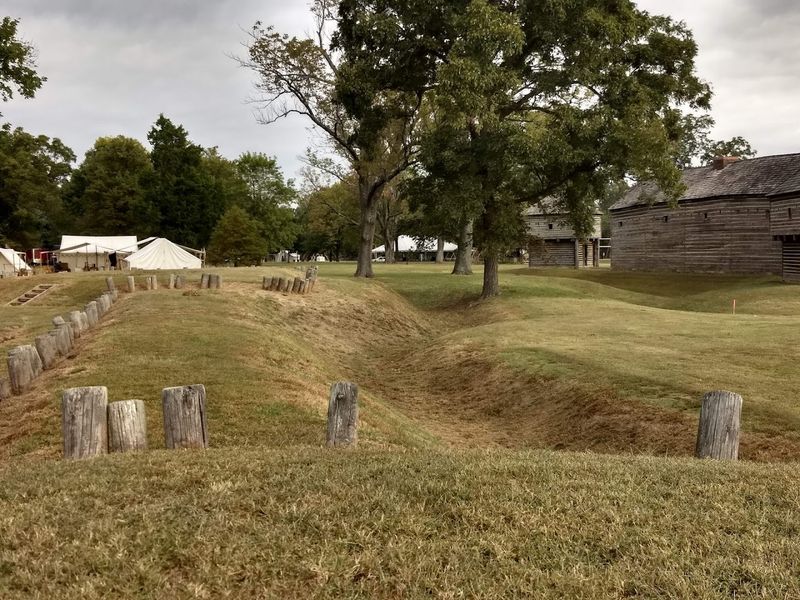
There is something specific about waking up in a tent when the Ohio River is just a short walk away. The morning air at Fort Massac carries a particular kind of quiet, broken only by birds and the distant rumble of a barge engine pushing upstream.
Camping here is not roughing it exactly, but it is grounding in all the right ways.
The campground sits conveniently off Interstate 24, close enough to Metropolis for a quick grocery run but far enough from the highway noise to actually sleep well. Campsites come with electric hookups, and water is available at several spigots around the grounds.
The restroom and shower facilities are well-kept, which is the kind of detail that makes or breaks an overnight stay.
Beyond the campground, the park offers hiking and biking trails that wind through the grounds without demanding too much from your legs. This is not a destination for serious elevation or backcountry adventure.
It is better suited for families, casual hikers, and anyone who wants to move through a beautiful space at their own pace. There is also a fishing pond on the property, which adds another reason to stay an extra night.
After dark, the park takes on a different personality. The fort walls look different by moonlight.
The river sounds louder when everything else goes still. It is easy to understand, standing out there at night, why people have been drawn to this particular piece of land for hundreds of years.
Some places just hold something.
Living History Events and the Town Around the Park
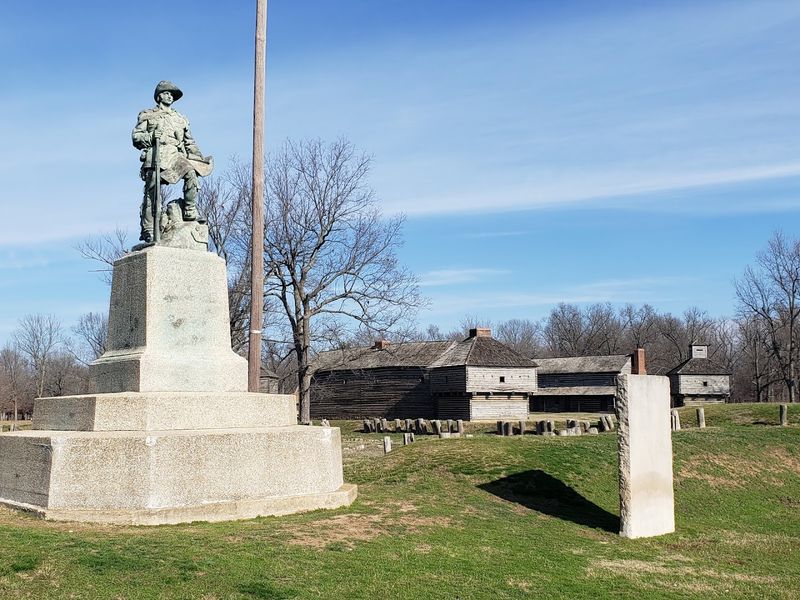
A few times a year, the park transforms in a way that genuinely catches people off guard. Living history events bring the grounds to life with battle reenactments featuring both British and American Revolutionary War actors in full period dress.
The crack of musket fire echoes off the old wooden walls, and for a moment the centuries collapse in a way that no textbook can replicate.
These events draw visitors from well outside Metropolis, and for good reason. There is food, handmade crafts, demonstrations, and the kind of communal energy that only comes from people sharing a real enthusiasm for history.
One visitor described it as a great getaway from everyday life, and that description feels accurate. It is immersive without being overwhelming.
Outside of event weekends, the town of Metropolis itself adds texture to a visit. The city is famously home to a Superman connection, complete with a large bronze statue downtown, which gives the area a quirky, fun identity that contrasts nicely with the park’s serious historical weight.
Nearby restaurants and shops are easy to reach from the park, making it simple to extend your time in the area.
The Metropolis Lighthouse in Dorothy Miller Park, dedicated to cancer awareness, is another local landmark worth a short detour. The park and the town complement each other well.
One holds the past, the other keeps moving forward. Together, they make Metropolis a destination worth putting on your map, even if some older maps forgot to include it.
Address: 1308 E 5th St, Metropolis, IL 62960
