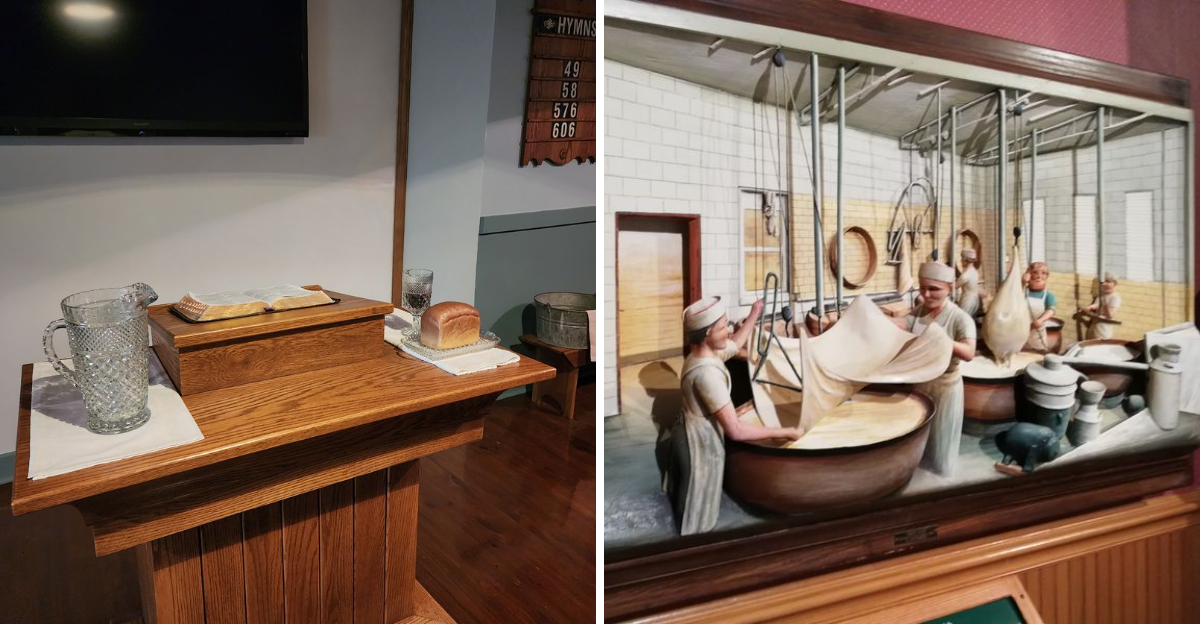
I remember the first time I drove through Shipshewana and saw those horse-drawn buggies clip-clopping down Van Buren Street. Growing up in Indiana, I thought I knew everything about the Amish communities that dot our northern counties.
But walking into Menno-Hof at 510 S Van Buren St changed all that for me. This cultural center opened my eyes to stories I never learned in school, histories that stretch back centuries across oceans and continents.
The building itself looks unassuming from the outside, but inside waits an experience that genuinely moved me. I spent nearly two hours wandering through rooms designed to transport you through time, watching short films that made complex history feel personal and real.
What struck me most was how the guides, many from the communities themselves, shared their faith and heritage with such openness and patience. Every question I asked got a thoughtful answer.
If you have ever been curious about why buggies still roll past modern cars in our state, or how these communities maintain traditions while the world rushes forward, Menno-Hof offers answers that stick with you long after you leave.
Interactive Historical Journey Through Persecution
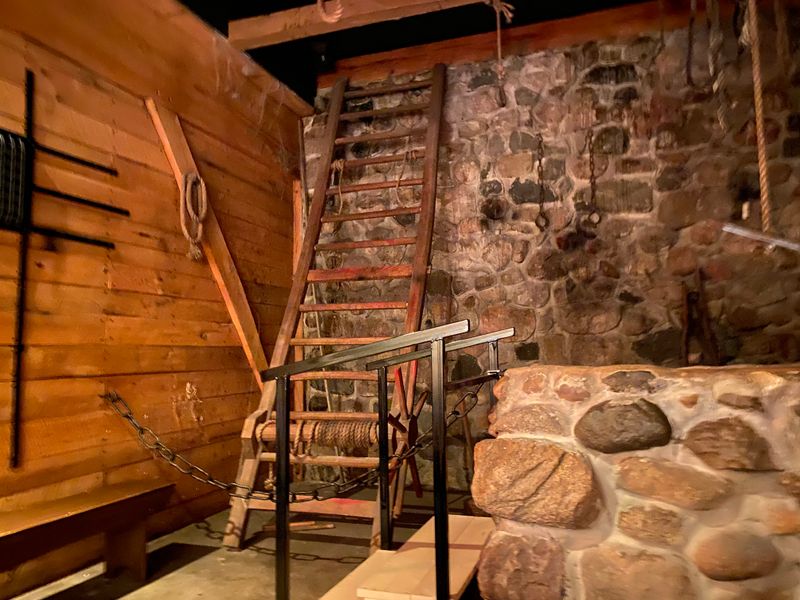
Walking into the first room at Menno-Hof feels like stepping back into a chapter of history most textbooks skip over. The space recreates a 16th-century European dungeon where Anabaptists faced imprisonment for their beliefs.
Dim lighting and stone-like walls set an atmosphere that makes the persecution feel immediate and real.
Short films play on screens mounted throughout, telling stories of ordinary people who chose faith over safety. I found myself genuinely moved by accounts of families torn apart and communities forced to flee their homes.
The presentations last just a few minutes each, keeping your attention without overwhelming you with information.
Interactive elements let you touch replicas of tools and items from that era. Kids can explore hands-on displays while adults read detailed placards explaining the historical context.
The tour guide I met, Mr. Al according to several visitors, answered every question with patience and depth.
This immersive approach helps you understand why these communities value simplicity and separation from worldly systems. You leave the room with context that makes everything else in the museum click into place.
The experience challenges you to think about religious freedom in ways you might not have considered before.
Authentic Ship Replica Crossing Experience
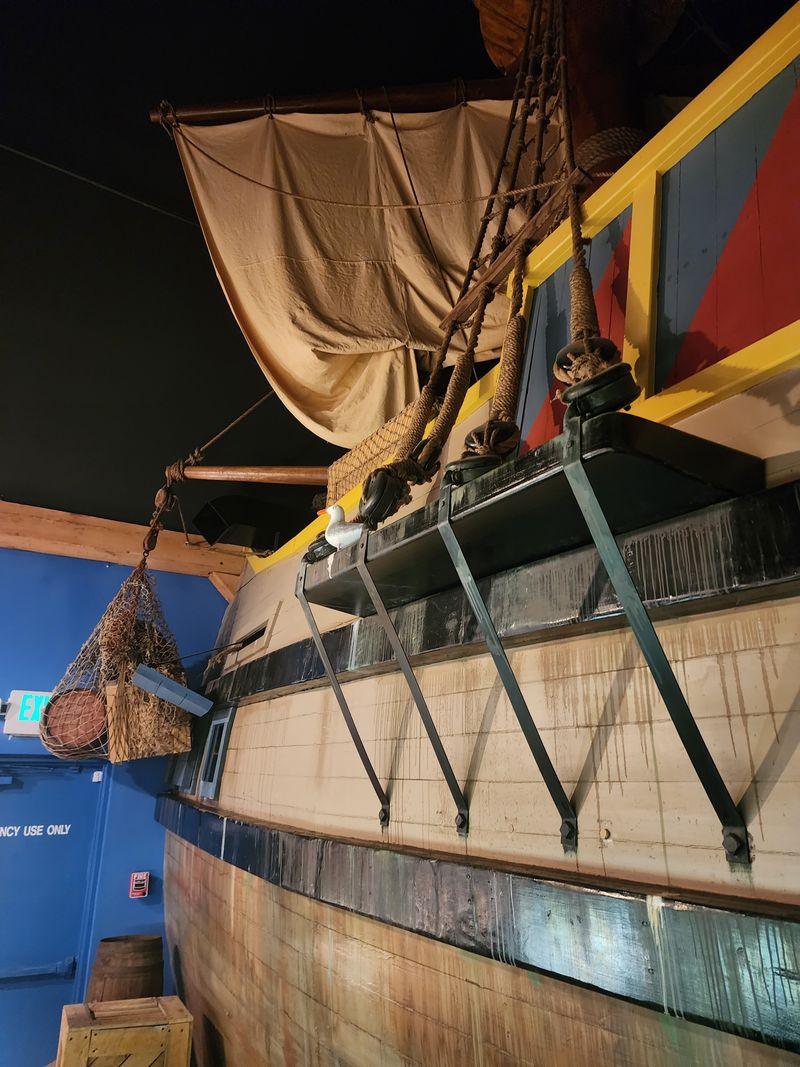
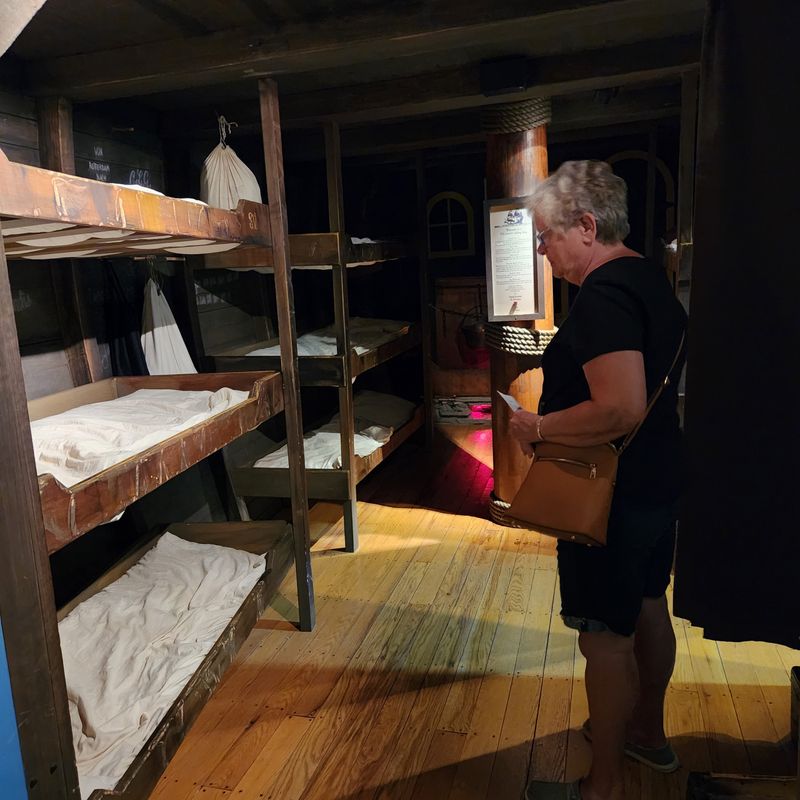
One room transforms into the belly of a sailing vessel that carried Anabaptist families across the Atlantic Ocean. The ceiling curves low overhead, and wooden planks creak beneath your feet, creating an atmosphere that captures the claustrophobia of months at sea.
You can almost smell the salt air and feel the rocking motion.
Displays show how families packed their entire lives into trunks no bigger than coffee tables. Children huddled in spaces barely large enough to lie down, enduring storms and sickness with only faith to sustain them.
The exhibit includes actual examples of what passengers brought along, from Bibles to basic tools for starting over in an unknown land.
Audio elements add sounds of waves and wind, making the experience surprisingly emotional. I watched a short film about one family’s journey that brought tears to my eyes.
Their courage in leaving everything familiar behind resonates differently when you stand in a recreation of where they suffered through that passage.
This section helps visitors understand the sacrifice these communities made for religious freedom. Modern comforts we take for granted become starkly apparent.
The ship experience bridges centuries, connecting past struggles with present-day dedication to maintaining those hard-won traditions.
Tornado Shelter That Teaches Community Values
A reconstructed tornado shelter demonstrates how Amish communities respond to crisis with collective action rather than insurance policies. The small underground space feels both protective and intimate, lined with simple wooden benches and stocked with basic supplies.
You sit where families actually gathered during storms, relying on neighbors rather than government assistance.
The shelter leads into discussions about barn raising and mutual aid that define these communities. Video presentations show dozens of men working together to construct an entire barn in a single day.
Women prepare massive meals while children play nearby, everyone contributing according to their abilities.
I learned that when disaster strikes an Amish family, the entire community mobilizes within hours. No insurance adjusters or lengthy claims processes, just neighbors showing up with tools and materials.
This system has worked for generations, creating bonds that modern society often lacks.
Interactive displays let you calculate how much a typical barn raising costs versus commercial construction. The numbers reveal efficiencies that come from volunteer labor and community resources.
Signs explain how this mutual aid extends beyond emergencies to everyday life, from harvests to healthcare.
Sitting in that shelter made me reconsider what security really means. These communities built resilience through relationships rather than policies, a lesson that feels increasingly relevant today.
Meetinghouse Recreation With Original Furnishings
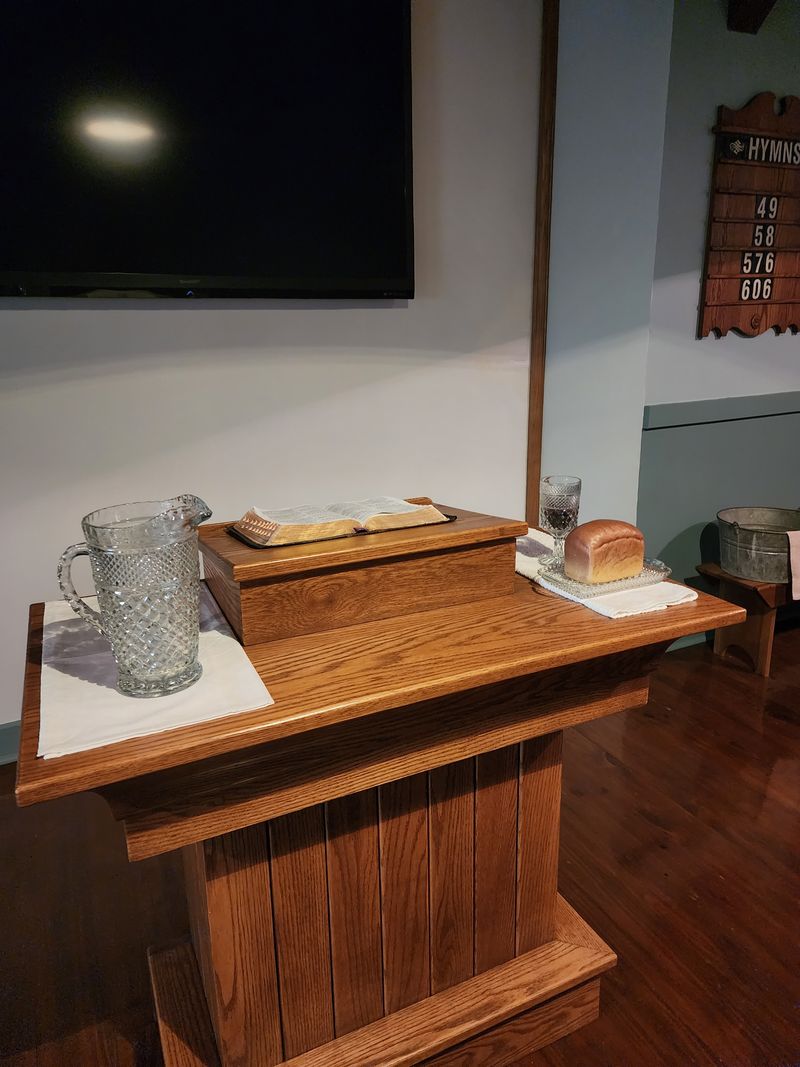
A full-scale meetinghouse recreation shows exactly where these communities gather for worship every other Sunday. Plain wooden benches line the walls, facing inward so everyone can see each other during services.
No pulpit dominates the space, no stained glass colors the light streaming through simple windows.
The starkness struck me immediately after visiting ornate churches elsewhere in Indiana. Everything about the room emphasizes equality and simplicity.
Men sit on one side, women on the other, with no hierarchy determining who sits where beyond age and gender.
A guide explained how services last three hours, conducted entirely in Pennsylvania Dutch with High German scripture readings. No musical instruments accompany the singing, just voices blending in slow, haunting melodies passed down through centuries.
Families bring their own hymnals, worn from generations of use.
Display cases hold actual hymnals and prayer books, their pages yellowed but words still clear. You can see how little has changed in worship practices over hundreds of years.
The commitment to tradition becomes tangible when you stand in this space.
What moved me most was learning that these meetinghouses rotate between family homes. The community literally takes church to each household in turn, reinforcing bonds and shared responsibility.
This practice keeps worship intimate and personal rather than institutional.
Differences Between Amish, Mennonite, and Hutterite Groups
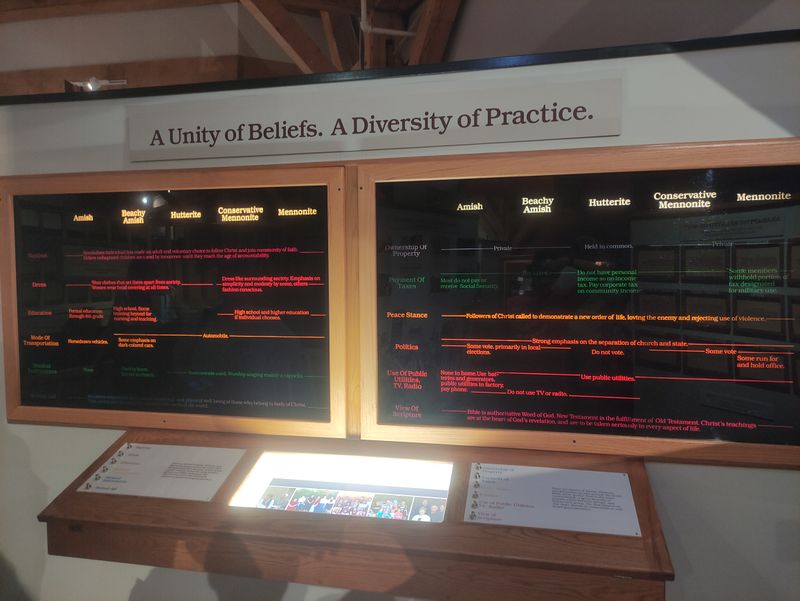
Before visiting Menno-Hof, I lumped all plain-dressing communities together in my mind. One exhibit area cleared up that confusion completely with clear explanations of what separates Amish, Mennonite, and Hutterite groups.
Visual displays show clothing differences, transportation choices, and technology adoption levels across these related but distinct communities.
The Amish generally maintain the strictest separation from modern conveniences, though even they vary by district. Some use solar panels while others forbid electricity entirely.
Mennonites range from Old Order groups nearly identical to Amish to progressive congregations indistinguishable from typical Protestants.
Hutterites live communally on colonies, sharing all property and resources in ways that go beyond Amish mutual aid. Their clothing differs slightly, and they embrace some technologies the Amish reject.
All three groups trace roots to the same Anabaptist movement but diverged based on how they interpreted scripture and responded to persecution.
Interactive touch screens let you explore specific communities across North America. I spent twenty minutes just clicking through different settlements, amazed at the diversity within what outsiders see as monolithic.
Maps show concentrations in Indiana, particularly around Elkhart and LaGrange counties.
Understanding these distinctions helps visitors appreciate the thoughtfulness behind each community’s choices. They are not simply stuck in the past but actively choosing how to engage with modernity based on deeply held convictions.
Martyrs Mirror Stories That Challenge Modern Faith
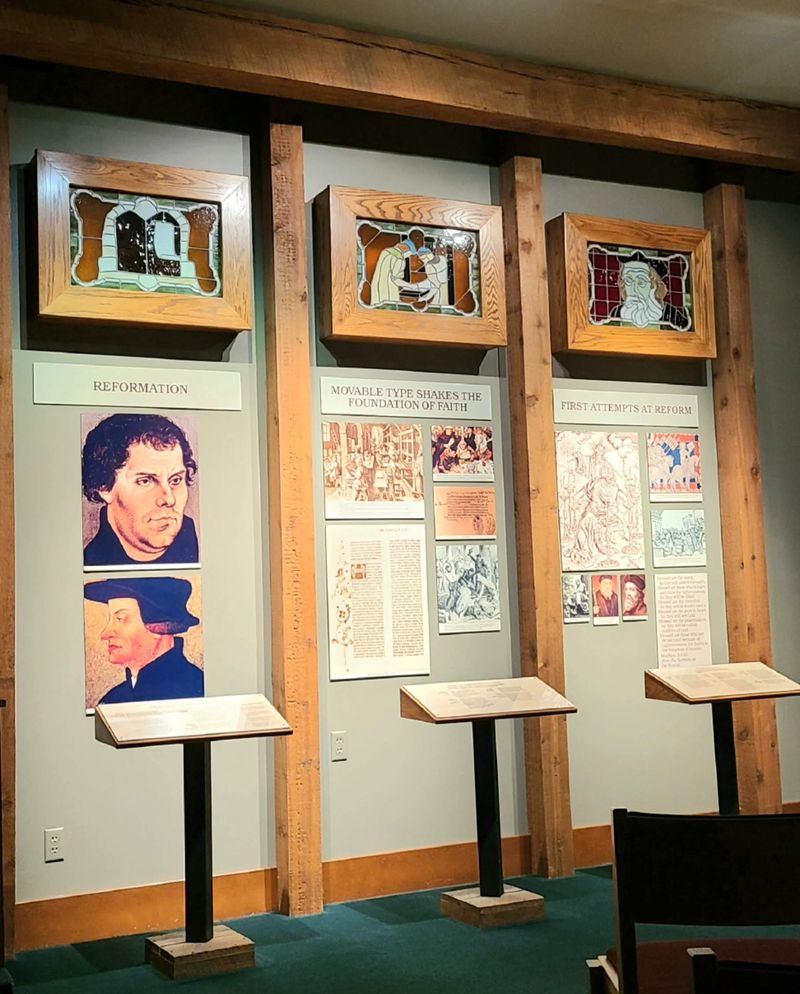
One section focuses on the Martyrs Mirror, a massive tome documenting Anabaptist persecution and martyrdom. Original copies sit behind glass, their pages filled with accounts of believers who chose death over renouncing their faith.
Illustrations show drownings, burnings, and other executions carried out by both Catholic and Protestant authorities.
Reading these stories challenged my comfortable Indiana upbringing where religious freedom seems guaranteed. Men and women faced torture for beliefs we now take for granted, like adult baptism and separation of church and state.
Their courage feels almost incomprehensible from our modern perspective.
The exhibit explains how every Amish and Mennonite household traditionally owned a copy of this book. Children grew up hearing these stories, understanding that their faith cost previous generations everything.
This historical memory shapes how current communities view sacrifice and commitment.
Interactive displays let you read translated accounts from the original Dutch and German texts. I found myself drawn to stories of ordinary people, farmers and mothers who could have saved themselves by simply conforming.
Their refusal resonates across centuries.
A video presentation connects these historical martyrdoms to current religious persecution worldwide. The parallels remind visitors that faith still costs some believers their lives.
This context helps explain why these Indiana communities maintain boundaries that might otherwise seem extreme or unnecessary.
Modern Amish Life Adaptations and Technology Choices
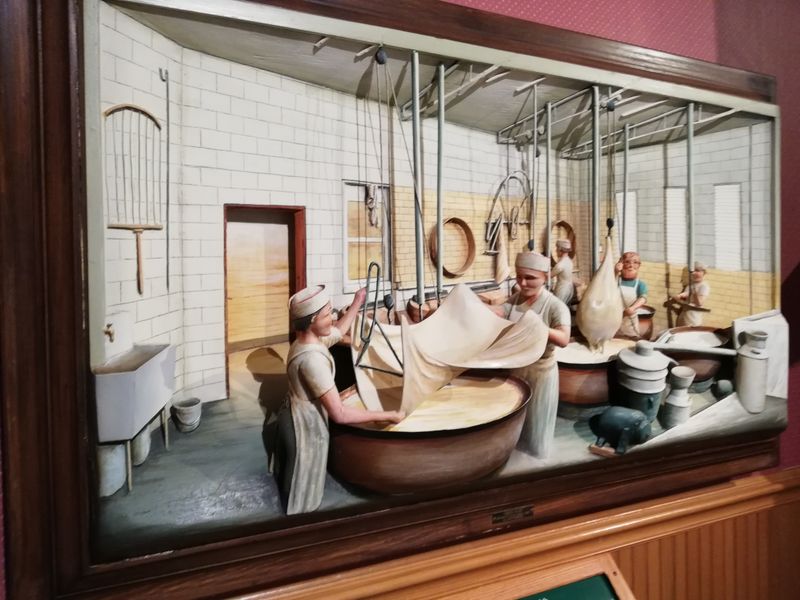
Many visitors arrive at Menno-Hof thinking Amish communities reject all technology uniformly. One exhibit area dispels that myth by explaining the careful decision-making process behind technology adoption.
Each district evaluates new inventions based on whether they strengthen or weaken community bonds and family structures.
Displays show approved technologies that might surprise outsiders. Solar panels appear on some barns, powering LED lights and refrigeration for dairy operations.
Pneumatic tools run on compressed air, allowing carpentry without electrical connections to the grid. Cell phones appear in businesses, kept in sheds rather than homes to maintain family time boundaries.
The exhibit explains how communities discuss potential changes for years before reaching consensus. Bishops and elders weigh whether a new tool serves genuine needs or just convenience.
This deliberative approach contrasts sharply with mainstream culture’s rush to adopt every innovation.
I learned that rules vary significantly between districts. What one community forbids, another might permit with restrictions.
This flexibility allows adaptation while preserving core values. Young people can see their elders wrestling with similar questions their own generation faces about technology and connection.
Interactive elements let you test your understanding by deciding whether various technologies might be approved. The exercise reveals how much thought goes into maintaining a distinct way of life while functioning in modern Indiana’s economy and society.
Dear Reader: This page may contain affiliate links which may earn a commission if you click through and make a purchase. Our independent journalism is not influenced by any advertiser or commercial initiative unless it is clearly marked as sponsored content. As travel products change, please be sure to reconfirm all details and stay up to date with current events to ensure a safe and successful trip.
