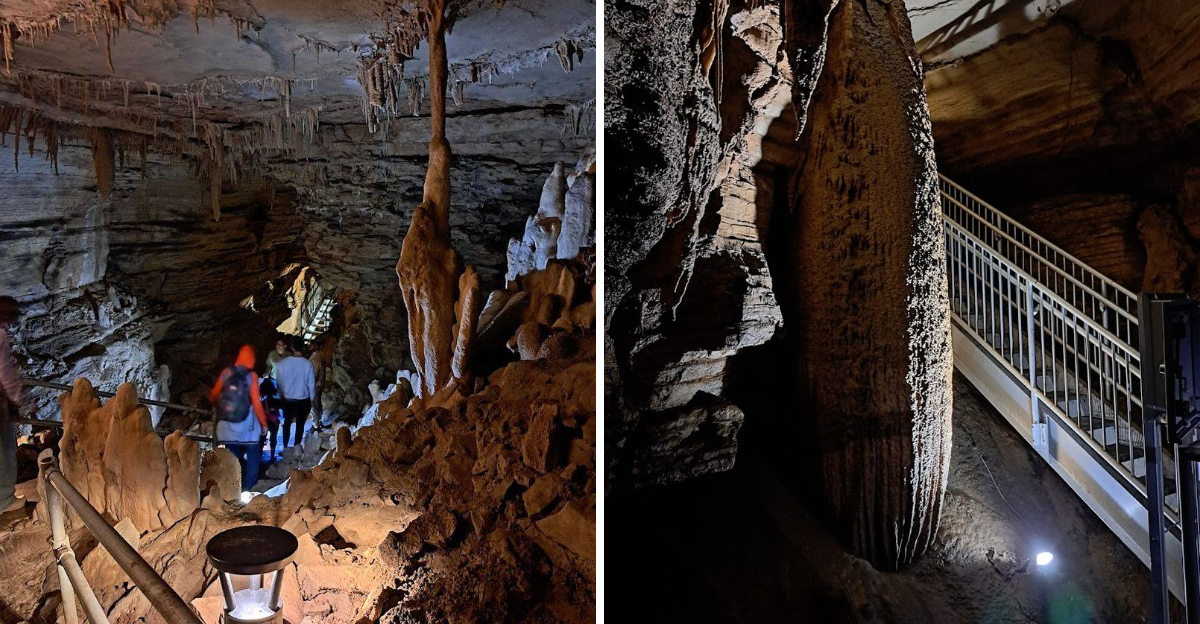
I have always believed that Indiana holds more wonder than most people give it credit for, and this cave system proved that belief in a big way. Buried beneath the hills of Crawford County, it stretches nearly 9.2 miles underground and carries the weight of 4,000 years of human history.
Stalactites and stalagmites glisten in the dim light, dripping water echoes through the chambers, and the air carries a cool, earthy scent that instantly makes you feel far from the surface world. From prehistoric Native American miners to geological formations that took millions of years to grow, there is nothing quite like this place anywhere in the state.
If you are looking for an adventure that is equal parts thrilling and educational, it is absolutely worth the drive.
Monument Mountain and the Senate Chamber Are Unlike Anything Above Ground
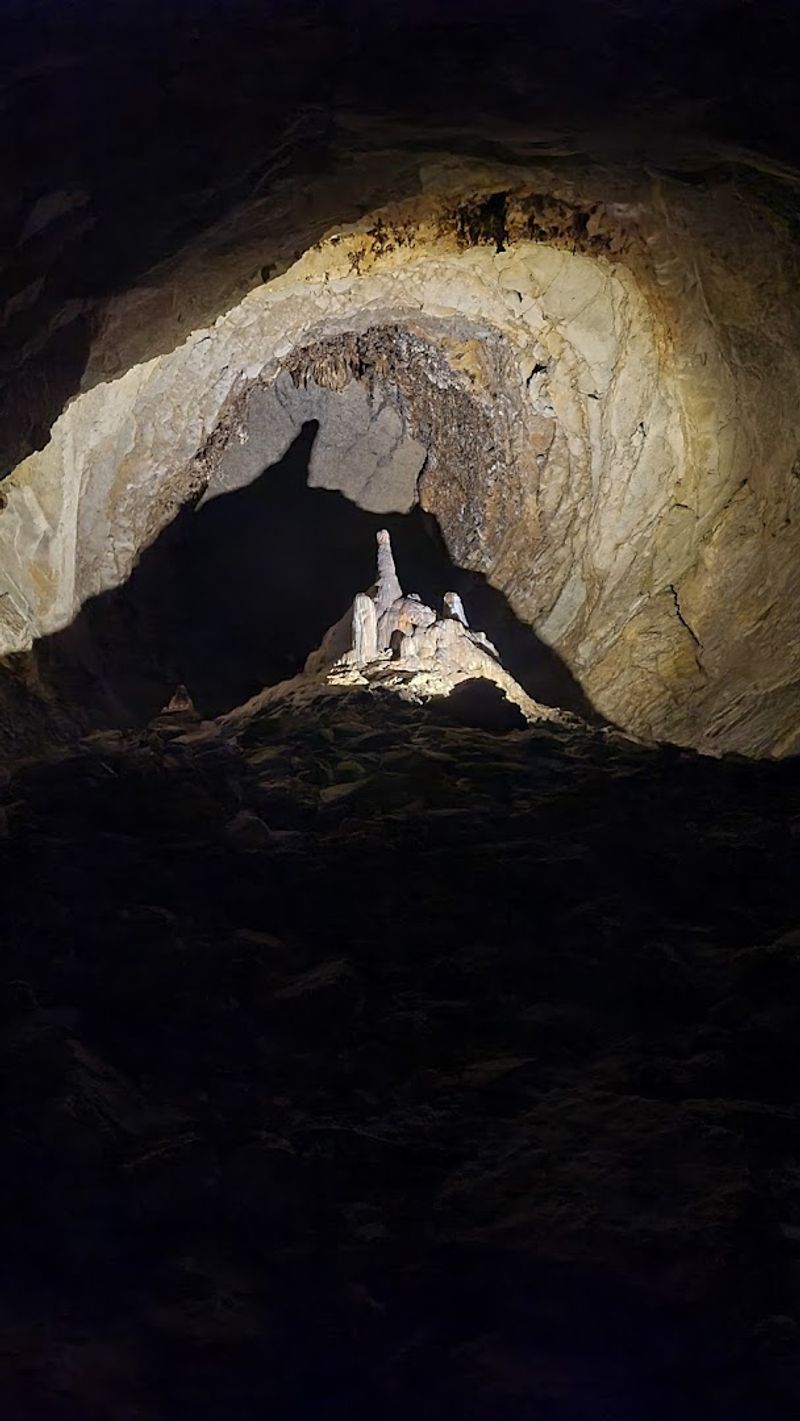
There are moments inside Wyandotte Caves when you genuinely forget you are underground. One of those moments happens when you first lay eyes on Monument Mountain, a colossal underground mound that rises 135 feet from the cave floor.
It is one of the largest underground mountains in the world, and seeing it in person has a way of making your jaw drop before you even realize it.
Nearby, the Senate Chamber stretches out like a natural amphitheater, its elliptical shape creating an almost theatrical atmosphere. At the center stands the Pillar of the Constitution, a massive stalagmite with a circumference exceeding 70 feet.
These formations were not built or sculpted by human hands. They grew slowly over millions of years, one mineral deposit at a time.
What makes this even more impressive is the scale. Photos do not do it justice, and descriptions barely scratch the surface.
You have to stand inside that chamber and look up to truly understand what millions of years of geology looks like in real life. The Big Wyandotte tour covers both of these landmarks, giving visitors enough time to take it all in without feeling rushed.
For Indiana locals who think they have seen everything the state has to offer, Monument Mountain is a genuine surprise that rewrites the list entirely.
A 4,000-Year-Old Underground Chert Mine That Still Tells Its Story
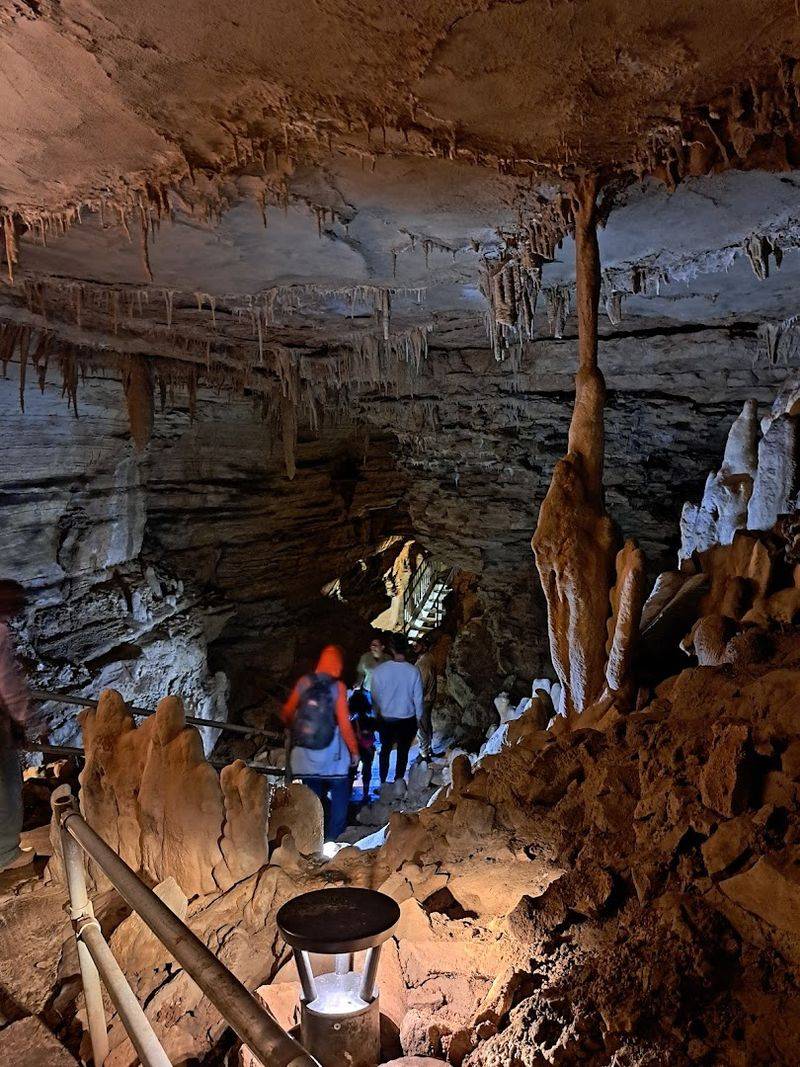
Long before anyone thought to give this cave a name, Native Americans were already working deep inside it. Archaeological evidence shows that people were mining chert and aragonite in Wyandotte Caves nearly 4,000 years ago, with carbon dating pushing evidence of human presence back as far as 8,000 BC.
That is not a typo. People were inside these tunnels thousands of years before recorded Indiana history even begins.
They used torches made from hickory bark and grapevines to light their way through passages that are still dark and narrow today. Artifacts recovered from within the cave have helped researchers piece together what daily life and ritual may have looked like for these early inhabitants.
Walking through the same tunnels they once worked in is a genuinely humbling experience.
The 2-hour Big Wyandotte tour brings you face to face with areas of the cave that connect directly to this ancient mining past. Guides explain the geology of chert and why this particular cave was so valuable to prehistoric people.
For anyone who loves history that you can actually see and touch, this reason alone makes the trip worthwhile. It is living archaeology, and it is right here in southern Indiana waiting to be explored.
Rare Helictites and Formations Found Almost Nowhere Else
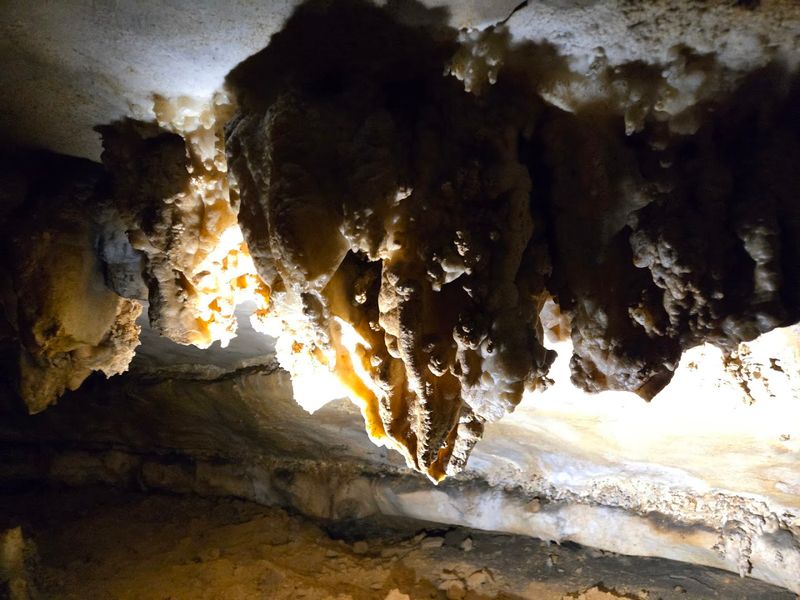
Most people have seen photos of stalactites and stalagmites, but helictites are something else entirely. These twisted, gravity-defying formations grow in every direction at once, curling and spiraling in ways that seem to ignore the basic rules of physics.
Wyandotte Caves is home to some of the finest examples of helictites found anywhere in the country, and they are genuinely mesmerizing up close.
Beyond helictites, the cave also features flowstone, columns, and curtain formations that shift in color depending on the mineral content of the water that deposited them. Some sections glow faintly gold or rust-orange under a flashlight beam.
Others appear almost white, almost translucent, like frozen waterfalls suspended in time.
What makes Wyandotte stand out from other Indiana caves is that it is almost exclusively dry. That rarity preserves formations in remarkable detail and keeps the cave environment unusually stable.
The steady 52-degree temperature inside contributes to that preservation and also makes for a refreshing escape on a hot Indiana summer day. Wear layers because it does get cool after a while, especially on the 2-hour tour.
Bring non-skid shoes too, since some surfaces can be slick in spots. Once you see the helictites in person, it becomes very easy to understand why geologists and cave enthusiasts consistently rank Wyandotte among Indiana’s most extraordinary natural wonders.
The 2-Hour Big Wyandotte Tour Is a Real Underground Adventure
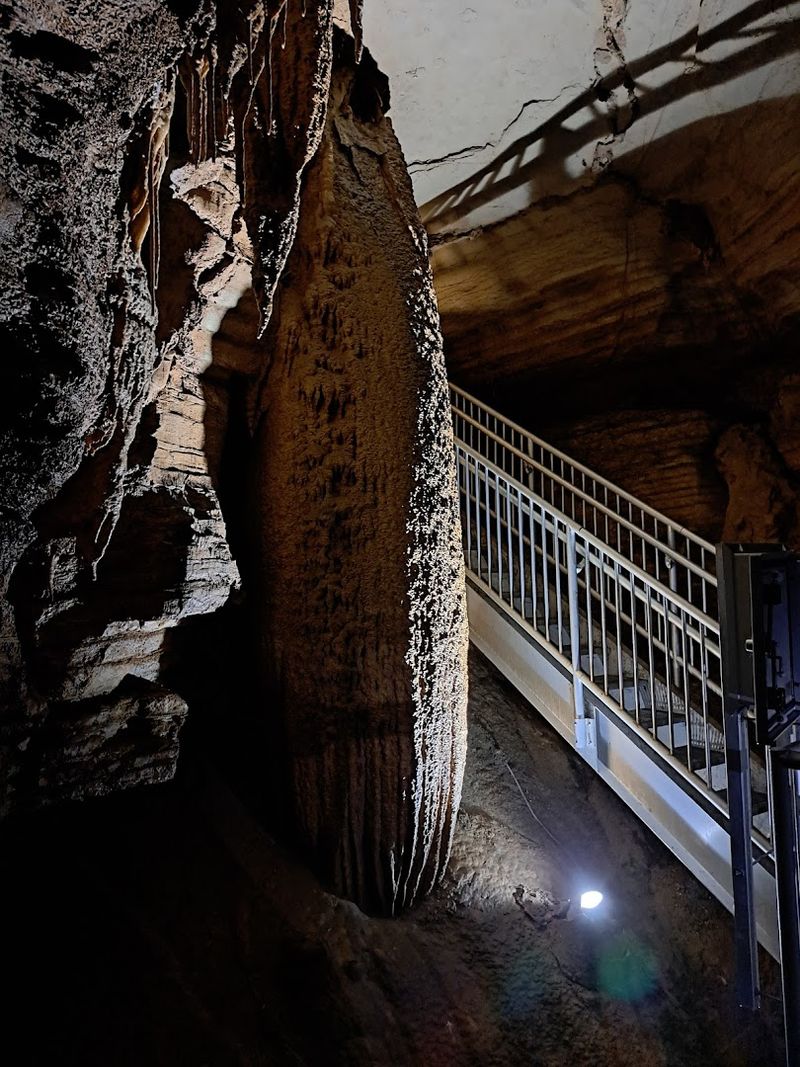
Not every cave tour feels like an adventure, but the Big Wyandotte tour earns that word honestly. Over the course of about two hours, you cover a significant stretch of cave passage that includes narrow squeezes, steep sections, and at least one ladder climb that reaches up to 15 or 20 feet.
It is physical enough to feel exciting without being extreme enough to scare off most visitors in reasonable health.
The guides who lead these tours know the cave deeply and bring a mix of geological knowledge and local history to every stop. They explain cave morphology in ways that actually make sense, point out formations most visitors would walk right past, and give honest context about the cave’s long human history.
Questions are welcomed and answered with patience and detail.
The tour runs on weekends and select holidays from Memorial Day through Labor Day, so planning ahead matters. Book tickets in advance whenever possible since spots fill up, especially on summer weekends.
Wear shoes you do not mind getting muddy, dress in layers, and skip the bathroom break because there are none once you are inside. For families with kids around six and older, this tour hits a sweet spot between genuinely challenging and totally manageable.
For adults who want something more memorable than a paved tourist cave, Big Wyandotte delivers exactly that kind of raw, unpolished underground experience.
Rich Biodiversity Makes Every Visit a Wildlife Encounter
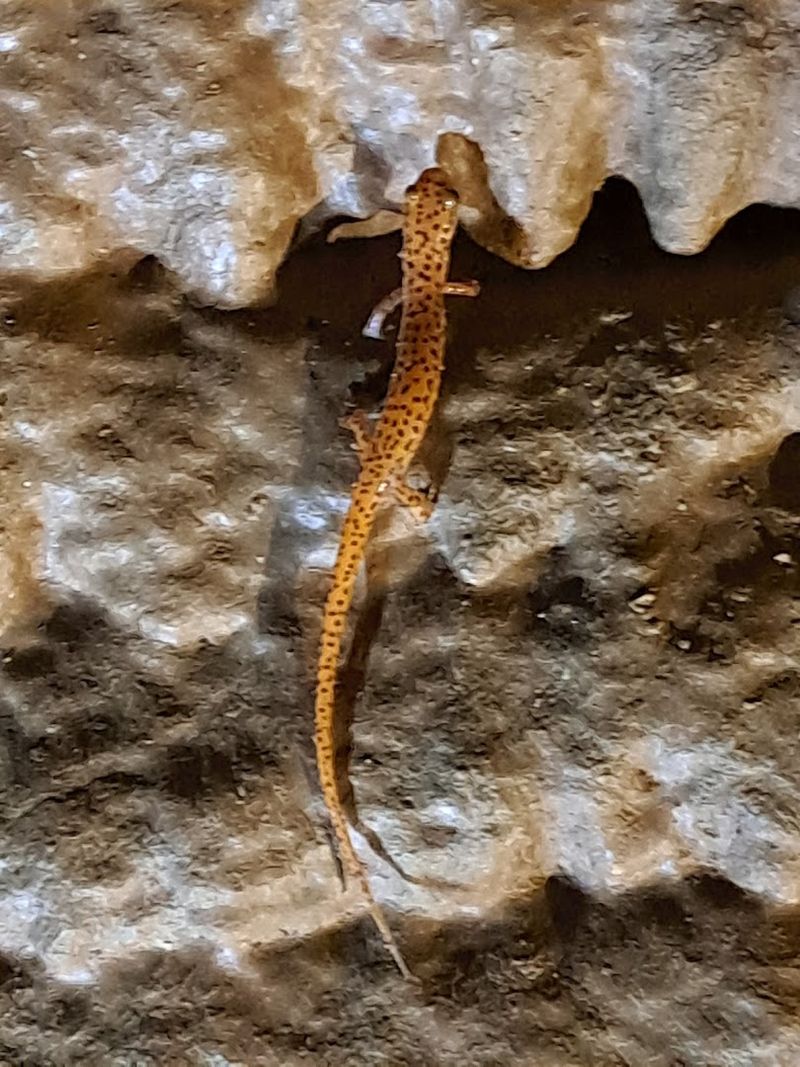
Most people come to Wyandotte Caves, located at 7315 S Wyandotte Cave Rd, Leavenworth, IN 47137, for the geology and the history, but the biology going on inside these tunnels is just as remarkable. The cave provides habitat for more than 20 known animal species, including nine of Indiana’s twelve bat species.
The endangered Indiana bat, known scientifically as Myotis sodalis, is among the most common residents, making Wyandotte one of the most significant bat habitats in the entire state.
Beyond bats, the cave also shelters cave salamanders, crayfish, and cave crickets, each one adapted to life in an environment where sunlight never reaches. The steady 52-degree temperature and high humidity create conditions that these species depend on year-round.
Conservation efforts to protect this fragile ecosystem are ongoing, and the cave’s National Natural Landmark designation since 1972 reflects just how seriously this biodiversity is taken.
Seeing an Indiana bat roosting overhead or spotting a pale cave salamander clinging to a wet limestone wall is a reminder that wild Indiana is still very much alive, even hundreds of feet underground. The guides are careful to explain which species you might encounter and why protecting them matters.
For nature lovers, educators, and curious kids alike, this layer of the Wyandotte experience adds a living, breathing dimension to what might otherwise feel like a geology lesson. It transforms the cave into something genuinely dynamic and worth returning to.
Saltpeter Mining History and War of 1812 Connections Run Deep Here
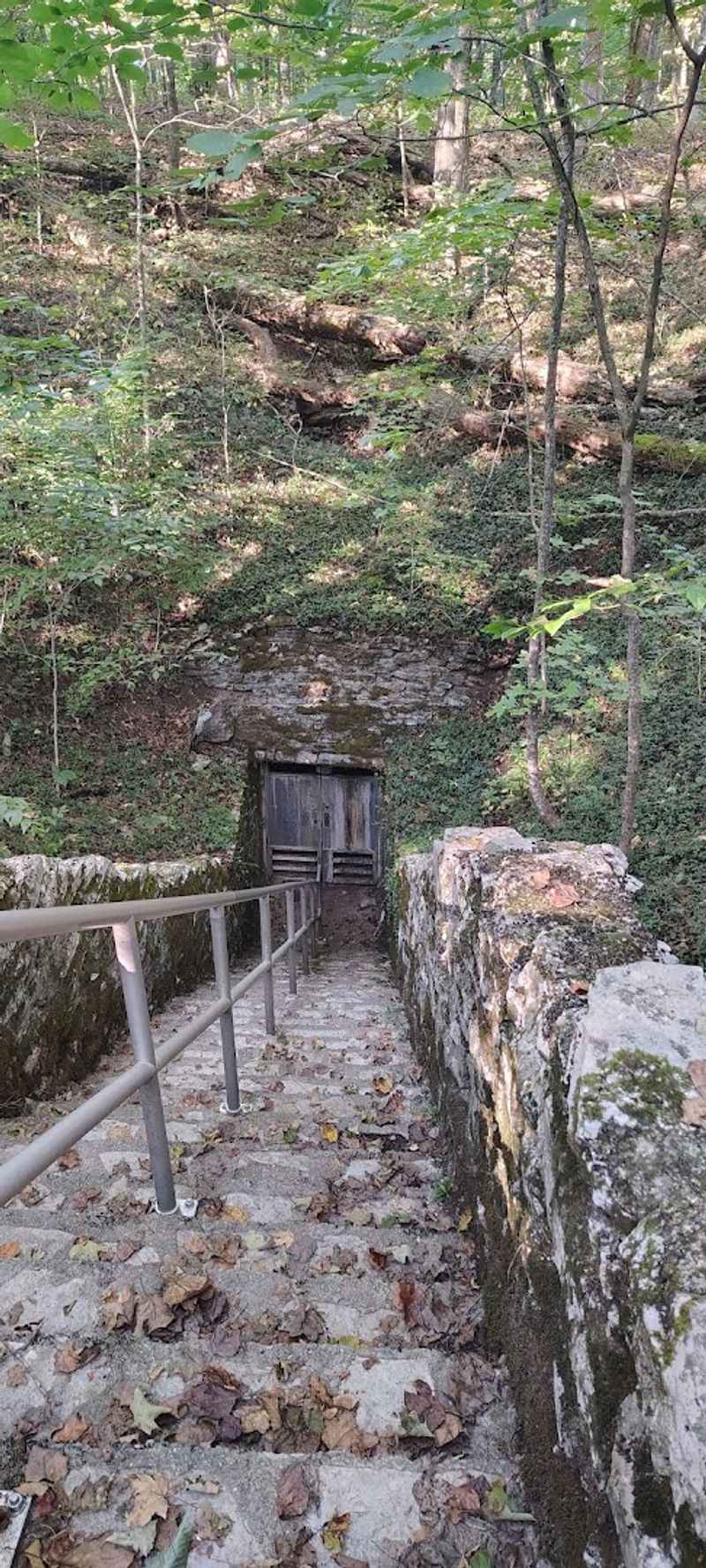
The prehistoric miners were not the only ones who found Wyandotte Caves useful. In the early 19th century, the cave became a source of saltpeter, a critical ingredient in gunpowder production.
During the War of 1812, the cave was reportedly used to store supplies for the army of William Henry Harrison, the same man who would later become president of the United States. That is a genuinely remarkable footnote hiding inside an Indiana hillside.
Epsom salts were also extracted from the cave during this period, adding another layer to its industrial history. The remnants of these early mining operations are still visible during tours, giving visitors a tangible connection to a time when this cave played a real role in American military history.
It is the kind of detail that makes a history class suddenly feel relevant and alive.
Southern Indiana has a way of quietly holding onto stories that the rest of the country has mostly forgotten. Wyandotte Caves is one of the best examples of that tendency.
The cave does not shout its history at you. It shows it to you slowly, in layers, the way geology itself works.
For anyone who has driven past Crawford County without stopping, the War of 1812 connection alone is a compelling reason to finally pull off the road and go underground for a couple of hours.
Southern Indiana Surroundings Make It a Full Day Worth of Exploration
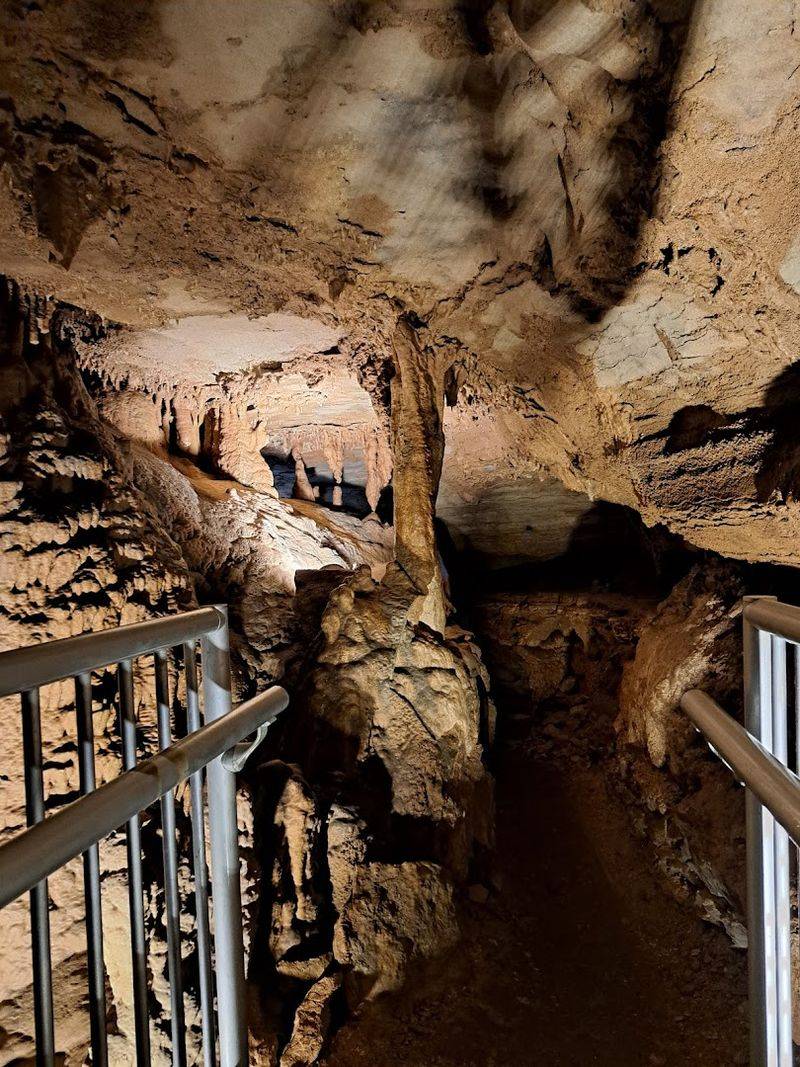
Wyandotte Caves does not exist in isolation. The surrounding Crawford County landscape is some of the most beautiful and underappreciated terrain in all of Indiana, and pairing a cave visit with time spent in the area makes for a genuinely full day out.
Harrison-Crawford State Forest, which surrounds the cave property, offers hiking trails through dense hardwood forest that feel worlds away from any city.
The nearby town of Leavenworth sits along a sweeping bend of the Ohio River and offers a handful of local spots worth checking out. Overlook Restaurant at 11900 IN-62, Leavenworth, IN 47137 gives you a panoramic river view that pairs well with a meal after a long cave tour.
For those who want to extend the trip, O’Bannon Woods State Park at 7240 Old Forest Rd SW, Corydon, IN 47112 is a short drive away and offers camping, trails, and more natural scenery.
History buffs can also visit nearby Corydon, Indiana’s first state capital, which sits just a short drive from the cave. The combination of underground adventure, forested hiking, river views, and small-town Indiana character makes this corner of the state worth more than a single afternoon.
I think the best trips are the ones that surprise you, and this whole stretch of southern Indiana has a habit of doing exactly that to anyone willing to take the scenic route.
