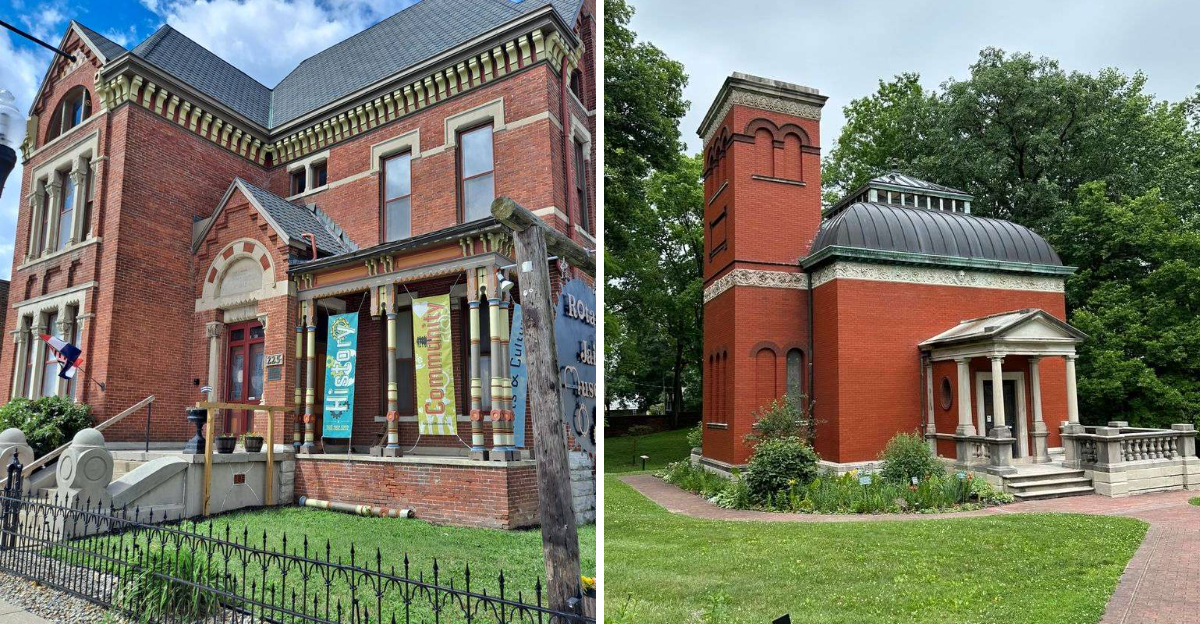
Crawfordsville sits quietly in west central Indiana, about 49 miles northwest of Indianapolis, holding stories that most people drive right past without a second thought. This city of just over 16,000 residents has more historical significance packed into its tree-lined streets than many places ten times its size.
From literary legends to architectural marvels, from Civil War heroes to educational pioneers, Crawfordsville has played surprising roles in shaping American culture and history. Walking through downtown feels like flipping through a living textbook.
The buildings whisper tales of ambition, creativity, and resilience that defined entire generations. You won’t find flashy tourist traps or manufactured experiences here, just authentic connections to the past that make history feel real and accessible.
Montgomery County’s seat offers something rare in today’s world: genuine historical encounters that don’t require admission tickets or scheduled tours. The lessons are simply there, waiting on street corners and inside beautifully preserved structures, ready to surprise anyone curious enough to look around.
General Lew Wallace Study and Museum
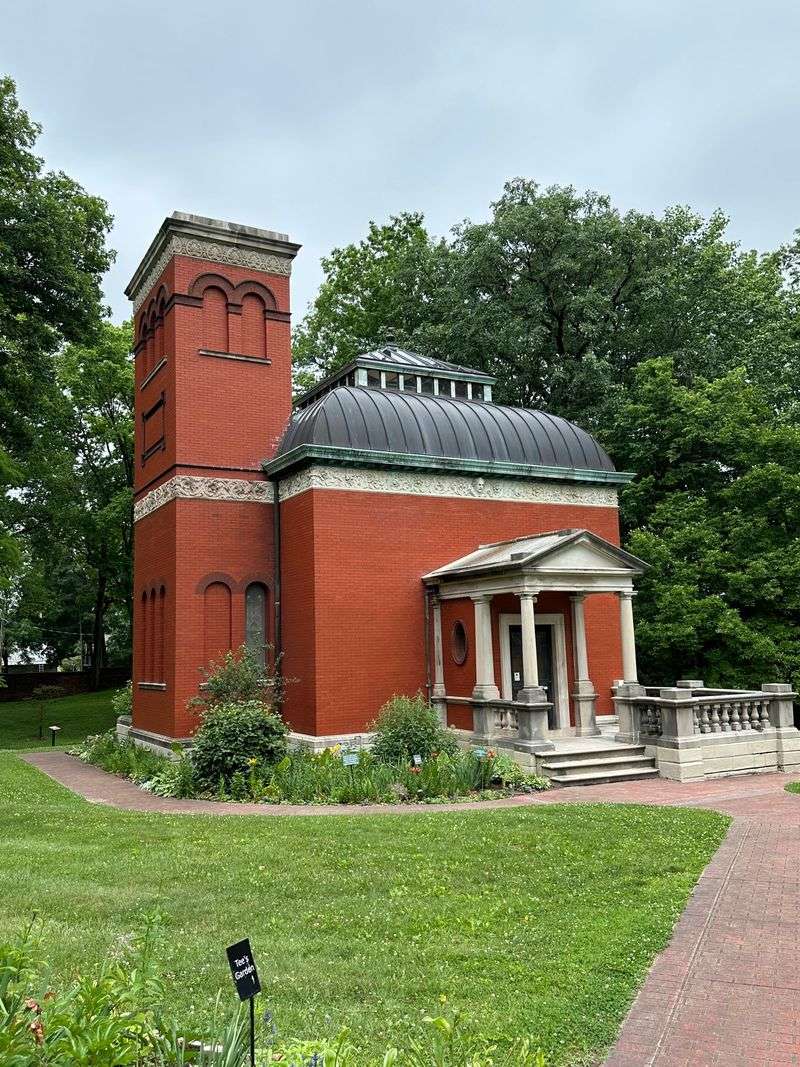
General Lew Wallace wrote one of the bestselling American novels of the 19th century right here in Crawfordsville, and his personal study still stands as proof. Ben-Hur: A Tale of the Christ came to life in a remarkable building that Wallace himself designed, complete with turrets and stained glass windows that look more like a small castle than a writing space.
The structure sits at 200 Wallace Avenue, surrounded by landscaped grounds that invite visitors to imagine the creative process of a man who was simultaneously a Civil War general, inventor, diplomat, and author.
Walking into the study feels like stepping into Wallace’s mind. His personal artifacts fill the space, including paintings he created, inventions he tinkered with, and the actual desk where he penned his masterpiece.
The museum doesn’t just celebrate one book but reveals the remarkable range of a Renaissance man who served as governor of New Mexico Territory and as U.S. Minister to the Ottoman Empire.
The grounds offer peaceful walking paths perfect for contemplation.
After exploring the museum, grab lunch at The Barefoot Burger Company at 115 E Main Street, where locally-sourced ingredients create memorable meals. The restaurant sits in downtown Crawfordsville, just a short drive from the Wallace study, making it easy to spend a full afternoon immersed in literary history while enjoying modern comforts and great food in this surprisingly cultured small city.
Lane Place Historic House Museum
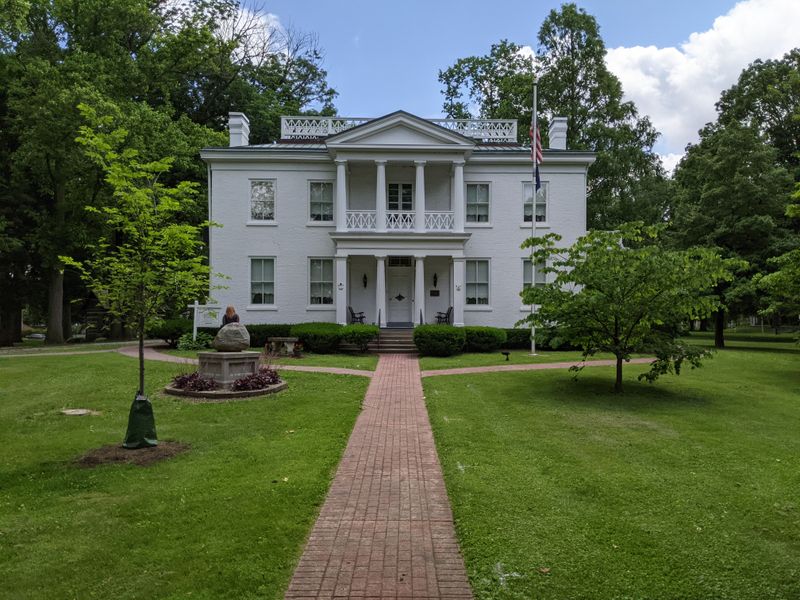
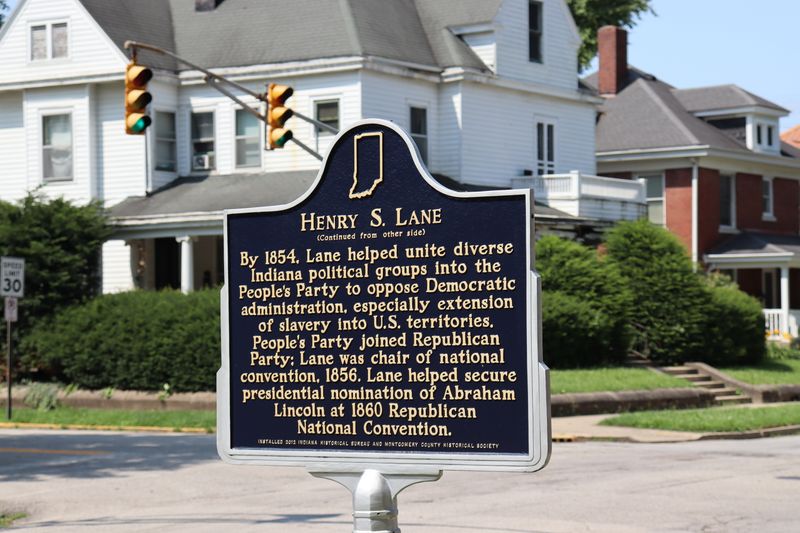
Henry Lane never became president, but his influence on American politics and Indiana’s role in the Civil War era makes his former home a fascinating historical classroom. The Lane Place at 212 S Water Street showcases Italianate architecture at its finest, with period furnishings that transport visitors back to the 1840s when this prominent attorney and politician walked these very halls.
Lane served as Indiana’s governor and later as a U.S. Senator, playing crucial roles in the formation of the Republican Party and the election of Abraham Lincoln.
The mansion’s rooms tell stories beyond politics. Victorian-era domestic life comes alive through carefully preserved details like the original kitchen equipment, parlor furniture, and personal belongings that reveal how wealthy Hoosier families lived during America’s most turbulent decades.
Guided tours explain not just who Lane was, but how households functioned, what social customs governed daily life, and how national events affected ordinary routines in small Indiana cities.
The property includes beautiful gardens and outbuildings that demonstrate the self-sufficient nature of 19th-century estates. You’ll see where food was prepared, how servants worked, and where horses were kept, creating a complete picture of antebellum and Civil War-era living.
The museum hosts special events throughout the year that bring history to life through reenactments and hands-on demonstrations.
Wabash College Campus and Architecture
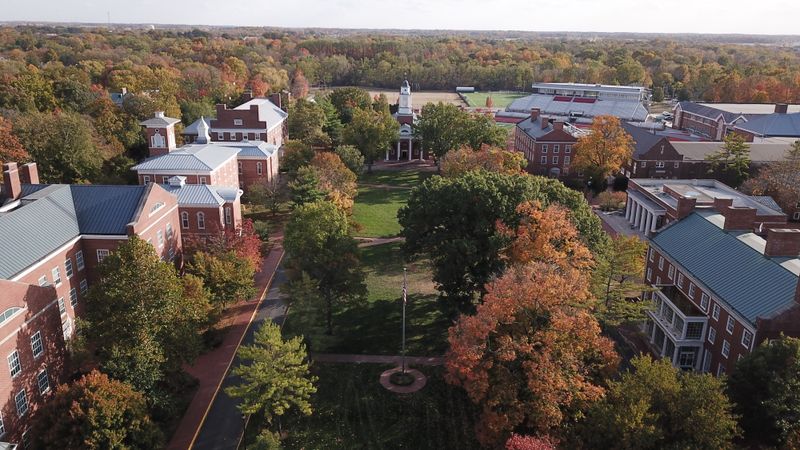
Founded in 1832, Wabash College represents one of only three remaining all-male liberal arts colleges in the United States, making it an educational institution worth understanding. The campus spreads across 60 acres at 301 W Wabash Avenue, featuring architectural styles spanning nearly two centuries of American building traditions.
Red brick buildings with white columns create a classic collegiate atmosphere that has educated generations of young men in the liberal arts tradition.
The college’s Chapel, completed in 1868, stands as a stunning example of Romanesque Revival architecture with beautiful stained glass windows and impressive stonework. Walking through campus reveals how educational philosophies have evolved while certain traditions remain constant.
Wabash maintains unique customs like the Gentleman’s Rule, which states that students are expected to conduct themselves as gentlemen at all times, with the college trusting them to make responsible decisions without excessive regulations.
The campus hosts public events, lectures, and performances throughout the year that welcome community members. The Fine Arts Center brings world-class musicians and speakers to this small Indiana city, enriching the cultural life of the entire region.
The athletic facilities showcase the college’s commitment to developing well-rounded individuals through both intellectual and physical challenges.
Visitors can explore the campus grounds freely, appreciating the careful landscaping and historic buildings that create an atmosphere of serious academic pursuit.
Rotary Jail Museum
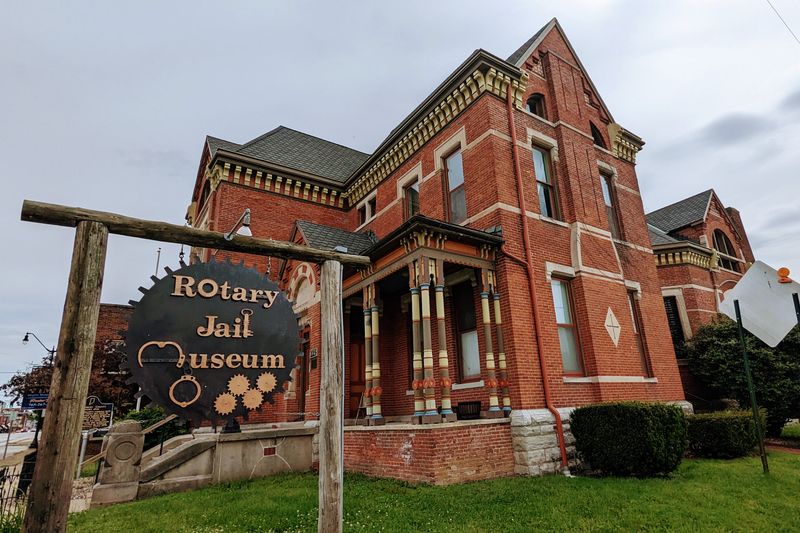
Imagine being locked in a jail cell that rotates like a lazy Susan, with only one door providing access to all cells on each floor. That bizarre reality existed at the Montgomery County Jail from 1882 until 1973, when authorities finally decided the rotating mechanism created more problems than it solved.
Located at 225 N Washington Street, this National Historic Landmark represents one of only two remaining rotary jails in the world that visitors can tour.
The concept sounds almost comical until you understand the serious engineering behind it. Designer William Brown believed a rotating cell block would improve security by requiring fewer guards, since only one cell at a time could align with the single door opening.
The massive iron cylinder, two stories tall, was hand-cranked to rotate, bringing different cells to the access point as needed. Unfortunately, the design had fatal flaws, including prisoners getting limbs caught in the mechanism and difficulty evacuating during fires.
Tours reveal both the innovation and the horror of 19th-century incarceration practices. You’ll see actual cells where prisoners lived, learn about escape attempts, and understand why this seemingly clever idea was eventually abandoned.
The sheriff’s residence attached to the jail shows how law enforcement families lived literally next door to criminals, creating unique domestic situations rarely seen in modern policing.
Carnegie Museum of Montgomery County
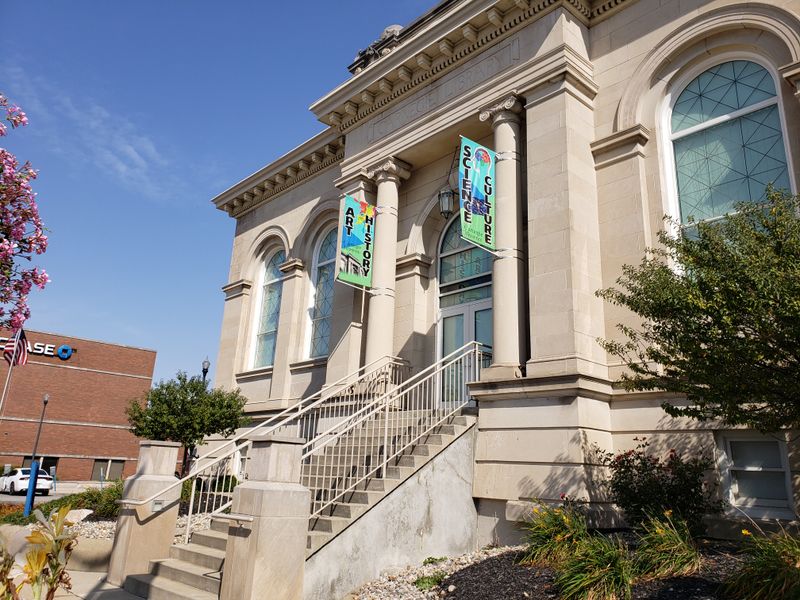
Andrew Carnegie’s philanthropy reached Crawfordsville in 1902, funding the construction of a beautiful Beaux-Arts library that now serves as the county museum. The building at 222 S Washington Street showcases the architectural elegance that Carnegie believed public institutions deserved, with grand columns, high ceilings, and natural light flooding through large windows.
Carnegie funded over 1,600 libraries across America, but each one was designed to fit its community’s character while maintaining standards of beauty and functionality.
The museum’s collections focus on Montgomery County history, from Native American artifacts through pioneer settlement to modern industrial development. Exhibits change regularly but consistently emphasize local stories that connect to broader American narratives.
You’ll find displays about early agriculture, the development of transportation networks, local industries that drove economic growth, and the everyday lives of families who built communities in west central Indiana.
The building itself teaches important lessons about the progressive era’s belief in public education and community improvement through access to knowledge. Carnegie’s requirement that communities provide ongoing operational funding ensured local investment in these institutions, creating partnerships between private philanthropy and public responsibility.
The architecture reflects confidence in democracy and the value of creating beautiful public spaces accessible to everyone regardless of economic status.
Old Jail Museum and Sheriff’s Residence
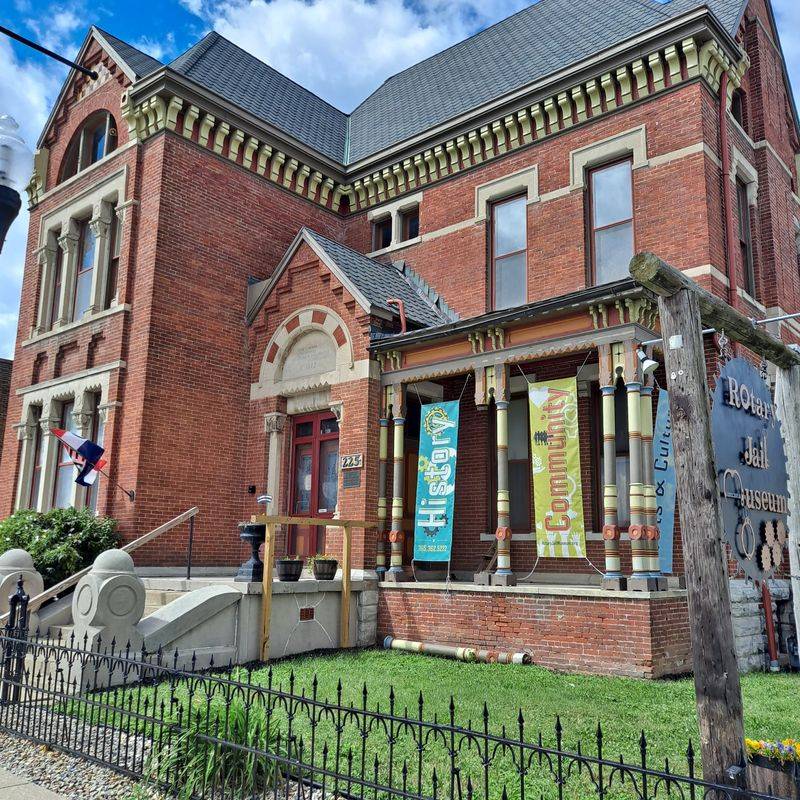
Before the infamous rotary jail, Montgomery County housed prisoners in a more conventional but equally fascinating structure built in 1854. The Old Jail Museum preserves this earlier chapter of local law enforcement history, showing how frontier justice evolved into more organized systems.
The building’s Greek Revival architecture reflects the optimistic belief that even institutions dealing with crime could embody democratic ideals and architectural beauty.
The sheriff’s residence portion reveals how law enforcement families balanced professional duties with domestic life. Original furnishings and personal items show that sheriffs lived with their families in quarters attached to the jail, creating situations where children grew up literally surrounded by locked cells and criminal activity.
Women managing households in these circumstances faced unique challenges, from maintaining normal family routines to occasionally helping with prisoner supervision when situations demanded extra hands.
The jail cells themselves tell stories of local crime, punishment philosophies, and the rough characters who populated frontier Indiana. Graffiti scratched into walls by long-dead prisoners provides haunting direct connections to the past.
You can see the cramped conditions, understand the minimal provisions for prisoner welfare, and appreciate how attitudes toward incarceration have changed dramatically over 170 years.
The museum demonstrates that criminal justice history isn’t just about famous outlaws or major crimes but about the everyday systems communities created to maintain order and safety.
Historic Downtown Architecture and Main Street
Crawfordsville’s downtown district preserves an exceptional collection of 19th and early 20th-century commercial architecture that most Indiana towns have lost to demolition or insensitive renovation. Walking along Main Street between Washington and Grant reveals building after building showcasing Italianate, Romanesque Revival, and early 20th-century commercial styles.
These structures weren’t built as museums but as functioning businesses, banks, and professional offices that served a thriving county seat.
The architectural details reward careful observation. Look up to see decorative cornices, original signage, ornate window frames, and the craftsmanship that builders invested in everyday commercial structures.
These details reflect an era when communities took pride in creating beautiful streetscapes, believing that business districts should inspire civic pride rather than just facilitate transactions. Many buildings retain original storefronts or have been carefully restored to their historical appearance.
Several buildings house businesses that welcome visitors to appreciate their historic interiors. Original tin ceilings, wooden floors, brick walls, and architectural details survive inside, creating shopping and dining experiences that connect customers to the past.
The downtown’s walkability makes it easy to explore multiple blocks, discovering how a successful county seat looked and functioned during Indiana’s peak agricultural and industrial prosperity.
The district demonstrates how preservation can serve economic development rather than opposing it.
Dear Reader: This page may contain affiliate links which may earn a commission if you click through and make a purchase. Our independent journalism is not influenced by any advertiser or commercial initiative unless it is clearly marked as sponsored content. As travel products change, please be sure to reconfirm all details and stay up to date with current events to ensure a safe and successful trip.
