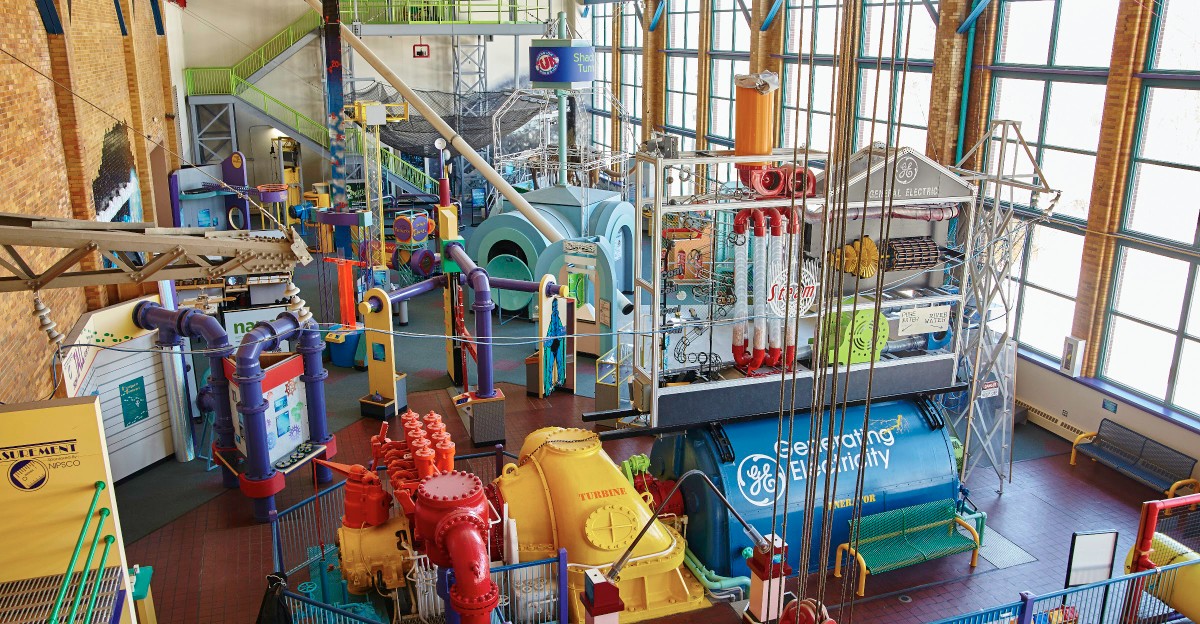
Kids can pedal a bicycle across a wire high above the floor inside an old Indiana power plant. Yes, really.
That plant once made electricity for an entire city.
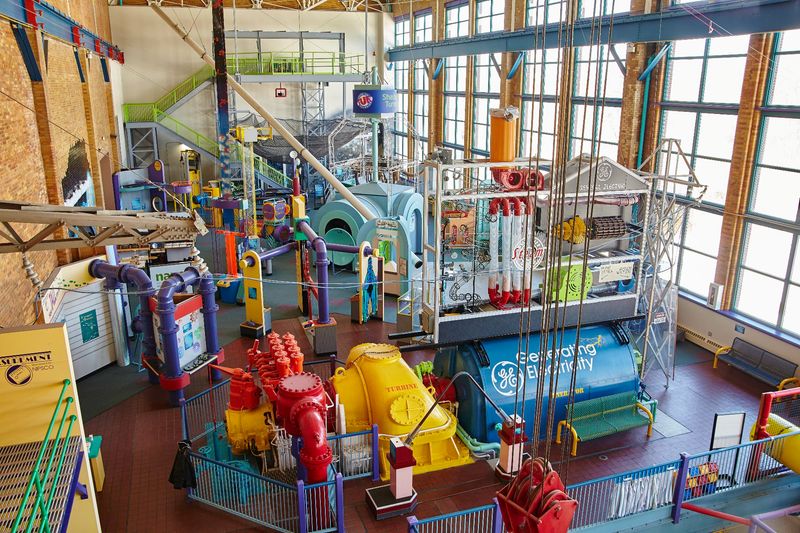
The building stopped producing power in 1975 and sat empty for 16 years. Now its brick walls, exposed pipes, and towering ceilings hold more than 120 hands-on exhibits.
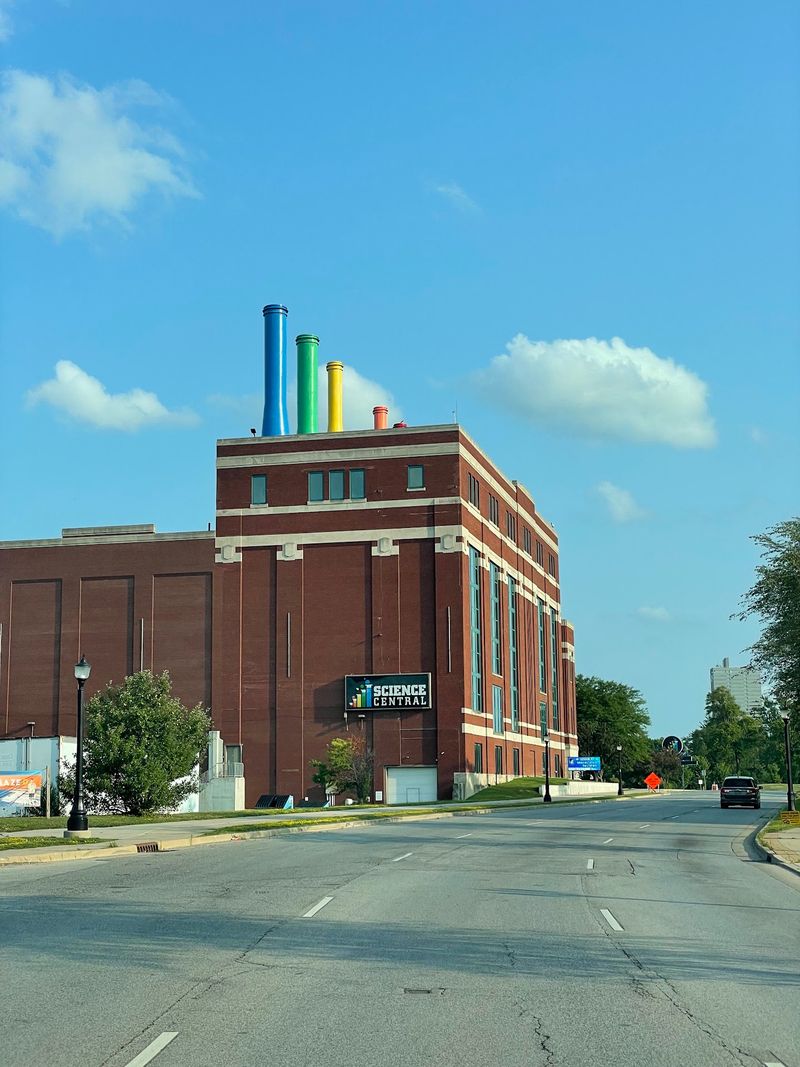
The smokestacks outside even got a bright paint job.
I’m impressed by how this former power plant found a completely new way to keep people energized. There’s a two-story twisting slide, a glowing globe that shows real weather, and a brand-new dome full of stars.
A place that once powered an entire city now gives kids room to experiment, explore, and burn off some energy. I’d say that’s a pretty brilliant second life for an old power plant.
A Power Plant That Traded Electricity for Curiosity
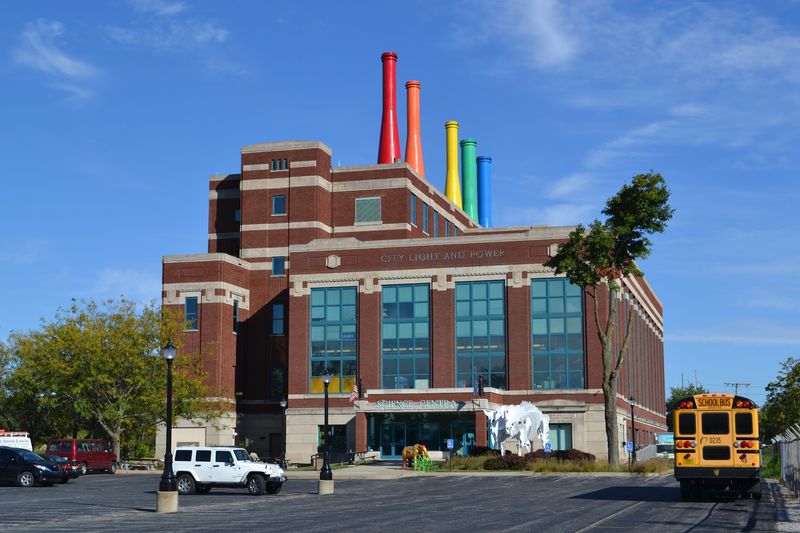
Back in 1908, the city of Fort Wayne opened its first publicly run electric utility right on this spot. Today that same site is home to Science Central, a hands-on science center in northeast Indiana.
The story behind the building is half the fun. An expansion started in 1929 and replaced the original 1908 plant, with the first phase finished in 1934.
The plant kept humming until February 28, 1975. Then it sat vacant for 16 long years, which feels like a very long nap for a building that used to make power.
Everything changed in November 1991. A major renovation began, and the old industrial giant reopened as a science museum in 1995.
You can still spot its past everywhere you look. Exposed pipes, brick walls, and towering ceilings remind you this place once had a very serious job.
Outside, the smokestacks got a cheerful makeover with vibrant colors. It’s hard to miss them, and kids usually point before the car is even parked.
I love that the building teaches a lesson before anyone touches an exhibit. Energy, history, and reinvention all live under one roof here.
That’s a pretty smart way to start a science day.
Two Stories of Twisting Slide Are Waiting for Brave Riders
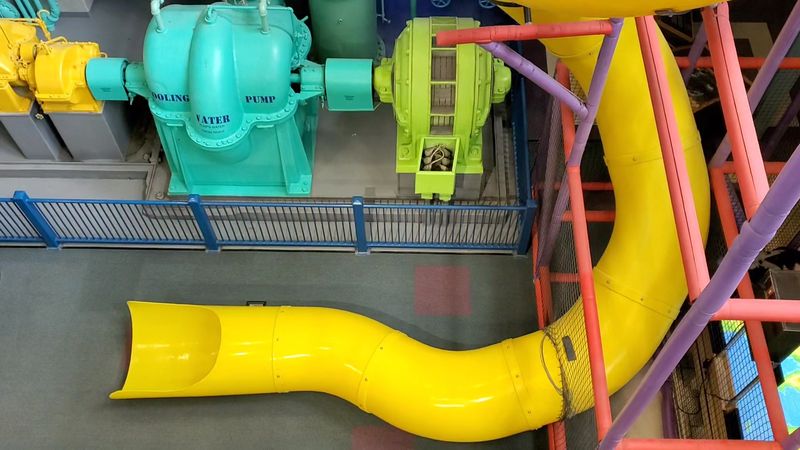
Some museums ask kids to walk quietly between exhibits. This one hands them a two-story twisting slide instead.
That alone might be the best rainy-day bargain in town. Kids climb up, whoosh down, and somehow want to go again before their feet hit the floor.
The slide also solves a classic parent problem. When little legs are bursting with energy, a few fast trips down burn it off faster than any lecture about gravity.
Of course, gravity is exactly what’s happening. Science sneaks in while everyone is busy laughing, which feels like a very clever trick.
Keep an eye on posted slide rules before your crew lines up. Staff members help keep things running smoothly, and following their directions keeps the fun moving.
Grown-ups shouldn’t feel left out, either. Watching your kid’s face at the bottom is half the entertainment, and honestly it beats staring at rain through a window.
I’d plan for several rounds rather than just one. Once kids discover it, the slide tends to become the place they keep circling back to.
Good luck getting them to leave it alone for long.
Pedaling Through the Air Sounds Wild Until You Try It
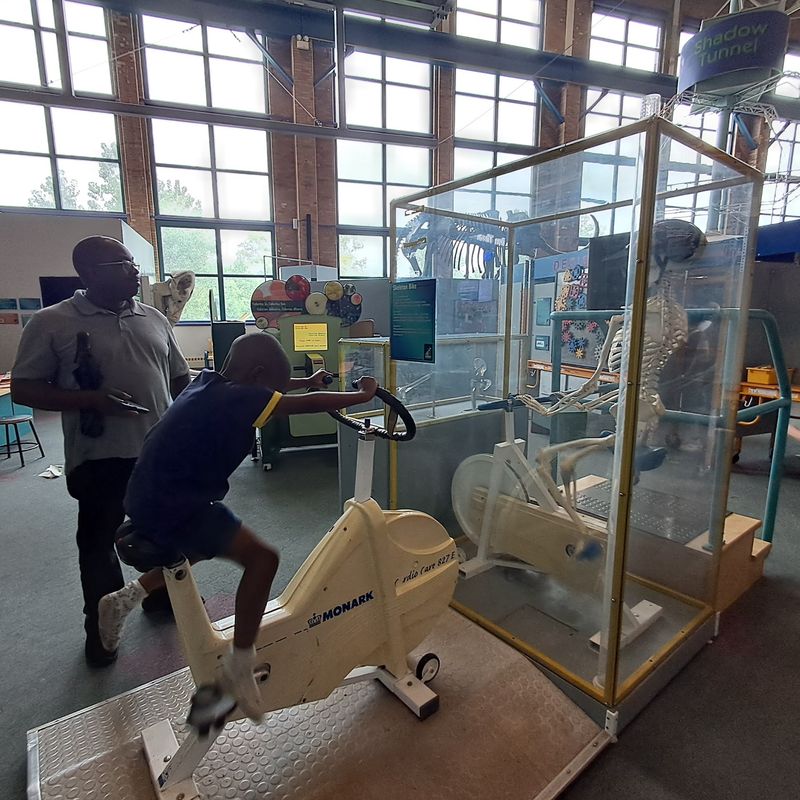
Riding a bike on a wire high above the ground sounds like a circus act. At Science Central, it’s simply called the High Ride Bicycle.
The bicycle is suspended overhead, so riders pedal across the air while everyone below looks up. It’s the kind of exhibit that makes kids feel brave and slightly famous at the same time.
So how does it stay upright? That’s the science lesson hiding inside the thrill, and it turns a scary-looking ride into a real-life puzzle about balance.
Kids who love a challenge will probably make this their top goal. More cautious riders can watch first and build up their courage, which is perfectly fine.
The towering ceilings of the old power plant make this ride possible. A normal museum room wouldn’t have the space for something this dramatic.
Parents might want their camera ready before the ride starts. A picture of your child floating above the floor on a bike makes a pretty great memory from a stormy day.
I can’t think of many places in Indiana where you can do this indoors. That makes it a standout reason to visit when the weather won’t cooperate.
A Glowing Globe Shows Storms From the Comfort of Indoors
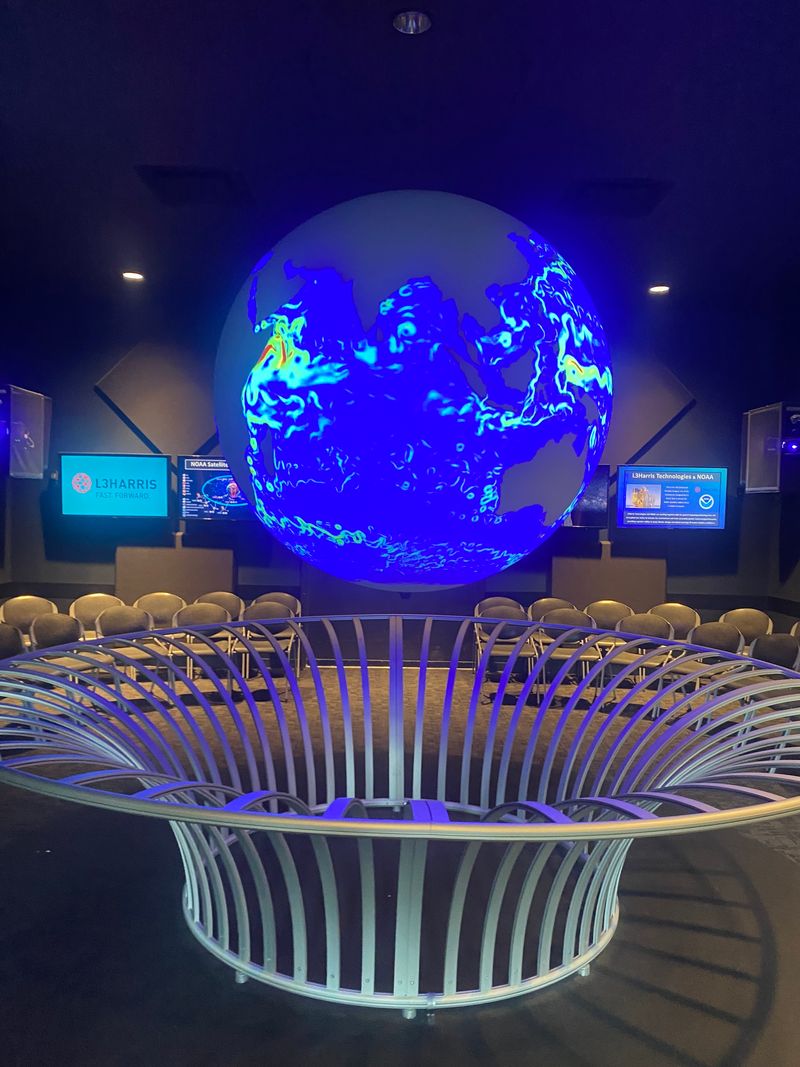
Here’s a fun twist for a stormy day. You can hide from the bad weather and then watch weather swirl across the whole planet.
Science On a Sphere is a six-foot globe that displays animated global data. It was developed by the National Oceanic and Atmospheric Administration, better known as NOAA.
This exhibit was the first of its kind in Indiana. That’s a nice bit of trivia to share with kids while they stare at it.
The sphere projects imagery of global weather, earthquakes, and tsunamis. It can also show planets and moons, which turns a small room into a trip through space.
Seeing clouds move across a giant ball makes weather feel less mysterious. Kids can spot where storms are forming and connect it to what’s happening outside.
I like how this exhibit works for many ages. Little ones enjoy the bright colors, while older kids can ask bigger questions about how our planet works.
Give it a few minutes rather than rushing past. The images keep changing, and each new view brings something different to talk about on the ride home.
The Newest Star of the Show Lives Under a Dome
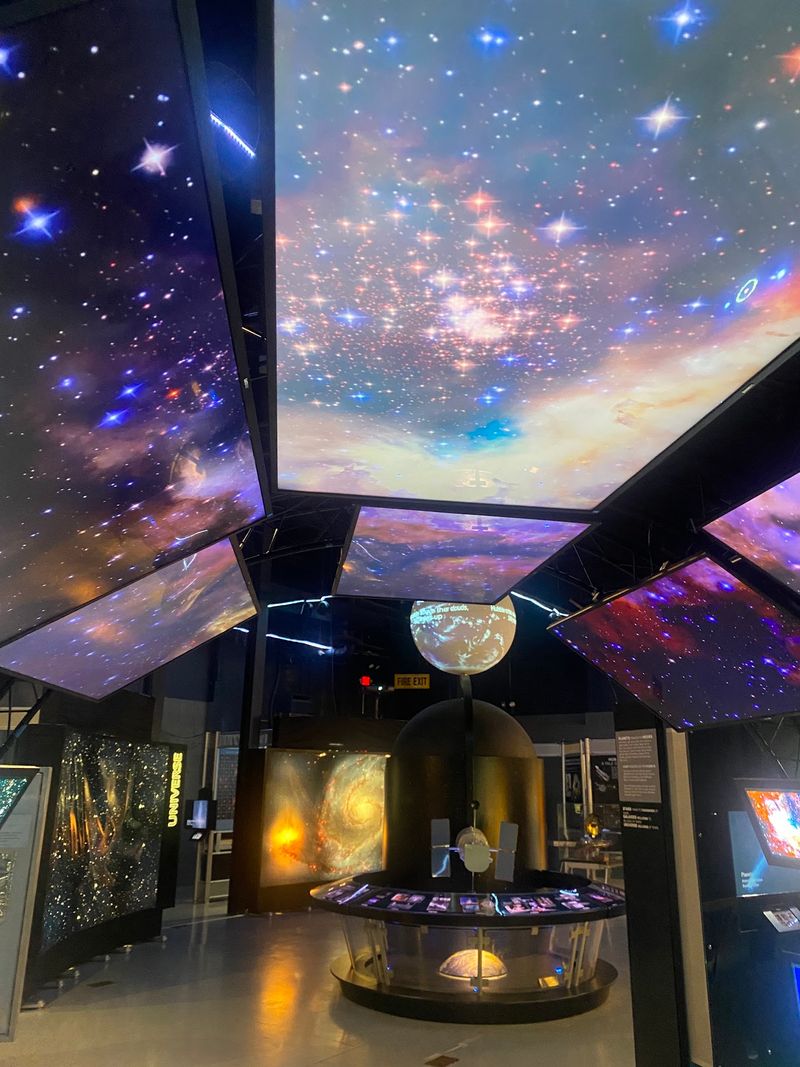
March 2026 brought a big moment for this old power plant. A brand-new planetarium opened its doors, and the stars finally moved in.
The dome stands 21 feet tall and stretches 28 feet wide. That’s plenty of room for planets, moons, and galaxies to float above your head.
The planetarium offers daily demonstrations, so you don’t need a special occasion to look up. Special events also pop up, including laser shows set to music.
Showtimes run on a schedule, which matters with small kids. Check the timing when you arrive so you can plan exhibits around your planetarium visit.
Members get some extra perks here, too. Member Thursdays feature extended hours and planetarium shows just for members.
I believe this dome changes the whole visit. A rainy afternoon suddenly includes a trip to the moon, and nobody needs a raincoat for that journey.
Science Central now has one of the coolest ways to explore space in northeast Indiana. Lie back, look up, and let the clouds outside become someone else’s problem for a while.
Little Scientists Get Their Own Splashy Corner
Toddlers don’t care about lab coats. They care about water, buttons, and anything they can climb, and Kids Central delivers all three.
This dedicated area is designed for kids ages 2 through 7. It gives younger visitors a space where everything fits their size and attention span.
The water table is a big draw. Kids can pour, splash, and watch how water moves, which counts as science even if it looks like pure play.
A giant keyboard lets little feet make music. There’s also an indoor playground, perfect for wiggles that just won’t quit on a gloomy day.
Parents of very young children will appreciate having a home base. When older siblings head off to bigger exhibits, the little ones still have something made just for them.
Packing an extra shirt is a smart move. Water tables and excited toddlers tend to go together like rain and puddles.
Children 2 and under get in free, which helps families with babies and toddlers. I love that the youngest visitors get treated like real scientists here, just with more splashing.
Prehistoric Giants and Hoosier Critters Share the Spotlight
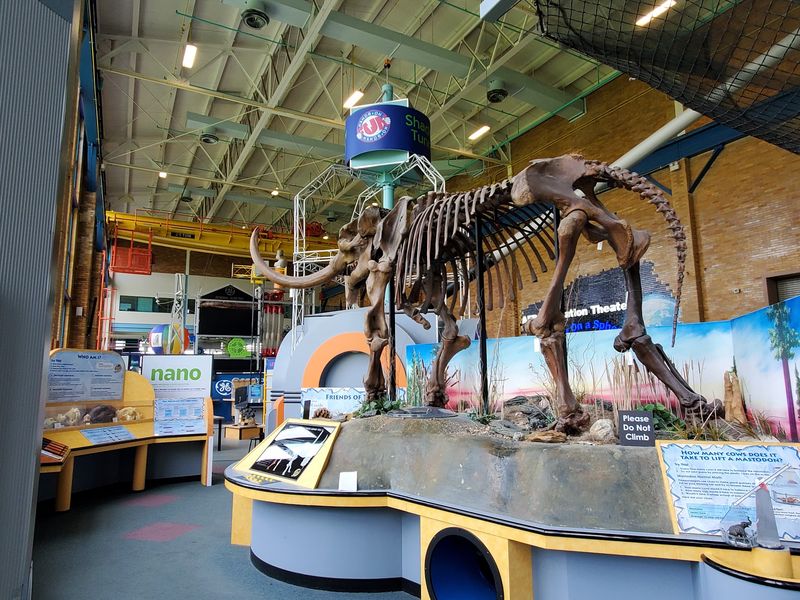
Long before anyone built a power plant here, ancient creatures roamed the land. The paleontology displays at Science Central bring that faraway world a little closer.
Kids who love fossils will find plenty to study. These exhibits offer a peek into prehistoric times, when the landscape looked nothing like modern Fort Wayne.
Biology fans get their turn, too. Displays feature Indiana’s native animals, which helps kids learn about the wildlife living right around them.
That local angle makes the learning stick. A child might spot one of these animals in the backyard later and remember seeing it at the museum.
Mixing ancient history with living creatures keeps things interesting. One minute you’re thinking about the distant past, and the next you’re meeting neighbors from the natural world.
Older kids can read the details and ask harder questions. Younger ones can simply enjoy the shapes, sizes, and surprises.
I think this section works well as a calmer stop between the slide and the High Ride Bicycle. Everyone gets a breather, and nobody stops learning.
Not bad for a rainy-day plan.
Live Demos Bring a Little Showtime to the Science
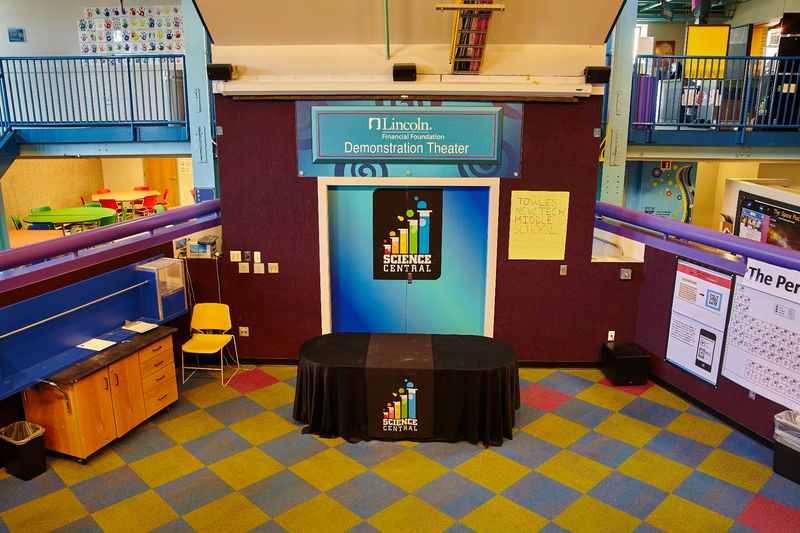
Watching science happen live beats reading about it in a textbook. Daily demonstrations at Science Central prove that point again and again.
Knowledgeable staff members lead shows in the Demonstration Theater. They turn experiments into performances, so kids get the excitement of a show along with real facts.
It’s smart to check the demo schedule when you arrive. Planning your route around showtimes means you won’t miss the main event.
Learning doesn’t stop at the theater door, either. The center also offers programs like Coding Club, STEM Camps, and Science Matters for older kids and teenagers.
Those programs give curious teens a reason to keep coming back. A kid who loved the slide at age six might be writing code here a few years later.
Special events, workshops, and live science shows pop up often throughout the year. Each one adds a fresh reason to return when the forecast looks gray again.
I love that real people make the science feel personal. A great demo can spark a question that lasts much longer than the visit itself, and that’s the best kind of souvenir.
A Few Smart Moves Make Your Visit Run Smoothly
Timing matters more than you’d think. Science Central opens Wednesday through Sunday from 10 a.m. to 5 p.m., and it’s closed Mondays and Tuesdays.
You’ll find it at 1950 N Clinton St, Fort Wayne, IN 46805. The colorful smokestacks make a pretty handy landmark when you’re driving in the rain.
Hungry crews should plan ahead. The center doesn’t serve prepared food, but it has an eating area with vending machines, and guests may bring their own food.
Outdoor picnic tables are available for nicer days. On stormy ones, the indoor eating space keeps lunch dry and simple.
Buying tickets online usually saves a little compared to paying at the door. Children 2 and under get in free, and members enjoy free admission all year.
Accessibility is well covered here. You’ll find step-free access, automatic doors, elevators, gender-neutral restrooms, sensory kits, and wheelchair rentals, and service animals are welcome.
One more tip could save your day. The center closes each year from August 24 to September 11 for maintenance, so check before heading out.
After that, Indiana weather can do whatever it wants.
