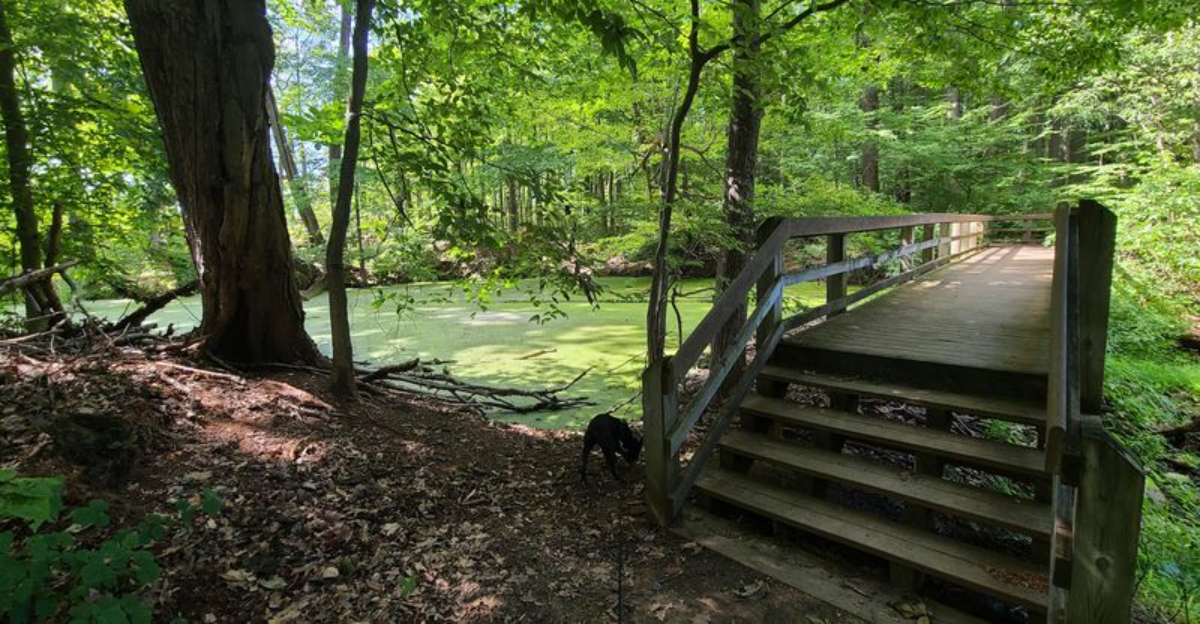
There is a place in northwest Indiana where the ground literally floats, where plants eat insects, and where the last Ice Age never quite let go. Pinhook Bog, tucked inside Indiana Dunes National Park near La Porte, is one of the most genuinely rare natural places in the entire Midwest.
I had heard about it for years before finally making the drive out, and nothing quite prepared me for what I found. This is not your average nature walk.
It is a living relic from thousands of years ago, and the fact that you can still walk through it feels almost unreal. If you love Indiana and you have not been here yet, keep reading.
A Floating Forest That Actually Moves Beneath Your Feet
Most forests stay put. Pinhook Bog does not.
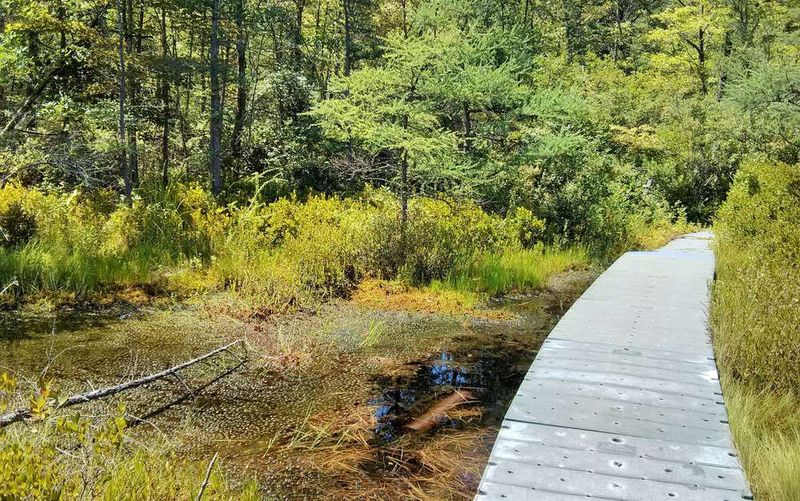
The bog sits on a mat of sphagnum moss so thick and buoyant that it floats on top of water, and when you walk across it during a ranger-led tour, you can actually feel the ground shift slightly under your steps. That sensation alone is worth the trip.
Pinhook Bog formed roughly 15,000 years ago when a massive chunk of glacial ice broke off and melted into the earth, leaving behind a bowl-shaped depression with no outlet. Without drainage, the water became highly acidic over centuries, and sphagnum moss took over, building up layer by layer into the floating mat you walk on today.
The boardwalk used during guided tours gives you access to the bog interior while protecting the fragile ecosystem underneath. Rangers explain how the mat behaves, why it moves, and what lives inside it.
It is a completely different sensory experience from any other hike in Indiana, and honestly, from most hikes anywhere. The bog is not just a landscape.
It is a living system that responds to your presence in a way solid ground never does.
Carnivorous Plants Growing Wild Right Here in Indiana
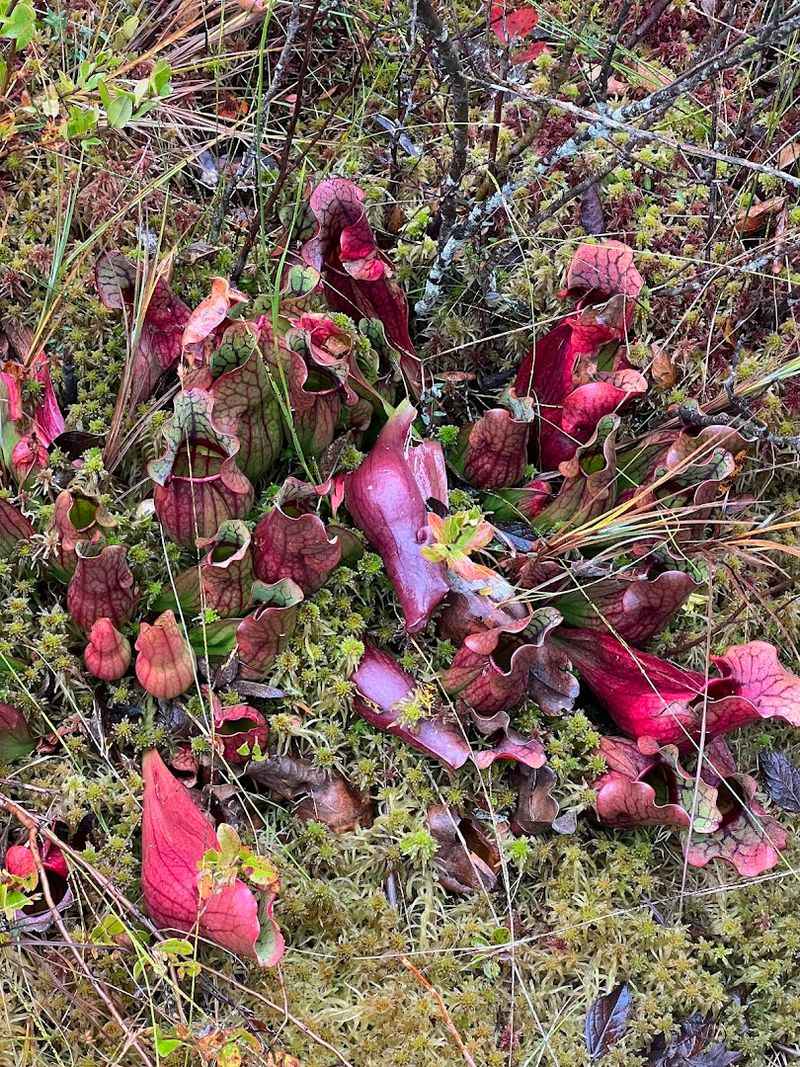
Pitcher plants, sundews, and bladderworts all grow wild at Pinhook Bog, and seeing them in person is genuinely jaw-dropping. These are not plants you expect to find in Indiana.
They belong in tropical documentaries, yet here they are, thriving in the acidic waters of a glacial kettle bog just a short drive from Lake Michigan.
The pitcher plant is the showstopper. Its tall, tube-shaped leaves fill with rainwater and digestive enzymes that slowly break down any insect unlucky enough to fall inside.
Sundews use sticky, glistening droplets on their leaf tips to trap prey. Bladderworts float in the water and use tiny vacuum-like bladders to suck in microscopic organisms.
All three species exist here because the bog soil is so nutrient-poor that the plants evolved to get what they need from bugs instead.
Visiting in late spring or early summer gives you the best chance to see pitcher plants in full bloom, along with rare bog orchids that pop up among the moss. The ranger tours point out exactly where to look, which makes a real difference because some of these plants are surprisingly easy to miss at first glance.
Once your eyes adjust to the scale of the bog, you start seeing life everywhere you look.
One of the Few Inland Kettle Bogs Left in the State
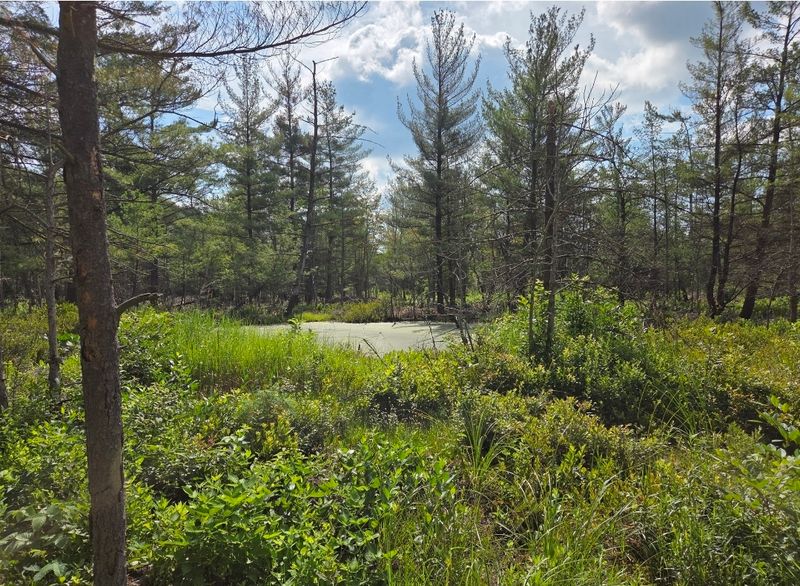
Indiana does not have many bogs left. Wetland drainage and development have wiped out the vast majority of the state’s original bog ecosystems over the past two centuries.
Pinhook Bog is one of the rare survivors, and it holds the designation of National Natural Landmark for exactly that reason.
A kettle bog forms in a specific way that makes it fundamentally different from a marsh or a swamp. When a glacier retreats, it sometimes leaves behind a buried chunk of ice.
When that chunk melts, it creates a steep-sided depression with no stream inlet or outlet. Water collects, stagnates, and becomes acidic.
Over thousands of years, sphagnum moss colonizes the surface and builds upward, eventually creating the floating mat that defines a true kettle bog.
Pinhook is considered one of the southernmost examples of this type of ecosystem in the United States. That geographic rarity adds another layer of significance to every visit.
You are not just walking through a pretty forest. You are standing at the edge of a biological boundary, a place where northern bog species reach their southern limit and cling on against the odds.
For anyone interested in ecology, geology, or natural history, that context transforms the entire experience from a nice hike into something genuinely profound.
Ranger-Led Tours That Actually Teach You Something
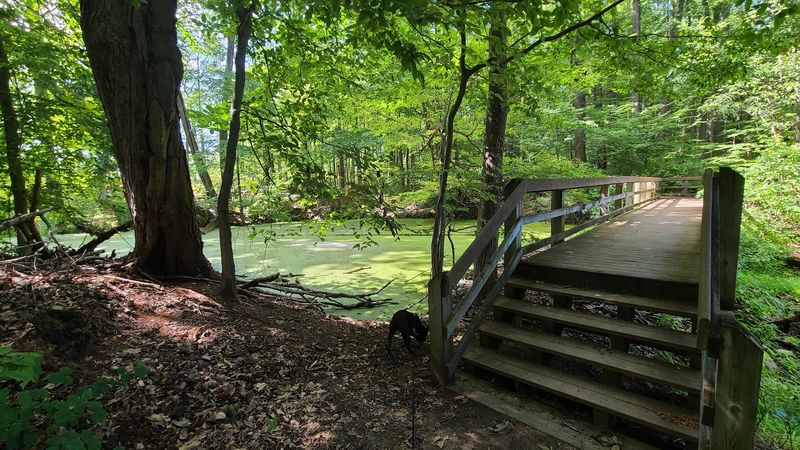
The bog interior is only accessible on ranger-led tours, and that restriction turns out to be one of the best things about visiting. You are not just wandering through on your own trying to figure out what you are looking at.
You have someone beside you who genuinely loves this place and wants you to understand why it matters.
Rangers at Pinhook Bog are known for bringing real enthusiasm and deep knowledge to every tour. They explain the difference between a bog and a marsh, walk you through the food web of carnivorous plants, and point out things you would never notice on your own, like the tiny sundews hiding in the moss or the bladderworts floating just below the water surface.
The tours typically last around an hour and cover the full boardwalk loop through the bog interior.
To access the bog itself, you need to check the National Park Service schedule and plan ahead. Tours are offered on a seasonal basis, with ranger-led programs running on select days during warmer months.
Calling the visitor center at 219-395-1882 or checking the NPS website before your visit saves you from arriving on a day when only the upland trail is open. The upland trail is worth doing on its own, but the bog tour is the experience that people talk about long after they get home.
The Upland Trail Through Old-Growth Beech and Maple Forest
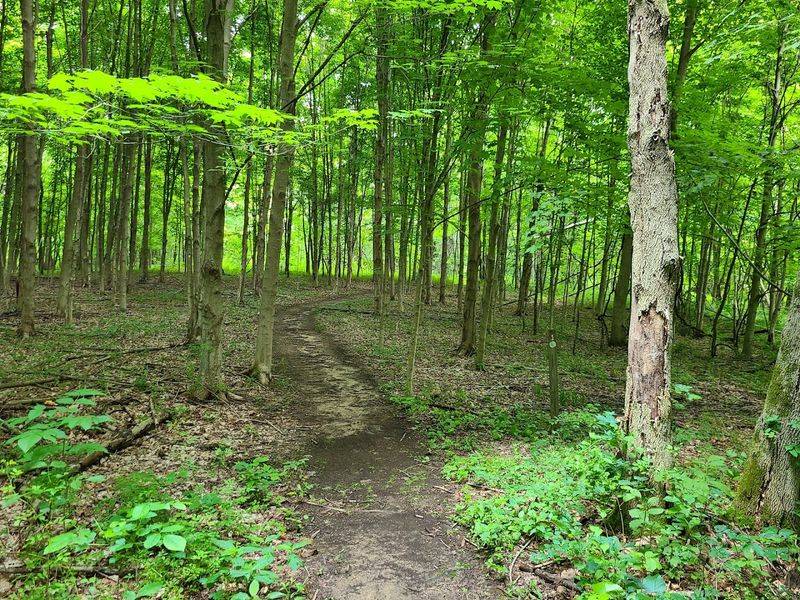
Even on days when the bog interior is closed, the Pinhook Bog Upland Trail delivers a genuinely beautiful hike through some of the most impressive old-growth forest in the region. The two-mile loop winds through a beech and maple canopy that has been growing on top of a glacial moraine for thousands of years, and the scale of the trees makes you feel wonderfully small.
The trail is rated easy with only about 124 feet of elevation gain, making it accessible for families, older hikers, and anyone who wants a peaceful walk without a serious workout. The packed dirt path crosses three small bridges, dips through shaded hollows, and occasionally opens up to views of the bog below.
Fall is especially spectacular here, when the hardwood canopy ignites with reds, oranges, and golds that reflect off the still water of the bog.
Birdwatchers consistently find the upland trail rewarding throughout the year. The forest holds a rich mix of songbirds, woodpeckers, and migratory species, and the quiet of the trail makes it easy to hear them before you see them.
Frogs call from the edges of the water in spring and summer, and turtle sightings are common along the bridges. The trail is open daily from 6 AM to 11 PM, so early morning visits before the crowds arrive have a particular kind of magic to them.
A Living Piece of Ice Age History in Your Own Backyard
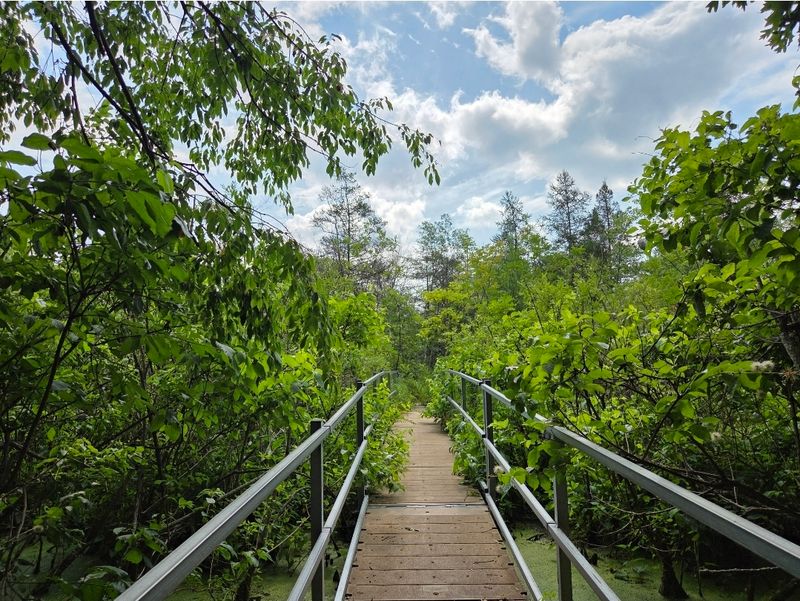
There is something quietly astonishing about realizing that the ground you are standing on was shaped by a glacier that retreated 15,000 years ago. The moraine hills surrounding Pinhook Bog are direct evidence of that ancient ice, pushed up and left behind as the glacier slowly pulled northward at the end of the last Ice Age.
The bog sitting inside those hills is essentially a frozen moment in geological time.
Sphagnum moss accumulates very slowly, sometimes just a few millimeters per year. The layers of peat beneath the Pinhook Bog mat represent thousands of years of continuous organic buildup.
Scientists can core into that peat and read the history of the local climate and ecosystem going back to the end of the Pleistocene epoch. That kind of deep time is hard to visualize, but standing on the floating mat and knowing what lies beneath gives you a physical connection to it that no textbook can replicate.
For Indiana locals especially, Pinhook Bog offers a reminder that this state has a geological story far older and stranger than most people realize. The flat cornfields and suburban sprawl of the region make it easy to forget that the land was once sculpted by mile-thick ice sheets.
Pinhook Bog preserves that story in a way that is still alive, still growing, and still accessible to anyone willing to make the drive out to La Porte.
Nearby Spots Worth Adding to Your Visit
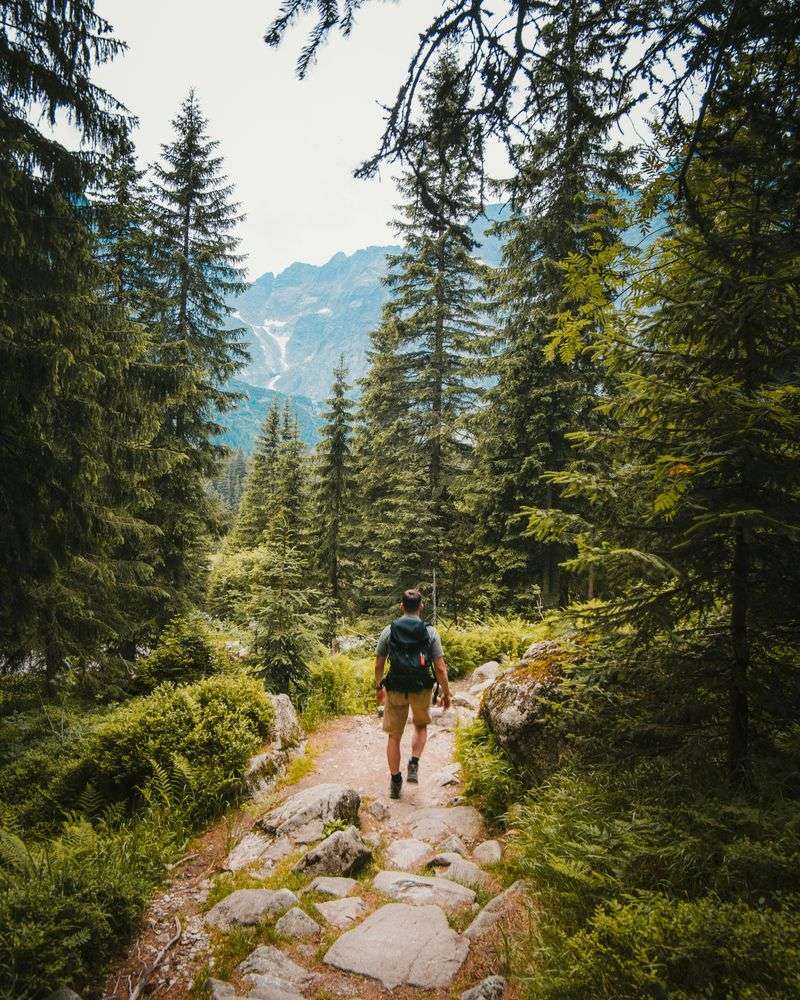
Pinhook Bog sits in La Porte County, and the surrounding area has plenty of reasons to extend your day trip. Indiana Dunes National Park itself covers over 15,000 acres along the Lake Michigan shoreline, and the main dunes area at 1215 N Indiana 49, Porter, IN 46304 offers dramatic beach and dune hikes that feel completely different from the quiet bog forest.
The contrast between the two ecosystems, separated by just a short drive, is one of the most interesting things about this corner of the state.
The Indiana Dunes Visitor Center at 1215 N Indiana 49, Porter, IN 46304 is a great first stop for maps, ranger advice, and information on current tour schedules for Pinhook Bog. Staff there can confirm which programs are running on any given day, which saves a lot of guesswork.
For a meal after your hike, the town of La Porte has a genuine local food scene worth exploring. Tryon Farm Market and surrounding farmstand stops along US 35 offer seasonal produce and local snacks that feel perfectly matched to a day spent in nature.
The town square in downtown La Porte, centered around Pine Lake Avenue, has several family-owned restaurants and cafes that locals rely on year-round. Ending a bog hike with a quiet lunch in a small Indiana town is exactly the kind of day that reminds you why this part of the state deserves more attention.
Dear Reader: This page may contain affiliate links which may earn a commission if you click through and make a purchase. Our independent journalism is not influenced by any advertiser or commercial initiative unless it is clearly marked as sponsored content. As travel products change, please be sure to reconfirm all details and stay up to date with current events to ensure a safe and successful trip.
