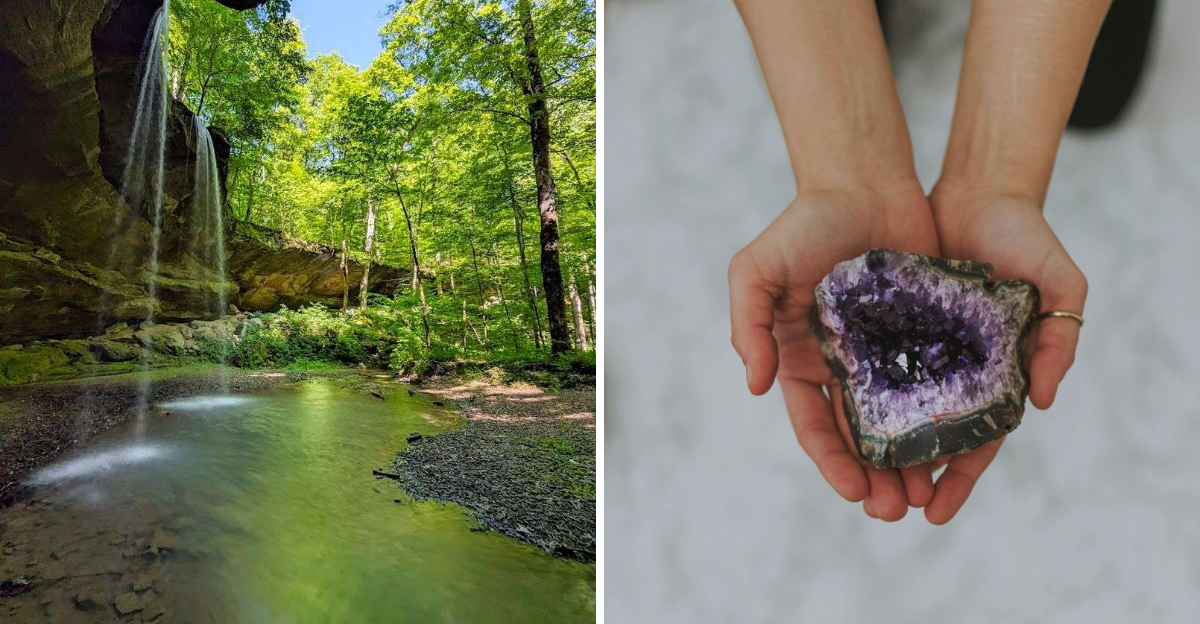
Most people think of Indiana as flat cornfields and quiet highways. What many miss is a sprawling 200,000+ acre national forest in the southern part of the state where the landscape rises into rugged ridges, drops into deep creek hollows, and hides something genuinely surprising beneath the surface.
This forest is one of Indiana’s best-kept secrets, and certain creek beds are known for containing geodes and crystals that visitors can sometimes find for free while exploring.
The terrain feels far more varied than the state’s typical image, with rolling hills, dense woodland, and quiet waterways shaping the experience.
If you have ever wanted to go treasure hunting without a guide or fee, this is one of those rare Indiana places where exploration itself feels like the reward.
Free Entry Makes It One of the Most Accessible Adventures in Indiana
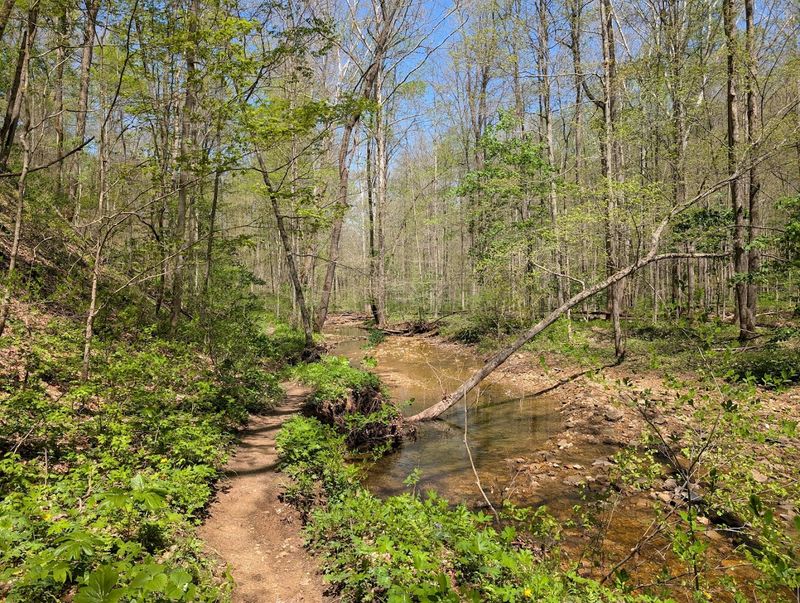
Not every great adventure has to cost money. One of the most underrated things about Hoosier National Forest is that entry is completely free, and recreational rockhounding does not require a permit or fee of any kind.
For families on a budget, this changes everything. You pack a lunch, grab some basic tools, load the kids into the car, and head out for a full day of real outdoor exploration without worrying about what it costs.
That kind of freedom is rare, and it makes the forest genuinely welcoming to everyone regardless of income or experience level.
The forest headquarters is located at 811 Constitution Ave, Bedford, IN 47421, where staff can point you toward good starting areas and answer questions about what you are allowed to collect. Office hours are limited to Tuesday through Thursday, 8 AM to 12 PM, so planning ahead is helpful.
Free access also means you can come back as many times as you want throughout the season without feeling like you are overspending. Locals who live within an hour or two of the forest often make it a regular weekend habit.
There is something refreshing about a public land that genuinely belongs to the public and keeps it that way, no entrance booth, no wristbands, just open forest and good ground to explore.
Surface-Level Collecting Keeps It Simple and Legal
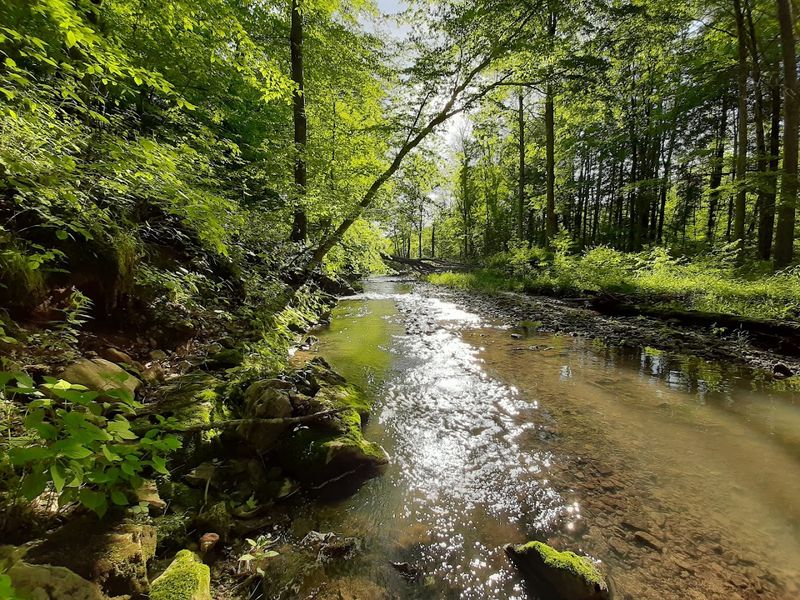
One of the best things about rockhounding at Hoosier National Forest is that you do not need heavy equipment or a geology degree to do it right. Surface collecting from creek beds and exposed dirt walls is allowed, and that is exactly where most of the good finds turn up anyway.
The rules are straightforward. You can collect minerals and rocks for personal, non-commercial use.
Small hand tools like rock hammers, chisels, and brushes are generally acceptable for surface work. What is not allowed is large-scale excavation, commercial collecting, or using motorized equipment to dig.
Keeping it simple actually works in your favor here because the creeks naturally expose new material after every rain.
After a good storm, fresh geodes and mineral pieces wash down from higher ground and settle into gravel bars and shallow bends in the creek. That makes the day after heavy rain one of the best times to visit.
The water clears quickly in most areas, and the freshly deposited material has not been picked over yet.
Wearing waterproof boots is a smart move since you will likely be wading through shallow water to reach the best spots. Bring a small bucket or mesh bag to carry your finds without crushing them.
Layering your clothing helps too, since mornings in the forest can be cool even in summer. A little preparation goes a long way toward making the trip enjoyable from start to finish.
Geodes and Crystals Are Everywhere in the Creek Beds

Some places make you work hard for a reward. Hoosier National Forest is not one of them.
The creek beds here are naturally loaded with geodes, and all you have to do is look down. Geodes form when minerals like quartz, barite, calcite, and dolomite crystallize inside hollow rock cavities over thousands of years.
When you crack one open, the inside can sparkle like a tiny cave of light. Finding one in the wild feels like discovering something the earth kept just for you.
The northern sections of the forest and areas near stream beds and dirt walls are especially productive spots. Monroe County and the regions near Bedford and Mitchell are well known among local rockhounds for turning up solid finds.
However, you must avoid the Charles C. Deam Wilderness area, where all rockhounding and mineral collecting are strictly prohibited to preserve the wild terrain.
Outside this zone, most geodes sit right on the surface or just slightly embedded in the creek bank. Bring a small hand lens or magnifying glass to get a better look at what you find.
A light rock hammer helps crack open candidates without destroying the crystals inside. Even kids can spot geodes once they know what rounded, bumpy rocks look like compared to plain creek stones.
The thrill of cracking one open never really gets old, no matter how many times you have done it before.
Rare Gem Finds Are a Real Possibility Here
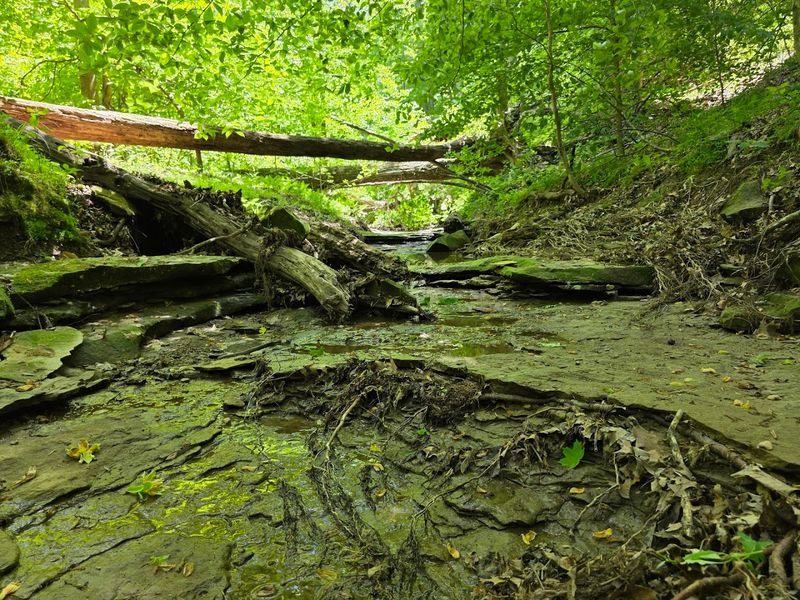
Most visitors come hoping to find a nice geode or some quartz crystals, and they usually leave satisfied. But Hoosier National Forest holds a quieter promise for those willing to look a little harder.
There is a genuine, if marginal, chance of finding something far more valuable.
Garnets have been found in the region, and reports of sapphire-like minerals occasionally surface among the rockhounding community. Some persistent visitors have even reported finding small flakes of gold while panning in certain streams.
Commercial equipment is prohibited, but basic gold panning with a simple pan is allowed, and that alone makes the forest feel like something out of a frontier story.
The key is patience. Rare finds do not come to people who rush.
Working a stretch of creek slowly, turning over stones methodically, and checking the inside of every promising rounded rock gives you the best odds.
Joining a local rockhounding club or online community before your trip can also point you toward the most productive areas based on recent reports from other collectors.
Even if you never find a garnet or a gold flake, the possibility keeps the experience exciting in a way that most outdoor activities simply cannot match. Every rock you pick up carries a small question mark.
That sense of possibility is genuinely addictive, and it is one of the main reasons people keep coming back to this forest season after season.
The Scenery Alone Is Worth the Drive
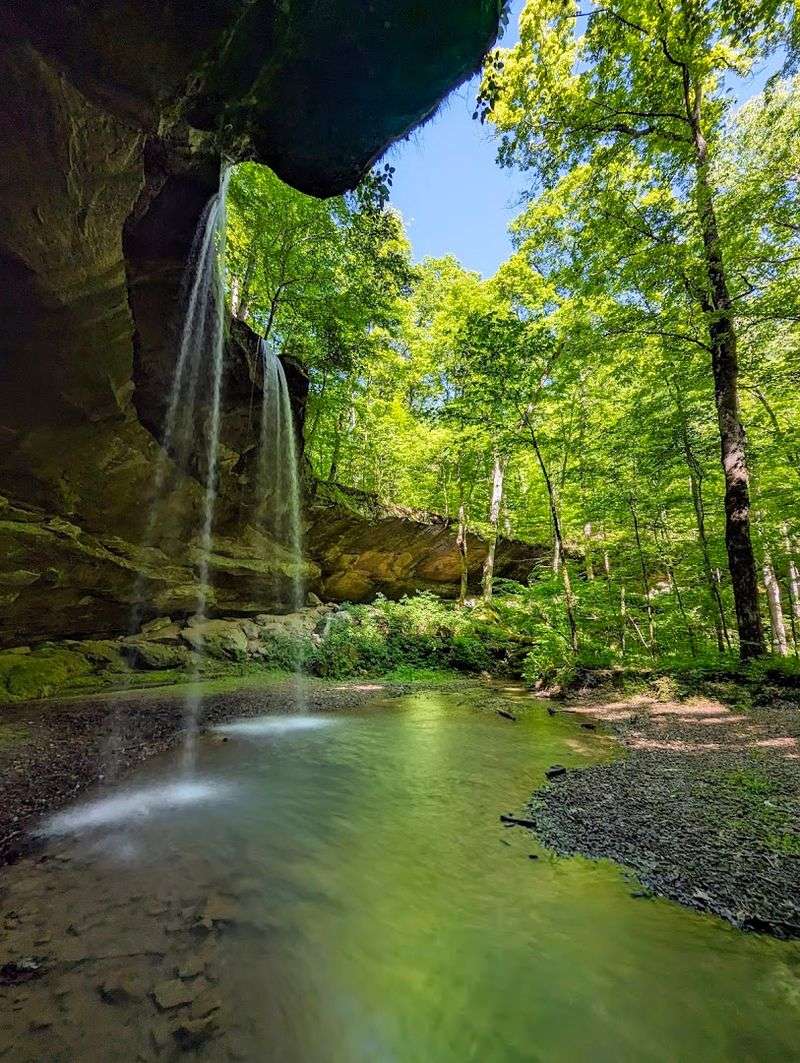
People who have never been to southern Indiana are often surprised by what they find. The landscape does not match the flat, open image most outsiders carry in their heads.
Hoosier National Forest covers 204,000 acres of rolling hills, wooded ridges, creek hollows, and photogenic lakes that change completely with each season.
Spring brings flowering redbuds and dogwoods that turn the forest pink and white along the trail edges. Summer fills the canopy out thick and green, keeping the creek corridors cool even on hot days.
Fall is genuinely stunning here, with the hardwood mix turning gold, orange, and deep red across the ridgelines. Even winter has its appeal, when the bare trees open up long views and the frozen creek edges catch the morning light in interesting ways.
The Hemlock Cliffs area is one of the most visually dramatic spots in the forest, featuring sandstone cliffs, shallow caves, and seasonal waterfalls tucked into a sheltered hollow. Jug Rock, a natural hoodoo formation near Shoals, is another landmark worth seeing while you are in the area.
These formations remind you that Indiana’s geology is far more interesting than most people give it credit for.
Bringing a camera is an obvious move, but even just sitting quietly beside one of the creeks for a few minutes gives you a sense of how genuinely peaceful this place is. The forest has a way of slowing everything down in the best possible way.
Over 260 Miles of Trails Connect the Whole Experience
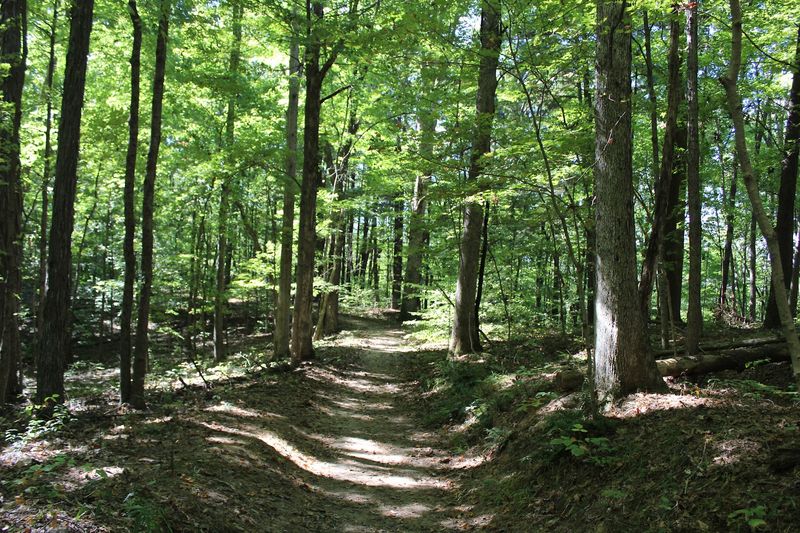
Crystal hunting is the main draw for a lot of visitors, but the trails here make it easy to turn a rockhounding trip into a full outdoor day or even a multi-day adventure.
Hoosier National Forest has over 260 miles of marked trails covering terrain that ranges from easy lakeside walks to more demanding ridge hikes.
The Charles C. Deam Wilderness area is one of the most popular sections for backpackers.
The trail system there winds around Lake Monroe, and camping directly on the lakeshore is allowed in designated areas. Moderate fitness is all that is needed for most of the routes, and the payoff in scenery is consistently high.
Horseback riding is permitted on many of the forest trails, and horse camps like Blackwell Horse Camp provide facilities for riders who want to stay overnight. Mountain biking has a presence here too, with certain trail sections well suited to off-road riding.
Fishing is available in the lakes, ponds, and streams throughout the forest, with bass, catfish, and panfish among the common catches.
What makes the trail network so valuable for crystal hunters is the way it connects you to remote creek sections that most casual visitors never reach. The further you hike from the trailhead, the less picked-over the creek beds tend to be.
Packing light but smart, good boots, water, a snack, and a small collecting bag, lets you cover more ground and find better material than those who stay close to the parking area.
The Mitchell Creek Road Area and Nearby Towns Add to the Adventure
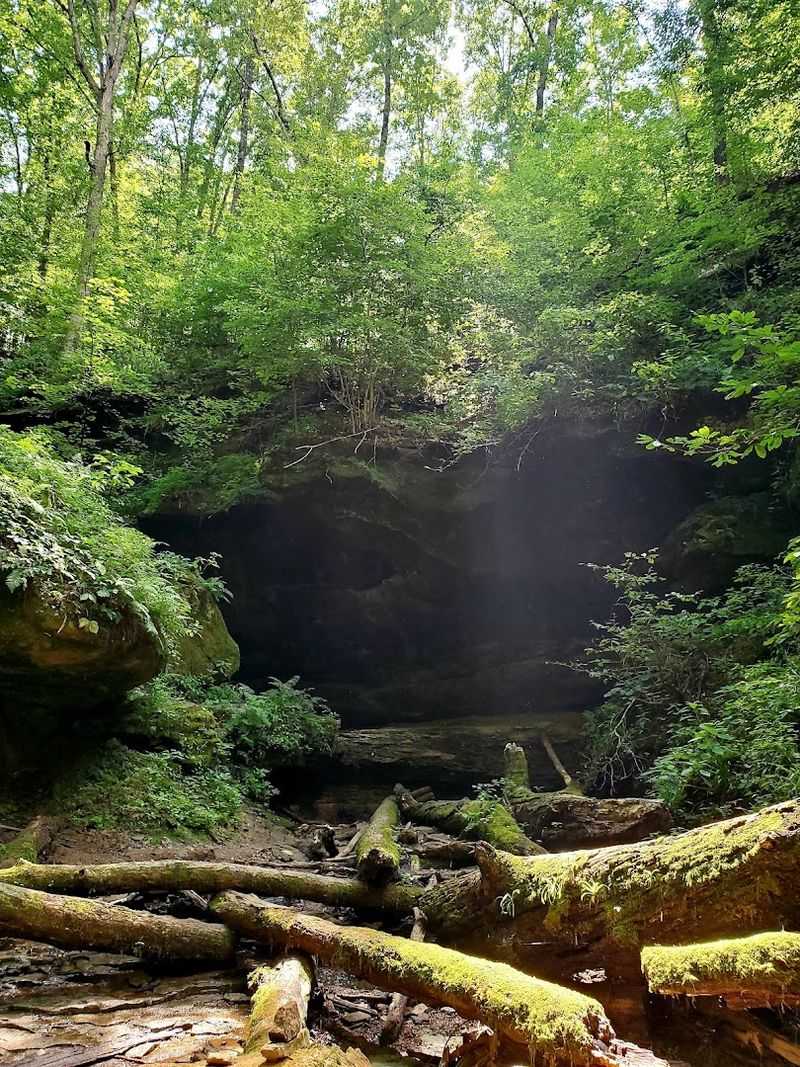
The forest does not exist in isolation. The towns surrounding Hoosier National Forest are part of what makes a visit here feel complete, and they add real character to the trip beyond what you find in the creek beds.
The Mitchell Creek Road area within the forest is noted by local rockhounds for its interesting geological features. Creek beds in that stretch have produced good geode finds, and the exposed banks reveal layers of sedimentary rock that tell a long story about what this land used to be.
Spending time in that corridor before or after hiking a trail makes for a well-rounded day.
Bedford, the town closest to the forest headquarters, is known as the Limestone Capital of the World. The local limestone has been quarried and shipped across the country for use in major buildings, including the Empire State Building and the Pentagon.
Walking through downtown Bedford gives you a sense of how deeply geology runs through the identity of this whole region.
Spring Mill State Park, located near Mitchell, is another excellent nearby stop. The park features a restored pioneer village, a working grist mill, and cave tours that explore the karst landscape beneath the surface.
It pairs naturally with a forest rockhounding trip and gives families a second destination to round out the day. The whole area rewards curiosity, and the more you explore, the more Indiana surprises you.
