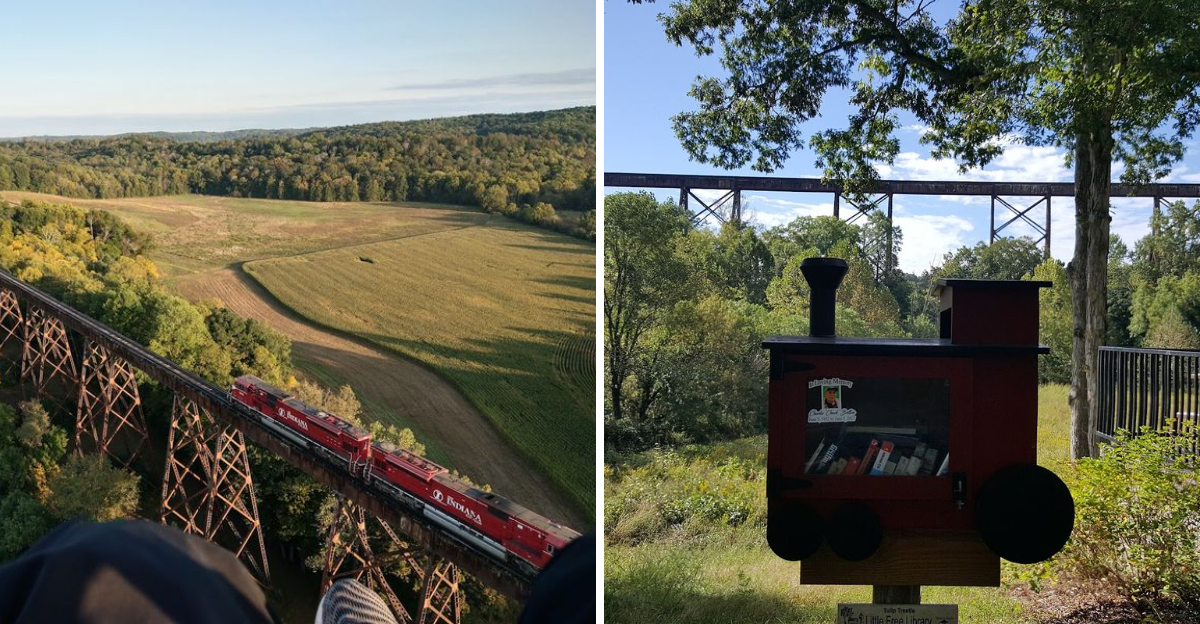
There is something quietly powerful about standing near a structure that once held a national record. This steel trestle in Greene County, Indiana, is exactly that kind of place.
Spanning over 2,200 feet across a creek valley, it was completed in 1906 and, at the time, was the longest rail trestle in the United States. I grew up hearing about landmarks like this, but nothing quite prepares you for the moment you actually see it rising above the valley.
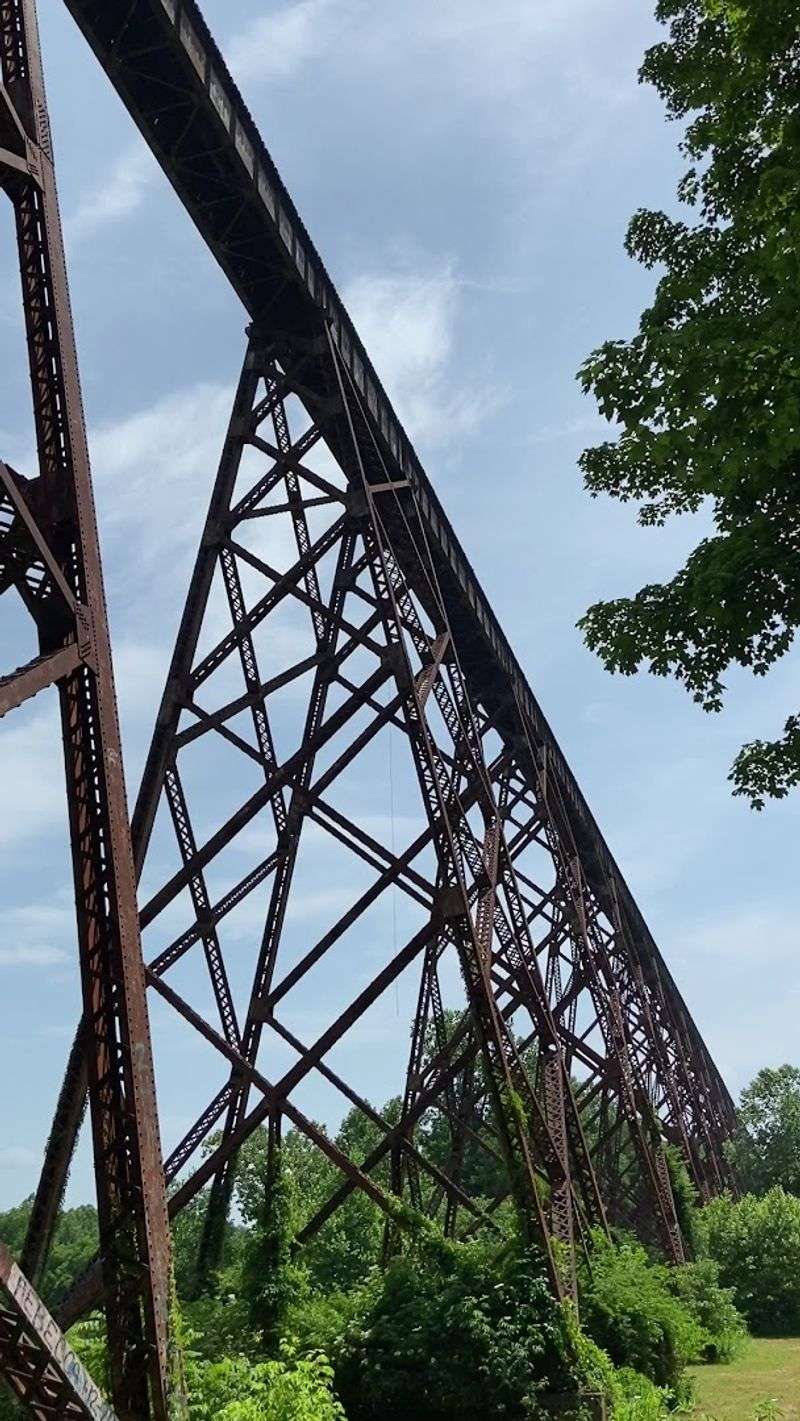
From the base, the scale feels almost impossible, and walking near it; or even just pausing to take it all in, gives you a real sense of the ambition and engineering that went into building it. The history, the views, and the way it dominates the landscape make it impossible to forget.
For Indiana locals and curious travelers alike, this is one of those destinations that earns its reputation every single visit and leaves a lasting impression long after you’ve left.
An Engineering Marvel That Stopped the World in 1906
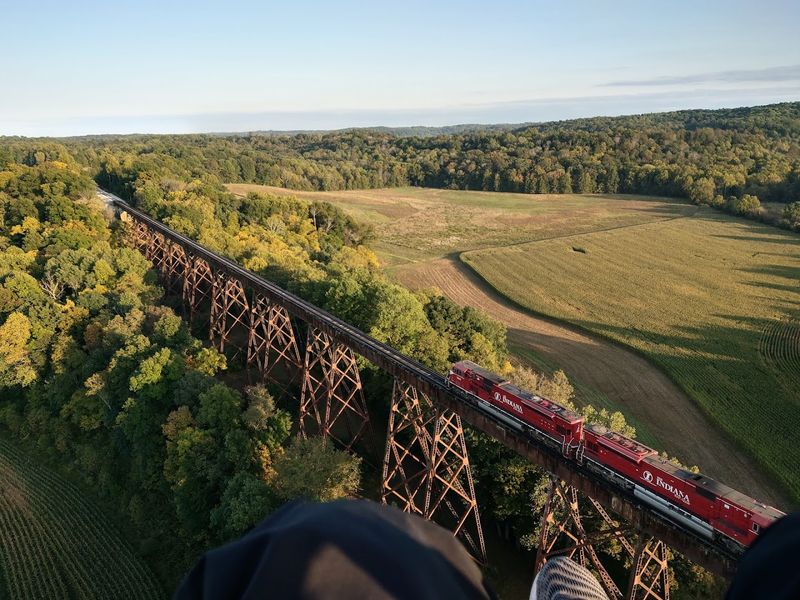
When the Tulip Trestle was completed in December 1906, engineers and railroad workers had just pulled off something nobody had ever done before at that scale. The structure stretches 2,295 feet long and rises 157 feet above the valley floor, supported by 18 steel towers bolted together with precision that still holds freight trains today.
About 2,700 tons of steel went into building this bridge. That number is hard to picture until you are standing at the base looking up, watching the towers disappear into the treeline above you.
The sheer volume of material moved and assembled in rural Indiana more than a century ago is genuinely staggering.
Much of the labor came from Italian immigrant workers who were paid around 30 cents an hour, which was considered solid pay for the era. Their craftsmanship has outlasted nearly every other steel trestle built in that same period.
The Tulip Trestle is not just a bridge. It is a monument to what determined people can accomplish when they work toward something bigger than themselves, and visiting it in person makes that history feel very real.
History Written in Steel: The Railroad Legacy Behind the Bridge
The Indianapolis Southern Railway built the Tulip Trestle with a very specific purpose in mind. Greene County was rich with coal, and getting that coal to major cities like Chicago required a rail line tough enough to cross the rugged terrain of the Richland Creek Valley.
The bridge was the solution, and it worked.
Passenger service ran across the trestle for decades before being discontinued in 1948. But the bridge never retired.
The Indiana Railroad still uses it today as an active freight corridor, which means if your timing is right, you can watch a real working train roll across a structure that is well over 100 years old. Visitors report seeing trains cross anywhere from a few times daily to several times throughout the day.
That active status makes the Tulip Trestle unlike most historic landmarks. It is not a relic sitting behind a fence.
It is still doing its job, still carrying weight, still part of the supply chain that keeps goods moving across the Midwest. That combination of living history and preserved heritage gives the trestle a character most historic sites simply cannot match.
Knowing the bridge was built to move coal and now still moves freight more than a century later adds a satisfying layer to the whole experience.
The Observation Deck That Changes Everything About the Visit
Before 2015, getting a good look at the Tulip Trestle meant scrambling down hillsides or finding the right spot on Viaduct Road. Then the Tulip Trestle Community Restoration Inc. built an observation deck, and everything about visiting changed for the better.
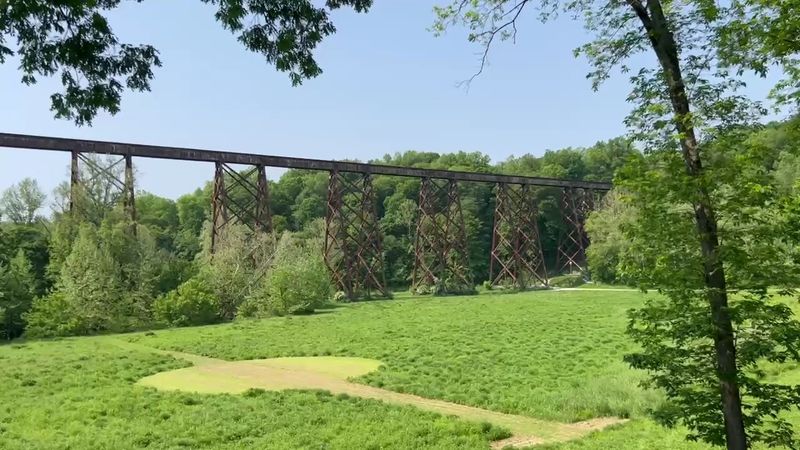
The deck sits at an elevation that gives you a sweeping, unobstructed view of the trestle stretching across the valley. Picnic tables are set up so you can sit, eat a packed lunch, and just absorb the scale of what you are looking at.
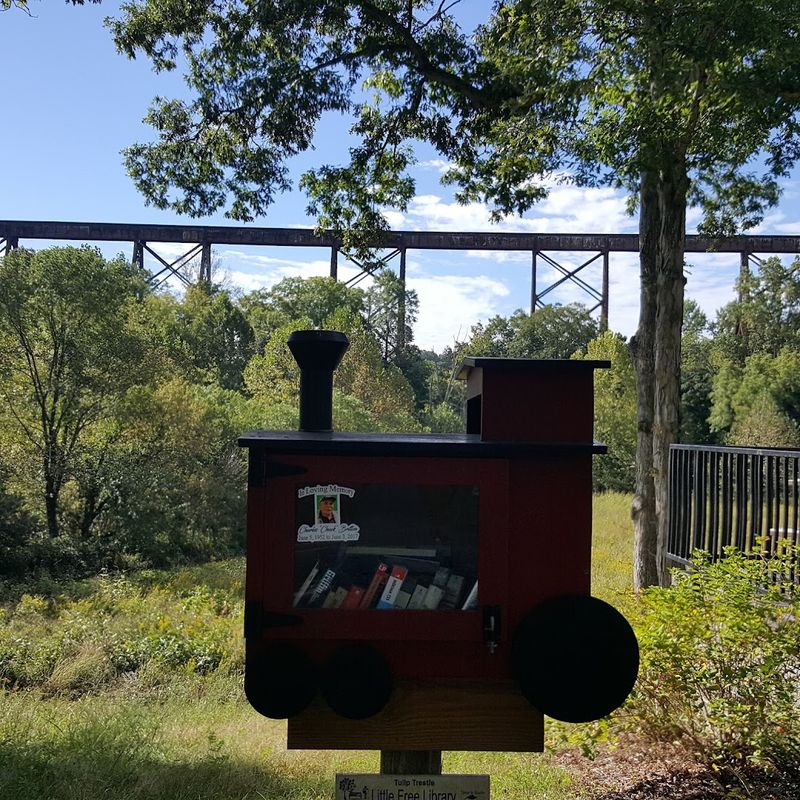
There is also a free little library on site, which is one of those small touches that makes a place feel genuinely cared for rather than just maintained.
Information boards around the deck walk you through the history of the trestle’s construction, the immigrant workers who built it, and the railroad lines that used it over the decades. Families with kids find these boards especially useful because the facts are presented in a way that actually holds a young person’s attention.
Photography enthusiasts consistently call this one of the best vantage points for capturing the full length of the bridge, particularly in fall when the surrounding foliage turns gold and orange. The observation deck turns a drive-by into a real destination worth planning around.
Fall Colors and Scenic Roads That Make the Drive Worth It Alone
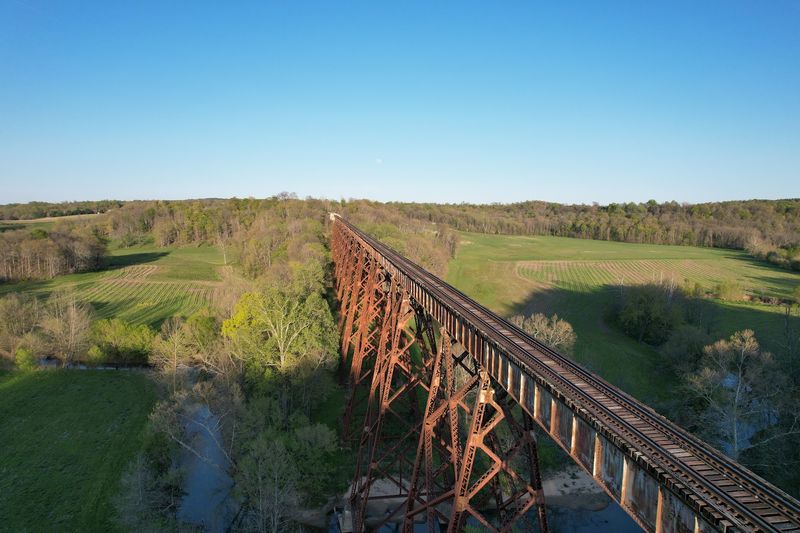
Getting to the Tulip Trestle is part of the experience. The roads leading out to County Rd 480 E near Bloomfield wind through some of the most genuinely beautiful hill country in southern Indiana.
The terrain is rolling and wooded, and the curves come quickly enough that you want to stay alert and keep your speed reasonable.
Fall is when this drive becomes something special. The hardwood forests surrounding Richland Creek Valley put on a full show from mid-October into early November, and the trestle framed by orange and gold leaves is the kind of scene that makes people stop the car and just look.
Photographers plan entire day trips around catching that combination of steel and autumn color in the right light.
Spring and summer visits have their own appeal. Wildflowers grow around the observation deck area, and the valley below stays lush and green well into late summer.
Morning visits on clear days offer soft light that makes the steel towers glow in a way that afternoon sun simply does not replicate. No matter the season, the landscape around the trestle rewards anyone who pays attention to it.
The scenery is not just backdrop here. It is genuinely part of why people keep coming back year after year to this corner of Greene County.
Community Events That Bring the Trestle to Life
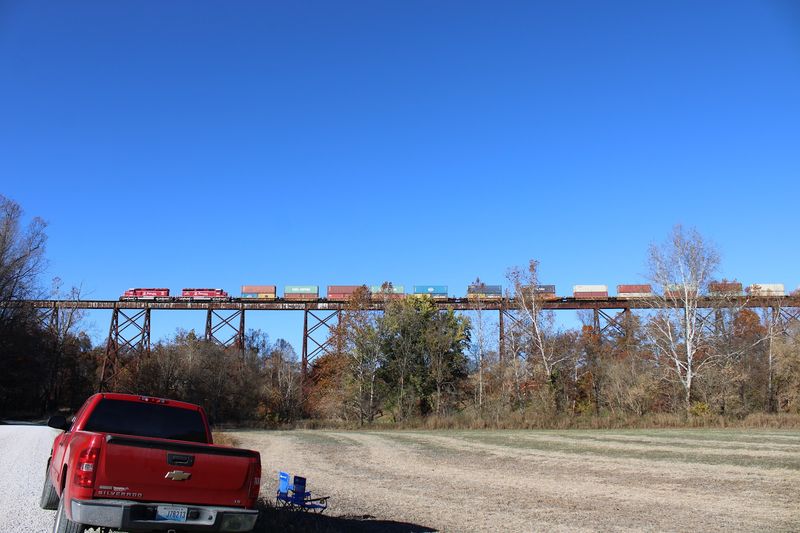
The Tulip Trestle is not just a landmark to look at and leave. The community around it has built a calendar of events that make repeat visits feel fresh and worthwhile.
The annual Tulip Trestle 5K is one of the most popular, taking runners through the hilly roads of Greene County with the viaduct as the centerpiece of the route.
The Santa Train event during the holiday season draws crowds to the observation deck for a reason that feels almost cinematic. Families gather as the decorated train crosses the trestle, and people wave from below as it rolls past.
It is the kind of tradition that becomes a family memory, the sort of thing kids ask about every December as the season approaches.
Monthly community meetings hosted by the Tulip Trestle Community Restoration Inc. are open to anyone who wants to get involved in preservation efforts or simply learn more about the history of the viaduct. The nonprofit runs entirely on donations and volunteer hours, which gives every visitor a direct way to contribute to keeping the site accessible and well maintained.
Showing up, learning the story, and dropping something in the donation box are all meaningful acts of support for a landmark that belongs to the whole region. The community investment here is visible and genuine.
Preservation Efforts That Keep This Landmark Standing Strong
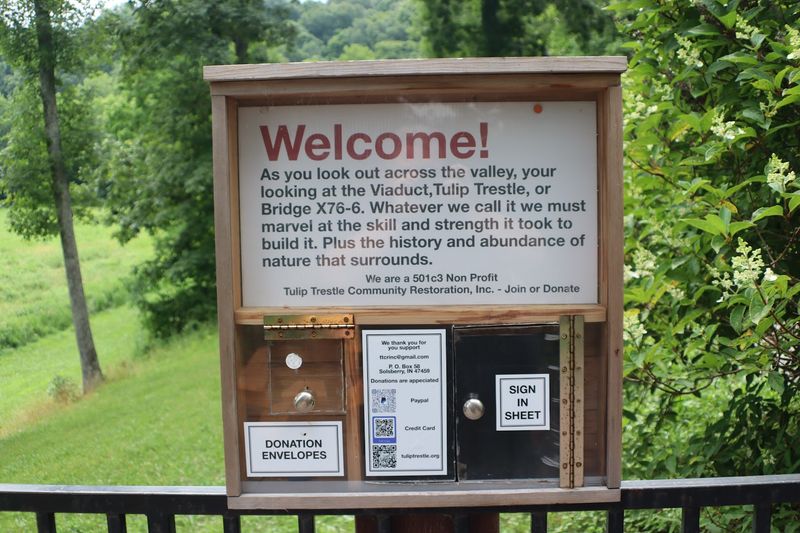
Historic structures do not maintain themselves, and the Tulip Trestle is no exception. The Tulip Trestle Community Restoration Inc. is the nonprofit organization that has taken on the responsibility of protecting and promoting this landmark for future generations.
Their work is the reason the observation deck exists, the reason the grounds are clean, and the reason visitors have access to meaningful historical information when they arrive.
The organization operates entirely through donations and volunteer labor. There are no corporate sponsors propping up the operation.
What you see when you visit, the well-kept grounds, the informational boards, the maintained deck and picnic area, all of that exists because people in Greene County and across Indiana chose to invest their time and money in something they believe matters.
That kind of grassroots preservation is increasingly rare, and it deserves recognition. Visitors who drop something in the donation box or spread the word about the trestle are directly contributing to its future.
The nonprofit also holds regular meetings open to the public, welcoming anyone who wants to participate in the ongoing conversation about how to best care for the site. Supporting the Tulip Trestle Community Restoration Inc. is one of the most direct ways anyone can help ensure that a landmark this significant stays accessible and respected for the next hundred years.
Nearby Places to Round Out Your Greene County Day Trip
A visit to the Tulip Trestle pairs naturally with exploring the broader Greene County area. Bloomfield, the county seat, is just a short drive away and offers a classic small-town Indiana experience with local shops and a historic courthouse square worth a slow walk around.
The town has the kind of unpretentious character that feels genuinely welcoming rather than staged for visitors.
For those who want to extend the day outdoors, Greene-Sullivan State Forest offers hiking and nature access within the region. The forested terrain shares the same rolling hill geography that makes the drive to the trestle so scenic, and spending time in it gives you a fuller sense of what southern Indiana’s landscape actually feels like at ground level.
The Yoho General Store, located near the trestle area, has served as a community gathering point and is worth a stop for local flavor and a chance to pick up information about the area. For a longer outing, the city of Linton in Greene County sits about 20 minutes away at 85 NE A St, Linton, IN 47441, and offers additional dining and local services.
Planning a full day around the trestle, the surrounding forest, and the nearby towns turns a single attraction visit into a genuinely satisfying Greene County road trip that Indiana locals and out-of-state visitors both tend to remember fondly.
Dear Reader: This page may contain affiliate links which may earn a commission if you click through and make a purchase. Our independent journalism is not influenced by any advertiser or commercial initiative unless it is clearly marked as sponsored content. As travel products change, please be sure to reconfirm all details and stay up to date with current events to ensure a safe and successful trip.
