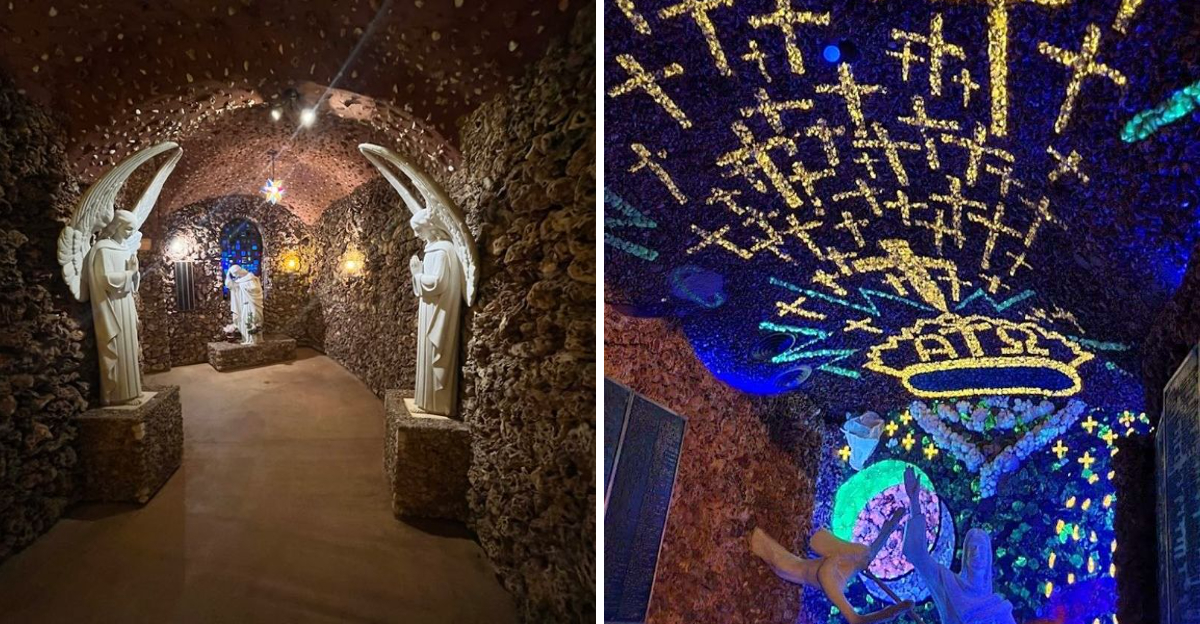
I never expected to come across something this extraordinary tucked along a quiet road in Munster, Indiana. This grotto is exactly the kind of place that makes you pause and take it all in.
Built from 250 tons of rare glowing sponge rock and rising three stories high, the blacklight-illuminated, underground-style structure feels unlike anything else in the Midwest. Most people haven’t heard of it, and that’s part of the magic.
Once you step inside, though, the experience is unforgettable; the way the light plays off the stone, the quiet reverence of the space, and the sheer uniqueness of it all make it a hidden gem that stays with you long after you leave.
A Three-Story Architectural Marvel Unlike Anything in Indiana
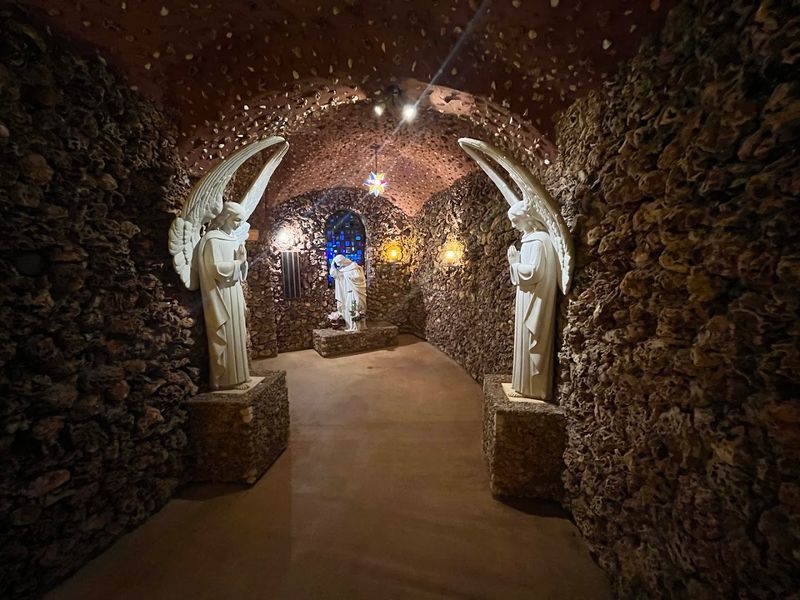
Most people picture a grotto as a small, mossy cave tucked behind a church. The Holy Mother Grotto at Our Lady of Mount Carmel Monastery in Munster completely redefines that image.
Completed in 1962, this three-story structure was built entirely above ground and designed to feel like an ancient catacomb you can actually walk through.
What makes it even more remarkable is the sheer scale. Workers carefully placed 250 tons of sponge rock to create a labyrinthine layout with winding passages, low ceilings, and hidden chambers that reward curious visitors who take their time exploring.
The construction process alone was a massive undertaking, and the result is something that feels both ancient and otherworldly at the same time.
Standing inside, it is easy to forget you are in northwest Indiana. The textures of the rock walls, the narrowing corridors, and the way light filters through the structure all create an atmosphere that feels genuinely immersive.
For architecture enthusiasts, history buffs, or anyone who appreciates bold creative vision, this grotto offers a rare opportunity to witness something truly one of a kind.
Blacklight Illuminations That Turn Rock Into Pure Magic
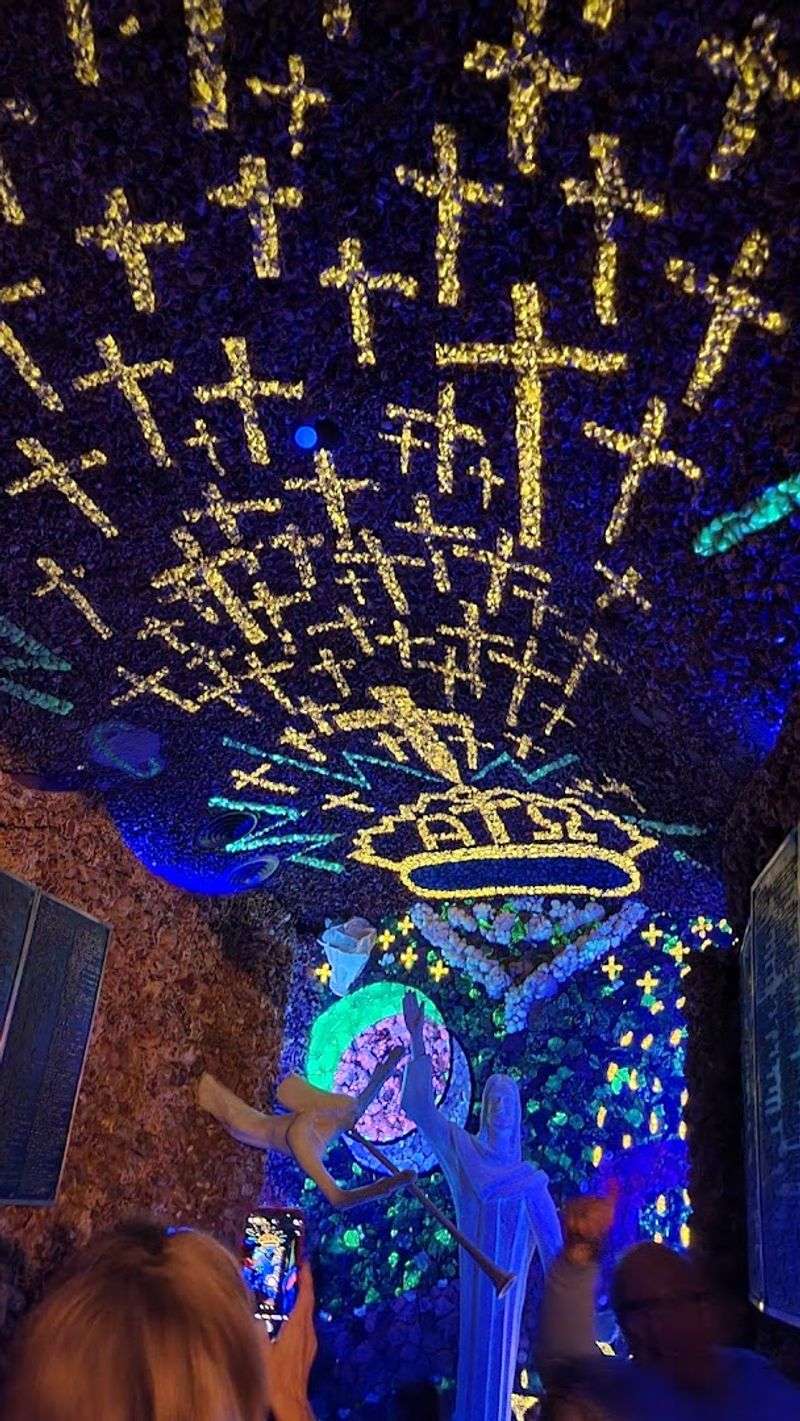
When the blacklights come on inside the Holy Mother Grotto, the entire atmosphere transforms. Fluorescent minerals embedded throughout the sponge rock walls begin to glow in vivid colors, casting an almost surreal light across scenes that depict the end times, including detailed representations of Jesus and the Archangel Gabriel raising the dead.
It is visually stunning in a way that photographs struggle to fully capture.
Gold crosses representing Christian martyrs are set into the ceiling among fluorescent stones, creating a canopy of glowing light above your head as you move through the passages. The effect is somewhere between sacred art and something you might expect to find in a science museum exhibit about minerals.
That unexpected combination is exactly what makes this grotto so memorable.
The creators clearly understood how to use geology as a creative tool. Every glowing element was placed with intention, and the overall result feels carefully composed rather than accidental.
Visitors who arrive expecting a traditional religious shrine often leave genuinely surprised by how visually dramatic the experience is. Whether you are drawn by faith, art, or pure curiosity, the blacklight illuminations inside this grotto deliver something that feels impossible to fully describe until you are standing right in the middle of it yourself.
Rare Minerals and Crystals Embedded Throughout the Walls
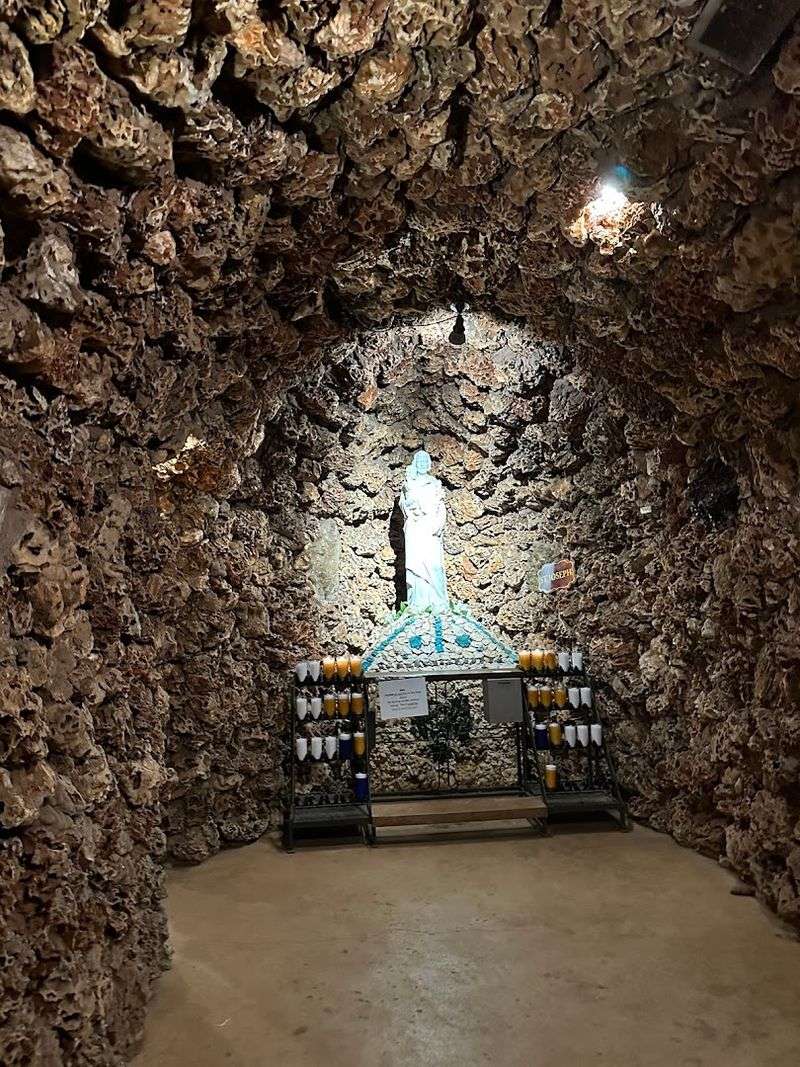
Geology fans will find plenty to appreciate here beyond just the spiritual atmosphere. The builders of the Holy Mother Grotto incorporated a remarkable variety of minerals and crystals directly into the sponge rock structure, including fluorite, dogtooth calcite, dolomite, and rose quartz.
These were not chosen randomly. Each mineral contributes to the glowing visual effect that makes the grotto so visually striking under blacklight.
Fluorite in particular is known for its vivid fluorescence, and seeing it set into the walls of a religious structure in northwest Indiana is genuinely unexpected. The dogtooth calcite formations add texture and dimension to the surfaces, while the rose quartz brings softer, warmer tones into the mix.
Together, these geological elements create a space that feels like a natural wonder as much as a human-made structure.
What I find fascinating is how the creators managed to blend scientific appreciation for earth materials with deeply held religious meaning. Every stone serves a dual purpose: contributing to the visual splendor and reinforcing the spiritual themes of the grotto.
For anyone who grew up collecting rocks or visiting natural history museums, this place offers a completely fresh context for thinking about minerals. It is geology presented as devotion, and that combination is genuinely rare anywhere in the country, let alone in Indiana.
A Living Piece of Polish-American Cultural Heritage
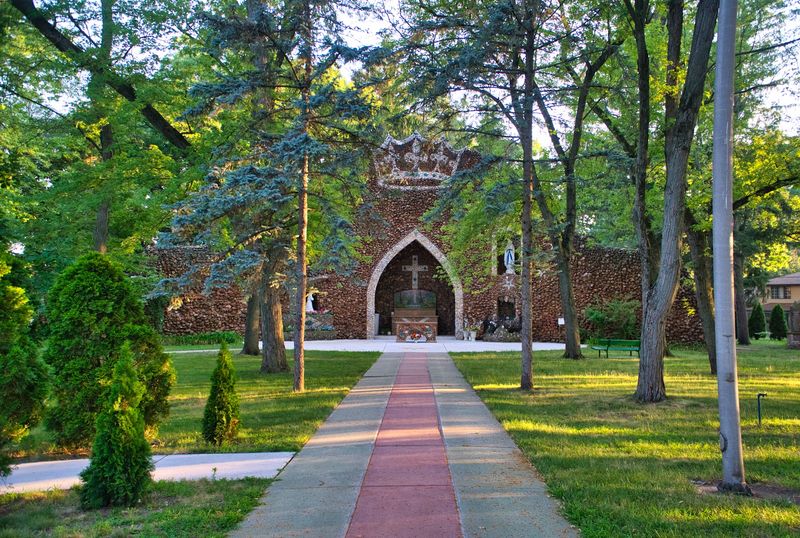
The story behind the Holy Mother Grotto is just as compelling as the structure itself. Polish Carmelites who emigrated to the United States after World War II built this grotto as an expression of their faith and cultural identity.
That history gives the space a depth that goes well beyond its visual spectacle, connecting visitors to a broader story of displacement, resilience, and devotion.
The Polish-American community in the greater Chicago area has deep roots in northwest Indiana, and Our Lady of Mount Carmel Monastery has been a central gathering point for that community for decades. The monastery still offers both English and Polish masses, and the annual Polish pilgrimage walk from Chicago has historically ended here, with pilgrims resting on the grounds before continuing their journey.
That living tradition is something you can genuinely feel when you visit.
There is also a striking memorial to Saint Maximilian Kolbe on the grounds, honoring the Polish Franciscan priest who gave his life at Auschwitz. Seeing that memorial alongside the grotto puts the entire site into powerful historical context.
For Indiana locals with Polish heritage, or for anyone interested in the immigrant experience and how faith shaped communities in the Midwest, this monastery offers a meaningful and moving connection to history that you simply cannot find anywhere else in the region.
Peaceful Grounds Perfect for Quiet Reflection and Walking
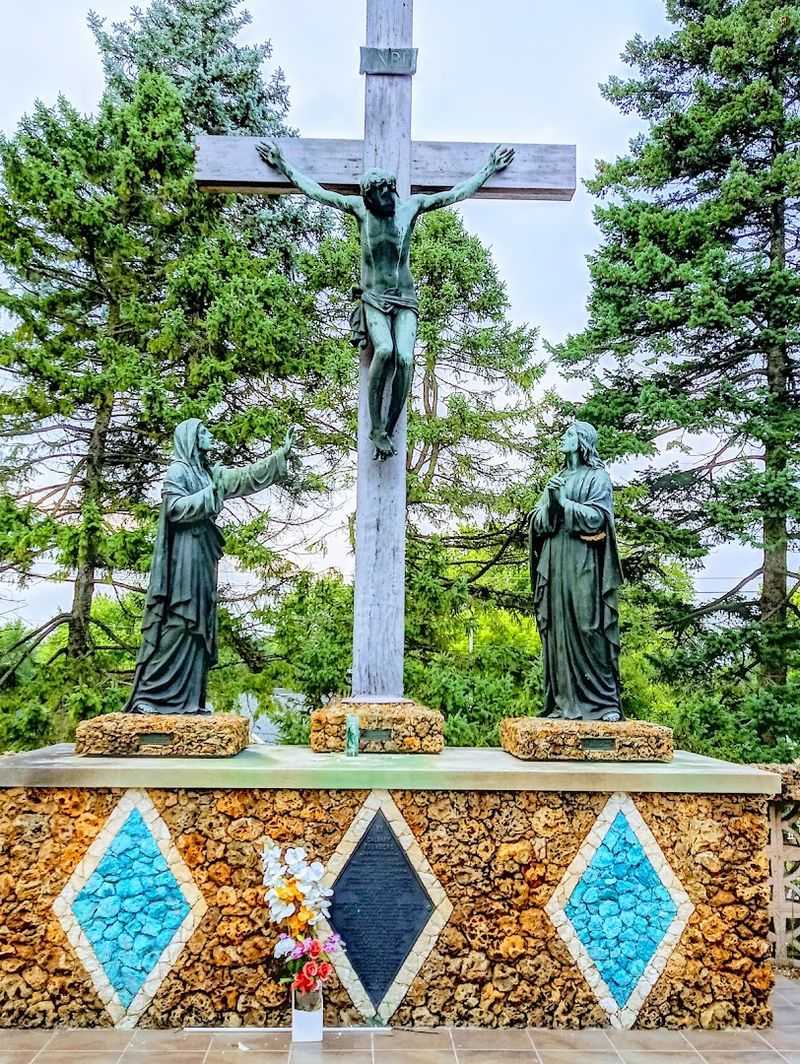
Beyond the grotto itself, the grounds surrounding Our Lady of Mount Carmel Monastery offer a genuinely restorative experience. Tree-lined pathways wind through the property, passing Stations of the Cross monuments, a striking tribute to Pope John Paul II, and other religious memorials that invite slow, contemplative walking.
The contrast with the busy traffic on Ridge Road outside is almost immediate once you step onto the grounds.
There is also a picnic area with tables, making this a comfortable spot for families who want to spend a few hours away from the noise of everyday life. The combination of natural greenery, religious art, and open space creates an atmosphere that feels welcoming regardless of your background or beliefs.
People come here to pray, to reflect, to photograph, and simply to breathe.
I think what surprises many first-time visitors is how much there is to explore outdoors before you even enter the grotto. The grounds feel like a small sanctuary tucked behind a busy suburban street, and that contrast makes the peaceful atmosphere even more pronounced.
Whether you walk the full path of the Stations of the Cross or simply find a quiet bench under the trees, the outdoor space at this monastery rewards anyone willing to slow down and take it all in. It is the kind of place that earns a second visit.
Psychedelic Religious Art That Defies Easy Categories
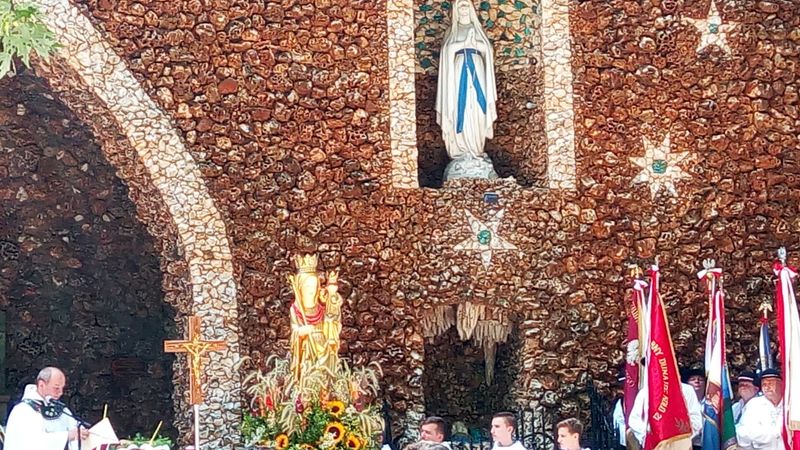
There are not many places in the world where sacred religious imagery and psychedelic visual art overlap so naturally, but the Holy Mother Grotto manages to pull it off without feeling forced or contradictory. The scenes depicted inside, including the resurrection of the dead and the role of angels in Christian end-times theology, are rendered in a visual language that feels almost otherworldly.
The combination of glowing minerals, dramatic lighting, and detailed figurative scenes creates something genuinely unlike any other religious art experience I have encountered.
Art enthusiasts who might not typically seek out religious sites often find themselves completely absorbed here. The craftsmanship is meticulous, and the use of natural materials to achieve such a vivid visual effect shows a level of creativity that goes well beyond conventional religious decoration.
It occupies a space between folk art, geological installation, and devotional sculpture that resists simple categorization.
That resistance to easy labeling is actually one of the grotto’s greatest strengths. It appeals to people who are deeply religious, people who are drawn by artistic curiosity, and people who simply love unusual and unexpected places.
Northwest Indiana has plenty of interesting destinations, but the Holy Mother Grotto stands apart because it genuinely cannot be compared to anything else nearby. Nearby, the Shrine of Christ’s Passion at 10630 Wicker Ave, St. John, IN 46373 offers another deeply moving outdoor religious experience worth combining with your visit.
Easy Accessibility and a Gift Shop Worth Browsing
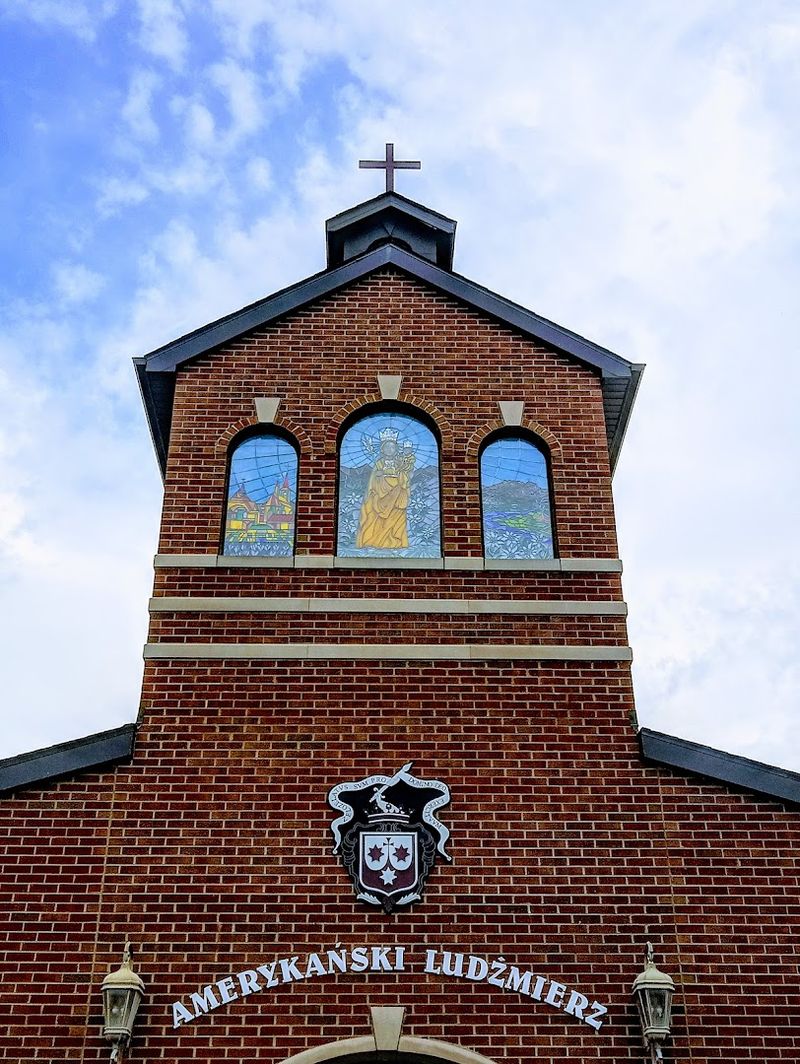
Planning a visit to the Holy Mother Grotto is straightforward, which is part of what makes it such an appealing day trip from anywhere in the Chicago metro area or northwest Indiana. The grotto is open to visitors on Sundays from Easter through November 1, generally from mid-morning through the late afternoon, and weekday visits can often be arranged by appointment through the monastery.
The address at 1628 Ridge Rd, Munster, IN 46321 is easy to reach by car, and parking is available on site.
The small gift shop on the grounds is worth a browse before or after your visit. It carries a thoughtful selection of Catholic items including holy cards, religious statues, and Polish flags that reflect the monastery’s cultural heritage.
For visitors with Polish roots or an interest in Catholic devotional items, the shop offers a personal and meaningful shopping experience that you would not find at a typical tourist gift shop.
If you want to make a full day of it, the area around Munster has plenty to offer. Wolf Lake Memorial Park at 2930 Lake Ave, Hammond, IN 46394 provides a beautiful natural setting for a walk before or after your grotto visit.
The combination of a spiritual experience at the monastery and time outdoors at the lake makes for a well-rounded and deeply satisfying day in the region, especially during the warmer months when the monastery grounds are at their most beautiful.
Dear Reader: This page may contain affiliate links which may earn a commission if you click through and make a purchase. Our independent journalism is not influenced by any advertiser or commercial initiative unless it is clearly marked as sponsored content. As travel products change, please be sure to reconfirm all details and stay up to date with current events to ensure a safe and successful trip.
