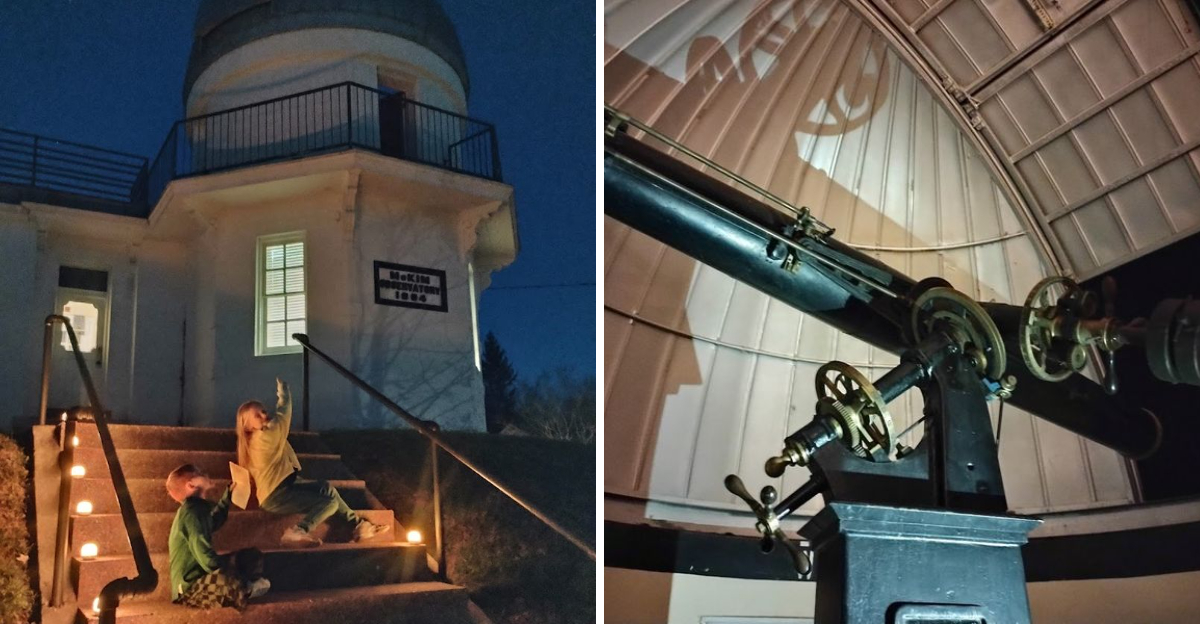
Somewhere in a quiet Greencastle neighborhood, a domed brick building has been watching the night sky for over 140 years. A historic university observatory in Indiana is one of the state’s most fascinating hidden gems, still opening its doors on select nights for public stargazing.
Built in the late 1800s, it offers visitors a rare chance to peer through a vintage telescope and view planets, nebulae, and distant galaxies. The experience blends science and history in a way that feels both intimate and awe-inspiring, especially when the dome opens and the night sky comes into focus.
Whether you love astronomy, historic architecture, or simply want to see Saturn’s rings with your own eyes, this place delivers something truly memorable.
Come See Instruments That Actually Still Work
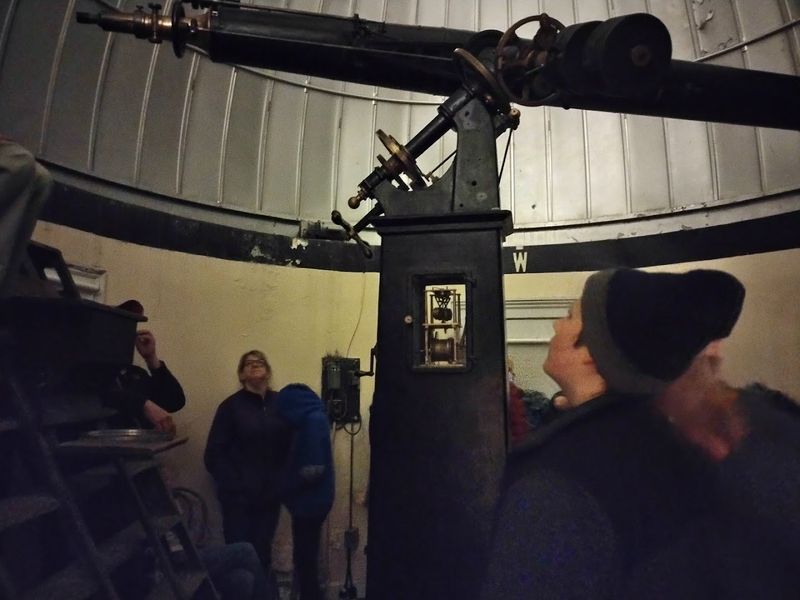
Beyond the main Clark telescope, McKim Observatory holds a collection of original instruments that are genuinely rare. The Fauth and Company Meridian Circle Transit Telescope sits in the Transit Room on the first floor, still functional after all these years.
Right next to it, a Warner and Swasey chronograph continues to operate as it was designed to over a century ago.
These are not museum replicas or decorative pieces. They are working instruments from the 19th century, preserved in the rooms they were built for.
The first floor of the observatory is divided into four distinct spaces: the Transit Room, the Chronograph Room, the Clock Room, and the Library. Each one tells a different part of the story of how astronomers once measured and recorded the sky.
One particularly rare item on display is a Bailey’s Astral Lantern, an antique device used to help visitors learn the constellations. Finding one of these in working condition anywhere in the world is unusual.
Seeing it here, in context, adds another layer of wonder to the visit.
Walking through these rooms feels like stepping into a working 1880s science lab. Everything is authentic.
The preservation effort behind this building is extraordinary, and that authenticity is exactly what makes McKim Observatory stand out from any modern facility you might visit elsewhere in Indiana.
Make Time for the Wooden Spiral Staircase Experience
Getting to the main telescope is an adventure on its own. A steep wooden spiral staircase connects the first floor to the second-floor Equatorial Room where the Clark Refractor lives.
The staircase is original to the building, constructed in 1884, and it creaks with authentic character beneath your feet.
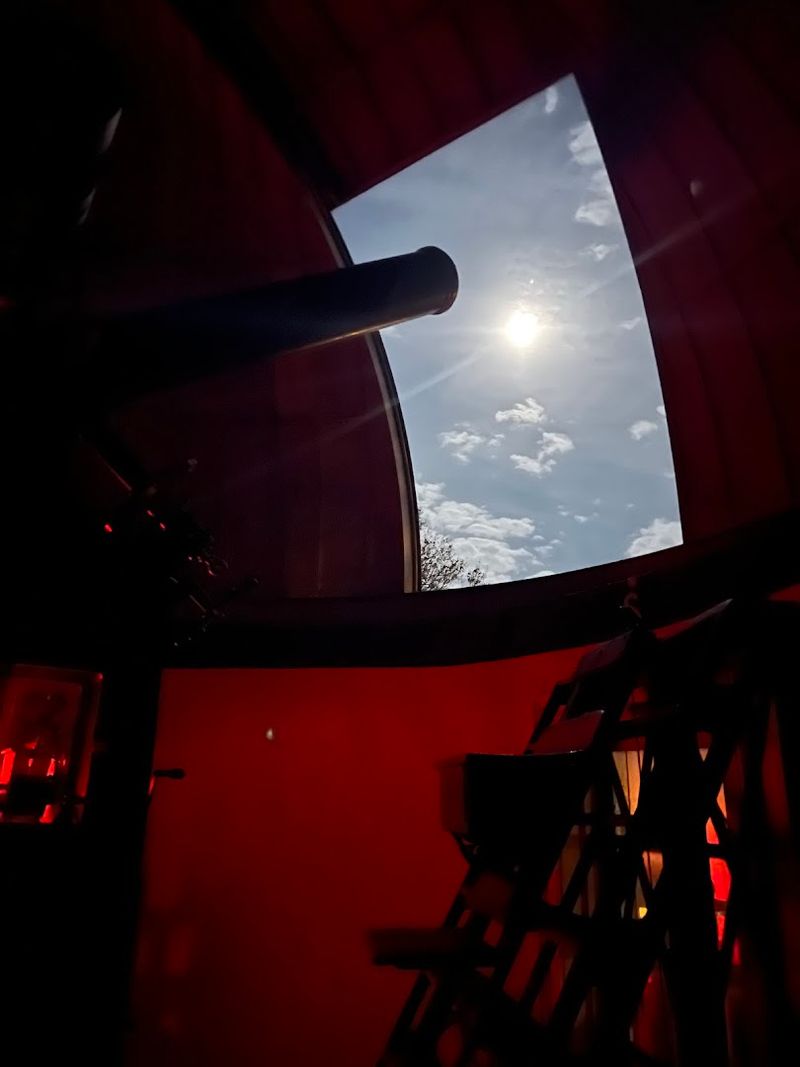
Once you reach the top, the domed ceiling opens above you and the telescope fills the room. Then comes a short ladder climb to reach the eyepiece itself.
For many visitors, this physical journey upward adds to the sense of occasion. You earn the view a little, and that makes it feel more meaningful.
It is worth knowing before you go that the building is not ADA compliant. The spiral staircase is narrow and steep, which can be challenging for some visitors.
Anyone with mobility concerns should plan accordingly and check with the observatory before attending an event.
Children who are old enough to handle a steep staircase safely tend to absolutely love this part of the visit. There is something thrilling about climbing through a historic building to reach a telescope that has been pointing at the stars since before their great-grandparents were born.
The architecture itself becomes part of the experience, not just a backdrop to it. The building at 711 Highridge Ave, Greencastle, IN 46135 is worth every step of that climb.
You Can Look Through a Real 140-Year-Old Clark Telescope
Most telescopes you encounter today are modern, computer-controlled machines. The Clark Refractor at McKim Observatory is something else entirely.
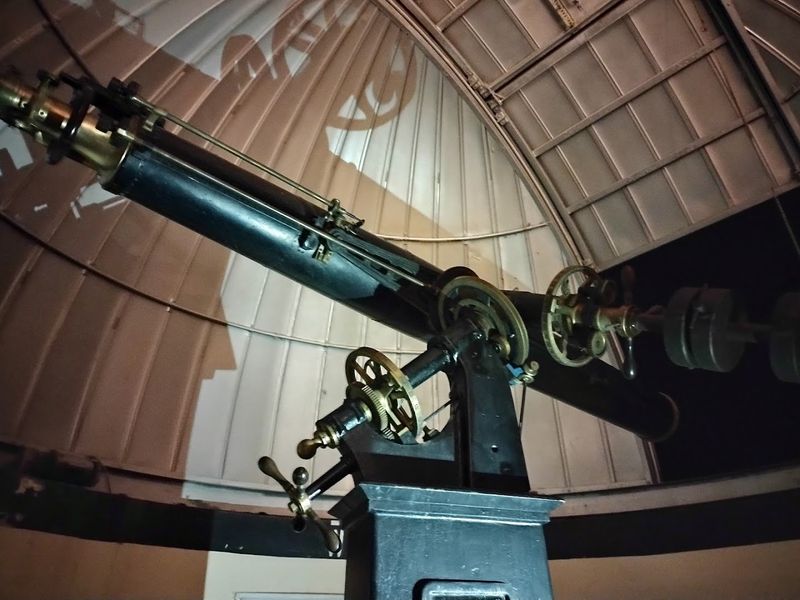
Crafted by the legendary firm of Alvin Clark and Sons, this 9.53-inch refracting telescope was installed in 1885 and has been showing visitors the cosmos ever since.
What makes it even more remarkable is that it still runs on its original gravity tracking drive. No electric motors, no digital upgrades.
The same mechanical system that tracked stars in the 1880s continues working today, quietly turning the telescope to follow the sky as Earth rotates beneath it.
To reach the telescope, you climb a narrow wooden spiral staircase to the second-floor Equatorial Room. Then you go up a short ladder to press your eye against the eyepiece.
That moment, when the image snaps into focus, feels genuinely magical.
Seeing Jupiter’s cloud bands or the rings of Saturn through glass ground over a century ago is a humbling experience. You are not just looking at space.
You are looking through history. The telescope first saw light on August 26, 1885, and its first official use marked a milestone in Indiana astronomy.
Visiting McKim Observatory means sharing that same view with generations of stargazers who stood in this very spot before you.
Plan Your Night Around Free Public Stargazing Events
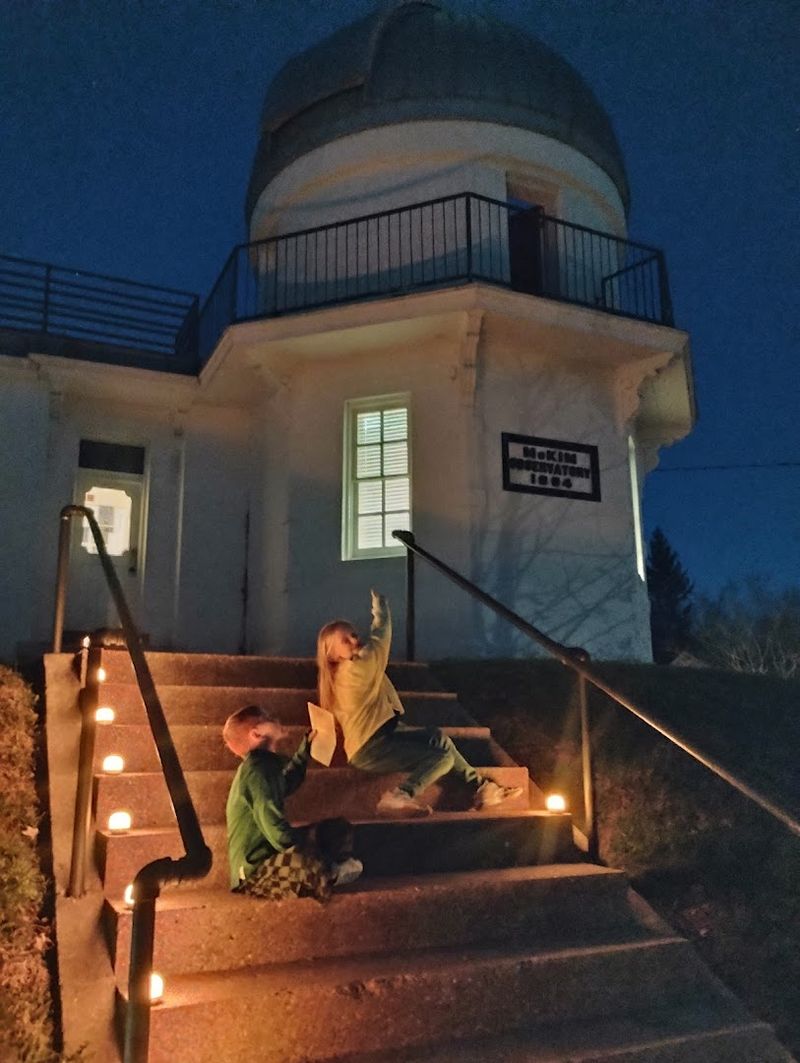
Free admission to a genuine working observatory is not something you find every day. DePauw University’s Department of Physics and Astronomy hosts free public open houses at McKim Observatory roughly twice a month during the academic year.
These events are open to everyone, not just students.
Showing up on one of these evenings means you get guided access to the Clark Refractor and help from knowledgeable hosts who explain what you are seeing. On a clear night, the moon alone can stop you in your tracks.
Its craters and mountain ranges appear in stunning detail through the eyepiece.
Special events also happen around significant astronomical occasions. Anniversary celebrations and notable sky events sometimes bring extra programming and guided tours to the observatory.
Checking the DePauw University website before you visit is always a smart move, since schedules can shift based on weather and the academic calendar.
Families with children especially love these evenings. Kids who see Jupiter or a star cluster through this telescope for the first time often talk about it for weeks.
The experience is personal and immediate in a way that a planetarium show simply cannot match. Parking is available on the street nearby, and since admission is free, the only thing you need to bring is curiosity and warm clothing for cooler evenings.
Do Not Miss the National Register of Historic Places Story
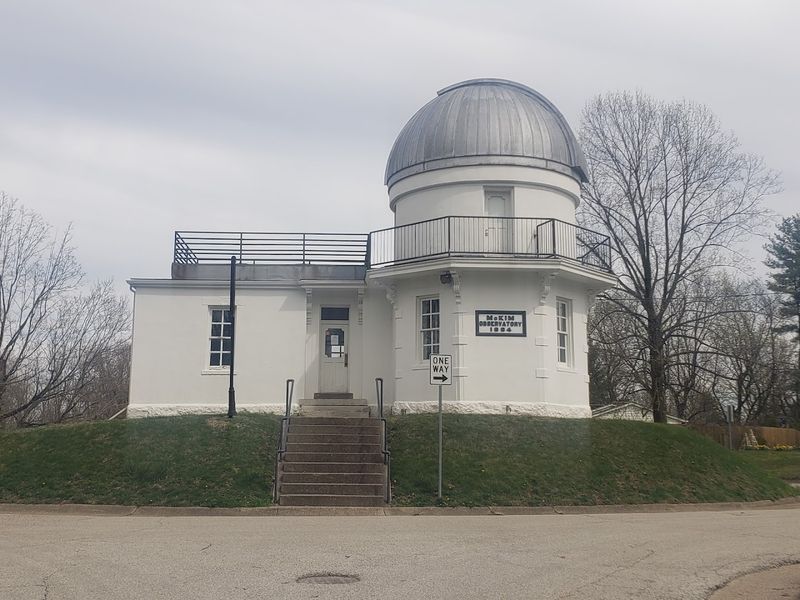
Not every place you visit carries a designation from the National Register of Historic Places. McKim Observatory earned that recognition in 1978, cementing its status as a site of genuine national significance.
In 2019, the National Park Service went further and acknowledged its statewide importance within Indiana’s broader cultural heritage.
The story behind the observatory’s founding adds another fascinating layer. Robert McKim donated the funds to build the observatory in 1884, but his gift came with a condition.
The university had to rename itself from Indiana Asbury University to DePauw University before the donation would be honored. The observatory’s construction was literally tied to a name change that shaped the institution’s entire future identity.
That kind of historical detail transforms a visit from a simple sightseeing trip into something with real depth. You are not just looking at an old building.
You are standing inside a place whose existence changed the course of a university and helped establish Indiana’s place in American scientific history.
McKim Observatory holds the distinction of being the first observatory established in Indiana. That fact alone makes it worth seeking out.
When you combine that history with a telescope that still works, instruments that are still functional, and events that are still free and open to the public, you have one of the most compelling historic sites in the entire state.
Try Spotting Saturn’s Rings on a Clear Evening
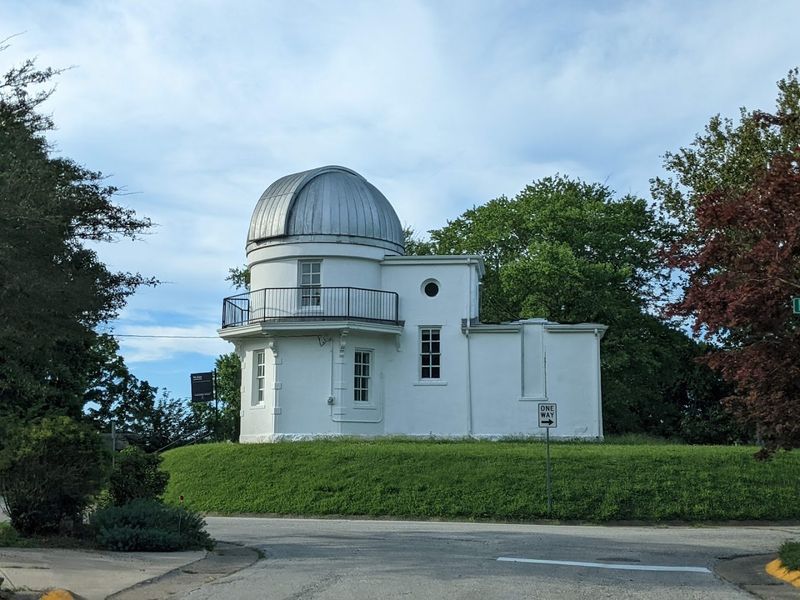
There is a specific kind of joy that comes from seeing Saturn’s rings for the first time. Not in a photograph, not on a screen, but live, through a telescope, with your own eye pressed against the glass.
McKim Observatory makes that experience available to regular visitors on clear evenings throughout the year.
The Clark Refractor handles planetary viewing exceptionally well. Jupiter’s equatorial cloud bands appear in crisp detail, and on the best nights you can make out the separation between Saturn’s rings and its disk.
The moon, when it is up, is almost overwhelming in its detail. Craters, mountain ranges, and shadowed valleys stretch across the eyepiece in ways that feel almost three-dimensional.
Beyond planets and the moon, the telescope reaches out to deep-sky objects as well. The Orion Nebula is a favorite target during winter months.
Star clusters and distant galaxies become accessible through this 140-year-old lens in ways that feel genuinely surprising given the telescope’s age.
Planning your visit around a clear forecast is essential. Cloud cover obviously limits what you can see, so checking the weather a day or two before an open house event is a practical habit.
Arriving a little early also helps, since these events can attract enthusiastic crowds. Dressing warmly matters too, because the dome stays open to the night air and Indiana evenings cool down quickly after sunset.
Skip No Detail of the Four-Room First-Floor Layout
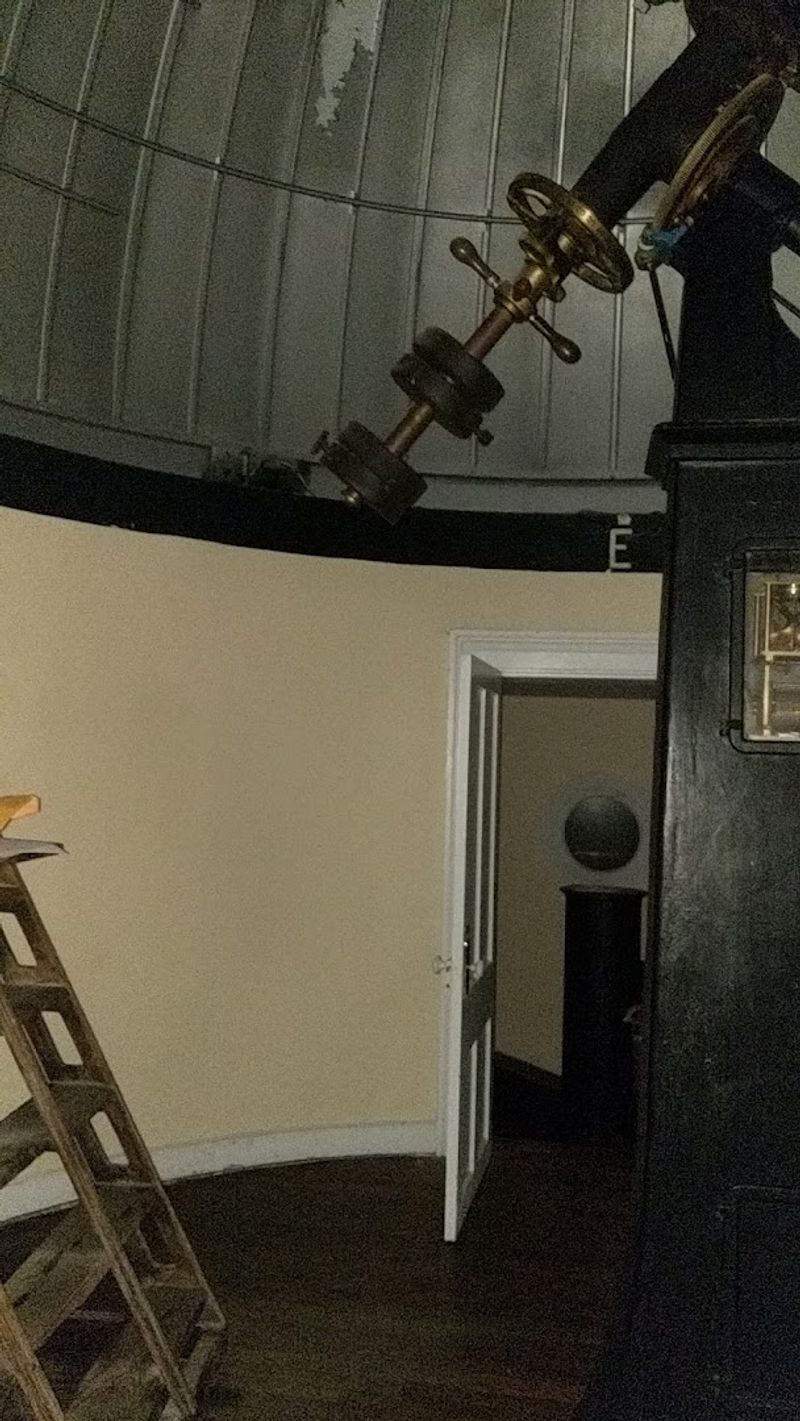
Most people come to McKim Observatory for the telescope, but the first floor deserves just as much of your attention. Four separate rooms each served a specific scientific purpose in the 1880s, and understanding what happened in each one brings the whole building to life in a new way.
The Transit Room housed the Fauth and Company Meridian Circle, used to precisely track stars as they crossed the meridian. The Chronograph Room held timing instruments that recorded astronomical events with mechanical precision.
The Clock Room kept the timekeeping systems that synchronized all observations. The Library stored reference materials, star catalogs, and research records that guided the observatory’s scientific work.
Together these rooms paint a picture of how serious astronomical research was conducted before computers, before electricity, and before any of the digital tools modern scientists take for granted. Every observation required careful coordination between instruments, timing, and human judgment.
The rooms at McKim still feel arranged for that purpose.
Visitors who take time to explore the first floor before heading upstairs often say it completely changes how they feel when they finally look through the telescope. Knowing the effort and precision that surrounded every observation made here for over a century adds weight to that moment at the eyepiece.
The observatory at 711 Highridge Ave, Greencastle, IN 46135 is a complete scientific environment, not just a room with a telescope in it.
