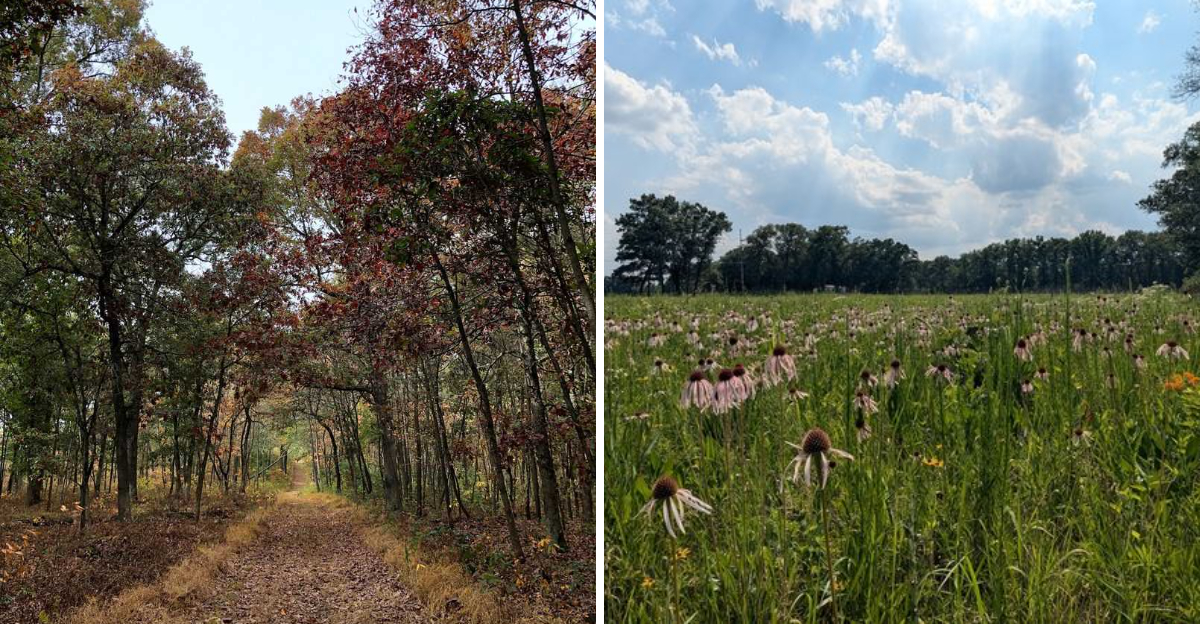
You would never guess that this quiet patch of sand has an Ice Age connection. Yet beneath the grasses and wildflowers lies a landscape shaped by ancient glacial activity, creating an unusual sand savanna ecosystem in Indiana.
The specialized habitat supports rare plants that struggle to survive in more heavily wooded or developed surroundings. Open sandy areas, seasonal wetlands, and native vegetation work together to create a surprisingly diverse environment.
For anyone interested in unusual natural landscapes, this preserve offers a fascinating look at a piece of ecological history that has managed to survive long after the glaciers that helped create its conditions disappeared.
A Globally Rare Sand Savanna You Can Actually Walk Through
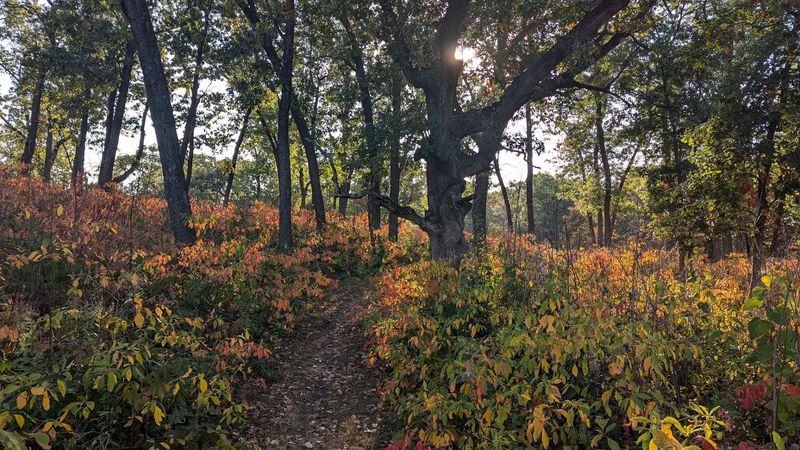
Most nature preserves I visit are either dense woods or wide open prairie. Stoutsburg is both at once, and that combination is what makes it so unusual.
Black oaks stand spread apart here rather than crowded together, so light reaches all the way down to the ground. Beneath them grows a thick understory of prairie grasses and flowering plants, which normally would never survive in shade.
Ecologists call this a black oak sand savanna, and it once stretched across large parts of the Great Lakes and Kankakee region.
Almost all of it is gone now. Farms, roads, and towns replaced the savannas, so the remaining scraps are considered globally rare.
The 235 acres protected here represent one of the better surviving examples anywhere.
What surprised me was how easy it is to sense that rarity without any signs explaining it. The spacing of the trees just looks intentional, almost like an orchard that nature designed on its own.
Give yourself time to stop moving and look sideways rather than straight ahead. The long sightlines between trunks are part of the charm, and they change completely depending on the season.
Spring feels bright and hopeful. Late summer turns golden and tall, with grasses brushing your knees along the edges of the path.
Ancient Dunes Left Behind By Retreating Glaciers
Sand this far inland always seems out of place until you learn where it came from. The gentle rises at Stoutsburg are old dunes, built by wind at the tail end of the last Ice Age.
As enormous glaciers melted and pulled back, they left behind huge amounts of loose sand across this part of Indiana. Strong winds pushed that sand into ridges and mounds, and some of those shapes are still here thousands of years later.
They are not dramatic. You will not be climbing anything steep or gasping for breath at a summit.
What they do instead is quietly control everything that grows here. Higher, drier crests hold different plants than the low swales between them, where moisture collects and the greenery looks noticeably lusher.
I found myself paying attention to my footing more than usual, partly because sand shifts a little under each step. It is a small physical reminder that this ground has a very different history than the black farm soil nearby.
Look for spots where the trail cuts through and exposes pale sand just under a thin layer of roots and leaf litter. That thin skin of life sitting on top of ancient dune sand tells the whole geological story better than any plaque could.
Endangered Wildflowers That Survived Since The Ice Age
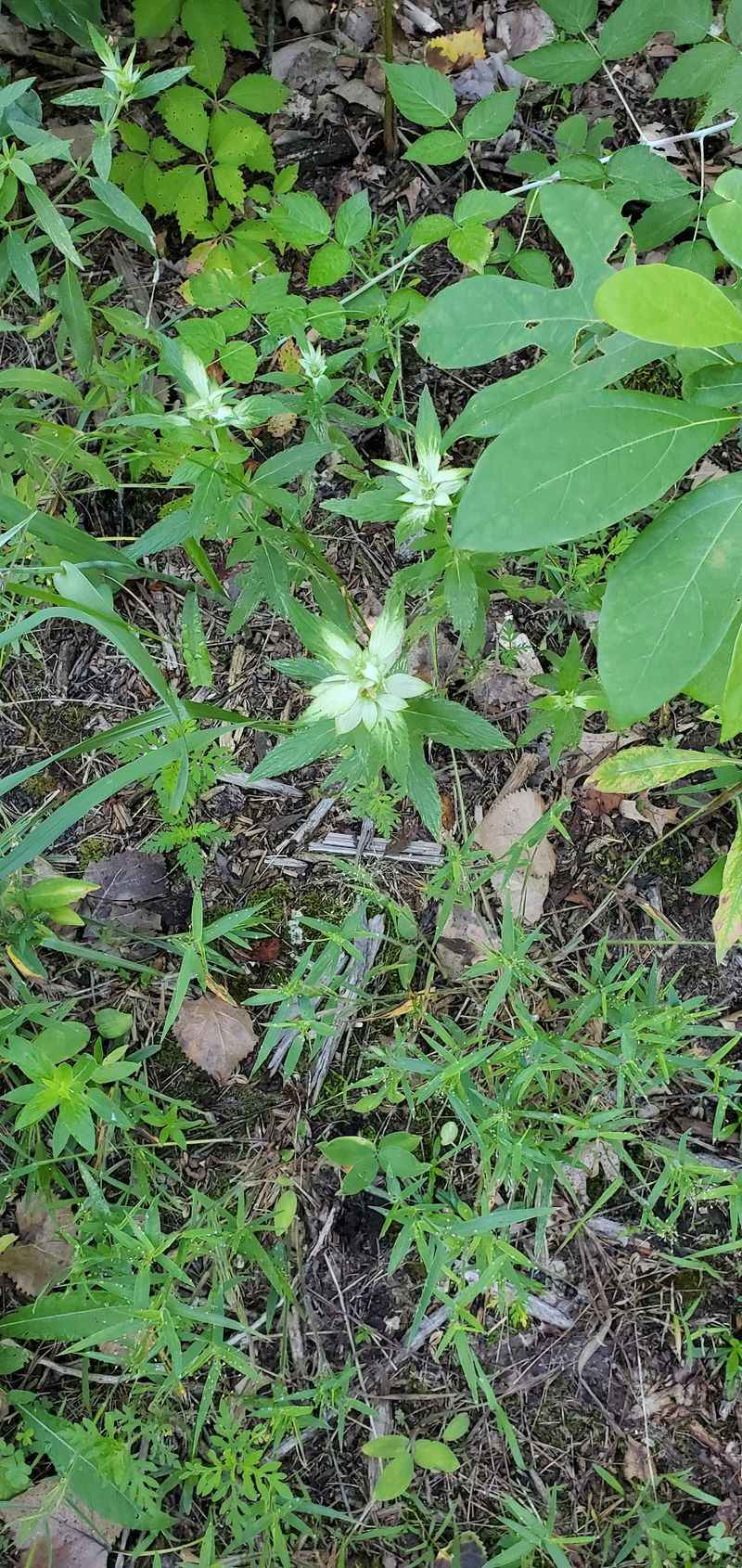
Rare plants were the reason I drove out here in the first place. Stoutsburg protects several species that Indiana lists as endangered, and a couple that are scarce well beyond state lines.
Kittentails, known scientifically as Besseya bullii, is one of them. It prefers the well drained sand and gravel soils that glacial meltwater streams dumped across this region, which explains why it clings to places like this one.
Hill’s thistle, or Cirsium hillii, is another. Unlike the aggressive thistles most of us pull out of yards, this one is native, uncommon, and considered globally rare.
Then there is prairie hyacinth, Camassia angusta, a plant rarely seen in any real abundance anywhere. Finding it in bloom feels less like sightseeing and more like witnessing something hanging on by a thread.
The open canopy is the reason these survivors persist. Sunlight reaches the ground here in a way it simply cannot in a closed forest.
Please resist the urge to pick anything or wander off trail chasing a photo. Sandy savanna soil and delicate root systems are easily damaged, and a single careless step can undo years of slow growth.
Bring a plant identification app or a field guide. Half the fun is puzzling out what you are looking at.
The Dunes And Prairie Trail Keeps Changing Under Your Feet
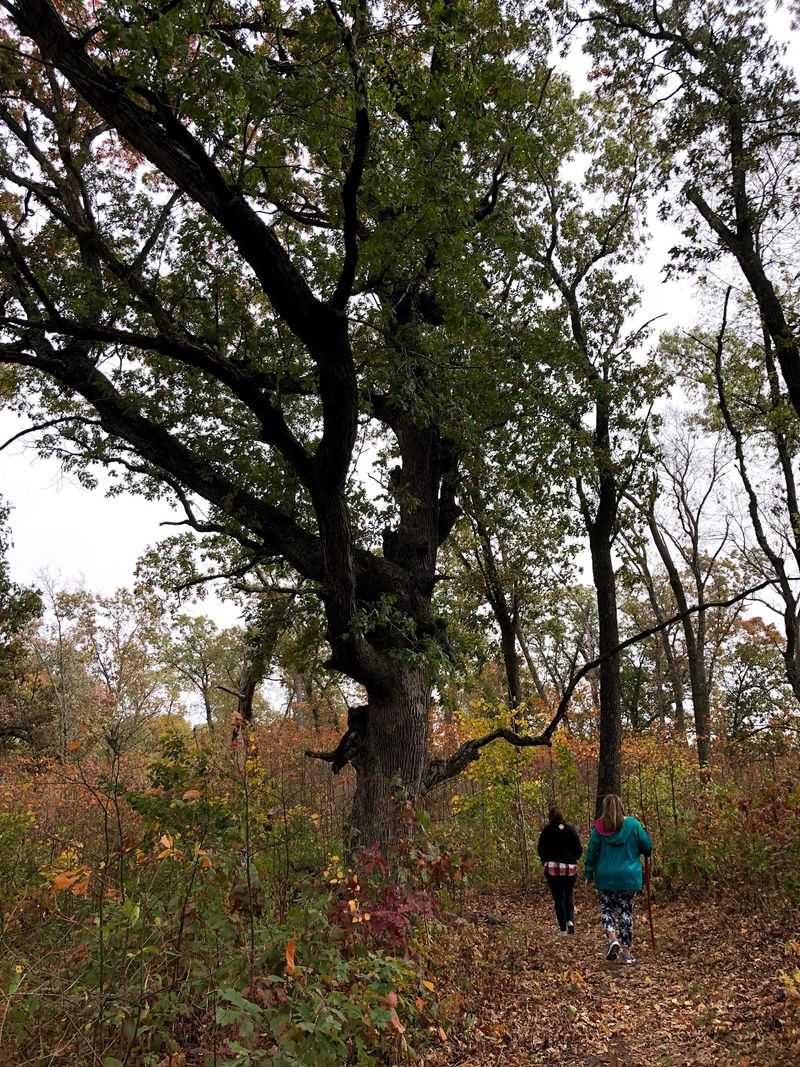
The main route here runs about a mile and a half, which sounds modest until you notice how much it shifts. One stretch climbs a soft dune shoulder, and the next drops into a lower, greener pocket where the air feels cooler.
Wetter areas appear along the way too, adding another habitat to the mix. Between grassy openings, oak groves, and damp low ground, the scenery rarely stays the same for long.
Terrain is easy overall, with nothing technical or steep. Families with kids handle it fine, and most visitors finish comfortably in about an hour.
Closed shoes are genuinely a good idea. Sandals and sand and prickly prairie plants are a bad combination, and I would skip flip flops entirely.
The trail is marked and generally well kept, though grasses lean into the path by mid summer when everything is growing fast. Long pants solve most of that problem.
There are no restrooms on site, so plan accordingly before you arrive. A parking area is available right at the entrance, which makes the whole visit refreshingly simple.
Water is worth carrying even on cool days. Open savanna offers less shade than a forest, and that sun adds up faster than you expect.
Rare Wildlife Hiding In The Grass And Oaks
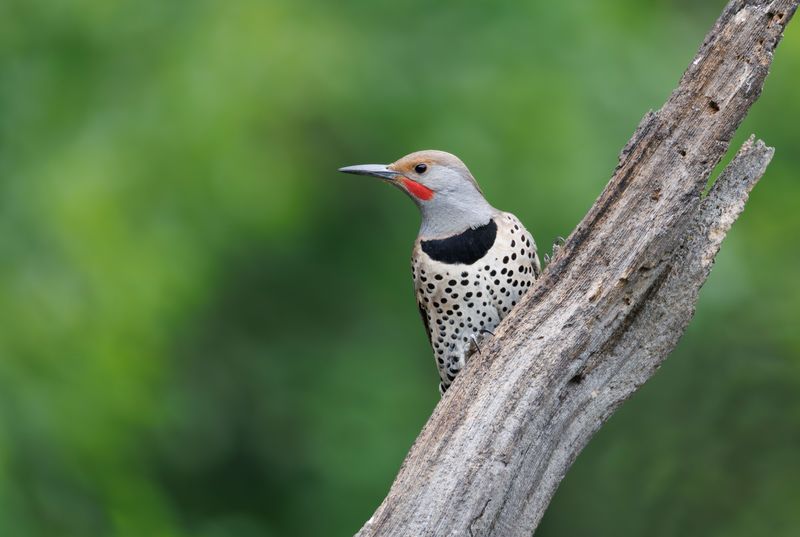
A flash of bright red near an oak trunk stopped me mid step. Red-headed woodpeckers live here, and open savannas with scattered trees are exactly the kind of habitat they favor.
They are not the only unusual residents. Glass lizards move through the grasses, looking startlingly like snakes despite being legless lizards.
Pocket gophers tunnel through the sandy soil below, which is easier to dig than heavy clay. You are far more likely to see their soil mounds than the animals themselves.
Bull snakes turn up here as well, along with lark sparrows, another species that depends on sparse, sunny grasslands. Every one of these creatures needs the same rare conditions the plants do.
Patience helps more than luck. I stood still near a stand of grass for a few minutes and heard far more than I saw.
Mornings are the best window for bird activity, especially in late spring. Bring binoculars if you own them, since sightlines through the open savanna are surprisingly generous.
One practical warning that regular visitors mention often: ticks can be abundant in warm months. Tuck pants into socks, use repellent, and do a thorough check when you get back to the car.
Cooler seasons make that much less of a concern.
Conservation Work That Shows What Careful Stewardship Looks Like
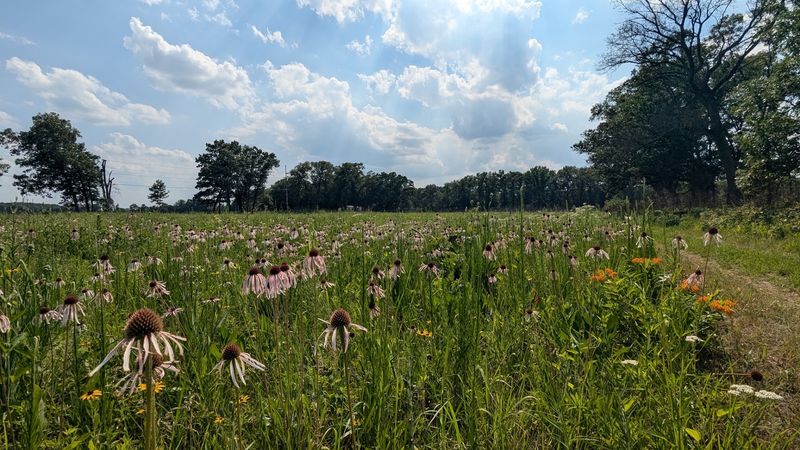
Here is something I did not fully appreciate until afterward. This landscape is not simply leftover wilderness that nobody bothered to develop.
The Indiana Department of Natural Resources Division of Nature Preserves owns and manages these 235 plus acres, and keeping a savanna healthy takes real effort.
Without intervention, shrubs and shade tolerant trees would gradually close the canopy and shade out the very wildflowers that make this spot special.
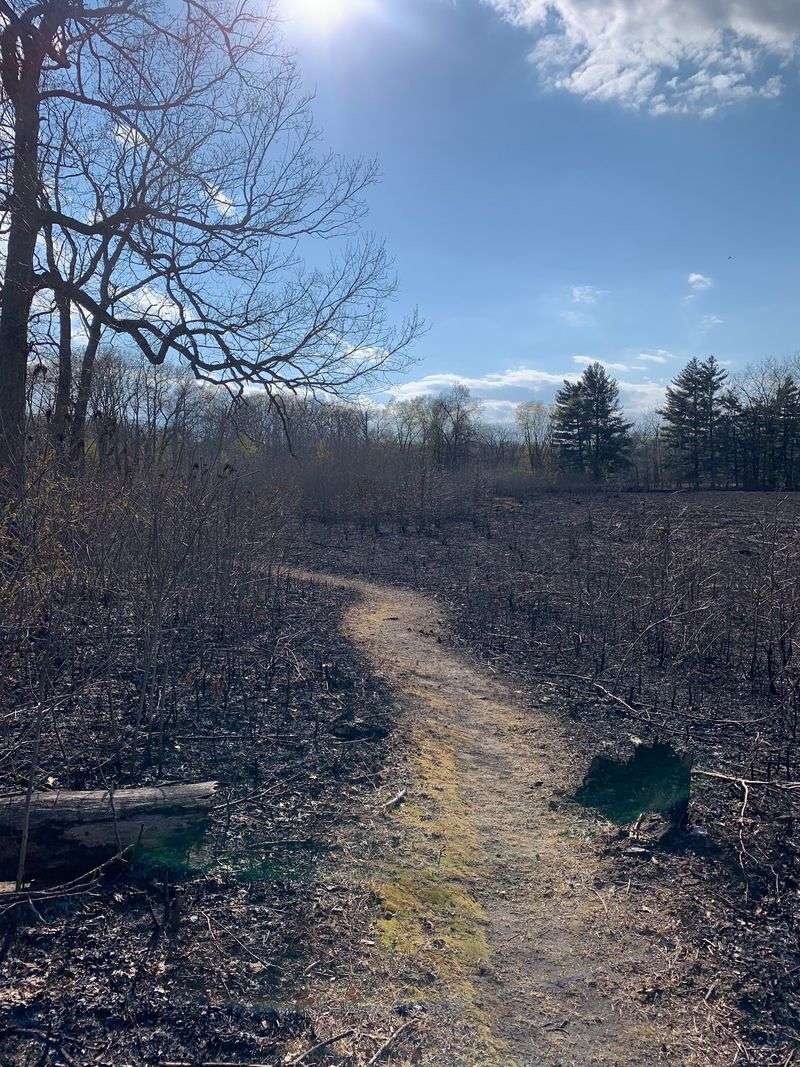
Prescribed fire is one of the main tools used here. Carefully planned burns imitate the natural fires that shaped savannas for thousands of years, clearing out woody growth while native prairie plants bounce back from deep roots.
If you visit shortly after a burn, do not be alarmed by blackened ground. Within weeks, fresh green shoots push up through the ash, and the following season often brings a stronger bloom.
Learning that changed how I looked at the place. Every sunny opening between oaks exists because someone made deliberate decisions about how to protect it.
You can support that work in the simplest way possible. Stay on the trail, pack out anything you bring, and leave plants and animals exactly where you find them.
Small habits matter enormously on ground this fragile. It is one of the rare places where doing less genuinely helps more.
Quiet That Feels Genuinely Rare In Northwest Indiana
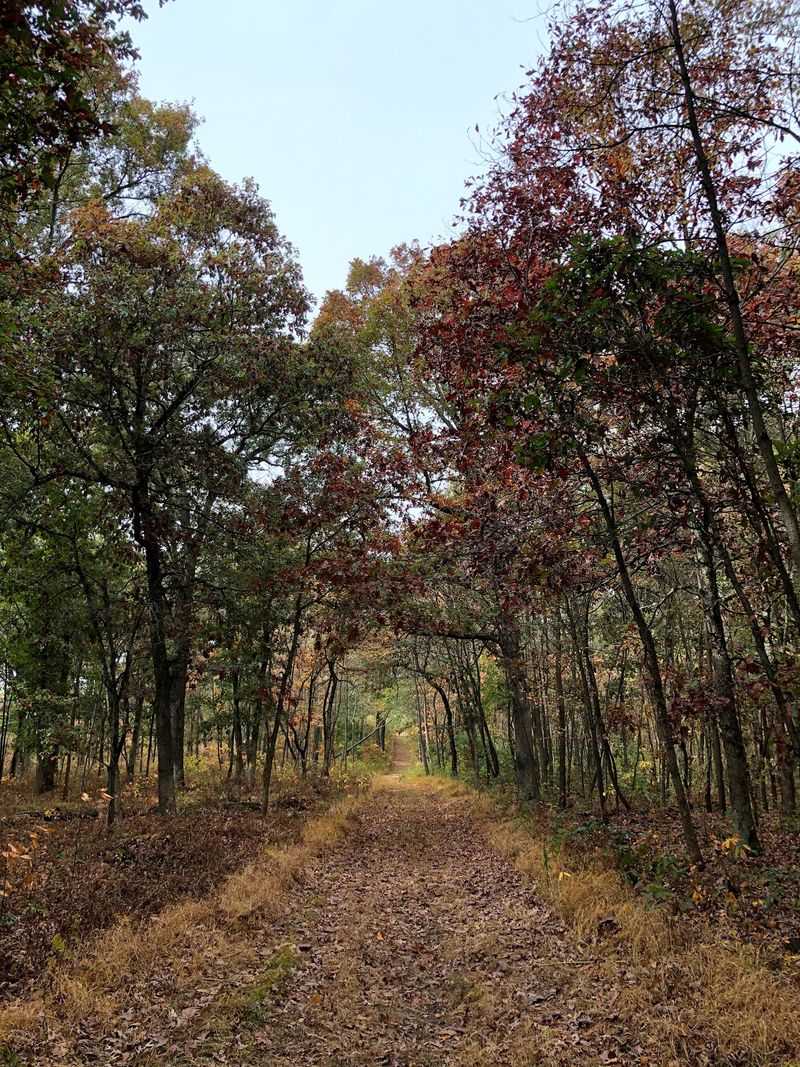
Silence was the part I keep thinking about. Not total silence, but the layered kind, where wind moving through oak leaves becomes the loudest thing around.
Tucked into rural Jasper County, the preserve sits far enough from busy roads that traffic noise never really intrudes. On my walk I passed almost no one, which turned the whole loop into something closer to a private wander.
The trail is open around the clock, so early risers and evening walkers both get their moment. Golden light late in the day makes the grasses glow in a way that photographs never quite capture.
Dogs are welcome on the trail, and plenty of local hikers bring theirs along. Just keep the tick precautions in mind for them too.
Autumn might be my favorite recommendation. Cooler air, fewer insects, and oaks turning color above dry rustling prairie make for an easy, pleasant hour outside.
Winter has its own appeal, when bare branches reveal the dune shapes more clearly than any other season. Snow across sand ridges is a genuinely odd and lovely sight.
Whether you come for the rare plants, the birds, or just a break from screens and noise, this small preserve delivers something unexpectedly memorable.
Address: W 1100 N, Wheatfield, IN 46392
