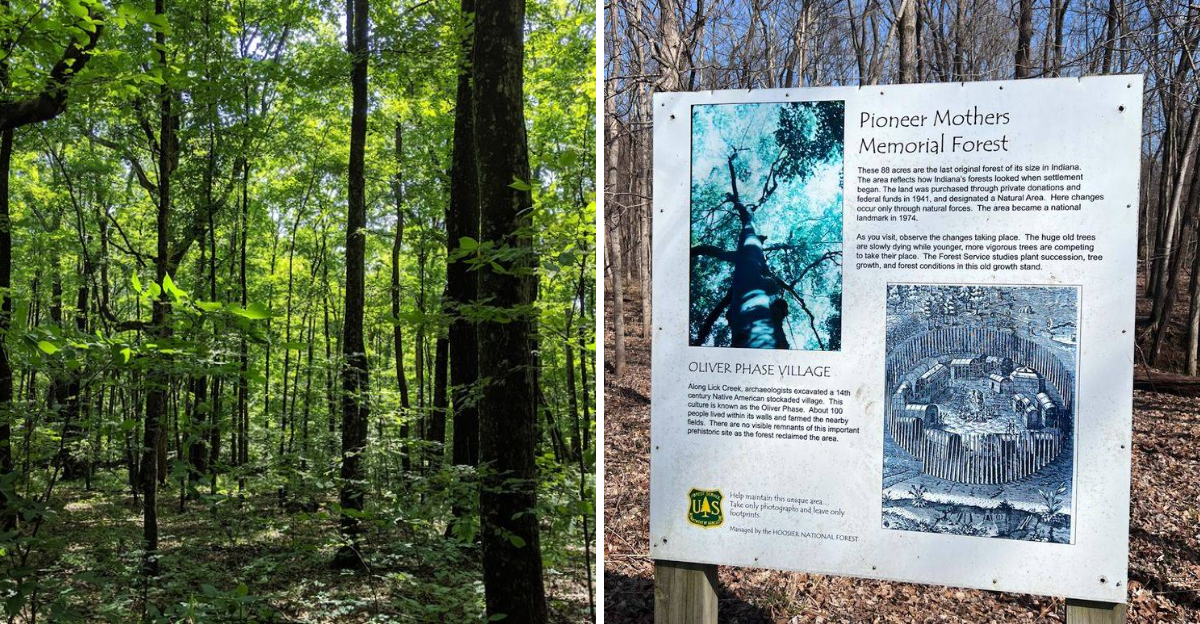
Hidden in Orange County, Indiana, just south of Paoli, an old-growth forest preserves one of the most remarkable natural landscapes in the Midwest.
Spanning nearly 90 acres, this protected woodland has remained largely untouched since before the state was established, offering a rare glimpse of what the region once looked like centuries ago.
Towering oaks, walnuts, and tuliptrees create a dense canopy overhead, while the forest floor supports a rich variety of native plants and wildlife.
Along a nearby creek, archaeologists have identified the remains of a Native American village dating back to around A.D. 1380, adding another layer of historical significance to the area.
Walking the quiet trails feels like stepping into another era, surrounded by nature that has endured for generations. Whether you appreciate history, hiking, or peaceful outdoor escapes, this remarkable preserve offers an experience that is both tranquil and unforgettable.
You Can Walk the 1.3-Mile Hiking Trail Here
Plan a visit with comfortable shoes because the trail here is one of the most calming walks you will find in southern Indiana.
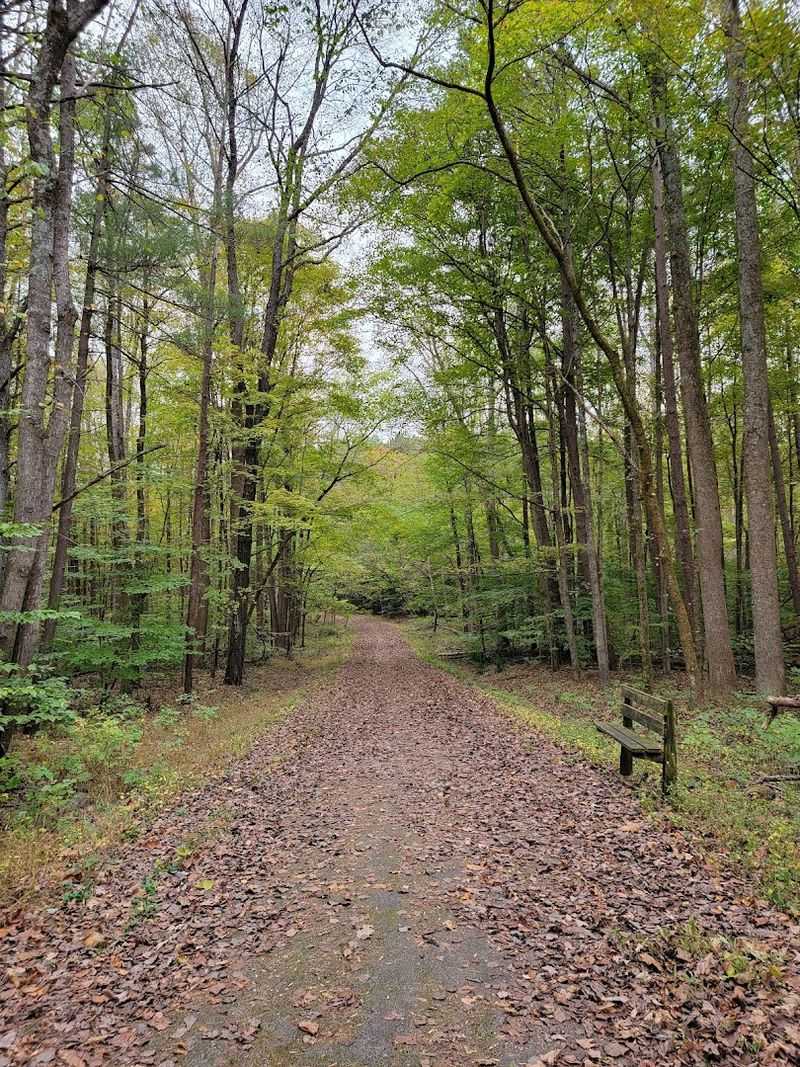
The hiking-only trail runs approximately 1.3 miles through the heart of the forest, connecting two separate parking areas so you can walk one way and return the same path or coordinate a simple shuttle with your group.
The trail is accessible to hikers of most fitness levels. It is not a rugged backcountry route, but it is also not a paved sidewalk.
You walk on natural ground through towering trees, past Lick Creek, and through sections of forest that feel genuinely ancient and undisturbed.
Because this is a Research Natural Area, the rules are clear. No bikes, no horses, no camping, and no plant collecting are allowed.
That might sound strict, but those rules are exactly why the forest remains so pristine. The trail is open year-round, though you should check for any storm-related closures before heading out, since tornado damage was reported in August 2023.
The forest is located at 1 S Triangle Rd, Paoli, IN 47454. Parking is limited, so arriving early on weekends is a smart move.
Come See the 1380 Prehistoric Native American Village Site
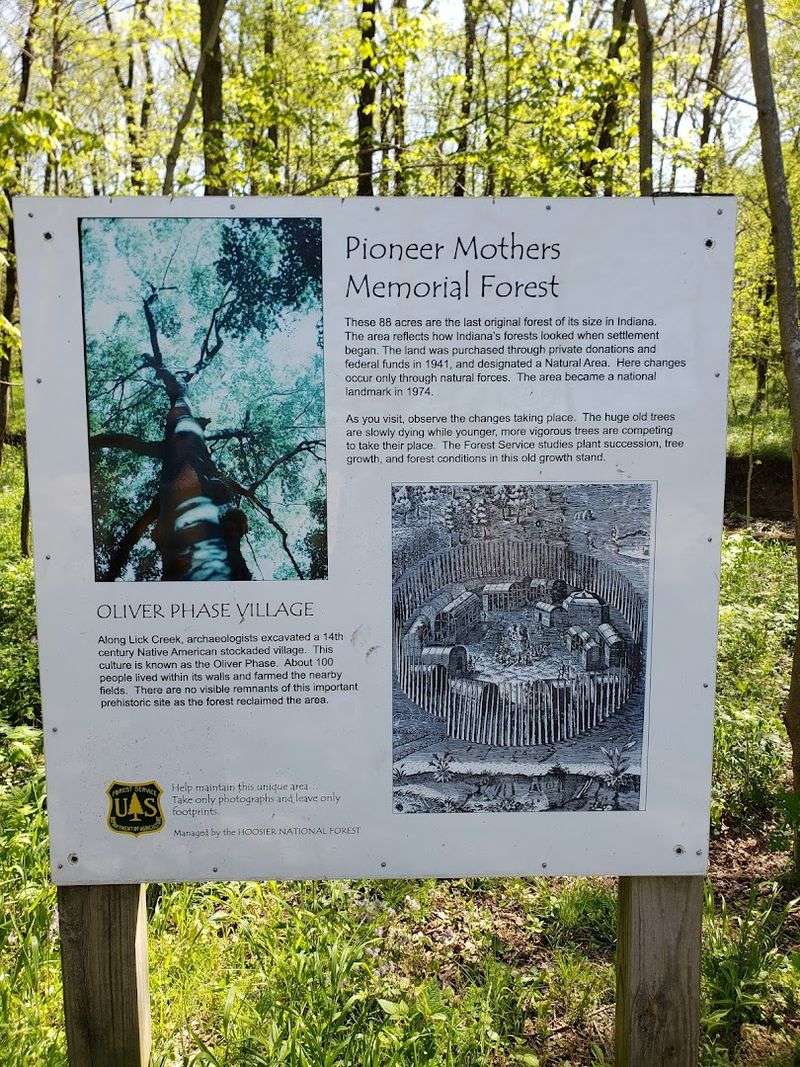
Long before European settlers arrived in Indiana, people were already building communities here. Along Lick Creek inside the forest, archaeologists have identified the remains of an Oliver Phase Mississippian village that dates to approximately A.D. 1380.
This prehistoric settlement is one of the more fascinating historical layers hidden within this already remarkable place.
Evidence of a walled village was still visible in unplowed sections of the land as recently as the 1940s. Archaeological surveys began in the late 19th century, and more extensive excavations followed over the decades.
The site connects this quiet forest to a much broader story of human civilization across the American Midwest.
Visiting the site today means walking through the same landscape where people lived, farmed, and built shelters more than 600 years ago. The physical evidence is subtle now, but knowing the history adds a completely different dimension to the experience.
It is the kind of place where the forest itself becomes a layered story, not just a collection of old trees. For history enthusiasts or anyone curious about Native American cultures of the region, this site alone makes the drive to Orange County well worth the effort.
Make Time for the Pioneer Mothers Rock Wall Memorial
There is a quiet, moving story behind why this forest exists at all. For 124 years, the Cox family protected these woods from logging, calling it Cox Woods.
When a lumber company threatened to harvest the trees in the 1940s, a community effort launched to save them. The Indiana Pioneer Mothers Club made a significant donation, and combined with funds from the U.S.
Forest Service, the forest was rescued.
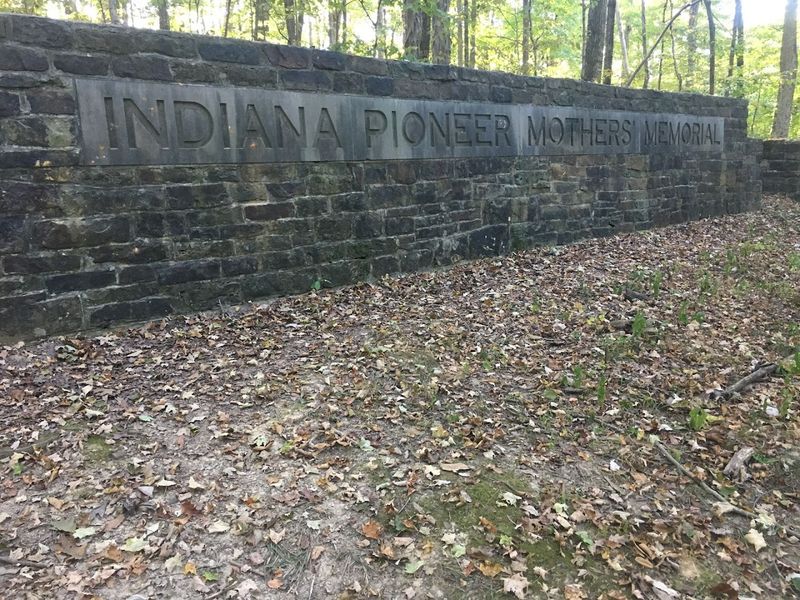
To honor that effort, a rock wall memorial was built and completed in 1951. The forest was officially renamed Pioneer Mothers Memorial Forest and dedicated in 1955.
The memorial stands as a tribute to the women whose financial contribution and community spirit made preservation possible at a critical moment in the forest’s history.
Seeing the rock wall in person puts the whole visit into perspective. You are not just walking through old trees.
You are walking through a place that people cared enough about to fight for, fundraise for, and ultimately protect for future generations. That kind of human story layered on top of natural beauty is rare.
The memorial is modest in size but meaningful in weight, and it gives visitors a moment to pause and reflect on what conservation actually looks like when a community comes together with purpose.
Ancient Trees in a Rare Virgin Forest
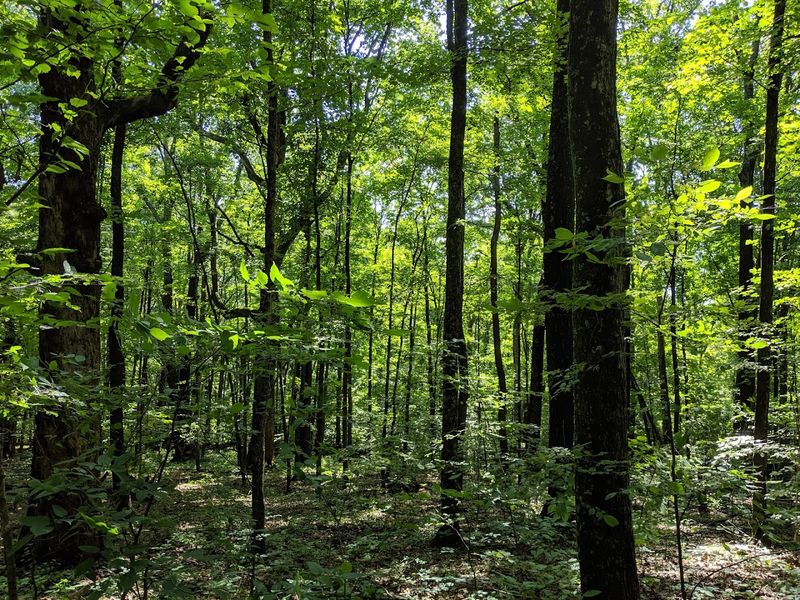
Some trees in this forest are so wide that two adults with outstretched arms could barely wrap around them.
Pioneer Mothers Memorial Forest contains white oak, black walnut, white ash, and tuliptree specimens that have been growing for centuries, with some oaks and walnuts reaching 50 inches in diameter and stretching 60 feet before the first limb even appears.
This is not a planted woodland or a managed park with manicured paths. It is one of Indiana’s last true pre-settlement forests, meaning the land has never been plowed or logged on a large scale.
Walking among these trees feels completely different from any other forest experience in the state.
Botanists and researchers have called this place one of the finest examples of Central Hardwood forest remaining in the United States. The walnut trees here, in particular, are considered some of the best forest-grown specimens anywhere in the country.
If you have ever wondered what Indiana looked like before settlers arrived, this forest gives you a real, living answer worth seeing in person.
Do Not Miss the National Natural Landmark Designation
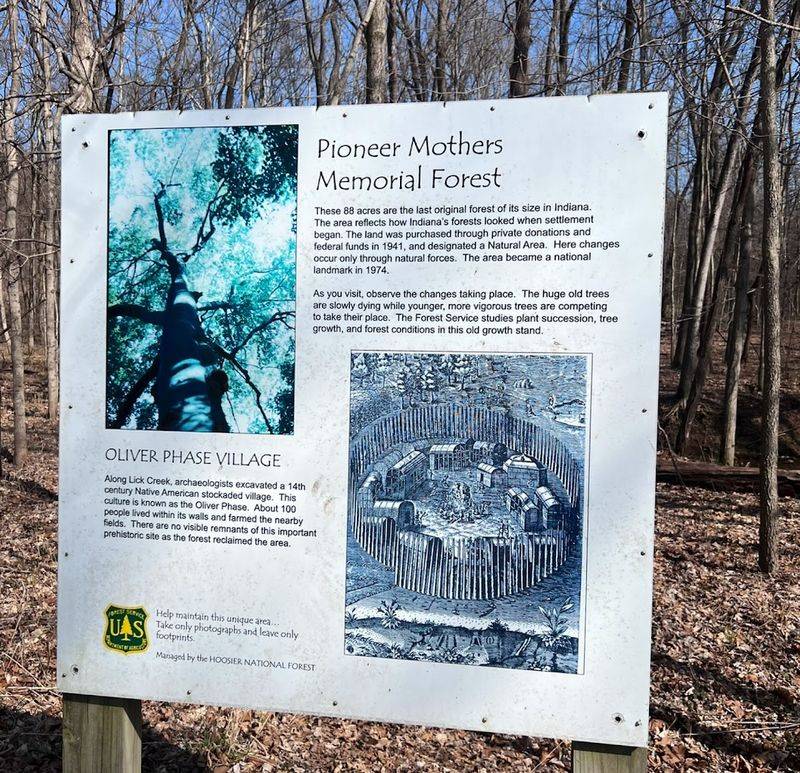
Not every forest earns a National Natural Landmark designation, and Pioneer Mothers Memorial Forest did so in 1974 for good reason. Before that, it was already designated a Research Natural Area in 1944, making it one of the earlier federally protected forest sites in Indiana.
These designations are not handed out casually. They reflect how scientifically and ecologically significant this place truly is.
The U.S. Forest Service manages the area within the Hoosier National Forest specifically to protect its unique qualities.
Researchers have used the site for decades to study old-growth forest ecology, tree growth patterns, and biodiversity in Central Hardwood ecosystems. The forest serves as a kind of living laboratory that continues to provide valuable data.
For visitors, those designations translate into something you can actually feel. The forest has a quality of stillness and ecological richness that managed or replanted forests simply do not have.
Massive trees, layered understory plants, and a creek winding through it all create an environment that feels genuinely intact. Knowing that scientists and conservationists have recognized this place as nationally significant makes the experience feel even more grounded.
You are not visiting a pretty park. You are visiting one of the most ecologically important forest fragments remaining in the entire state of Indiana.
Try Photography Along Lick Creek in Fall or Spring
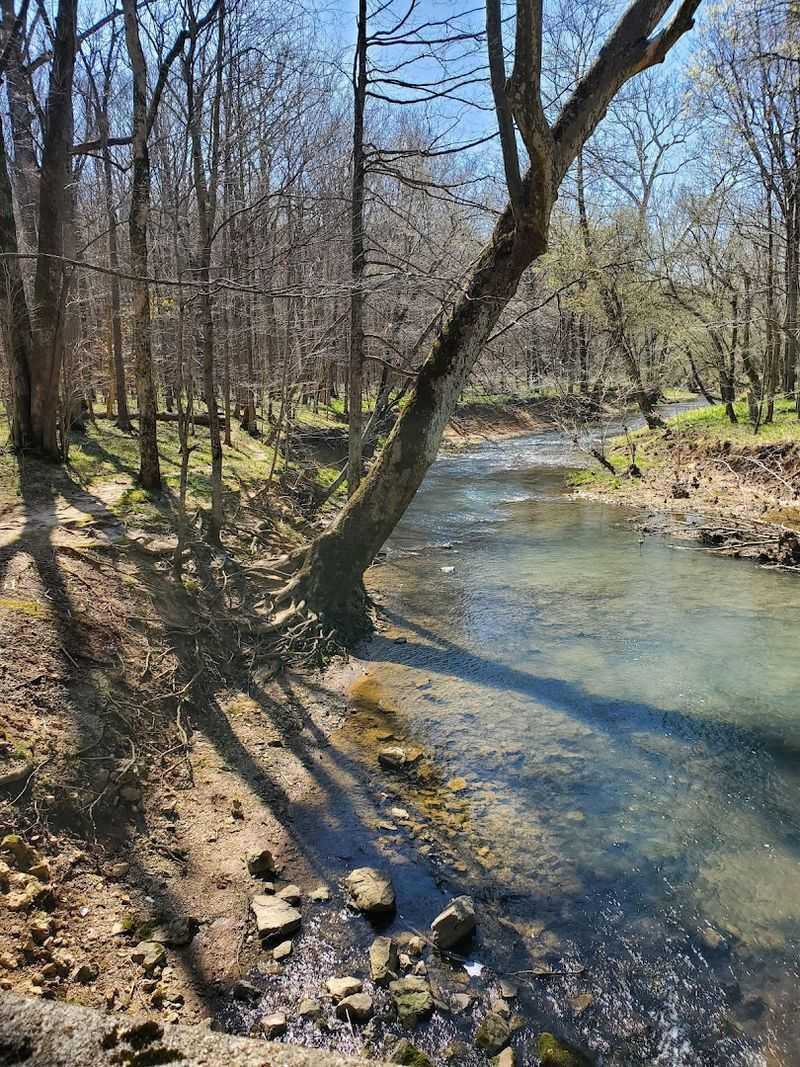
Lick Creek runs through the heart of Pioneer Mothers Memorial Forest, and it transforms the landscape into something genuinely photogenic throughout the year. In spring, fresh green leaves unfurl against the dark bark of centuries-old trees, and the creek runs clear and lively.
In fall, the canopy shifts to gold, amber, and rust, creating a color palette that photographers travel hours to find.
The combination of old-growth trees, winding water, and filtered light makes this one of the more rewarding nature photography locations in southern Indiana. You do not need professional gear to come away with beautiful images.
Even a smartphone camera captures the scale and atmosphere of the forest in a way that is hard to replicate anywhere else nearby.
Early morning visits offer the best light and the quietest experience. The forest is peaceful at any time of day, but mist rising off the creek in the early hours adds a layer of atmosphere that feels almost cinematic.
Wildlife is also present throughout the forest, including snakes and various bird species, so keep your camera ready for unexpected moments.
The trail follows the creek closely enough that you will have multiple opportunities to frame the water with towering trees on either side, giving you a composition that feels timeless and completely natural.
Skip the Crowds and Find Real Forest Quiet Here
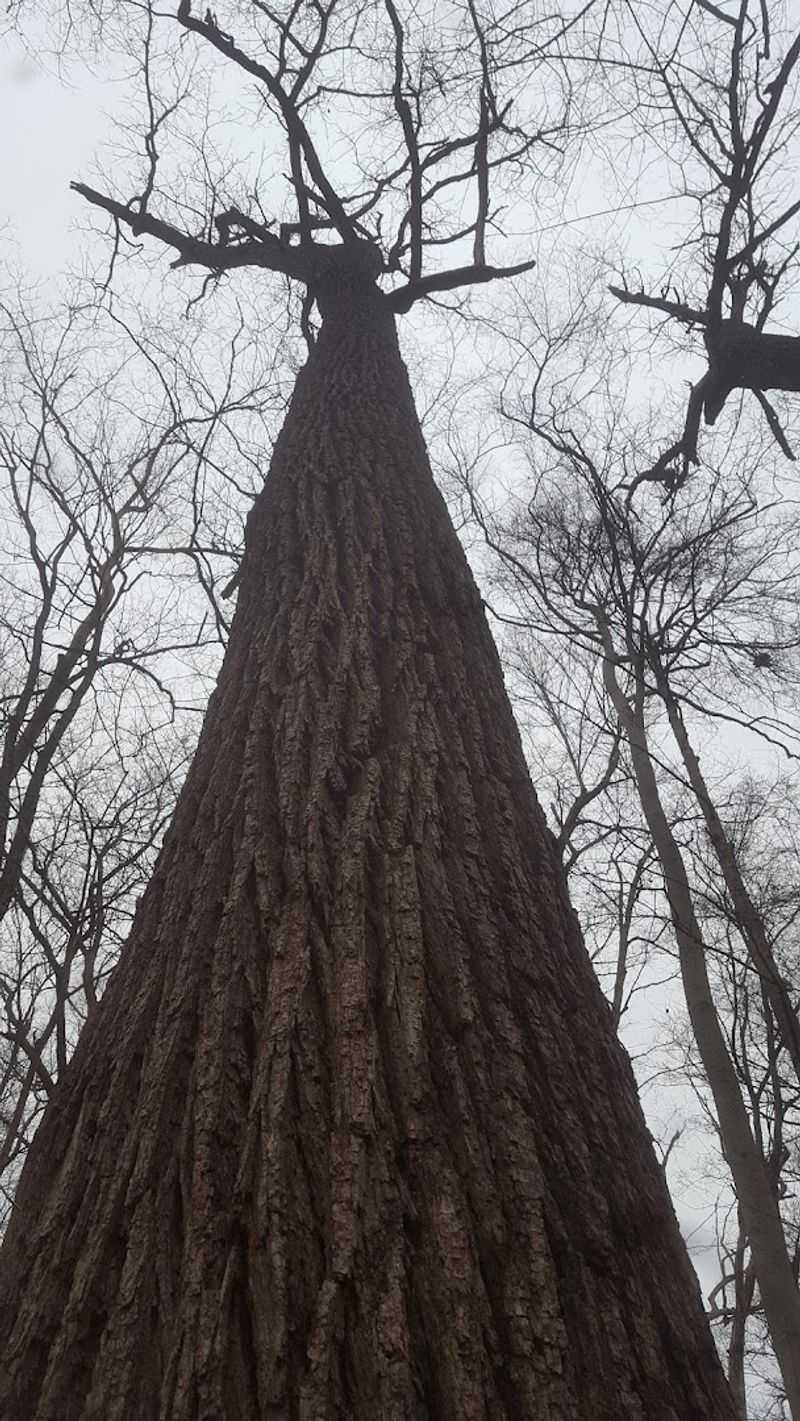
Most people in Indiana have never heard of Pioneer Mothers Memorial Forest, and that is honestly part of what makes it special. The parking area off Triangle Road holds only a handful of vehicles, and the trail sees a fraction of the foot traffic that busier state parks attract.
If solitude in nature is something you actively seek, this forest delivers it consistently.
The Research Natural Area restrictions that limit certain activities also keep the atmosphere unusually calm. No hunting, no target shooting, no mountain bikes, and no horses means the trail stays quiet and the wildlife stays undisturbed.
That policy creates a noticeably different energy compared to multipurpose recreation areas where noise and activity compete with the natural environment.
Hearing rain hit the leaves overhead, as some visitors have described, or simply standing still among trees that were already mature before the Civil War, gives you a sense of scale that is hard to find in everyday life. The forest is not dramatic in a flashy way.
It earns its impression slowly, through atmosphere and age. For anyone feeling overloaded by busy schedules or crowded destinations, a morning here in Orange County, Indiana, offers a kind of reset that feels genuinely restorative without requiring any special gear or long-distance travel planning.
